
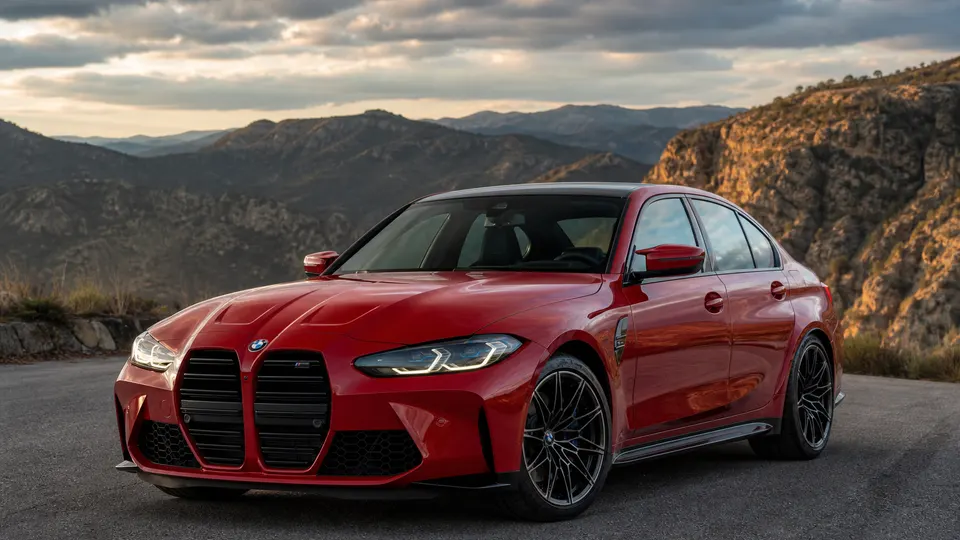
The BMW M3 is one of the most celebrated performance sedans ever built, and most model years deliver an exceptional driving experience - but a handful of generations carry well-documented mechanical failures that can cost you thousands out of nowhere. Using data from NHTSA, CarComplaints, and RepairPal, this guide shows you exactly which years to avoid and which ones to target so you can buy with confidence.
At a glance
- Worst years
- 2003
- 2005
- 2008
- 2011
- Best years
- 2006
- 2021
- 2022
- 2023
- Top failure
- E90/E92/E93 (2008-2013) S65 rod bearing failure (CarComplaints - 108 complaints on the 2008 alone; 2005 rated worst by PainRank)
- Always do before buying
- Run the VIN through NHTSA's recall checker to confirm every open recall is closed, plus check the oil level and ask for rod bearing service history on any 2008-2013 car
How we rated the best and worst BMW M3 years
The E90/E92/E93 generation (2008-2013) produces the most data-backed concern, with the 2008 carrying the single highest raw complaint count in the CarComplaints database and the 2005 (E46) rated worst overall by PainRank - CarComplaints's composite score for repair cost and mileage at failure.
CarComplaints rates the 2005 model year as worse than the 2008, because of factors such as higher repair cost or more problems at lower mileage, even though the 2008 has the most overall complaints. NHTSA complaint volume - which counts raw owner submissions - tells a different story: the 2008 BMW M3 has 108 problems and defects reported by M3 owners on CarComplaints, the single highest count across all M3 model years in that database. RepairPal's BMW M3 Reliability Rating is 2.0 out of 5.0, ranking it 29th out of 31 luxury midsize cars, with an average annual repair cost of $1,161. Additional sources include NHTSA recall and complaint records, owner forums (M3Post, NA M3 Forums), and repair-shop data. Our editorial guidelines govern how complaint data, repair costs, and owner forum reports are weighted to reach each verdict.
| BMW M3 Generation | Best BMW M3 Years | Worst BMW M3 Years |
|---|---|---|
| E30 (1987-1991 US) | None | None |
| E36 (1995-1999 US) | None | None |
| E46 (2001-2006) | 2006 | 2003, 2005 |
| E90/E92/E93 (2008-2013) | None | 2008, 2011 |
| F80 (2015-2018) | None | None |
| G80 (2021-present) | 2021, 2022, 2023 | None |
Every BMW M3 model year ranked
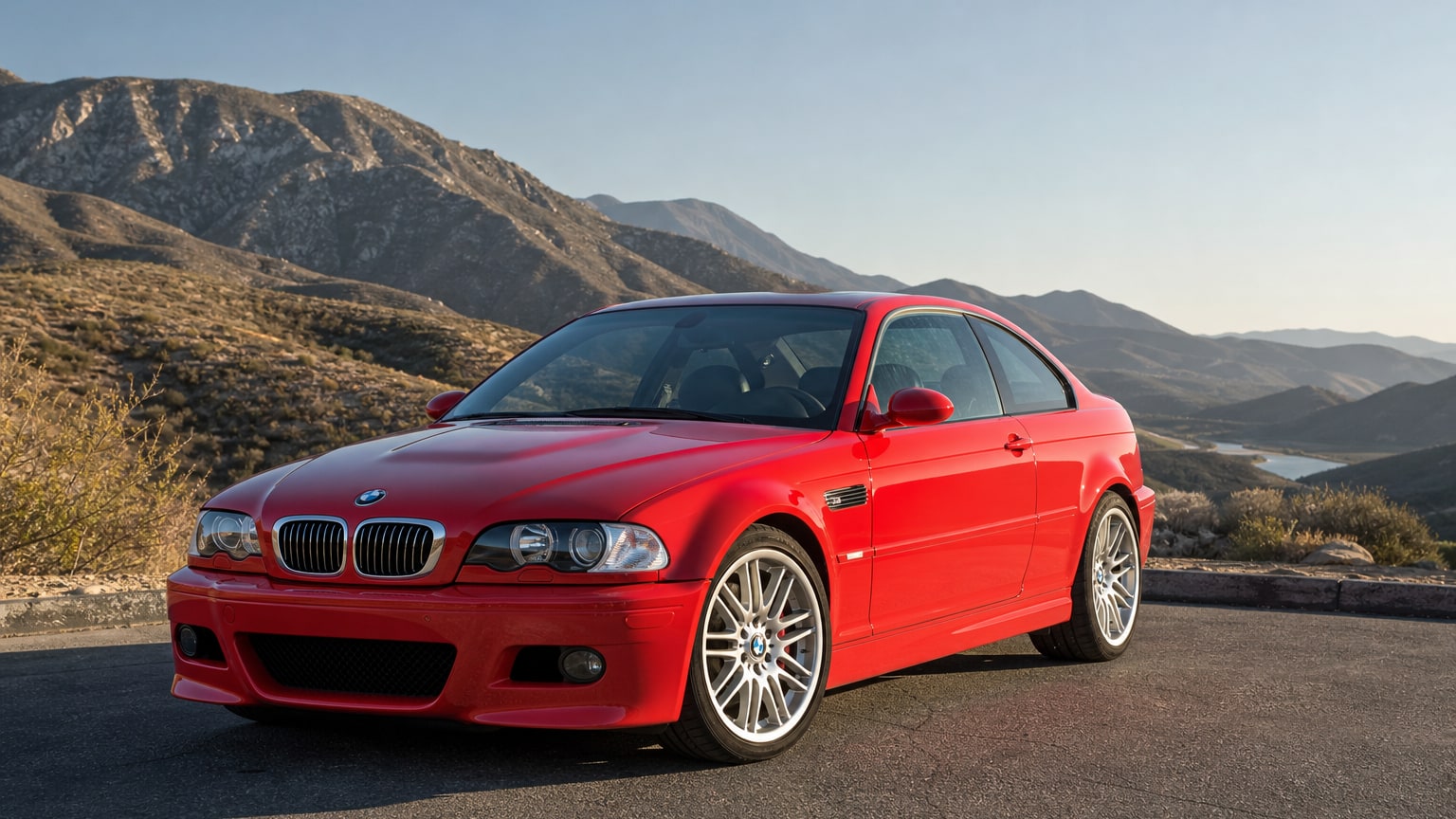
The data points most clearly toward the early E46 years and the launch year of the E90 generation as the ones to avoid, while the final E46 year, the closing F80 years, and the entire current G80 generation stand out as safer picks.
| Model Year | Generation | Verdict | Notes |
|---|---|---|---|
| 1987 | E30 | OK/Mixed | Classic era, separate collector market |
| 1988 | E30 | OK/Mixed | Classic era, separate collector market |
| 1989 | E30 | OK/Mixed | Classic era, separate collector market |
| 1990 | E30 | OK/Mixed | Classic era, separate collector market |
| 1991 | E30 | OK/Mixed | Classic era, separate collector market |
| 1995 | E36 | OK/Mixed | US launch year, detuned vs. Euro spec |
| 1996 | E36 | OK/Mixed | Modest power, limited complaints |
| 1997 | E36 | OK/Mixed | Stable mid-run year |
| 1998 | E36 | OK/Mixed | Solid mid-cycle |
| 1999 | E36 | OK/Mixed | Final E36 year, refined |
| 2001 | E46 | OK/Mixed | Launch year, early subframe concerns |
| 2002 | E46 | OK/Mixed | Rod bearing service action issued |
| 2003 | E46 | Avoid | 67 CarComplaints reports, subframe & bearing issues |
| 2004 | E46 | OK/Mixed | Post-service-action, fewer complaints |
| 2005 | E46 | Avoid | CarComplaints PainRank worst year |
| 2006 | E46 | Best | Final E46 year, lowest complaint load |
| 2008 | E90/E92/E93 | Avoid | 108 CarComplaints reports, highest raw count |
| 2009 | E90/E92/E93 | OK/Mixed | DCT recall, lower complaint count than 2008 |
| 2010 | E90/E92/E93 | OK/Mixed | 20 CarComplaints reports, manageable |
| 2011 | E90/E92/E93 | Avoid | 43 CarComplaints reports, engine & interior issues |
| 2012 | E90/E92/E93 | OK/Mixed | Mid-run, lower volume |
| 2013 | E90/E92/E93 | OK/Mixed | Final E9x year, near end of rod-bearing warranty window |
| 2015 | F80 | OK/Mixed | Launch year, crank hub concerns first appeared |
| 2016 | F80 | OK/Mixed | 7 CarComplaints reports, low volume |
| 2017 | F80 | OK/Mixed | Stable mid-run year |
| 2018 | F80 | OK/Mixed | 10 NHTSA complaints, 0 recalls |
| 2021 | G80 | Best | New S58 engine, low complaint volume |
| 2022 | G80 | Best | Low complaint volume, strong early data |
| 2023 | G80 | Best | Still building data, minimal complaints |
Most common BMW M3 problems
The single biggest failure across the M3's history is rod bearing wear, which has affected multiple generations and triggered both a service action and a major warranty extension program.
1. Rod bearing failure (S54 and S65 engines)
The connecting rod bearings inside the S54 (E46, 2001-2006) and S65 (E90/E92/E93, 2008-2013) engines can wear prematurely, starving of oil and eventually seizing. The engine can fail while driving and at any speed due to the bearings not having enough lubrication; the hydraulic power steering is driven directly by the rotating assemblies, so a failure of the rotating assembly causes a complete loss of power steering. The symptoms are a deep knocking noise followed by sudden power loss - what owners on M3Post describe as catastrophic.
A BMW M3 engine failure lawsuit alleged the M3 S65 engine can fail due to metal debris from the connecting rod bearings; one plaintiff needed a $2,000 bearing replacement at an independent shop after a dealer denied there was a problem. Full engine replacement, when the bearings fail completely, can run $8,000-$15,000. The class-action lawsuit covers current and former owners and lessees for model years 2008-2013.
BMW issued a warranty extension covering engine repair or replacement for connecting rod bearing wear, extended to 15 years or 150,000 miles from the date of original retail delivery, valid for original and subsequent owners; this bulletin supersedes an earlier version designated 22-EM-006H-1. The warranty extension is not a recall or service action, and no immediate repair is required unless the vehicle is currently experiencing a problem. On any 2008-2013 M3 you're considering, confirm the bearing service history and ask the dealer whether the VIN qualifies under this warranty extension. Proactive replacement of the S65 bearings runs roughly $500-$800 in parts and labor and can prevent a five-figure repair bill.
For the E46 S54, connecting rod bearings in M3 coupe/convertible vehicles produced from February 2001 through May 2003 were not manufactured to BMW quality standards, making them susceptible to overheating and subsequent premature failure if driven at higher engine speeds over an extended timeframe. A service action was conducted on those vehicles to replace the connecting rod bearings and reprogram the engine control module. If you're buying a 2001-2003 E46 M3, verify this service action was completed.
2. E46 rear subframe cracking (2001-2006)
The rear subframe in the E46 is a critical component that connects the chassis to the suspension; over time, stress from driving - especially under spirited or heavy-load conditions - can cause the subframe mounting points to develop cracks, and the issue is most prevalent in models produced between 1999 and 2006, including the M3 variant.
Symptoms include clunking from the rear and outright subframe failure; the cracking has been documented on cars with mileage as low as 30,000 miles and as high as 150,000 miles. A clunking or creaking noise from the rear under acceleration is the primary warning sign, and the failure can also show up as misaligned suspension or uneven tire wear. Repair costs for E46 subframe reinforcement range from roughly $1,300 for bottom-side welding and plates up to $5,800 or more for a full reinforcement with fresh bushings and suspension components, based on owner reports at NA M3 Forums. This known drivetrain malfunction pattern is one reason a pre-purchase lift inspection is non-negotiable on any E46 M3.
3. S55 crank hub slippage (F80, 2015-2018)
The crank hub connects the crankshaft to the timing chain system; on the BMW S55, the factory crank hub design is a multi-piece, friction-fit system, and under high load - such as hard acceleration, aggressive downshifts, or tuning for more power - the hub can slip, throwing off the timing between the crankshaft and camshafts.
Any unintended slippage of the chain will vary the timing, resulting in a rising piston meeting fast-moving valves and leading to catastrophic engine failure; it remains a mystery why BMW's engineers secured the crank hub with a single bolt and friction material on performance M-car models, with no keyway or pins. The "spun crank hub" has become a fairly common repair for the S55 engine and a prevalent preventive maintenance item for F80 M3 owners to prevent a potentially catastrophic failure. The fix is a keyed or pinned aftermarket crank hub, typically $500-$1,500 installed. Any used F80 M3 you're considering should have documented confirmation that this repair or upgrade has been completed.
4. Takata airbag inflator rupture (E46, 2000-2006)
The NHTSA and BMW issued a "Do Not Drive" warning for older BMW models; more than 90,000 vehicles built between 2000 and 2006 are impacted because they have been under recall for a defective Takata airbag, and until the repairs are made, the vehicles should remain parked. The cars have some of the oldest Takata airbags and have an extremely high probability of failure during a crash; if the inflators rupture, metal fragments ejected toward the driver's face could kill or leave them with devastating injuries.
The airbags can be repaired for free, with replacement parts available; affected models include 2000-2006 BMW 3 Series (E46) including the M3. This is a safety-critical recall. Before buying any 2001-2006 E46 M3, confirm the recall repair has been completed using NHTSA's VIN lookup.
5. DCT transmission software (E90/E92, 2008-2009)
BMW recalled approximately 2,500 2008-2009 M3 vehicles with the optional dual-clutch transmission; the problem involves the double clutch gearbox, where a rapid vehicle deceleration could cause the transmission software to perform a multistage downshift. A sudden multi-ratio downshift at speed can cause the rear wheels to lock up, creating a serious crash risk.
The worst complaints for the 2008 BMW M3 on CarComplaints are engine and clutch problems. On 2008-2009 cars with the DCT (also sold as the M-DCT), ask for records showing the software update was performed. If the vehicle has the six-speed manual, this specific recall does not apply.
6. Cooling system and water pump failures (E90/E92/E93, F80)
The S65 and S55 engines share a vulnerability to cooling system failures, particularly the electric water pump on the E9x generation. An F80 that overheated in traffic after a warning light was ignored turned what should have been an $850 water pump replacement into a $6,200 repair. A failing water pump on any high-revving M engine can escalate quickly once the coolant temperature climbs unchecked. The BMW M3 Reliability Rating is 2.0 out of 5.0, and the average annual repair cost of $1,161 reflects poor ownership costs that include frequent and potentially severe repairs. Never ignore a temperature warning or coolant light on any M3 - pull over immediately.
Checking a used BMW?
Scan for hidden fault codes from your phone in minutes — before you buy.
REREV may earn a commission if you sign up through this link. Learn more.
Which BMW M3 years should you avoid?
The BMW M3 years to avoid are 2003, 2005, 2008, and 2011.
CarComplaints rates the 2005 model year as the worst BMW M3 overall by PainRank - its composite score for repair cost and mileage at failure. For raw complaint volume, the 2008 BMW M3 has 108 problems and defects reported on CarComplaints, the single highest count of any M3 year in that database. These are different metrics measuring different things, and both years warrant avoidance.
| BMW M3 Generation | Model Years | Verdict | Main Issues |
|---|---|---|---|
| E46 (2001-2006) | 2003, 2005 | Worst | Rod bearing, rear subframe cracking, Takata airbag recall |
| E90/E92/E93 (2008-2013) | 2008, 2011 | Worst | S65 rod bearing failure, DCT software recall, high complaint volume |
| F80 (2015-2018) | 2015-2018 | Mixed | S55 crank hub slippage, manageable if inspected |
| G80 (2021-present) | 2021-2023 | Best | Low complaints, S58 engine reliability |
Worst BMW M3 years: 2003, 2005, 2008, 2011
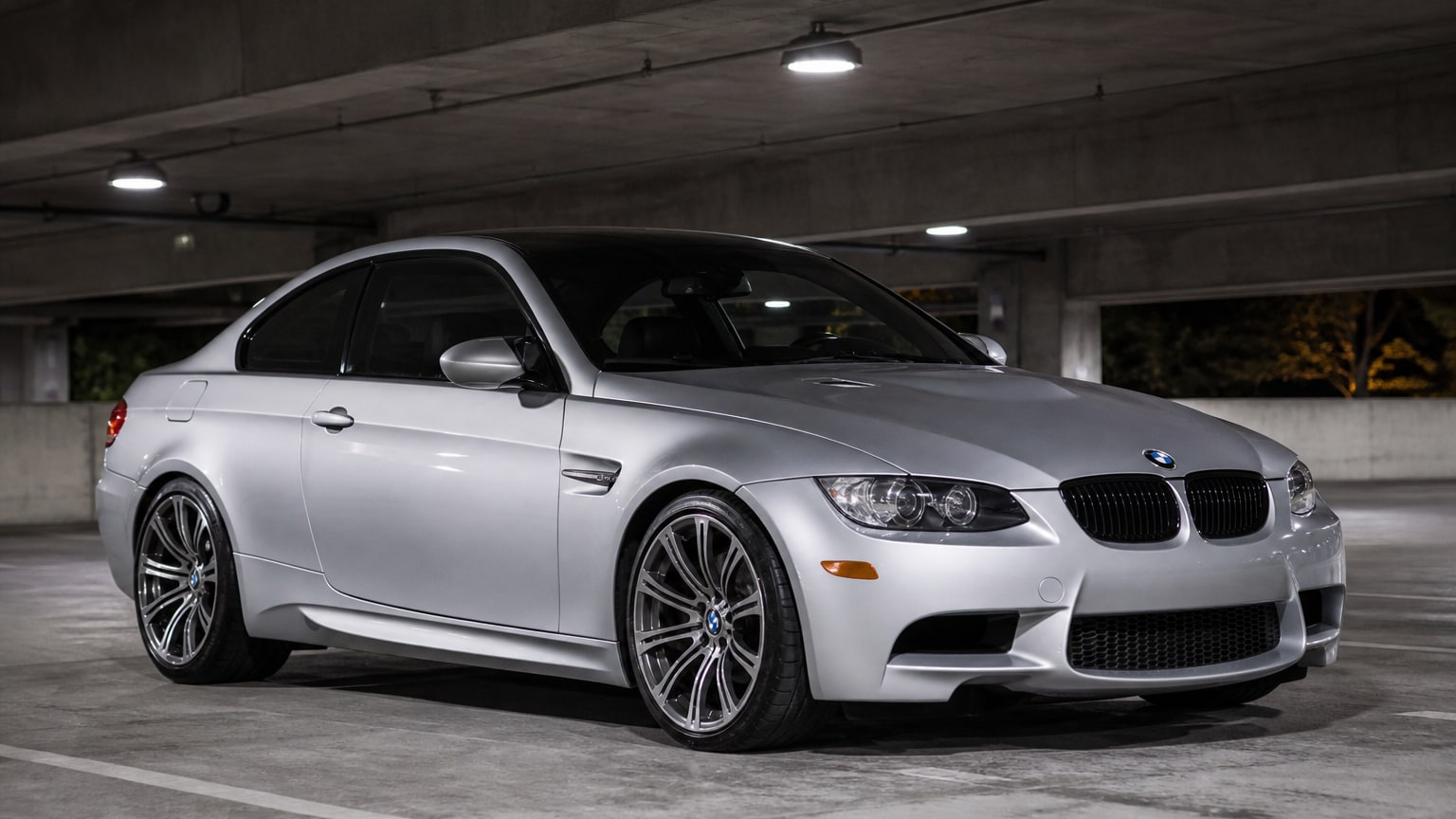
Third-generation BMW M3 E46 (2001-2006)
The 2003 BMW M3 has 67 problems and defects reported by M3 owners on CarComplaints, making it the highest-complaint E46 year. The 2001-2003 cars are also the ones covered by BMW's rod-bearing service action on the S54 engine, covering vehicles produced from February 2001 through May 2003. The 2005 earns CarComplaints's worst PainRank for the E46 generation, with 13 reported problems, the worst of which are transmission complaints. On any E46 M3, also confirm the Takata airbag recall (2000-2006 affected) has been resolved before purchase - NHTSA issued a "Do Not Drive" warning for unrepaired cars. Check NHTSA's 2003 BMW M3 records before making an offer.
Fourth-generation BMW M3 E90/E92/E93 (2008-2013)
The 2008 BMW M3 has 108 problems and defects reported by M3 owners, with the worst complaints in engine and clutch categories. The 2011 BMW M3 has 43 problems and defects reported, with the worst complaints in accessories/interior and engine categories. The S65 rod-bearing warranty extension (15 years/150,000 miles from original retail delivery) is the key check on any 2008-2013 car - confirm the VIN is still covered and ask whether proactive bearing service has been done. Review NHTSA's complaint data for the 2008 BMW M3 before buying.
What are the best BMW M3 years to buy?
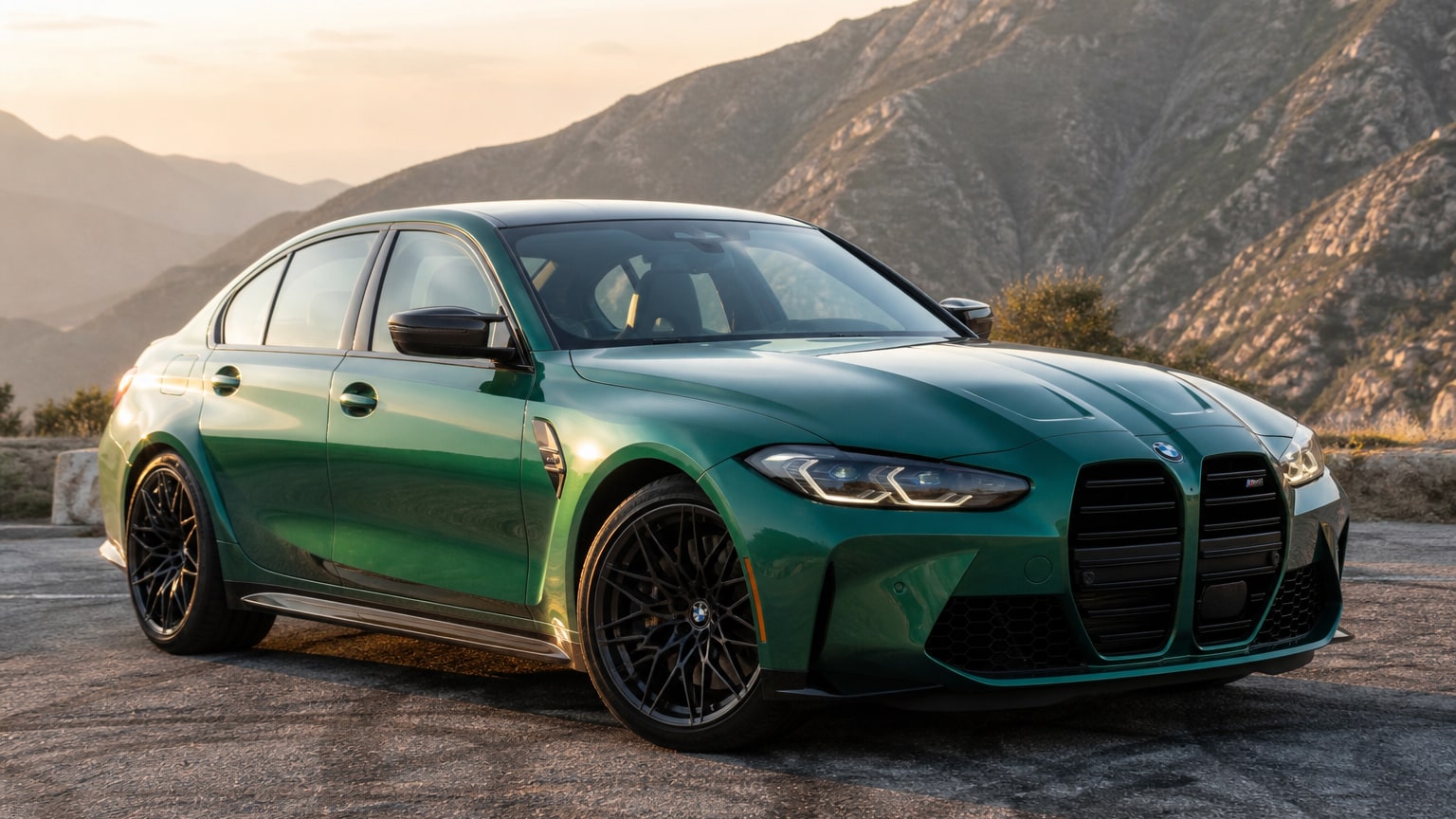
The best BMW M3 years to buy are 2006, 2021, 2022, and 2023 - years with the lowest complaint loads, the fewest safety concerns, and (in the G80's case) a stronger engine design.
| Best BMW M3 Year | Why It's a Strong Buy |
|---|---|
| 2006 | Final E46 year; rod-bearing service action complete on earlier cars; lowest complaint load in the E46 run |
| 2021 | Launch year of the G80; new S58 engine rated most robust M engine in years; low early complaint volume |
| 2022 | G80 second year; strong early reliability data; very low complaint count |
| 2023 | G80 third year; still building data but minimal complaints to date |
Most reliable BMW M3 years: 2006, 2021, 2022, 2023
2006 BMW M3
The 2006 is the final year of the beloved E46 generation, and it benefits from years of production refinement. The E46 BMW M3, covering model years 2001 through 2006, delivered power via a 3.2-liter inline-six making 333 hp. By 2006, early rod-bearing service actions on the S54 were long completed on virtually all cars, reducing the surprise-failure risk that haunted 2001-2003 examples. The 2006 also carries the lowest complaint load of any E46 year in the CarComplaints database. Verify the Takata airbag recall is closed on any specific VIN using the NHTSA recall checker - that one applies across the whole E46 run.
2021-2023 BMW M3 (G80)
The G80/G82/G83 M3/M4 with the S58 twin-turbo engine is the most robust M engine in years, with better cooling, stronger internals, and improved oiling. BMW's own website notes the G80, which has been produced since 2020, is available with three performance levels and for the first time with M xDrive all-wheel drive. Complaint volumes for 2021-2023 are minimal across databases, and these cars remain close enough to their original warranty periods that repair costs are manageable. The average total annual cost for repairs and maintenance on a BMW M3 is $1,161, compared to an average of $739 for luxury midsize cars - so even the better years carry a cost premium vs. mainstream cars, something to budget for. See the RepairPal BMW M3 reliability page for the latest ratings.
BMW M3 pre-purchase checklist
Every used BMW M3 purchase should include these model-specific checks before you sign anything.
- Run the VIN through NHTSA's recall checker at nhtsa.gov/recalls to confirm every open recall - especially the Takata airbag recall on 2001-2006 cars - is closed.
- On any 2008-2013 car, check the oil level and ask for rod-bearing service history. Confirm whether the VIN still qualifies under BMW's warranty extension (15 years/150,000 miles from original delivery) covering connecting rod bearing damage.
- On any 2001-2006 E46 M3, have a shop put it on a lift and inspect the rear subframe mounting points. Cracks can be present on cars with as little as 30,000 miles; symptoms include clunking from the rear and outright subframe failure.
- On any 2015-2018 F80 M3, ask whether the crank hub has been replaced or upgraded. The spun crank hub has become a fairly common repair for the S55 engine and is now a prevalent preventive maintenance item for F80 M3 owners.
- Request full service records. Oil change intervals matter enormously on the S65 and S55 engines, where oil quality is directly tied to rod-bearing longevity. The E90/E92/E93 S65 should be serviced every 5,000-7,500 miles with BMW LL-01 5W-30; any track use requires an oil change after every event.
- Check for cooling system warning history. An ignored overheating warning turned an $850 water pump job into a $6,200 repair on an F80 M3. Ask if the water pump, thermostat, and coolant expansion tank have been replaced - these are known wear items.
- On 2008-2009 DCT cars, confirm the transmission software recall was completed. If the car has the M-DCT and has no service record of the software update, have a BMW dealer check the VIN before purchase.
- Get an independent pre-purchase inspection (PPI) from a BMW specialist. The biggest risks on a used BMW M3 are rod bearing wear on E46 and E90 models, crank hub issues on F80 models, and lack of service history.
Better alternatives to consider
If the BMW M3 years in your budget land on the avoid list, consider these alternatives instead:
- BMW 3 Series - the non-M sibling with a much broader used market and a clearer year-by-year reliability map if you do not need M-car power
- BMW M4 - the coupe sibling sharing the same M engines and many of the same ownership caveats across F82 and G82 generations
- BMW M2 - the smaller M coupe if you want similar driving intensity with a shorter wheelbase and typically lower purchase prices
- Audi S4 - a well-rounded turbocharged sport sedan with a strong reliability track record and a clearer best/worst year split for used buyers
- Mercedes-AMG C43 - shares the sport-sedan class with the M3, with lower average repair costs and a less fraught reliability history on most model years
- Lexus IS F - the naturally aspirated 5.0-liter V8 sport sedan delivers similar performance thrills with a significantly stronger RepairPal reliability profile than the M3
Is the BMW M3 worth buying?
Yes - as long as you avoid the 2003, 2005, 2008, and 2011 model years and go in with eyes open on the generation-specific issues. The G80's S58 twin-turbo engine is the most robust M engine in years, with better cooling, stronger internals, and improved oiling, making 2021-2023 cars a solid choice if your budget allows. For older generations, the 2006 E46 is the pick of the classic cars. When maintained properly, most failures come from deferred maintenance rather than poor engineering. Run the VIN through NHTSA's recall checker, verify full maintenance history, and budget for the $1,161 average annual repair cost that comes with owning any M3. You can also check how long a BMW typically lasts to set realistic long-term ownership expectations.