
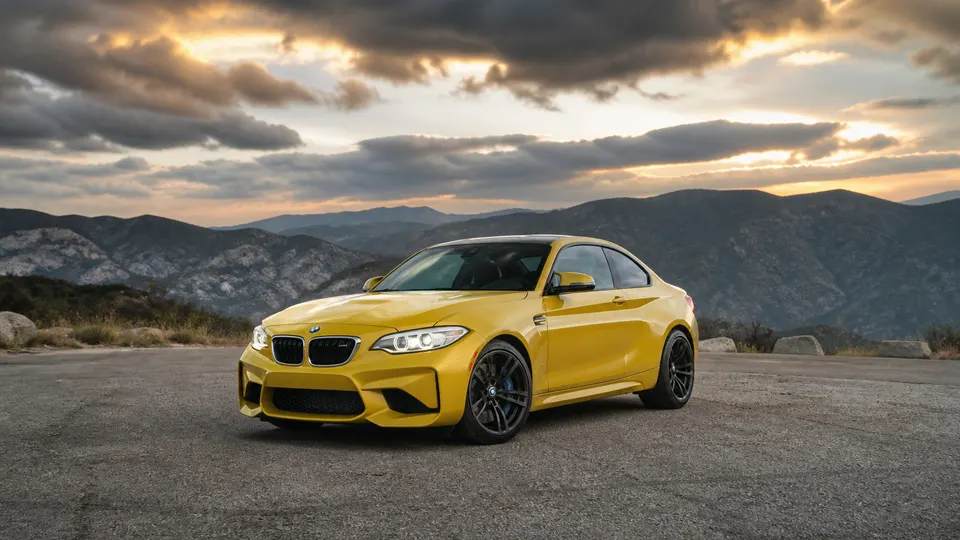
The BMW M2 is one of the more reliable entries in BMW's M lineup, with a relatively short complaint record and strong owner satisfaction across most model years. That said, a handful of specific years carry well-documented mechanical risks, from early-build teething issues in 2016 to a serious gearbox failure pattern that surfaced on the 2023 second-generation model.
This guide uses NHTSA complaint and recall data, CarComplaints PainRank scores, and owner-forum reporting to show you exactly which years to prioritize and which to skip.
For generations, engines, and M-car ownership notes in one place, see the BMW M2 hub.
At a glance
- Worst years
- 2016
- 2019
- 2023
- Best years
- 2018
- 2020
- 2021
- 2024
- 2025
- Top failure
- 2023 G87 gearbox failure / 2019 M2 Competition S55 crank hub spinning (CarComplaints & owner forums)
- Always do before buying
- run the VIN through NHTSA's recall checker; on 2019-2021 cars, verify the fuel injector recall (NHTSA 20V-666) has been completed
How We Rated the Best and Worst BMW M2 Years
The 2023 BMW M2 has the most overall complaints on CarComplaints, which also rates 2023 as the worst model year based on repair cost and average mileage when problems occur. The 2016 and 2019 model years follow as the next most problematic, based on NHTSA complaint volumes and owner-forum patterns for their respective first-year teething issues.
This guide draws on NHTSA complaints and recall campaigns, CarComplaints PainRank data, J.D. Power coupe reliability ratings, and owner discussions on BimmerPost's dedicated M2 forum (f87.bimmerpost.com). CarComplaints ranks a "worst year" by repair cost and mileage-at-failure using its PainRank algorithm, while NHTSA shows raw complaint and recall volume - these are different datasets, and the worst year on each metric is not always the same model year. J.D. Power consistently rates the BMW 2 Series line as one of the most reliable coupes available in the United States.
Our years to avoid methodology combines these sources to weight severity and mileage-at-failure alongside raw complaint counts, so a single catastrophic early failure can outrank a model year with more but cheaper complaints.
| BMW M2 Generation | Best BMW M2 Years | Worst BMW M2 Years |
|---|---|---|
| 1st gen F87 (2016-2021) | 2018, 2020, 2021 | 2016, 2019 |
| 2nd gen G87 (2023-present) | 2024, 2025 | 2023 |
Every BMW M2 Model Year Ranked
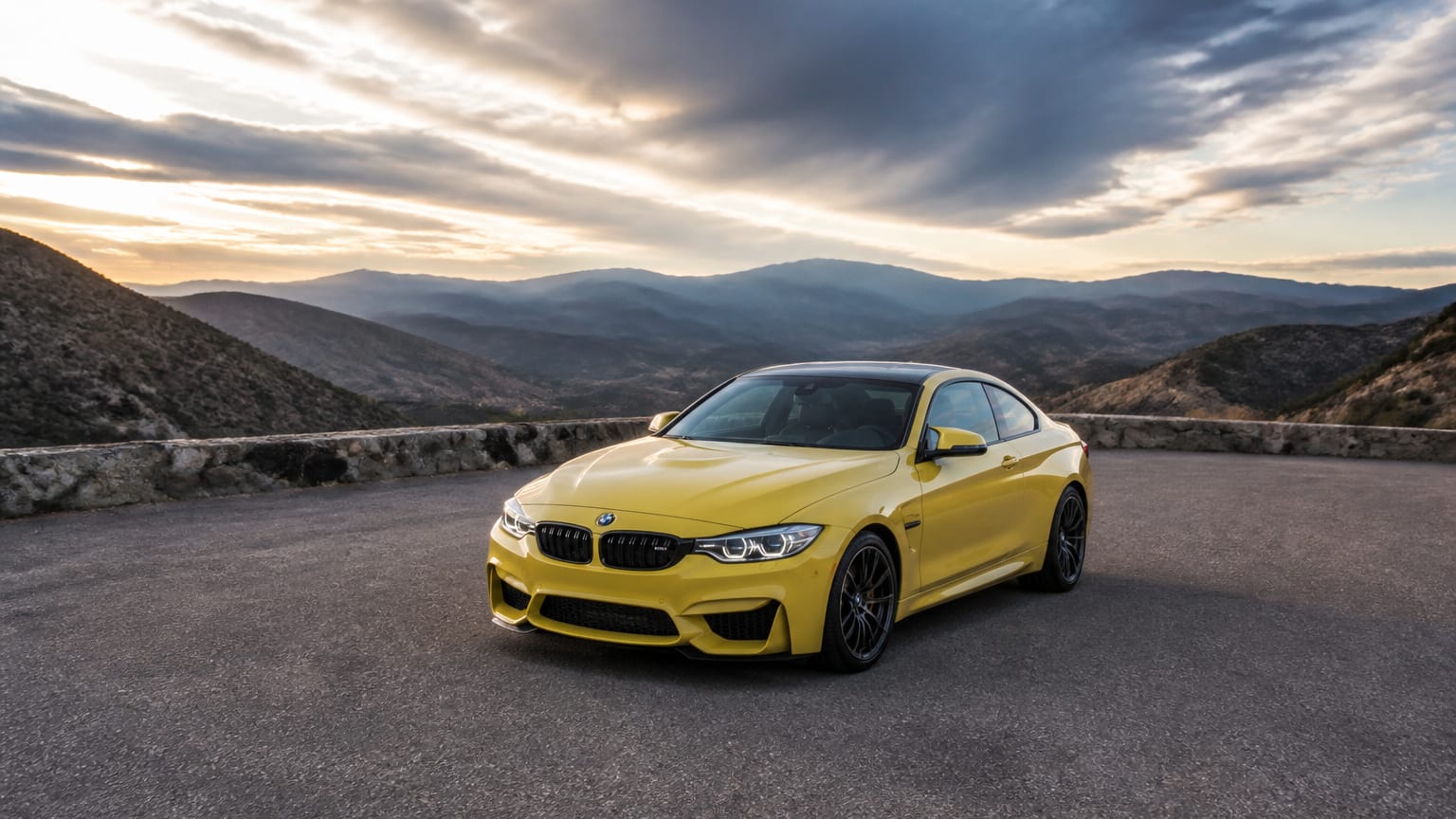
The BMW M2 has been in production from 2016 to 2021, then from 2023 to the present. There was no 2022 M2 sold in the US as the generation gap fell between the F87's end and the G87's launch.
| Model Year | Generation | Verdict | Notes |
|---|---|---|---|
| 2016 | F87 (1st gen) | Avoid | First-year teething, sub-frame bolt recall (16V-653), lighting complaints |
| 2017 | F87 (1st gen) | OK/Mixed | Instrument panel lighting issue, but more stable than 2016 |
| 2018 | F87 (1st gen) | Best | Low complaints, no major recalls, strongest 1st-gen pick |
| 2019 | F87 (1st gen) | Avoid | S55 crank hub risk, infotainment complaints, park-outside fire recall |
| 2020 | F87 (1st gen) | Best | Fuel injector recall (20V-666) completed on most; otherwise clean |
| 2021 | F87 (1st gen) | Best | Final F87 year, well-sorted, fuel injector recall covered |
| 2023 | G87 (2nd gen) | Avoid | CarComplaints worst year; gearbox failure at \~2,300 miles |
| 2024 | G87 (2nd gen) | Best | Early production issues largely resolved |
| 2025 | G87 (2nd gen) | Best | Newest G87, limited complaint data but clean so far |
Most Common BMW M2 Problems
On the first-generation BMW M2 (F87), the most commonly reported engine problems include oil leaks from gaskets, cracked charge pipes that cause a sudden loss of boost and put the car into limp mode, misfires from failing ignition coils, and occasional electric water pump failure that can lead to overheating. The single most notorious defect across the full M2 lineup is the S55 crank hub spinning issue on the M2 Competition and M2 CS, which can cause timing failure if left unaddressed.
1. S55 Crank Hub Spinning (M2 Competition and M2 CS, 2019-2021)
The crank hub can spin on S55-engined models (Competition and CS), which can cause timing failure. Many owners upgrade with a pinned or one-piece hub as a preventive measure. When the hub spins, it loses its grip on the crankshaft, effectively desynchronizing the timing system, which can result in catastrophic engine damage if not caught early. The symptom is often a sudden loss of power, rough running, or a drivetrain malfunction warning.
The base M2 (N55 engine), the M2 Competition (S55), and the M2 CS all have different mechanical DNA, and reliability varies significantly between them. The crank hub issue is specific to S55-powered cars (2019 M2 Competition onward into the 2020-2021 CS). Some M2 owners reported problems with a failing crank hub. It is not a common issue but is often connected with engines delivering more power than stock, so cars with performance chips or other modifications installed may be more likely to experience it.
A preventive crank hub upgrade kit (a pinned or one-piece billet replacement) runs roughly $400-$600 in parts, but the labor to access the front of the engine adds significantly to the total. If the hub has already spun and caused timing damage, engine rebuild costs can reach several thousand dollars. No BMW recall or warranty extension for this specific issue on the M2 has been confirmed in NHTSA records, so the cost falls to the owner. Ask any seller of a 2019-2021 M2 Competition or CS whether a crank hub upgrade has been done.
2. Gearbox Failure (2023 G87)
The 2023 BMW M2 has the most overall complaints on CarComplaints, which rates it the worst model year on repair cost and average mileage at failure. The most-reported problem is a gearbox that failed or "exploded" at around 2,300 miles. This is a second-generation G87-specific complaint and the primary reason to approach early 2023 examples with caution.
One recall has been issued for the 2023 BMW M2 by the NHTSA, covering unintentional window and sunroof closure - a separate issue from the gearbox complaint. The gearbox failures reported on CarComplaints do not appear to be covered by a formal recall as of this writing. The 2023-present M2 is still relatively new, so warranty coverage and a full service history are especially valuable on these cars.
If you are shopping for a 2023 M2, confirm the gearbox has not been replaced under warranty (which would indicate a prior failure) and insist on a pre-purchase inspection by a BMW specialist. Verified gearbox repair on these cars can reach $5,000 or more depending on what failed.
3. Oil Leaks (F87, 2016-2021)
The valve cover gasket and oil filter housing gasket are prone to leaks on the F87, potentially leading to oil loss and engine complications. These leaks are typically gradual - you may notice a burning oil smell after a spirited drive or spot residue on the underside of the engine bay before any warning light appears.
Even though the M2 is reliable for a performance car, oil leaks from valve cover gaskets and oil filter housing gaskets over time are among the documented known issues. Valve cover gasket replacement typically runs $300-$600 at a shop. The oil filter housing gasket is more labor-intensive and can approach $500-$800 at a dealer. On any used F87, check the engine bay for oily residue around the top of the engine and at the oil filter housing before purchase. Finding metal shavings in oil during a service inspection is a separate and more serious red flag.
4. Cracked Charge Pipes and Boost Loss (F87 N55, 2016-2018)
On 2016-2021 first-gen M2 cars, cracked charge pipes are a common issue, causing sudden loss of boost and putting the car into limp mode. The charge pipe runs between the turbocharger and the intercooler. On the N55-powered base M2 (2016-2018), the factory charge pipe is made of plastic and is susceptible to cracking under heat cycling and high boost pressure.
The symptom is a sudden drop in power accompanied by a hesitation under throttle, often followed by a check-engine light for boost pressure faults. Many owners replace the factory plastic pipe with an aluminum aftermarket unit as a precaution. Aftermarket aluminum charge pipes cost $150-$300 in parts; labor adds another $100-$200 depending on the shop. This is a repair that typically surfaces around 40,000-60,000 miles on hard-driven examples.
5. Electric Water Pump Failure (F87, 2016-2021)
Cooling system failures, including water pump and thermostat failing prematurely, are among the documented issues on the F87 M2. BMW uses an electric water pump on the M2, and when it begins to fail, you may notice a car overheating at idle or a coolant temperature warning. Unlike a mechanical pump that fails gradually, an electric unit can fail suddenly with limited warning.
The electric water pump failure symptoms include rising coolant temperature at low speeds, a warning light, or an error code in BMW's fault memory. Replacement cost at a dealer typically runs $800-$1,200 including parts and labor. This failure tends to appear between 60,000 and 90,000 miles on higher-mileage F87 examples, making it a key inspection point on any car over 60k.
6. Rear Sub-Frame Bolt Loosening (2016 F87 - Recall 16V-653)
BMW recalled certain 2016 BMW M2 Coupe vehicles under NHTSA campaign 16V-653. During servicing of the rear differential for a prior service action, the rear sub-frame bolts may have been reused instead of being replaced, causing the bolts to loosen over time.
Loose rear sub-frame bolts can adversely affect vehicle handling and control, increasing the risk of a crash. BMW's remedy was to notify owners and have dealers replace the rear sub-frame bolts with new bolts, free of charge. This recall applies specifically to 2016 M2 Coupes. Before buying a 2016 example, verify the recall has been completed using the VIN lookup at NHTSA's recall checker.
Checking a used BMW?
Scan for hidden fault codes from your phone in minutes — before you buy.
REREV may earn a commission if you sign up through this link. Learn more.
Which BMW M2 Years Should You Avoid?
The BMW M2 years to avoid are 2016, 2019, and 2023. CarComplaints rates 2023 as the worst model year on repair cost and mileage-at-failure, with gearbox failure appearing as early as 2,300 miles. On NHTSA complaint and recall volume, the 2016 and 2019 first-gen years stand out for the sub-frame bolt recall and early-build issues (2016) and the S55 crank hub risk combined with infotainment complaints (2019).
| BMW M2 Generation | Model Years | Verdict | Main Issues |
|---|---|---|---|
| F87 1st gen (2016-2021) | 2016, 2019 | Worst | Sub-frame bolt recall, crank hub, charge pipe, infotainment glitches |
| F87 1st gen (2016-2021) | 2017, 2018, 2020, 2021 | Mixed/Best | Minor or resolved issues; 2018/2020/2021 are picks |
| G87 2nd gen (2023-present) | 2023 | Worst | Gearbox failure at \~2,300 miles (CarComplaints worst by PainRank) |
| G87 2nd gen (2023-present) | 2024, 2025 | Best | Early-build issues addressed; clean complaint record |
Worst BMW M2 years: 2016, 2019, 2023
First-Generation BMW M2 (2016-2021)
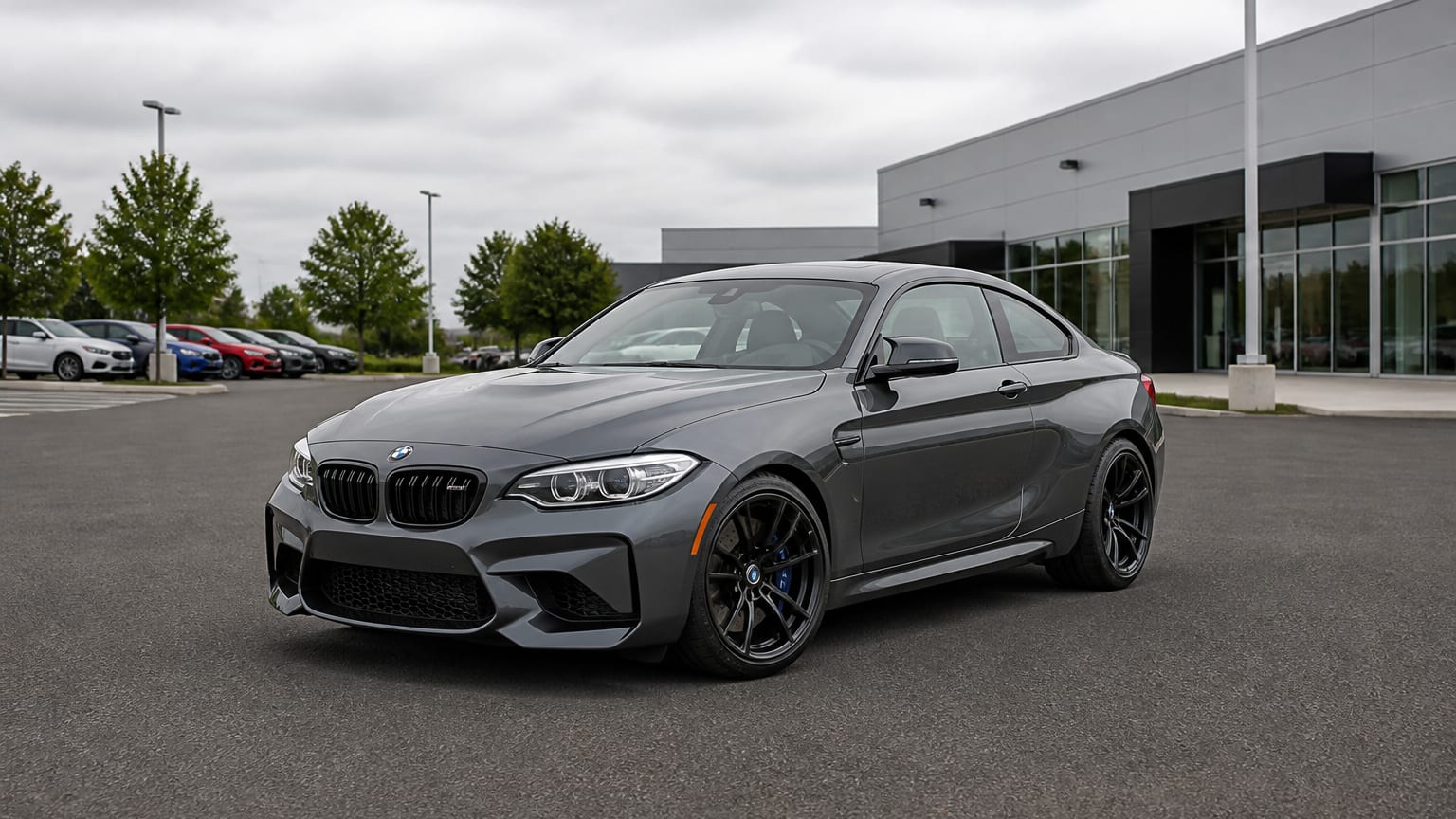
CoPilot generally advises buyers to be wary of first production years due to teething issues, and that seems to be the case with the 2016 M2. The 2016 model year carries NHTSA recall 16V-653 (rear sub-frame bolt loosening) and drew complaints about instrument gauge lighting visibility. The 2016 BMW M2 has 5 problems and defects reported by M2 owners on CarComplaints.
The 2019 M2 brought the mid-cycle refresh and introduced the S55 engine to the Competition variant. The 2019 model year is often considered one to approach with caution due to reported software glitches with the infotainment system. The larger concern on 2019 Competition examples is the S55 crank hub risk described above. The 2019 model year saw changes to the BMW M2 formula that included a mid-cycle refresh and a new S55 engine with more power. On 2020-2021 M2 cars, BMW recalled certain 2020-2021 M2 Coupe vehicles under NHTSA campaign 20V-666 because fuel injectors may have been installed without a damping component, and over time vibration could cause damage at the connection between the fuel line and the fuel rail. That recall is a known, finite fix; once completed, the 2020-2021 cars are among the more solid F87 picks.
Second-Generation BMW M2 (2023-Present)
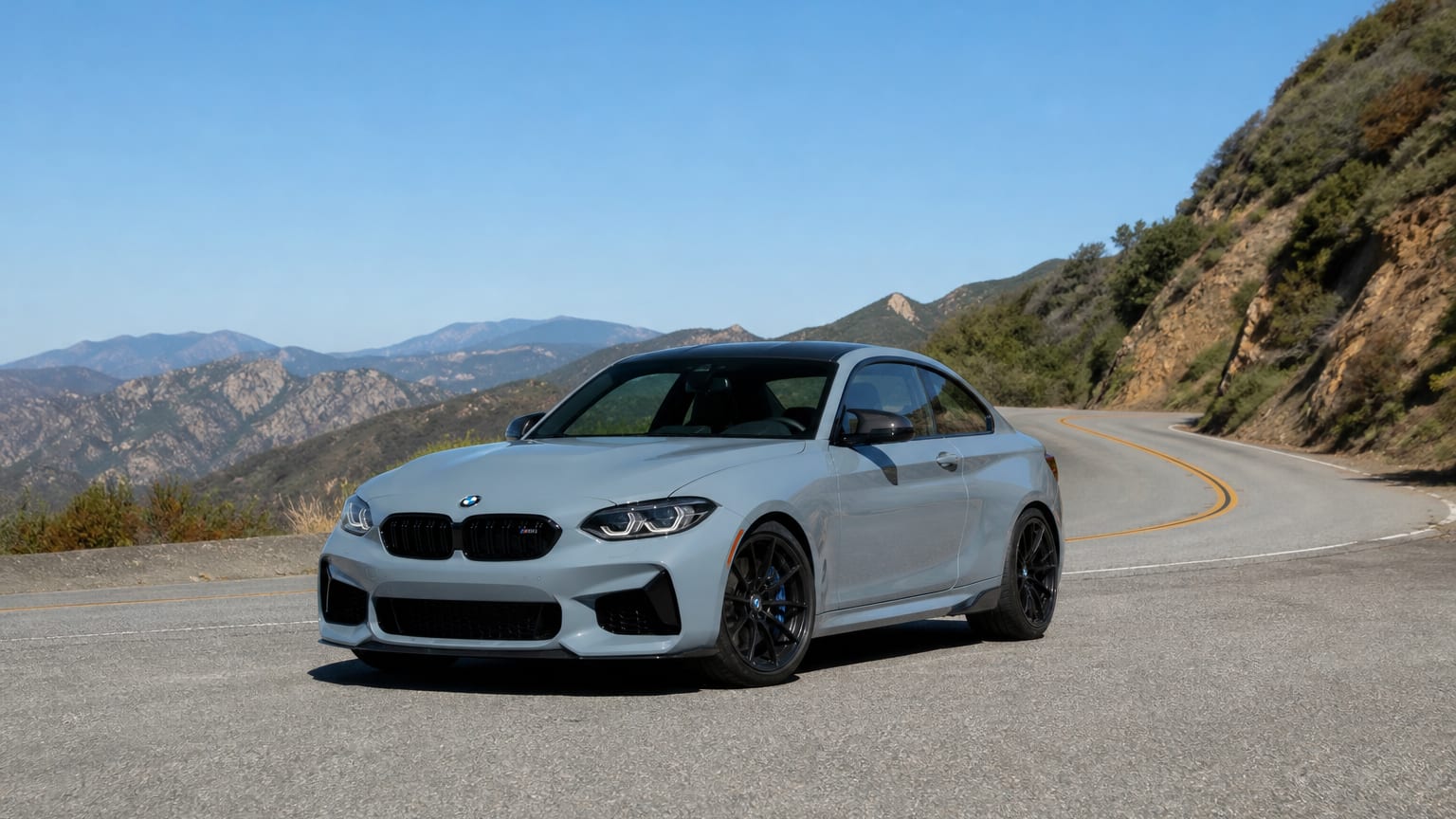
The second and current generation of the BMW M2 debuted for the 2023 model year. It is 4.1 inches longer and 1.3 inches wider than the first generation and has more power. Early 2023 production examples hit a reliability snag. The most-reported problem on CarComplaints is with the 2023 BMW M2 for gearbox failure at 2,300 miles.
The gearbox complaint volume is low in absolute terms (CarComplaints itself notes it is still collecting M2 data), but the severity - a gearbox failing before 3,000 miles - and the high repair cost make 2023 the one year to avoid in the G87 lineup. Because the latest M2 has only been on sale since 2023, early reliability reporting for the coupe and sports car class suggests that the problems cropping up most often are related to the 12-volt battery, non-engine electrics, and minor bodywork issues alongside the powertrain complaints. The 2024 and 2025 model years appear cleaner based on the limited data available so far.
What Are the Best BMW M2 Years to Buy?
The best BMW M2 years to buy are 2018, 2020, 2021, 2024, and 2025. J.D. Power consistently rates the BMW 2 Series line as one of the most reliable coupes in the United States, and the years listed below represent the model at its most sorted within each generation.
| Best BMW M2 Year | Why It's a Strong Buy |
|---|---|
| 2018 | Mid-cycle F87, lowest complaint count, no major recalls |
| 2020 | Fuel injector recall (20V-666) is a known fix; otherwise clean |
| 2021 | Final F87, well-sorted, full feature set, crank hub upgrade now widely done |
| 2024 | Second-gen G87 past early-production gearbox issues |
| 2025 | Newest available G87, clean complaint record so far |
Most reliable BMW M2 years: 2018, 2020, 2021, 2024, 2025
2018 BMW M2
The 2018 model year represents the sweet spot of the first-generation F87 lineup. It sits past the 2016 first-year teething period and the rear sub-frame recall, and it predates the 2019 S55 engine swap and its associated crank hub concerns. Complaint volume on CarComplaints is minimal for this year. The 2018 M2 uses the N55 turbocharged inline-six (365 hp), a proven unit with a long track record across the broader BMW lineup. The BMW M2 F87 enjoys a strong reputation for reliability, especially compared to larger M models like the M3 and M4 of the same era. It benefits from simpler packaging, fewer electronics, and a robust drivetrain. Our editorial guidelines and research verification process requires that reliability claims be cross-referenced against at least two independent data sources before publication, which is why the 2018 stands out as a consistently clean year across every dataset we checked.
2020-2021 BMW M2
The 2020 and 2021 model years are the final expression of the F87. The F87 M2 launched with the longer ownership history to draw on, and it is the generation with the more established track record. The fuel injector recall (NHTSA 20V-666) is a finite, dealer-completed fix that covered both years; once verified as done, these cars are strong used-market picks. The 2021 M2 CS variant is the most refined F87 version, though prices reflect that. For buyers on a budget, a clean 2020 M2 with full service records is one of the better performance-car values available today. Buyers shopping for used BMW M2 models should consider having any vehicle checked over by a qualified mechanic, and a long list of proper scheduled maintenance is also valuable.
BMW M2 Pre-Purchase Checklist
Before you finalize any used BMW M2 purchase, run through these model-specific checks:
- Run the VIN through NHTSA's recall tool at nhtsa.gov/recalls to confirm every open recall - including the 2016 sub-frame bolt recall (16V-653) and the 2020-2021 fuel injector recall (20V-666) - has been completed.
- On 2019-2021 M2 Competition and CS models, ask about the crank hub. The crank hub can spin on S55-engined models, which can cause timing failure. Many owners upgrade with a pinned or one-piece hub. Ask the seller whether the upgrade has been performed and get documentation.
- On 2023 G87 examples, check the gearbox service history. The most-reported problem on the 2023 M2 is gearbox failure at around 2,300 miles. Ask whether the gearbox has ever been replaced under warranty.
- Inspect the engine bay on any F87 for oil leaks. The valve cover gasket and oil filter housing gasket are prone to leaks, potentially leading to oil loss and engine complications. Look for oily residue at the top of the engine and around the oil filter housing.
- Test the cooling system. On higher-mileage F87 cars (over 60k miles), ask for documentation of water pump and thermostat service, as electric water pump failure is a documented F87 weakness.
- Check the charge pipe on 2016-2018 N55 cars. Look for any evidence of boost leaks, hesitation under throttle, or an aftermarket aluminum charge pipe (a good sign the plastic factory unit has already been upgraded).
- Request full service records and verify BMW-spec oil (10W-60 LL-01 FE) has been used at proper intervals. The M2's driving character encourages performance driving, and most M2 specialists recommend no longer than 5,000 to 7,000 miles between oil changes, or annually.
- Have a pre-purchase inspection done by a BMW specialist, not just a general mechanic, to assess the transmission, differential, and any modification-related wear. A vehicle check by a qualified mechanic is especially important for any used M2.
Better Alternatives to Consider
If the BMW M2 years in your budget land on the avoid list, also see BMW M4 years to avoid and BMW 2 Series years to avoid, or consider these alternatives instead:
- BMW M240i — a closely related platform with the B58 inline-six, generally lower ownership costs, and a cleaner early-year reliability record than the M2 Competition
- Audi S3 — a strong AWD compact rival the M2 competed with at launch; also compare Audi S5 if you want more coupe space
- Volkswagen Golf GTI — a practical hot-hatch cross-shop for buyers who need daily-driver flexibility over full M commitment
- Porsche Cayman (718) — mid-engine sports coupe with comparable performance and strong dependability scores in its class
Is the BMW M2 Worth Buying?
Yes, the BMW M2 is worth buying as long as you avoid the 2016, 2019, and 2023 model years. CarComplaints cites 2023 as the worst year overall, even though it only has one complaint on file, which underscores just how low the M2's overall complaint volume is - this is not a problem-ridden model. J.D. Power consistently rates the BMW 2 Series line as one of the most reliable coupes available in the United States. The 2018, 2020, and 2021 model years offer the best combination of reliability, sorted engineering, and value within the first generation, and 2024 and 2025 are the picks for buyers who want the current G87.
Understanding how long a BMW lasts with proper maintenance can help you plan the full ownership cost. Before finalizing any purchase, run the VIN through NHTSA's recall checker and verify the full maintenance history.