
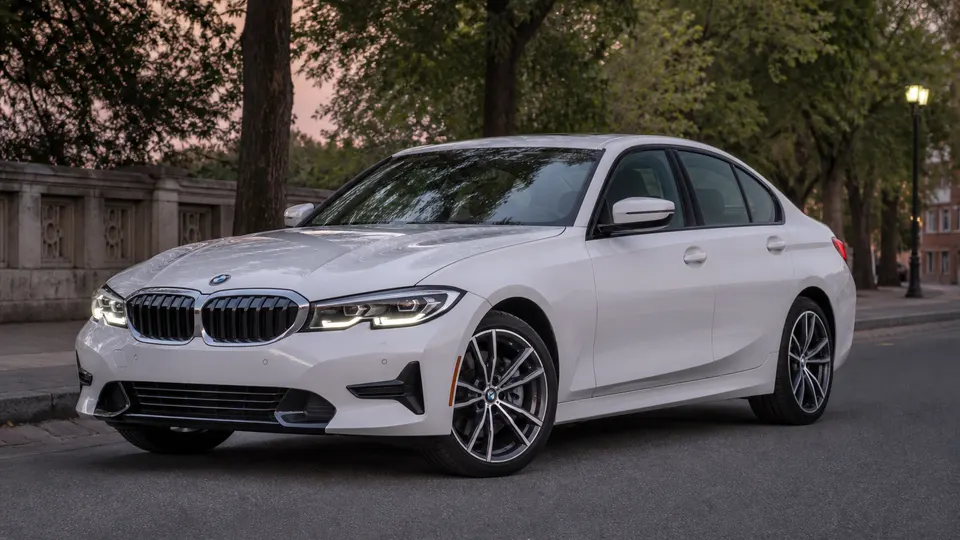
The BMW 3 Series is one of the most celebrated sport sedans ever built, and many used examples offer genuine driving pleasure at a reasonable price. But specific model years carry engine problems severe enough to turn a dream purchase into a money pit. This guide uses NHTSA complaint and recall data, CarComplaints PainRank scores, Consumer Reports reliability ratings, and owner forum reports to show you exactly which years to skip and which to seek out.
At a glance
- Worst years
- 2000
- 2005
- 2006
- 2007
- 2008
- 2009
- 2010
- 2011
- 2012
- 2013
- 2014
- Best years
- 2001
- 2002
- 2003
- 2004
- 2016
- 2017
- 2021
- 2022
- Top failure
- N20 timing chain guide failure (2012-2015 sixth-gen F30, per CarComplaints and class-action settlement)
- Always do before buying
- Run the VIN through NHTSA's recall checker; on 2006-2014 cars, physically check the oil level and confirm the Takata airbag recall has been completed
Recalls by year
Gray bands mark years the model was not produced.
How we rated the best and worst BMW 3 Series years
The fifth-generation E90 (2006-2011) and the early sixth-generation F30 (2012-2014) are the weakest eras, with persistent engine complaints and a class-action lawsuit over timing chains that led to thousands of dollars in surprise repair bills. To build this guide, we drew on NHTSA complaint and recall filings, CarComplaints PainRank scores (which weight repair cost and the mileage at which problems appear), Consumer Reports reliability scores, RepairPal annual cost data, J.D. Power ratings, KBB owner reviews, and owner discussions on forums including BimmerFest.
Our editorial guidelines for car research require citing each source independently rather than blending datasets, which matters here because CarComplaints rates 2014 as the worst single year to buy based on repair cost and low mileage at failure, while NHTSA complaint volume is highest across the 2006-2011 generation as a whole, with thousands of engine complaints filed across those six years. Those are different datasets with different worst-year conclusions, and both are cited independently below.
| BMW 3 Series Generation | Best BMW 3 Series Years | Worst BMW 3 Series Years |
|---|---|---|
| 4th gen E46 (1999-2005) | 2001, 2002, 2003, 2004 | 2000, 2005 |
| 5th gen E90 (2006-2011) | None | 2006, 2007, 2008, 2009, 2010, 2011 |
| 6th gen F30 (2012-2018) | 2016, 2017 | 2012, 2013, 2014 |
| 7th gen G20 (2019 - present) | 2021, 2022 | None |
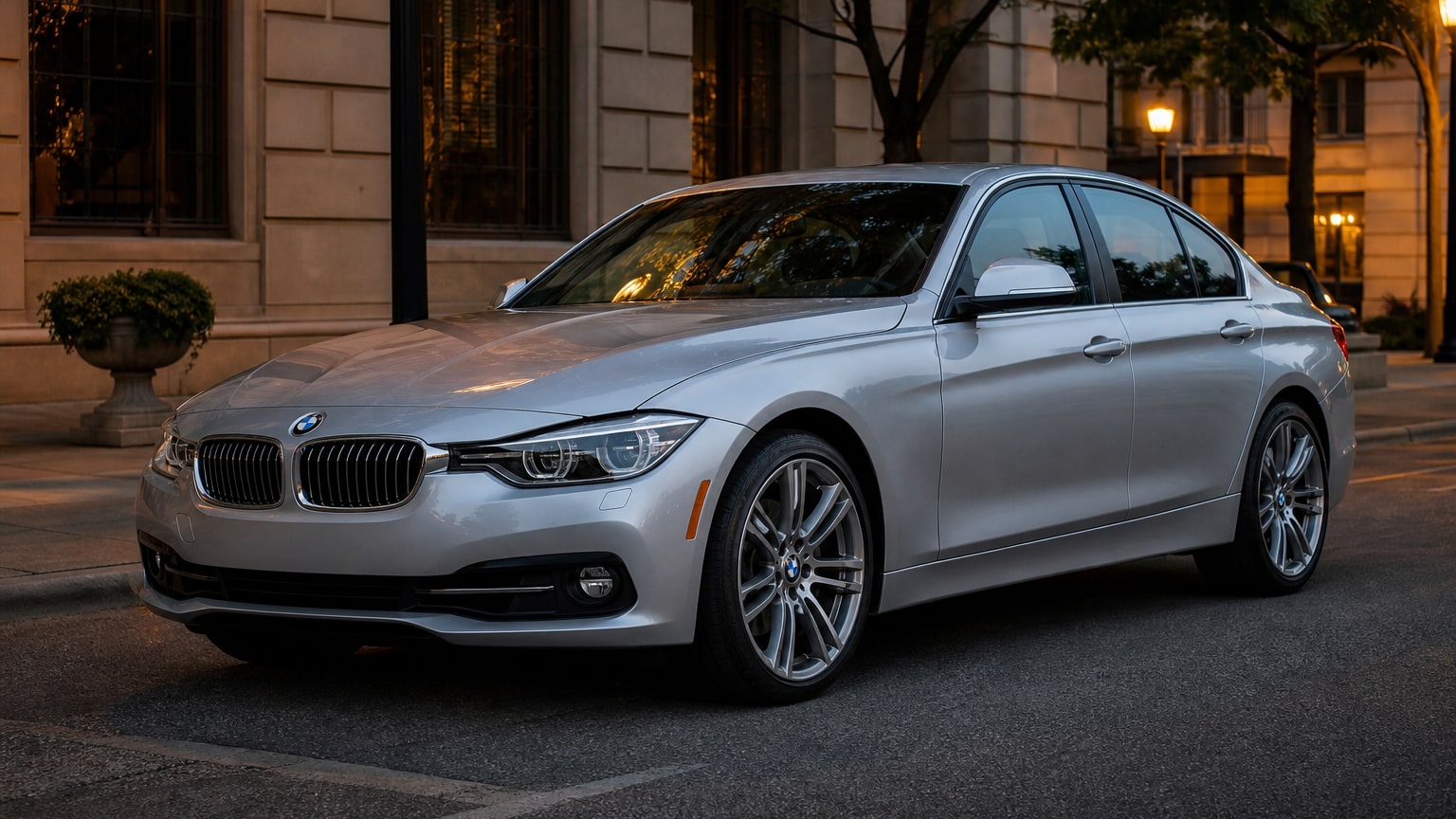
Every BMW 3 Series model year ranked
The sixth-generation F30 and the entire fifth-generation E90 account for the most data-backed "Avoid" verdicts, while the early fourth-generation E46 and the current G20 offer the most comfortable used-car purchases. Classic-era E21 (1975-1983), E30 (1982-1994), and E36 (1990-2000) models are a separate collector market assessed differently from daily-driver used cars; any example you find today will need a dedicated pre-purchase inspection by a BMW specialist.
| Model Year | Generation | Verdict | Notes |
|---|---|---|---|
| 1999 | E46 (4th gen) | OK/Mixed | First year of gen; KBB 4.7/5 reliability |
| 2000 | E46 (4th gen) | Avoid | Transmission failures, rear subframe cracks, cooling leaks |
| 2001 | E46 (4th gen) | Best | Transmission fix applied; strong owner ratings |
| 2002 | E46 (4th gen) | Best | High owner satisfaction; KBB 4.5/5 |
| 2003 | E46 (4th gen) | Best | Consistent reliability; minimal critical complaints |
| 2004 | E46 (4th gen) | Best | Late E46; proven reliability, good value |
| 2005 | E46 (4th gen) | Avoid | Early NHTSA engine complaints; Consumer Reports drop |
| 2006 | E90 (5th gen) | Avoid | 100+ NHTSA engine complaints; Consumer Reports 3/5 |
| 2007 | E90 (5th gen) | Avoid | Most complained-about year on CarComplaints; CR 2/5 |
| 2008 | E90 (5th gen) | Avoid | Electrical issues added; Consumer Reports 1/5 |
| 2009 | E90 (5th gen) | Avoid | Engine complaints continue; Consumer Reports 2/5 |
| 2010 | E90 (5th gen) | Avoid | Consumer Reports 1/5; engine complaints persist |
| 2011 | E90 (5th gen) | Avoid | NHTSA engine complaints quadrupled over 2010 |
| 2012 | F30 (6th gen) | Avoid | First N20 year; timing chain guides fail early; CarComplaints worst |
| 2013 | F30 (6th gen) | Avoid | N20 timing chain \+ Takata airbag recall |
| 2014 | F30 (6th gen) | Avoid | CarComplaints rates worst 3 Series year; engine repair cost |
| 2015 | F30 (6th gen) | OK/Mixed | Improved; B48 engine in some trims; minimal critical complaints |
| 2016 | F30 (6th gen) | Best | Consumer Reports 5/5; J.D. Power 83/100; KBB 4.5/5 |
| 2017 | F30 (6th gen) | Best | Consumer Reports top score; fewest NHTSA complaints of gen |
| 2018 | F30 (6th gen) | OK/Mixed | 5 recalls, 58 NHTSA complaints; no dominant failure |
| 2019 | G20 (7th gen) | OK/Mixed | 9 recalls, 34 NHTSA complaints; some electrical/engine reports |
| 2020 | G20 (7th gen) | OK/Mixed | 12 recalls, 45 NHTSA complaints; vacuum pump recall 21V-598 |
| 2021 | G20 (7th gen) | Best | 9 recalls, 22 NHTSA complaints; Consumer Reports 4-5/5 |
| 2022 | G20 (7th gen) | Best | Significant complaint reduction vs. 2019-2020 |
| 2023 | G20 (7th gen) | OK/Mixed | Recent; limited long-term data |
| 2024 | G20 (7th gen) | OK/Mixed | 2 recalls, 8 NHTSA complaints; still accumulating data |
Most common BMW 3 Series problems
The single biggest documented failure across modern 3 Series history is the N20 timing chain guide, which affects the 2012-2015 F30 generation and led to a class-action lawsuit and a BMW Customer Care warranty extension. Beyond that, the E90 generation carries its own engine and reliability problems, and the Takata airbag defect is a safety issue that cuts across both generations.
1. N20 timing chain guide failure (2012-2015)
For owners of 2012-2017 BMW models with the N20 engine, a subtle whining noise from the engine can be the first sign of a serious problem: N20 timing chain failure, which stems from premature wear of the plastic timing chain guides responsible for maintaining engine timing. The noise is typically audible between 1,500 and 2,500 RPM and can progress to a skipped or broken chain - often destroying the engine entirely.
The class-action settlement covering this defect applied to the 2012-2015 320i, 2012-2015 328i, 2014-2015 228i, 2012-2015 Z4, and related models equipped with the N20 or N26 engine. Repair bills reported by owners ran from roughly $5,000 at a dealer to over $7,000 when engine damage was severe, based on forum reports at BimmerFest.
BMW did not issue a formal recall but created a Customer Care Program extending the warranty for the timing chain assembly on affected vehicles to 7 years or 70,000 miles; most of those vehicles are now outside that extended coverage period. The program is referenced in the BMW Technical Service Bulletin published as SIB 11 03 13 (N20/N26 engine timing chain and oil pump drive chain extended warranty). The B48 engine, which replaced the N20, was designed with an improved timing chain system and does not share this failure; the issue is isolated to the N20 and the related N26 SULEV engine. If you're shopping a 2012-2015 328i, a drivetrain warning light at low mileage is a red flag that chain damage may already be underway.
Buyer takeaway: Avoid the 2012-2014 N20-powered 328i unless you can confirm the timing chain assembly was replaced under the Customer Care Program or at a shop - and budget for the repair if service records are missing.
2. High-pressure fuel pump (HPFP) failure - N54 and N55 engines (2007-2013)
HPFP failures are a well-documented issue affecting an estimated 35% of N54 engines, with turbocharger repairs on the same platform costing up to $4,500. The N54 powered the 335i from 2007 through 2010, and the N55 replaced it in 2011, carrying a similar high-pressure pump design. Symptoms include hard starting, rough running, and a sudden engine stall, sometimes with no warning.
In July 2021, BMW issued a recall (NHTSA campaign 21V-586) for the high-pressure fuel pump in diesel models including the 328d, stating that the pump can wear prematurely and fail, causing an engine stall; the remedy is replacement with an improved version at no charge. Gasoline-engine N54 owners had no equivalent recall and faced out-of-pocket HPFP replacement costs of roughly $2,800, based on owner case studies.
Buyer takeaway: On any 2007-2013 335i or 328i, ask for HPFP replacement records. Run the VIN through NHTSA's recall checker to confirm whether the diesel pump recall (21V-586) applies.
3. Electric water pump and cooling system failure (2006-2014)
The cooling system in BMW 3 Series models is prone to issues including thermostat failure, water pump failure, and radiator leaks. BMW's electric water pump, used on E90 and early F30 models, is known to fail between 60,000 and 80,000 miles. Unlike a mechanical pump, it fails electrically, and the driver often gets no warning until the temperature gauge spikes. The 2007 328i is the BMW car with the highest-reported single problem on CarComplaints, and that most-reported problem is electric water pump failure.
Replacement costs typically run $800 - $1,100 for parts and labor at an independent shop, higher at a BMW dealer. Failure to catch a failing pump can lead to overheating and a blown head gasket, turning a $1,000 repair into a $3,000-plus job. RepairPal puts average yearly maintenance for the F30 generation at $1,517, and the generation as a whole has 5 documented recalls including one for the coolant pump issue.
Buyer takeaway: On any 2006-2014 example, ask your pre-purchase inspector to check the coolant expansion tank for cracks and test the electric water pump. Water pump failure symptoms - overheating at idle, coolant loss with no visible leak - should end any negotiation if found.
4. Takata airbag inflator recall (2006-2012 E90)
BMW recalled up to 394,029 model-year 2006-2012 3 Series vehicles for a defective driver-side airbag; these vehicles may be equipped with a sport or M-sport style steering wheel with a PSDI-5 airbag inflator containing ammonium nitrate manufactured by Takata. Long-term exposure to high heat and humidity can cause these inflators to explode, sending metal fragments through the airbag cushion material into the cabin. The NHTSA recall campaign number for this 2024 action is 24V-513.
BMW believes some 3 Series owners exchanged their stock steering wheels for upgraded M Sport units containing the same dangerous airbags; the company is recalling all affected E90s to have their wheels inspected for bad airbags. The fix - inspection and replacement of any defective module - is free at any BMW dealer.
Buyer takeaway: Before driving any 2006-2012 3 Series off a lot, confirm recall 24V-513 (and earlier Takata campaigns) are closed on that specific VIN at nhtsa.gov/recalls.
5. VANOS system faults (2006-2011 E90)
BMW's variable camshaft timing system (VANOS) controls intake and exhaust valve timing for better performance; two common problems in the 3 Series, especially early six-cylinder petrol models, are a failed solenoid and blocked or leaking oil pipes, leading to rough idling, loss of power, and reduced fuel economy. These faults frequently appear on the E90 alongside the water pump issues described above, compounding repair costs.
Solenoid cleaning or replacement typically runs $200 - $600. A full VANOS rebuild can reach $1,500 or more at a dealer. The E90/E92/E93 generation (2006-2013) averages $1,876 in annual repair costs, partly reflecting the frequency with which these engine-management faults pile up together. A rough idle at startup that clears with engine warm-up is one of the most common early VANOS warning signs.
Buyer takeaway: On any E90 you inspect, check for VANOS-related fault codes with an OBD scanner before buying.
6. Electrical system and iDrive faults (2012-2019)
Engine and electrical system problems are reported in earlier G20 models, particularly 2018 and 2019, with a significant reduction in complaints by 2022. The F30 and early G20 generations have attracted owner complaints about iDrive infotainment glitches, Bluetooth dropouts, and window regulator failures. The 2020 3 Series most commonly reports electrical system faults (16 complaints) followed by engine issues (9 complaints) in NHTSA filings.
Window regulator failures typically cost $400 - $700 per door to repair. iDrive software issues are often resolved by dealer-installed updates at no charge, but failing iDrive control modules can run $800 or more. Ask any seller whether software was kept up to date.
Buyer takeaway: On F30 and early G20 cars, budget for electrical odds and ends, and test every powered window and the iDrive screen during your test drive.
Checking a used BMW?
Scan for hidden fault codes from your phone in minutes — before you buy.
REREV may earn a commission if you sign up through this link. Learn more.
Which BMW 3 Series years should you avoid?
The BMW 3 Series years to avoid are 2000, 2005, 2006, 2007, 2008, 2009, 2010, 2011, 2012, 2013, and 2014. CarComplaints rates the 2014 model year as the worst single 3 Series to buy due to its engine problems and the cost and low mileage at which those problems appear. On raw NHTSA complaint volume, the entire 2006-2011 fifth generation stands out, with the fifth generation spanning 2006 to 2011 drawing engine complaints by the thousands from the very first model year. Our years to avoid methodology combines complaint volume, repair cost, and the mileage at which failures occur to produce the avoid verdicts below, rather than weighting any single dataset alone.
| BMW 3 Series Generation | Model Years | Verdict | Main Issues |
|---|---|---|---|
| E46 (4th gen) | 2000, 2005 | Worst | Transmission, subframe cracks, cooling leaks |
| E90 (5th gen) | 2006, 2007, 2008, 2009, 2010, 2011 | Worst | HPFP, water pump, VANOS, Takata airbag |
| F30 (6th gen) | 2012, 2013, 2014 | Worst | N20 timing chain guides, Takata airbag |
Worst BMW 3 Series years: 2000, 2005, 2006, 2007, 2008, 2009, 2010, 2011, 2012, 2013, 2014
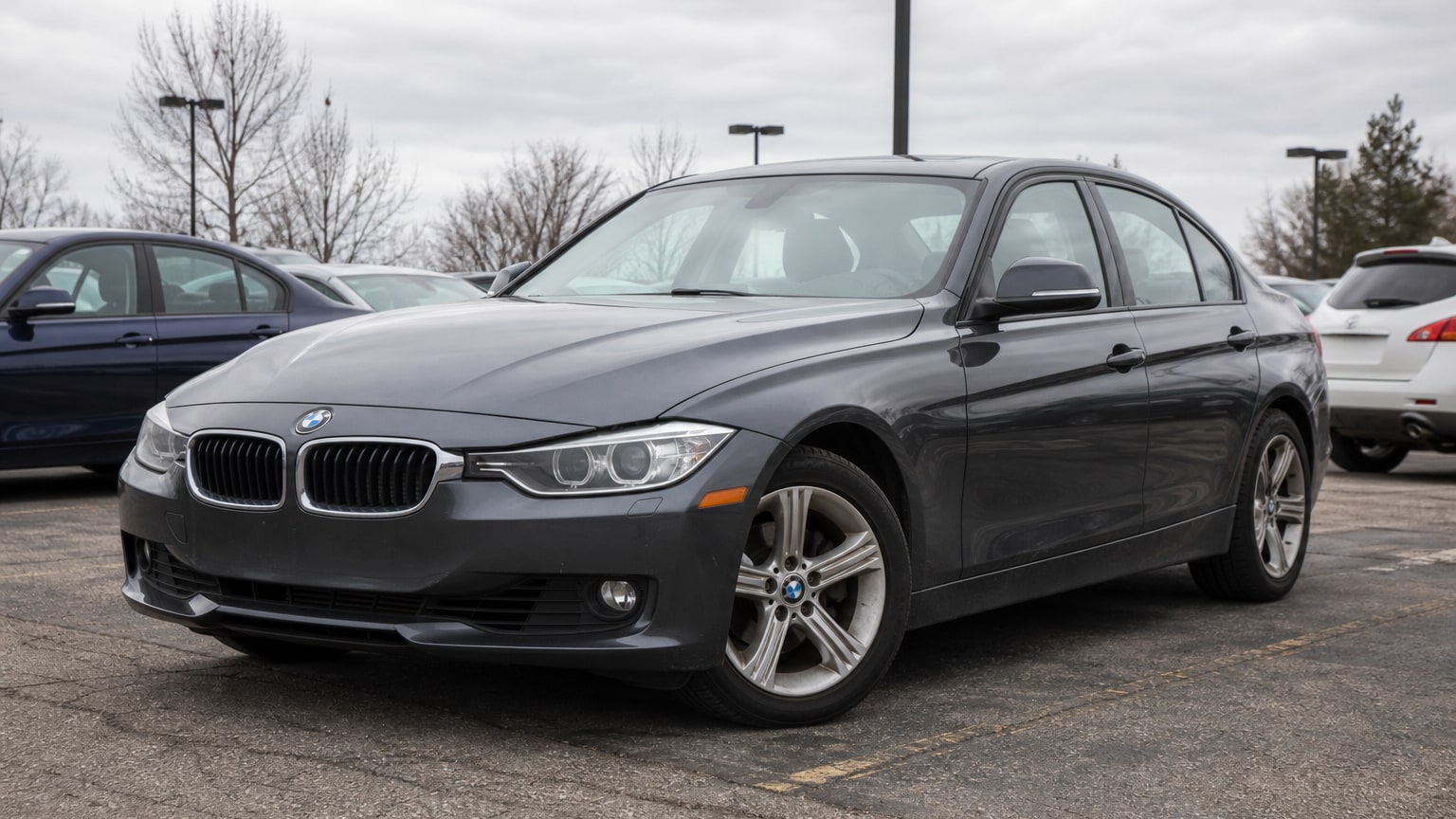
Fifth-generation BMW 3 Series (2006-2011)
The 2007 model saw an increase in engine troubles and a drop in Consumer Reports' reliability score to 2 out of 5, earning the distinction of being the most complained-about year of the generation on CarComplaints. The 2008 fared even worse, with Consumer Reports' reliability rating sinking to 1 out of 5, and reports of electrical issues adding to the numerous engine problems. The 2011 model, the last of the generation, saw the number of engine complaints filed with NHTSA more than quadruple over the previous year. Every year in this generation carries at minimum an open Takata airbag recall concern - verify recall 24V-513 status on any E90 before purchase at the NHTSA complaints page for this model.
Sixth-generation BMW 3 Series, early years (2012-2014)
The BMW 3 Series (2012-2015) with the N20 engine is known to develop timing chain problems, often due to premature wear of the chain, guides, or tensioner. The 2012 is the worst year to buy used from this generation specifically because of the early N20 inline-four and its timing chain vulnerability. The 2013 added the Takata airbag recall on top of the timing chain exposure. CarComplaints ranks 2014 as the worst 3 Series year to buy due to its engine issues, and other reports are equally discouraging.
What are the best BMW 3 Series years to buy?
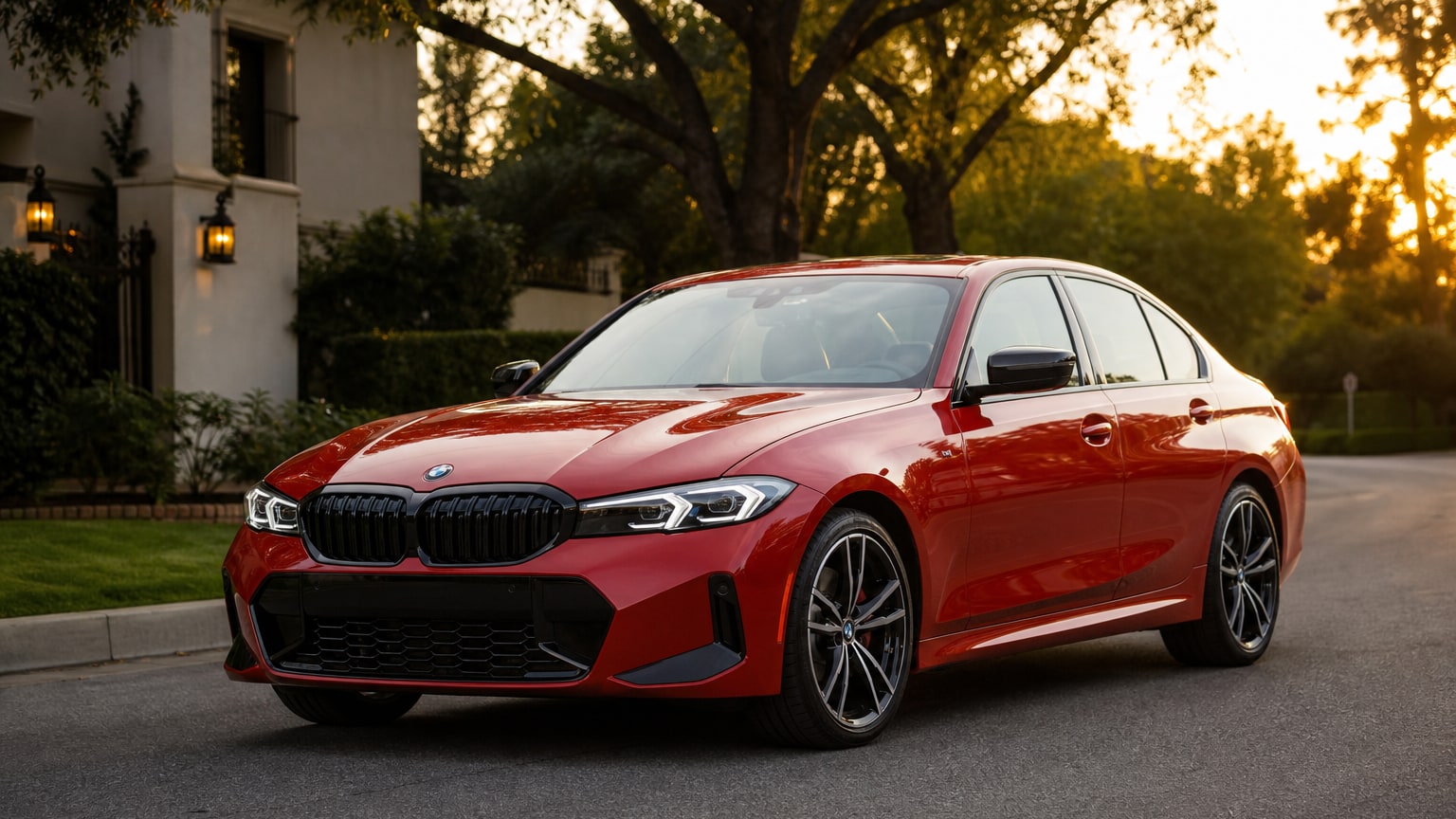
The best BMW 3 Series years to buy are 2001, 2002, 2003, 2004, 2016, 2017, 2021, and 2022. The most reliable model years in the sixth generation are 2016 and 2017, with these years receiving high reliability scores from Consumer Reports and having fewer complaints filed with NHTSA. The 2021-2022 G20 cars combine modern safety technology with a low complaint footprint.
| Best BMW 3 Series Year | Why It's a Strong Buy |
|---|---|
| 2001 | Transmission fix applied; strong owner ratings |
| 2002 | High owner satisfaction; KBB 4.5/5 |
| 2003 | Consistent reliability; minimal critical complaints |
| 2004 | Late E46; proven reliability, good value |
| 2016 | Consumer Reports 5/5; J.D. Power 83/100; KBB 4.5/5; B48 engine replaces N20 |
| 2017 | Consumer Reports top score; fewest NHTSA complaints in its generation |
| 2021 | 22 NHTSA complaints; Consumer Reports 4-5/5; G20 platform matured |
| 2022 | Significant complaint reduction vs. early G20; updated safety tech |
Most reliable BMW 3 Series years: 2001, 2002, 2003, 2004, 2016, 2017, 2021, 2022
2016 BMW 3 Series
The 2016 BMW 3 Series (F30) earned an 83 out of 100 J.D. Power reliability rating and a 4.5 out of 5 KBB reliability rating, making it one of the most dependable 3 Series years on record. The 2016 3 Series earned a perfect 5 out of 5 reliability score from Consumer Reports, a rare mark for any luxury car. By 2016, the B48 engine had replaced the problematic N20, eliminating the timing chain guide issue entirely.
2017 BMW 3 Series
The 2017 BMW 3 Series carries a top reliability score from Consumer Reports, and few complaints filed elsewhere make it a highly recommended used pick. The 2018 3 Series is essentially a continuation of the 2017 model year with even fewer NHTSA complaints, and most of those don't involve critical components - making either year a sound purchase if the price is right.
2021 BMW 3 Series
The 2021 and 2022 BMW 3 Series model years earn a double thumbs-up recommendation, with NHTSA complaints practically non-existent and Consumer Reports giving these model years a 4 or 5 for reliability. The 2021 specifically has 9 recalls and 22 NHTSA owner complaints on file - low for a car with this sales volume. If you want the most modern safety features and the lowest complaint density, the 2021 or 2022 G20 is where to look.
BMW 3 Series pre-purchase checklist
Before you hand over a deposit on any used BMW 3 Series, run through these model-specific checks:
- Run the VIN through NHTSA's recall checker. Confirm every open recall is closed, including the Takata airbag campaigns (24V-513 and earlier) on 2006-2012 cars, and the diesel HPFP recall (21V-586) on 328d models.
- Check the oil level on 2006-2014 cars. Low oil at a service interval can signal VANOS-related oil consumption or a leaking valve cover gasket; either finding warrants a closer inspection.
- Ask for timing chain service records on 2012-2015 N20 cars. Confirm whether the chain assembly was replaced under BMW's Customer Care Program (SIB 11 03 13) or by a shop. If no record exists, budget $5,000 - $7,000 for the repair or walk away.
- Listen for a whine from the engine at 1,500-2,500 RPM on any 328i from 2012-2015. That whine is the first symptom of plastic timing chain guide wear and indicates the repair is due or overdue.
- Test the cooling system. Ask a pre-purchase inspector to pressure-test the system and check the electric water pump on any 2006-2014 example. A cracked plastic expansion tank or a failing pump is a near-certain repair on high-mileage E90 cars.
- Inspect for VANOS fault codes. Plug in an OBD reader before the test drive on any E90 (2006-2011); a P0011 or P0015 code points to a VANOS solenoid fault that can run $200 - $1,500 to fix.
- Ask for full service records and verify oil change intervals. BMW's extended oil-change intervals (up to 15,000 miles) can shorten engine life on turbocharged models; look for records showing oil changes every 7,500-10,000 miles.
- Test every powered window and the iDrive screen on F30 and G20 cars. Window regulator failures ($400 - $700 each) and iDrive faults are among the most frequent low-level complaints on 2012-2022 models.
Better alternatives to consider
If the BMW 3 Series years in your budget land on the avoid list, also see BMW 4 Series years to avoid for the coupe sibling, or consider these alternatives instead:
- Acura TL - a front-wheel-drive luxury sport sedan with a strong V6 reliability record and lower average repair costs than the E90 BMW
- BMW 7 Series - if your budget stretches to the upper end of the used-luxury market, the 7 Series best years offer a similar driving experience with a different set of model-year caveats to navigate
- Mercedes-Benz C-Class - the most direct cross-shop in the compact luxury sedan segment, with a similarly wide range of good and bad model years worth researching before buying
- Audi A4 - another natural alternative for buyers who want European sport-sedan handling, with its own generation-specific reliability swings that reward careful year selection
Is the BMW 3 Series worth buying?
Yes, the BMW 3 Series is worth buying as long as you avoid the 2006-2014 years, which carry the most serious documented engine and safety problems. RepairPal gives the BMW 3 Series a reliability rating of 4 out of 5, placing it above average for luxury vehicles. The 2016 and 2017 F30 cars and the 2021-2022 G20 cars offer genuine driving pleasure with a significantly lower repair risk. Owners regularly claim to put 250,000-plus miles on the 2016 3 Series with proper maintenance, which suggests that a well-chosen example can be a genuinely long-term ownership proposition. Run the VIN through NHTSA's recall checker and verify the full maintenance history before any purchase.