
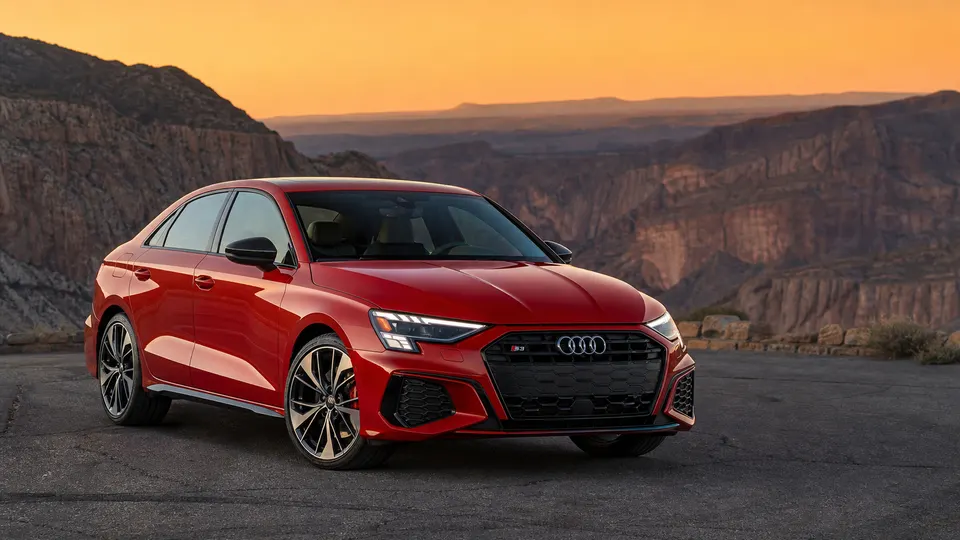
The Audi S3 is one of the more rewarding compact performance sedans on the used market, pairing a strong turbocharged 2.0T engine with Quattro all-wheel drive at a price well below comparable German rivals. The 2015 Audi S3 has the most overall complaints, and CarComplaints also rates 2015 as the worst model year ranked on several factors such as repair cost and average mileage when problems occur. Knowing which years to skip and which to target can save you thousands in unplanned repair bills - and that's exactly what this data-backed guide covers.
At a glance
- Worst years
- 2015
- 2016
- 2017
- Best years
- 2018
- 2019
- 2022
- Top failure
- 3rd-gen water pump and thermostat housing failure on the EA888 2.0T engine (CarComplaints, NHTSA, owner forums)
- Always do before buying
- run the VIN through NHTSA's recall checker to confirm all open recalls are resolved, and check the coolant level on any 2015-2020 S3 for the known water pump leak
How we rated the best and worst Audi S3 years
The 3rd-generation S3 (2015-2020) is the generation to watch most closely, with 2015 carrying the heaviest complaint burden and an active history of safety recalls. This guide draws on data from NHTSA complaint and recall records, CarComplaints for per-year complaint counts and PainRank scoring, RepairPal for brand-level repair cost context, and owner discussions on Audizine and Audi-Sport.net forums.
CarComplaints ranks the worst year by repair cost and average mileage at failure (its PainRank system), while NHTSA shows raw complaint volume - these are often different metrics and both are cited correctly throughout.
Our years to avoid methodology weighs complaint volume, recall history, repair cost, and failure mileage together rather than relying on any single data source.
| Audi S3 Generation | Best Audi S3 Years | Worst Audi S3 Years |
|---|---|---|
| 3rd Gen (2015-2020) | 2018, 2019 | 2015, 2016, 2017 |
| 4th Gen (2022 - present) | 2022 | None |
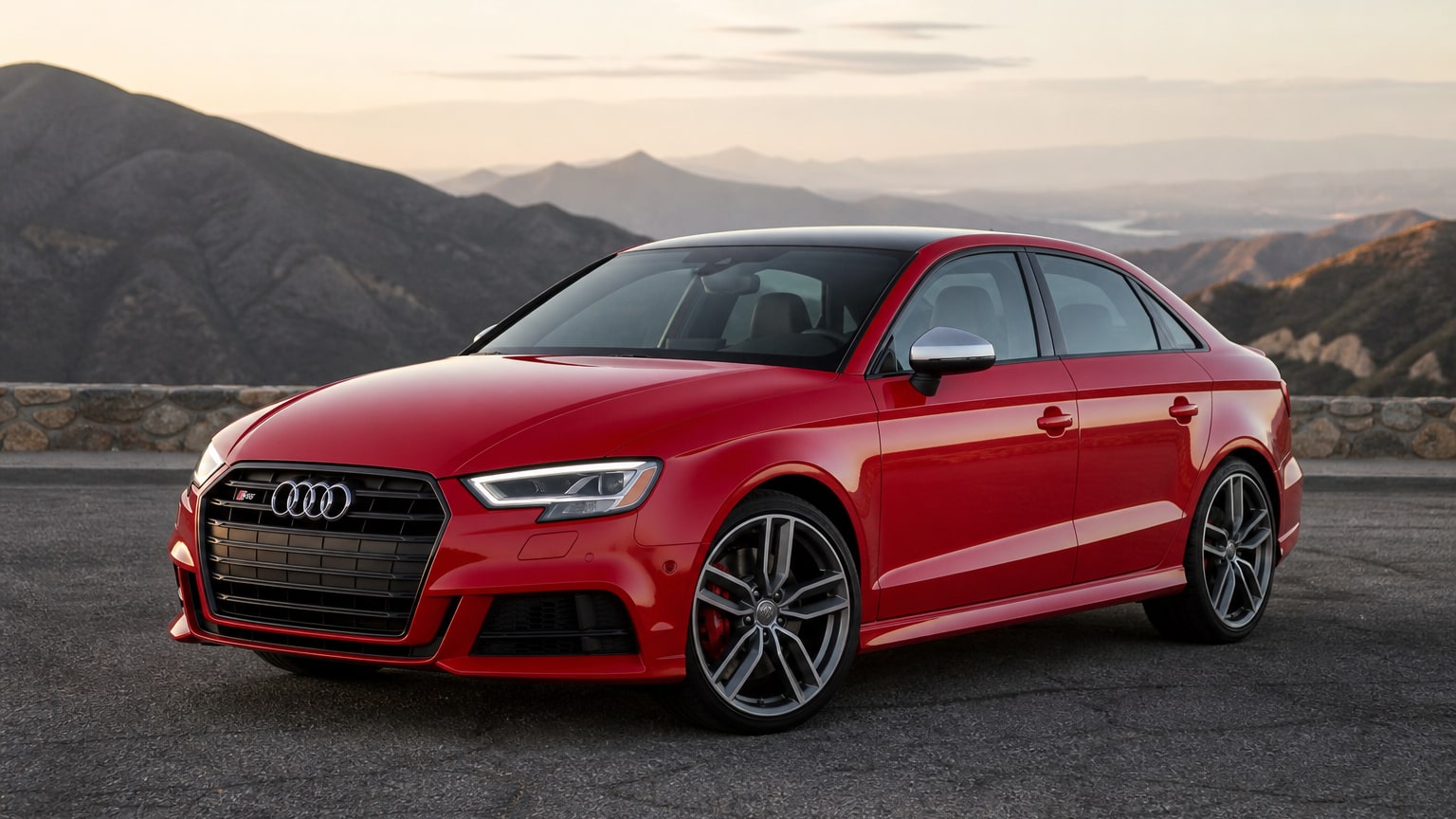
Every Audi S3 model year ranked
The Audi S3 has been around since 1999 but didn't reach the US market until the third-generation A3 sedan was introduced in 2015. The classic European-market S3 (1999-2012) is a separate collector and gray-market car assessed differently from the US-spec model. The table below covers US-market S3 model years only.
| Model Year | Generation | Verdict | Notes |
|---|---|---|---|
| 2015 | 3rd Gen | Avoid | Highest complaints (70); cooling, DSG, airbag recall |
| 2016 | 3rd Gen | Avoid | 19 complaints; airbag recall; NHTSA complaint spike |
| 2017 | 3rd Gen | Avoid | Above-average complaints; start-stop, airbag recall |
| 2018 | 3rd Gen | Best | Lower complaints; 1 recall; RepairPal 3/5 |
| 2019 | 3rd Gen | Best | Low complaint count; fewest complaints of 3rd gen |
| 2020 | 3rd Gen | OK/Mixed | Some fuel-pump recall coverage; transitional year |
| 2022 | 4th Gen | Best | Significantly fewer reported issues; airbag recall resolved |
| 2023 | 4th Gen | OK/Mixed | Early data; 1 recall; still accumulating owner reports |
Most common Audi S3 problems
The single biggest recurring failure on the US-market S3 is the water pump and thermostat housing assembly on the EA888 2.0T engine, which has generated complaints, a class-action lawsuit, and a warranty extension covering affected 3rd-gen cars.
1. Water pump and thermostat housing failure (EA888 2.0T)
These vehicles use the EA888 engine, and the original water pump assemblies feature a thermoplastic housing that is prone to cracking and leaking over time due to heat and stress - an issue so common it led to multiple class-action lawsuits against Audi and Volkswagen. The first sign is usually a low coolant warning light; leaks often start small, sometimes only showing up as a low-coolant warning light, and because of a large undertray shield, you may not see puddles on the ground until the leak is significant.
Affected years include 2015-2020 S3 models alongside the A3, RS3, and several VW platform-mates using the same engine. Replacement is a labor-intensive job (4-5 hours) as the part is buried under the intake manifold. Owners on VWVortex report replacement of both the pump and thermostat housing at the same time, with out-of-pocket cost around $1,100.
A class-action settlement produced a warranty extension covering the water pump and thermostat housing assembly. The extended warranty covers the affected components during a period of eight years or 80,000 miles, whichever occurs first, from the original in-service date of the vehicle. Pump replacement is fully covered or reimbursed if done out of pocket before that 8-year/80,000-mile threshold. No specific Audi TSB number was confirmed in research for this program; if your car falls in the 2015-2020 range, ask the dealer to verify your VIN's warranty-extension eligibility before paying out of pocket. A water pump failure that goes unaddressed can escalate to overheating and major engine damage - buyer takeaway: always check the coolant level before any 2015-2020 S3 purchase.
2. S-tronic DSG transmission problems
The Audi S3's S-tronic dual-clutch transmission, also known as DSG, needs new fluids every 40,000 miles to stay trouble-free; ignoring that service can end up damaging the mechatronic unit or the entire gearbox. Owners on Audizine and CarComplaints describe a "Gearbox Malfunction - No Reverse Gear" warning appearing within a few hundred feet of pulling out of a driveway.
The 2015 Audi S3 has the most overall complaints, and the most-reported single problem for that year is rough downshift. Repair costs depend on what has failed: a DSG fluid service costs around $400, but if the mechatronic unit itself has failed you are looking at roughly $2,000, and owners on Audizine report paying $5,000 for a complete transmission replacement. Buyers should ask for DSG service records and, on any 2015-2017 S3, test all gears - including reverse - during the test drive.
3. Passenger airbag deactivation (PODS recall)
Recall campaign 19V-474 covered 2015-2016 Audi S3 sedans among approximately 138,896 vehicles; an improper electrical contact may cause the Passenger Occupant Detection System (PODS) to falsely detect a malfunction and deactivate the passenger airbag. A deactivated passenger airbag increases the risk of injury during a crash.
An expanded campaign, NHTSA campaign number 21V-198, was issued as an expansion of NHTSA 19V-474; Audi's number for this recall is 69BY. This expanded recall covers certain 2015-2020 Audi S3 sedans, where the PODS may malfunction and switch off the passenger airbag even when the seat is occupied. Verify through NHTSA's recall checker that both campaigns are closed on any S3 you consider buying.
4. Fuel system leak (suction jet pump recall)
A recall covers front-wheel-drive 2015-2020 Audi A3 sedans and cabriolets due to a problem with a suction jet pump seal inside the fuel tank; fuel may flow into the evaporative emissions system and possibly leak out of the charcoal canister, and a fuel leak in the presence of an ignition source increases the risk of a fire.
In 2022, Volkswagen issued warranty extensions for the fuel tank suction jet pump in 2015-2020 Audi A3 and related vehicles, with the extension covering replacement of the fuel tank including an improved suction jet pump. Note that this recall specifically targets front-wheel-drive A3/S3 variants; confirm your target car's drivetrain and VIN status through NHTSA before purchase.
5. Start-stop system malfunctions
There are multiple problems with Audi's start-stop technology. Owners complain that the system will shut off the power steering and brake systems at dangerous times - a concern that affects 3rd-gen S3 models equipped with the feature. This is not a recall-level safety item for all affected cars, but it is a recurring owner grievance documented on CarComplaints and Audizine forums across the 2015-2017 model range.
Software updates from the dealer address many start-stop complaints, and turning the system off manually is a short-term workaround. Ask the selling dealer whether any relevant technical service bulletins have been applied before buying a 2015-2017 car.
6. Infotainment and electrical gremlins
For 2015 A3/S3 owners, electrical and air conditioning faults account for 43% of all tracked repairs - the largest single category in TrueDelta's survey data. Complaints cover nav/infotainment freezes, window regulator clip failures, and HVAC sensor faults.
There are many reports of S3s with malfunctioning air conditioning; the first thing to check is the aircon sensor, which is inexpensive to replace, but if that does not resolve it, the problem may be the air conditioning compressor. On 2022 models, a recall was issued covering the 2022 S3 because the infotainment main unit may become damaged internally when the vehicle is shut off, resulting in an inoperative rearview camera display. Dealer software and hardware fixes resolved that campaign.
Checking a used Audi?
Scan for hidden fault codes from your phone in minutes — before you buy.
REREV may earn a commission if you sign up through this link. Learn more.
Which Audi S3 years should you avoid?
The Audi S3 years to avoid are 2015, 2016, and 2017. CarComplaints rates the 2015 as the single worst S3 model year, based on repair cost and average mileage when problems occur. On raw NHTSA complaint volume across the 122 complaints filed for the US-market S3, the highest concentrations fall on the 2015 and 2016 model years - two different measurements that, in this case, point to the same generation.
| Audi S3 Generation | Model Years | Verdict | Main Issues |
|---|---|---|---|
| 3rd Gen | 2015, 2016, 2017 | Avoid | Water pump, DSG, PODS airbag recall, start-stop |
| 3rd Gen | 2018, 2019 | Best | Lower complaints; airbag recalls managed |
| 3rd Gen | 2020 | OK/Mixed | Some fuel-pump recall coverage; transitional year |
| 4th Gen | 2022 | Best | Minor airbag recall resolved; low complaint volume |
| 4th Gen | 2023 | OK/Mixed | Early data; still accumulating owner reports |
Worst Audi S3 years: 2015, 2016, 2017
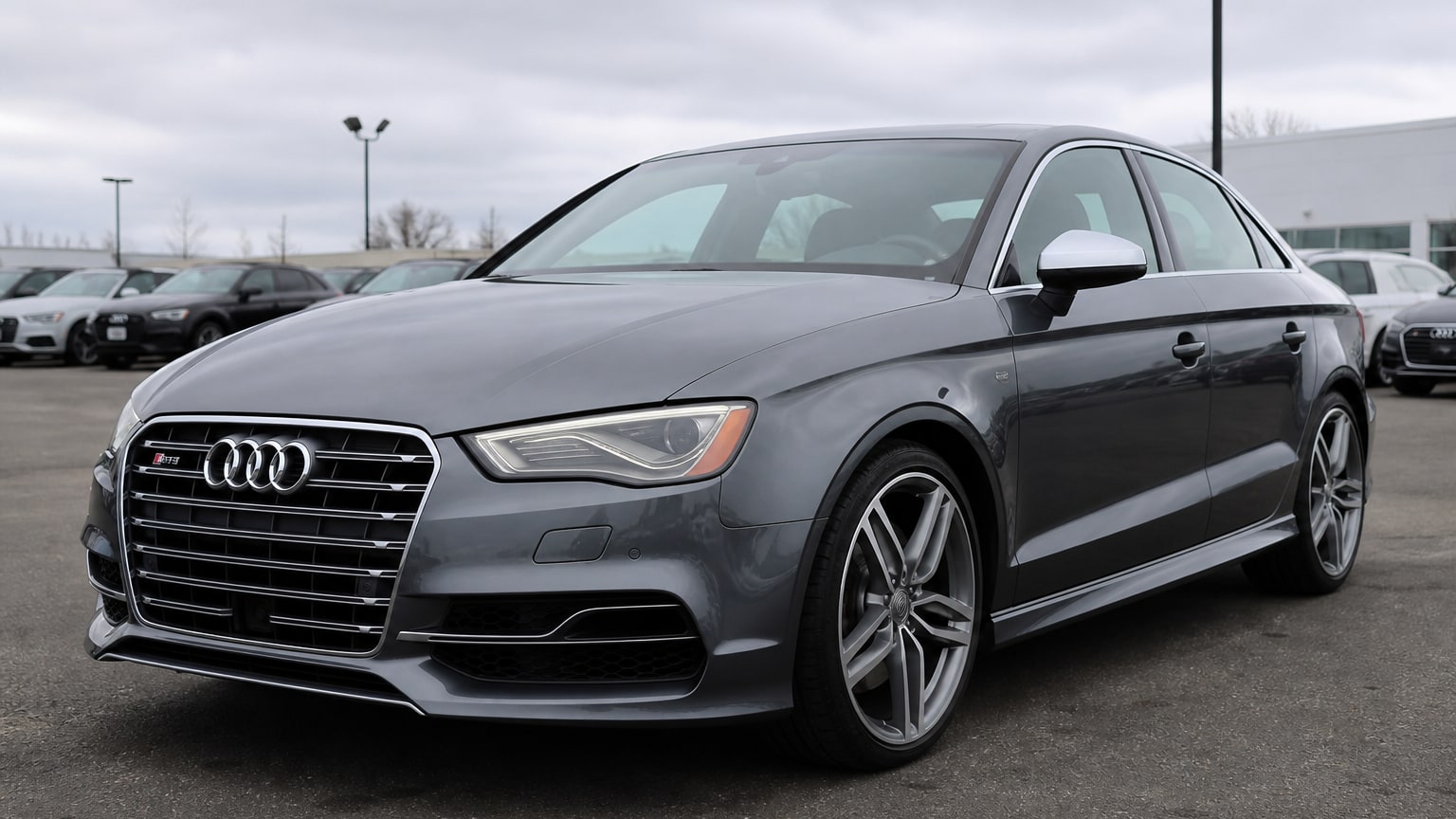
3rd-generation Audi S3 (2015-2020)
The 2015 Audi S3 has 70 problems and defects reported by owners on CarComplaints; the worst complaints involve the cooling system and transmission. That 70-complaint total is roughly four times the volume seen on the cleaner 3rd-gen years. On CarComplaints' 2015 S3 page, the DSG rough downshift shows up as the single most-filed individual complaint.
The 2016 Audi S3 has 19 problems and defects reported by S3 owners on CarComplaints - far fewer than 2015, but the year still carried the PODS airbag recall and above-average NHTSA complaint volume relative to the model's median. The 2017 sits above the model's average as well, with the start-stop complaints and the ongoing airbag recall coverage. The NHTSA 2019 S3 page shows just how much cleaner the later 3rd-gen years are by comparison.
What are the best Audi S3 years to buy?
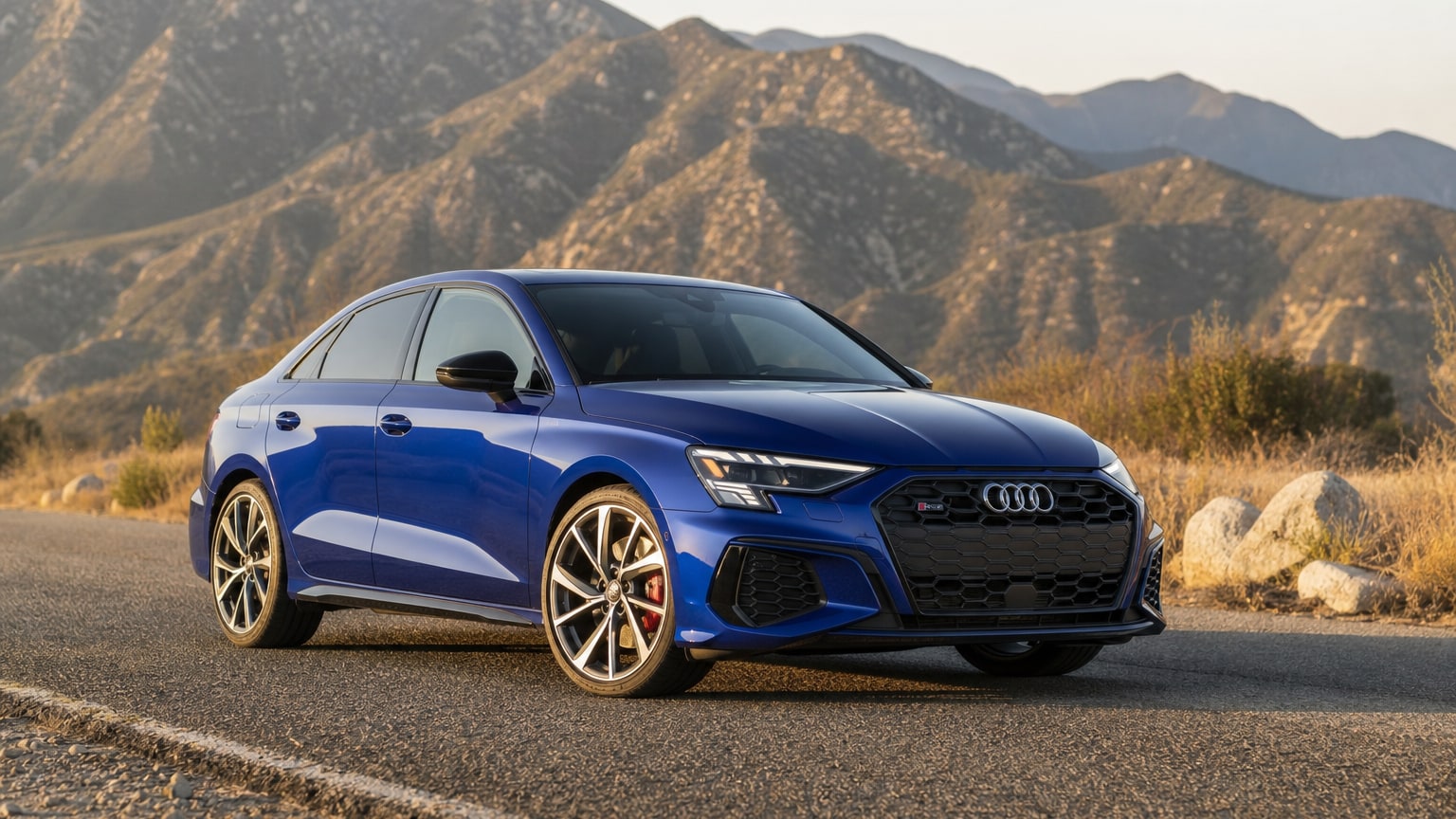
The best Audi S3 years to buy are 2018, 2019, and 2022. Each carries a lower complaint load, confirmed recall completions, and the same strong 2.0T powertrain without the early-build quality issues that plagued launch-year 3rd-gen cars.
| Best Audi S3 Year | Why It's a Strong Buy |
|---|---|
| 2018 | 4-year/50,000-mile basic warranty, 1 recall; below-average complaint count |
| 2019 | Fewest NHTSA complaints of the 3rd-gen run; all airbag recalls applicable |
| 2022 | Significantly fewer reported issues than earlier years; 4th-gen redesign resolves most 3rd-gen faults |
Most reliable Audi S3 years: 2018, 2019, 2022
2018 Audi S3
The 2018 Audi S3 carries a 4-year/50,000-mile basic warranty and just 1 recall; RepairPal gives it a reliability rating of 3 out of 5, ranking it 15th out of 26 luxury compact cars. By this point in the 3rd-gen run, Audi had addressed the worst of the early build quality concerns, and the PODS airbag recall was being actively managed. A 2018 with verified recall completion and a clean DSG service record is one of the safer used picks in the 3rd-gen lineup.
2019 Audi S3
The 2019 stands out as the lowest-complaint year of the 3rd-gen cycle based on NHTSA data. Audi S3 models of 2019 and 2018 have had the least number of complaints among recently produced years. If your budget allows for a late 3rd-gen car, the 2019 is the one to prioritize - just confirm the PODS airbag recall has been completed on your specific VIN.
2022 Audi S3
The 2022 marked the US debut of the 4th-generation S3, bringing a refreshed interior, an upgraded infotainment system, and a cleaner reliability record. The 2023 S3 carries a 4-year/50,000-mile warranty and 1 recall; RepairPal gives it a reliability rating of 3 out of 5, ranking it 15th out of 26 luxury compact cars - the same benchmark that applies to the 2022 generation. The 4th gen's airbag-related recall (incorrectly folded front passenger airbag module, Audi number 69DZ) has been addressed at the dealer level; confirm closure on your VIN before purchase.
Audi S3 pre-purchase checklist
Before buying any used Audi S3, run through these model-specific checks to avoid inheriting known problems.
- Run the VIN through NHTSA's recall checker. Confirm that NHTSA campaigns 19V-474 and 21V-198 (PODS airbag) are both closed on any 2015-2020 car, and that the fuel-system suction pump recall is resolved on FWD models.
- Check the coolant level before starting the engine. On any 2015-2020 S3, a low or recently topped-up reservoir is the first sign of the EA888 water pump or thermostat housing leak. Ask for service records showing whether the water pump assembly has been replaced, and verify your VIN's eligibility under the 8-year/80,000-mile warranty extension.
- Test the DSG transmission through all gears. Shift into reverse, drive, and back. A "Gearbox Malfunction" warning or hesitation on the 2015, 2016, or 2017 is a red flag. Ask for documented DSG fluid service at or before 40,000 miles.
- Check for burning oil smell through the vents or blue smoke. Excessive oil consumption has been flagged by S3 and RS3 owners on the EA888 platform; ask the seller to check the dipstick in front of you.
- Ask for full DSG and cooling-system service records. Any gap in maintenance history - especially on the DSG fluid or coolant - increases the risk of the two most expensive failures on this car.
- Test all infotainment functions. On 2015-2017 cars, nav freezes, window regulator failures, and HVAC sensor faults are common. On 2022 models, confirm the infotainment recall (inoperative rearview camera) has been corrected.
- Have an independent Audi-specialist pre-purchase inspection done. The EA888's water pump is buried under the intake manifold and can leak slowly for months without triggering a warning light immediately.
Better alternatives to consider
If the Audi S3 years in your budget land on the avoid list, consider these alternatives instead:
- Audi S4 - a step up in displacement and refinement, with a different engine platform that sidesteps the worst EA888 water pump and DSG complaints
- Audi S5 - another Audi performance coupe/sedan option with a different engine family and its own best/worst year split
- Audi Q5 - if you want the Quattro drivetrain and Audi cabin quality in a more practical SUV body with a broader used-market selection
- Volkswagen Golf R - shares the EA888 platform but has a larger owner community and often broader dealer support for the same DSG and cooling-system repairs
- BMW 2 Series / BMW M240i - rear-wheel-drive alternatives in the same price bracket; the volume 228i/230i trims have a strong reliability record on the N20/B46 four-cylinder, while the M240i is the closer performance cross-shop
Is the Audi S3 worth buying?
The Audi S3 is worth buying as long as you target the right model years - specifically 2018, 2019, or 2022. CarComplaints rates the 2015 as the worst year, and avoiding it along with 2016 and 2017 removes the bulk of the model's documented problems. The 4th-gen 2022 onward brings a cleaner build record, and even the later 3rd-gen cars (2018-2019) represent solid value once you verify the airbag recall is closed. Our editorial guidelines require that every vehicle verdict be grounded in NHTSA records, CarComplaints data, and verified owner reports rather than manufacturer claims or press material. Before finalizing any purchase, run the VIN through NHTSA's recall checker and ask for documented proof of water pump, DSG fluid, and recall service completion.