
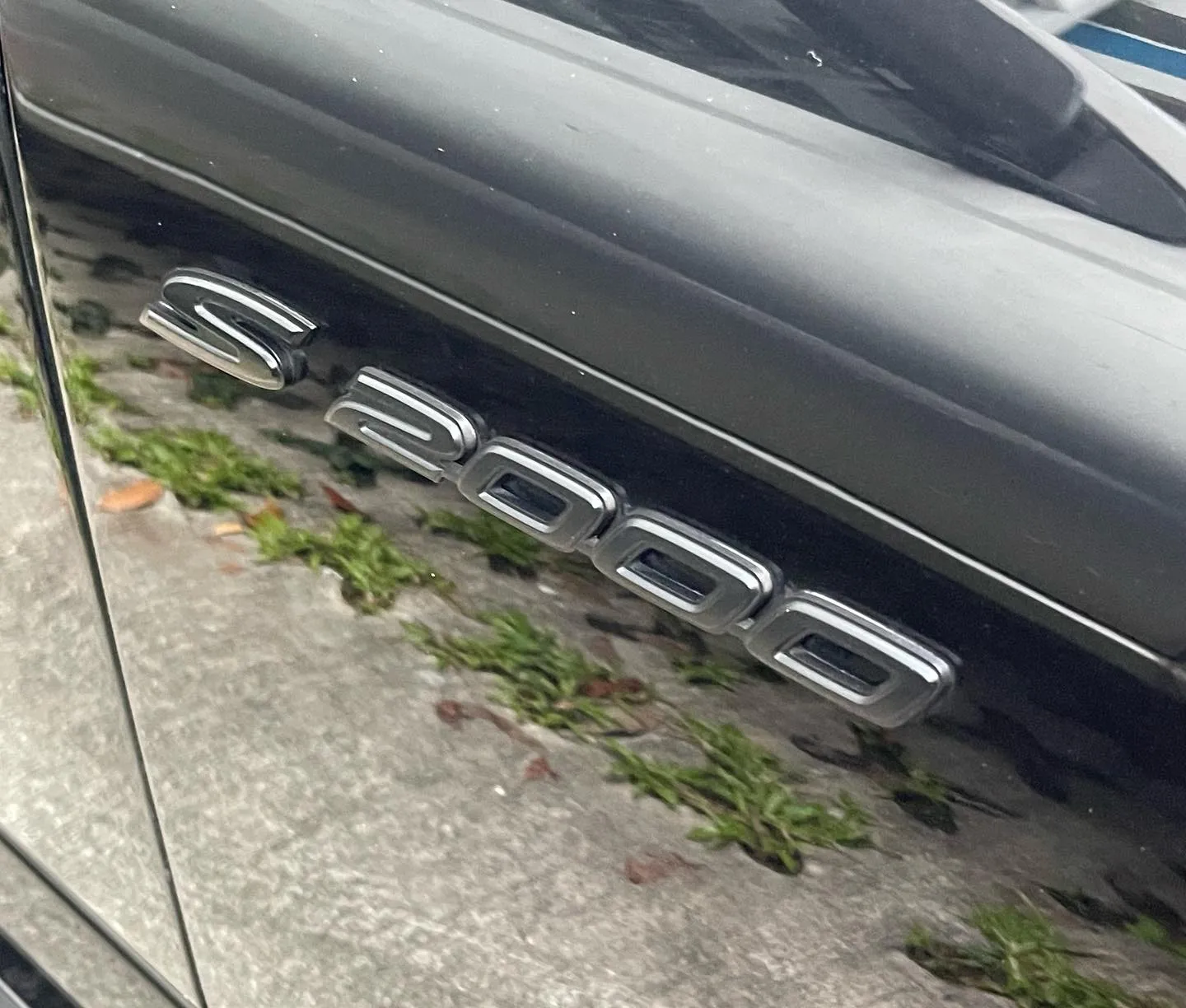
The Honda S2000 is one of the most rewarding used sports cars you can buy, but a handful of model years carry real financial risk that you'll want to know about before writing a check. The AP1 generation (2000-2003) concentrates the most serious mechanical failures, while the AP2 (2004-2009) is the cleaner half of the production run. This Honda S2000 years to avoid guide ranks every model year using NHTSA complaint and recall data, CarComplaints PainRank, and RepairPal problem reports so you can buy with confidence.
For tire sizes, AP1/AP2 notes, and buying advice in one place, see the Honda S2000 hub.
At a glance
- Worst years
- 2000
- 2001
- Best years
- 2006
- 2007
- 2008
- 2009
- Top failure
- AP1 engine oil starvation / rod bearing failure (2000-2003, CarComplaints PainRank)
- Always do before buying
- run the VIN through NHTSA's recall checker; on 2001-2003 cars, confirm the Takata airbag recall is fully completed before driving
Recalls by year
How we rated the best and worst Honda S2000 years
Using CarComplaints’ PainRank system, the 1st generation (2000-2003) is the one to avoid, with the 2000 model year carrying the heaviest load of complaints and recalls of any single year in the lineup. This guide draws on five data sets: the 2000-2009 Honda S2000 has accumulated 162 NHTSA complaints, with the most frequently reported problem areas being engine, cooling system, and transmission; CarComplaints for per-year PainRank (which weighs repair cost and the mileage at which failures occur); RepairPal’s problem database for recurring complaints; the S2KI owner forum for real-world context; and NHTSA recall records. CarComplaints ranks the worst year by repair cost and mileage-at-failure (its PainRank score), while NHTSA shows raw complaint volume - they do not always point to the same year. Our years to avoid methodology combines these sources so that no single data point drives the final verdict.
| Honda S2000 Generation | Best Honda S2000 Years | Worst Honda S2000 Years |
|---|---|---|
| AP1 (2000-2003) | None | 2000, 2001 |
| AP2 (2004-2009) | 2006, 2007, 2008, 2009 | None |
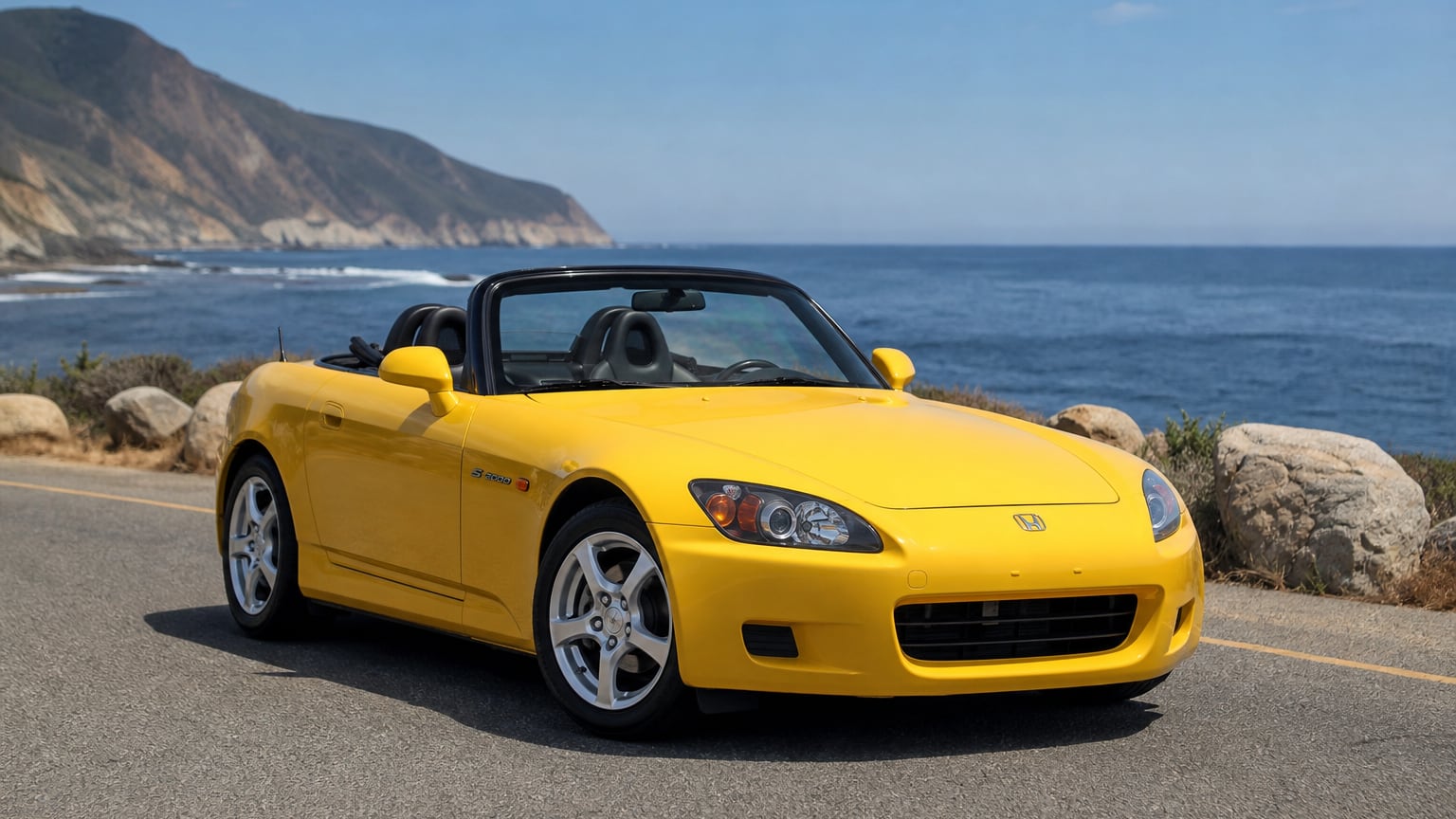
Every Honda S2000 model year ranked
The cleanest S2000 years are the late-production AP2s (2006-2009), while the earliest AP1s (2000-2001) carry the worst failure records by both CarComplaints and NHTSA volume.
| Model Year | Generation | Verdict | Notes |
|---|---|---|---|
| 2000 | AP1 | Avoid | Highest NHTSA complaint volume (28), 3 recalls, engine oil starvation risk |
| 2001 | AP1 | Avoid | 0 recalls in NHTSA model-year filings; steering lockup, Takata Alpha Do Not Drive risk, 18 CarComplaints reports |
| 2002 | AP1 | OK/Mixed | 0 recalls; oil jet bolt fix mid-year; fewest AP1 complaints after the fix |
| 2003 | AP1 | OK/Mixed | 0 recalls; final AP1 year; Takata Alpha Do Not Drive risk still applies, but mechanical issues settled |
| 2004 | AP2 | OK/Mixed | AP2 launch; 0 recalls, 1 NHTSA complaint but gear pop-out noted |
| 2005 | AP2 | OK/Mixed | 0 recalls; gear pop-out and convertible top issues; 11 RepairPal problems |
| 2006 | AP2 | Best | 2 recalls; VSA added; brake booster recall; 10 RepairPal issues (tied low) |
| 2007 | AP2 | Best | 1 recall (brake booster); low complaint count; VSA module issue rare and isolated |
| 2008 | AP2 | Best | CR variant arrives; 0 recalls; fewest documented NHTSA problems |
| 2009 | AP2 | Best | 0 recalls; final production year; CR Club Racer; low complaint history |
Most common Honda S2000 problems
These failures drive most Honda S2000 years to avoid calls. The single biggest failure on the S2000 is the AP1’s engine oil starvation issue, which can destroy rod and main bearings with little warning. Below are the five recurring failure categories you need to know before buying any model year.
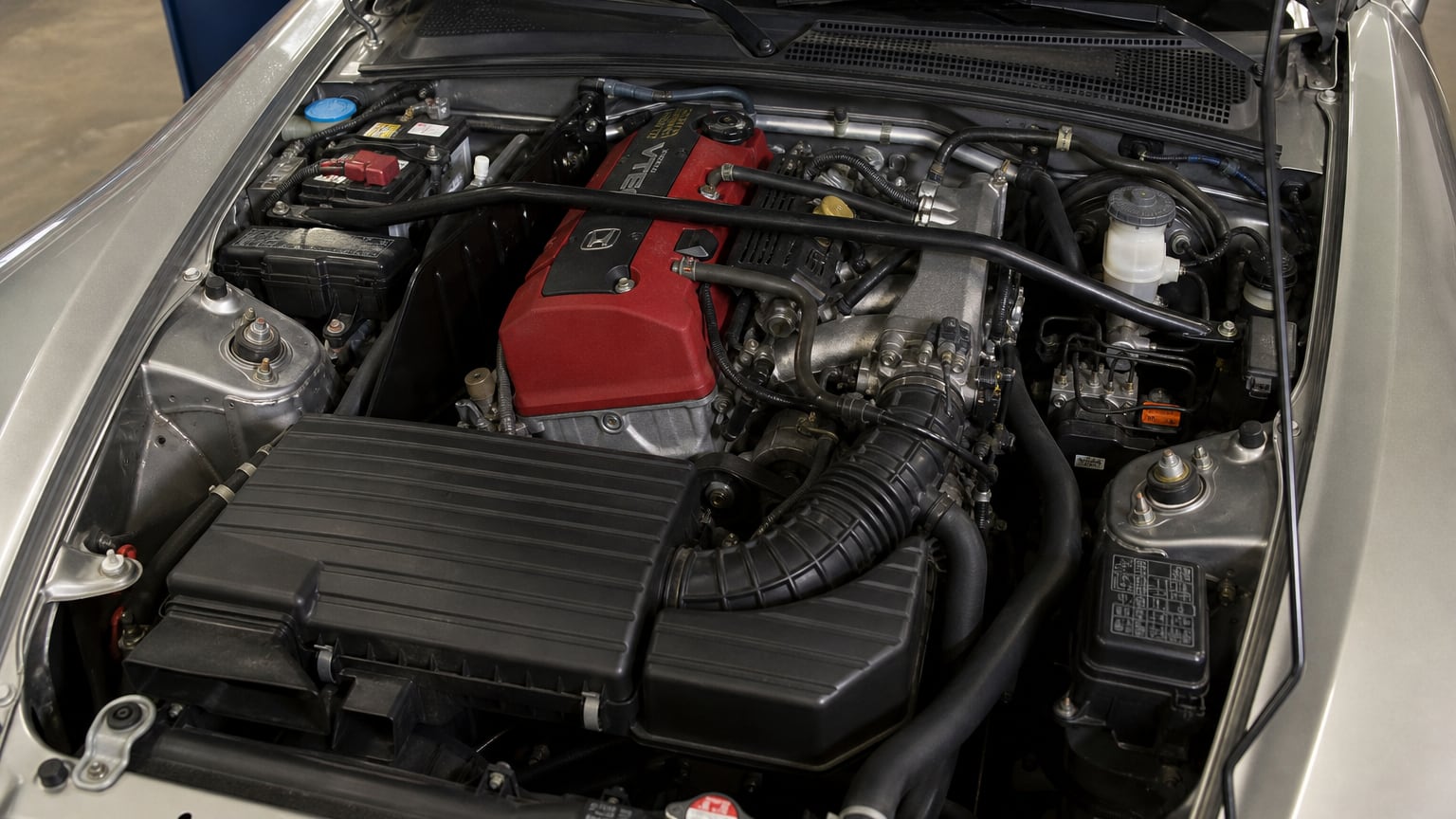
1. AP1 engine oil starvation and bearing failure (2000-2003)
Honda eventually fixed an oil starvation problem found in earlier models - different oil jet bolts were installed as of May 2002 to address potential oil starvation issues under very heavy loads. On the pre-fix AP1 cars, oil can fail to reach the rod and main bearings during hard cornering or sustained high-rpm driving, causing catastrophic bearing failure. Many owners report that the engine stopped suddenly while driving and that the low oil warning light never illuminated - the engine blew a rod bearing because it needed so much oil.
The 2000 model year experienced engine failure after about 62,000 miles, and the only solution was to replace the engine - a repair owners could expect to pay at least $1,700, with full rebuilds running considerably higher. Honda addressed the underlying cause with a mid-year change to new oil jet bolts (Part Number 15290-PCX-000). Honda recalled cars in Europe but never issued a formal recall in North America, although earlier AP1 owners can swap out the parts independently. No formal NHTSA recall campaign was issued for this defect on US-market S2000s, so there is no campaign number to confirm. Buyer takeaway: on any pre-May-2002-build AP1, ask about oil jet bolt replacement history and pull the dipstick before you drive it. Signs like metal shavings in the oil are a strong warning of bearing wear already in progress.
2. Takata airbag inflator recall (2001-2003)
Honda issued a “Do Not Drive” warning for certain 2001-2003 Honda vehicles equipped with unrepaired Takata Alpha driver-side airbag inflators - if you own one of these vehicles and still have an open Takata airbag recall, do not drive it until the recall has been completed. Alpha airbags have a 50% failure rate, and if the inflators rupture, metal fragments ejected toward the driver’s face could kill or cause life-altering injuries.
The repair is free at any authorized Honda dealer. If you drive a 2001-2003 Honda or Acura vehicle, you should contact Honda at 844-758-9245 or a dealer immediately to schedule the free repair. Always run the VIN through NHTSA’s recall checker before buying any 2001-2003 S2000 and confirm the airbag work is documented in the service record. The recall covers the driver-side inflator, so do not assume a prior owner completed it - verify it.
3. Transmission gear pop-out (AP2, 2004-2009)
On AP2 models (2004-2009), the gear lever pops out of 2nd, 4th, or 6th gear, and the fix is addressed by a Technical Service Bulletin. The synchros in the six-speed manual can wear prematurely, particularly if the previous owner drove aggressively or missed shifts at high rpm. Both generations can wear out 2nd and 3rd gear synchros if the previous owner missed a lot of shifts.
Some S2000s develop a problem with the transmission popping out of fourth gear; a new updated fourth and fifth gear assembly is the fix, but the transmission has to be removed and disassembled. A full synchro and gear assembly replacement at a specialist shop typically runs $1,000-$2,000 in labor alone. During your test drive, run through all six gears firmly and check that none pop back to neutral. On the S2000, a whining noise when accelerating through the mid-rpm range can also signal worn gear sets before they start popping out.
4. VSA module failure (2006-2009)
CarComplaints.com reports that one of the most significant S2000 problems occurred in the 2007 model - the Vehicle Stability Assist (VSA) module. An owner reported that their S2000’s VSA module failed after logging only 2,000 miles on the odometer, and the solution was to replace the module - the owner was given a quote of about $2,200 for the repair. Because of the high repair cost and the risks of a faulty VSA, CarComplaints gave this problem a 10 out of 10 in severity.
VSA stability control became standard on US cars from 2006 onward, so only the late AP2 years are exposed to this failure. The failure rate is low, but the cost per incident is high. If the VSA warning light is on at purchase, treat it as a significant repair item, not a deferred maintenance note.
5. Convertible top deterioration (all years, but worst on 2000-2005)
The most commonly reported Honda S2000 problem on RepairPal is convertible top issues. The soft top fabric and rear window age out around 15 to 20 years, and the replacement is not cheap. On early AP1 cars, the original fabric and plastic rear window are now well past that threshold.
A TSB covers convertible tops that tear at the lock handle and/or the right rear, affecting 2005 and later models. A full convertible top replacement from a Honda dealer runs roughly $1,000-$1,500 in parts and labor; aftermarket replacements can be lower but vary in quality. Check the top for tears, check the plastic rear window for crazing, and operate the latch mechanism fully before you buy.
6. Valve cover oil leak and camshaft seal failure (all years)
The camshaft seal, located at the end of the cylinder head, has a reputation for failure on the 2000-2009 Honda S2000 - this seal wraps around the camshaft to prevent engine oil from leaking where the camshaft exits the cylinder head. Replacing the leaky seal requires timing belt removal, so the timing belt and water pump may also be recommended if your vehicle is near the service interval.
Smelling burning engine oil is common on the 2000-2009 S2000, associated with oil leaking from the valve cover - the oil drains down and settles on the exhaust manifold, which burns it upon contact. The valve cover gasket should be replaced promptly to prevent engine misfires from oil contaminating the ignition coil; valve cover gasket replacement corrects both the leak and the burning oil smell. This is an inexpensive repair (roughly $100-$200 in parts) but becomes expensive if ignored. The AP1’s F20C is particularly prone to this because of its high-revving nature.
Which Honda S2000 years should you avoid?
The Honda S2000 years to avoid for most buyers are 2000 and 2001. The 2000 Honda S2000 has 1 recall and 28 owner complaints, giving it the highest problem score in the dataset by NHTSA complaint volume. By CarComplaints PainRank, which weighs repair cost and how early failures occur, you’re better off avoiding the 1st generation (2000-2003) overall, with 2000 and 2001 being the worst within that group. NHTSA complaint volume is highest on the 2000 model year, while CarComplaints’ cost-and-mileage ranking points to the first generation as a whole.
| Honda S2000 Generation | Model Years | Verdict | Main Issues |
|---|---|---|---|
| AP1 | 2000, 2001 | Worst | Engine oil starvation (pre-fix), Takata airbag recall, seat belt recalls, steering lockup |
| AP1 | 2002, 2003 | OK/Mixed | Oil-jet-bolt fix applied mid-2002; Takata recall still applies |
| AP2 | 2004-2009 | Mixed/Best | Gear pop-out (early AP2), VSA module, convertible top aging |
Worst Honda S2000 years: 2000, 2001
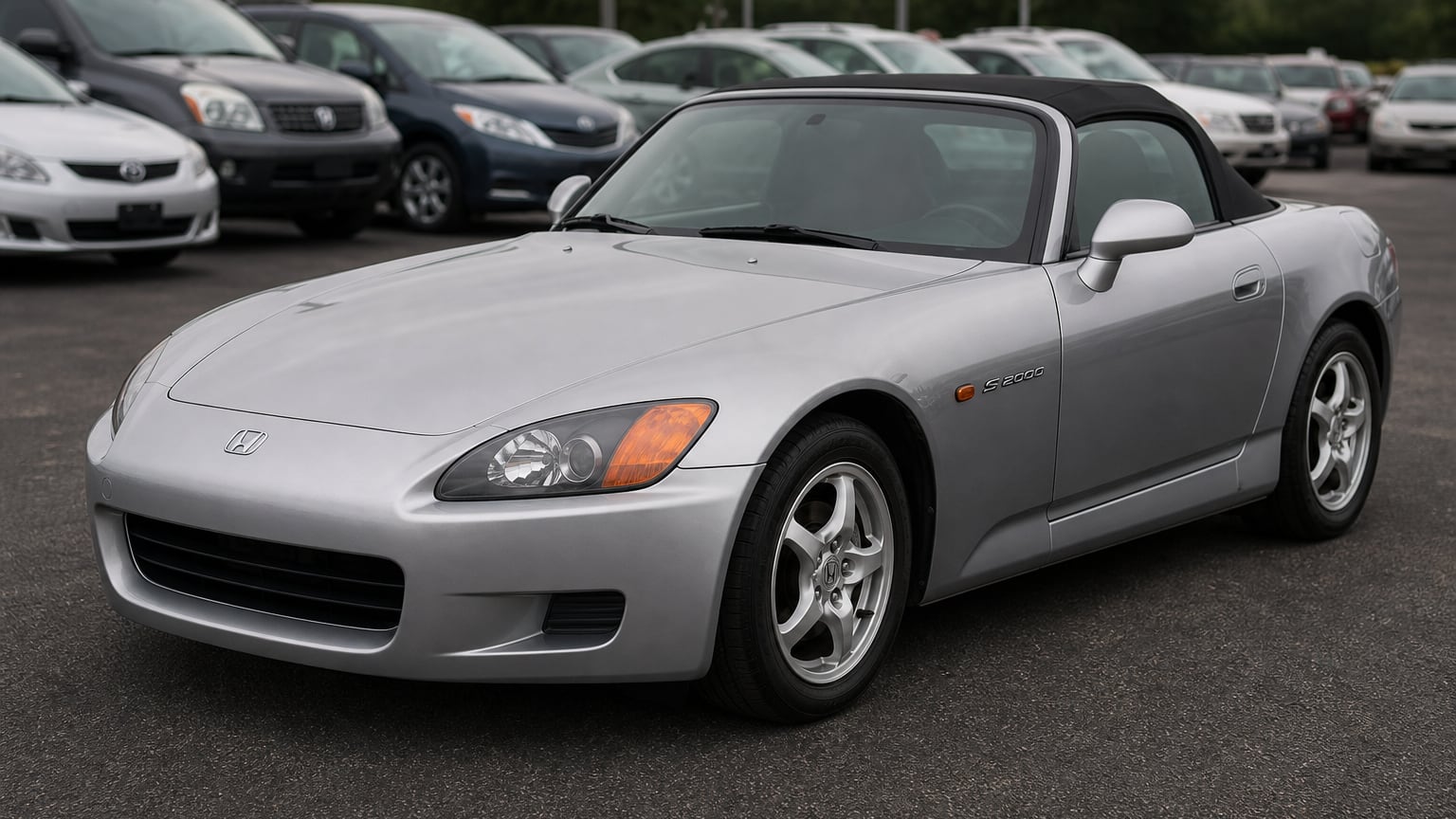
1st-generation Honda S2000 AP1 (2000-2003)
The 2000 Honda S2000 has 1 formal recall and 28 owner complaints on NHTSA’s database. The recall record includes two seat belt recalls (NHTSA campaign IDs 00V016000 and 00V316000) and a tail light recall (NHTSA campaign ID 04V257000). Under certain conditions, the seat belt retractor can deform and cause complete locking of the retractor, meaning the seat belt cannot be pulled out and cannot be used - in a crash, the occupant may not be properly restrained, increasing the risk of injury or death.
The 2001 Honda S2000 has 18 problems and defects reported by S2000 owners on CarComplaints, with the worst complaints being steering problems. The 2001 model’s steering wheel could lock up - owners reported this issue happened when the car had about 80,000 miles on it. The 2001-2003 models also fall under the Takata Alpha airbag recall, and NHTSA’s Do Not Drive warning applies to any of these with an open, unrepaired recall.
What are the best Honda S2000 years to buy?
Once you clear the Honda S2000 years to avoid, the best years to buy are 2006, 2007, 2008, and 2009. The easiest S2000 to buy is a documented AP2 from 2006-2009 with under 80,000 miles and an OEM hardtop - that combination gets you the F22C with factory-upgraded valve retainers, revised rear suspension geometry, drive-by-wire throttle, and VSA stability control.
| Best Honda S2000 Year | Why It's a Strong Buy |
|---|---|
| 2006 | First year with standard VSA; AP2 engine with factory-upgraded valve retainers; 10 RepairPal problems (tied lowest) |
| 2007 | Low NHTSA complaint history; AP2 fully sorted; VSA module failures rare |
| 2008 | CR Club Racer variant available; fewest documented NHTSA problems of any year |
| 2009 | Final production year; CR Club Racer; all known issues addressed; low complaint history |
Most reliable Honda S2000 years: 2006, 2007, 2008, 2009
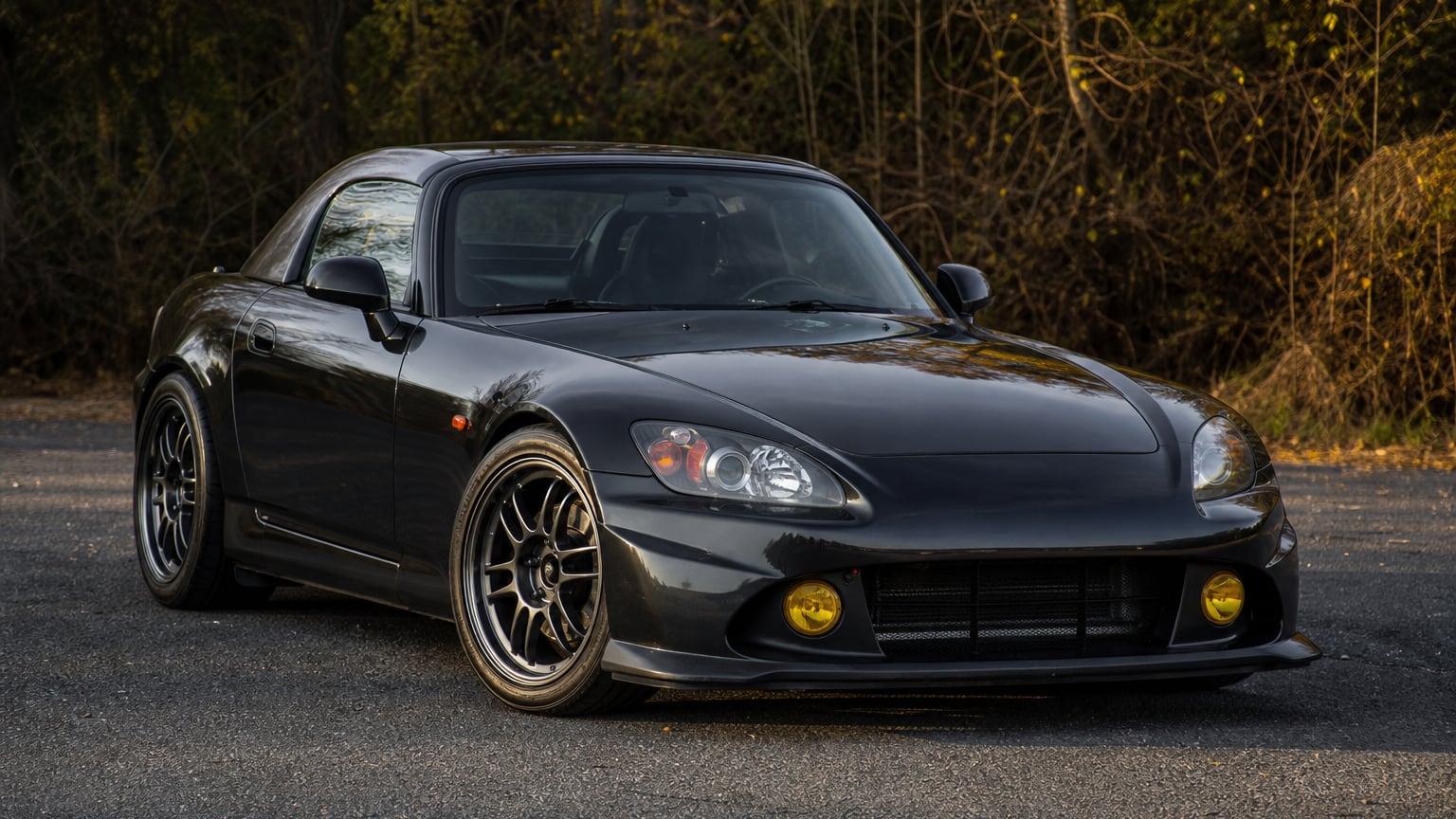
2008-2009 Honda S2000 (CR Club Racer)
The CR (Club Racer) was a 2008-2009 US-only variant - 699 units total - with a hardtop, suspension and chassis bracing, with A/C and stereo optional. These are the most track-capable factory S2000s and have the shortest exposure to the AP1’s early-production failures. The late build date also means the soft top (on non-CR AP2s) is relatively newer compared to AP1 cars.
2006 Honda S2000
From 2006, drive-by-wire throttle and VSA stability control became standard on US cars, making it the year the AP2 reached its most complete form. RepairPal lists 10 known complaints for the 2006 model - tied for the fewest of any S2000 year. The 2006 also received a brake booster recall (covering 2006-2007 models per the S2KI forum), so confirm that recall is closed when you check the VIN. Honda recalled certain 2006-2007 Honda S2000 vehicles because the brake booster may be unable to maintain a vacuum when the brake is applied - confirm this is resolved on any 2006 you buy.
Honda S2000 pre-purchase checklist
Every used S2000 deserves a thorough inspection before money changes hands. Here are the model-specific items to work through:
- VIN recall check: Run the VIN through NHTSA’s recall database before anything else. On 2001-2003 cars, confirm the Takata Alpha airbag recall is closed and documented. This is a safety-critical step, not optional.
- Oil jet bolt verification (2000 to early-2002 builds): Ask whether the updated oil jet bolts (Part Number 15290-PCX-000) have been installed. Check the engine oil level cold and look for any milky or metallic contamination.
- Oil leaks at idle (all years): With the engine warm and at idle, inspect the valve cover gasket and the camshaft seal area for seeping oil. Burning oil smell through the vents is a strong sign the valve cover gasket needs replacement.
- Gear pop-out test (AP2 2004-2009): During the test drive, shift firmly through all six gears. Any gear that pops back to neutral under load - particularly 2nd, 4th, or 6th - signals synchro or gear assembly wear.
- Convertible top and rear window: Operate the top fully up and down. Inspect the fabric for tears at the lock handle and right-rear corner, and check the rear window for crazing, yellowing, or delamination. The soft top fabric and rear window age out around 15 to 20 years.
- VSA and dash warning lights (2006-2009): Confirm no VSA, check-engine, or stability-control warning lights are illuminated. A live VSA fault can indicate a $2,200 module replacement.
- Brake booster (2006-2007): Confirm the brake booster recall for 2006-2007 models has been completed. Pump the brakes several times with the engine off and then start the engine - a firm pedal that softens slightly is normal; no vacuum assist is not.
- Service records: Ask for a full maintenance history. The F20C and F22C require disciplined oil changes; a car with long oil-change intervals is higher risk for the bearing failures described above.
Better alternatives to consider
If the Honda S2000 years in your budget land on the avoid list, consider these alternatives instead:
- Mazda Miata - a longer production run with a clearer year-by-year reliability record and lower parts costs
- Porsche Boxster - a mid-engine roadster in a similar price bracket, with the mid-2000s 986 generation offering stronger reliability once the IMS bearing is addressed
- Toyota MR2 Spyder (2000-2005) - a rear-wheel-drive roadster with a simpler 1ZZ-FE engine, very low complaint count on NHTSA, and an affordable parts supply
- Porsche 991 - a step up in price but with a more complete reliability story across its generation run, and year-by-year data that makes it easy to identify which variants to avoid
Is the Honda S2000 worth buying?
Yes, the Honda S2000 is worth buying as long as you stay away from 2000 and 2001 and approach 2002-2003 with documented service records. The 2000-2009 Honda S2000 can be a solid used car purchase depending on trim, mileage, and maintenance history, and prospective buyers should review the known problem areas and check for open recalls before buying. The best picks remain 2006-2009, where the AP2’s revised suspension, standard VSA, and factory-upgraded valve retainers make for a more complete package. Facts and figures in this guide follow editorial guidelines and research verification practices that require cross-checking complaint data against multiple independent sources.
The Honda S2000 has 5 known recalls across its production run. Run the VIN through NHTSA’s recall checker and verify the full maintenance history - particularly oil change intervals and the oil jet bolt status on pre-2002 cars - and your S2000 should reward you for years.