
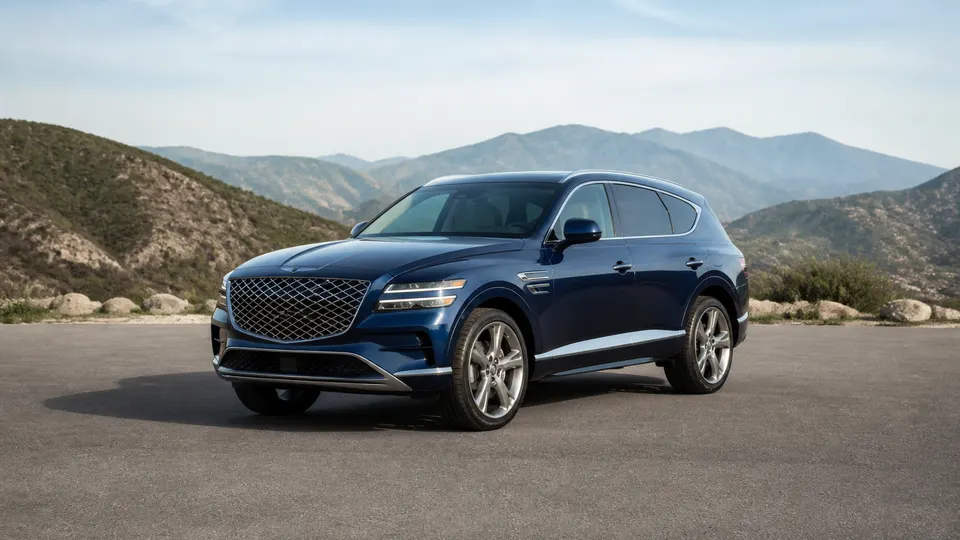
The Genesis GV80 is a well-designed luxury midsize SUV with strong safety scores and an appealing ownership package, but its earliest model years carry a disproportionate share of complaints, recalls, and documented failures. CarComplaints rates the 2021 Genesis GV80 as the worst model year, ranked on factors including repair cost and average mileage when problems occur. This guide uses NHTSA complaint data, CarComplaints PainRank, Consumer Reports subscriber surveys, and owner-forum reports to show you exactly which years to skip and which to buy with confidence.
For generations, engines, and ownership notes in one place, see the Genesis GV80 hub.
Related: Genesis GV70 years to avoid, BMW X5 years to avoid.
At a glance
- Worst years
- 2021
- 2022
- Best years
- 2023
- 2024
- Top failure
- Seat belt pretensioner explosion risk (2020-2023 GV80, CarComplaints / NHTSA)
- Always do before buying
- Run the VIN through NHTSA's recall checker to confirm all open campaigns are closed, and verify that the seat belt pretensioner recall has been completed on any 2021-2023 example
How we rated the best and worst Genesis GV80 years
The 2021 Genesis GV80 is the single worst model year, carrying both the highest NHTSA complaint volume and the lowest CarComplaints PainRank score driven by high repair cost and low mileage at failure. This guide draws on NHTSA complaint and recall data, CarComplaints for per-year ranking and repair-cost weighting, Consumer Reports subscriber surveys, and owner discussion on GV Forums. CarComplaints ranks the worst year by repair cost and mileage-at-failure (its PainRank system), while NHTSA shows raw complaint volume - and for the GV80, those two measures point to the same year: 2021.
Our years to avoid methodology weights repair cost and mileage-at-failure alongside raw complaint volume, which is why the 2021 stands out so clearly across every source we consulted. NHTSA complaint volume by year shows 2021 with 55 complaints, 2022 with 42 complaints, and 2023 with 35 complaints.
| Genesis GV80 Generation | Best Genesis GV80 Years | Worst Genesis GV80 Years |
|---|---|---|
| First generation (2021-present) | 2023, 2024 | 2021, 2022 |
Every Genesis GV80 model year ranked
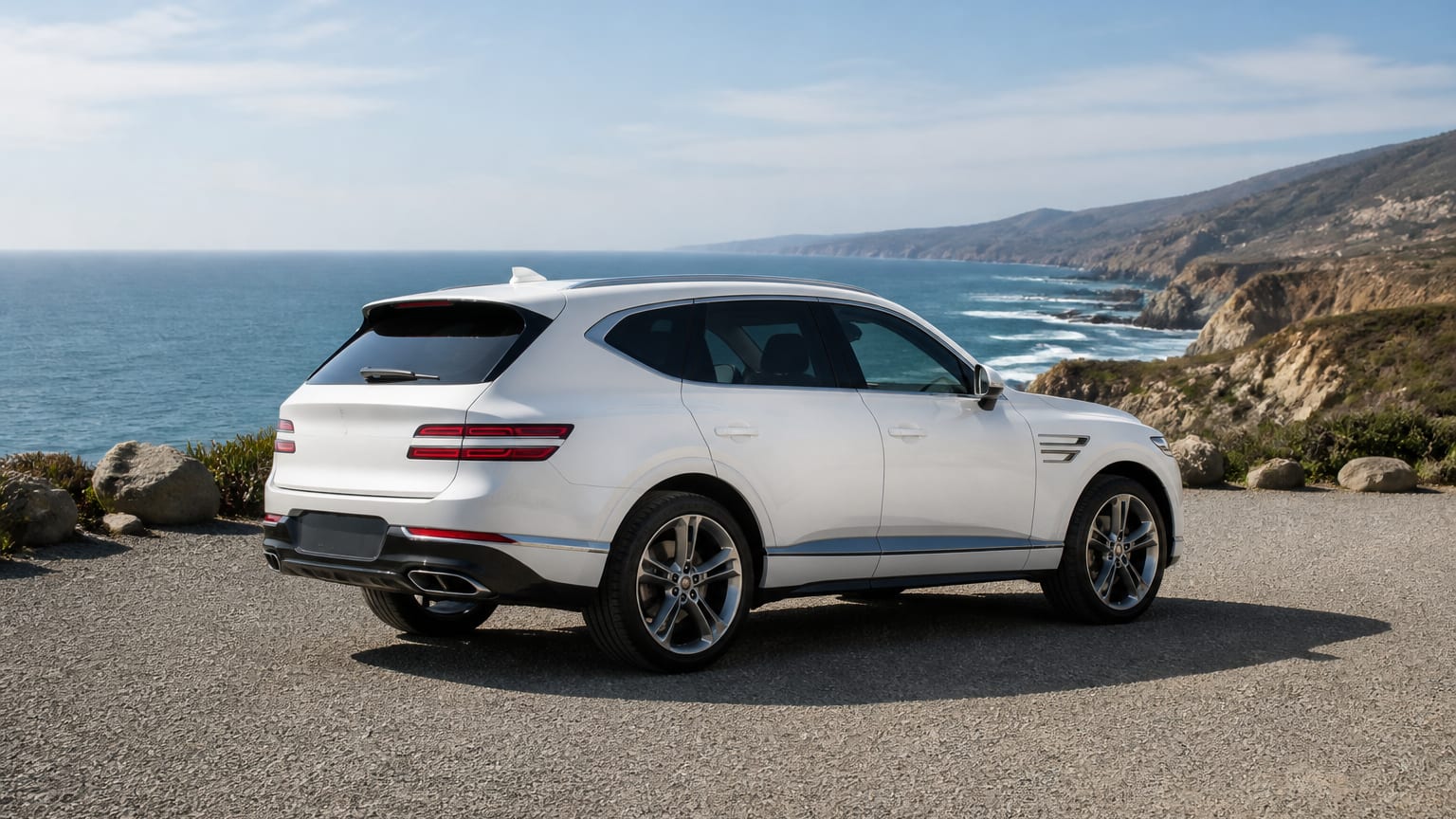
The GV80 has been in production since the 2021 model year, so every available year is part of one generation - the table below covers all six years on the US market.
| Model Year | Generation | Verdict | Notes |
|---|---|---|---|
| 2021 | 1st gen | Avoid | Most complaints (55 NHTSA), 5 recalls, sunroof leaks, pretensioner risk |
| 2022 | 1st gen | Avoid | 42 NHTSA complaints, 3 recalls, fuel-pump stalling risk |
| 2023 | 1st gen | Best | 35 NHTSA complaints, 3 recalls, cleaner reliability profile |
| 2024 | 1st gen | Best | 17 NHTSA complaints, 1 recall per Consumer Reports; fewest issues of older stock |
| 2025 | 1st gen | OK/Mixed | 1 NHTSA complaint (lowest), 1 recall; too new for full data |
| 2026 | 1st gen | OK/Mixed | Newest model year; minimal data accumulated |
Most common Genesis GV80 problems
The GV80’s single most documented safety issue is the seat belt pretensioner defect, which triggered multiple overlapping recall campaigns spanning nearly every model year. Across all model years, the most commonly reported problem areas for the Genesis GV80 in NHTSA complaint data are electrical system, fuel/propulsion system, and forward collision avoidance.
1. Seat belt pretensioner failure
Hyundai Motor America recalled certain 2021 Genesis GV80 vehicles because, in the event of a crash, the front driver-side and/or passenger-side seat belt pretensioner(s) may explode upon deployment, projecting metal fragments into the vehicle and striking occupants. The risk is similar to the Takata airbag pattern: a pyrotechnic component misfiring and turning into shrapnel during a crash.
The original campaign carried NHTSA recall number 21V-796 (Genesis Motor America recall number 009G), affecting 2021 GV80 vehicles. That recall was subsequently superseded and expanded under recall number 21V-796. A broader recall then covered 2020-2023 Genesis GV80, 2021-2023 Genesis G80, 2022-2023 Genesis GV70, and 2023 Genesis GV60 vehicles, with dealers securing the seat belt pretensioners with a cap free of charge; owner notification letters were mailed April 14, 2023. Genesis’s manufacturer number for that expanded campaign is 012G. If you are buying any 2021-2023 GV80, confirm this repair has been completed with dealership paperwork before you hand over a check.
2. Fuel pump failure and stalling
Genesis recalled over 31,000 GV70 and GV80 SUVs and G80 and G90 sedans from the 2022 and 2023 model years because they may stall while driving, which could cause a crash. The problem involves a trouble-prone fuel pump: if the pump fails, gas won’t reach the engine and the vehicle could stall. Drivers typically notice the check engine light coming on, or the engine hesitating or running roughly.
The NHTSA campaign number for this recall is 24V-282, Hyundai’s own number is 022G, and the earlier related recall is 23V-670. Genesis dealers will replace the faulty fuel pumps free of charge. A separate earlier campaign covered 2021 GV80 models fitted with the 2.5-liter turbo engine, where the fuel tube connecting the high-pressure fuel pump to the fuel rail may not seal properly, allowing fuel to leak.
3. Electrical system faults
Across NHTSA complaint data, the electrical system is the top reported issue category with 38 complaints, followed by engine with 29 complaints and fuel/propulsion system with 28 complaints. Owners on the GV80 problems forum describe a range of symptoms from warning lights to complete system resets.
One owner reported that the entire screen went blank while driving, appearing to cycle through its startup sequence and come back on, happening five or six times completely at random. Genesis also recalled certain 2025-2026 G80 and GV80 vehicles due to a software error that may cause the instrument panel display to fail. A whining noise when accelerating can sometimes trace to electrical accessory loads rather than a mechanical fault, so confirm the source before authorizing expensive repairs.
4. Sunroof leaks and body hardware issues
The most-reported single problem on CarComplaints for the Genesis GV80 is sunroof leaks, primarily affecting the 2021 model year. Owners describe water intrusion into the cabin during rain, and the fault tends to appear at relatively low mileage on early production vehicles. Consumer Reports’ subscriber data for the 2021 GV80 flags body hardware - including squeaks, rattles, wind noises, seals and weather stripping, air and water leaks - as a documented trouble spot.
Sunroof drain tube cleaning or resealing typically costs a few hundred dollars at an independent shop. On early GV80s still under Genesis’s 5-year/60,000-mile new-vehicle warranty, this should be a covered repair. Ask for service records showing any prior leak repairs before you buy a used 2021.
5. Drive system and differential problems
Consumer Reports subscriber data for the 2024 GV80 surfaces differential complaints, with one owner noting it is a known problem in a segment of GV80 models and confirming there is a recall requiring differential replacement. This is separate from the fuel-pump and pretensioner campaigns and affects the drivetrain directly.
Symptoms include vibration or noise from the rear axle area, particularly at highway speeds. A differential replacement on a luxury midsize SUV can run into the thousands of dollars out of warranty, so any AWD GV80 you are evaluating deserves a thorough test drive with close attention to drivetrain smoothness. A transmission fluid leak when parked is an early warning sign worth checking for on the drive system; dark pooled fluid under the rear axle area warrants a pre-purchase inspection.
6. Infotainment and head-up display failures
Consumer Reports subscribers report that the head-up display (HUD) began failing at 2,000 to 3,000 miles on some 2023 GV80s, appearing worse in daytime when the dash heats up - and at least one dealer initially dismissed the complaint before a factory recall was issued to replace the units. Wireless Apple CarPlay connectivity issues also appear across multiple model years, with owners on both 2024 and 2025 vehicles reporting dropouts after switching to Bluetooth mode.
Which Genesis GV80 years should you avoid?
The Genesis GV80 years to avoid are 2021 and 2022. CarComplaints rates the 2021 Genesis GV80 as the worst model year on factors including repair cost and average mileage when problems occur. On the NHTSA side, the 2021 leads complaint volume with 55 reports, while 2022 follows with 42.
| Genesis GV80 Generation | Model Years | Verdict | Main Issues |
|---|---|---|---|
| 1st gen (early) | 2021, 2022 | Avoid | Pretensioner recall, fuel-pump stalling, sunroof leaks, electrical faults |
| 1st gen (later) | 2023, 2024 | Best | Lower complaint volume, differential recall addressed, improved HUD |
| 1st gen (newest) | 2025, 2026 | OK/Mixed | Minimal data; infotainment bugs reported |
Worst Genesis GV80 years: 2021, 2022
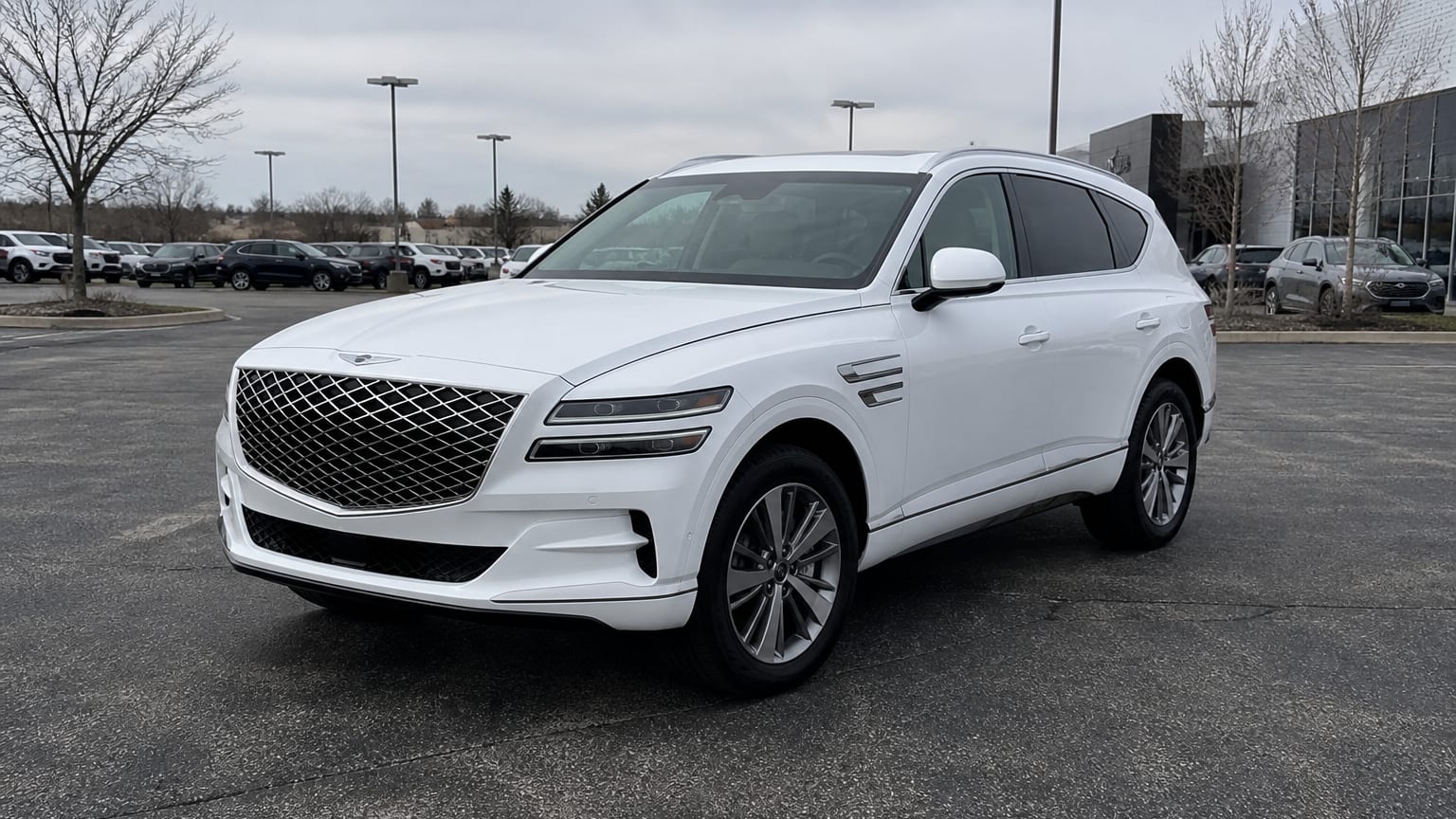
First-generation Genesis GV80 - 2021 and 2022
Consumer Reports rates the 2021 GV80 as less reliable than other cars from the same model year, and the 2021 Genesis GV80 has been recalled 5 times by NHTSA. The combination of the seat belt pretensioner explosion risk, early-production fuel tube leak on 2.5T models, sunroof leaks, and an overall elevated complaint rate makes the 2021 the year to pass on when shopping used. Our editorial guidelines require that every avoid-year verdict be supported by at least two independent data sources, and the 2021 GV80 meets that bar across NHTSA complaints, CarComplaints PainRank, and Consumer Reports subscriber surveys. Check the NHTSA complaints page for the 2021 GV80 for the full recall and complaint list before any purchase.
The 2022 is only marginally better. Consumer Reports rates the 2022 GV80 as less reliable than other cars from the same model year, and the 2022 Genesis GV80 has been recalled 3 times by NHTSA. Genesis recalled over 31,000 GV70 and GV80 SUVs from the 2022 model year for stalling risk, and had previously recalled 19,000 older vehicles in 2023 for the same fuel-pump issue. The 2022 also falls inside the pretensioner recall campaign that covers 2020-2023 vehicles.
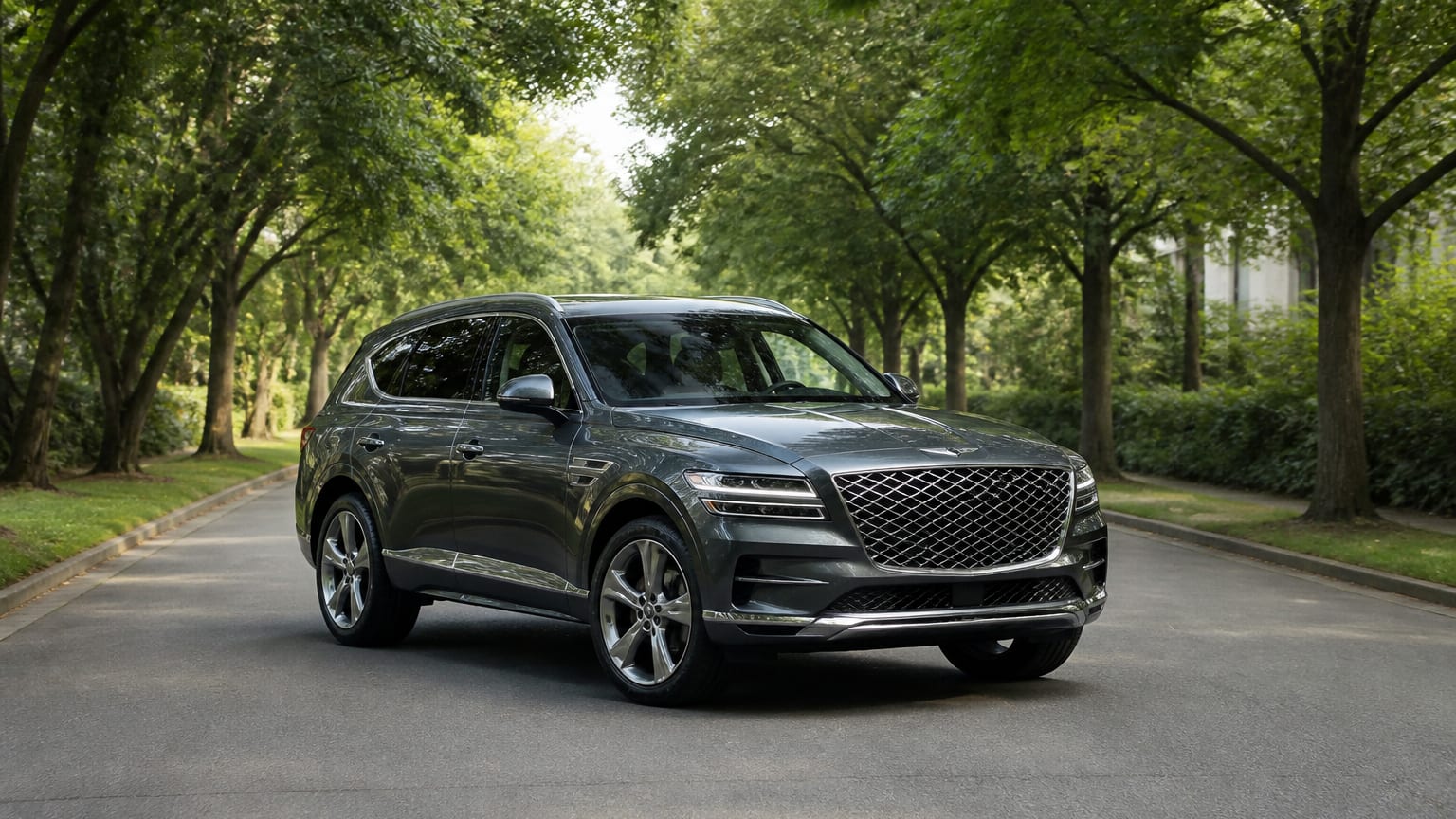
What are the best Genesis GV80 years to buy?
The best Genesis GV80 years to buy are 2023 and 2024, which carry meaningfully lower NHTSA complaint volumes and fewer active recalls than the 2021-2022 cars.
| Best Genesis GV80 Year | Why It's a Strong Buy |
|---|---|
| 2023 | 35 NHTSA complaints (vs. 55 for 2021); 3 recalls, all covered at dealer |
| 2024 | 17 NHTSA complaints; 1 recall per Consumer Reports; drive-system recall addressed |
Most reliable Genesis GV80 years: 2023, 2024
2023 Genesis GV80
The 2023 Genesis GV80 has accumulated 30 NHTSA complaints in one dataset - a roughly 45% drop from the 2021 model. The pretensioner recall is addressed, the fuel-pump issue is covered under 24V-282, and the HUD software fix was issued as a recall. Buyers who prioritize a used GV80 with the widest selection of resolved issues should start here.
2024 Genesis GV80
Consumer Reports notes that the 2024 GV80 is less reliable than other cars from the same model year, and the 2024 Genesis GV80 has been recalled once by NHTSA. That single recall figure is the lowest of any GV80 model year with enough time on the road to accumulate data, making the 2024 the lowest-recall-count option among used GV80s currently in the market. Edmunds projects that most Genesis vehicles will cost less than $1,000 in annual repairs once their warranty expires - a figure that is low for a luxury segment.
Genesis GV80 submodel years to avoid
The GV80 lineup includes the standard five-door SUV and the GV80 Coupe, which was added for the 2025 model year. Each is assessed on its own complaint and recall record below.
Genesis GV80 Coupe years to avoid
For the 2025 model year, Genesis introduced the GV80 Coupe alongside a significant update to the standard GV80 SUV; the GV80 Coupe shares underpinnings with the updated SUV but features a sportier look, a more extensive standard feature list, and a more powerful engine option.
The GV80 Coupe is distinct from the standard SUV in its powertrain range. Whereas the standard GV80 continues with a turbocharged 2.5-liter four-cylinder base engine and an available twin-turbocharged 3.5-liter V6, the GV80 Coupe adds the e-supercharged V6 from the G90 sedan producing 409 horsepower. The GV80 Coupe is available in two well-equipped all-wheel-drive trim levels, primarily differentiated by their powertrain.
No GV80 Coupe model year has yet accumulated enough complaint data to flag a specific avoid year. The GV80 Coupe is all-new for 2025, so there is no real complaint history to it yet. The parent platform’s electrical system and infotainment quirks covered above apply equally here, since the Coupe shares the same architecture. Key checks before buying a used GV80 Coupe:
- Confirm the instrument panel display software recall (if applicable to your VIN) has been completed
- Test wireless CarPlay and the 27-inch merged display thoroughly on the test drive
- Check for any new recall campaigns on the e-supercharged 3.5T, as this powertrain has no field history yet
Genesis GV80 pre-purchase checklist
Before signing anything on a used Genesis GV80, work through this checklist:
- Run the VIN through NHTSA’s recall checker at nhtsa.gov/recalls to confirm every open campaign is resolved; the GV80 has accumulated multiple overlapping recall waves
- Verify the seat belt pretensioner recall is complete - on any 2021-2023 GV80, ask for dealer paperwork showing the pretensioner cap installation or replacement under recall 21V-796 / Genesis number 012G
- Confirm the fuel pump recall is closed - on 2022-2023 GV80s, verify the fuel pump was replaced under NHTSA campaign 24V-282 (Genesis number 022G) or its predecessor 23V-670
- Test the sunroof on 2021 cars - open and close it, then look for any staining on the headliner or damp smell that suggests a prior water intrusion not fully repaired
- Check the infotainment system and HUD - on 2023-2024 models, confirm the HUD software recall has been performed and test wireless CarPlay on the test drive
- Inspect the AWD differential - on any AWD-equipped GV80, listen for vibration or grinding at highway speeds; ask for service records showing the differential recall status
- Request full service records - Genesis’s warranty is generous (5-year/60,000-mile new-vehicle, 10-year/100,000-mile powertrain), so used cars with documented dealer service history are worth a premium
- Budget for out-of-warranty repair costs - RepairPal data for the GV80 is still sparse given the model’s youth, but Edmunds projects under $1,000 per year for most Genesis vehicles once the factory warranty expires
Better alternatives to consider
If the GV80 years in your budget land on the avoid list, consider these alternatives instead:
- Acura MDX - longer production run with a clearer year-by-year reliability record and a well-documented best-year window in the third generation
- Toyota RAV4 - a step down in luxury but one of the most thoroughly documented reliability records in the midsize SUV class, with a straightforward used-market history
- Lexus RX - similar luxury-brand positioning to the GV80, with multiple generations of NHTSA and CarComplaints data for direct year-by-year comparison
- BMW X5 - cross-shopped directly against the GV80 in most luxury midsize SUV buyer journeys, with a longer complaint history that makes its own avoid years easier to pin down
Is the Genesis GV80 worth buying?
Yes, the Genesis GV80 is worth buying - as long as you avoid the 2021 and 2022 model years and confirm all open recalls are closed on any car you are considering. The GV80 won the Kelley Blue Book Best Buy Award for midsize luxury SUVs the year it was introduced and retained the top position in its class. Overall, repair costs for out-of-warranty Genesis vehicles are expected to remain below $1,000 per year on average, based on Edmunds and RepairPal estimates. The 2023 and 2024 model years represent the clearest used-market buys: lower complaint counts, fewer open recalls, and the same award-winning interior and safety package. Run the VIN through NHTSA’s recall database and verify the service history before you buy.