

The Genesis G70 is one of the more compelling used luxury sport sedans on the market, blending rear-wheel-drive dynamics with below-average ownership costs. Specific model years carry a disproportionate share of the complaints and recalls, though, so picking the right year matters more than it does with some competitors. This guide uses NHTSA complaint data, CarComplaints PainRank scoring, and RepairPal repair-cost data to tell you exactly which years to buy and which to skip.
For generations, engines, and ownership notes in one place, see the Genesis G70 hub.
Related: Genesis G80 years to avoid, BMW 3 Series years to avoid.
At a glance
- Worst years
- 2019
- 2020
- 2023
- Best years
- 2021
- 2024
- Top failure
- High-pressure fuel pump failure causing loss of drive power on 2019-2023 G70s (NHTSA recall 24V-528, CarComplaints)
- Always do before buying
- Run the VIN through NHTSA's recall checker to confirm every open recall is closed, and on any 2019-2023 car verify that recall 24V-528 (fuel pump) has been completed at a dealer
Recalls by year
Gray bands mark years the model was not produced.
How we rated the best and worst Genesis G70 years
The first generation (2019-2021) and the facelifted second generation (2022 - present) both have documented problems, but the 2019 launch year stands out as the single weakest entry point by NHTSA complaint volume, while CarComplaints rates the 2023 model year as its worst based on repair cost and mileage-at-failure (its PainRank system). Those are different findings from different methodologies, and this guide attributes each to the right source. The years to avoid methodology relies on NHTSA complaints, CarComplaints PainRank, and RepairPal cost data rather than any single source, which is why the worst year can differ depending on which signal you weight.
Data sources used here include NHTSA complaints and recall campaigns, CarComplaints PainRank, RepairPal repair-cost data, Consumer Reports owner surveys, and owner discussion on Genesis G70 Forum and Genesis Owners Group forums. CarComplaints ranks a model year as worst based on repair cost and the mileage at which problems appear; NHTSA ranks by raw complaint volume. These often point to different years, and both signals matter.
| Genesis G70 Generation | Best Genesis G70 Years | Worst Genesis G70 Years |
|---|---|---|
| First gen (2019-2021) | 2021 | 2019, 2020 |
| Second gen / facelift (2022 - present) | 2024 | 2023 |

Every Genesis G70 model year ranked
The 2019 launch year is the clearest avoid, followed by 2020 and the facelifted 2023; every other model year falls into an OK or better category.
| Model Year | Generation | Verdict | Notes |
|---|---|---|---|
| 2019 | First gen | Avoid | Highest NHTSA complaint volume (57 complaints); 5 recalls; electrical, powertrain, fuel pump issues |
| 2020 | First gen | Avoid | 12 NHTSA complaints; 3 recalls; fuel pump and steering recall; shares 2019 issues |
| 2021 | First gen | Best | Only 4 NHTSA complaints; 4 recalls mostly carried over but lowest complaint rate of the generation |
| 2022 | Second gen | OK/Mixed | Facelift year; 27 NHTSA complaints; fuel pump recall coverage begins; some first-facelift build issues |
| 2023 | Second gen | Avoid | CarComplaints rates worst year by repair cost/mileage; Consumer Reports rates reliability below average |
| 2024 | Second gen | Best | 0 reported owner complaints; 0 recalls per available data; reliability scores improve |
| 2025 | Second gen | OK/Mixed | 1 NHTSA complaint; early data only; no major defect clusters yet |
Most common Genesis G70 problems
The top reported issue categories across all G70 model years are engine (28 complaints), fuel/propulsion system (26 complaints), and unknown or other (21 complaints), according to NHTSA data. The single most notorious failure is the high-pressure fuel pump defect, which triggered a formal safety recall covering five model years. Beyond the fuel pump, a pattern of ABS module fire risk, turbocharger oil line leaks, transmission shudder, and infotainment failures rounds out the list.
1. High-pressure fuel pump failure (2019-2023)
The fuel control valve inside the high-pressure fuel pump can stick or allow excess fuel into the system, producing an air/fuel mixture that runs too rich. This causes a reduction or loss of motive power at low speeds, rough running, and check-engine warnings, increasing crash risk.
NHTSA recall 24V-528 (Genesis Motor America recall number 023G) covers certain 2019-2023 model year G70 vehicles and addresses a condition involving the high-pressure fuel pump. Dealers update the engine control module software and inspect and replace the fuel pump assembly as necessary, all free of charge. As of the recall filing date, Genesis confirmed 2,460 related incident reports received from May 2019 through June 2024 for affected U.S. vehicles.
The repair itself is covered under the recall at no cost. Out-of-pocket repairs before the recall, or on out-of-coverage vehicles, run roughly $400 - $900 for a pump assembly. If you own a 2019-2023 G70, confirm this recall is closed before you drive the car.
2. ABS module electrical short / fire risk (2019-2021)
Hyundai issued safety recalls (NHTSA IDs: 21V-160 and 21V-161) covering 2019-2021 Genesis G70 vehicles. The anti-lock brake system modules could malfunction internally and cause an electrical short over time, potentially resulting in an engine compartment fire while parked or driving.
Until recalled vehicles were repaired, Genesis recommended parking them outside and away from homes and other structures. RepairPal lists the starter solenoid electrical short causing risk of fire as the most common recall on the G70 overall. The ABS module swap is dealer-performed at no cost under the recall. On a used buy, pull the CarFax and verify the recall repair date appears in the service history.
3. Turbocharger oil feed pipe leak (2019-2022, 3.3T engine)
Hyundai recalled certain 2019-2022 G70 vehicles equipped with the 3.3-liter V6 turbocharged engine because the left turbocharger oil feed pipe may deteriorate and leak oil. An oil leak in the presence of hot engine components increases the risk of an engine compartment fire. Dealers replace the left turbocharger oil feed pipe free of charge. The NHTSA campaign number is 24V-191 (Genesis recall number 019G), and it expands and replaces the earlier campaign 19V-538.
Turbocharger oil feed lines are the primary wear item on the 3.3T. The rubber-and-metal composite lines harden and crack with heat cycling, typically after 80,000 miles. If the recall repair has already been done (dealers fit a redesigned stainless steel pipe), this concern is largely resolved. Verify the fix in the service records before purchase.
4. Transmission shudder and low-speed hesitation
The G70 uses a ZF-derived 8-speed automatic that is fundamentally sound but generates significant owner frustration when fluid maintenance is ignored. Low-speed hesitation and torque converter shudder are the most common complaints. The car hunts for gears in stop-and-go traffic, and a vibration appears during light throttle application around 40-50 mph. This can show up as early as 20,000 miles but is more common after 40,000.
A transmission fluid flush typically resolves the shudder in most cases. A full flush at an independent shop runs roughly $150 - $300. If the shudder persists after a fresh fluid change, a torque converter replacement can reach $1,500 - $2,500. Owner forums note hard shifting issues with the transmission, particularly on early 2019-2021 models. Always ask a seller when the transmission fluid was last changed.
5. Infotainment freezing and electrical gremlins (2019-2020)
Infotainment freezing and rebooting is most prevalent on 2019 and 2020 cars. G70 owners report persistent problems with the infotainment system including screen delamination, navigation glitches, and Bluetooth disconnections. The telematics system and remote start features often function sporadically. These electronic gremlins are particularly common on early 2.0T models.
The 2019 model year’s most commonly reported problem areas include electrical system (8 complaints) and unknown or other (8 complaints) per NHTSA data. A head unit replacement at a dealer can run $800 - $1,500 depending on the trim. Software updates have addressed some of the worst behavior, but the underlying hardware on 2019-2020 cars was never redesigned.
6. Brake rotor warping (all years, Sport trim)
Rotor warping is a consistent complaint on Sport trims with the larger brake package. The G70’s aggressive factory brake bias combined with hard use accelerates the problem. Symptoms include steering wheel vibration under braking, pedal pulsation, and uneven pad wear.
OEM rotors run $80 - $150 each, quality aftermarket options $100 - $200 each, and pads $60 - $150 per axle. A full brake job at an independent shop runs $400 - $800. This is manageable maintenance rather than a catastrophic defect, but budget for it within the first 30,000 miles on any used Sport trim. A squeaky brake pedal or pulsation under light braking is the first warning sign.
Which Genesis G70 years should you avoid?
The Genesis G70 years to avoid are 2019, 2020, and 2023. The 2019 model year drew the most NHTSA complaints of any year in the G70’s run. The 2019 Genesis G70 has mixed reliability, with 5 recalls and 57 NHTSA owner complaints on file, including 6 crash-related complaints. CarComplaints, which weights repair cost and the mileage at which problems emerge, rates the 2023 model year as its worst year for the G70.
| Genesis G70 Generation | Model Years | Verdict | Main Issues |
|---|---|---|---|
| First gen (2019-2021) | 2019, 2020 | Worst | Fuel pump failure, ABS module fire risk, electrical gremlins, high complaint volume |
| First gen (2019-2021) | 2021 | Best | Lowest complaint rate of first gen, same recall coverage resolved |
| Second gen / facelift (2022 - present) | 2022 | Mixed | Moderate complaint volume, turbo pipe and fuel pump recalls apply |
| Second gen / facelift (2022 - present) | 2023 | Worst | CarComplaints worst year by repair cost; Consumer Reports below-average reliability |
| Second gen / facelift (2022 - present) | 2024 | Best | Lowest complaint counts; most recalls resolved |
| Second gen / facelift (2022 - present) | 2025 | OK/Mixed | Early data only; no major defect clusters yet |
Worst Genesis G70 years: 2019, 2020, 2023

First-generation Genesis G70 (2019-2021)
Early model years experienced several reliability issues including fuel pump failures, ABS module malfunctions, and starter solenoid problems. The 2019 and 2020 models faced multiple recalls that affected owner confidence and long-term dependability.
The 2019 G70 carries 5 recalls and 57 NHTSA owner complaints, making it the single most complaint-heavy year in the lineup. The 2020 model improved somewhat, with 3 recalls and 12 NHTSA owner complaints on file, but it shares the same fuel pump and infotainment weaknesses as the 2019. If you are shopping in this generation, the 2019 NHTSA complaint page is worth reviewing before any purchase.
Second-generation Genesis G70 / facelift (2022 - present)
The facelifted 2022 carries a moderate complaint load of 27 NHTSA complaints, in part because the fuel pump recall (24V-528) applies to it alongside carryover turbo oil line exposure. Although the 2020 Genesis G70 has the most overall complaints on CarComplaints, the site rates the 2023 model year as worse because of higher repair cost or more problems at lower mileage. Consumer Reports also notes that the 2023 G70 is less reliable than other cars from the same model year. The 2024 and later years benefit from resolved recalls and a cleaner complaint record.
What are the best Genesis G70 years to buy?
The best Genesis G70 years to buy are 2021 and 2024. Both sit at the low end of the complaint and recall distribution, and each benefits from fixes applied to the problems that troubled earlier cars.
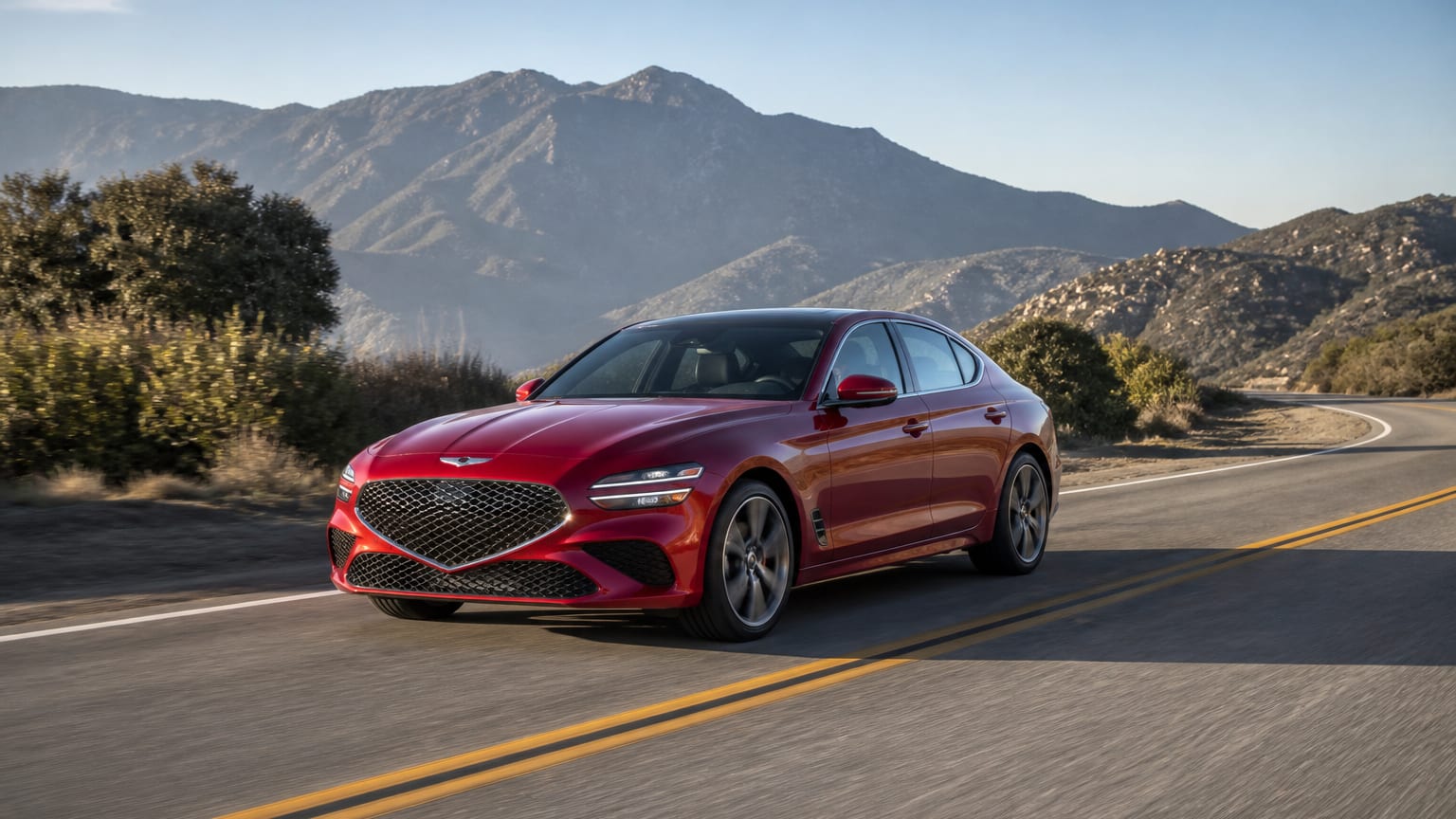
| Best Genesis G70 Year | Why It's a Strong Buy |
|---|---|
| 2021 | Only 4 NHTSA complaints; final pre-facelift year with early issues resolved; recall coverage in place |
| 2024 | 0 reported owner complaints; 0 recalls per available data; post-facelift refinement settled in |
Most reliable Genesis G70 years: 2021, 2024
2021 Genesis G70
The 2021 model year drew the fewest NHTSA complaints of the entire G70 lineup to that point. The 2021 G70 has good reliability, with 4 recalls and only 4 NHTSA owner complaints on file. The 2021 model year marked the final year of the pre-facelift design. Reliability improved slightly over 2019-2020 as Genesis addressed early production issues. The ABS module recall affected 2019-2021 models, but overall complaint rates decreased sharply compared to the launch years.
2024 Genesis G70
The 2024 Genesis G70 is a strong reliability pick, with 0 recalls and 0 owner complaints on record. The 2024 also benefits from physical climate control buttons and an updated interior that addressed the touchscreen-heavy layout criticized in earlier facelifted cars. The 2024-2025 models benefit from Genesis addressing earlier problems, with all 3.3T variants receiving Brembo brakes as standard equipment. The models feature the most up-to-date technology and refined driving dynamics with fewer reported problems than launch years.
Genesis G70 submodel years to avoid
The G70 2.0T and G70 3.3T use fundamentally different engines and have meaningfully different reliability profiles. Each is assessed on its own data below.
Genesis G70 3.3T years to avoid
The G70 3.3T pairs the Lambda II 3.3-liter twin-turbocharged V6 with an 8-speed automatic, producing 365 horsepower. It was offered across the full G70 run (2019 - present) in RWD and AWD configurations. This is a different engine family from the 2.0T Theta II four-cylinder, and its known failure set is different as well.
Forum consensus across Genesis and Stinger communities consistently rates the Lambda II 3.3T as the more reliable long-term engine. It does not share the 2.0T’s oil consumption reputation. The 3.3T’s own primary concern is the turbocharger oil feed line: on 2019-2022 3.3T G70s, the left turbocharger’s oil feed pipe assembly can degrade and leak under sustained heat cycling, creating a fire hazard. NHTSA recall 24V-191 (Genesis campaign 019G) covers free replacement with a redesigned stainless steel pipe - the same pipe Genesis fitted from the factory on 2023+ cars. If this recall has been completed, the pipe concern is resolved.
Carbon buildup is a maintenance reality on the direct-injection V6. Walnut blasting on the V6 runs $500 - $900 due to added complexity and should be planned for at 60,000-80,000 miles. A persistent forum claim about timing chain tensioner failure on the 3.3T appears to have been borrowed from early Kia Stinger reports and is not documented as a widespread G70-specific failure - watch for it, but do not treat it as a confirmed defect.
The 3.3T also falls within the high-pressure fuel pump recall (24V-528) on 2019-2023 cars - this is a shared issue with the 2.0T covered in full earlier in this article. Among 3.3T model years, the 2019 carries the most recall exposure given the combination of the ABS module (21V-161), the turbo oil pipe (24V-191), and the fuel pump (24V-528) campaigns. Verify all three are resolved on any 2019 3.3T before purchase.
- Check that recall 24V-191 (turbo oil pipe) is closed - it applies to 3.3T cars only (2019-2022)
- Budget for walnut blasting at 60,000-80,000 miles
- Inspect the engine bay for oil seep near the turbochargers on high-mileage examples
- Confirm transmission fluid has been changed; the 3.3T’s torque output accelerates shudder on neglected fluid
Genesis G70 pre-purchase checklist
Before buying any used Genesis G70, run through these model-specific checks:
- Run the VIN through NHTSA’s recall checker to confirm every open campaign is closed - the G70 carries up to 5 recall campaigns on the 2019 model year alone
- Verify recall 24V-528 (fuel pump) is completed on any 2019-2023 car; this is the broadest G70 recall, covering five model years, and the repair is a free ECM update plus HPFP inspection or replacement at any Genesis dealer
- On a 3.3T (2019-2022), confirm recall 24V-191 (turbo oil pipe) is done - ask for the dealer repair order showing the stainless replacement pipe was installed
- Check recall 21V-161 (ABS module fire risk) on 2019-2021 cars - this recall recommended outdoor parking until fixed; confirm the module replacement is in the service records
- Test the transmission at 40-50 mph under light throttle for torque converter shudder, and ask when the fluid was last changed; a flush costs $150 - $300 and should have been done by 40,000 miles
- On 2019-2020 cars, test the infotainment system for screen freezing, reboot cycles, and Bluetooth drop - software updates help but the underlying hardware was never redesigned
- Check the brake rotors on Sport trims for pulsation under light braking; warped rotors can appear by 20,000 miles and a full brake job runs $400 - $800 at an independent shop
- Ask for full service records to confirm oil change intervals (use 5,000-mile full-synthetic on the 2.0T), recall completions, and transmission fluid history
Better alternatives to consider
If the G70 years in your budget land on the avoid list, consider these alternatives instead:
- Hyundai Genesis (2015-2016) - the full-size predecessor shares the Genesis platform DNA and may offer a cleaner used-market option in certain budgets
- Kia Stinger (2018-2023) - shares the G70’s Lambda II 3.3T engine and platform, with a similar reliability profile but a larger body and arguably better parts availability
- Lexus IS (2014-2020) - a proven alternative in the same compact luxury sport sedan class with a stronger long-term reliability record and a wider dealer network
- BMW 3 Series (2019-2021 G20 generation) - competes directly with the G70 on performance but has better parts availability; confirm the B48 or B58 engine variant before buying
Is the Genesis G70 worth buying?
The Genesis G70 is worth buying as long as you stay away from the 2019, 2020, and 2023 model years. The annual maintenance cost of a Genesis averages $524 according to RepairPal, which is meaningfully below the $652 average for all vehicles and well below German luxury alternatives. Genesis vehicles average around $524 per year to maintain and repair, well below comparable German luxury brands like BMW or Mercedes-Benz.
The 2021 and 2024 models are the strongest used picks - low complaint counts, resolved recalls, and the full Genesis powertrain warranty backing them. All new Genesis models include an industry-leading 10-year/100,000-mile powertrain warranty, which transfers in part to used buyers still within coverage. Run the VIN through NHTSA’s recall checker and verify the fuel pump recall (24V-528) is closed before finalizing any purchase.