
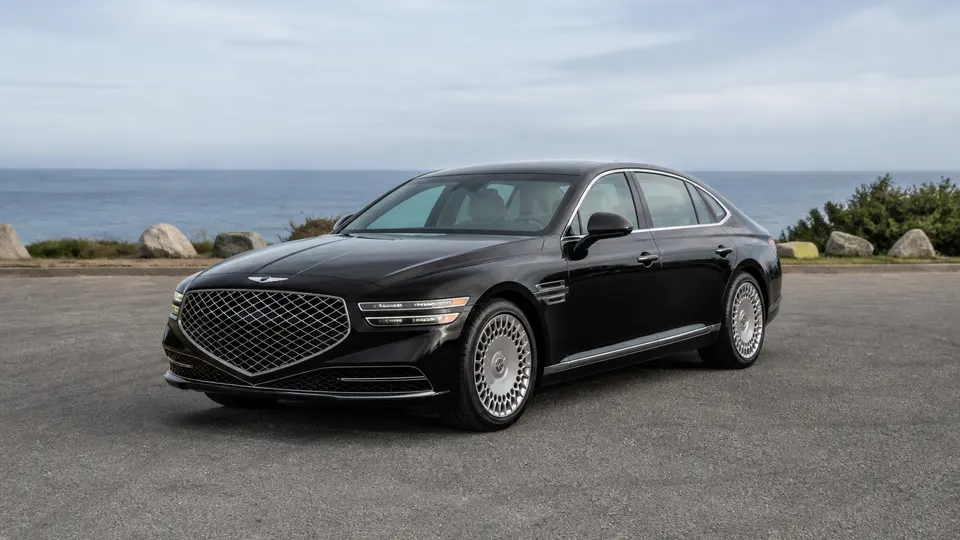
The Genesis G90 is one of the most value-rich full-size luxury sedans you can buy used, offering near-Mercedes levels of comfort at a fraction of the price. Manufactured since 2015 by Genesis Motor (Hyundai's luxury division), the G90 is a four-door flagship sedan with a genuinely strong overall record - but the 2017 and 2018 model years carry fire-risk recalls and elevated complaint rates that you'll want to price in or walk away from. This guide uses NHTSA complaint data, CarComplaints PainRank ratings, recall campaign records, and owner-forum reports to show you exactly which years to target and which to avoid.
For generations, engines, and ownership notes in one place, see the Genesis G90 hub.
Related: Genesis G80 years to avoid, Audi A8 years to avoid.
At a glance
- Worst years
- 2017
- 2018
- Best years
- 2019
- 2020
- 2021
- Top failure
- 1st-gen 3.3T turbocharger oil pipe leak and engine-compartment fire risk (CarComplaints / NHTSA recalls 19V-538 and 24V-191)
- Always do before buying
- run the VIN through NHTSA's recall checker to confirm every open recall is closed, and on any 3.3T-equipped G90 from 2017-2022, verify the turbo oil pipe replacement under recall 019G / 24V-191 has been completed
How we rated the best and worst Genesis G90 years
The 2017 and 2018 Genesis G90 are the years to steer clear of, driven by the highest NHTSA complaint volumes of any model year and multiple fire-risk recall campaigns on the 3.3T engine. CarComplaints rates the 2018 model year as worse on its PainRank (which weighs repair cost and mileage at failure), even though the 2017 has the most overall complaints on that site. NHTSA measures raw complaint volume - a different dataset - and the 2017 and 2018 years top that list as well. The two numbers are different in methodology and often name different years as “worst,” so each claim in this article is attributed to its specific source; our years to avoid methodology applies these data sources consistently across vehicle reviews. Additional sources used include RepairPal reliability ratings, Consumer Reports recall counts, owner reports on the Genesis Owners Group forum, and recall campaign records from NHTSA.
| Genesis G90 Generation | Best Genesis G90 Years | Worst Genesis G90 Years |
|---|---|---|
| 1st gen (2017-2022) | 2019, 2020, 2021 | 2017, 2018 |
| 2nd gen (2023 - present) | None | None |
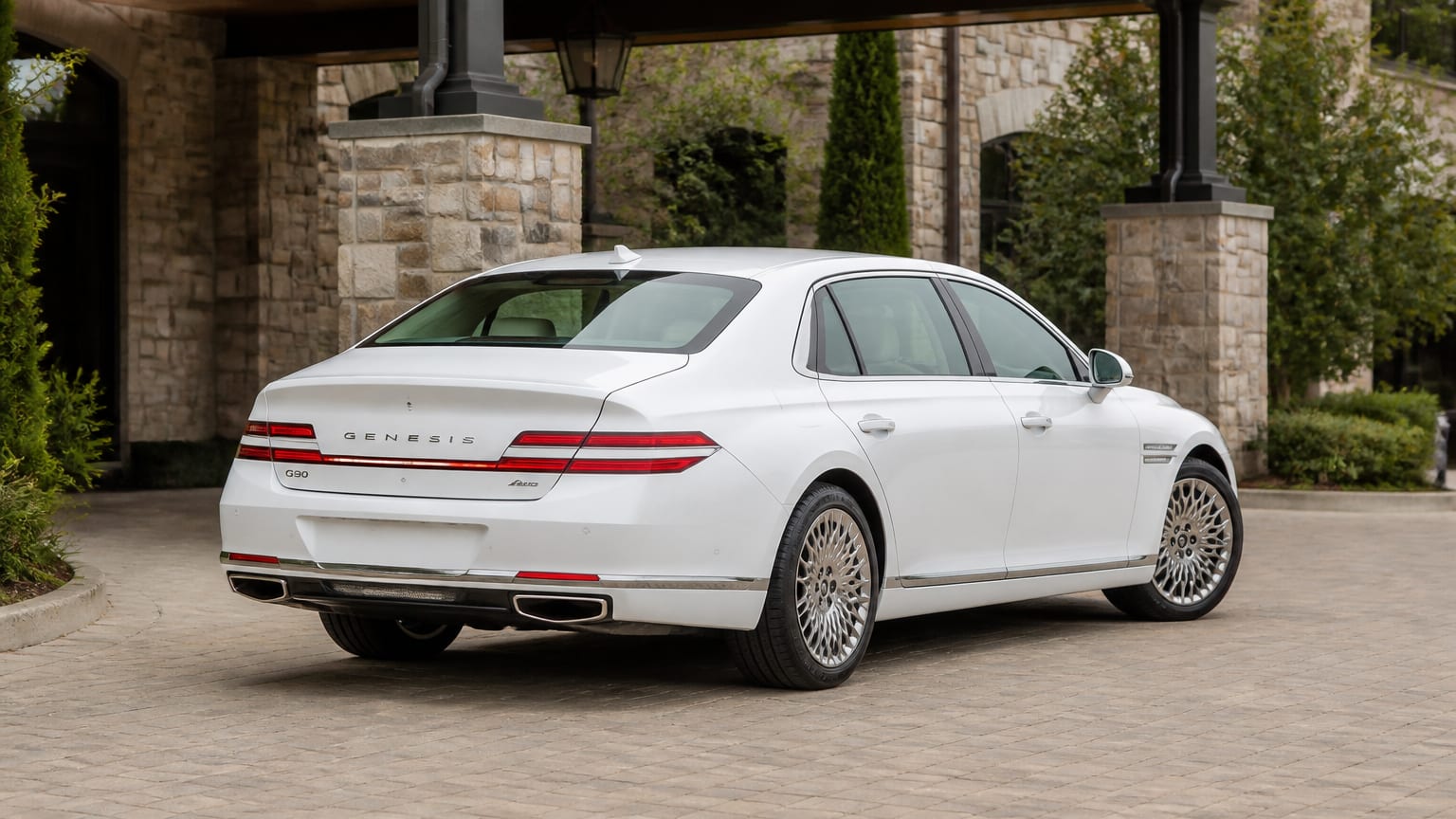
Every Genesis G90 model year ranked
The 2018 Genesis G90 is the single most problematic year to buy used, rated worst on CarComplaints by repair cost and mileage at failure, while 2019 through 2021 represent the cleanest first-generation picks.
| Model Year | Generation | Verdict | Notes |
|---|---|---|---|
| 2017 | 1st gen | Avoid | Most raw NHTSA complaints; turbo pipe fire recall; starter solenoid fire recall |
| 2018 | 1st gen | Avoid | CarComplaints worst year by PainRank; 4 NHTSA recalls; rodent/airbag wire issue |
| 2019 | 1st gen | Best | Low complaint count; turbo pipe recall applies but fewer distinct complaints |
| 2020 | 1st gen | Best | Minimal complaints filed with NHTSA; no distinct fault cluster |
| 2021 | 1st gen | Best | Low complaint volume; fuel pump recall (022G) applies to some VINs - verify |
| 2022 | 1st gen | OK/Mixed | Fuel pump recall 022G (expansion of 23V-630) applies; check VIN |
| 2023 | 2nd gen | OK/Mixed | New generation; early active recalls (instrument cluster, seat-belt pretensioner, fuel leak) |
| 2024 | 2nd gen | OK/Mixed | Too early for mature complaint data; HDA radar recall (030G) active on some VINs |
| 2025 | 2nd gen | OK/Mixed | Too early for mature complaint data; fuel leak recall 033G active |
Most common Genesis G90 problems
The single biggest documented failure on the Genesis G90 is the 3.3T turbocharger oil pipe leak that creates a genuine engine-compartment fire risk, and it spans the entire first-generation 3.3T production run. Below are the five recurring failure categories found across NHTSA complaints, recall campaigns, and owner forum reports.
1. Turbocharger oil pipe leak and engine fire risk (3.3T, 2017-2022)
Hyundai recalled 2017-2022 G90 vehicles equipped with the 3.3-liter V6 turbocharged engine because the left turbocharger oil feed pipe may deteriorate and leak oil. The pipe leaks pressurized engine oil directly onto the hot exhaust manifold, dramatically raising the risk of an under-hood fire. On 2017-2018 cars specifically, an earlier loose-seal version of the same pipe was the subject of a separate, earlier recall.
NHTSA campaign 19V-538 (Hyundai manufacturer number 003G) covered 2017-2018 G90 vehicles with 3.3-liter turbocharged engines where the turbocharger oil supply pipe had a loose seal causing oil to leak onto the exhaust manifold; dealers replaced the turbocharger oil supply pipe free of charge. NHTSA recall 24V-191 (manufacturer number 019G) later expanded coverage to 2017-2022 G90 3.3T vehicles and replaced the updated pipe design. Vehicles previously repaired under 19V-538 needed to have the new remedy completed under 24V-191 as well.
The fix is free at any Genesis dealer, but the key buyer takeaway is this: a 3.3T G90 from 2017-2022 could have two separate pipe replacements due - verify both recall completions by VIN before purchase. Turbocharger oil supply pipe cracking was also observed in Korean-market Genesis vehicles, prompting Hyundai’s global investigation before the expanded recall was filed.
2. Starter solenoid water intrusion and fire risk (2017-2019)
On 2017-2019 Genesis G90 vehicles, water can enter the starter solenoid and cause an electrical short that may lead to an engine-compartment fire while the vehicle is parked or being driven; Genesis instructed owners to park outside and away from structures until repaired.
This defect is covered by NHTSA Recall 24V-107 (Hyundai/Genesis campaigns 018G and 254H), with owner notification letters mailed July 15, 2024. Under that recall, dealers install a remedy relay kit in the engine junction box that de-energizes the starter circuit when the engine is running, preventing solenoid overheating - performed free of charge.
If you’re buying a 2017, 2018, or 2019 G90, confirm this relay kit is installed. The out-of-pocket repair cost if done outside a recall is up to $300, but on an unrepaired car the fire risk is the real concern, not the dollar figure.
3. 12V battery drain and parasitic draw (2017-2023)
On 2017-2023 Genesis G90 vehicles, owners report the 12V battery going flat after the car sits a few days; the radio/head unit continuing to draw current after shutdown is a documented culprit, along with other parasitic draws, and leaving the key fob near the car compounds the drain. Frequent deep discharges shorten battery life and can leave the car unable to start.
The electrical system is the most common complaint category across all G90 model years in NHTSA data. Where the head unit is the source, dealers have replaced it under warranty. For a used purchase outside the warranty window, a head-unit replacement runs several hundred dollars. Ask the seller if the battery has been replaced recently and whether any parasitic-draw diagnosis has been performed.
4. Sunroof and headliner rattles (1st gen, 2017-2022)
On 2017-2022 Genesis G90 sedans with the large panoramic glass roof, owners and dealers commonly find creaks, rattles, and wind noise from the roof and headliner area; documented root causes include sunroof frame attachment bolts that back off or were under-torqued from the factory, with one case finding 32 loose bolts.
This is not a safety recall but does appear across owner reports on the Genesis Owners Group forum. The fix typically involves re-torquing or replacing roof attachment hardware, which a dealer can perform under warranty if the car is still covered. On an out-of-warranty car, have a pre-purchase inspection specifically check the headliner and sunroof frame. A whining noise when accelerating from the drivetrain is a separate symptom - the sunroof rattle is most obvious at highway speeds or over road seams.
5. Fuel pump failure (2022-2023) and fuel rail leak (2023-2025)
Hyundai recalled 2022-2023 Genesis GV70, GV80, G80, and G90 vehicles because the fuel pump may fail, resulting in a loss of drive power that can increase the risk of a crash. Hyundai’s manufacturer number for this recall is 022G, which is an expansion of recall 23V-630. Dealers inspect and replace the fuel pump assembly free of charge, with owner notifications mailed June 7, 2024.
A separate recall also affects 2023-2025 G90s because a fuel leak at the engine rail could increase the risk of fire; dealers will inspect and fix both issues for free. The fuel-leak recall carries Hyundai’s number 033G and affects 2023-2025 Genesis G90 vehicles; insufficient torque during assembly may cause retention fasteners to loosen, allowing fuel to leak from the crossover pipe. Both of these are correctable free of charge - the key step is confirming the VIN-specific repair status before any purchase.
Which Genesis G90 years should you avoid?
The Genesis G90 years to avoid are 2017 and 2018. CarComplaints rates the 2018 as the worst year by its PainRank metric, which accounts for repair cost and the mileage at which problems appear, while the 2017 leads in raw complaint count on that site. On NHTSA complaint data, the 2017 and 2018 years also carry the highest raw complaint volumes of any G90 model year.
| Genesis G90 Generation | Model Years | Verdict | Main Issues |
|---|---|---|---|
| 1st gen (2017-2022) | 2017, 2018 | Worst | Turbo oil pipe fire recall, starter solenoid fire recall, highest complaint volume |
| 1st gen (2017-2022) | 2019, 2020, 2021 | Best | Low complaints, same recalls applicable but far fewer fault clusters |
| 1st gen (2017-2022) | 2022 | Mixed | Fuel pump recall (022G); otherwise solid |
| 2nd gen (2023 - present) | 2023, 2024, 2025 | Mixed | Active recalls: fuel leak, instrument cluster, seat-belt pretensioner |
Worst Genesis G90 years: 2017, 2018
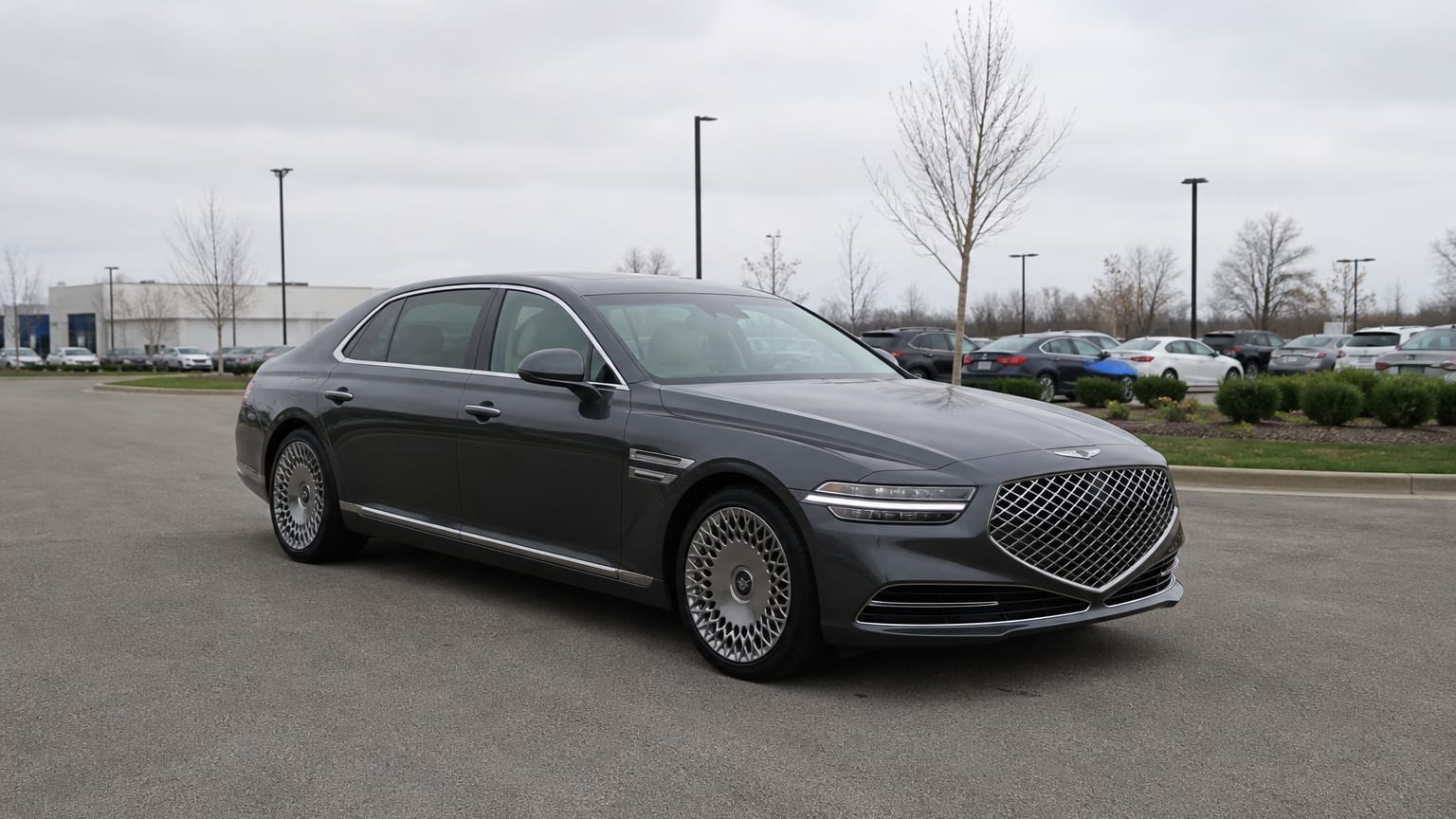
1st-generation Genesis G90 (2017-2022)
The most-reported single problem on CarComplaints for the entire G90 lineup is on the 2018 model year for rodent chewing on wires for air bags - a frustrating issue with no safety recall remedy as of this writing, so inspect the under-hood wiring harness on any 2018 purchase.
The 2018 Genesis G90 has been recalled 4 times by NHTSA, the highest count of any first-generation year. The 2017 is close behind with its own cluster of fire-related recall campaigns. There are 5 NHTSA recalls affecting some 2017-2022 Genesis G90 vehicles, and VIN-level eligibility varies - not every 2017-2022 G90 is subject to every campaign. The two with the most safety significance are the turbo oil pipe recalls (19V-538 / 24V-191) and the starter solenoid recall (24V-107), both described in full in the problem sections above.
What are the best Genesis G90 years to buy?
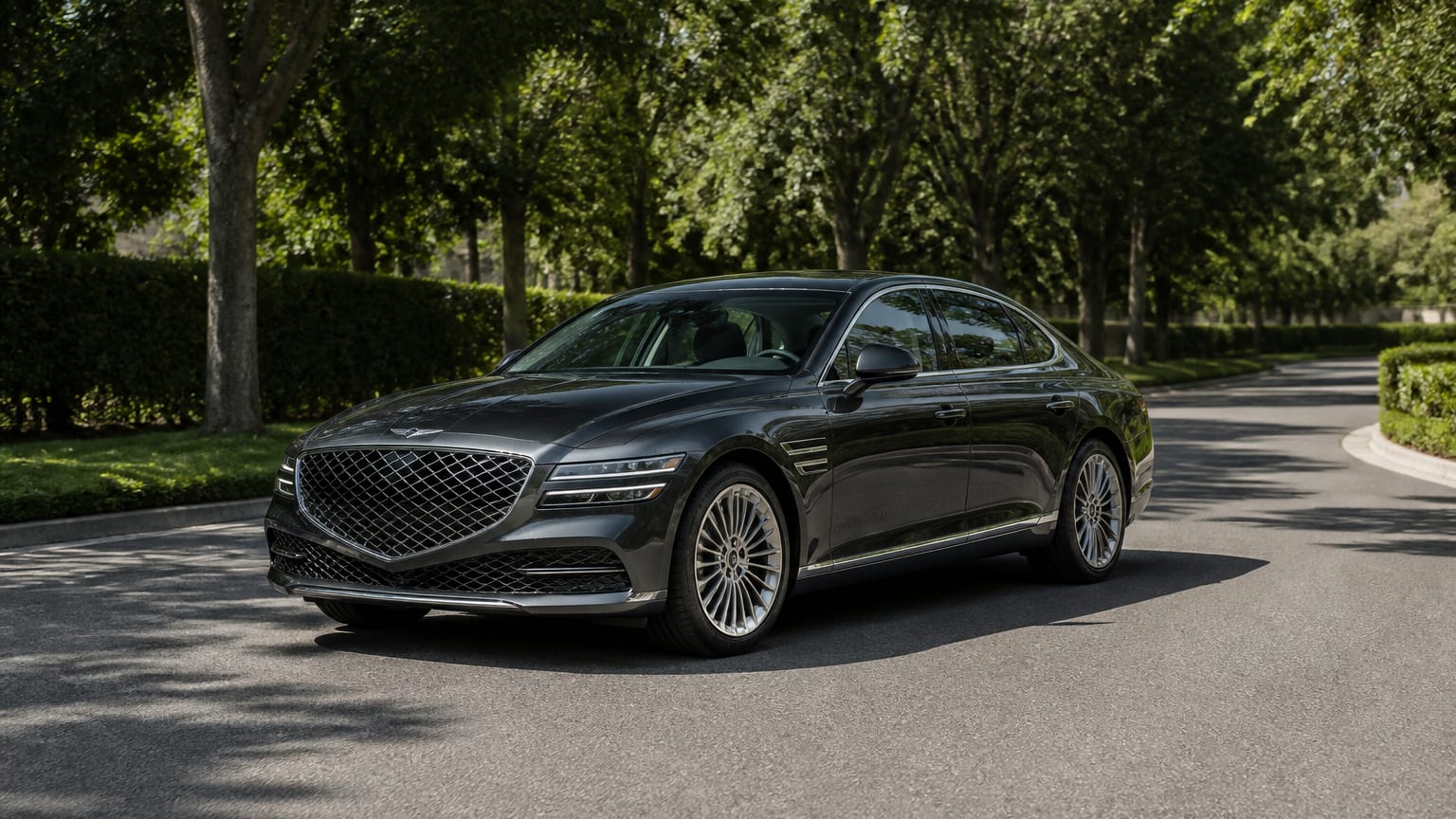
The best Genesis G90 years to buy are 2019, 2020, and 2021, which logged the lowest complaint counts among first-generation cars and avoided the 2017-2018 early-build quality problems.
| Best Genesis G90 Year | Why It's a Strong Buy |
|---|---|
| 2019 | Lower complaint count than 2017-2018; starter solenoid recall applies but fewer distinct fault reports |
| 2020 | Minimal NHTSA complaints filed; no distinct fault cluster documented |
| 2021 | Low complaint volume; same recall landscape as later 1st-gen cars, but with real-world data showing clean track record |
Most reliable Genesis G90 years: 2019, 2020, 2021
2019 Genesis G90
The 2019 G90 sits outside the worst of the early build-quality problems. The 2019 Genesis G90 has only 2 problems and defects reported by G90 owners on CarComplaints, with the worst complaints being electrical problems - a fraction of the 2017’s and 2018’s totals. The turbo oil pipe recall (24V-191) does extend to the 2019 3.3T, so confirm that repair is closed on any 3.3T example, but the overall ownership picture is considerably cleaner.
2020 Genesis G90
The 2020 Genesis G90 logged 2 owner complaints and 1 recall in NHTSA records, making it one of the quietest years in the entire first-generation run. NHTSA complaints for the 2020 Genesis G90 include 1 crash-related report, 0 fire reports, 0 injuries, and 0 fatalities. This is the year for buyers who want first-generation styling and a well-sorted ownership experience.
2021 Genesis G90
The 2021 sits at the end of the first generation’s production run and benefits from years of refinement. The 2017-2022 Genesis G90 can be a sound used car depending on trim, mileage, and maintenance history, and the 2021 represents the cleanest expression of that generation. The fuel pump recall (022G) may apply to some 2021 VINs - run the NHTSA VIN checker before purchase to confirm its status.
Genesis G90 submodel years to avoid
The Genesis G90 has been sold with two primary engine configurations throughout its run - the 3.3T twin-turbo V6 and the 5.0 V8 - and each has its own reliability profile worth assessing separately.
Genesis G90 3.3T years to avoid
The G90 3.3T is powered by Hyundai’s Lambda II 3.3-liter twin-turbocharged V6, producing 365 horsepower, and was available across the full first-generation run (2017-2022). Recall campaigns affecting 2017-2022 G90 vehicles with the 3.3-liter V6 turbocharged engine centered on the left turbocharger oil feed pipe deteriorating and leaking oil, the defect described in full in Problem section 1 above. That is the defining reliability liability of the 3.3T variant specifically - the 5.0 V8 does not share it.
The 2017 and 2018 3.3T years are the clearest avoids. Both the original 19V-538 (manufacturer 003G) and the expanded 24V-191 (manufacturer 019G) recall campaigns applied specifically to 3.3T-equipped vehicles, and 2017-2018 3.3T cars may require completion of both campaigns. On the 2017-2022 Genesis G90 3.3L twin-turbo V6 (Lambda II), the original left-hand turbo oil pipe was the source of the recurring leak defect. On any 3.3T purchase from 2019-2022, the 24V-191 campaign still applies, but the complaint density is lower - confirm the pipe replacement is complete, and you are in meaningfully better shape.
Key checks before buying a G90 3.3T:
- Confirm recall 24V-191 (019G) completion via NHTSA VIN lookup
- On 2017-2018, also confirm the earlier 19V-538 (003G) pipe was replaced AND re-done under 24V-191
- Ask for records showing the 24V-107 starter solenoid relay kit was installed (2017-2019 only)
- Look for any oil residue on the exhaust manifold or under-hood burn marks
Genesis G90 5.0 years to avoid
The G90 5.0 pairs a naturally aspirated 5.0-liter V8 (420 hp) with an 8-speed automatic and was available on select trim levels from 2017 through 2022, rear-wheel drive only. Based on NHTSA complaint data, the 5.0L V8 has the lowest complaint density of any first-generation G90 engine and is considered the most reliable engine choice for buyers.
No G90 5.0-specific model year has accumulated enough complaint data to flag as an avoid year. The turbo oil pipe recall (the most serious first-gen defect) does not apply to the naturally aspirated 5.0 - it is a 3.3T-specific fault. The starter solenoid recall (24V-107) does apply to 2017-2019 5.0 cars, shared with the 3.3T, so confirm that relay kit installation on any early-year V8 purchase.
Note that the first-generation G90 does not use air suspension - it uses Genesis Adaptive Control (ECS) gas-charged electronic dampers with coil springs; part numbers vary by drivetrain (RWD 5.0 V8 vs. AWD 3.3T), so verify by VIN when sourcing replacement dampers. ECS rear damper wear is the high-cost mechanical concern to inspect on high-mileage V8 examples, not an air-suspension compressor.
Genesis G90 pre-purchase checklist
Before handing over money for any used Genesis G90, run through these model-specific checks:
- Run the VIN through NHTSA’s recall database to confirm every open recall campaign is closed - at minimum check 24V-191 (turbo pipe), 24V-107 (starter solenoid), and 022G (fuel pump) for applicable years.
- On any 2017-2022 3.3T: confirm recall 24V-191 / 019G turbo oil pipe replacement is complete; if buying a 2017-2018 3.3T, also confirm the prior 19V-538 / 003G pipe was replaced and re-done.
- On 2017-2019 cars (both engines): verify the starter solenoid relay kit under 24V-107 / 018G is installed and ask the seller whether the car was ever flagged for the fire risk.
- Inspect the under-hood wiring harness on 2018 models for rodent damage around the airbag wiring - the most-reported single problem on CarComplaints for the 2018 G90 is rodent chewing on wires for air bags.
- Test the 12V battery: on 2017-2023 cars, have the battery load-tested and confirm no parasitic draw exceeds roughly 50 mA after key-off; the head unit is a known culprit.
- Check the panoramic sunroof and headliner on 1st-gen cars for creaks and rattles, particularly at highway speed - loose frame bolts are a documented issue and may not be visible without a test drive on real roads.
- Confirm the fuel pump recall (022G / 23V-630 expansion) is closed on 2022 and 2023 G90 purchases; and on 2023-2025 cars, check for the fuel rail leak recall (033G) and the instrument cluster software update (027G).
- Request full service records and cross-reference oil-change intervals - particularly on 3.3T cars, where turbo health is tied to consistent oil maintenance.
Better alternatives to consider
If the Genesis G90 years in your budget land on the avoid list, consider these alternatives instead:
- Hyundai Sonata - a well-documented reliability record across multiple generations, with a far larger service network and lower ownership costs than the G90
- Chrysler 300 - a full-size rear-wheel-drive sedan with strong V8 options and a longer production run that gives more data points for year-by-year reliability shopping
- Lexus LS - the benchmark for full-size luxury reliability, with a stronger long-term ownership record and a denser dealer/service network than Genesis currently offers
- BMW 7 Series - a direct competitor in the full-size luxury space with a clearer model-year-by-model-year complaint history, though running costs run higher than the G90
Is the Genesis G90 worth buying?
Yes, the Genesis G90 is worth buying as long as you avoid 2017 and 2018. The 2017-2022 Genesis G90 can be a sound used car depending on trim, mileage, and maintenance history. The 2019, 2020, and 2021 model years in particular represent strong used-car value - full-size luxury amenities at a price well below equivalent European flagships, with a complaint record that is genuinely low.
The platform’s predecessor, the Hyundai Genesis, carries a RepairPal reliability rating of 3.5 out of 5.0, ranking it 7th out of 30 luxury full-size cars, with an average annual repair cost of $565 - well below the segment average. Our editorial guidelines and research methodology govern how complaint data, recall records, and owner reports are weighted across every vehicle review on this site. On the safety side, the 2025 Genesis G90 has been recalled 4 times by NHTSA for the active campaigns noted above, all of which are correctable free of charge at any Genesis dealer. Run the VIN through NHTSA’s recall checker and verify full service history before signing anything.