
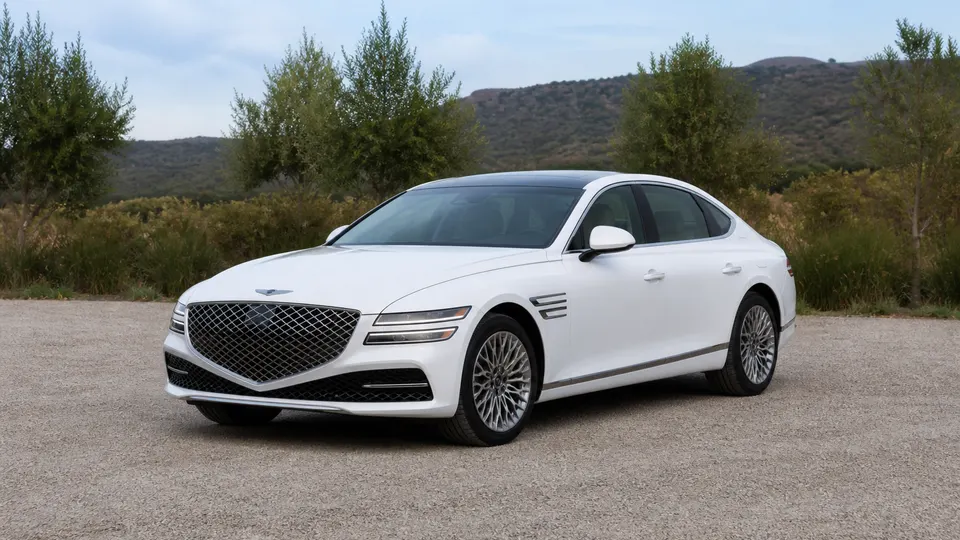
The Genesis G80 is one of the better values in the used luxury sedan segment, with strong J.D. Power scores and a relatively short complaint history compared to rivals. The G80 has the longest track record of quality and reliability scores among Genesis models, but two model years stand out for elevated complaints, fire-risk recalls, and repair costs that you should sidestep. This guide uses NHTSA complaint and recall data, CarComplaints PainRank ratings, and owner-forum reports to tell you exactly which years to avoid and which to target.
For generations, engines, and ownership notes in one place, see the Genesis G80 hub.
Related: Genesis G70 years to avoid, Genesis G90 years to avoid.
At a glance
- Worst years
- 2017
- 2018
- Best years
- 2022
- 2023
- Top failure
- 1st-gen electrical/fire risk from starter solenoid water intrusion and turbocharger oil pipe cracking (CarComplaints worst year: 2018; NHTSA highest complaint volume: 2018 with 102 complaints)
- Always do before buying
- run the VIN through NHTSA's recall checker; on 2017-2020 cars, confirm the starter solenoid recall (24V-107) and turbocharger oil pipe recall (019G) have both been completed at a dealer
Recalls by year
Gray bands mark years the model was not produced.
How we rated the best and worst Genesis G80 years
The 2017-2018 first-generation G80s are the years to avoid, driven by the highest NHTSA complaint volume and the most recall campaigns of any G80 model year. This guide draws on NHTSA complaint and recall records, CarComplaints (which ranks model years by repair cost and mileage at failure using its PainRank system), RepairPal, J.D. Power, Consumer Reports, Kelley Blue Book, and the Genesis G80 owner forum. CarComplaints rates 2018 as the worst year based on repair cost and low mileage at failure, while NHTSA’s raw complaint volume is also highest on the 2018, making both sources point to the same year. These are different measurement systems - CarComplaints uses a severity-weighted cost-per-repair formula, while NHTSA counts raw owner filings.
| Genesis G80 Generation | Best Genesis G80 Years | Worst Genesis G80 Years |
|---|---|---|
| 1st gen (2017-2020) | None | 2017, 2018 |
| 2nd gen (2021-present) | 2022, 2023 | None |

Every Genesis G80 model year ranked
The 2018 and 2017 G80s carry the weakest records across every data source; every other year lands in “OK/Mixed” or “Best” territory.
| Model Year | Generation | Verdict | Notes |
|---|---|---|---|
| 2017 | 1st gen | Avoid | 74 NHTSA complaints; starter solenoid fire recall |
| 2018 | 1st gen | Avoid | 102 NHTSA complaints; 6 recalls; CarComplaints worst year |
| 2019 | 1st gen | OK/Mixed | 32 NHTSA complaints; 3 recalls; fewer issues than 2017-2018 |
| 2020 | 1st gen | OK/Mixed | About-average reliability (Consumer Reports); 2 NHTSA recalls |
| 2021 | 2nd gen | OK/Mixed | Redesigned; 86/100 J.D. Power; fuel pump and seat belt pretensioner recalls |
| 2022 | 2nd gen | Best | Lowest complaint rate of post-redesign era; resolved most 2021 launch issues |
| 2023 | 2nd gen | Best | Fewest sustained owner complaints; instrument panel software recall resolved |
| 2024 | 2nd gen | OK/Mixed | 0 consumer complaints on record; 5 recalls (software/fuel); very new to used market |
Most common Genesis G80 problems
The single biggest failure across the G80’s history is electrical system faults tied to fire-risk recalls, which defined the first generation. Below are the four most documented recurring problems, ordered most serious first.
1. Starter solenoid water intrusion and fire risk
Hyundai recalled certain 2017-2019 Genesis G80 vehicles because water could enter the starter solenoid and cause an electrical short, which could result in an engine compartment fire while parked or driving. The symptom owners reported included smoke from the engine bay, a burning smell, and difficulty starting the car.
In documents provided to NHTSA, the automaker said it was aware of 12 cases in the U.S. where the starter solenoid experienced a “thermal incident.” The NHTSA campaign number is 24V-107, and Genesis’ own recall number is 018G. Owners are advised to park outside and away from structures until the recall repair is complete; dealers install a remedy relay kit in the engine junction box, free of charge.
This recall covers 2017-2019 G80s and is the most serious safety issue in the model’s history. If you are buying any of those years, verifying this recall is closed on your specific VIN is the single most important pre-purchase step.
2. Turbocharger oil feed pipe deterioration (3.3L V6 turbo)
Hyundai recalled certain 2018-2020 Genesis G80 vehicles equipped with a 3.3-liter V6 turbocharged engine because the left turbocharger oil feed pipe may deteriorate and leak oil. An oil leak in the presence of hot engine components raises the risk of an engine compartment fire.
Genesis’ recall number for the expanded campaign is 019G, which expands and replaces the earlier recall 19V-538; vehicles previously repaired under 19V-538 need to have the new remedy completed. Dealers replace the pipe at no charge. This defect is specific to the 3.3L twin-turbo V6 - base V6 (3.8L naturally aspirated) and V8 owners are not affected. Any 2018-2020 G80 with the 3.3T engine should have both the original 19V-538 repair and the 019G follow-up repair confirmed in writing before purchase.
3. ABS module malfunction and fire risk
Hyundai recalled certain 2017-2020 Genesis G80 vehicles because the Anti-Lock Brake System (ABS) module could malfunction and short circuit. An electrical short circuit inside the ABS module could cause an engine compartment fire while parked or driving; owners are advised to park outside and away from structures until the remedy is complete.
This is a separate recall from the starter solenoid campaign and affects a wider year range (2017-2020). It is one reason the 2018 model year accumulated 6 NHTSA recall campaigns - more than any other G80 year. Confirm this recall is cleared by VIN before buying any first-generation G80.
4. AC compressor and cooling system failure
The 2018 Genesis G80 drew its most severe CarComplaints-rated complaints in the AC/heater and cooling system categories. Owner accounts on Consumer Reports describe AC compressors failing in hot-weather stop-and-go driving, with one owner reporting the AC compressor quit entirely in June 2024 after previously freezing up in hot weather, costing $3,500 to fix, with only about 25,000 miles on the car.
The most-reported single problem on CarComplaints for the G80 is a water pump leak on the 2018 model year. CarComplaints lists the water pump leak repair cost at approximately $800. These cooling and climate failures point to a pattern of thermal management issues on the 2018 first-gen cars, most of which appear at relatively low mileage. A water pump failure that goes unchecked can cause rapid overheating, so ask for a cooling system inspection on any 2018 purchase.
5. Fuel pump failure (2nd gen)
Hyundai recalled certain 2021-2022 Genesis G80 and GV80 vehicles because the fuel pump may fail, which can result in a loss of drive power. A separate but related campaign followed for 2022-2023 models. The most worrying fuel pump recall in recent years was issued for approximately 31,440 Genesis units including G80 models from the 2022 and 2023 model years. Both campaigns were addressed through dealer replacement at no charge. This is a documented issue rather than a chronic field failure - confirmed recall repair completion is the check that matters here.
Which Genesis G80 years should you avoid?
The Genesis G80 years to avoid are 2017 and 2018. CarComplaints rates the 2018 Genesis G80 as the worst model year, ranked on several factors including repair cost and average mileage when problems occur, and it carries the most overall complaints on that platform. On the NHTSA side, the years with the most NHTSA complaint volume are 2018 (102 complaints), 2017 (74), and 2019 (32).
| Genesis G80 Generation | Model Years | Verdict | Main Issues |
|---|---|---|---|
| 1st gen | 2017, 2018 | Avoid | Starter solenoid fire risk, turbo oil pipe, ABS module recall, AC/water pump failures |
| 1st gen | 2019, 2020 | OK/Mixed | Turbo oil pipe recall (3.3T), ABS module recall; fewer complaints than 2017-2018 |
| 2nd gen | 2022, 2023 | Best | Fuel pump recall (resolved), instrument panel software recall (resolved) |
| 2nd gen | 2021, 2024 | OK/Mixed | Fuel pump recall (resolved), seat belt pretensioner recall, software recalls |
Worst Genesis G80 years: 2017, 2018
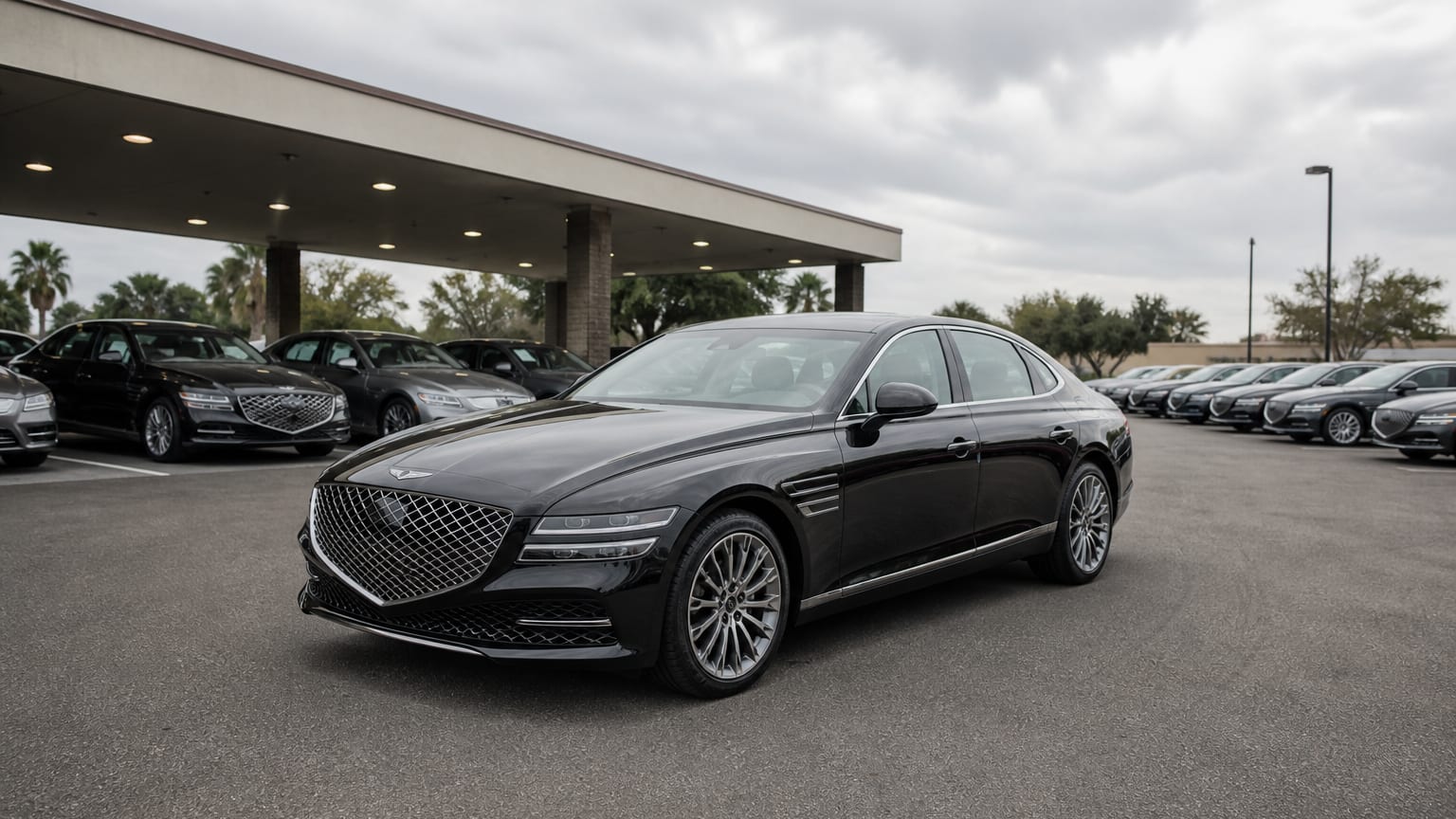
First-generation Genesis G80 (2017-2020)
The 2018 model year had the most recall activity of any G80 year, with 6 recall campaigns. The 2017 model accumulated 74 NHTSA complaints, driven largely by the same electrical and fire-risk issues. Both years sit inside the starter solenoid recall window (24V-107), the ABS module recall window, and - for 3.3T-equipped cars - the turbocharger oil pipe recall window (019G, which expands on 19V-538).
The top recall themes across the first-generation G80 are fuel and emissions, electrical, and engine and cooling. The 2019 and 2020 G80s are meaningfully better - the 2019 G80 achieved an 81 out of 100 rating from J.D. Power and avoided many of the severe problems found in 2017-2018 vehicles, though turbocharger oil pipe concerns remained for 3.3T cars. Consumer Reports rates the 2020 G80 as having about average reliability compared to other cars from the same model year, a notable improvement over the 2018.
Second-generation Genesis G80 (2021-present)
The Genesis G80 was last redesigned in 2021, bringing turbocharged four- and six-cylinder engines and a substantially updated interior. The 2021 G80 earned an 86 out of 100 reliability rating from J.D. Power. The second generation has no year that approaches the first gen’s complaint levels - the entire 2021-2025 G80 range has accumulated 26 NHTSA complaints combined, compared to 102 for the 2018 alone.
What are the best Genesis G80 years to buy?
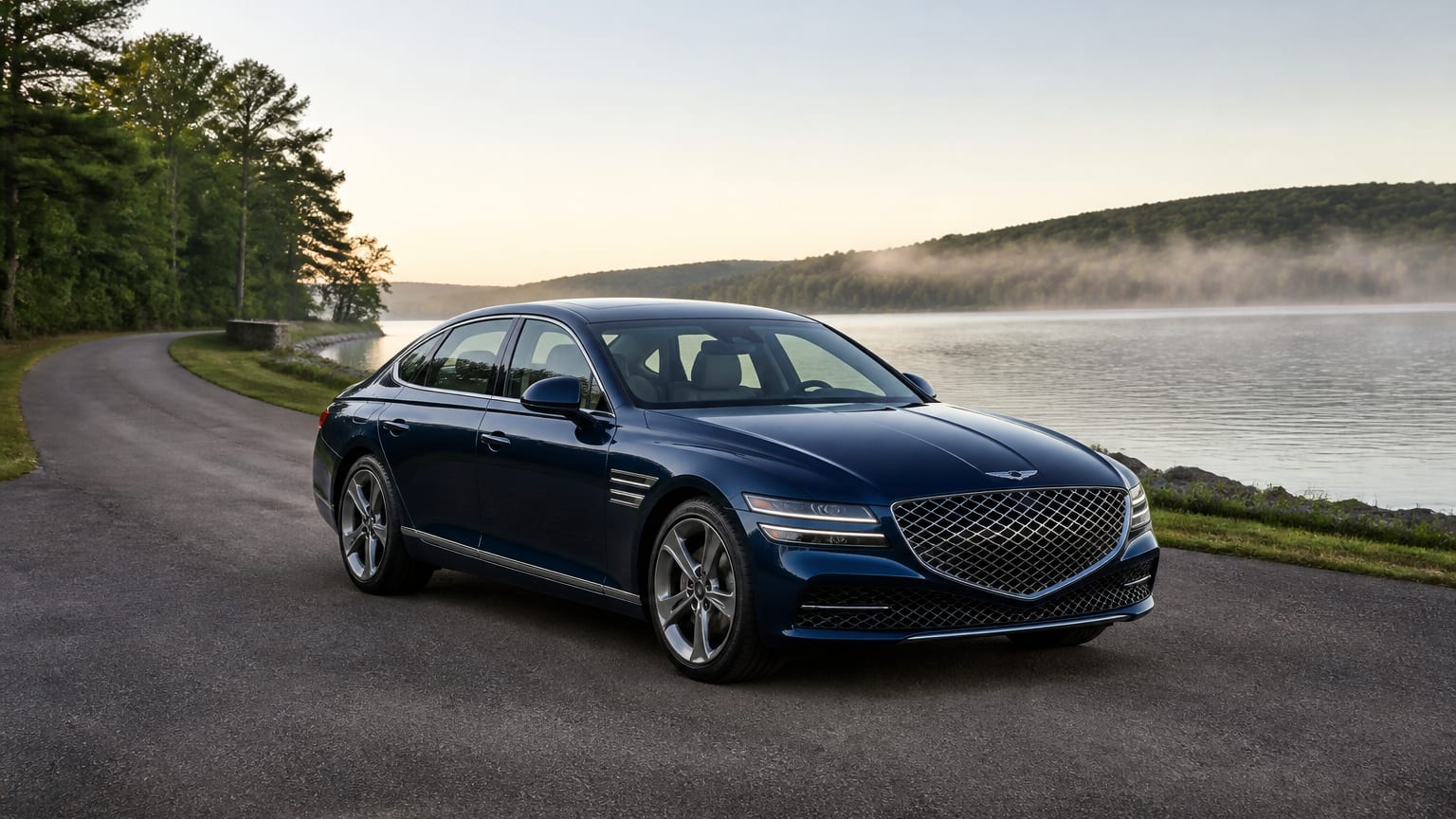
The best Genesis G80 years to buy are 2022 and 2023, with 2019 and 2020 as solid fallback options if budget requires a first-gen car.
| Best Genesis G80 Year | Why It's a Strong Buy |
|---|---|
| 2022 | Post-redesign build quality improvements; resolved 2021 launch issues; lowest complaint density of the modern era |
| 2023 | Fewest sustained NHTSA complaints; benefits from two years of second-gen refinement |
Most reliable Genesis G80 years: 2022, 2023
2022 Genesis G80
The 2022 model is widely regarded as the most reliable G80, benefiting from improvements made after the 2021 redesign. A fuel pump recall affected some 2022 units but was addressed through dealer service. With the second-generation platform now settled and no structural defects in the complaint record, a well-maintained 2022 is one of the safer picks in the used luxury sedan segment.
2023 Genesis G80
The second generation faced fuel pump failures affecting 2021-2023 models and instrument panel display issues in 2023-2024 vehicles, but both were addressed through recall campaigns. The 2023 benefits from the fewest unresolved complaints of any G80 year. A recall addressed an instrument panel display failure caused by a software error on 2023-2024 G80 vehicles - confirm it is resolved on your specific VIN before buying.
Genesis G80 submodel years to avoid
The Genesis G80 comes in a standard internal-combustion version and one electric submodel. Each is assessed here on its own record.
Genesis Electrified G80 years to avoid
The Electrified G80 is a fully electric version of the second-generation G80 platform, offered in the U.S. for the 2023 and 2024 model years before Genesis discontinued it domestically. Genesis quietly discontinued the Electrified G80 in the U.S. in 2025 after low sales, but existing cars remain under warranty and will be on the used market for years. Its powertrain is completely different from the ICE G80 - a dual-motor all-wheel-drive electric system replaces the 2.5T or 3.5T engines, and the complaints and recalls that define the standard G80 (starter solenoid, turbo oil pipe, ABS module) do not apply.
Because the Electrified G80 sold in low volumes, there is not the kind of large-sample reliability data available for higher-volume EVs. No Electrified G80 model year has accumulated enough complaint data to flag a specific year as one to avoid. The known issues are concentrated in electronics: the most consistent complaints involve digital instrument clusters and infotainment displays freezing, rebooting, or going blank until the car is restarted or software is updated.
One recall does stand out. Hyundai recalled certain Genesis G80 “Electrified” vehicles (NHTSA campaign 24V-868, manufacturer number 025G) because the Integrated Charging Control Unit (ICCU) may become damaged and stop charging the 12-volt battery, which can result in a loss of drive power. Verify this is resolved on any Electrified G80 you consider. Wide-scale, confirmed battery-pack failures on this model are rare so far. Given its discontinuation and low parts volumes, the key buyer check is:
- Confirm the ICCU recall (24V-868) is closed on the VIN
- Ask for complete service history showing software updates
- Test the infotainment and instrument cluster during a test drive - screen freezes in a parked car are a red flag
- Factor in that resale liquidity is limited given discontinuation in the U.S.
Genesis G80 pre-purchase checklist
Before buying any used Genesis G80, go through these model-specific checks:
- Run the VIN on NHTSA’s recall checker at nhtsa.gov/recalls - the G80 has accumulated up to 6 recalls on single model years; open recalls are VIN-specific and may not be visible any other way.
- On 2017-2019 cars, confirm recall 24V-107 (starter solenoid) is closed - dealers install a relay kit free of charge, but owner notification letters only went out in 2024, so many cars may still have this open; park outside until verified.
- On 2018-2020 cars with the 3.3L V6 turbo, confirm recall 019G (turbocharger oil pipe) is closed - this expands the earlier 19V-538 campaign; cars repaired under 19V-538 need the new remedy completed separately.
- On 2017-2020 cars, confirm the ABS module recall is closed - a separate campaign covering this electrical fire-risk fault applies to the full first-generation range.
- On 2018 cars, inspect the water pump and AC compressor - CarComplaints flags the water pump leak as the 2018’s top reported problem (~$800 repair), and Consumer Reports owner data shows AC compressors failing at low mileage (~$3,500 to replace).
- On 2021-2023 cars, confirm the fuel pump recall and seat belt pretensioner recall are both closed - Hyundai recalled certain 2021-2023 Genesis G80 vehicles because the front seat belt pretensioners may explode upon deployment in a crash.
- Request full service records - look for consistent oil-change intervals; the 3.3T engine’s turbocharger longevity depends on clean oil.
- For Electrified G80 only, confirm ICCU recall 24V-868 is closed and test all screens during the drive.
Better alternatives to consider
If the Genesis G80 years in your budget land on the avoid list, consider these alternatives instead:
- BMW 7 Series - a longer production history and broader service network, with a clearer year-by-year reliability picture for shoppers who want European luxury
- Cadillac CTS - a well-documented domestic luxury sedan with a long production run and lower average used prices than the G80 in comparable trim
- Lexus ES - a consistent reliability record backed by Toyota engineering and a larger used-market inventory, making specific good years easier to find
- Mercedes-Benz E-Class - a direct competitor in the executive sedan segment with a wider dealer network for service and parts support
- Hyundai Sonata - shoppers stepping down to a mainstream sedan will find that certain Sonata model years to avoid follow a similar pattern of first-year-of-generation reliability dips worth knowing before buying
- Hyundai Tucson - buyers open to a compact crossover from the same parent brand should note that specific Tucson years carry elevated complaints comparable in character to the G80’s worst-year issues
Is the Genesis G80 worth buying?
Yes, the Genesis G80 is worth buying as long as you avoid the 2017 and 2018 model years. The G80 has averaged a J.D. Power rating of 85/100 over the last decade, which is exceptional. The redesigned second-generation G80, launched for 2021, features a turbocharged 2.5-liter four-cylinder producing 300 horsepower and a turbocharged 3.5-liter V6 generating 375 horsepower, with a substantially upgraded cabin. Target the 2022 or 2023 model years for the strongest combination of refinement and a clean complaint record. Run the VIN through NHTSA’s recall checker and ask the seller for proof that all open recall campaigns - especially the starter solenoid and turbocharger oil pipe recalls on older cars - have been completed at a dealer.