
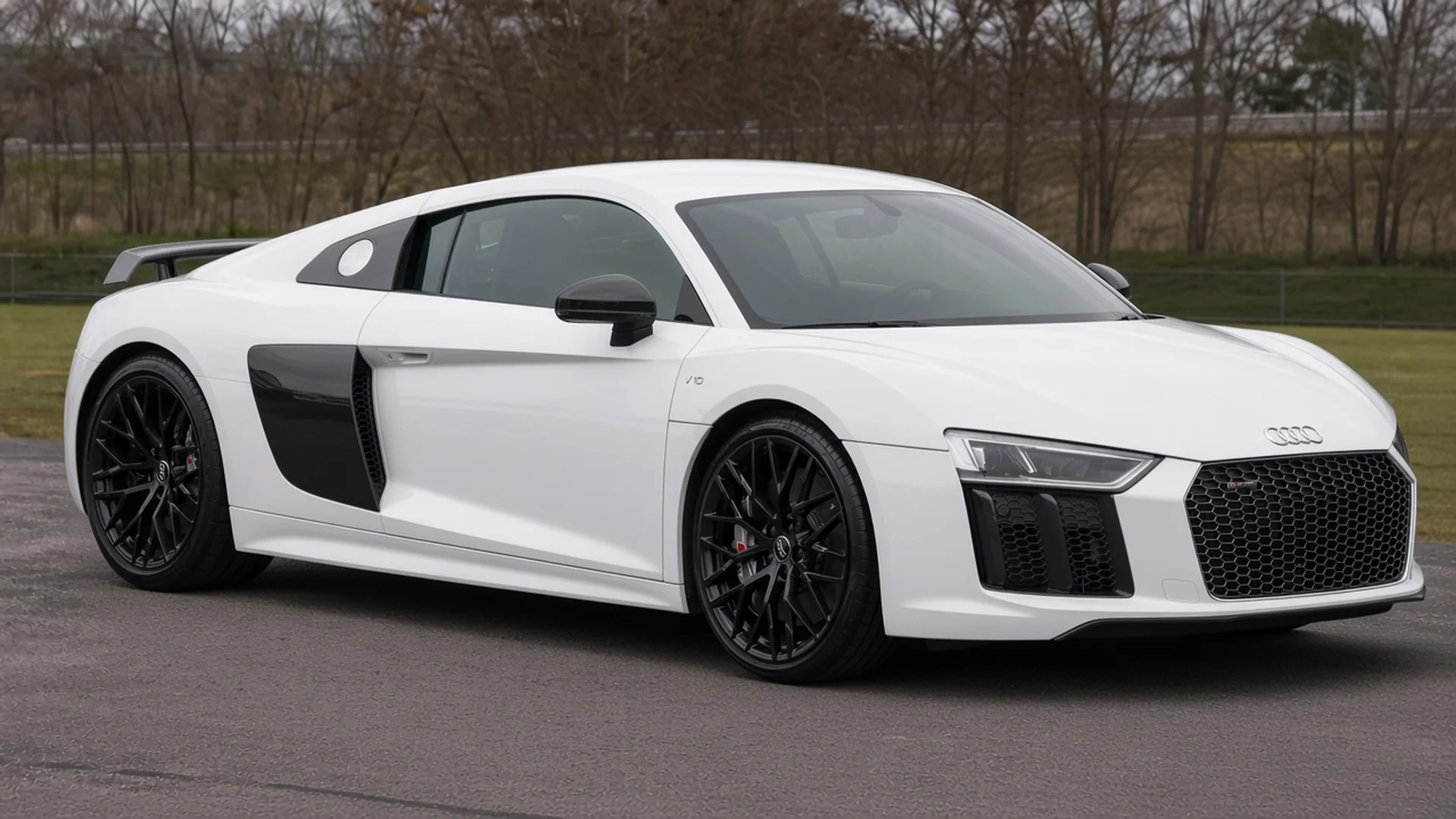
The Audi R8 is a two-seat sports car sold as a coupe and as the open-top R8 Spyder. Early cars came with a 4.2-liter V8 or a 5.2-liter V10, and every R8 from 2017 on has the V10. Few were sold, so NHTSA complaint numbers are small, but the earliest model years account for most of them.
This guide ranks each R8 model year using NHTSA complaints and recalls and our years to avoid methodology. In short: avoid the 2008 and 2009, be careful with 2011 and 2016 to 2018, and look for a 2020 or later if you want an R8.
Related: Porsche 911 years to avoid, Mercedes-Benz AMG GT years to avoid, Corvette C7 years to avoid.
How we rated the best and worst Audi R8 years
We put the most weight on NHTSA owner complaints and recalls, and every count in this guide comes from NHTSA's complaint and recall records.
The R8 has 15 NHTSA complaints across all model years, and 11 of them are for the 2008 and 2009. You won't find a 2013 or 2019 R8 in the table, because NHTSA has no complaints or recalls on file for those years.
Every Audi R8 model year ranked
| Model year | Verdict | NHTSA complaints | NHTSA recalls | Most-reported components |
|---|---|---|---|---|
| 2008 | Avoid | 5 | 0 | Suspension, structure |
| 2009 | Avoid | 6 | 0 | Structure, suspension, engine |
| 2010 | Good | 0 | 0 | None |
| 2011 | Caution | 1 | 1 | Suspension |
| 2012 | Good | 0 | 1 | None |
| 2014 | Good | 0 | 0 | None |
| 2015 | Good | 1 | 0 | Engine |
| 2016 | Caution | 0 | 1 | None |
| 2017 | Caution | 0 | 2 | None |
| 2018 | Caution | 1 | 1 | Air bags |
| 2020 | Good | 1 | 0 | None |
| 2021 | Good | 0 | 1 | None |
| 2022 | Good | 0 | 1 | None |
| 2023 | Best | 0 | 0 | None |
Most common Audi R8 problems
These are the problems that show up most in NHTSA complaints and recall campaigns.
1. Leaking magnetic ride shocks
Suspension is the most-reported component, with 7 complaints. Six of them, for the 2008 and 2009, describe magnetic ride shocks that leak and fail early, sometimes at around 20,000 miles, making the handling unpredictable. A 2011 R8 Spyder complaint describes a rear lower control arm that broke at low speed.
2. Frame and body cracks (2008 and 2009)
Four complaints for the 2008 and 2009 describe cracks in the frame or body structure with no prior accident, one of them near the front strut tower. There is no R8 recall for frame cracks in NHTSA data, so have the structure inspected on any early car.
3. Fuel and transmission fluid leaks
Three recalls cover leaks that could cause a fire. Campaign 11V390 covers certain 2011 and 2012 R8 Spyders where the fuel supply line may rub against a heat shield and leak. Campaign 18V639 covers certain 2017 and 2018 R8s where transmission fluid may leak from the gearbox vent hose after high-speed driving. Campaign 22V225 covers a handful of 2021 and 2022 R8s that may have too little transmission oil, which can cause clutch slip and an oil leak.
4. Airbag inflator recalls (2016 and 2017)
Campaign 22V543 covers certain 2016 R8 Coupes, along with other Volkswagen Group models, where the front passenger airbag may explode or deploy incorrectly. Campaign 19V014 covers certain 2017 R8s where the driver's frontal airbag inflator may explode during deployment. Both can send metal fragments toward the occupants. One 2018 complaint also reports a side airbag that did not deploy in a crash.
5. Engine and cooling
Two complaints involve the engine. A 2009 complaint describes a check engine light traced to carbon build-up, and a 2015 complaint describes overheating after the coolant tank expanded.
Checking a used Audi?
Scan for hidden fault codes from your phone in minutes — before you buy.
REREV may earn a commission if you sign up through this link. Learn more.
Which Audi R8 years to avoid
Avoid: 2008 and 2009
The first two model years have 11 of the R8's 15 NHTSA complaints. Most describe leaking magnetic ride shocks or cracks in the frame or body structure.
Caution: 2011 and 2016 to 2018
The 2011 has the Spyder fuel line recall and a complaint about a broken control arm. The 2016 and 2017 have airbag inflator recalls that could cause serious injury, and the 2017 and 2018 have the transmission fluid leak recall. Confirm all recall work before you buy one of these years.
What is the best Audi R8 year
The 2023 is the best R8 year in NHTSA data, with no complaints or recalls on file. The 2020 to 2022 cars are also good choices. The 2021 and 2022 have one recall that covers only a few cars, so check whether it applies to the car you are looking at.
Audi R8 pre-purchase checklist
- Run the VIN through NHTSA's recall lookup and confirm every open recall is complete.
- On a 2008 to 2010 car, have the frame and front strut towers inspected for cracks.
- Look for oil on the shocks, and ask whether they have been replaced and with which parts.
- Check for fuel, oil or transmission fluid leaks in the engine bay and under the car.
- Check that the airbag warning light comes on and then goes off at start-up.
- Ask for service records, and have a mechanic inspect the car before you buy.
Better alternatives to consider
If you want a high-performance sports car, these models are worth comparing. Check the years to avoid for each one before you shop.
Is the Audi R8 reliable
The R8 has very few NHTSA complaints, but it also sold in small numbers. The 2008 and 2009 cars have a pattern of shock and frame complaints, while later years have only scattered complaints and a few recalls. A later car with complete recall work and good service records is the safest choice, but expect high running costs for any R8.
Frequently asked questions
What years did Audi make the R8?
Fueleconomy.gov lists the R8 for the 2008 to 2012, 2014, 2015, 2017, 2018 and 2020 to 2023 model years, and NHTSA also has a recall for a 2016 R8.
What is the most common problem with the Audi R8?
Suspension is the most common complaint, mostly leaking magnetic ride shocks on the 2008 and 2009 cars.
What gas mileage does the Audi R8 get?
Fueleconomy.gov rates the V8 R8 at 14 to 17 mpg combined and the V10 at 14 to 18 mpg combined, depending on year and transmission.
Which Audi R8 years should you avoid?
Avoid the 2008 and 2009 R8. They have the most NHTSA complaints, mostly about leaking shocks and frame cracks. The 2023 is the best year.