
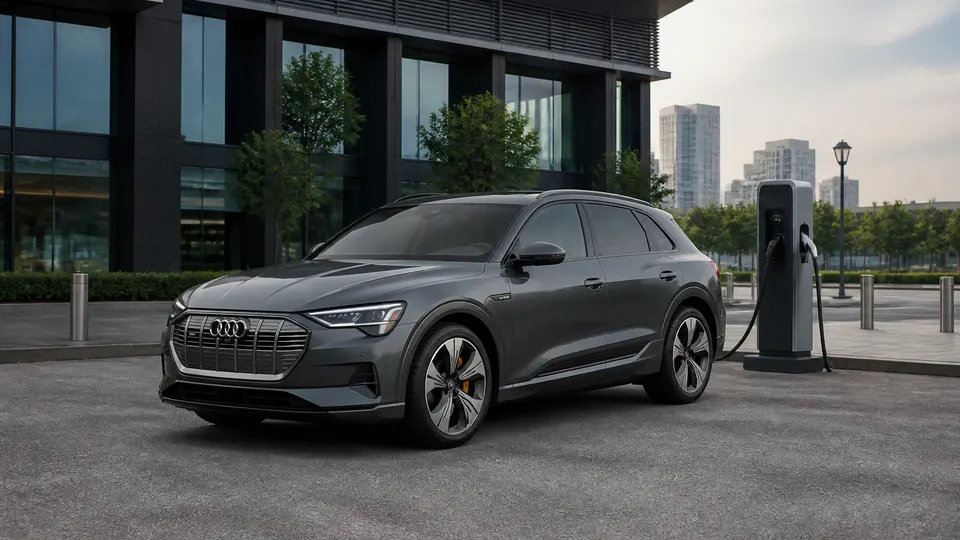
The Audi e-tron is a well-built luxury electric SUV with a strong safety record and a generally competent ownership experience, but a handful of model years carry disproportionate electrical, suspension, and high-voltage battery problems that can make used-car ownership expensive. Before you buy, you need to know which years to pass on and which ones represent the e-tron at its best. This guide ranks every model year using NHTSA complaint and recall data, CarComplaints PainRank, and owner-reported repair costs so you can shop with confidence.
For range, generations, and EV ownership notes in one place, see the Audi e-tron hub.
At a glance
- Worst years
- 2019
- 2022
- Best years
- 2020
- 2021
- Top failure
- 1st-gen high-voltage electrical system faults, including the charging socket moisture recall and HV battery self-discharge (CarComplaints / NHTSA)
- Always do before buying
- run the VIN through NHTSA's recall checker, plus verify that recall 93E8 (charging socket) and recall 93V2 (HV battery modules) are both closed on any 2019-2022 example
Recalls by year
Gray bands mark years the model was not produced.
How we rated the best and worst Audi e-tron years
The 2019 Audi e-tron is the single worst year to buy used because it carries the highest repair costs at the lowest mileage, earned via a first-generation launch with multiple unresolved electrical faults and a stop-sale recall before delivery.
Although the 2021 Audi e-tron has the most overall complaints, CarComplaints rates the 2019 model year as worse because of other possible factors such as higher repair cost or more problems at lower mileage. That distinction matters: CarComplaints ranks the worst year by repair cost and mileage-at-failure (its PainRank system), while NHTSA tracks raw complaint volume - and those two metrics often point to different model years.
Our years to avoid methodology weights repair cost and mileage-at-failure more heavily than raw complaint volume, which is why the 2019 ranks below the 2021 despite the latter accumulating more total reports. The data below is drawn from NHTSA complaints and recalls, CarComplaints PainRank, and reliability scoring from Consumer Reports.
| Audi e-tron Generation | Best Audi e-tron Years | Worst Audi e-tron Years |
|---|---|---|
| 1st gen (2019-2023) | 2020, 2021 | 2019, 2022 |
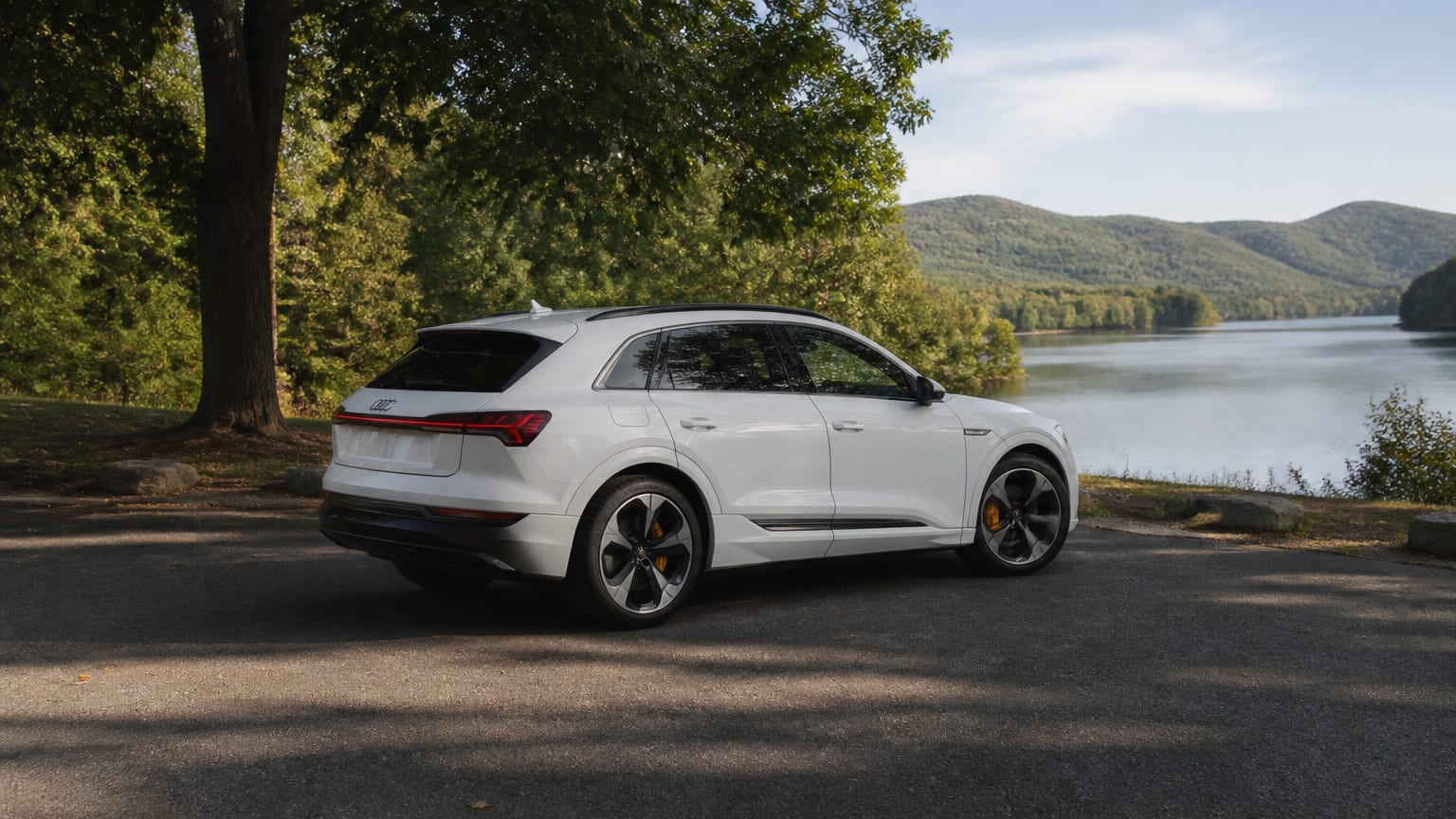
Every Audi e-tron model year ranked
The 2020 model year stands out as the cleanest first-generation purchase, with the fewest owner complaints and the highest reliability score in the lineup.
The Audi e-tron, covering model years 2019 to 2023, has an average reliability score of 51/100, indicating mixed reliability. The table below shows every model year broken out individually.
| Model Year | Generation | Verdict | Notes |
|---|---|---|---|
| 2019 | 1st gen | Avoid | Highest repair cost at low mileage; charging socket recall 93E8; 71 complaints |
| 2020 | 1st gen | Best | Lowest complaint count (1); 4 recalls; 62/100 reliability score |
| 2021 | 1st gen | Best | Most raw CarComplaints volume, but lower repair costs than 2019; 5-star NHTSA |
| 2022 | 1st gen | Avoid | 32 recalls, 52 complaints, 2 fire-related reports; highest recall count in lineup |
| 2023 | 1st gen | OK/Mixed | 22 recalls, 30 complaints; electrical system dominant issue |
Most common Audi e-tron problems
The single biggest failure across the e-tron lineup is high-voltage electrical system faults, a category that spans the charging socket moisture defect on early cars, HV battery self-discharge, and related wiring issues. Because the e-tron does not use a conventional multi-speed transmission, its single-speed electric drivetrain routes all power through the high-voltage system - meaning electrical faults tend to shut the whole car down rather than causing a partial drivability issue.
1. High-voltage electrical system faults (charging socket moisture and HV battery)
The most serious recurring failure involves moisture entering the high-voltage battery system through a faulty seal on the charging socket. Moisture can enter the high-voltage battery system through a faulty seal on the charging socket, and moisture in the high-voltage system can cause a short-circuit, increasing the risk of fire.
The affected model is the 2019 Audi e-tron, under NHTSA Campaign Number 19V-434. The recall covered approximately 1,646 vehicles, with the electrical system listed as the affected component. Audi's own recall number for this campaign is 93E8. If warning lights appear along with the message "Electrical system: fault," owners should immediately stop driving, park outdoors away from structures, and not charge the vehicle. Audi dealers install a new seal and, as necessary, replace the affected system components free of charge.
A second HV battery concern emerged separately: Audi conducted a voluntary safety recall involving all e-tron vehicles built with potentially suspect HV battery modules from LG Energy Solution, where a potentially critical self-discharge condition exists in certain high-voltage battery modules that may lead to thermal overload, increasing the risk of a fire. This campaign covered 2019-2022 e-tron quattro vehicles. Complaint volume for the 2019 sits above average at 71 owner complaints alongside 5 recalls, with issues in the electrical system (27 complaints) tending to be the costly ones. If you're shopping a 2019-2022 e-tron, confirm that both recall 93E8 and the HV battery module campaign (Audi codes 93U9 and 93V2) are closed on the specific VIN before buying.
2. Air suspension malfunction
The air suspension system on first-generation e-trons is a recurring source of trouble, particularly on the 2019 launch year. The most-reported problem on CarComplaints is with the 2019 Audi e-tron for suspension failure. The 2019 Audi e-tron has 1 problem reported on CarComplaints for suspension failed, with an average repair cost of $1,300 at 5,500 miles.
The symptom is the suspension system setting itself to the lowest possible ride height and becoming unresponsive. The Audi drive select system malfunctions, the vehicle's air suspension sets itself to the lowest possible setting, and the drive select screen goes blank without any selectable options. Audi TSB 2059363/5 covers the e-tron air-suspension malfunction when suspension controller J775 stores fault code C1260F0 for no communication with compressor-control unit J1135. Before buying any first-gen e-tron with air suspension, test the full range of ride height adjustment on a cold start and ask the seller for any records of suspension work.
3. High-voltage battery overheating and fire risk (2022 recall)
The 2022 model year carries a concentrated set of battery-related concerns separate from the early charging socket issue. The 2022 Audi e-tron has mixed reliability, with 32 recalls and 52 owner complaints on file, including severity signals of 4 crash-related complaints and 2 fire-related complaints.
Audi Safety Recall Code 93V2, titled "Interim Monitoring Program for High-Voltage Battery Modules," was originally published on February 16, 2024. It covers the 2019-2022 e-tron quattro (18,083 vehicles in the US) and the 2020-2022 e-tron Sportback quattro (4,407 vehicles). The remedy is installation of onboard diagnostic software to monitor battery module performance, with replacement of affected modules where necessary, at no cost to owners. If you see an "Electrical system: fault" warning or notice the car will not charge above a reduced threshold, this recall campaign is the first thing to verify.
4. Infotainment and software freezes
The Audi e-tron has been associated with several software-related problems, including freezing or crashing of the infotainment system and navigation issues, with many owners reporting screen-freezing problems online. The MMI system can lose audio, navigation, climate controls, and Bluetooth simultaneously during a freeze event, requiring a full vehicle shutdown and restart to recover.
Software issues are flagged across the 2019-2021 period and appear frequently in NHTSA complaint data for the 2019-2023 generation. Audi has developed new software applicable to certain e-tron vehicles to bring them up to the latest factory specifications, and multiple TSBs address individual software faults, including charger communication failures and privacy-setting resets. Ask for dealer service records showing any software-update history before buying.
5. Brake system concerns (ABS/ESC and brake pedal fastener)
Owners and lessees have reported Audi e-tron problems including suspension failure and issues with the antilock braking system; Audi issued a recall for e-tron vehicles with possible failure of their antilock braking systems (ABS) and electronic stability control (ESC). Drivers experiencing ABS and ESC problems in Audi e-tron vehicles will notice a reduction in braking performance and resistance during hard braking maneuvers, requiring more stopping distance to brake safely.
A separate brake pedal fastener recall also affects a wide swath of the lineup. Audi is recalling certain 2019-2023 Audi e-tron quattro and 2020-2023 e-tron Sportback vehicles because the fastener that connects the brake pedal and the brake booster may have been improperly assembled, which can cause the brake pedal to detach from the brake booster. This is a safety-critical item - confirm it is resolved before any test drive.
6. 12V auxiliary battery drain
Low-voltage battery deaths are common on EVs and hybrids that use a 12V battery for accessories, and the e-tron is no exception. The 12V auxiliary battery powers the car's control modules, and when it dies, the vehicle can become completely inoperable even when the main high-voltage pack is fully charged — a pattern that overlaps with battery discharge warning issues on conventional cars. Owners on the e-tron Forum report this happening with limited warning. On any used e-tron, check the 12V battery health as part of a pre-purchase inspection; replacement is a relatively inexpensive fix, but the failure can leave you stranded unexpectedly.
Checking a used Audi?
Scan for hidden fault codes from your phone in minutes — before you buy.
REREV may earn a commission if you sign up through this link. Learn more.
Which Audi e-tron years should you avoid?
The Audi e-tron years to avoid are 2019 and 2022. Although the 2021 Audi e-tron has the most overall complaints, CarComplaints rates the 2019 model year as worse because of higher repair costs and more problems at lower mileage. For raw NHTSA complaint volume, the 2022 Audi e-tron is the most concerning, with 32 recalls and 52 owner complaints on file - the highest recall count across the whole lineup.
| Audi e-tron Generation | Model Years | Verdict | Main Issues |
|---|---|---|---|
| 1st gen (2019-2023) | 2020, 2021 | Best | Low complaints, clean battery record, 5-star NHTSA (2021) |
| 1st gen (2019-2023) | 2019, 2022 | Worst | Charging socket recall, HV battery fire risk, high repair cost |
| 1st gen (2019-2023) | 2023 | Mixed | Elevated recalls, electrical system top complaint |
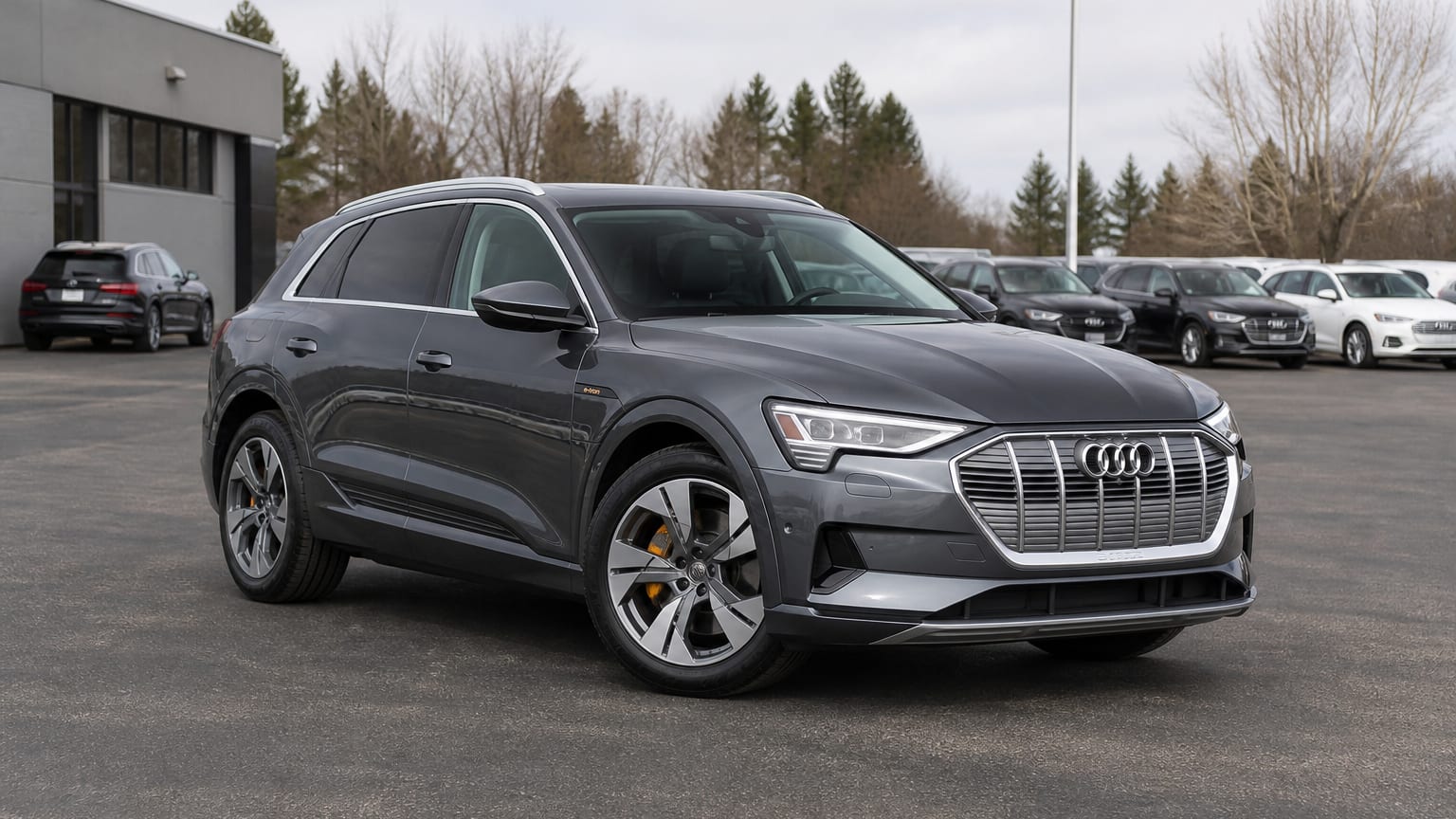
Worst Audi e-tron years: 2019, 2022 1st-generation Audi e-tron (2019-2023)
2019: The first model year launched with a stop-sale recall before many cars even reached customers. The 2019 Audi e-tron scores 48/100 ("Mixed"), with 5 recalls and 71 owner complaints on file, making it the highest-complaint year in the first-generation lineup. The 2019 Audi e-tron has been recalled 5 times by NHTSA. The charging socket moisture recall (NHTSA 19V-434 / Audi 93E8), the HV battery module campaign, and the brake pedal fastener recall all cluster on this launch year. Repair costs at relatively low mileage (the CarComplaints PainRank is driven by $1,300 suspension repairs appearing as early as 5,500 miles) push the 2019 to the bottom of the pack.
2022: The 2022 model year carries the most recalls of any year in the lineup. The most commonly reported problems with the 2022 Audi e-tron include electrical system (24 complaints), power train (11 complaints), service brakes (3 complaints), forward collision avoidance (2 complaints), and fuel/propulsion system (2 complaints). Severity signals include 4 crash-related complaints and 2 fire-related complaints. The 32 open recall campaigns on this model year indicate that Audi has been actively issuing fixes, but each unresolved campaign is a liability on a used example.
What are the best Audi e-tron years to buy?
The best Audi e-tron years to buy are the 2020 and 2021 model years, both of which avoided the worst of the launch-year electrical issues while benefiting from first-year software fixes. The 2020 Audi e-tron has a "Good" reliability rating with a score of 62/100, with only 4 recalls and 1 owner complaint on file.
| Best Audi e-tron Year | Why It's a Strong Buy | 2020 |
|---|---|---|
| Highest reliability score (62/100), only 1 owner complaint, 4 recalls, launch-year faults already corrected | 2021 | 5-star overall NHTSA safety rating, 9 recalls, 32 complaints - acceptable for a volume EV year |
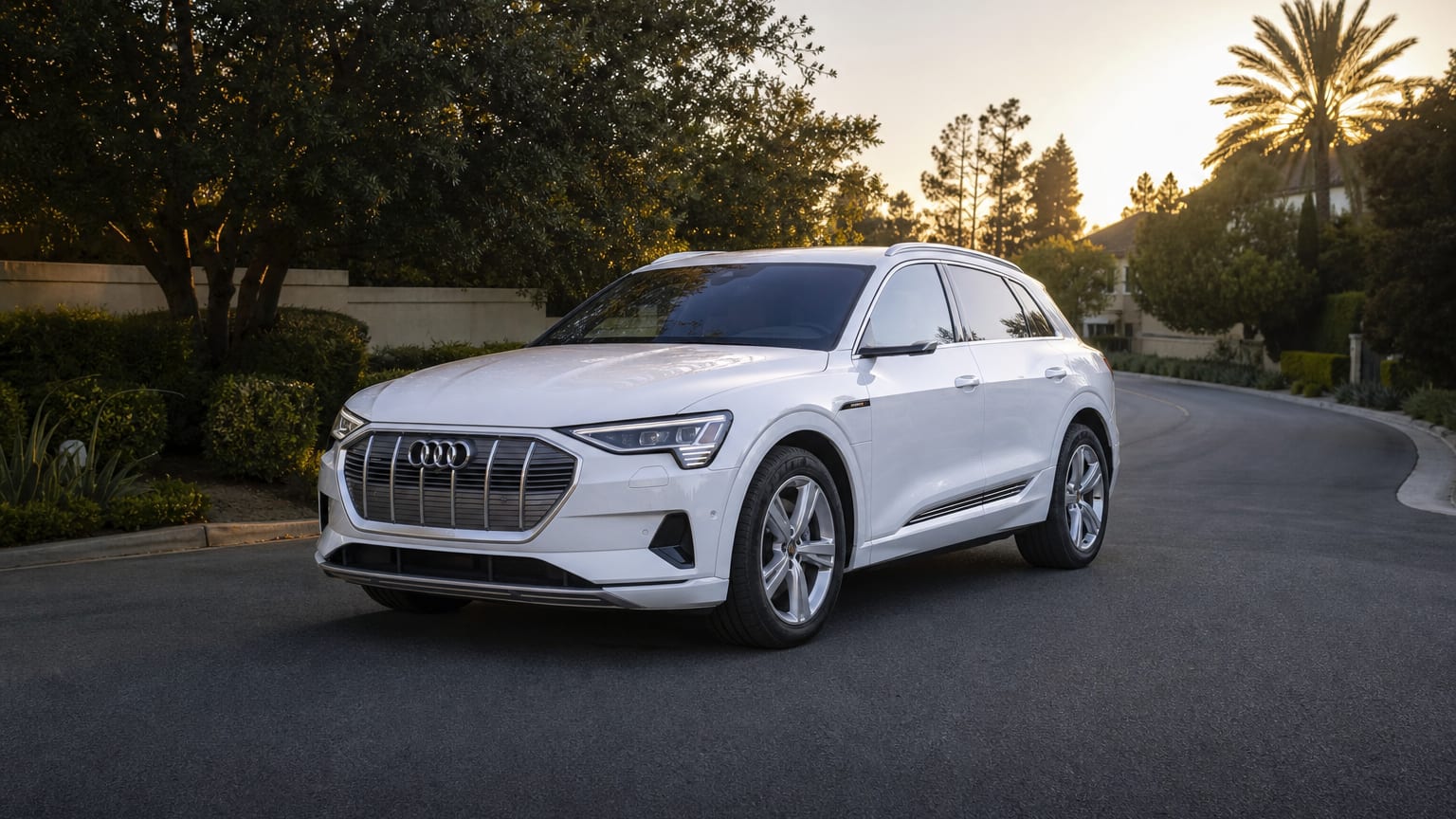
Most reliable Audi e-tron years: 2020, 2021
2020 Audi e-tron
The 2020 Audi e-tron has good reliability, with 4 recalls and just 1 owner complaint on file. The most commonly reported problem area is the electrical system, with only 1 complaint. The 2020 model is the second-year production car, meaning Audi had already corrected the charging socket seal defect that plagued 2019 deliveries. The low complaint footprint makes this the pick for buyers who want the first-generation e-tron with the least ownership risk.
Our editorial guidelines require that reliability verdicts reflect both repair cost and mileage-at-failure, not raw complaint totals alone, which is why the 2020's single low-cost complaint earns it the top reliability ranking.
2021 Audi e-tron
The 2021 Audi e-tron received an overall 5-star safety rating from NHTSA, with a frontal crash rating of 4 stars, a side crash rating of 5 stars, and a rollover rating of 5 stars with a 9.2% rollover probability. While CarComplaints flags the 2021 as the year with the most raw complaints in the lineup, the 2021's complaints reflect higher volume rather than higher repair cost at low mileage, making it a more tolerable ownership proposition than the 2019. The 5-star safety score is a meaningful differentiator for families. The hidden costs of owning an electric car - particularly HV battery service and charging equipment - are worth budgeting for on any used first-generation e-tron purchase, but are manageable on the 2021.
Audi e-tron pre-purchase checklist
Any used Audi e-tron deserves a focused pre-delivery inspection, given the number of recall campaigns issued across all model years.
-
Run the VIN through NHTSA's recall checker. Every e-tron year from 2019-2023 has at least four open recall campaigns; confirm each is closed before signing.
-
Verify recall 93E8 (NHTSA 19V-434) is complete on any 2019 car. This is the charging socket moisture seal recall; an unclosed example represents a live fire risk and a no-buy.
-
Confirm HV battery campaigns 93U9 and 93V2 are resolved on 2019-2022 cars. These address potentially self-discharging battery modules that can overheat and catch fire.
-
Check the brake pedal fastener recall. Audi has recalled 2019-2023 e-tron quattro and 2020-2023 e-tron Sportback vehicles for a brake pedal fastener that may allow the pedal to detach from the brake booster. Confirm this is repaired before a test drive.
-
Test the air suspension on a cold start. Cycle through all ride height settings using Audi drive select; if the system is unresponsive or defaults to the lowest setting, budget for diagnosis under TSB 2059363/5.
-
Check the 12V auxiliary battery. Ask for a battery health report; a dead 12V will strand the car regardless of the main pack's state of charge.
-
Request full software-update history. Multiple infotainment and charging TSBs exist for 2019-2022 models; a dealer printout showing completed updates is a positive sign.
-
Get an independent pre-purchase inspection from an EV-certified shop. Ask the technician to scan all control modules for stored fault codes, particularly in the suspension, HV battery management, and charging system modules.
Better alternatives to consider
If the Audi e-tron years in your budget land on the avoid list, consider these alternatives instead:
- Nissan Leaf - a longer-running EV with a larger used-car pool and a well-documented model-year-by-year reliability record that makes shopping easier
- Chevrolet Volt - a plug-in alternative if you want EV miles without committing to a full battery-electric used SUV
- Tesla Model S - the closest luxury EV reliability map we cover for shoppers cross-shopping the Tesla side of this segment
- Jaguar I-Pace - a near-identical size and price class luxury electric SUV with a different electrical architecture; fewer cumulative recall campaigns on mid-generation (2021-2022) examples
- Mercedes EQC - priced comparably to the e-tron on the used market, with a similar luxury SUV footprint and a strong safety rating if you want a European alternative
- Audi Q8 - if you want a similar Audi luxury SUV footprint without going fully electric
Also worth reading before you commit: are electric cars worth it, hidden costs of owning an electric car, and how far can electric cars go on one charge.
Is the Audi e-tron worth buying?
Yes, the Audi e-tron is worth buying as long as you avoid the 2019 and 2022 model years and verify all open recalls are closed on any specific car you consider. The 2021 Audi e-tron received an overall 5-star safety rating from NHTSA, which underlines how capable the platform is when the electrical issues are addressed. The 2020 model year, with its 62/100 reliability score, is the safest first-generation pick for most used-car shoppers. Run the VIN through NHTSA's recall checker and ask for full service and software-update records before any purchase.