
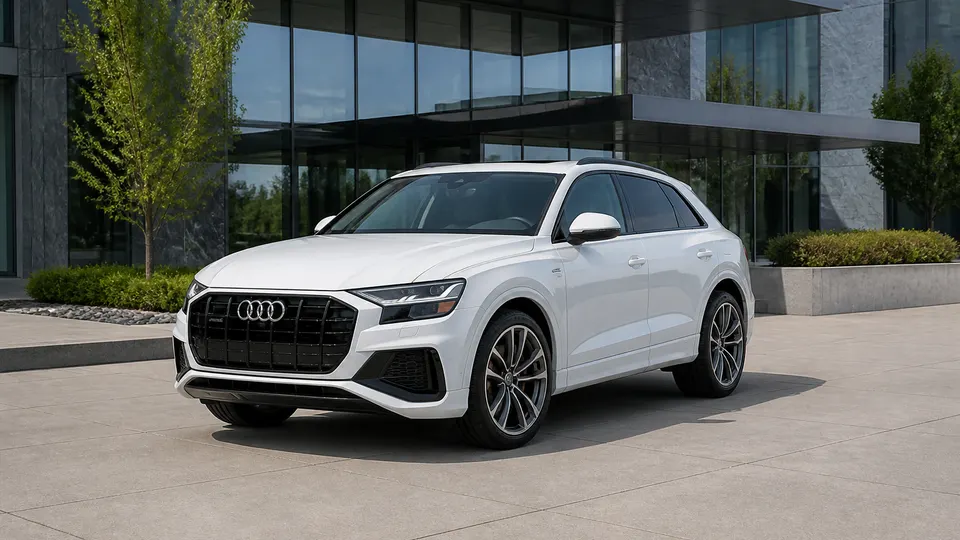
The Audi Q8 is a well-engineered luxury SUV that has improved noticeably since its 2019 debut, but its launch year carries a disproportionate share of complaints and safety recalls that used buyers need to know about. Before you put down a deposit, you should know which model years to skip and which ones offer the smoothest ownership experience. This guide draws on NHTSA complaint and recall data, CarComplaints.com figures, and repair-cost benchmarks to give you a data-backed year-by-year ranking.
For trims, generations, and related Audi SUV guides, see the Audi Q8 hub.
At a glance
- Worst years
- 2019
- Best years
- 2022
- 2023
- Top failure
- 2019 powertrain/throttle-lag and alternator failure (CarComplaints, NHTSA - 103 NHTSA complaints on the 2019 alone)
- Always do before buying
- run the VIN through NHTSA's recall checker, and on any 2019 model specifically test the throttle response from a rolling stop and ask for documentation that open recalls have been resolved
Recalls by year
Gray bands mark years the model was not produced.
How we rated the best and worst Audi Q8 years
The 2019 model year is the weakest generation-opener in the Q8's short history, primarily because of powertrain and electrical complaints that pushed its reliability score well below the model average. To build this ranking we drew on NHTSA complaint and recall data, CarComplaints.com per-year counts, Auto Reliability Index scores (which aggregate NHTSA complaint patterns into a 0-100 score), and owner reports.
CarComplaints ranks a "worst year" by repair cost and mileage at failure (its PainRank), while NHTSA shows raw complaint volume - these two measures point to the same year (2019) for the Q8, but the counts come from different datasets and are not interchangeable. RepairPal gives Audi a reliability rating of 3.0 out of 5.0 and puts the average annual Audi repair cost at $987. The estimated annual maintenance cost for the Audi Q8 specifically is $1,127.
Our years to avoid methodology weights complaint volume, complaint severity, recall count, and repair cost to identify which years a used buyer should prioritize or skip.
| Audi Q8 Generation | Best Audi Q8 Years | Worst Audi Q8 Years |
|---|---|---|
| 1st Gen (2019-2023) | 2022, 2023 | 2019 |
| Facelifted (2024 - present) | None | None |
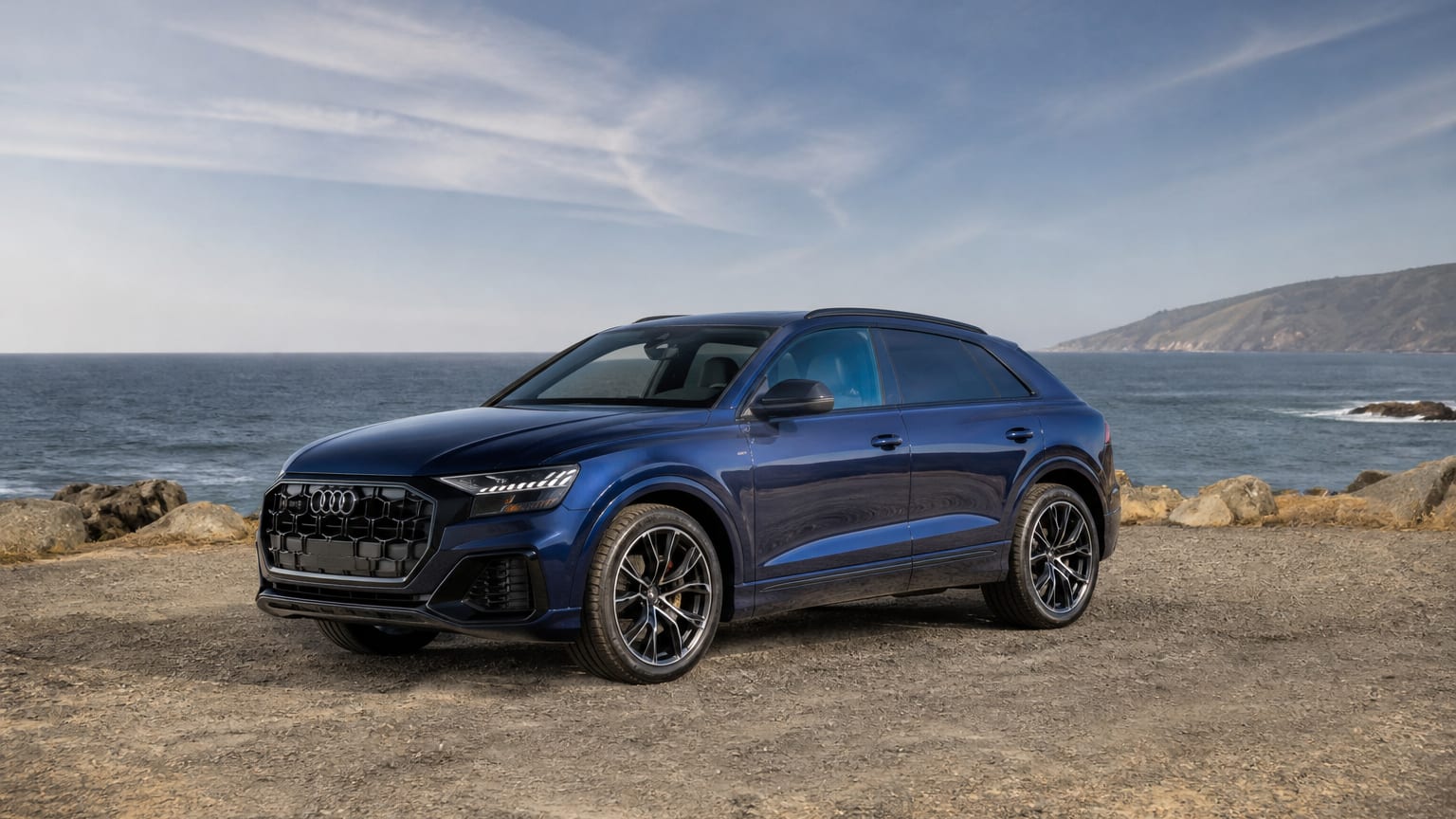
Every Audi Q8 model year ranked
The 2019 model year stands alone as the Audi Q8's most problematic year - every other year ranks as OK or better once complaint volume is normalized for sales. The Audi Q8's current generation spans 2019 to 2023, with a facelift arriving for 2024.
| Model Year | Generation | Verdict | Notes |
|---|---|---|---|
| 2019 | 1st Gen | Avoid | Highest complaint volume; powertrain, electrical, steering failures |
| 2020 | 1st Gen | OK/Mixed | Improved over 2019; transmission oil pipe recall; 25 NHTSA complaints |
| 2021 | 1st Gen | OK/Mixed | 28 CarComplaints reports; instrument panel recall; 14 NHTSA recalls |
| 2022 | 1st Gen | Best | Lowest complaint count in generation; 5 NHTSA complaints |
| 2023 | 1st Gen | Best | 2 NHTSA complaints; 3 recalls; strong reliability score |
| 2024 | Facelifted | OK/Mixed | 8 recalls and 16 NHTSA complaints; brake and electrical concerns |
| 2025 | Facelifted | OK/Mixed | 2 recalls; 1 NHTSA complaint; solid score |
Most common Audi Q8 problems
The single biggest documented failure in the Audi Q8's history is the 2019 powertrain/throttle system, which generated more owner complaints than any other single issue across any model year. Beyond that, four additional problem categories show up repeatedly across owner reports and NHTSA filings.
1. Powertrain Throttle Lag and Alternator Failure (2019)
The most notorious Q8 defect is a dangerous throttle lag on 2019 models tied to the 48-volt mild hybrid auto start-stop system — related reading: electronic throttle control light and bad throttle position sensor symptoms. Owners describe a serious intermittent throttle lag: when pulling out of parking lots or coasting without coming to a full stop, the throttle lags one to three seconds, then surges forward when it finally responds. The problem occurs even when the start-stop system is switched off, making it difficult to predict. A class action lawsuit was filed in May 2020 over this problem but was dismissed because the car manual states the vehicle can experience a delay when restarting from Start/Stop mode.
Compounding the powertrain category, owners diagnosed at dealerships were told the issue was an alternator-starter-generator failure, which is described as a common issue on Audi threads. At least one owner reported the failure occurring at approximately 38,000 miles. A complete alternator replacement is a significant out-of-pocket expense once the vehicle is out of warranty — see can you drive with a bad alternator.
There are 5 recalls and 103 NHTSA owner complaints on file for the 2019 Audi Q8, with the most commonly reported problem areas being Power Train (38 complaints), Electrical System (29), and Steering (11). No manufacturer TSB or warranty-extension program covering the throttle-lag defect was confirmed in research - if you own a 2019, verify the current recall status using your VIN at NHTSA.gov. Buyer takeaway: avoid the 2019 unless you can confirm every open recall is closed and independently verify smooth throttle response.
2. Steering Shaft Bolt Loosening (2019)
NHTSA recall 20V-149 (Audi campaign 36A1) covers certain 2017-2019 Audi Q7 and 2019 Audi Q8 vehicles in which the steering shaft may not have been properly attached to the steering gear during a manual rework process at the factory. The attachment bolt can loosen over time, causing the connection between the steering shaft and steering gear to loosen, which can lead to limited steering or a complete loss of steering control.
Audi dealers will inspect and, if necessary, replace the steering shaft bolt free of charge. If you are buying a used 2019 Q8, verify this recall has been completed - a bad control arm bushing can produce similar steering vagueness symptoms, so make sure a pre-purchase inspection distinguishes between the two. Dealers inspect and replace the bolt at no cost, but unresolved examples still exist in the used market.
3. Transmission Oil Pipe Leak (2019-2020)
NHTSA recall 20V-272 (Audi campaign 38C7) covers 2020 Audi Q8 vehicles in which an insufficient weld on a transmission oil pipe may cause automatic transmission fluid to leak; if the fluid leaks while driving, the road surface may become slippery, increasing the risk of a crash. Oil can also escape from a faulty join in the gearbox oil line of Q8s manufactured from September 1 to December 31, 2019; Audi dealers will replace the line to fix the problem.
Audi dealers will inspect the transmission oil pipe and replace it if necessary, free of charge. A transmission fluid leak when parked is one of the earliest visible warning signs - check under any used 2019 or 2020 Q8 before purchase. If the puddle is reddish and slippery, the pipe may not have been remedied.
4. Electrical System and Instrument Panel Failures (2021)
The 2021 Audi Q8 has good reliability overall, but 14 NHTSA recalls were issued for that year, with the most commonly reported problems being Electrical System (12 complaints), Fuel System (4), and Power Train (3). One key recall covers the instrument panel display. NHTSA recalled certain 2021 SQ8, A6, A7, A8, Q7, Q8, and related models because a software error can cause the instrument panel display to fail; an instrument panel that fails to show critical safety information such as the speedometer or warning lights increases the risk of a crash. Dealers update the instrument panel module software free of charge.
The 2021 Audi Q8 has 28 problems and defects reported on CarComplaints.com, with the worst complaints in the electrical, accessories/interior, and windows/windshield categories. The high recall count for 2021 is worth noting, though most were software-related and corrected without parts replacement.
5. Air Suspension Wear and Compressor Failure (All Years)
The Q8's adaptive air suspension may start leaking or the compressor might wear out over time, leading to air suspension failure. The Q8's 48-volt mild hybrid system helps provide smoother engine stop-start behavior, and an air suspension system with rear-wheel steering was optional. On optioned models, suspension problems are expensive to fix. The average cost for an Audi Q8 active suspension air spring replacement is between $2,189 and $2,439.
Signs of air suspension trouble include a car that sits noticeably lower on one corner, a compressor that runs constantly, or a ride that feels harsh on one axle. A whining noise when accelerating can sometimes accompany compressor strain. Budget for this repair on higher-mileage examples, particularly those with the optional air suspension.
6. Infotainment Software Glitches (All Years)
Buyers should be generally aware of potential issues with the 48-volt mild hybrid system, the air suspension, and infotainment software glitches. Software updates from a certified Audi service center often fix infotainment glitches and other non-engine electrical issues. The MMI touchscreen system can freeze or reboot, and camera systems have been subject to their own software recalls across multiple model years. Always verify that the infotainment software is running the latest version before purchase.
Checking a used Audi?
Scan for hidden fault codes from your phone in minutes — before you buy.
REREV may earn a commission if you sign up through this link. Learn more.
Which Audi Q8 years should you avoid?
The Audi Q8 years to avoid are 2019. The 2019 Audi Q8 has mixed reliability, with 5 recalls and 103 NHTSA owner complaints on file. Complaint rates peaked at 72.3 complaints per 10,000 sold in 2019, compared to just 0.9 in 2025 - a gap that makes the launch year the clear outlier. CarComplaints rates the 2019 as the worst year by owner-reported defects and repair frustration, while NHTSA complaint volume also peaks on the 2019, meaning both datasets agree on this one.
| Audi Q8 Generation | Model Years | Verdict | Main Issues |
|---|---|---|---|
| 1st Gen | 2019 | Worst: 2019 | Powertrain lag, alternator failure, steering shaft bolt |
| Facelifted | 2024 - present | Mixed | Electrical, brake complaints on 2024 |
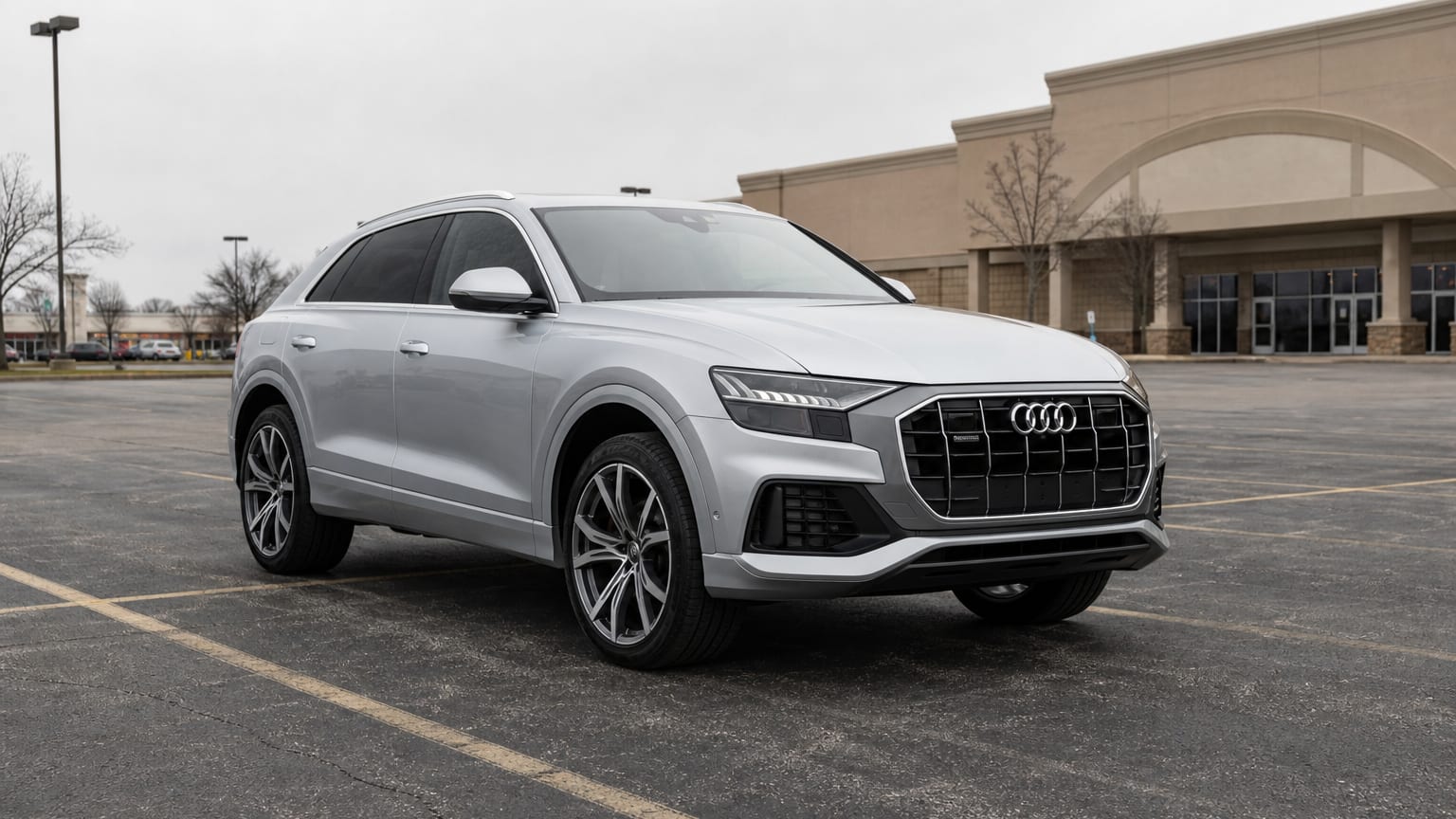
Worst Audi Q8 years: 2019 1st-Generation Audi Q8 (2019-2023)
On the 2019 Q8, owners encounter throttle lag, engine misfires, and transmission problems including delayed acceleration and failure to accelerate when the gas pedal is applied. The weakest year is 2019, with a reliability score of 53/100, primarily due to Power Train issues (38 complaints). The 2020 through 2023 years are materially better. The 2020 Q8 is night and day compared to the previous year, with NHTSA complaints dropping significantly to twelve.
What are the best Audi Q8 years to buy?
The best Audi Q8 years to buy are 2022 and 2023. The 2022 Audi Q8 has good reliability, with 7 NHTSA recalls and just 5 owner complaints, with the most commonly reported problems being Electrical System (3 complaints), Unknown/Other (1), and Tires (1). The 2023 Audi Q8 also has good reliability, with 3 recalls and only 2 owner complaints, and the most commonly reported problem areas are Unknown/Other (1) and Service Brakes (1).
| Best Audi Q8 Year | Why It's a Strong Buy | 2022 |
|---|---|---|
| Just 5 NHTSA complaints; lowest complaint count in 1st gen; good reliability score | 2023 | Only 2 NHTSA complaints; 3 recalls; end of first-gen refinement |
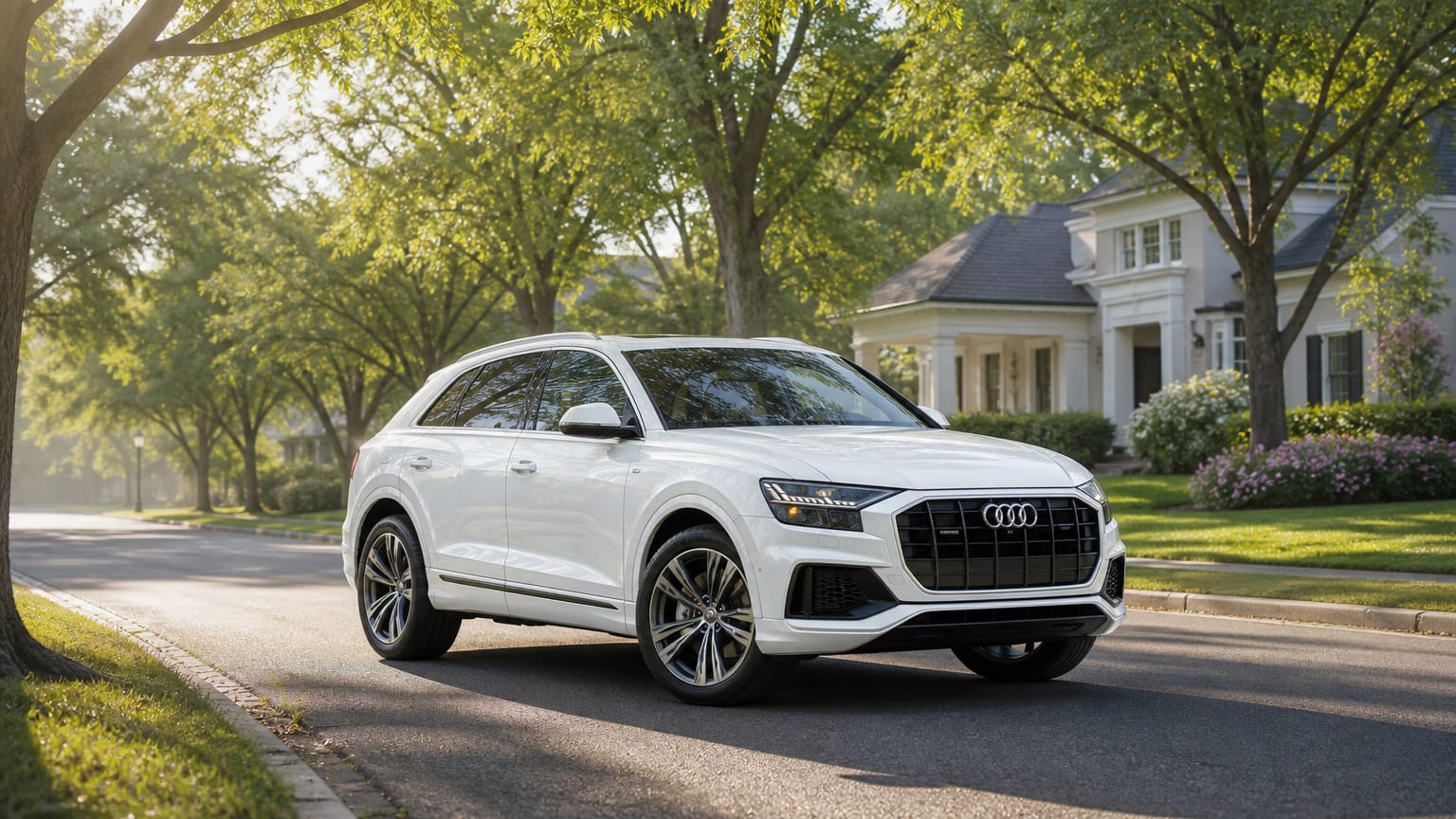
Most reliable Audi Q8 years: 2022, 2023
2022 Audi Q8
The 2022 Audi Q8 has good reliability, with 7 NHTSA recalls and only 5 owner complaints; the most commonly reported problem areas are Electrical System (3), Unknown/Other (1), and Tires (1). The recall count is slightly elevated due to broad VW Group software campaigns that covered dozens of models, not Q8-specific defects. With just 5 owner complaints on record, this is the cleanest first-generation Q8 you can buy. NHTSA gives the 2022 Q8 a 5-star overall safety rating.
2023 Audi Q8
The 2023 Audi Q8 has good reliability, supported by only 3 NHTSA recalls and 2 owner complaints. It represents the final year of the first-generation design, benefiting from four model years of refinement since the problematic 2019 launch. If you want a first-generation Q8 at the lowest ownership risk, the 2023 is the one to target. Verify the NHTSA complaint data for the 2023 Q8 before purchase to confirm no new filings have emerged for your specific trim.
Audi Q8 pre-purchase checklist
Before buying any used Audi Q8, work through these model-specific checks:
-
Run the VIN through NHTSA's recall checker. Confirm every open recall - including the steering shaft bolt recall (20V-149 for 2019 models) and the transmission oil pipe recall (20V-272 for 2020 models) - has been completed and documented by the dealer.
-
On any 2019 Q8, test throttle response from a rolling stop. Simulate normal driving by coasting down to about 5 mph without fully stopping, then reapply the accelerator. Any hesitation of more than one second is the known powertrain lag issue.
-
On 2019-2020 models, check for transmission fluid under the vehicle. An insufficient weld on the transmission oil pipe can cause ATF to leak; fluid on the road surface increases crash risk. Check the underside for signs of fluid.
-
Check the air suspension on all years. Look for the car sitting unevenly, listen for a compressor running for more than 30 seconds after startup, and ask if any air springs or the compressor have been replaced. Replacement costs run $2,189 - $2,439 per spring.
-
On 2021 Q8s, verify the instrument panel recall is closed. The software recall (Audi campaign 90VC) corrects a failure where the instrument panel display goes dark while driving.
-
Confirm infotainment software is current. Ask the selling dealer to show a recent software update in the service records, or verify at an Audi dealership before purchase.
-
Request full service records to confirm oil change intervals were maintained and the 48-volt mild hybrid battery has not flagged any warnings.
-
Have a pre-purchase inspection done by an independent Audi specialist, paying particular attention to the suspension, alternator output, and steering feel.
Better alternatives to consider
If the Audi Q8 years in your budget land on the avoid list, consider these alternatives instead:
- Audi Q5 - a smaller but better-documented Audi SUV with a longer reliability track record and lower running costs
- Audi Q7 - the three-row sibling on related architecture with a longer used-market history
- Audi SQ8 and Audi RS Q8 - hotter Q8-family variants if you want more power (and can budget for the maintenance that comes with it)
- Audi S4 - a performance-focused Audi sedan with a more established reliability history across more model years
- BMW X5 - a direct luxury midsize SUV competitor with a similarly long complaint history that is well-documented year by year
- Porsche Cayenne - shares platform DNA with the Q7/Q8 family but generally posts stronger long-term reliability scores in owner surveys
Is the Audi Q8 worth buying?
Yes, the Audi Q8 is worth buying as long as you avoid the 2019 model year and, to a lesser extent, are cautious about 2021 examples with unresolved software recalls. The vehicle is best suited for those who prioritize advanced safety features, with consistent 5/5 NHTSA safety ratings across model years. Reliability has improved in recent years, with newer models scoring an average of 66/100 compared to 59/100 for older years. Stick to a 2022 or 2023, confirm open recalls are closed using the NHTSA VIN lookup, and verify full maintenance history - those two steps will put you in a well-sorted Q8 at a meaningful discount from new pricing.