
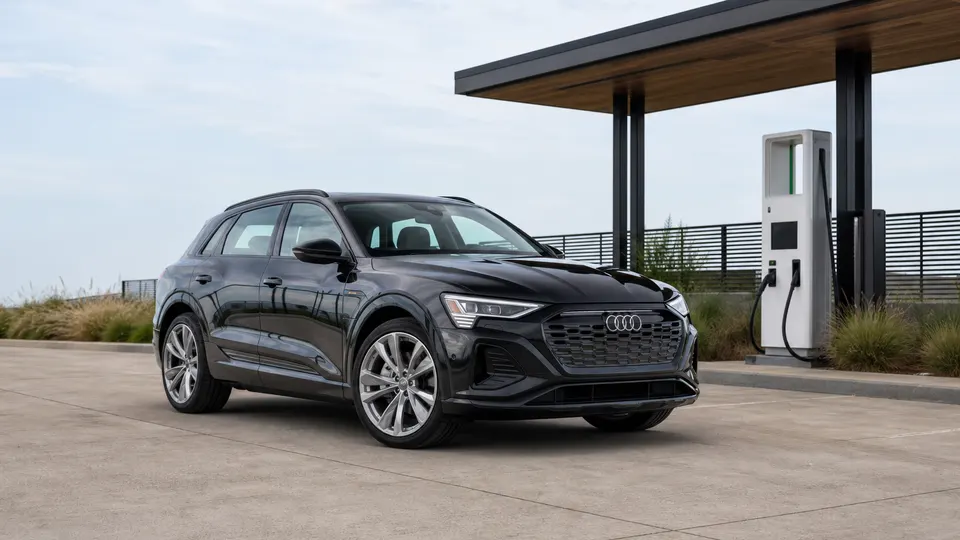
The Audi Q8 e-tron is a well-built luxury electric SUV, but the 2019 model year carries a disproportionate share of complaints, recalls, and a serious fire-risk charge-port issue that separates it from every other model year. If you shop carefully and stick to the right years, you can get a genuinely capable and safe EV at a strong used price. This guide uses NHTSA complaint and recall data, CarComplaints PainRank ratings, and IIHS crash-test results to show you exactly which years to target and which to pass on.
For range, generations, and EV ownership notes in one place, see the Audi Q8 e-tron hub.
At a glance
- Worst years
- 2019
- Best years
- 2024
- 2025
- Top failure
- 2019 Gen 1 charge-port moisture ingress creating a fire risk (CarComplaints worst year by PainRank; NHTSA highest complaint volume at 103 complaints)
- Always do before buying
- Run the VIN through NHTSA's recall checker, plus verify that the 2019 charge-port fire-risk recall (93E8) has been completed on any pre-2020 example
How we rated the best and worst Audi Q8 e-tron years
The 2019 model year is the single year to avoid, and CarComplaints rates it the worst because of higher repair cost and problems appearing at lower mileage - even though the 2021 model year has the most overall CarComplaints complaints (5 versus 3 for 2019). That distinction matters: CarComplaints ranks its "worst year" by its PainRank system - a weighted score of repair cost and mileage-at-failure - while NHTSA shows raw complaint volume. On NHTSA's dataset, the 2019 Audi Q8 e-tron (sold then as the e-tron) draws 103 owner complaints - the highest volume of any model year. Both measures point to 2019, making it the clear year to avoid.
Data sources used in this guide: NHTSA complaints and recalls, CarComplaints PainRank, IIHS crash-test ratings, KBB, and Edmunds consumer reviews.
| Audi Q8 e-tron Generation | Best Audi Q8 e-tron Years | Worst Audi Q8 e-tron Years |
|---|---|---|
| Gen 1: e-tron (2019-2022) | None | 2019 |
| Gen 2: Q8 e-tron (2023-2025) | 2024, 2025 | None |
Every Audi Q8 e-tron model year ranked
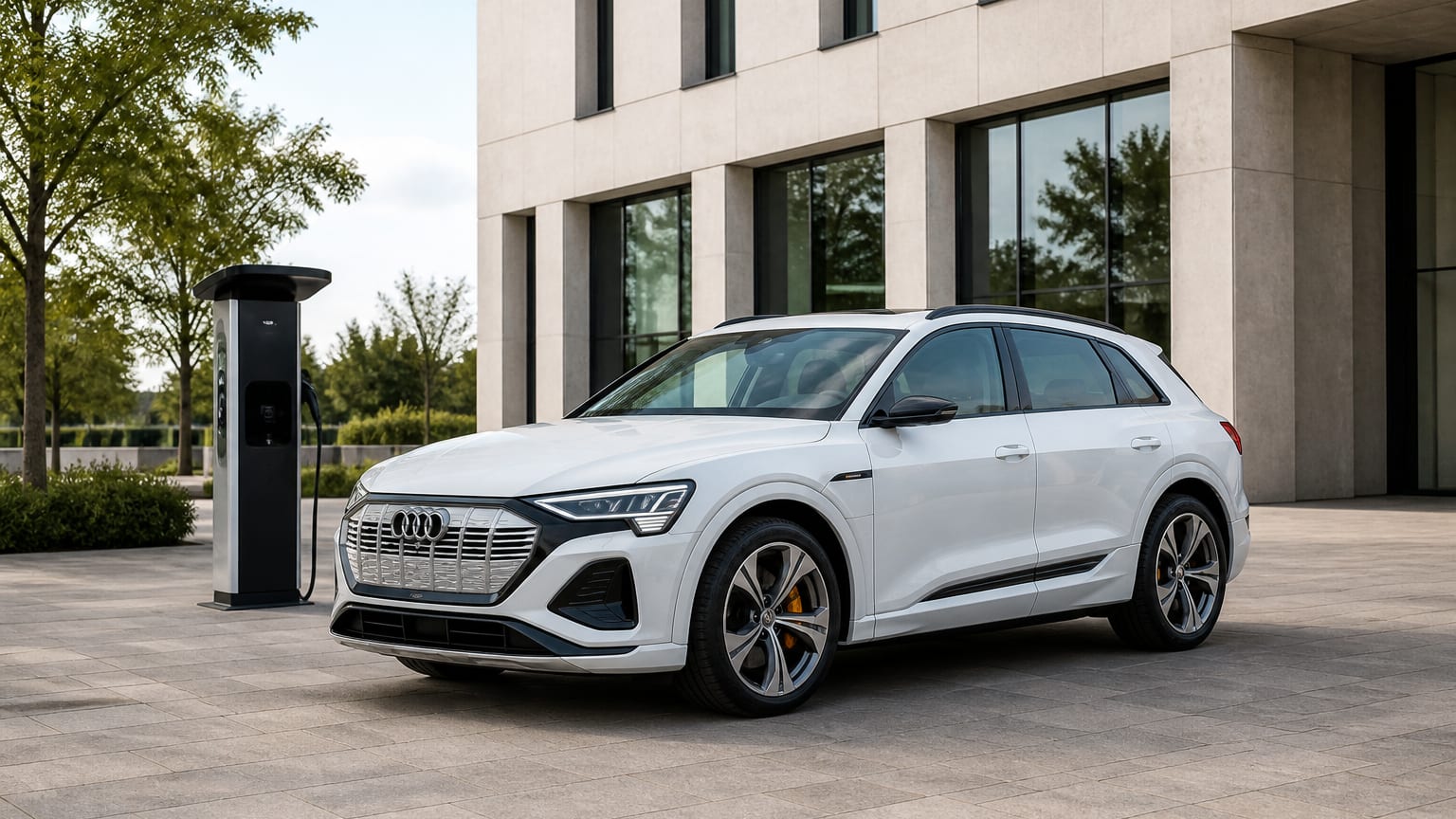
The Audi Q8 e-tron lineage runs from 2019 (first delivered in May 2019 as the "e-tron") through 2025, covering the full production run of Audi's first battery-electric mass-production car. The table below covers all model years you'll realistically find on the used market.
| Model Year | Generation | Verdict | Notes |
|---|---|---|---|
| 2019 | Gen 1 (e-tron) | Avoid | Highest NHTSA complaints (103), 5 recalls, charge-port fire-risk recall, worst CarComplaints PainRank |
| 2020 | Gen 1 (e-tron) | OK/Mixed | 25 NHTSA complaints, 4 recalls; Sportback variant added |
| 2021 | Gen 1 (e-tron) | OK/Mixed | Most CarComplaints raw complaints (5); NHTSA data mixed but no dominant single failure |
| 2022 | Gen 1 (e-tron) | OK/Mixed | 2 CarComplaints complaints; pre-facelift but settled production |
| 2023 | Gen 2 (Q8 e-tron) | OK/Mixed | Rename/facelift year; more recalls (22 per NHTSA dataset) than later years, airbag and camera recalls |
| 2024 | Gen 2 (Q8 e-tron) | Best | 0 owner complaints, 2 recalls, IIHS Top Safety Pick+, NHTSA 5-star |
| 2025 | Gen 2 (Q8 e-tron) | Best | 0 recalls, 0 owner complaints; highest reliability score in lineup |
Most common Audi Q8 e-tron problems
The single biggest failure on the Audi Q8 e-tron's first generation is moisture entering the high-voltage charging system through a faulty seal on the charging socket, putting the electrical system at risk of a short circuit and, in worst cases, a vehicle fire. Beyond that, the model family has four other recurring problem categories worth knowing before you buy.
1. Charge-port moisture ingress and fire risk (2019)
Certain 2019 Audi e-tron models were recalled because a faulty seal on the charge-port harness could allow moisture to enter the high-voltage system, creating a risk of a short circuit and fire; the fix involved installing an improved seal. If you own or are considering a 2019 e-tron and see an "Electrical system: fault" warning on the display, Audi's official guidance is to stop immediately in a safe outdoor location, not charge the vehicle, and have it towed to a dealer.
The recall covering this defect was issued as recall code 93E8 for 2019 models. Dealer replacement of the full charge-port harness is expensive - $3,000 or more - due to high labor costs involving dropping the subframe. If the recall has been completed, the risk is resolved. If it has not, walk away or negotiate a price that covers the repair.
Buyer takeaway: Before buying any 2019 e-tron, run the VIN through NHTSA's recall tool and confirm recall 93E8 is marked closed. The most common ongoing charge-port issue after the recall is the lock actuator, which can prevent charging or trap the plug - but this part can often be replaced separately from the full harness.
2. Brake pedal detachment (2019-2024)
Audi recalled certain 2019-2023 e-tron Quattro, 2020-2023 e-tron Sportback, and 2024 Q8 e-tron vehicles because a fastener connecting the brake pedal to the brake booster may have been improperly assembled, allowing the brake pedal to detach from the brake booster and causing a complete loss of normal brake function.
The current NHTSA campaign number for this recall is 26V-240 (Audi number 46P7), and it covers certain 2019-2024 e-tron and 2020-2024 e-tron Sportback vehicles - an expansion of an earlier campaign. The issue traces to an improperly torqued screw that connects the brake pedal's input rod to the actuator rod on the brake booster; the screw connection may disconnect, and the problem originated with supplier Aumovio due to a malfunction at the production plant.
Dealers inspect and tighten the pushrod screw joint as necessary, free of charge. On any used example across the full model range, confirm this recall is resolved before taking delivery. A brake pedal that goes to the floor without normal resistance is an immediate stop-driving situation.
3. Powertrain and start/stop system faults (2019)
The 2019 Audi Q8 e-tron's top NHTSA complaint categories are powertrain (38 complaints), electrical system (29 complaints), and steering (11 complaints). Owners report throttle lag, engine misfires, and transmission problems including delayed acceleration and failure to accelerate when the gas pedal is applied.
Audi's start/stop technology drew complaints for shutting off the power steering and brake systems at dangerous moments and causing acceleration issues. Most of these powertrain complaints cluster in the 2019 model year. The 2020 and later models show far lower powertrain complaint rates in NHTSA data, suggesting Audi addressed most of these issues in production.
4. Air suspension failures (all generations)
Owners report charging quirks, software glitches, faster-than-expected brake wear, and occasional air-suspension issues; air-suspension repairs are not cheap - sensors run into the hundreds, while air springs or a compressor replacement runs into four figures. The Q8 e-tron comes standard with adaptive air suspension, so every used example carries this potential cost.
Air suspension compressor failures and air spring leaks cause ride-height faults. On a test drive, watch for the vehicle sitting noticeably lower on one corner, or a compressor noise at startup. Factor a pre-purchase inspection by an EV-specialist technician into your buying process on any out-of-warranty example. On a used example out of warranty, catching early signs and factoring potential repair costs into your negotiation position is essential.
5. Dashboard leather delamination (2019-2022)
Audi issued a technical service bulletin covering 2019-2022 e-tron quattro and Sportback models for a condition where the dashboard leather becomes wavy, wrinkled, loose, blistering, or bubbling because the leather delaminates from the dashboard substrate. The root cause is process weaknesses and extreme stresses from hot and humid climates that push the material past its physical load limit; Audi noted that various production measures were taken but are not 100% effective.
This is a cosmetic problem, not a safety one, but dashboard replacement is an expensive repair on a luxury vehicle. If you're shopping a 2019-2022 example in a warm climate, inspect the dashboard carefully for any early bubbling or separation at the edges.
Checking a used Audi?
Scan for hidden fault codes from your phone in minutes — before you buy.
REREV may earn a commission if you sign up through this link. Learn more.
Which Audi Q8 e-tron years should you avoid?
The Audi Q8 e-tron year to avoid is 2019. CarComplaints rates the 2019 model year the worst because of higher repair cost and problems appearing at lower mileage, even though the 2021 has the most raw CarComplaints complaints. On NHTSA's complaint dataset, the 2019 has the highest volume at 103 owner complaints and 5 recalls - well above any other model year.
| Audi Q8 e-tron Generation | Model Years | Verdict | Main Issues |
|---|---|---|---|
| Gen 1: e-tron | 2019 | Avoid | Charge-port fire risk, powertrain faults, brake recall, start/stop defects |
| Gen 1: e-tron | 2020, 2021, 2022 | OK/Mixed | Brake recall, air suspension, dashboard delamination |
| Gen 2: Q8 e-tron | 2023 | OK/Mixed | Airbag and camera recalls, brake recall expansion |
| Gen 2: Q8 e-tron | 2024, 2025 | Best | 0 owner complaints; 2024 brake recall resolved, 2025 0 recalls |
Worst Audi Q8 e-tron years: 2019
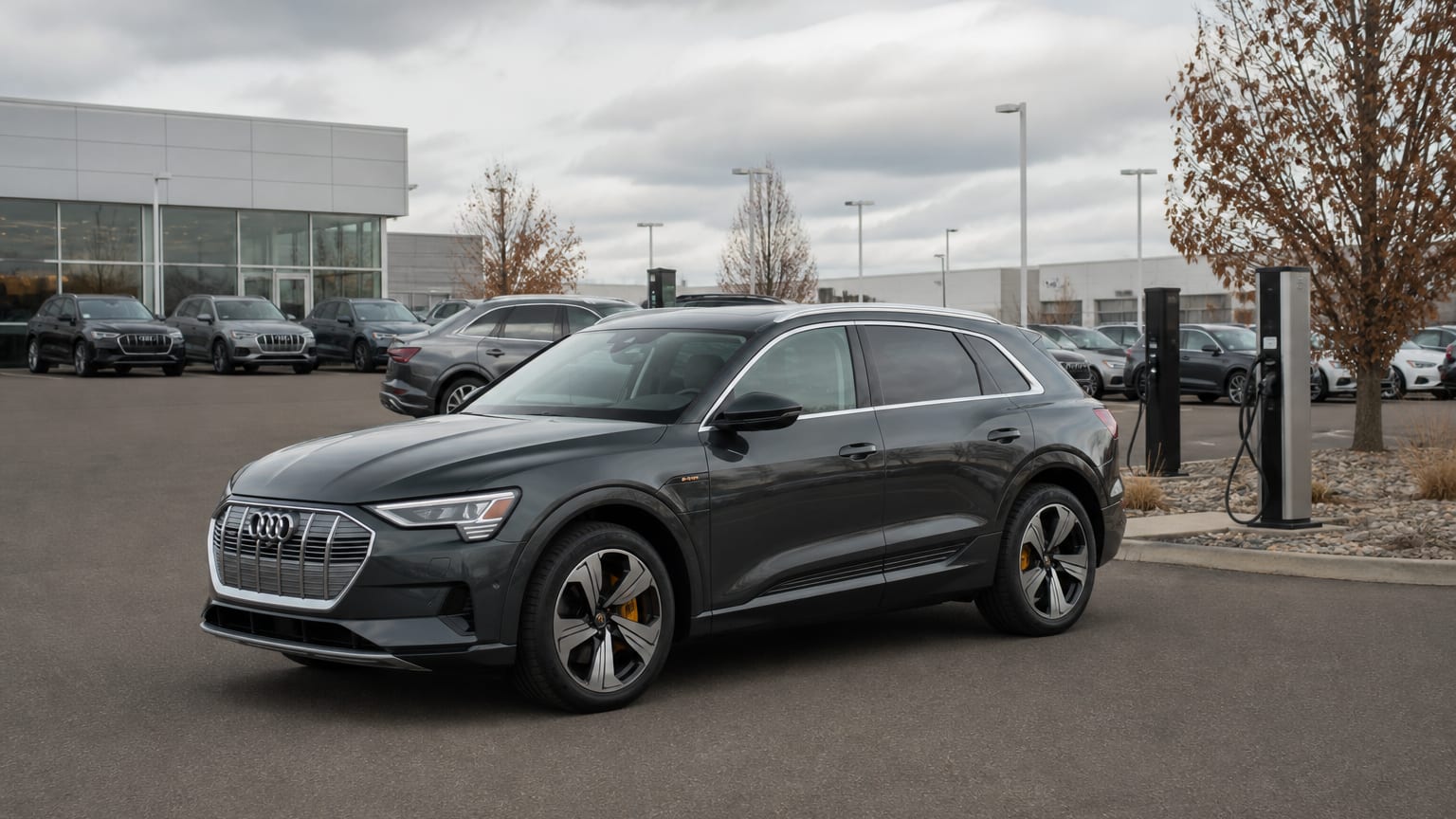
First-generation Audi Q8 e-tron (2019-2022)
The 2019 model has mixed reliability, with 5 recalls and 103 owner complaints on file, including 1 crash-related complaint; the most commonly reported problem areas are powertrain (38 complaints), electrical system (29 complaints), and steering (11 complaints).
The 2020 model year shows improved reliability, with 4 recalls and 25 NHTSA owner complaints on file. The 2021 and 2022 years show even lower complaint volumes in NHTSA data, and CarComplaints puts total complaints at 5 and 2 respectively for those years - suggesting Audi progressively addressed first-year issues through the Gen 1 run.
What are the best Audi Q8 e-tron years to buy?
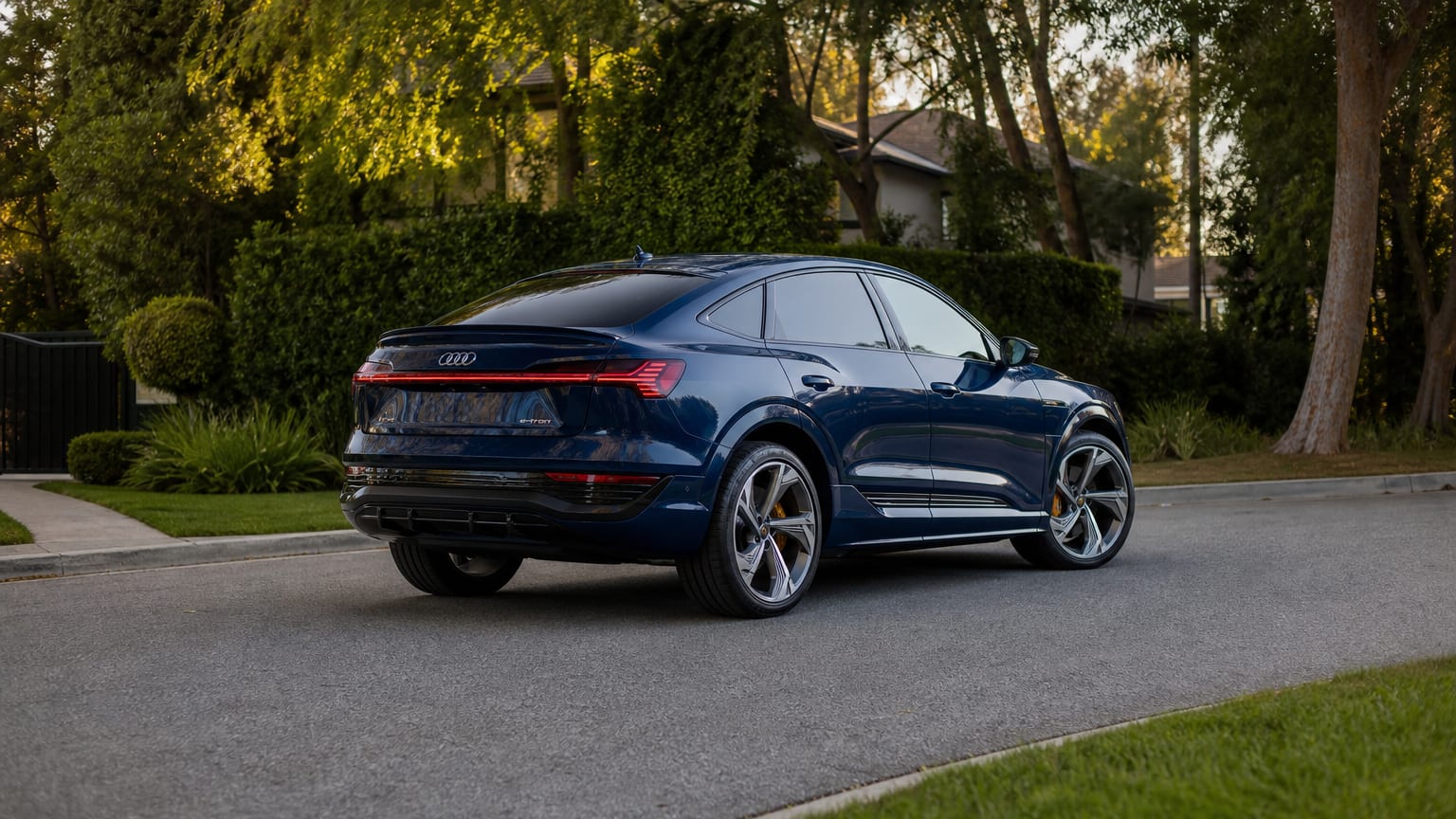
The 2025 Audi Q8 e-tron is the strongest pick, with 0 recalls and 0 owner complaints on file. The 2024 model is nearly as good. Both benefit from the Gen 2 facelift, updated battery, and the model's strongest safety credentials.
| Best Audi Q8 e-tron Year | Why It's a Strong Buy |
|---|---|
| 2025 | 0 recalls, 0 owner complaints, highest reliability score (78/100) |
| 2024 | 0 owner complaints, 2 recalls, IIHS Top Safety Pick+, NHTSA 5-star overall |
Most reliable Audi Q8 e-tron years: 2024, 2025
2025 Audi Q8 e-tron
The 2025 Audi Q8 e-tron scores 78 out of 100 on the reliability scale - rated "Good" - with 0 recalls and 0 owner complaints on file, making it the strongest year in the entire lineup. Production ended in February 2025, so 2025 examples represent the final, most refined version of the platform and are the lowest-risk used buy as they age into the market.
2024 Audi Q8 e-tron
The 2024 Audi Q8 e-tron has good reliability, with 2 recalls and 0 owner complaints on file in NHTSA data. The 2024 Audi Q8 e-tron earned an IIHS Top Safety Pick+ for the 2023 calendar year. It was also named an IIHS Top Safety Pick and received a maximum 5-star overall score from NHTSA. Edmunds consumer reviews give the 2024 Q8 e-tron an average rating of 4 stars out of 5, based on 22 reviews.
For 2024, the Q8 e-tron received a more energy-rich 114-kWh propulsion battery, aerodynamic improvements, a more efficient rear motor with increased driving range, and faster DC charging capability up to 170 kW (up from 150 kW). That hardware upgrade makes the 2024 the better long-range buy over the 2023.
Audi Q8 e-tron pre-purchase checklist
Run through these checks on any used Audi Q8 e-tron before you sign:
- Run the VIN through NHTSA's recall checker: Confirm every open recall is closed, especially recall 26V-240 (brake pedal detachment) and recall 93E8 (charge-port fire risk on 2019 models).
- On any 2019 example, verify recall 93E8 is complete: The 2019 charge-port seal recall created a fire risk; the fix is an improved seal, and it is critical to verify this has been performed before buying.
- Test the brakes at slow speed: Audi warns that drivers might notice an unusual noise or find the brake pedal does not return to its original position - both signs the pushrod fastener may have an issue.
- Inspect the dashboard on 2019-2022 cars: Look for wavy, wrinkled, loose, blistering, or bubbling leather, which signals delamination from the dashboard substrate - an expensive cosmetic repair.
- Test the air suspension: At startup, listen for compressor noise and watch for uneven ride height. Air spring or compressor replacement costs run into four figures, so factor this into your offer if the vehicle sits low or bounces unevenly.
- Confirm the charging port locks and unlocks cleanly: The charge-port lock actuator can fail when the grease inside hardens, preventing the pin from moving and either trapping the plug or preventing charging.
- Request a charging session as part of the test drive: A Q8 e-tron that has range or charging output well below its EPA estimate on a temperate day may have battery degradation worth pricing in.
- Ask for complete service and software-update records: Audi has issued multiple software recalls across the model run; a car with documented dealer history is lower risk.
Better alternatives to consider
If the Audi Q8 e-tron years in your budget land in the 2019 avoid window, also see the related Audi e-tron years to avoid guide, or consider these alternatives in the same luxury-EV SUV class:
- Nissan Leaf - a longer-established EV with a broader used-market pool and a clearer year-by-year reliability record, though it targets a smaller, more affordable segment
- Tesla Model X - the dominant large-format luxury electric SUV with an extensive NHTSA complaint and over-the-air software-update history, giving buyers better insight into known issues before purchase
- BMW iX - a direct luxury EV SUV rival with similar pricing and a more recent platform that avoids the first-generation e-tron's charge-port and powertrain growing pains
Is the Audi Q8 e-tron worth buying?
Yes - as long as you avoid the 2019 model year. The Q8 e-tron earned an IIHS Top Safety Pick designation and a maximum 5-star overall NHTSA score, putting it among the safest luxury SUVs on the market. The 2024 and 2025 model years carry 0 owner complaints in NHTSA data and represent the best value in the used lineup as prices soften following the model's discontinuation. The Q8 e-tron can be a smart used-EV buy - you're getting a quiet, comfortable luxury SUV with a proven battery pack - but you can't treat it like any old crossover; go in with eyes open about charging quirks, brake wear, software updates, and air-suspension costs, and insist on a thorough inspection before signing anything. Run the VIN through NHTSA's recall checker and verify the maintenance history before you commit.
Understanding the hidden costs of owning an electric car - such as out-of-warranty high-voltage component repairs - is especially relevant for a used Q8 e-tron bought beyond the factory EV warranty period.