
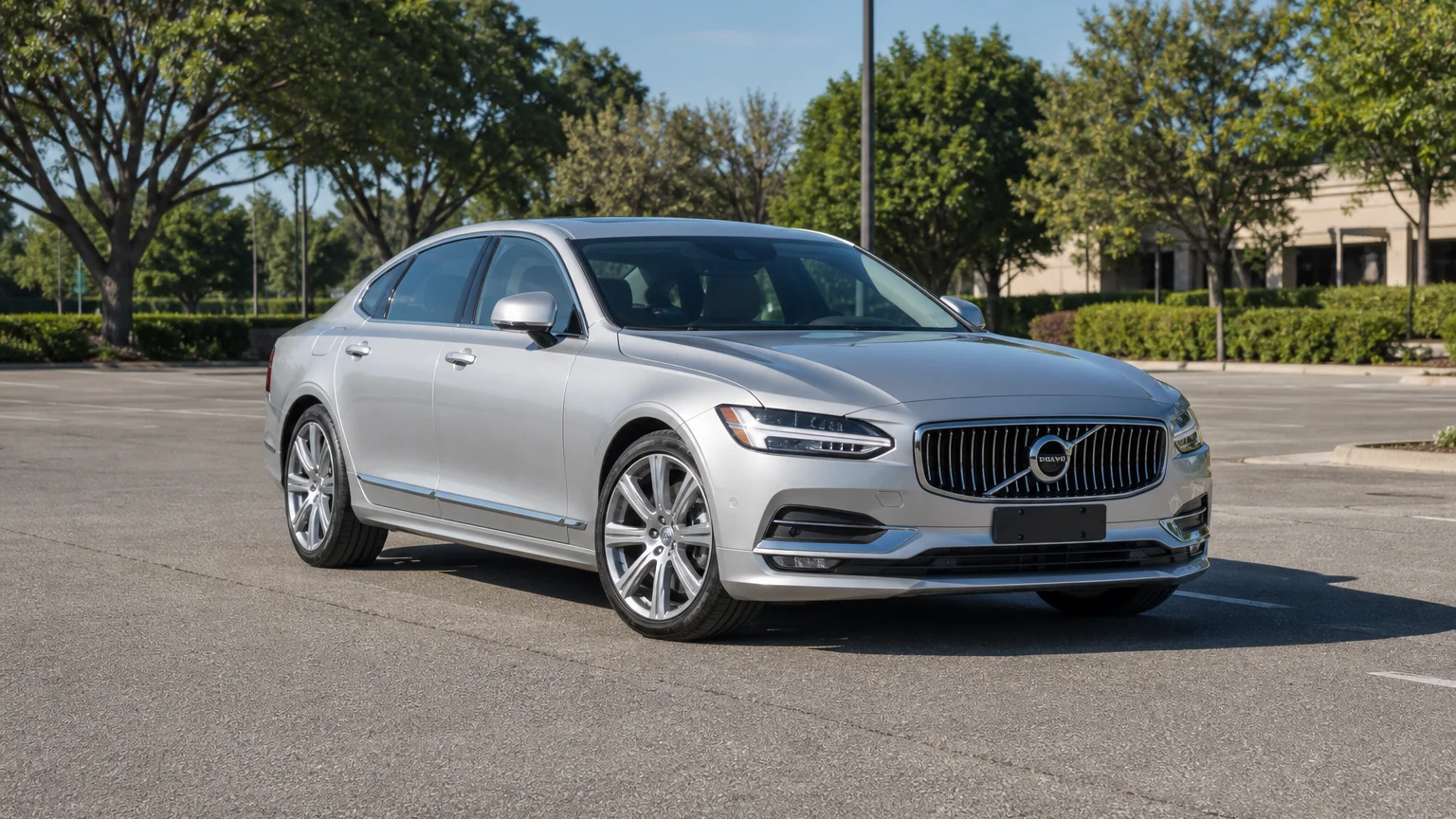
The Volvo S90 is a genuinely capable luxury executive sedan that, across most of its modern run, delivers a comfortable and refined ownership experience. That said, a handful of model years carry meaningfully higher complaint counts, heavier recall activity, and well-documented infotainment and cooling faults that can lead to costly repairs. You'll want to know which specific years to skip and which represent the safest used buy before you put money down.
For generations, engines, and ownership notes in one place, see the Volvo S90 hub.
Related guides appear in the Volvo years to avoid directory.
At a glance
- Worst years
- 2017
- 2018
- Best years
- 2021
- 2022
- 2023
- Top failure
- Sensus infotainment system freezes and black-screen crashes (2017-2023, CarComplaints / owner data)
- Always do before buying
- run the VIN through NHTSA's recall checker to confirm every open recall is closed, and on any 2017-2022 T6 car check the coolant crossover pipe area for seepage before purchase
Recalls by year
How we rated the best and worst Volvo S90 years
The 2017 and 2018 Volvo S90 models report the most frequent complaints, with owners often mentioning electrical faults and engine troubles - making those two years the clear avoid set for the modern S90. To build this guide, we drew on NHTSA complaint and recall data, CarComplaints per-year complaint counts and problem rankings, RepairPal repair-cost and reliability data, and owner reports from the SwedeSpeed forum and Reddit’s r/Volvo community. CarComplaints ranks the worst year by repair cost and mileage-at-failure (its PainRank system), while NHTSA tracks raw complaint volume - those two metrics often point to different years, and we attribute each claim to its correct source throughout. Our years to avoid methodology applies consistent scoring across complaint volume, recall activity, and repair-cost data so that no single source skews a model year’s verdict.
The modern S90 spans model years 2018 to 2026 in tracked reliability databases, with the current generation beginning in 2017 and receiving facelifts in 2020 and 2023.
| Volvo S90 Generation | Best Volvo S90 Years | Worst Volvo S90 Years |
|---|---|---|
| 1st gen (2017-2025) | 2021, 2022, 2023 | 2017, 2018 |
Every Volvo S90 model year ranked
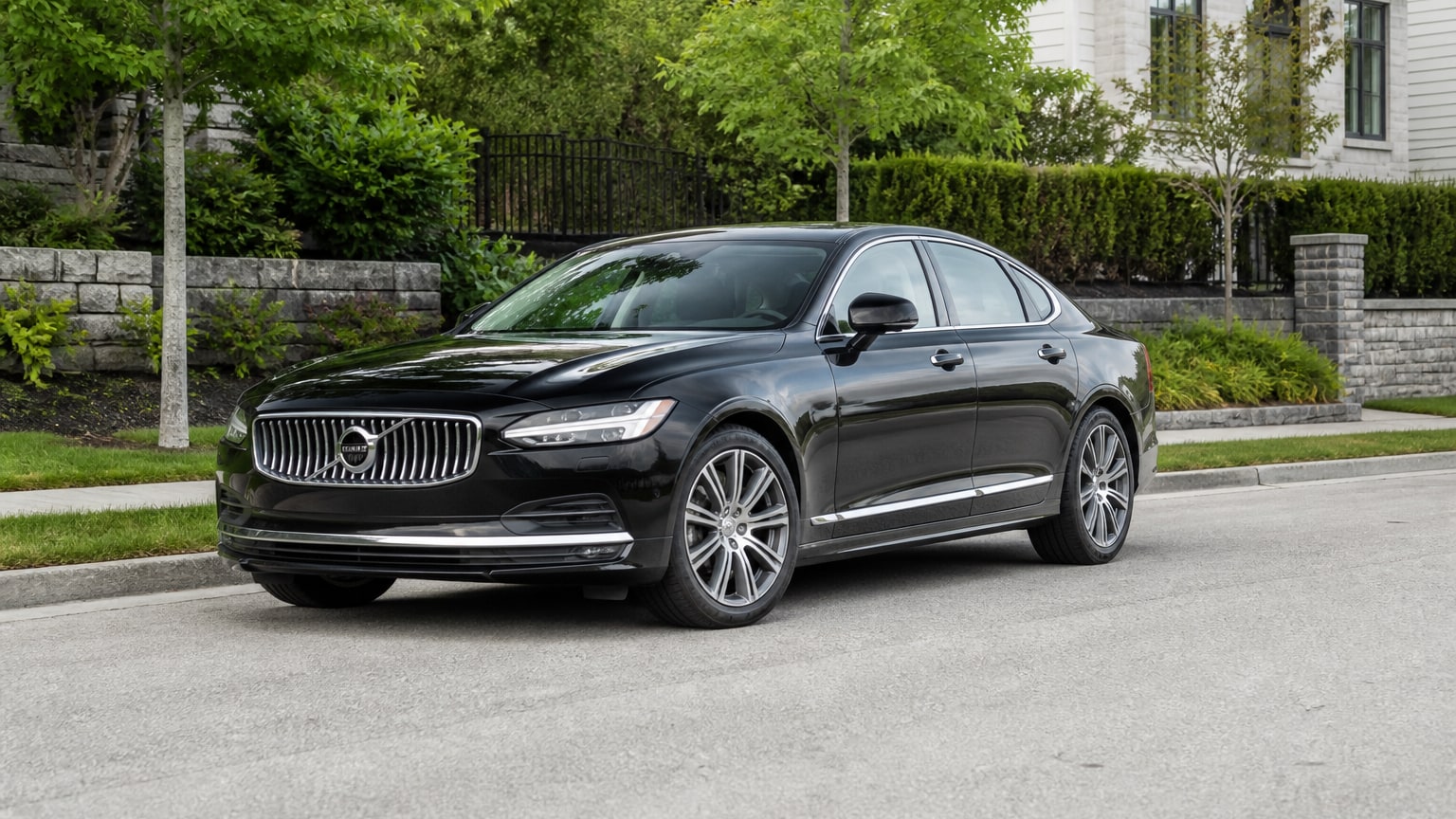
The modern S90 has been on sale in the US as a single generation since 2017; the classic 1997-1998 S90 is a separate collector-market nameplate and is not ranked here. The table below covers every modern model year for which meaningful data exists.
| Model Year | Generation | Verdict | Notes |
|---|---|---|---|
| 2017 | 1st gen | Avoid | Most recalls (4); highest owner complaint density on CarComplaints; early-build electrical and infotainment faults |
| 2018 | 1st gen | Avoid | Highest CarComplaints complaint count (21 reported problems); engine/transmission top complaints |
| 2019 | 1st gen | OK/Mixed | 4 recalls including AEB software recall; some owner transmission complaints |
| 2020 | 1st gen (facelifted) | OK/Mixed | 2 recalls; 2 NHTSA complaints; facelift improves interior; PHEV battery recall affects some units |
| 2021 | 1st gen | Best | 2 recalls; 0 NHTSA owner complaints; 71/100 reliability score |
| 2022 | 1st gen | Best | 3 recalls; 1 NHTSA complaint; 65/100 reliability score; mild-hybrid B6 engine standard |
| 2023 | 1st gen (facelifted) | Best | 3 recalls; 2 NHTSA complaints; 0 RepairPal reported problems |
| 2024 | 1st gen | OK/Mixed | 2 recalls; 1 NHTSA complaint; late-run model with limited data |
| 2025 | 1st gen | OK/Mixed | 4 recalls; 0 NHTSA owner complaints; final US model year |
Most common Volvo S90 problems
The single most commonly reported issue across the modern S90’s life is Sensus infotainment system lag, crashes, and black screen, with 850 owner reports across owner-data sources. Beyond the touchscreen, the S90 also has documented patterns around rear brake rotor vibration, coolant system leaks on T6 engines, automatic emergency braking software faults, and high-voltage battery concerns on plug-in hybrid models.
1. Sensus infotainment system lag, crashes, and black screen
On 2017-2023 Volvo S90 models, the Sensus infotainment system suffers from significant lag, screen freezes, and black-screen episodes. Because the system controls climate, seat heating, navigation, and vehicle settings through the central touchscreen, a crash renders many vehicle functions inaccessible.
The system runs on a Tegra K1 processor that struggles with the software load, especially when running multiple apps simultaneously. Volvo issued multiple over-the-air and dealer software updates throughout the production run, but owners on the SwedeSpeed forum report that updates reduced but did not fully eliminate the freeze events on earlier model years. Repair costs across all S90 issues range from $200 to $3,500, with infotainment module replacement sitting at the higher end of that range if software updates fail.
Buyer takeaway: on any 2017-2022 S90, cycle through every infotainment function during the test drive - climate, navigation, Bluetooth, and backup camera - to confirm the system responds without lag or a black-screen reset.
2. Rear brake rotor vibration
Vibration problems from the rear brake rotors are common on the S90 and require replacement of the pads and rotors. This is RepairPal’s top-ranked S90 problem, reported across multiple model years. Consumer Reports notes the S90’s cabin is gorgeous with supportive seats, but the touchscreen proves frustrating to use - and owners pairing that frustration with brake pulsation under moderate braking have logged the complaint from as early as 30,000 miles.
The average cost for a Volvo S90 brake pad replacement is between $278 and $335 at RepairPal-certified shops, but rotor replacement on top of pads pushes the total repair closer to $500-$700 at a Volvo dealer. A soft or pulsing brake pedal at highway speeds is the clearest early symptom. Ask for brake-service records before buying any used S90 regardless of year.
3. Coolant crossover pipe leaks (T6 engine, 2017-2022)
On 2017-2022 S90 models with the T6 twin-charged engine, a coolant crossover pipe (also called the coolant bridge) runs between the cylinder head and the turbocharger. This pipe develops leaks at the O-ring seals, causing coolant loss that can lead to overheating if not caught. The plastic components in the coolant routing deteriorate from heat cycling, and the leak is often slow and can be mistaken for condensation.
The electric auxiliary coolant pump on 2017-2025 S90 models can also develop a leak or fail, affecting cabin heating performance and turbo/supercharger cooling on T6 models, as the pump circulates coolant to the heater core and turbo when the engine is off or at idle. No standalone NHTSA recall was issued for this specific pipe, but repair costs for the crossover pipe O-rings typically run $300-$600 at a Volvo dealer. A damp smell from the engine bay or a rising temperature gauge on a warmed-up T6 are the tell-tale symptoms - water coming from the engine compartment is a signal to inspect the coolant routing before buying.
4. Automatic emergency braking (AEB) software fault
NHTSA recall campaign 21V-414 covers certain 2019-2020 S90 vehicles. Due to a software/hardware incompatibility, the Automatic Emergency Brake (AEB) system may not detect obstacles and engage as intended, increasing the risk of a crash. Volvo notified owners and dealers update the Active Safety Domain Master (ASDM) software, free of charge; the recall began April 9, 2020. Volvo’s internal number for this recall is R29998.
Separately, NHTSA recall 18V-800 covers certain 2017-2019 XC90, S90, and other Volvo models; Volvo identified that the Telematics and Driver Support systems on affected vehicles required a remedy. Both campaigns are VIN-specific - run your candidate car’s VIN through NHTSA’s recall tool to confirm completion.
5. Seat structure and seat belt buckle recalls (2017-2019)
Volvo recalled certain 2018-2019 XC60 and S90 vehicles because the driver and passenger front seat rail rear flange nuts may not have been installed during assembly; if the nuts are missing, in the event of a crash, the front seat structure and position may be affected, increasing the risk of injury. Dealers inspect the front seat rails and install missing flange nuts free of charge.
The most common recall on the 2017 S90 involves the front passenger seat belt buckle separating and not securing the occupant, plus a GPS recall where the system does not provide location information to emergency personnel. Consumer Reports rates the 2018 S90’s overall reliability as about average compared to other cars from the same model year, and the 2018 S90 has been recalled 2 times by NHTSA. Before buying any 2017-2019 S90, physically check the seat rail bolts and confirm both seat belt and AEB recalls are marked complete.
Which Volvo S90 years should you avoid
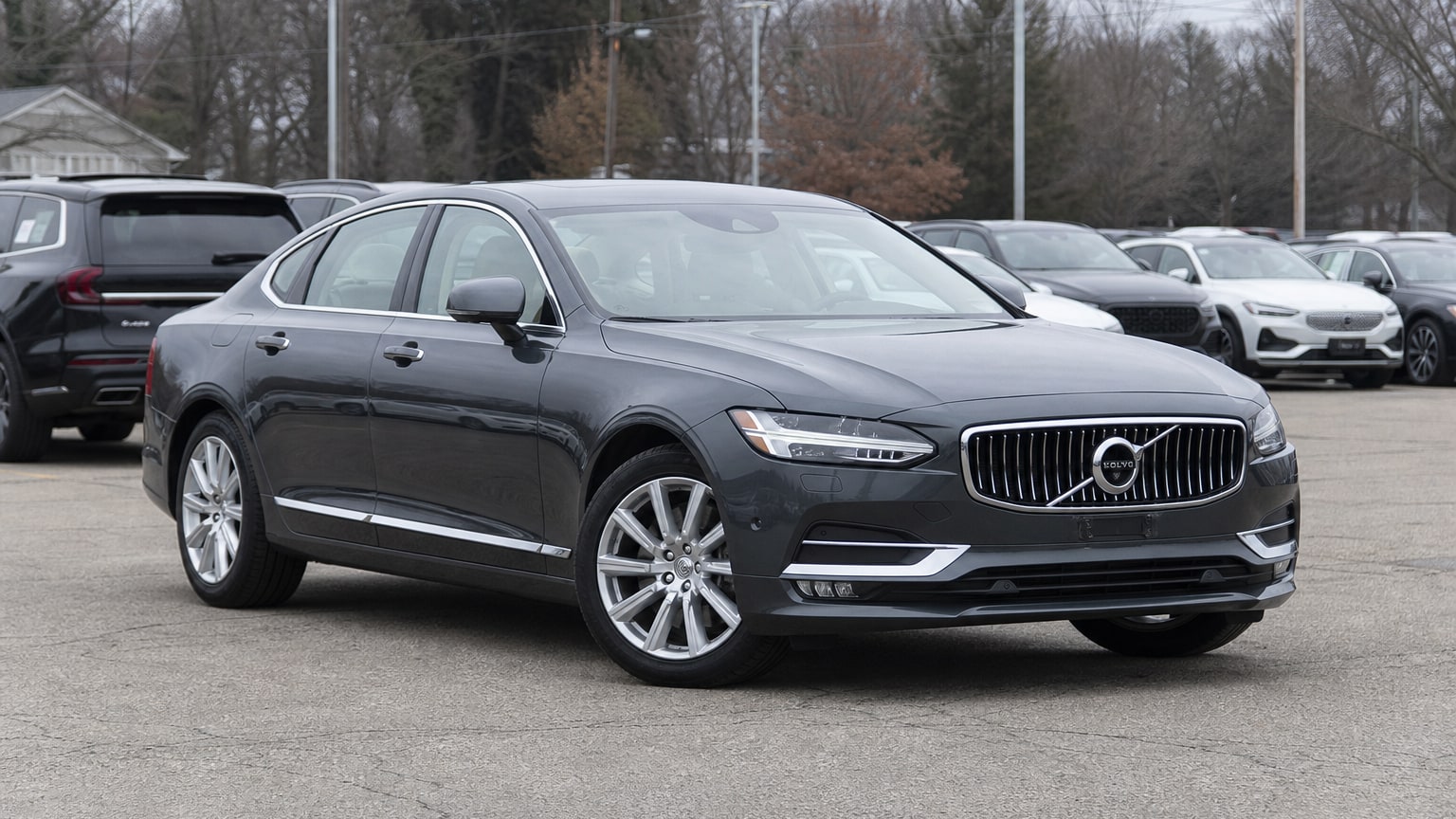
The Volvo S90 years to avoid are 2017 and 2018. The 2018 Volvo S90 has 21 problems and defects reported by S90 owners on CarComplaints, with the worst complaints concentrated in engine and transmission problems - making it the year with the highest owner-reported problem count on CarComplaints for the modern S90. The 2017 Volvo S90 has 8 problems and defects reported on CarComplaints; separately, NHTSA recall activity is highest on the 2017 and 2019 model years at 4 recall campaigns each per NHTSA data.
| Volvo S90 Generation | Model Years | Verdict | Main Issues |
|---|---|---|---|
| 1st gen (2017-2025) | 2017, 2018 | Worst | Infotainment crashes, engine/transmission complaints, seat belt and seat rail recalls, highest CarComplaints problem counts |
| 1st gen (2019-2025) | 2019, 2020, 2024, 2025 | Mixed | AEB software recall on 2019-2020; PHEV battery fire recall on 2020-2021; 2021-2023 are the cleanest years |
| 1st gen (2021-2023) | 2021, 2022, 2023 | Best | Lowest complaint and recall loads of the entire production run |
1st-generation Volvo S90 (2017-2025)
The 2017 and 2018 S90 models report the most frequent complaints, with owners citing electrical faults and engine troubles. Early models have software glitches affecting infotainment and safety features, and Volvo issued recalls mainly for the 2017 and 2018 models, including for faulty airbags and brake system defects.
The 2018 Volvo S90 carries 2 recalls and 12 owner complaints, with the most commonly reported problem areas being the electrical system, latches/locks/linkages, and tires. That 12-complaint NHTSA tally for 2018 is the highest single-year NHTSA complaint count for the modern S90. The 2017’s four active recall campaigns cover the seat belt buckle, GPS emergency-services link, telematics, and a passenger seat belt stud - all safety-critical issues that must be verified as completed on any used example.
What are the best Volvo S90 years to buy
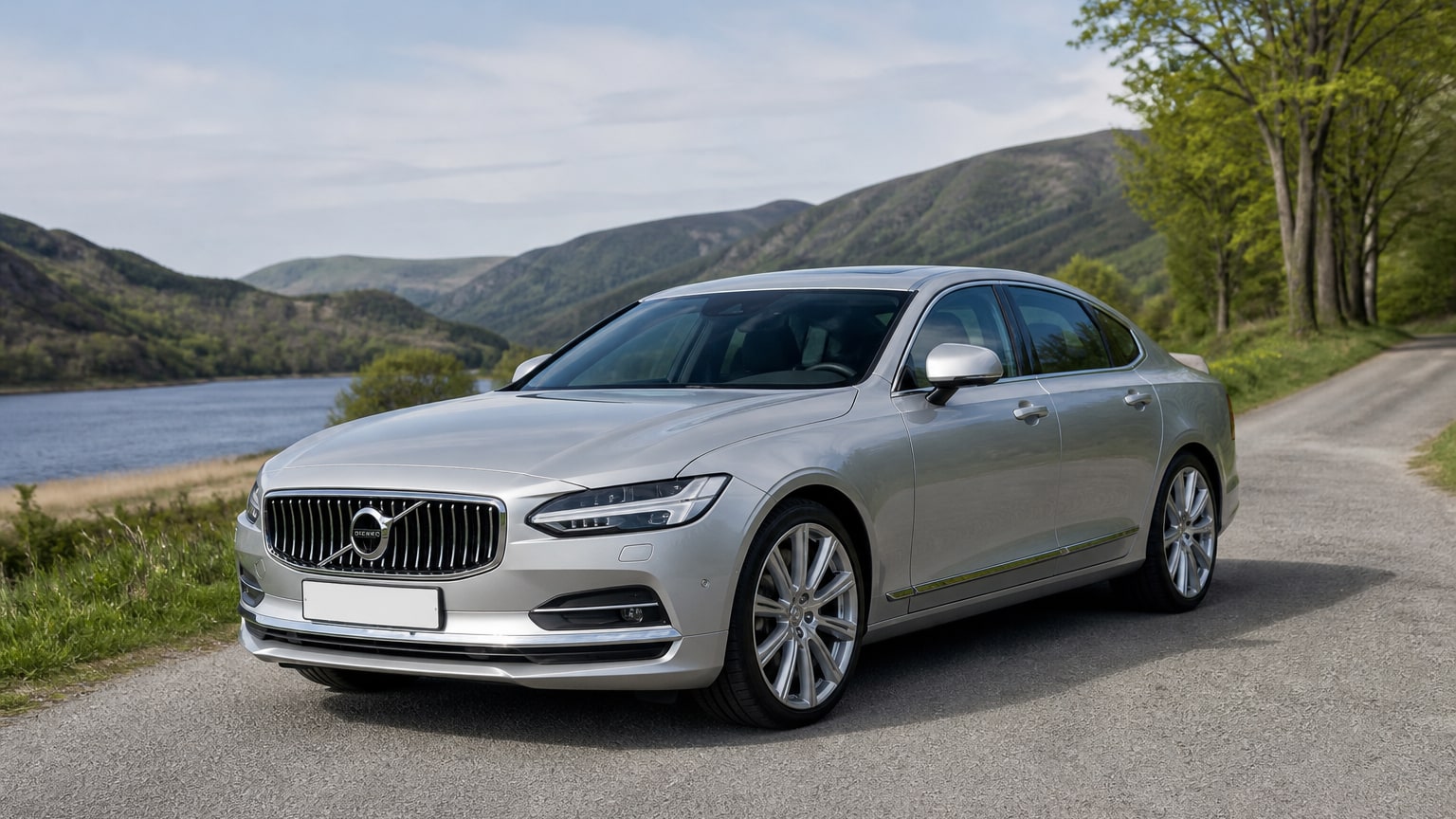
The 2021 Volvo S90 scores 71/100 for reliability with only 2 recalls and 0 NHTSA owner complaints on file - making it the standout pick for used buyers. The 2022 and 2023 follow closely with similarly low complaint tallies and no powertrain-specific fault clusters.
| Best Volvo S90 Year | Why It's a Strong Buy |
|---|---|
| 2021 | 71/100 reliability score, 0 NHTSA owner complaints, 2 recalls, post-facelift interior |
| 2022 | 65/100 reliability score, 1 NHTSA complaint, 295-hp B6 mild-hybrid engine standard |
| 2023 | 3 recalls, 2 NHTSA complaints, 0 RepairPal reported problems; second facelift refinements |
2021 Volvo S90
The 2021 Volvo S90 scores 71/100 for reliability (rated Good) and carries 2 recalls with 0 NHTSA owner complaints on file, the cleanest active record of any easily shopped used model year. It also benefits from the 2020 facelift’s revised instrument cluster and larger PHEV battery. Changes for 2020 included a new 12.3-inch display in the instrument panel and an increase in the plug-in hybrid battery size to 11.6 kWh. For buyers wanting the T8 plug-in hybrid, the 2021 is the last year of that powertrain before the S90 Recharge designation shifted; verify the PHEV battery recall (discussed below) is closed on any 2020-2021 PHEV example.
2022 Volvo S90
The 2022 Volvo S90 scores 65/100 for reliability, carries 3 recalls, and has just 1 NHTSA owner complaint on file, with seat belts as the only flagged problem area. For 2022, the S90 received a 295-hp, 2.0-liter turbo four-cylinder mild hybrid engine dubbed the B6 as standard equipment, replacing the older T5/T6 naming. Repair costs on the B6’s mild-hybrid system are not yet widely documented, but the low complaint count suggests a cleaner early ownership record than the launch-year models.
2023 Volvo S90
The 2023 Volvo S90 scores well for reliability with 3 recalls and only 2 NHTSA owner complaints on file, with unknown/other and back-over prevention as the flagged categories. RepairPal shows 0 reported owner problems for the 2023 S90, the cleanest record on that platform for the model. The second facelift’s revised software also reduces the Sensus screen-freeze complaints that plagued earlier cars.
Volvo S90 submodel years to avoid
The modern S90 range includes a plug-in hybrid variant (sold as the S90 T8 and later the S90 Recharge) alongside the standard petrol models; each has its own recall and fault profile distinct enough to assess separately.
Volvo S90 Recharge years to avoid
The S90 Recharge is the plug-in hybrid (PHEV) version of the S90, offered in the US market on 2020 and 2021 model years under the T8 Twin Engine designation before Volvo transitioned to the “Recharge” brand name. Its powertrain pairs the 2.0-liter four-cylinder petrol engine with a 64 kW rear-axle electric motor and an 11.6 kWh high-voltage battery.
The single most consequential recall specific to the S90 Recharge’s own drivetrain is the high-voltage battery fire risk. Volvo recalled nearly 7,500 plug-in hybrids in the US over a high-voltage battery issue that may cause it to short-circuit, increasing the risk of fire. Owners were advised not to charge their vehicles until a remedy had been completed. The recall covers certain 2020-2021 S90, 2020-2022 S60, V60, XC60, XC90, and 2022 V90 plug-in hybrid vehicles. This is NHTSA recall campaign 25V-179 (Volvo’s internal number R10312). Dealers inspect the high-voltage batteries for the defect and replace the battery module if one is found.
No S90 Recharge model year has yet accumulated a meaningful pattern of non-battery PHEV-specific complaints beyond the battery recall above. The S90 Recharge’s engine, transmission, and body complaints overlap with those of the standard S90 and are already covered in the problem sections above. Before buying a used 2020 or 2021 S90 Recharge, confirm recall 25V-179 is closed on your specific VIN via NHTSA, and ask the seller whether the high-voltage battery module was inspected or replaced:
-
Confirm recall 25V-179 / R10312 is closed on your VIN at nhtsa.gov/recalls
-
Do not buy a 2020-2021 S90 PHEV if the battery recall is still open without a firm dealer appointment
-
Check that the 11.6 kWh battery charges normally and holds charge for the rated ~22 miles of electric range
-
Review service records for any auxiliary coolant pump work (the T8 PHEV relies on it more heavily than the petrol-only T6)
Volvo S90 pre-purchase checklist
Run these checks on any used S90 before signing:
- VIN recall check: Enter the VIN at nhtsa.gov/recalls to confirm every open campaign - including the AEB recall (21V-414 on 2019-2020 cars), the seat belt buckle recall on 2017 models, and the PHEV battery recall (25V-179 on 2020-2021 PHEV units) - is closed.
- Infotainment stress test: On any 2017-2022 S90, run the Sensus screen through climate, navigation, Bluetooth, and backup camera simultaneously. A freeze or black-screen reset during the test drive is a reliable predictor of ongoing problems.
- T6 coolant crossover pipe inspection: On 2017-2022 T6 models, look at the engine bay for any damp residue or coolant smell around the area where the crossover pipe meets the turbocharger. A slow leak here often goes unnoticed until it becomes an overheating event.
- Rear brake rotor check: Ask for brake-service history. RepairPal flags rear rotor vibration as the S90’s most commonly reported mechanical problem; if pads and rotors haven’t been replaced in recent mileage, budget $500-$700 for the repair.
- Seat rail and seat belt verification (2017-2019): Confirm the front seat rail flange-nut recall and the passenger seat belt buckle recall are marked complete in the NHTSA VIN lookup before taking delivery.
- PHEV battery health (2020-2021 Recharge): Charge the car to 100% and confirm the battery holds charge and that no warning lights illuminate. Confirm recall 25V-179 / R10312 is closed.
- Service records: Request full maintenance documentation; the S90’s auxiliary coolant pump and brake service should have clear records.
- Pre-purchase inspection: Have an independent Volvo-experienced mechanic scan for fault codes - the S90’s electrical system can carry stored codes that a standard OBD-II reader misses.
Better alternatives to consider
If the Volvo S90 years in your budget land on the avoid list, consider these alternatives in the same luxury executive sedan class:
-
BMW 5 Series - a deep used-car market with multiple engine options, strong long-term parts availability, and a clear year-by-year reliability record across multiple generations
-
Mercedes-Benz E-Class - the segment benchmark for cabin refinement, with wider dealer coverage than Volvo and a similarly well-documented complaint record by model year
-
Porsche Boxster - for buyers who prioritize driving feel over rear-seat space, the Boxster offers a far simpler powertrain with a stronger reliability track record than any early-gen S90
Is the Volvo S90 worth buying
Yes - as long as you avoid the 2017 and 2018 model years. The S90 averages 68/100 across all tracked model years, rated good overall, with an estimated annual repair cost of $976. The 2021-2023 cars carry the lightest complaint and recall loads of the entire production run, and the best-performing year in reliability scoring is 2021 at 71/100, with 2025 also scoring 69/100. Stick to those years, run the VIN through NHTSA’s recall checker before buying, and verify maintenance history - especially brake service and coolant system work on any T6 model.
Frequently asked questions
What are the best Volvo S90 years to buy?
The best Volvo S90 years to buy are 2021, 2022, and 2023. The 2021 leads the group with a 71/100 reliability score, 0 NHTSA owner complaints, and just 2 recalls on record - the cleanest profile of any readily available used model year.
What are the worst years for the Volvo S90?
The worst Volvo S90 years are 2017 and 2018. The 2018 has 21 owner-reported problems on CarComplaints, with engine and transmission issues topping the complaint list, while the 2017 carries 4 known recalls, including seat belt buckle separation and a GPS emergency-services fault.
Which year Volvo S90 is most reliable?
The 2021 Volvo S90 is the most reliable pick, scoring 71/100 (Good) with 2 recalls and 0 NHTSA owner complaints on record - the best combination of a low recall count, zero complaint volume, and post-facelift build quality improvements. All sources are evaluated against our editorial guidelines and research methodology to ensure claims reflect documented data rather than anecdote.
What year Volvo S90 has the worst infotainment problems?
The 2017-2023 Volvo S90 models are all affected by the Sensus infotainment system’s lag, screen freezes, and black-screen episodes, but the 2017 and 2018 cars - before Volvo’s iterative software updates improved the system - show the highest concentration of owner complaints. Early models have software glitches affecting infotainment and safety features that were partly addressed in later over-the-air and dealer updates.
How long does a Volvo S90 last?
The 2017-2025 Volvo S90 can be a sound used car depending on trim, mileage, and maintenance history, with 27 total NHTSA complaints on record across the entire production run - a low figure for a model spanning nearly a decade. The Volvo brand earns a 3.5 out of 5.0 reliability rating from RepairPal, ranking it 17th out of 32 car brands based on an average across 345 unique models. With proper maintenance - particularly coolant system service and timely brake rotor replacement - a well-kept S90 from a good model year is capable of reaching well over 150,000 miles.
Does the Volvo S90 have a recall for the brakes?
Yes, on certain plug-in hybrid years. The 2025 S90 PHEV is included in a brake-related recall campaign covering several Volvo plug-in hybrid and electric models. Separately, the 2017-2019 years carry seat belt and seat structure safety recalls that involve the braking and occupant-protection system. Always confirm via the NHTSA VIN lookup which specific campaigns affect your candidate vehicle before purchase.