
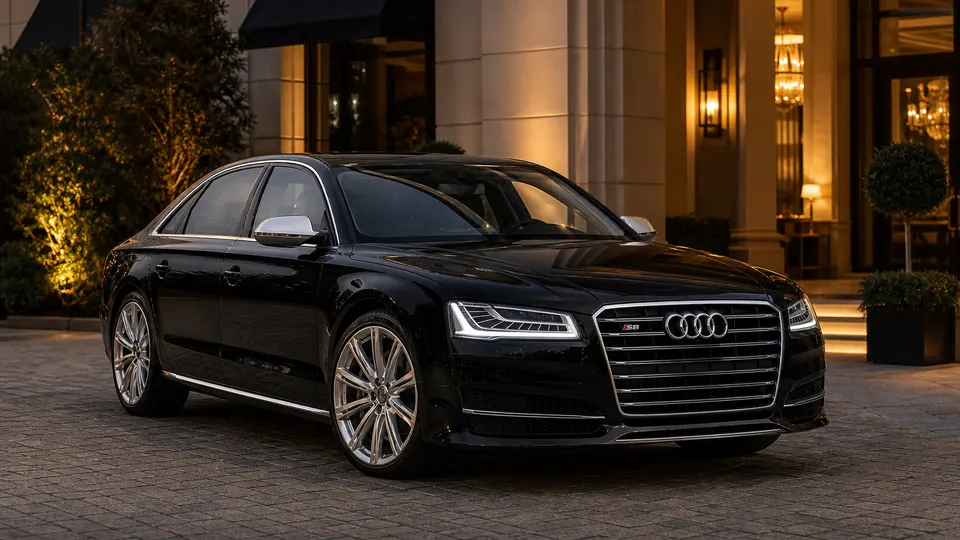
The Audi S8 is one of the most capable full-size luxury sedans ever built, and across most of its production run it has earned a reputation for solid long-term dependability. A few model years inside the third-generation (D4) lineup, however, carry a documented turbocharger defect serious enough that NHTSA opened a formal investigation - and eventually triggered a recall covering more than 26,000 vehicles. Before you put a deposit down on a used S8, you need to know which years to skip and which to target.
At a glance
- Worst years
- 2013
- 2014
- 2015
- 2016
- 2017
- Best years
- 2001
- 2002
- 2003
- 2007
- 2008
- 2020
- 2021
- 2022
- Top failure
- D4-generation (2013-2017) twin-turbo oil strainer clog causing turbo stall (CarComplaints rates 2014 worst on repair cost; NHTSA recall campaign 22V-178)
- Always do before buying
- run the VIN through NHTSA's recall checker to confirm recall 22V-178 (oil strainer / turbocharger) is closed, plus check the oil level and inspect for any "EPC" or oil warning lights on 2013-2017 cars before purchase
How we rated the best and worst Audi S8 years
The 2014 Audi S8 has the most overall complaints, and CarComplaints rates 2014 as the worst model year ranked on several factors such as repair cost and average mileage when problems occur. That is a separate measurement from raw NHTSA complaint volume, which is highest across the 2013-2017 D4 generation as a group due to the widespread turbocharger recall. CarComplaints ranks the worst year by repair cost and mileage-at-failure (its PainRank system), while NHTSA shows raw complaint volume - the two metrics do not always point to the same year.
Ratings were built from NHTSA complaints and recalls, CarComplaints per-year complaint counts and PainRank, RepairPal for repair-cost and known recalls, KBB and owner reports on TrueDelta, and owner threads on AudiWorld forums.
Our years-to-avoid methodology weights failure severity, repair cost, and mileage-at-failure over raw complaint volume alone.
| Audi S8 Generation | Best Audi S8 Years | Worst Audi S8 Years |
|---|---|---|
| D2 (1997-2003) | 2001, 2002, 2003 | None |
| D3 (2006-2010) | 2007, 2008 | None |
| D4 (2013-2018) | None | 2013, 2014, 2015, 2016, 2017 |
| D5 (2020 - present) | 2020, 2021, 2022 | None |
Every Audi S8 model year ranked
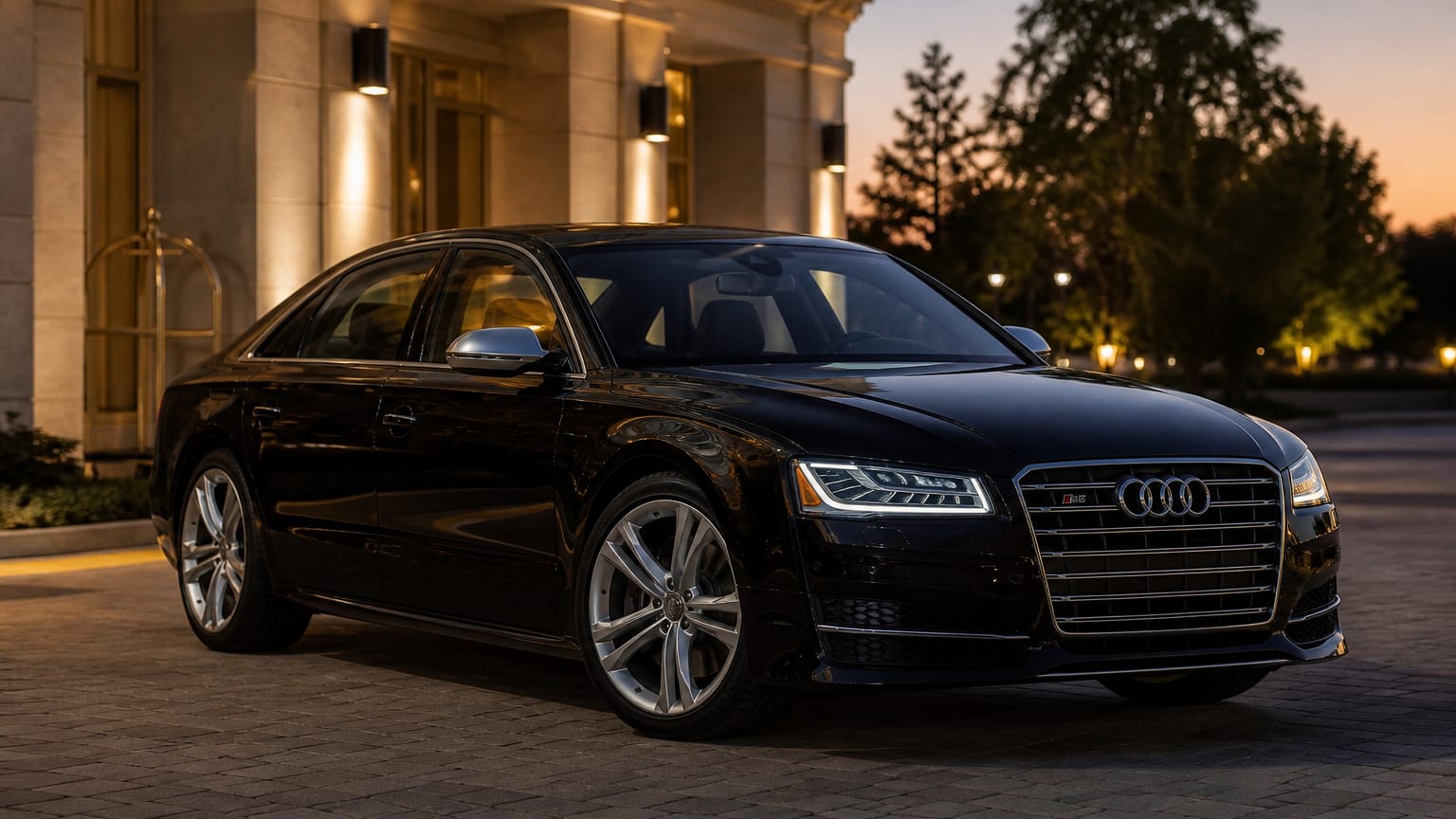
The worst Audi S8 years to avoid are concentrated entirely in the D4 generation, while the D3 and D5 generations offer the most reliable used picks.
| Model Year | Generation | Verdict | Notes |
|---|---|---|---|
| 1997 | D2 | OK/Mixed | Early gen, collector market, limited US data |
| 1998 | D2 | OK/Mixed | Early gen, collector market, limited US data |
| 1999 | D2 | OK/Mixed | Early gen, collector market, limited US data |
| 2000 | D2 | OK/Mixed | Early gen, collector market, limited US data |
| 2001 | D2 | Best | End of D2, lower complaint footprint |
| 2002 | D2 | Best | Low complaint count, analog simplicity |
| 2003 | D2 | Best | Final D2 year, minimal NHTSA filings |
| 2006 | D3 | OK/Mixed | First D3 year, minor break-in issues |
| 2007 | D3 | Best | V10 settled, low complaint volume |
| 2008 | D3 | Best | Low complaint volume, strong reliability |
| 2009 | D3 | OK/Mixed | Approaching end of D3 run |
| 2010 | D3 | OK/Mixed | Final D3 year |
| 2013 | D4 | Avoid | Turbo recall, 19 CarComplaints reports, High KBB major-repair risk |
| 2014 | D4 | Avoid | CarComplaints worst year overall; most complaints, highest repair cost |
| 2015 | D4 | Avoid | Turbo recall scope, suspension and electrical complaints |
| 2016 | D4 | Avoid | Within turbo recall window; 7 CarComplaints reports |
| 2017 | D4 | Avoid | Final year in turbo recall scope |
| 2018 | D4 | OK/Mixed | Post-recall fix applied at factory; lighter complaint load |
| 2020 | D5 | Best | New-gen platform, low complaint volume |
| 2021 | D5 | Best | Refreshed D5, low complaints, recall limited to rear axle campaign |
| 2022 | D5 | Best | Facelifted, lowest D5 complaint count |
Note on the D2 (1997-2003): the Audi S8 (D2) was produced from 1996 to 2003 and is powered by a 4.2-liter V8 with 340 PS. US-market examples are a separate collector segment with very sparse modern ownership data; 2001-2003 earn "Best" here based on low NHTSA filings for their age, not a head-to-head data comparison with later generations.
Most common Audi S8 problems
The single biggest recurring failure across all Audi S8 model years is twin-turbocharger failure caused by a clogged oil strainer - a defect that triggered both a NHTSA investigation and a formal recall covering 2013-2017 S8 models. Four additional problem categories recur across one or more generations.
1. Twin-turbocharger oil starvation (D4 2013-2017)
Audi recalled S8 sedans from the 2013-2017 model years to fix a problem with the turbocharger; the recall followed a yearlong NHTSA investigation into reports that these vehicles could stall without warning while in motion, and only those with 4.0-liter twin-turbocharged engines are included.
The problem is due to a poorly designed oil strainer that allows oil and/or carbon deposits to build up, blocking oil from reaching the turbocharger bearings - if the turbocharger is not lubricated, it could fail. Symptoms include EPC warning lights, a check engine light, a metallic grinding noise at idle, sudden power loss, and in the worst cases a full engine stall while moving. The mesh is fine enough that it can become blocked by accumulated deposits or carbon buildup within the oil, reducing oil flow to the turbine bearings and increasing wear; as the bearings wear, increased play in the turbo shaft can result, which could allow the turbine to contact the housing or the shaft itself to break.
In March 2022, Audi announced a turbocharger recall of about 26,000 vehicles to replace the 30 micron mesh oil strainers with 90 micron mesh oil strainers. The NHTSA campaign number is 22V-178 and Audi's own recall code is 21H7. Audi also extended the warranty period for the turbocharger to 10 years or 120,000 miles. According to recall documents, 3,449 US S8s between 2013 and 2017 are covered. A full turbo replacement on the 4.0T runs $4,000 - $8,000 out of warranty. Buyer takeaway: confirm recall 22V-178 is closed on any 2013-2017 S8 before purchase, and check the oil level at the lot.
2. Adaptive air suspension failure (D4 and D5)
The D4 generation is well-documented for air suspension issues as it ages; failures typically begin to appear after 80,000 miles, and common problems include leaking air bladders due to age and environmental exposure and internal damper failure causing knocking sounds. The symptom most owners describe is a "suspension fault" warning on the dash followed by a noticeably harsh, crash-over-every-bump ride that makes rough roads almost undrivable, as documented by owners on the AudiWorld D4 forums.
Replacing an air strut typically costs between $1,000 and $2,000, while replacing an air compressor can cost upwards of $1,500. At dealer pricing, costs are considerably higher. Buyer takeaway: on any D4 or D5 S8 over 80,000 miles, check for sagging at one corner and ask the dealer to demonstrate full suspension cycling before purchase.
3. Electrical and MMI infotainment faults (D4 2013-2016)
TrueDelta repair data shows electrical and air conditioning problems account for 33% of all Audi A8/S8 repairs, the largest single category across 416 documented repair events. The most common failures on the D4 platform include the MMI infotainment system freezing or resetting, rearview camera dropouts (a TSB and recall addressed this), seat heater switch failures, and blower motor failures. RepairPal notes the most common S8 recall is "Rearview Camera Does Not Engage When In Reverse Gear."
Electrical repair costs on the A8/S8 are generally lower than the engine or suspension failures - TrueDelta data shows 37% of electrical repair trips cost under $100 and only 5% exceed $2,500 - but the frequency of visits and the complexity of diagnosing faults in a vehicle loaded with driver-assistance technology can add up. Buyer takeaway: test every MMI function, the rearview camera, and all seat heaters before committing.
4. Brake rotor wear (D4 platform)
The D4 S8 uses light-weight aluminum alloy front rotors with a layer of iron, and they only last 25,000 to 35,000 miles, requiring both to be replaced at a cost of $600 - $700 per set. This is not a defect in the traditional sense - it is a design characteristic of the performance braking setup - but it catches many buyers off guard. A whining noise when accelerating combined with brake pulsation is a common owner complaint that often traces to warped or worn rotors on these lightweight composite units.
Replacement costs at a dealer, including labor and pads, can reach $1,500 - $2,500 per axle on the S8. Buyer takeaway: ask for recent brake-service records and inspect rotor thickness during a pre-purchase inspection.
5. Timing chain tensioner wear (4.2L V8 D3 platform)
The Audi S8 D3 was produced from 2006 to 2010 and powered by a V10 engine; some D3 A8/S8 examples with the 4.2L V8 share a well-known timing chain tensioner issue. A worn or failed tensioner produces a distinctive rattling noise on cold start - similar to the pattern described for a bad timing chain - and if left unaddressed can lead to catastrophic engine damage. Repair costs range from roughly $2,000 to $4,000 depending on how far the wear has progressed. Buyer takeaway: listen for a chain rattle on cold startup when inspecting any D3-era S8.
Checking a used Audi?
Scan for hidden fault codes from your phone in minutes — before you buy.
REREV may earn a commission if you sign up through this link. Learn more.
Which Audi S8 years should you avoid?
The Audi S8 years to avoid are 2013, 2014, 2015, 2016, and 2017. CarComplaints rates 2014 as the worst model year ranked on repair cost and average mileage when problems occur, while the NHTSA complaint volume is highest across the entire 2013-2017 D4 block due to the turbocharger recall that covered those years. The 2013 Audi S8 has 19 problems and defects reported by S8 owners on CarComplaints, the second-highest count in the model's history.
| Audi S8 Generation | Model Years | Verdict | Main Issues |
|---|---|---|---|
| D2 (1997-2003) | 1997, 1998, 1999, 2000, 2001, 2002, 2003 | Mixed | Age, sparse data, collector-market segment |
| D3 (2006-2010) | 2006, 2007, 2008, 2009, 2010 | Mixed | Timing chain tensioner (4.2L), minor first-year bugs |
| D4 (2013-2018) | 2013, 2014, 2015, 2016, 2017 | Worst | Turbo oil starvation, air suspension, electrical faults |
| D5 (2020 - present) | 2020, 2021, 2022 | Best | Low complaint volume, modernized platform |
Worst Audi S8 years: 2013, 2014, 2015, 2016, 2017
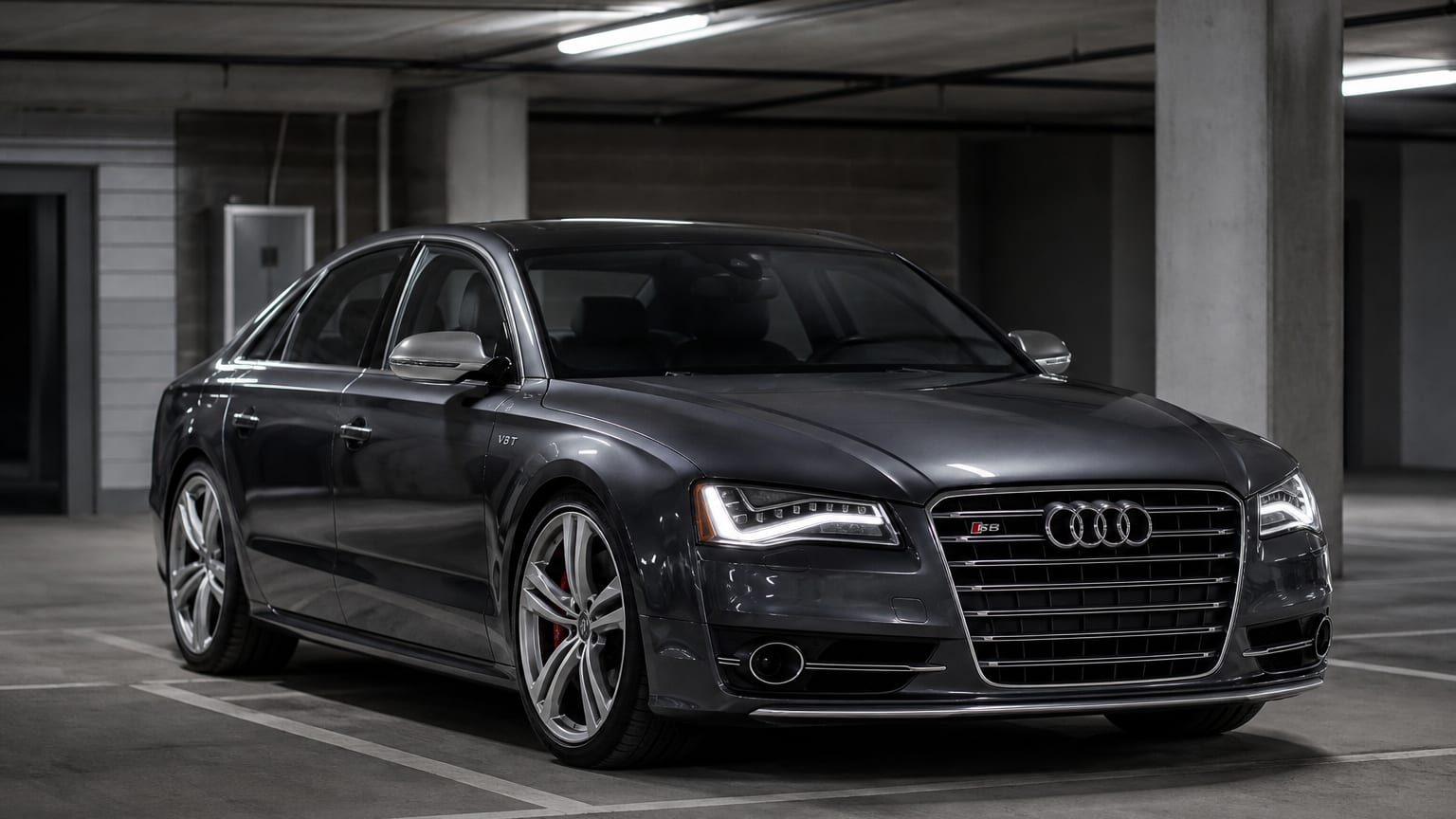
Third-generation Audi S8 D4 (2013-2017)
Volkswagen Group of America recalled certain 2013-2017 A8, S6, S7, S8, and 2014-2017 RS7 vehicles because the turbocharger oil supply strainer can become blocked, causing wear to the bearings due to lack of lubrication; worn bearings can cause the turbine wheel to contact the turbocharger housing or cause the shaft to break, causing an engine stall and increasing the risk of a crash.
The 2014 Audi S8 has 9 problems and defects reported on CarComplaints, with the worst complaints in the engine and suspension categories. The 2014 also carries the highest repair cost per failure of any S8 model year in CarComplaints' PainRank. KBB forecasts a "High Risk of Major Repair" for 2013 S8s in the 96,000-108,000 mile range. Beyond the turbo recall, D4 owners also contend with air suspension faults after 80,000 miles and above-average electrical repair frequency. These cars are now old enough that pre-recall work may or may not have been completed - always verify via the NHTSA recall lookup.
What are the best Audi S8 years to buy?
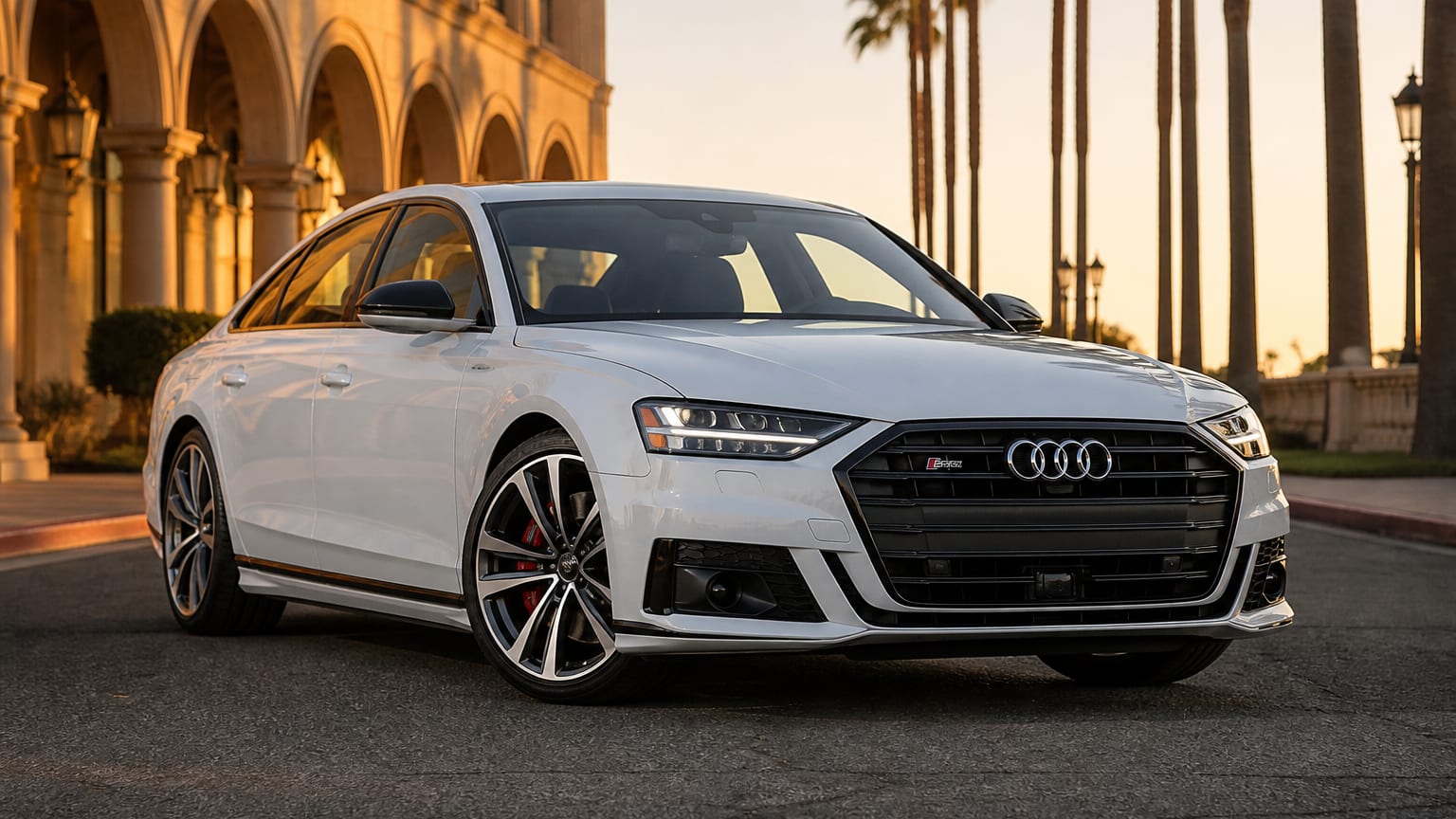
The best Audi S8 years to buy are 2001, 2002, 2003, 2007, 2008, 2020, 2021, and 2022. The D2 final years (2001-2003), the D3 generation (2006-2010), and the current D5 generation (2020 - present) all sit outside the turbocharger recall window and carry the lowest complaint volumes in the model's history.
| Best Audi S8 Year | Why It's a Strong Buy |
|---|---|
| 2001 | Final D2 years, low NHTSA filings, analog simplicity |
| 2002 | Low complaint count, minimal documented failures |
| 2003 | Final D2 year, minimal NHTSA filings |
| 2007 | D3 V10 platform settled, low NHTSA complaint volume |
| 2008 | Low complaint count, V10 reliability peak for D3 |
| 2020 | New D5 platform, modernized engineering, low complaints |
| 2021 | D5 refreshed styling, low complaints, warranty coverage still accessible |
| 2022 | Facelifted D5, lowest post-2020 complaint count, modern safety tech |
Most reliable Audi S8 years: 2001, 2002, 2003, 2007, 2008, 2020, 2021, 2022
2007 Audi S8
The 2007 S8 sits in the sweet spot of the D3 generation. The D3 was produced from 2006 to 2010 and was powered by a modified version of the V10 engine found in the Lamborghini Gallardo of the same years, and by 2007 early production bugs had been addressed. NHTSA complaint filings for 2007 are minimal, and repair cost data on CarComplaints shows no dominant failure category for this year. It sits outside both the turbo oil-strainer recall window and the most complaint-heavy D4 years, making it a strong pick for buyers who want a naturally aspirated V10 S8 at a lower price point.
2021 Audi S8
The higher performance version, S8, was introduced in the late 2019 for the 2020 model year, and the 2021 model benefited from a styling refresh. The D5 S8 produces 563 hp from its 4.0-liter twin-turbo V8 and includes a 48-volt mild hybrid system for stop-start use and coasting. NHTSA complaint volume for 2021 is low, and any open recalls are narrowly scoped. The 2021 represents a modernized S8 with the turbo oil-strainer fix already incorporated in production - unlike 2013-2017 D4 cars where owners had to wait for the recall to be performed.
2022 Audi S8
The 2022 model was facelifted and represents the freshest entry point into the D5 platform on the used market. When Audi refreshed the D5 generation for 2021, it gave the S8 a piano-black front fascia with an updated grille design. The 2022 carries the fewest post-2020 complaints on CarComplaints and remains close enough to new-car age that certified pre-owned warranty coverage is still achievable on lower-mileage examples.
Audi S8 pre-purchase checklist
Before signing anything on a used Audi S8, work through these model-specific checks:
- Run the VIN through NHTSA's recall checker at nhtsa.gov/recalls and confirm that recall campaign 22V-178 (turbocharger oil strainer) is closed on any 2013-2017 S8. If it shows open, the dealer must complete it at no charge before delivery.
- Check the oil level on 2013-2017 cars before you start the engine - a low or dirty oil reading on a 4.0T suggests the oil strainer may be partially clogged; also watch for EPC or oil warning lights during the test drive.
- Test the air suspension on any D4 (2013-2018) or D5 (2020+) over 80,000 miles - park on level ground and see if any corner sags overnight; ask the seller to cycle through all suspension modes and listen for compressor noise.
- Test every MMI and driver-assistance function - rearview camera, seat heaters, blower motor, and the MMI touchscreen - since electrical and air conditioning problems account for 33% of all A8/S8 repair events across TrueDelta's dataset.
- Inspect brake rotor thickness on any D4 S8, especially if the seller cannot show a recent brake service. The composite front rotors only last 25,000-35,000 miles, so factor in an immediate brake job if records are absent.
- On D3 cars (2006-2010), listen for timing chain rattle on cold start - start the engine cold and listen for a metallic rattling noise from the front of the engine that fades as oil pressure builds. If present, budget $2,000 - $4,000 for the repair.
- Request full service records, specifically oil-change intervals - the turbocharger oil strainer clogs faster when oil changes are extended beyond the manufacturer's recommended interval on 4.0T engines.
- Confirm the airbag recall is closed on 2022-2023 S8s - Audi recalled certain 2022-2023 S8 and A8 vehicles because the front-passenger occupant protection flap of the air bag may not have been folded correctly; Audi's number for this recall is 91EI.
Better alternatives to consider
If the Audi S8 years in your budget land on the avoid list, consider these alternatives instead:
- BMW 7 Series - a direct full-size luxury sedan rival with a broader model-year spread and a comparable performance lineup, letting you sidestep the D4 S8's turbo recall era more easily
- Audi S6 - the same 4.0T performance DNA in a midsize package, with overlapping recall coverage and a lower purchase price on many used examples
- Audi S4 - a smaller, lower-cost sibling that delivers S-line performance with a significantly lower ownership and repair cost profile than the flagship S8
- Mercedes-Benz S-Class - the segment benchmark for long-term luxury and resale, with a similarly wide range of model years to shop across and a well-documented reliability record in the same price bracket
Is the Audi S8 worth buying?
Yes - as long as you avoid the 2013, 2014, 2015, 2016, and 2017 model years. An Audi S8 will cost about $11,285 for maintenance and repairs during its first 10 years of service, which beats the industry average for luxury sedan models by $1,936. The D5 generation in particular offers modern safety technology, a 563-hp twin-turbo V8, and a low complaint footprint. There is a 27.69% chance that an S8 will require a major repair during its first ten years, which is modestly better than segment peers. For used buyers targeting the D3 or D5 generations, the S8 is a rewarding buy - run the VIN through NHTSA's recall lookup and verify full service records before signing.