
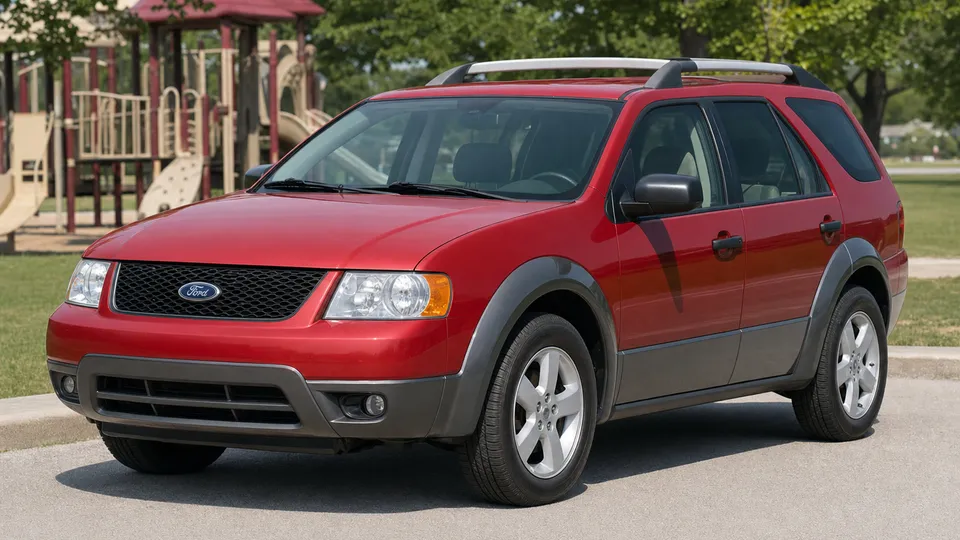
The Ford Freestyle is a practical, seven-passenger crossover that can still serve a family well on a budget, but specific model years carry serious transmission and throttle body problems that can cost you thousands in repairs. Before you buy a used Freestyle, you need to know which of the three production years to avoid and which one to prioritize. This guide uses NHTSA complaint and recall data, CarComplaints PainRank, and owner reports to give you a data-backed answer.
At a glance
- Worst years
- 2005
- 2006
- Best years
- 2007
- Top failure
- CVT (CFT30) transmission failure, all years (CarComplaints worst-year ranking: 2005)
- Always do before buying
- run the VIN through NHTSA's recall checker, plus check CVT fluid condition and ask whether the throttle body has been serviced under Customer Satisfaction Program 12N03
How we rated the best and worst Ford Freestyle years
The 2005 Ford Freestyle has the most overall complaints, and CarComplaints also rates 2005 as the worst model year, ranked on several factors such as repair cost and average mileage when problems occur. To build this guide, we cross-referenced NHTSA complaints and recall campaigns, CarComplaints PainRank (which ranks years by repair cost and mileage-at-failure, not raw complaint count), RepairPal problem data, and owner threads on the My Ford Freestyle forum. CarComplaints and NHTSA measure different things: CarComplaints’ PainRank weighs repair cost and how early failures occur, while NHTSA shows raw complaint volume. Years with the most NHTSA complaint volume are 2005 (2,015 complaints), 2006 (1,870), and 2007 (1,250) - so on both measures, 2005 ranks worst and 2007 ranks best. Our years to avoid methodology combines complaint volume, repair cost, and mileage-at-failure into a consistent ranking framework applied across every vehicle covered on this site.
| Ford Freestyle Generation | Best Ford Freestyle Years | Worst Ford Freestyle Years |
|---|---|---|
| First generation (2005-2007) | 2007 | 2005, 2006 |
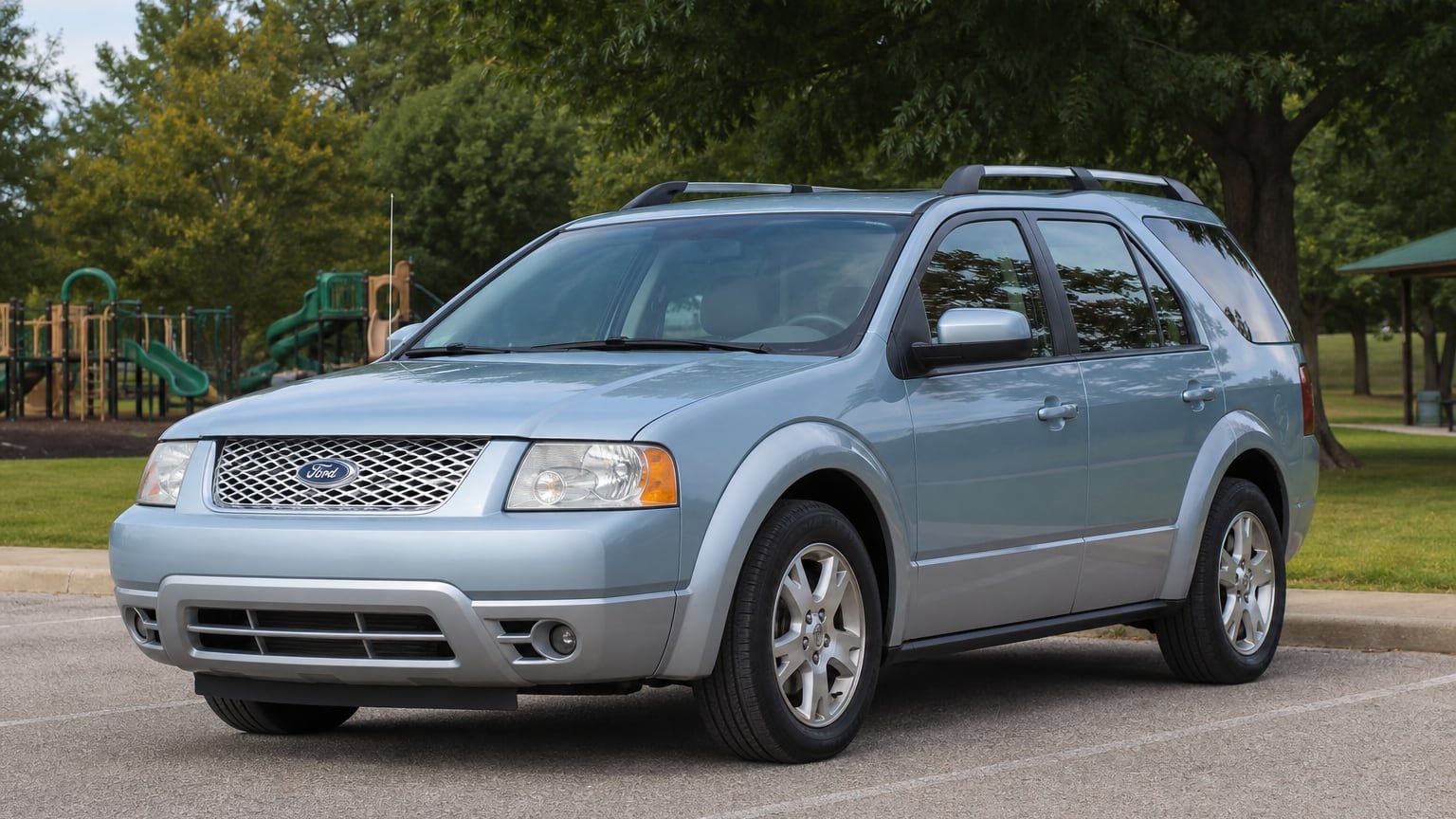
Every Ford Freestyle model year ranked
The 2005 model year is the one to avoid most, followed closely by 2006, while the 2007 is the strongest used buy of the three.
| Model Year | Generation | Verdict | Notes |
|---|---|---|---|
| 2005 | First gen (2005-2007) | Avoid | Most complaints, highest repair costs, 2 recalls, worst CVT/brake failures |
| 2006 | First gen (2005-2007) | Avoid | High complaint volume, throttle body & CVT issues, 1 additional recall |
| 2007 | First gen (2005-2007) | Best | Lowest complaint count, same known issues but fewer reports |
Most common Ford Freestyle problems
The single biggest failure across all Ford Freestyle years is CVT transmission failure, a costly and often catastrophic problem that affects every model year in the lineup. Below are the four most documented recurring issues, ordered most serious first.
CVT (CFT30) transmission failure
The CFT30 transmission in these vehicles is known to be failure-prone, with many owners reporting complete transmission failure requiring replacement. Symptoms include a loud “helicopter” noise, the vehicle going into limp mode (a self-protection state that limits speed), a wrench warning light, and sudden loss of all acceleration. The transmission can shift erratically for months before failing entirely.
Numerous Technical Service Bulletins (TSBs) exist for CVT noise and shift quality, highlighting the sensitive nature of this transmission. Ford never issued a safety recall specifically for CVT failure on the Freestyle, and replacement parts eventually became scarce through the factory. The average repair cost for 2005 CVT transmission failure is $4,640 at approximately 107,650 miles. The 2006 model averages $5,380 at 113,750 miles for the same failure.
If you’re looking at a used Freestyle, dark or burnt-smelling CVT fluid is a red flag - and transmission fluid pooling under a parked car is an early warning sign of seal failure inside the CFT30. Ask for the transmission service history before buying, and have an independent transmission shop inspect the unit, not just a general mechanic.
Throttle body idle surge and unintended lunging
NHTSA investigated the 2005-2007 Ford Freestyle after receiving 238 complaints that the crossover was lunging forward at very low speeds when in gear without either the brake or accelerator pedal applied. In some cases the vehicle moved as much as ten feet. Reports claim this lunge could be more severe if the air conditioning was running or if the steering wheel was turned to full lock.
Ford addressed this through Customer Satisfaction Program 12N03, issued November 2012, which extends coverage for a one-time repair of engine idle RPM surge caused by throttle body deposits for up to ten years of service or 150,000 miles from the warranty start date of the vehicle. Coverage is automatically transferred to subsequent owners, and the program covers all 2005 through 2007 model year Ford Freestyle, Five Hundred, and Mercury Montego vehicles. The repair involves cleaning the throttle body and reprogramming the Powertrain Control Module. If a used Freestyle you’re considering still needs this service, call a Ford dealer with the VIN to confirm eligibility. If the program deadline has passed and the vehicle has not had the service, budget roughly $400 - $800 for a throttle body cleaning or replacement.
Premature rear brake wear
The 2005-2007 Ford Freestyle is notorious for premature rear brake wear, often evidenced by heavy brake dust accumulation on the rear wheels. The most-reported single problem on CarComplaints is rear brakes wearing out prematurely on the 2005 Ford Freestyle.
Ford issued Customer Satisfaction Program 07N10, which replaced the rear brakes and pads on affected 2005 Freestyles. Despite this, many owners report the problem recurring. Some owners report rear brakes wearing out in as little as 15,000 miles. Using quality aftermarket ceramic pads or updated Motorcraft parts can reduce the rate of wear when replacing the brakes on a used Freestyle. A squeaky brake pedal or a soft brake pedal on a used Freestyle almost always traces to the rear brakes, not the fronts.
The repair itself - rear pads, rotors, and a caliper inspection - typically runs $300 - $600 at an independent shop. Because the rear caliper pistons must be twisted rather than simply pushed back, this job requires a special tool, which increases dealer labor costs.
Fuel tank strap failure (recall 05V515000)
NHTSA recall campaign 05V515000, dated November 7, 2005, covers 123,206 units of the 2005 Ford Freestyle; the straps securing the fuel tank to the vehicle body may break, leading to the fuel tank and heat shield dropping onto the driveshaft (AWD vehicles) or exhaust system (FWD vehicles). If this occurs, drivers may hear a noise or notice a fuel leak. A fuel leak near an ignition source could lead to a fire. The remedy is replacement of both fuel tank straps at no cost.
The 2005 Ford Freestyle has been recalled 2 times by NHTSA. The second recall, campaign 06V383000, covers 2005-2006 model Freestyles for a door latch mechanism that could be affected by water intrusion. Always confirm both campaigns are closed on any 2005 or 2006 VIN before purchase.
Electrical system failures and alternator issues
The 2007 Ford Freestyle has 37 NHTSA complaints for the electrical system at an average of 64,882 miles. Owners report sudden battery warning lights, complete shutdown of gauges, power locks, windows, and lighting while driving - a serious safety concern on highways. The root cause in many cases is a failing alternator or a related charging circuit fault.
Among the worst electrical complaints on the 2007 model are the factory battery dying early, a rear differential module shorting out, and the transmission jerking when the AC or heater is turned on. If you’re test-driving a Freestyle and notice a rough idle or hesitation when the A/C engages, that combination of electrical and throttle behavior points to the throttle body issue described in section 2 above. A rough idle on a car idling rough page often traces to the same dirty throttle body that triggers the surge complaint.
Which Ford Freestyle years should you avoid?
The Ford Freestyle years to avoid are 2005 and 2006. The 2005 Ford Freestyle has the most overall complaints, and CarComplaints rates it the worst model year on repair cost and average mileage when problems occur. On raw NHTSA complaint volume, 2005 also leads with 2,015 complaints, followed by 2006 with 1,870 - so both metrics point to the same two years.
| Ford Freestyle Generation | Model Years | Verdict | Main Issues |
|---|---|---|---|
| First generation (2005-2007) | 2005, 2006 | Worst | CVT failure, throttle body surge, premature rear brakes, fuel-tank strap recall |
| First generation (2005-2007) | 2007 | Best | Lowest complaints; same failure modes but fewer reports |
Worst Ford Freestyle years: 2005, 2006
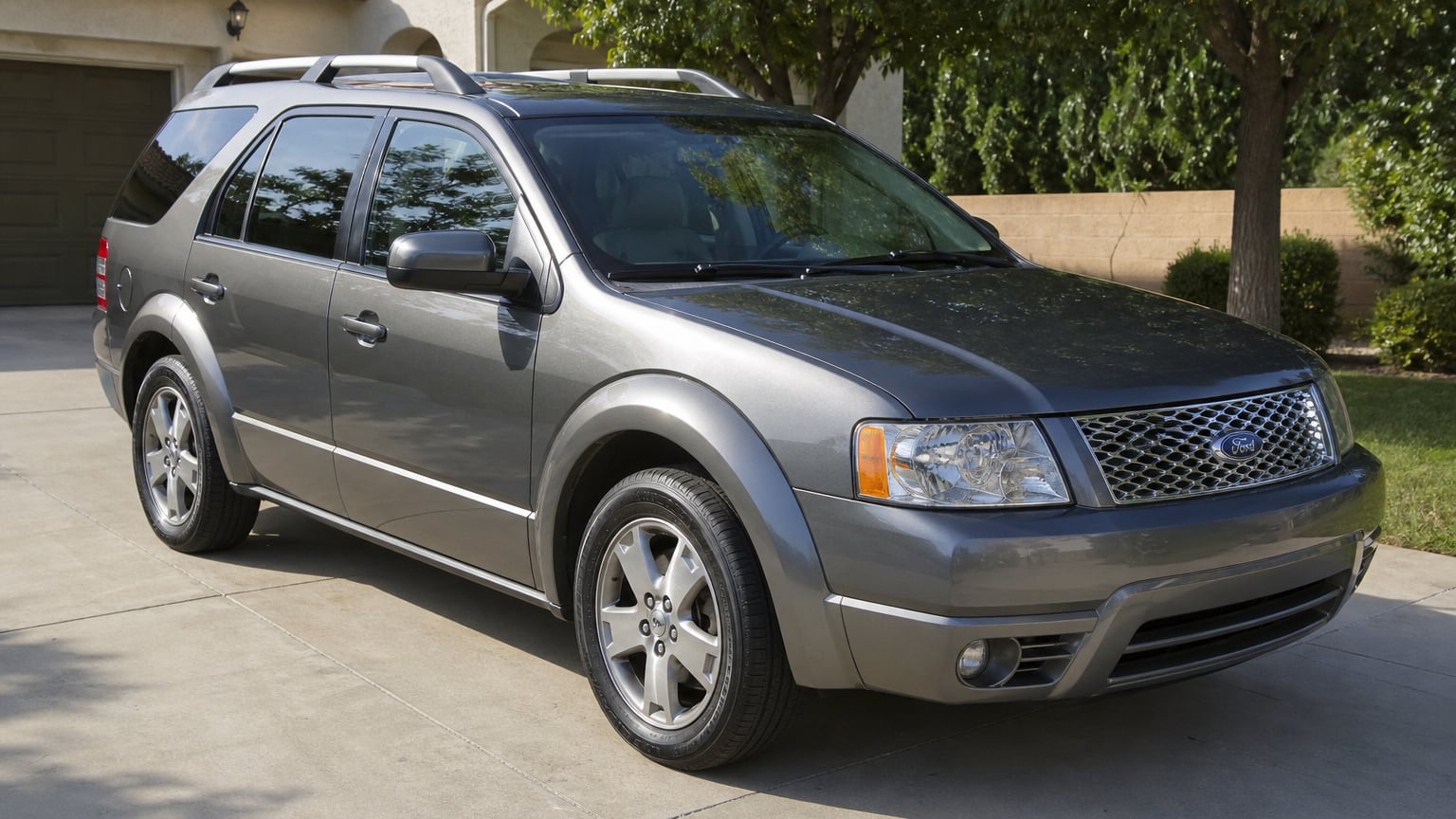
First-generation Ford Freestyle (2005-2007)
The Freestyle’s single generation spans just three model years, all sharing the same CFT30 CVT, the same 3.0L Duratec V6, and the same brake geometry. The difference in severity comes down to the number of owner complaints per year. The 2005 Ford Freestyle has 2,204 problems and defects reported by owners on CarComplaints, with the worst complaints concentrated in transmission, engine, and brakes.
The 2006 Ford Freestyle has 2,003 problems and defects reported by owners, with the worst complaints in transmission, engine, and body/paint. The 2006 also carries one additional recall (door latches, campaign 06V383000) that the 2007 does not share.
The 2007 Ford Freestyle has 1,349 problems and defects reported by owners, with the worst complaints in transmission, engine, and AC/heater. The 2007’s lower count makes it the relative best choice, though it still uses the same failure-prone CVT and throttle body. When shopping a 2007, verify that the throttle body service under Customer Satisfaction Program 12N03 has been completed.
What are the best Ford Freestyle years to buy?
The best Ford Freestyle year to buy is the 2007, which posts the lowest complaint count of the three production years on both CarComplaints and NHTSA.
| Best Ford Freestyle Year | Why It's a Strong Buy |
|---|---|
| 2007 | Lowest NHTSA complaint volume (1,250), no fuel-tank strap recall, same known issues but fewer reported cases |
Most reliable Ford Freestyle years: 2007
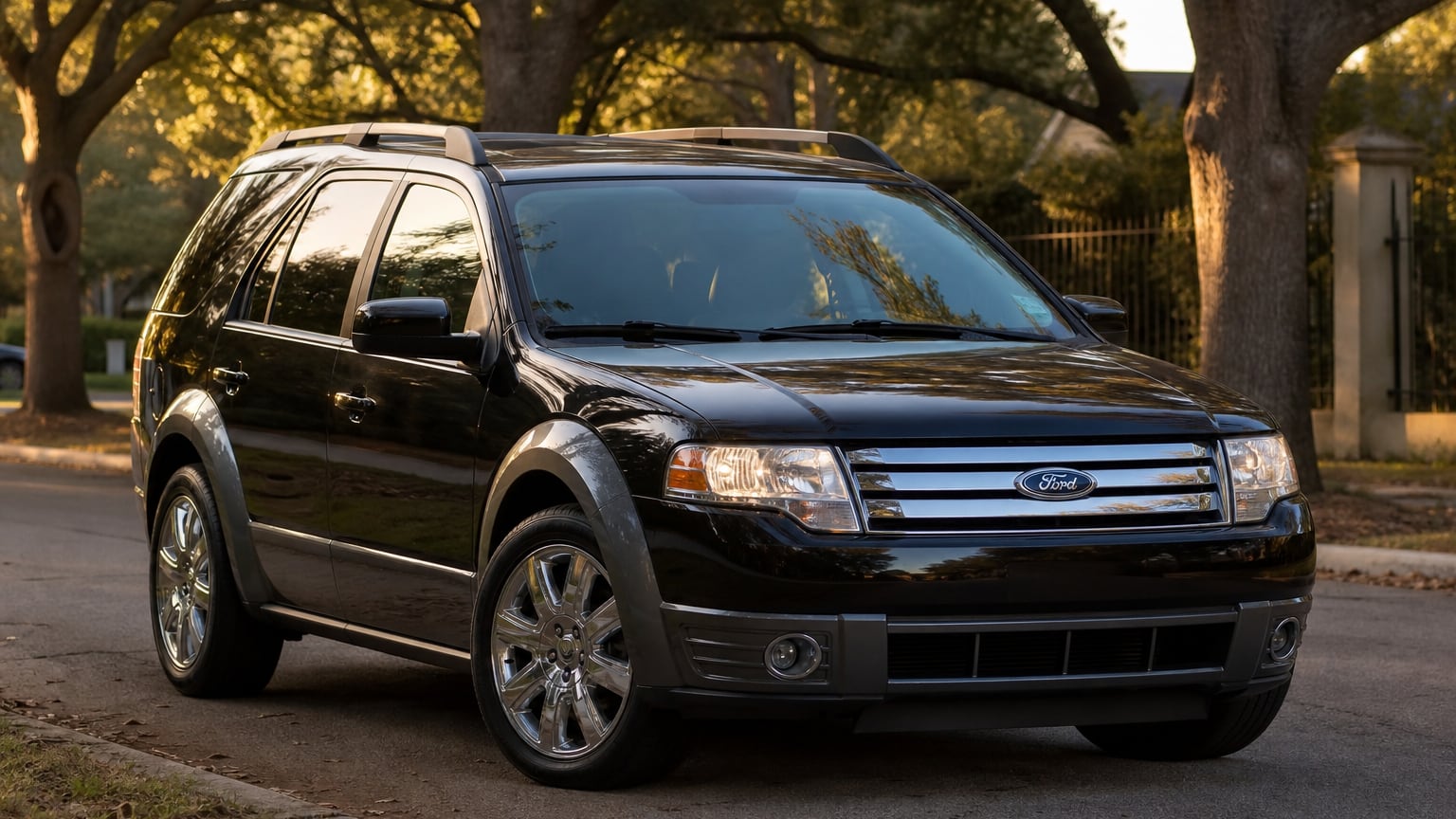
2007 Ford Freestyle
The 2007 Ford Freestyle has 1,349 problems and defects reported by owners on CarComplaints - roughly 40 percent fewer than the 2005. It shares the same 3.0L V6 and CFT30 CVT but benefits from being a year further from the manufacturing launch, when the most severe early defects were concentrated.
The 2007 does not carry the fuel-tank strap recall (05V515000), which was limited to 2005 units. It is still covered by Customer Satisfaction Program 12N03 for throttle body surge, so confirm that repair has been completed. A 2007 with a documented CVT fluid service history, a clean throttle body service, and no “helicopter” noise at idle is a reasonable used buy for a family that needs three rows of seating on a budget. Look for examples with under 100,000 miles to give yourself the most margin before potential CVT concerns surface.
Ford Freestyle pre-purchase checklist
Before buying any used Ford Freestyle, go through these model-specific checks in addition to a standard used-car inspection:
- Run the VIN through NHTSA’s recall checker: confirm that recall 05V515000 (fuel tank straps, 2005 only) and recall 06V383000 (door latches, 2005-2006) are both closed before handing over any money.
- Verify Customer Satisfaction Program 12N03 status: call a Ford dealer with the VIN; if the throttle body surge service has not been performed, negotiate for it to be done, or budget $400 - $800 for the repair.
- Check the CVT fluid: pull the transmission fluid dipstick (if accessible) or have a shop do a drain-and-inspect. Dark, burnt-smelling fluid and fine metallic particles are signs the CFT30 is on its way out. A full CVT replacement runs $4,600 - $5,400.
- Listen for the “helicopter” noise: start the engine cold and let it idle. A low-frequency rhythmic noise from the transmission area means CVT internal wear. Walk away.
- Test the rear brakes: during the test drive, brake firmly from 40 mph several times. Any grinding, pulling to one side, or excessive dust on the rear wheels points to the premature-wear issue common to all three production years.
- Inspect the fuel tank area (2005 VINs): even if the recall shows closed, have a shop visually confirm the fuel tank straps are intact and that no heat shield damage occurred before the recall was completed.
- Ask for full service records: the CFT30 CVT needs periodic fluid changes. A Freestyle with no documented CVT service is higher risk regardless of mileage.
- Have an independent pre-purchase inspection done: given the CVT’s high replacement cost, a $100 - $150 inspection by a transmission specialist is money well spent before committing to any Freestyle.
Better alternatives to consider
If the Ford Freestyle years in your budget fall on the avoid list, consider these alternatives instead:
- Honda Pilot - a three-row crossover with a stronger long-term reliability record and easier-to-source parts than the CVT-equipped Freestyle
- Ford Escape - a smaller two-row option from the same brand with a wider range of model years and a more conventional automatic transmission
- Ford Fusion - a sedan alternative for buyers who don’t need three rows, with a significantly better reliability track record in most production years
- Toyota Highlander - the direct three-row crossover rival with stronger resale value, wider parts availability, and fewer CVT-related complaints in the mid-2000s generation
Is the Ford Freestyle worth buying?
The Ford Freestyle is worth buying as a budget used family hauler, as long as you stick to the 2007 and verify the CVT and throttle body history before purchase. The 2005-2007 Ford Freestyle can be a solid used car purchase depending on trim, mileage, and maintenance history, and our editorial guidelines require that every verdict be grounded in NHTSA data and owner-reported repair costs rather than subjective impressions. The 2005 and 2006 carry too much CVT-replacement risk at typical used-car prices to recommend without a clean bill of health from a transmission specialist.
Check NHTSA complaint data for the specific year you’re considering, run the VIN through the recall checker at nhtsa.gov/recalls, and verify that any open recall is resolved and the 12N03 throttle body service has been completed before you finalize a purchase.