

Buying new tires starts with one simple question: how do I find my tire size? The good news is you don’t need a special tool or a trip to the shop. Your vehicle already lists the size in a few easy-to-reach places, and the numbers on the sidewall tell you the rest.
Here’s how to find your tire size, what a code like P225/55R17 means, and what to do if the size on your tires doesn’t match the sticker on the door.
Where to find your tire size
You can usually find your tire size in three places:
- The driver’s side door jamb tire information placard
- The sidewall of the tires currently on your car
- Your owner’s manual
The door jamb placard is the most reliable source for the size your vehicle manufacturer recommends. The sidewall shows what is actually mounted today. Those two should match on most cars — but on used vehicles, a previous owner may have switched sizes.
1. Check the driver’s door jamb sticker
Open the driver’s door and look at the door frame (the B-pillar area) or the edge of the door itself. You’ll see a tire and loading information placard that lists:
- The recommended tire size
- Cold tire inflation pressure (PSI)
- Sometimes optional or spare tire sizes
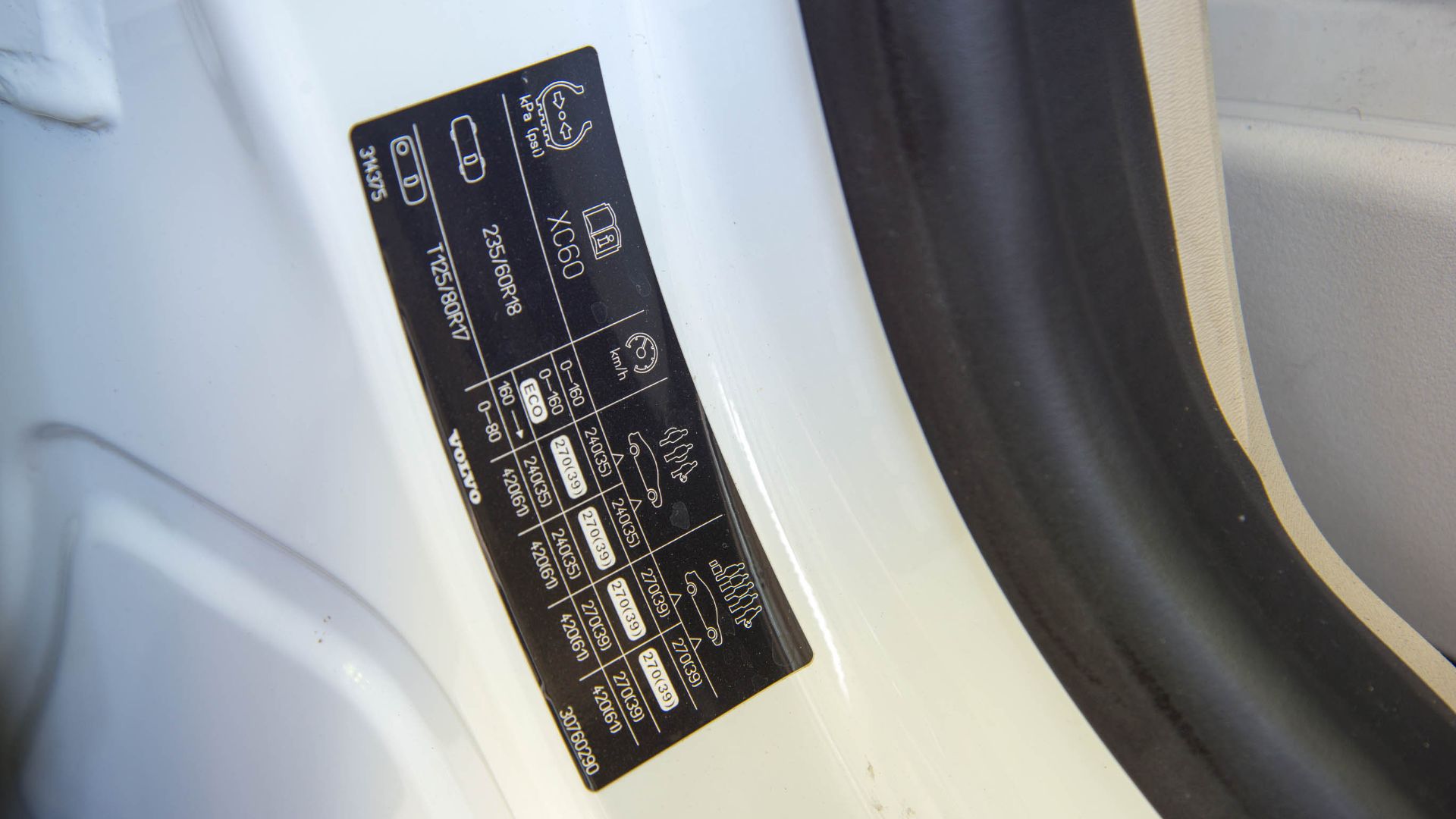
This sticker is the same place you’d look for recommended tire pressure. If you don’t see it on the door jamb, check inside the glove box door or, on some models, near the fuel filler door.
2. Read the size on the tire sidewall
Walk around to any tire and look at the outer sidewall. You’ll find a large alphanumeric code molded into the rubber, usually something like P225/55R17 or LT275/65R18.
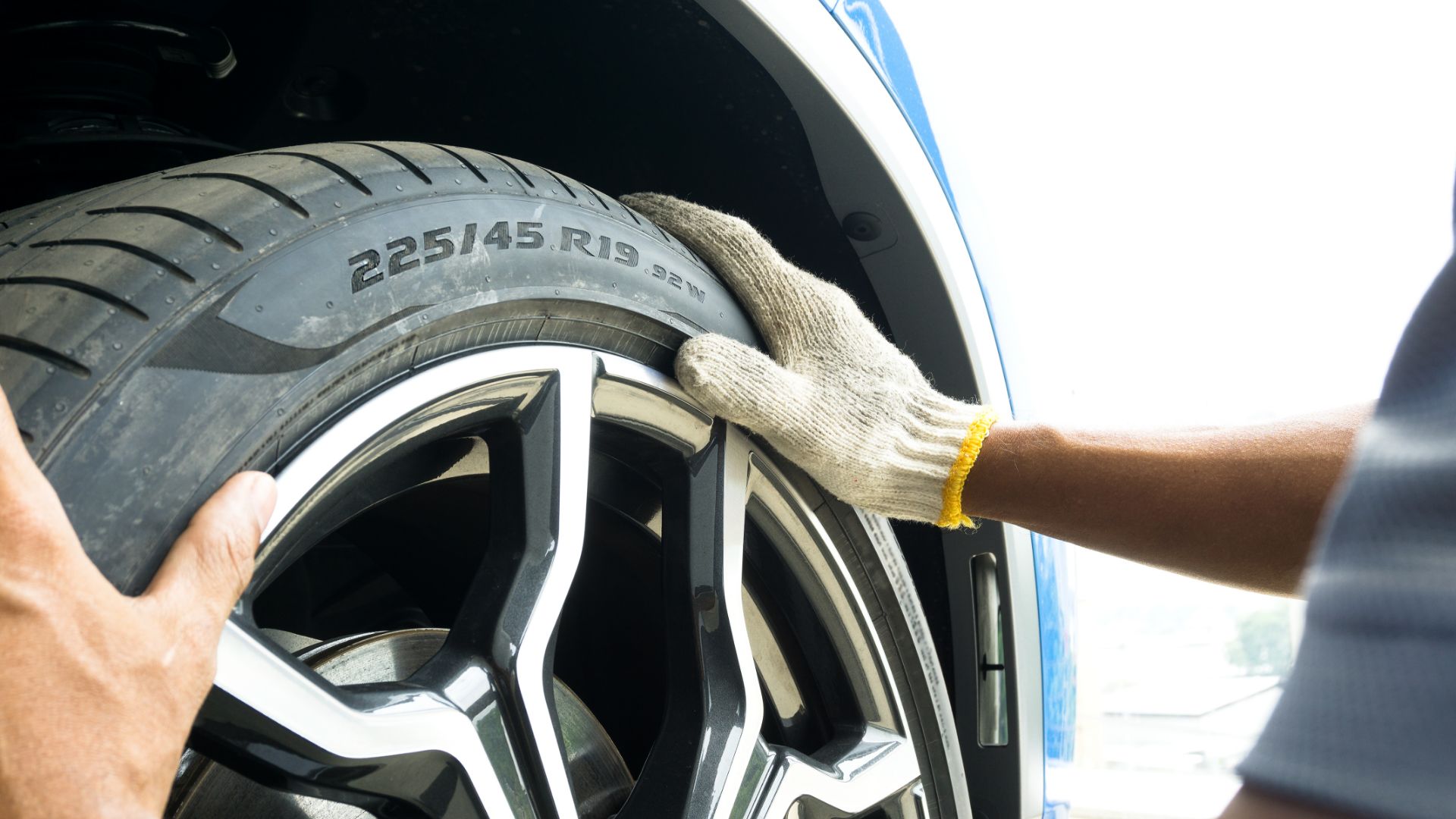
That code is your current tire size. Write down the full sequence — including the load index and speed rating that follow it (for example, 95H) — before you shop for replacements.
If the sidewall is dirty or worn, wipe it clean with a rag. The size marking is often printed more than once around the tire.
3. Confirm in the owner’s manual
Your owner’s manual lists the original-equipment tire sizes for your trim, plus approved options in some cases. Use it when:
- The sidewall markings are hard to read
- You suspect the current tires aren’t the original size
- You want to double-check load and speed rating requirements
How to read a tire size code
A typical passenger tire size looks like this: P225/55R17 95H.
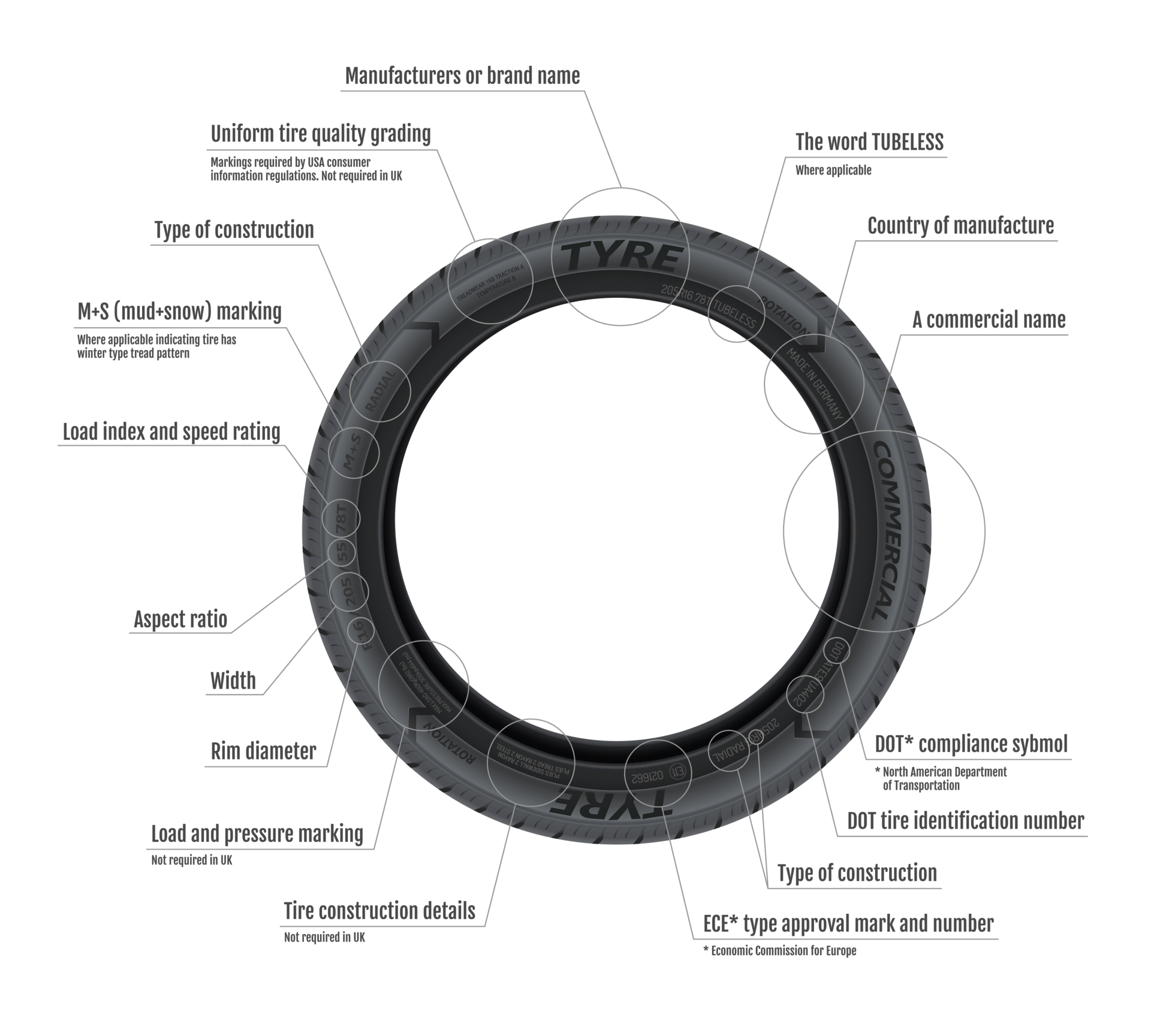
Here’s what each part means:
- P — tire type (passenger car; also LT for light truck, T for temporary spare, ST for trailer)
- 225 — section width in millimeters (sidewall to sidewall)
- 55 — aspect ratio (sidewall height as a percentage of the width)
- R — radial construction (most modern tires)
- 17 — rim diameter in inches
- 95 — load index (maximum load when properly inflated)
- H — speed rating (maximum sustained speed capability)
So P225/55R17 means a passenger tire that is 225 mm wide, with a sidewall height equal to 55% of that width, radial construction, and a 17-inch rim.
For a deeper walkthrough of load index, speed rating, UTQG, and DOT date codes, see our guide to tire number meaning.
Quick tip: metric vs. flotation sizes
Most cars and crossovers use metric sizes like the example above. Some trucks and off-road tires use flotation sizes such as 33x12.50R17, which list overall diameter × width × rim size in inches. Either way, match the full size string when you shop — don’t mix formats casually.
What if the sidewall and door sticker don’t match?
On a used car, it’s common to find a different size on the wheels than on the placard. Before you buy another set of the “current” size:
- Prefer the door jamb placard as the manufacturer’s recommended size.
- Ask a tire professional whether the installed size is a safe, speedometer-friendly alternative.
- Stick with equal or higher load index and an appropriate speed rating for your driving.
Changing width, aspect ratio, or rim diameter can affect handling, clearance, speedometer accuracy, and ABS/traction systems. Plus-sizing (larger wheels with lower-profile tires) can work, but it should stay within the vehicle maker’s approved options.