
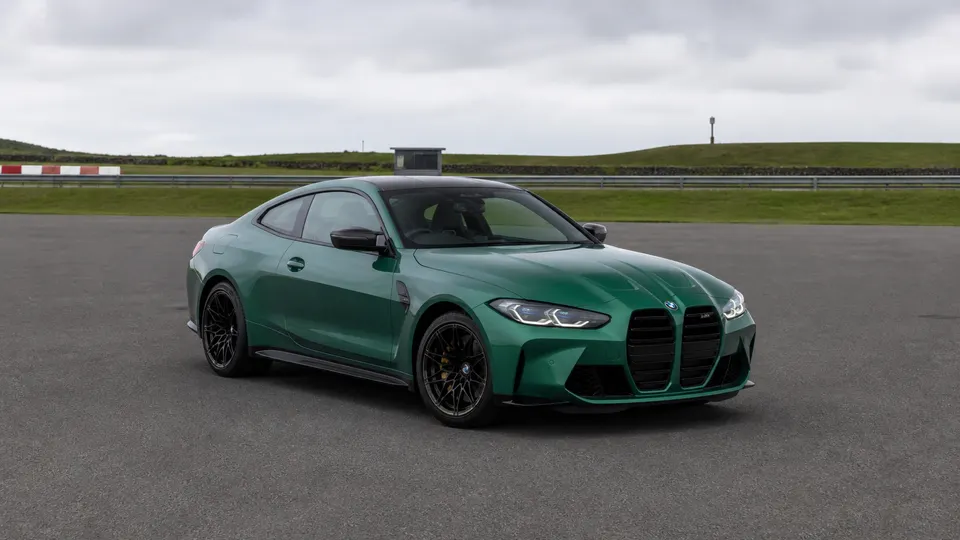
The BMW M4 is one of the most capable sports coupes on the used market, and most model years hold up well with proper maintenance. A few years stand out for elevated complaint volumes, costly engine failures, and driveshaft recalls that you'll want to know about before handing over a check. This guide pulls data from NHTSA, CarComplaints, RepairPal, and owner forums to give you a year-by-year breakdown of which M4s to seek out and which to pass on.
For F82/G82 generations, engines, and M4 ownership notes in one place, see the BMW M4 hub.
At a glance
- Worst years
- 2015
- 2019
- Best years
- 2017
- 2022
- 2023
- Top failure
- S55 crank hub slippage and rod bearing wear - 1st-gen F82 (2015-2020), per CarComplaints and NHTSA complaint reports
- Always do before buying
- Run the VIN through NHTSA's recall checker, and on any 2015-2019 car check the oil level cold and ask whether the S55 crank hub has been inspected or upgraded
How we rated the best and worst BMW M4 years
The 2015 BMW M4 stands out as the worst model year, carrying the most overall complaints on CarComplaints and ranking last on repair cost and average mileage when problems occur.
The data behind this guide draws on CarComplaints' per-year complaint counts and PainRank (which weights repair cost and mileage-at-failure), NHTSA complaint and recall data (raw complaint volume by model year), RepairPal for reliability ratings and annual cost, and Kelley Blue Book for repair-risk forecasts.
CarComplaints and NHTSA measure different things: CarComplaints ranks a year worst by repair cost and how early failures appear, while NHTSA shows raw complaint volume - the two rankings do not always land on the same year.
The years to avoid methodology weights repair cost and mileage-at-failure more heavily than raw complaint counts, which is why 2015 ranks worse than 2016 despite the 2016 posting a higher raw complaint volume.
| BMW M4 Generation | Best BMW M4 Years | Worst BMW M4 Years |
|---|---|---|
| 1st Gen F82/F83 (2015-2020) | 2017 | 2015, 2019 |
| 2nd Gen G82/G83 (2021-present) | 2022, 2023 | None |
Every BMW M4 model year ranked
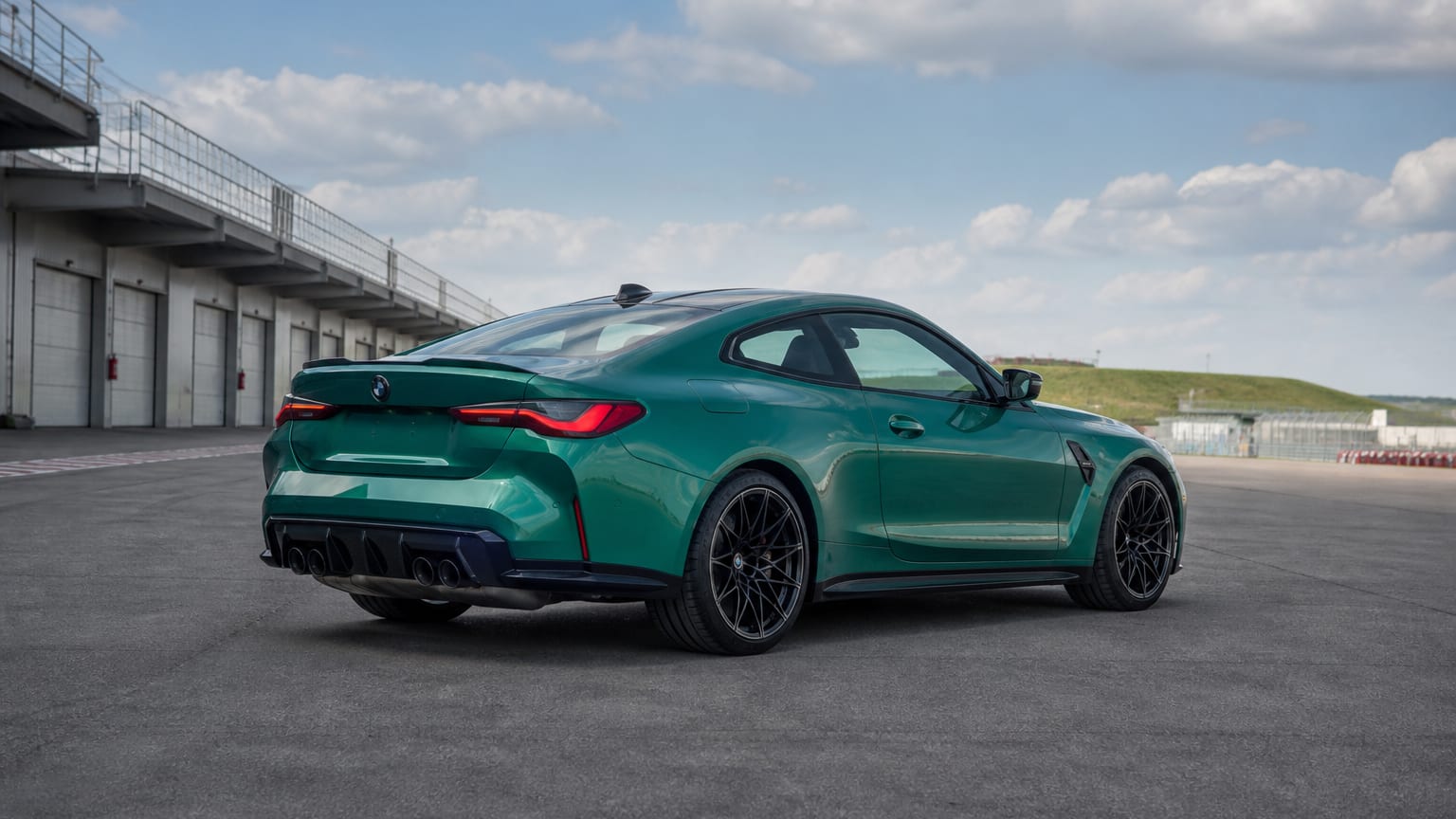
The 2015 model year is the single worst pick in the M4 lineup, rated worst by CarComplaints on repair cost and mileage-at-failure, and carrying the most owner complaints on file. The table below covers every model year the M4 has been sold in the US.
| Model Year | Generation | Verdict | Notes |
|---|---|---|---|
| 2015 | F82/F83 (1st Gen) | Avoid | Most complaints, worst repair cost rank (CarComplaints); brake noise, crank hub, rod bearing |
| 2016 | F82/F83 (1st Gen) | OK/Mixed | 31 CarComplaints entries; DCT rough shifting, driveshaft recall |
| 2017 | F82/F83 (1st Gen) | Best | Lowest complaint volume in 1st gen; Competition Package available |
| 2018 | F82/F83 (1st Gen) | OK/Mixed | 5 CarComplaints entries; FMVSS tire labeling noncompliance noted |
| 2019 | F82/F83 (1st Gen) | Avoid | Valve cover gasket leaks, oil leaks, elevated complaint trend |
| 2020 | F82/F83 (1st Gen) | OK/Mixed | Minimal data; low complaint count, end-of-generation run-out |
| 2021 | G82/G83 (2nd Gen) | OK/Mixed | Early software/electrical issues; new S58 engine, low complaint volume |
| 2022 | G82/G83 (2nd Gen) | Best | Low complaint volume; G82 platform settled; good reliability record |
| 2023 | G82/G83 (2nd Gen) | Best | Very low complaint count; updated software stability |
Most common BMW M4 problems
The single most notorious failure on the 1st-gen M4 is S55 crank hub bolt loosening, followed by rod bearing premature wear and rear subframe cracking from track use. The sections below cover the four main recurring failure categories found across owner reports and NHTSA data, ordered most serious first.
1. S55 crank hub slippage (catastrophic engine timing failure)
The S55 engine has a known issue where the crank hub that drives the timing chain can spin on the crankshaft, affecting an estimated 2-3% of vehicles. This throws off engine timing and can cause catastrophic piston-to-valve contact - it is a separate issue from rod bearing failure but another path to major engine damage in M3 and M4 models.
The S55 engine in the F82/F83 M4 (2015-2020) is susceptible to catastrophic crank hub failures; the hub is press-fit onto the crankshaft and can slip under high load, especially on tuned cars or during track use. The S55 crank hub slippage is widely acknowledged as a design weakness in the M2, M3, and M4 - the friction-fit hub can slip, causing loss of engine timing, and the only permanent solution is an aftermarket keyed or pinned crank hub assembly.
Repair costs for the crank hub failure itself typically run $1,200-$2,500, while the associated S55 rod bearing premature wear costs $3,000-$5,000 to address. No manufacturer recall covers this issue. The S55 crank hub slippage is not a recall; it remains a widely acknowledged design weakness. Before buying any 2015-2019 M4, ask specifically about crank hub inspection history, and budget for the aftermarket fix if none has been done. NHTSA owner complaints about the crank hub on the 2015 M4 describe it as a safety risk on stock and modified cars alike.
2. S55 rod bearing wear
The first model year of the F82 saw issues with rod bearings, leading to engine knock and, in severe cases, catastrophic engine failure. Connecting rod failure in S55 engines is almost always a secondary failure caused by oil starvation - the primary symptom is a deep "rod knock" sound, and if you hear this, stop the engine immediately to prevent catastrophic, unrepairable damage.
S55 rod bearing premature wear carries a typical repair cost of $3,000-$5,000, and if left unaddressed it can escalate to a full engine replacement. Engine replacements in the BMW M4 can be expensive, often ranging from $15,000 to $25,000 depending on labor and parts. Any used 2015-2019 M4 - especially one with a track history - deserves a pre-purchase oil analysis and a listen for symptoms of rod knock at idle.
Both S55 engines in vehicles like the M3 and M4 can experience oil starvation during sustained high-G cornering on a racetrack, leading to bearing failure. This makes track-use history a critical disclosure to request from any private seller.
3. Valve cover gasket oil leak
If a BMW M4 is leaking oil, it is likely due to either the valve cover and gasket or the oil pan gasket - the S55 engine's valve covers and gaskets are known to crack, typically because the seals wear down quickly at high temperatures. This issue often shows up between 20,000 and 50,000 miles.
The oil filter housing gasket issue affects the 2015 to 2020 model years of the BMW M4, which use the S55 engine. A burning smell and visible oil smoke from the engine bay are the telltale signs. The faulty PCV valve is integrated into the valve cover itself, and dealers will typically replace the entire valve cover to fix PCV issues.
Valve cover replacement typically runs $500-$1,500 at a dealer depending on labor rates. You can visually check for staining or an oil smell at the back of the engine bay during any pre-purchase inspection.
4. DCT dual-clutch transmission problems
The M4's DCT is known for its speed but can be problematic - frequent complaints include jerky shifts, clutch overheating, and failure under aggressive driving conditions. The Getrag DCT experiences clutch pack wear from aggressive driving, repeated launch control, and track use, as the two clutch packs for odd and even gears wear over time.
After selecting reverse and stepping on the gas, the DCT can feel like it is still in neutral even when the dash shows reverse - this issue typically occurs after the vehicle has been sitting for a while and was reported only on the first-generation M4, sold from 2015 to 2020.
Budget $5,000-$8,000 for DCT clutch replacement on high-mileage M4s. A transmission fluid leak when parked or dark, burnt-smelling DCT fluid on any 2015-2019 car is an early warning sign that the clutch packs may be on their way out. In some cases, a software update can resolve DCT shifting issues, but others require costly repairs.
5. Driveshaft recall (2015-2017)
NHTSA recall campaign 15V-782 covers certain 2015-2016 M4 Convertible vehicles whose driveshaft slip-joint may not have been filled with grease, causing the joint to fail over time. If the slip-joint fails, there would be a loss of power to the rear axle, stopping the vehicle and increasing the risk of a crash - BMW notified owners and dealers to inspect and replace the driveshaft free of charge.
A second driveshaft recall covers 2016 and 2017 M3 and M4 models - 936 M4s in total - due to a driveshaft flange that was not produced with sufficient long-term durability. The three-holed flange section of the carbon-fiber driveshaft could slide out from its knurled crimp connection, causing a loss of power transmission to the rear differential. Both campaigns are free repairs; run your VIN through NHTSA's recall lookup to confirm the work has been completed before buying any 2015-2017 M4.
Checking a used BMW?
Scan for hidden fault codes from your phone in minutes — before you buy.
REREV may earn a commission if you sign up through this link. Learn more.
Which BMW M4 years should you avoid?
The BMW M4 years to avoid are 2015 and 2019. CarComplaints rates 2015 the worst model year on repair cost and average mileage when problems occur, and the most-reported single complaint on the 2015 is brake noise. The 2019 rounds out the avoid list due to elevated valve cover gasket failure and oil leak reports appearing at relatively low mileage on late-production F82 cars.
| BMW M4 Generation | Model Years to Avoid | Verdict | Main Issues |
|---|---|---|---|
| F82/F83 (1st Gen) | 2015, 2019 | Avoid | Crank hub slippage, rod bearing wear, DCT clutch wear, valve cover gasket leaks, driveshaft recalls |
| G82/G83 (2nd Gen) | None | - | - |
Worst BMW M4 years: 2015, 2019
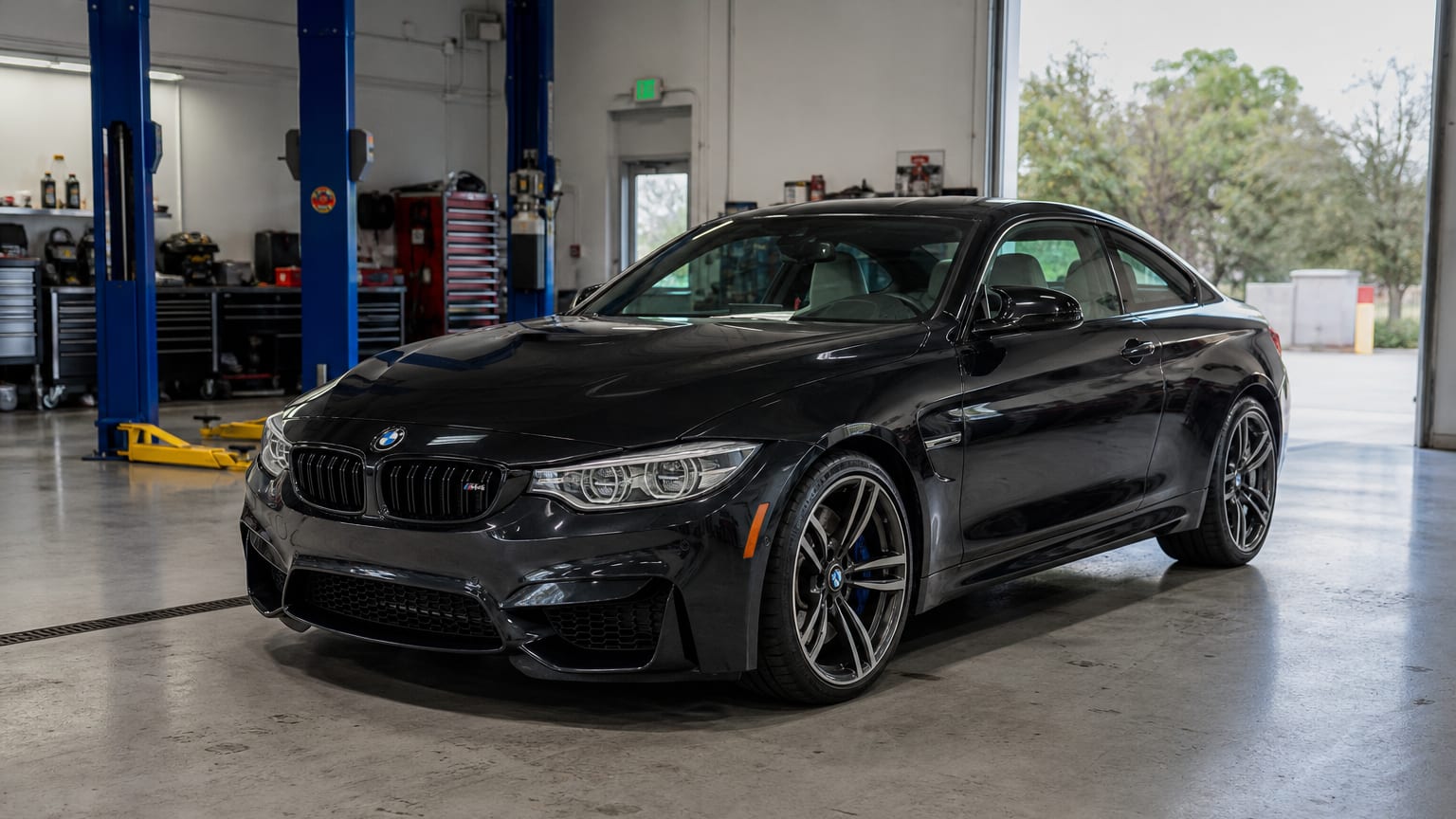
1st-generation BMW M4 (2015-2020)
The 2015 BMW M4 has 18 problems and defects reported by owners on CarComplaints, with the worst complaints concentrated in brakes and wheels/hubs. The crank hub, rod bearing, and driveshaft issues described above are all concentrated in this generation and are most acute on the earliest (2015) and latest-avoid (2019) F82 model years.
The 2016 BMW M4 has 31 problems and defects reported on CarComplaints, the highest raw count among individual F82 years - a contrast worth noting since CarComplaints rates the 2015 worst on repair cost and early-mileage failure, while the 2016 posts the higher raw complaint volume. The 2018 BMW M4 has just 5 problems reported on CarComplaints, making it the quietest year in the first generation.
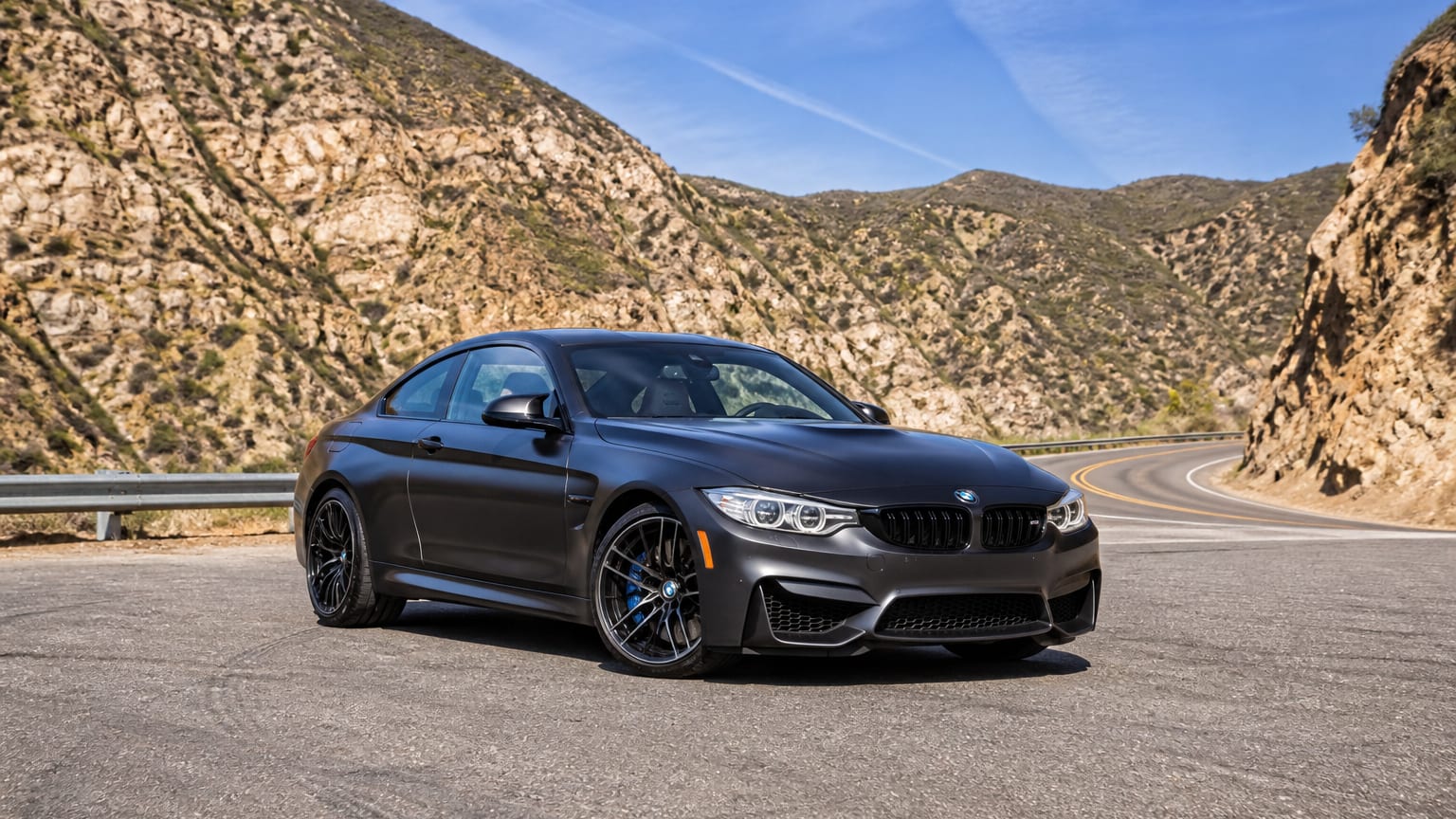
What are the best BMW M4 years to buy?
The best BMW M4 years to buy are 2017, 2022, and 2023. The Competition Package was introduced in 2016, raising output to 444 hp with revised suspension tuning and an upgraded exhaust, and by 2017 the F82's early teething issues had largely been addressed through dealer software and service updates. The 2021-2024 M4 represents the second generation, built on the G82 platform and powered by the S58 twin-turbo inline-six engine, which is a clean-sheet redesign compared to the S55.
| Best BMW M4 Year | Why It's a Strong Buy |
|---|---|
| 2017 | Lowest complaint volume among F82 years; Competition Package available; DCT software refined |
| 2022 | G82 generation settled; very low complaint count; S58 engine cleaner design than S55 |
| 2023 | Minimal complaints; updated software stability; second full year on the refined G82 platform |
Most reliable BMW M4 years: 2017, 2022, 2023
2017 BMW M4
The 2017 is the standout pick from the first generation. By this point, BMW had addressed many early-production software and service concerns with the Getrag DCT, and the Competition Package delivered a well-sorted suspension. RepairPal reports the average annual repair and maintenance cost for the BMW M4 is $1,030, but well-maintained 2017 examples with service records tend to land at the lower end of that range. Check that the driveshaft recall (18V-713) has been completed, as 2016-2017 M4s are covered.
2022 BMW M4
The G82 M4 is powered by the S58 3.0-liter twin-turbo inline-six, producing 473 hp in base form and 503 hp in Competition trim. The S58 does not carry the crank hub design weakness that plagued the S55, making the 2022 a much lower-risk buy from an engine standpoint. The second-generation BMW M4 has a good reliability record so far, and owners have not raised issues on CarComplaints. Confirm that any open recalls have been closed using NHTSA's VIN tool before purchase.
BMW M4 pre-purchase checklist
Every used M4 deserves a methodical inspection before purchase; here is what to verify:
- Run the VIN through NHTSA's recall checker to confirm all open recall campaigns - including the driveshaft recall (15V-782 for 2015-2016 cars) - have been completed before delivery.
- On any 2015-2019 F82, check the oil level cold and ask whether the S55 crank hub has been inspected, upgraded, or replaced with an aftermarket pinned/keyed unit; this is the single highest-cost risk on the platform.
- Listen for rod knock at idle on any 2015-2019 example, especially one with a track history; a deep, rhythmic knock from the bottom end means walk away. A drivetrain malfunction warning on the instrument cluster deserves the same response.
- Check the valve cover area for oil staining or a burning smell on S55 cars (2015-2020); the gasket typically fails between 20,000 and 50,000 miles and is often visible as a brown crust on the back of the engine.
- Request full service records, specifically looking for DCT fluid changes; the Getrag dual-clutch should be serviced every 30,000-40,000 miles and neglected fluid accelerates clutch pack wear.
- Test the DCT in reverse after the car has sat for at least an hour; hesitation or a "neutral feel" when the dash shows reverse is a known early sign of DCT clutch wear on 2015-2020 cars.
- Verify the driveshaft recall is closed on all 2015-2017 M4s; the carbon-fiber driveshaft crimp-connection failure can cause sudden loss of drive power.
- On G82 cars (2021+), check for open electrical or software recalls, as early 2021 models had software and electrical issues that were addressed through OTA updates and dealer service bulletins.
Better alternatives to consider
If the BMW M4 years in your budget land on the avoid list, also see BMW M3 years to avoid and BMW 4 Series years to avoid, or consider these alternatives instead:
- BMW M2 (F87/G87) — the smaller sibling uses the same S55 (F87) and S58 (G87) engines with a shorter wheelbase; the F87’s S55 carries the same crank-hub risk as the F82 M4
- BMW M240i — B58 performance without full M running costs if you want the driving feel at a lower ownership intensity
- Audi RS7 — a high-power Audi cross-shop with a clearer year-by-year reliability map for buyers open to a four-door
- Porsche 718 Cayman — flat-four/flat-six sports coupe with typically lower annual running costs than S55-era M4s
- Mercedes-AMG C63 — V8 rival in a similar price band; see which Mercedes class is the best for the broader Mercedes lane
Is the BMW M4 worth buying?
The BMW M4 is worth buying - as long as you avoid the 2015 and 2019 model years. RepairPal gives the BMW M4 an overall reliability rating of 2.5 out of 5 stars, ranking it 54th out of 68 in the luxury midsize car segment, which reflects the real cost of ownership on the high-strung S55. The G82 generation (2021+) represents a meaningful step forward with the S58 engine, and the second-generation M4 has posted a good reliability record with no raised issues on CarComplaints so far. A 2017 F82 with documented service history or a 2022-2023 G82 are the picks you can feel good about - just run the VIN through NHTSA's recall lookup and verify the maintenance log before signing anything.