
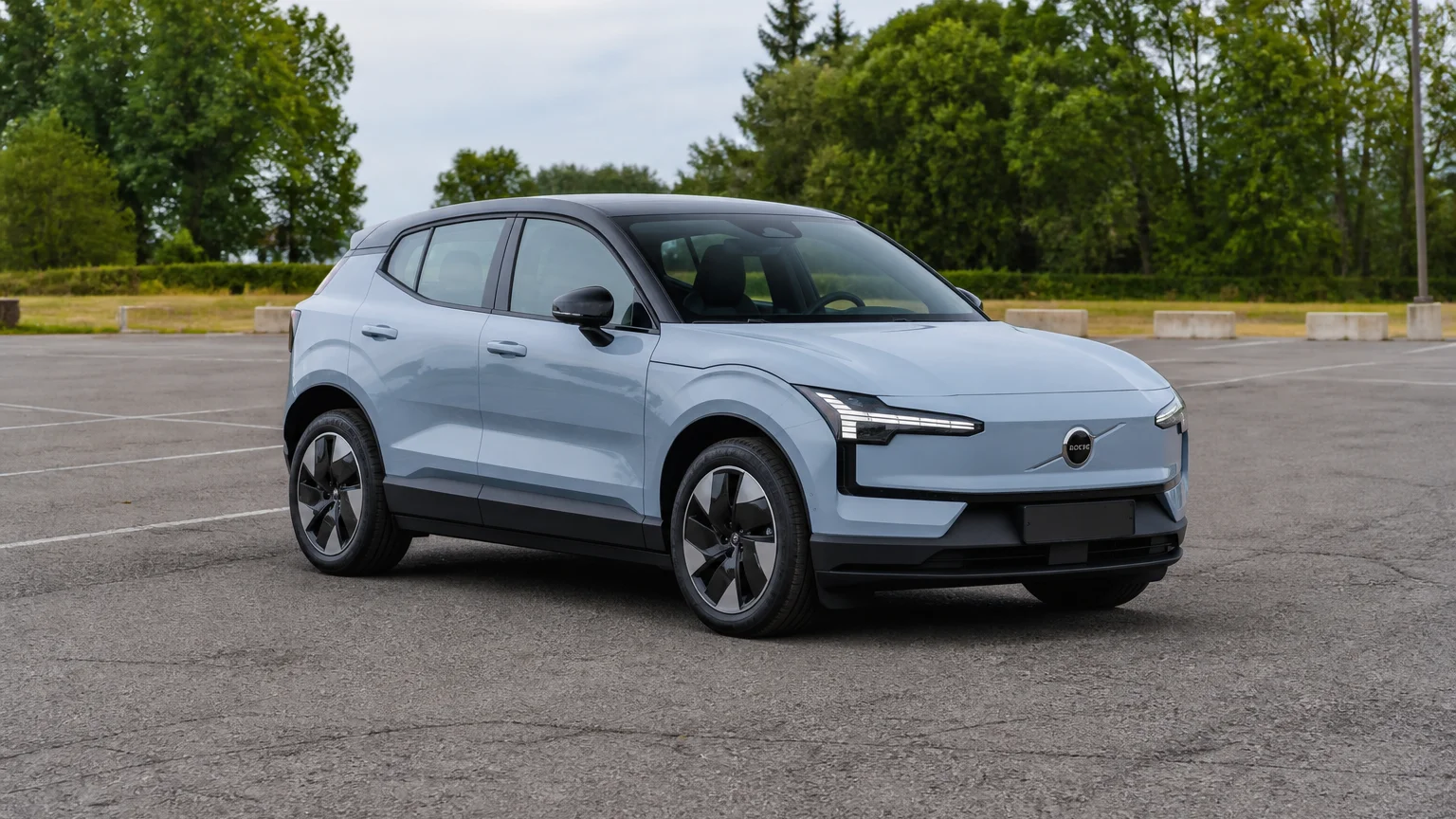
The Volvo EX30 is a genuinely compelling small electric SUV - fast, safe, and competitively priced - but its very short production history has already produced one serious safety recall and a pattern of software complaints worth knowing before you buy. You can own a great EX30, but picking the right model year makes a real difference. This guide ranks every EX30 model year using NHTSA recall and complaint data across 2025-2026, owner reports, and third-party reliability sources so you can shop with confidence.
For generations, engines, and ownership notes in one place, see the Volvo EX30 hub.
Related guides appear in the Volvo years to avoid directory.
At a glance
- Worst years
- 2025
- Best years
- 2026
- Top failure
- 2025 high-voltage battery fire risk (Volvo recall R10355 / NHTSA campaign 26V-001, per NHTSA recall data)
- Always do before buying
- Run the VIN through NHTSA's recall checker to confirm all open campaigns are closed, plus on any 2025 EX30, ask the dealer for documented proof that the battery recall (R10355) and seat belt chime recall (R10365) have been completed
How we rated the best and worst Volvo EX30 years
The 2025 model year is the worst Volvo EX30 to buy right now, carrying the most open recalls and the highest NHTSA owner complaint volume of any EX30 year on record. To build this guide, we pulled data from NHTSA complaints and recall campaigns, CarComplaints.com (which ranks a model year’s severity by repair cost and mileage-at-failure using its PainRank system), owner reports aggregated across 1,310-plus submissions, Euro NCAP crash-test scores, and Consumer Reports reliability predictions.
CarComplaints ranks the worst year by repair cost and mileage-at-failure on its PainRank scale, while NHTSA measures raw complaint volume - these are different datasets and often point to different years. For the EX30, both currently converge on 2025 as the most problematic year, given its battery fire recall and the highest NHTSA-reported complaint count of any EX30 model year.
The years to avoid methodology we apply weights recall severity, complaint volume, and mileage-at-failure together, which is why a low absolute complaint count can still produce an “Avoid” verdict when a safety-critical recall is present.
The EX30 only launched globally in 2023 and reached U.S. customers for the 2025 model year, so the ranked generation table below covers the one generation US buyers can realistically shop today.
| Volvo EX30 Generation | Best Volvo EX30 Years | Worst Volvo EX30 Years |
|---|---|---|
| 1st Gen (2025-2026) | 2026 | 2025 |
Every Volvo EX30 model year ranked
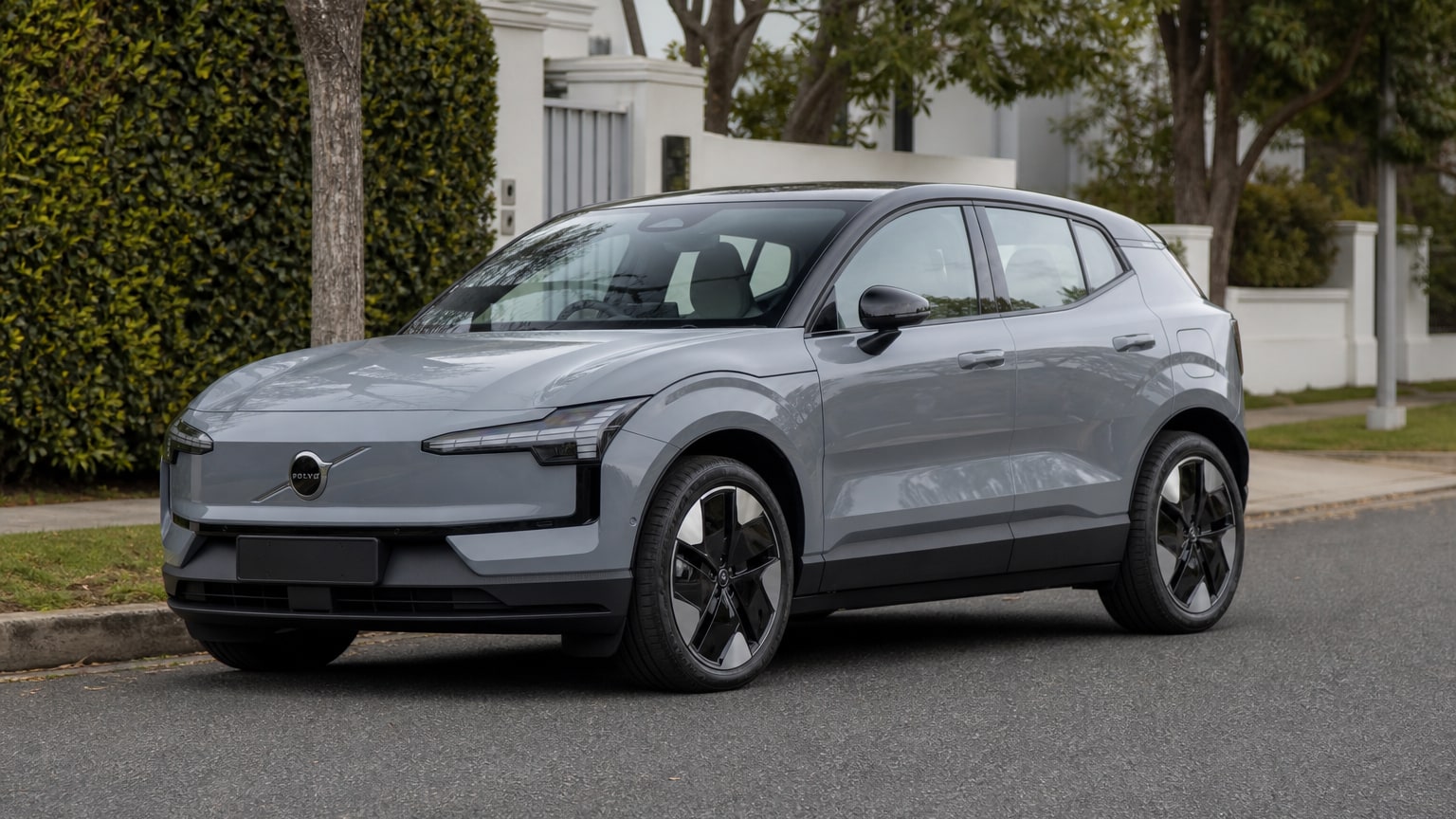
The 2025 EX30 draws an “Avoid” verdict based on its battery fire recall and elevated NHTSA complaint volume, while the 2026 is the cleaner pick as software and recall issues diminish.
| Model Year | Generation | Verdict | Notes |
|---|---|---|---|
| 2025 | 1st Gen | Avoid | Battery fire recall (R10355), seat belt chime recall, highest NHTSA complaint volume |
| 2026 | 1st Gen | Best | One recall (seat belt chime, closed on most VINs), software improvements, stronger over-the-air update maturity |
Most common Volvo EX30 problems
The single biggest failure on the EX30 is its high-voltage battery fire risk on certain 2025 builds, but software bugs affecting the central touchscreen are the most frequently reported complaint across the entire model line. Below are the four recurring problem categories documented across 1,310-plus owner reports and NHTSA data.
1. High-voltage battery overheating and fire risk
A manufacturing deviation in some high-voltage battery cells can cause lithium plating and internal short circuits at high state-of-charge, which may lead to pack overheating and, in a worst case, a thermal-runaway fire. The symptom is a battery overheating warning in the driver information module, though Volvo says no warranty claims or reports have been made in the U.S. regarding this issue.
The most serious EX30 recall so far is a high-voltage battery safety campaign referenced as recall R10355 (NHTSA campaign number beginning with 26V-001 in the U.S.), involving certain 2025 EX30s built with a specific batch of battery cells. A subsequent campaign replaces and expands previous NHTSA recall number 26V-001. The NHTSA recall report states 40 vehicles in the US are involved, impacting 2025 models produced between September 6, 2024, and October 25, 2025 - built with high-voltage batteries from the Sunwoda Power Battery Company.
As an interim measure, owners are advised to park outside and away from structures and limit their charge to a maximum of 70% until the recall repair is complete; dealers inspect and replace the battery modules as necessary, free of charge. The NHTSA recall page for the 2025 EX30 is where you can verify whether a specific VIN’s recall has been resolved. Buyer takeaway: always confirm via VIN that this recall is closed before purchasing any 2025 EX30.
2. Android Automotive OS infotainment bugs
The EX30 launched with a notably buggy implementation of Android Automotive OS, compounded by the fact that the EX30 relies entirely on its central touchscreen for all vehicle controls, including mirrors, speed display, turn signal indicators, and HVAC. Early owners reported missing speedometer display, non-functional voice commands, phantom touch inputs, and the screen freezing during driving - and the minimalist design means any infotainment failure renders basic driving information inaccessible.
According to analysis of 1,310-plus owner reports, the 2024-2025 EX30 has 4 documented issues with 1 rated critical: Android Automotive OS infotainment bugs and missing features, which is also the most commonly reported issue with 890 owner reports. Repair costs range from $0 to $300, since most fixes arrive as over-the-air software updates. In June 2024, Volvo announced a global software recall for nearly all EX30s built up to that point, roughly 70,000 vehicles worldwide, because the central screen cluster and driver-assist systems could behave unpredictably or even go blank due to software bugs.
Early build cars from 2023 through early 2024 showed the roughest software behavior - frozen central screens, random warning lights, inconsistent driver-assist settings, and slow over-the-air updates - while mid-2024 and 2025 builds benefited from several software revisions that smoothed out the worst bugs but didn’t eliminate owner complaints entirely. On any used EX30, check the software version in the car’s settings menu and confirm it is current before buying. Owner discussions on the Volvo EX30 Forum document these glitches in detail.
3. 12V auxiliary battery drain
The 12V auxiliary battery drains when the vehicle is parked for extended periods, preventing the car from powering on; various modules fail to enter sleep mode properly, drawing excessive standby current, and software updates have partially addressed this. The symptom is that the car refuses to start or unlock after sitting for a day or two without being plugged in - a car won’t start situation that can be alarming on a nearly-new EV.
Repairs typically run $0 to $400, depending on whether a software update resolves the issue or the 12V battery itself needs replacement. Volvo published Technical Journal TJ 36189.4.0 (filed with NHTSA) specifically covering 12V battery drain on BEV models, listing symptoms including intermittent failure to start, intermittent failure to unlock, the Start/Stop function not working, and a “Battery Low Warning” in the Driver Information Module. Buyer takeaway: on any used EX30 that has sat on a dealer lot, test the 12V by starting the car cold before signing anything.
4. Real-world range shortfall
The EX30 Single Motor Extended Range variant has been reported to provide significantly less real-world range than its EPA-estimated 275 miles, with many owners reporting only 200-230 miles in mixed driving, and the range estimator being overly optimistic. This is not a mechanical defect, but it matters for used buyers who need to budget for charging stops. Understanding how far electric cars go on one charge in real-world conditions - factoring in highway speeds, cold weather, and HVAC use - helps set realistic expectations before committing.
Real-world range can fall well below rated figures in cold weather, plus some owners experience frustration around charging speeds and planning. DC fast-charging times around 25-30 minutes from roughly 10-80% are possible on a strong 150+ kW charger, but peak speed is not maintained for the whole session. Buyer takeaway: size your purchase decision to the EX30’s worst-case range, not the EPA number, especially if you live in a cold climate.
5. Wind noise and build quality niggles
Excessive wind noise from the A-pillar and side mirror area at highway speeds is a documented complaint; the compact crossover design creates turbulence around the A-pillar, and some vehicles have misaligned door seals contributing to the issue. Some owners also report an audible click or knock when turning the wheel at low speeds, with dealer responses varying; interior squeaks and buzzes around the minimalist dash, center console, or door cards over rough roads are also common.
Beyond software and charging, the 2025 EX30 has picked up a low but persistent background of noise and quality complaints. These are generally low-severity issues - a whining noise when accelerating or cabin rattle is annoying but rarely expensive to fix. On a test drive, pay attention to door-seal gaps and listen for wind rush above 60 mph.
Which Volvo EX30 years should you avoid
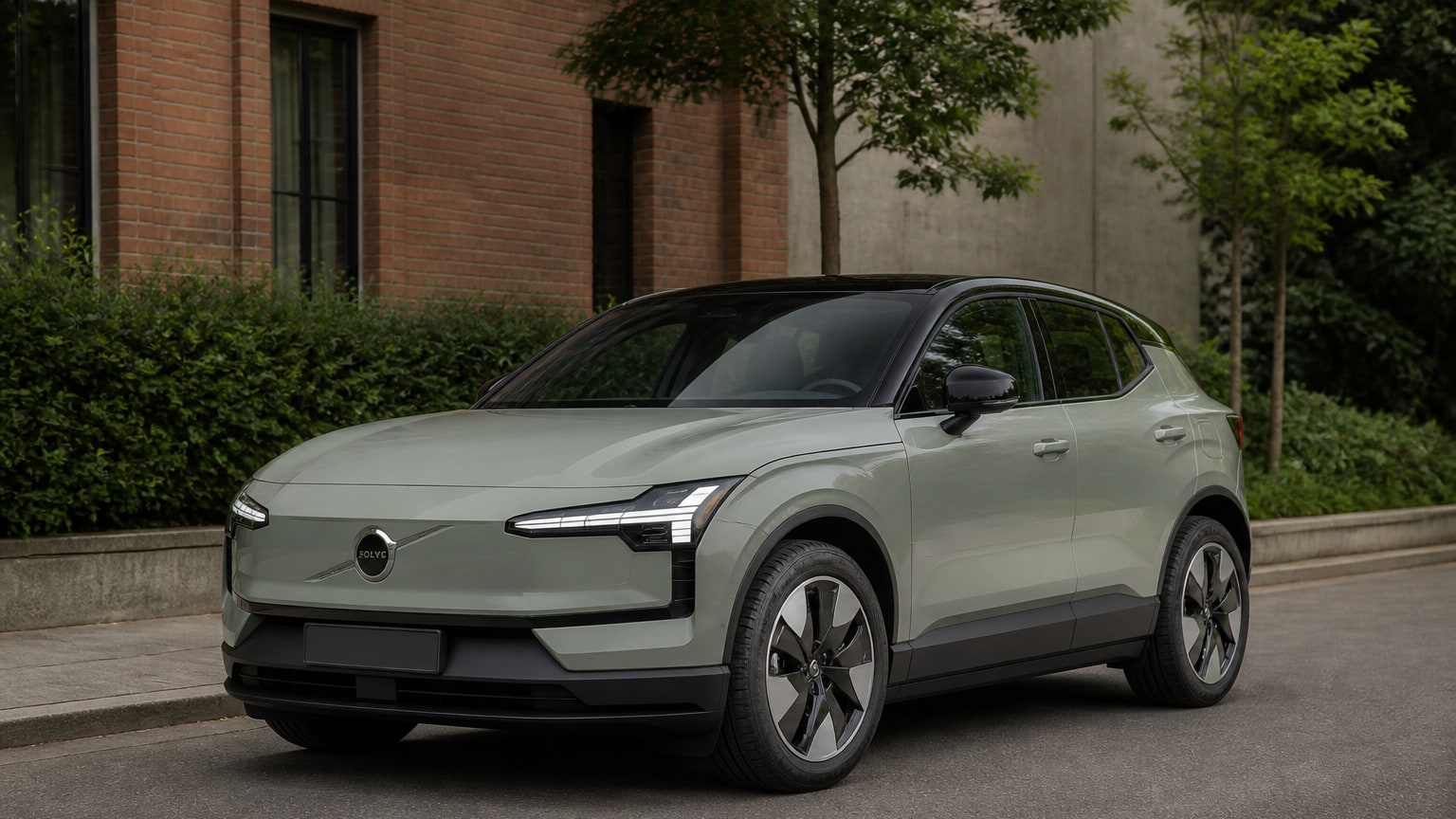
The Volvo EX30 year to avoid is 2025. NHTSA complaint volume for the 2025 model year is the highest of any EX30 year, at 4 complaints in official NHTSA data - a small absolute number that reflects both the model’s newness and the low US delivery count, but 2025 also carries the most recall campaigns. CarComplaints does not yet publish a PainRank for the EX30 given its limited US history, but its recall and complaint concentration is clearly heaviest on 2025.
| Volvo EX30 Generation | Model Years | Verdict | Main Issues |
|---|---|---|---|
| 1st Gen | 2025 | Worst | Battery fire recall (R10355), seat belt chime recall (R10365), infotainment bugs, 12V drain |
| 1st Gen | 2026 | Best | Seat belt chime recall (closed most VINs), improved software, no battery fire campaign |
1st-generation Volvo EX30 (2025-2026)
The headline issue for 2025 EX30s is a high-voltage battery defect that can lead to thermal runaway and fire in a subset of vehicles, covered by Volvo recall R10355. The seat belt chime recall (Volvo R10365) also affects both 2025 and 2026 model years. Volvo is recalling certain 2025-2026 EX30 vehicles because the seat belt warning system may not activate the audible warning chime as intended, meaning these vehicles fail to comply with Federal Motor Vehicle Safety Standard number 208.
Early build cars through early 2024 showed the roughest software behavior, with frozen central screens, random warning lights, and inconsistent driver-assist settings; mid-2024 and 2025 builds benefited from software revisions that smoothed out the worst bugs but didn’t eliminate complaints entirely. The 2026 model year receives ongoing improvements but still carries the seat belt chime recall. Verify open recall status for any first-gen EX30 at the NHTSA recalls page before purchasing.
What are the best Volvo EX30 years to buy
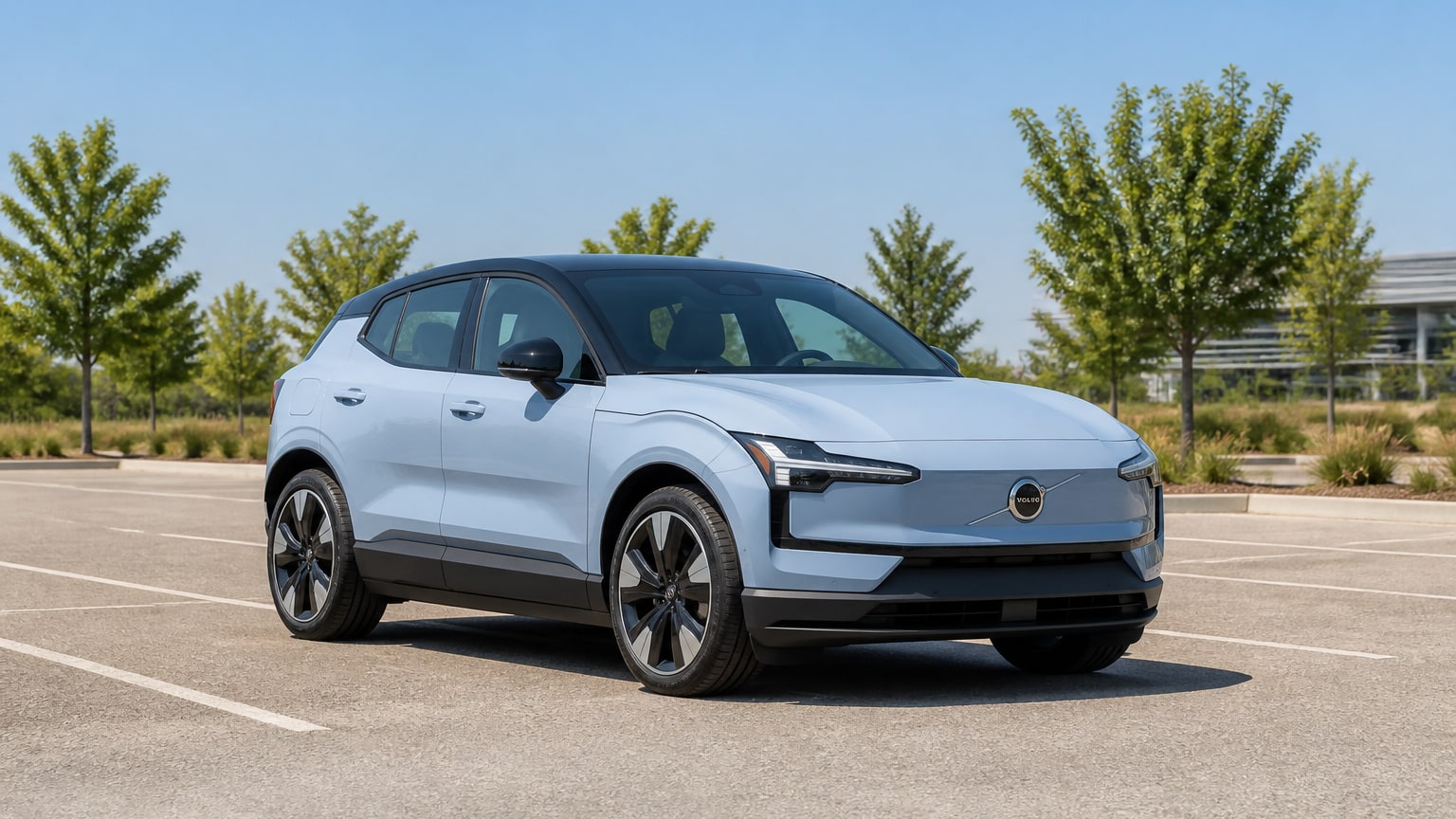
The best Volvo EX30 year to buy is 2026. It carries fewer open recalls than the 2025, benefits from more mature over-the-air software, and does not share the battery fire campaign that shadowed early 2025 production.
| Best Volvo EX30 Year | Why It's a Strong Buy |
|---|---|
| 2026 | One recall (seat belt chime, largely closed), software more mature, no high-voltage battery fire campaign, Euro NCAP 5-star safety |
2026 Volvo EX30
The 2026 Volvo EX30 has been recalled 1 time by NHTSA - the seat belt audible chime campaign (R10365) - compared to the multiple campaigns affecting 2025 builds. Consumer Reports expects the 2026 EX30 to be less reliable than other new cars, with that prediction based on data from similar electric models and the Volvo brand score - so reliability is still a work in progress, but the 2026 is meaningfully cleaner than 2025 by recall count and complaint volume.
In December 2024, Euro NCAP awarded the EX30 a full five-star rating, with strong scores for adult and child occupant protection and advanced driver-assistance systems, and that rating applies to all EX30 builds currently on sale, including U.S.-spec models. The 2026 also benefits from Volvo’s ongoing monthly OTA update cycle, which has addressed many of the screen-freeze and connectivity bugs that plagued early builds. If your budget allows, prioritize a 2026 over a discounted 2025.
Volvo EX30 pre-purchase checklist
Before committing to any used EX30, run through these model-specific checks:
- Run the VIN through NHTSA’s recall checker: Confirm that recall R10355 (battery fire) and R10365 (seat belt chime) are both shown as closed for the specific VIN - not just “announced.”
- On any 2025 EX30, verify battery recall completion: Ask for dealer paperwork showing battery module inspection or replacement under Volvo recall R10355. If evaluating an EX30 built in 2024-2025, verifying recall status is non-negotiable.
- Check the software version: In the car’s settings menu, confirm the system software is current. It is worth checking in the car’s menus (or with a dealer) that it’s on current software and not a year behind.
- Test the 12V battery on a cold start: Unlock and start the car cold, without plugging in first, to confirm the 12V auxiliary battery is holding charge. Owners have reported the screen going off on startup, with the brake pedal not responding.
- Listen for wind noise above 60 mph: Excessive wind noise from the A-pillar and side mirror area at highway speeds is a documented issue; the compact crossover design creates turbulence around the A-pillar. Check door seals for alignment gaps on any used example.
- Confirm the battery warranty is still active: The 8-year/100,000-mile coverage on the high-voltage pack is in line with class leaders - get the in-service date confirmed so you know how much warranty remains.
- Inspect for interior squeaks and steering-wheel clicks: Rattles around the minimalist dash, center console, or door cards are common and often fixable with trim adjustments, but may take multiple dealer visits to resolve.
Better alternatives to consider
If the 2025 EX30 is the only one in your budget and its open recalls give you pause, consider these alternatives instead:
-
Mazda CX-5 - a compact crossover with a longer production history and a clearer year-by-year reliability record, with no equivalent battery fire recall on its record
-
Hyundai Ioniq 5 - a similarly sized EV with a more established NHTSA complaint history, an 800-volt charging architecture, and a deeper used-market inventory
-
Kia EV6 - shares the Ioniq 5’s platform, offers a comparable range and price point, and has a few more real-world model years of reliability data than the EX30
Is the Volvo EX30 worth buying
Yes, the Volvo EX30 is worth buying - as long as you avoid the 2025 model year unless you can confirm its battery and seat belt recalls are fully closed on the specific VIN. In December 2024, the EX30 went through Euro NCAP testing and earned a full five-star rating - the independent gold standard for crash safety in Europe, which it hit on the first try. The 2025 EX30’s reliability rating today is “good but still maturing” - safety performance is excellent, mechanical and battery issues are rare so far, and software and electronics are the main trouble spots.
The 2026 model year is the best pick for a used buyer today: one recall (largely closed), more mature software, and the same five-star crash performance. Before finalizing any purchase, run the VIN through NHTSA’s recall checker and ask for full service records confirming recall completion and software update history.
Frequently asked questions
What are the best Volvo EX30 years to buy?
The best Volvo EX30 year to buy is 2026. The 2026 Volvo EX30 has been recalled 1 time by NHTSA, compared to multiple campaigns on the 2025, and it benefits from more mature software delivered through Volvo’s monthly OTA update cycle. Confirm the seat belt chime recall (R10365) is closed on any 2026 VIN before purchasing.
What are the worst years for the Volvo EX30?
The worst Volvo EX30 year is 2025. NHTSA complaint volume is highest for the 2025 model year, and the most reported problem areas are forward collision avoidance and lane departure. It also carries the most recall campaigns of any EX30 model year, including the high-voltage battery fire recall (R10355) and the seat belt chime recall (R10365).
Which year Volvo EX30 is most reliable?
The 2026 Volvo EX30 is the most reliable pick in the current lineup. Mid-2024 and 2025 builds benefited from software revisions that smoothed out the worst bugs, and by early 2026, the biggest headline reliability story was the high-voltage battery recall affecting certain 2025 U.S. cars - a campaign that does not apply to 2026 production. The 2026 has just one NHTSA recall campaign on record, compared to multiple for 2025.
What year Volvo EX30 has battery fire problems?
The 2025 Volvo EX30 is the year affected by the high-voltage battery fire recall. The NHTSA recall covers 40 US vehicles from 2025 models produced between September 6, 2024, and October 25, 2025, built with batteries from the Sunwoda Power Battery Company, where a process deviation may cause lithium plating growth and an internal cell short. Volvo recall R10355 (NHTSA campaign 26V-001, later superseded by an expansion campaign) covers this defect. If a seller cannot show dealer paperwork confirming this recall is resolved, walk away.
How long does a Volvo EX30 last?
Volvo covers the high-voltage battery for 8 years and 100,000 miles, which is the clearest mileage benchmark on a new EV model. The EX30 is too new to have high-mileage real-world longevity data - it is a new vehicle and long-term reliability data simply doesn’t exist yet. That said, Volvo’s broader lineup has a strong mechanical reputation, and the EX30’s reliability rating today is “good but still maturing,” with safety performance excellent and software and electronics being the main trouble spots.