
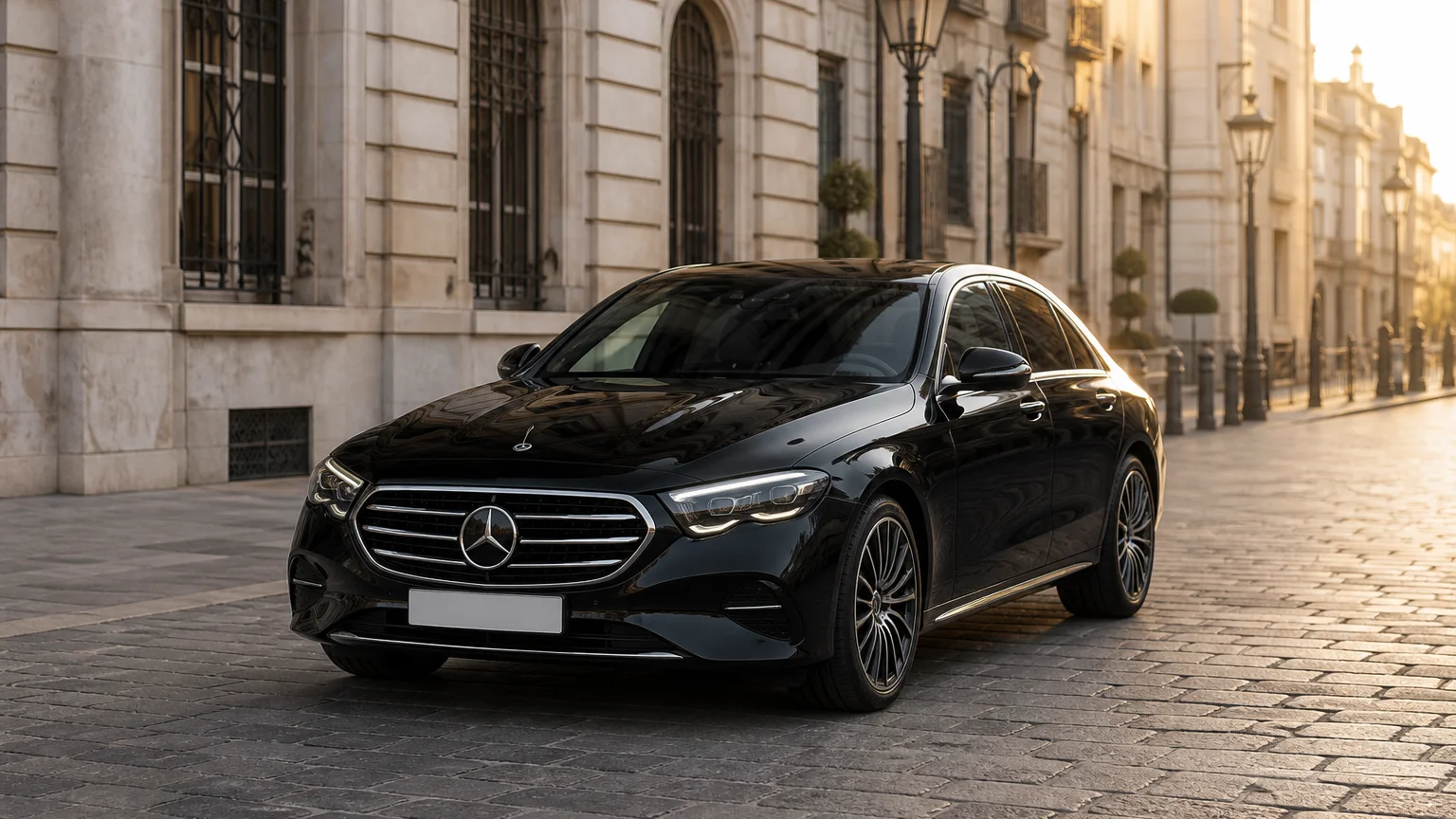
The Mercedes-Benz E-Class is one of the most respected luxury sedans on the used market, but a handful of model years carry genuinely expensive defects that can erase any savings you made on the purchase price. According to analysis of over 11,700 owner reports, the 2003-2024 E-Class has 9 documented known issues, with 6 rated critical, and repair costs on the worst failures range from $2,000 all the way to $5,000 or more. This guide uses NHTSA complaint and recall data, CarComplaints PainRank ratings, and owner-forum evidence to identify exactly which years to skip and which to seek out.
For generations, engines, and ownership notes in one place, see the Mercedes-Benz E-Class hub.
Related: Mercedes E350 years to avoid, Mercedes-Benz C-Class years to avoid.
At a glance
- Worst years
- 2003
- 2004
- 2005
- 2006
- 2007
- 2010
- 2011
- Best years
- 2012
- 2015
- 2020
- 2021
- Top failure
- M272 balance shaft gear wear on 2005-2008 W211 models (CarComplaints rates 2006 as the single worst year by repair cost and mileage-at-failure)
- Always do before buying
- Run the VIN through NHTSA's recall checker; on 2003-2008 cars, verify the engine serial number is above the M272/M273 defect threshold before buying
How We Rated the Best and Worst Mercedes-Benz E-Class Years
The W211 generation (2003-2009) is the weakest generation overall, driven primarily by the M272 balance shaft defect and early 7G-Tronic transmission problems. This guide draws on NHTSA complaints and recall records, CarComplaints PainRank ratings, RepairPal reliability and repair-cost data, owner communities at MBWorld and BenzWorld, and broader owner-report aggregation. CarComplaints ranks years by repair cost and average mileage when problems occur, while NHTSA tracks raw complaint volume - these two measures often point to different model years, and both are used here with attribution to the correct source. Each model year rating follows a years to avoid methodology that weights repair cost, mileage at failure, and complaint volume together rather than treating any single metric as definitive.
| Mercedes-Benz E-Class Generation | Best Mercedes-Benz E-Class Years | Worst Mercedes-Benz E-Class Years |
|---|---|---|
| W211 3rd Gen (2003-2009) | None | 2003, 2004, 2005, 2006, 2007 |
| W212 4th Gen (2010-2016) | 2012, 2015 | 2010, 2011 |
| W213 5th Gen (2017-2023) | 2020, 2021 | None |
| W214 6th Gen (2024-present) | None | None |
Every Mercedes-Benz E-Class Model Year Ranked
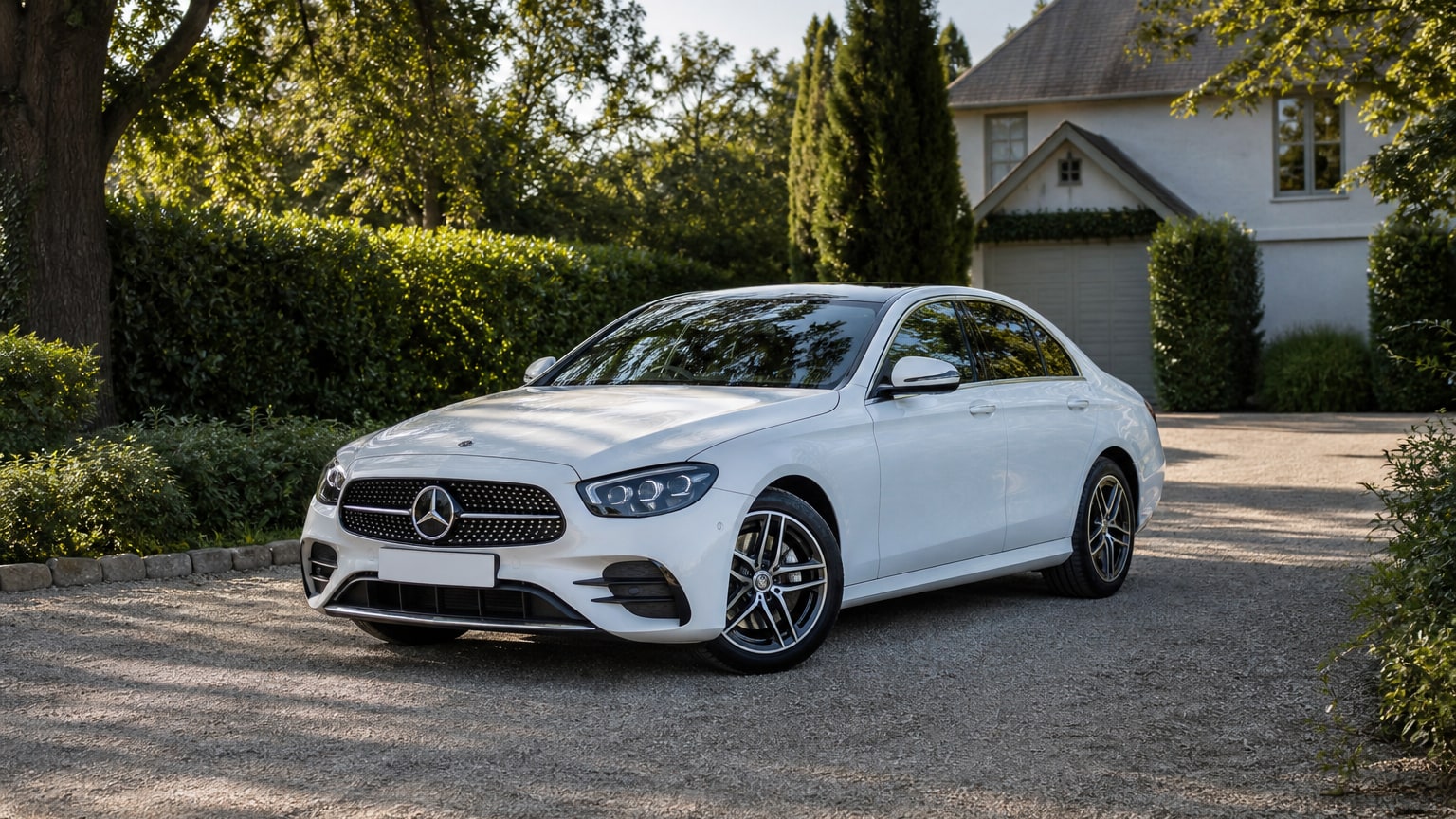
The classic-era E-Class (W124 and W210, produced through the late 1990s) is a separate collector market assessed differently from modern used-car shopping; buyers interested in those cars should evaluate them on their own merits. The table below covers the modern generations that used buyers realistically shop today.
| Model Year | Generation | Verdict | Notes |
|---|---|---|---|
| 2003 | W211 (3rd Gen) | Avoid | Early production quality issues, Sensotronic brake faults |
| 2004 | W211 (3rd Gen) | Avoid | M272/M273 defect window begins, high repair cost |
| 2005 | W211 (3rd Gen) | Avoid | M272 balance shaft failure most concentrated here |
| 2006 | W211 (3rd Gen) | Avoid | CarComplaints worst year by repair cost; most complaints |
| 2007 | W211 (3rd Gen) | Avoid | Balance shaft / 7G-Tronic conductor plate failures |
| 2008 | W211 (3rd Gen) | OK/Mixed | Late facelift; M272 defect largely resolved; low NHTSA complaints |
| 2009 | W211 (3rd Gen) | OK/Mixed | Final W211 year; improved over prior years |
| 2010 | W212 (4th Gen) | Avoid | Early W212 teething issues; Airmatic and transmission faults |
| 2011 | W212 (4th Gen) | Avoid | Takata airbag recall; early 7G-Tronic problems |
| 2012 | W212 (4th Gen) | Best | Low complaints; pre-facelift sweet spot |
| 2013 | W212 (4th Gen) | OK/Mixed | Takata airbag recall; otherwise solid |
| 2014 | W212 (4th Gen) | OK/Mixed | Post-facelift added complexity; generally solid |
| 2015 | W212 (4th Gen) | Best | Pinnacle W212 year; refined and reliable |
| 2016 | W212 (4th Gen) | OK/Mixed | Final W212; transitional year |
| 2017 | W213 (5th Gen) | OK/Mixed | First W213; some early infotainment glitches |
| 2018 | W213 (5th Gen) | OK/Mixed | Settled gen; some electrical complaints |
| 2019 | W213 (5th Gen) | OK/Mixed | Highest NHTSA complaint volume for W213 per Auto Reliability Index |
| 2020 | W213 (5th Gen) | Best | Zero E350 complaints on CarComplaints; strong reliability |
| 2021 | W213 (5th Gen) | Best | Low complaints; mid-cycle refinements in place |
| 2022 | W213 (5th Gen) | OK/Mixed | Good overall; minor infotainment software issues |
| 2023 | W213 (5th Gen) | OK/Mixed | Final W213 year; limited used-market data |
| 2024 | W214 (6th Gen) | OK/Mixed | New generation; too new for meaningful complaint record |
Most Common Mercedes-Benz E-Class Problems
The single biggest failure across the E-Class’s modern history is the M272/M273 balance shaft gear defect, which generated more owner reports than any other issue in the model’s complaint record. Beyond that, five additional recurring categories deserve attention before you buy.
1. M272/M273 Balance Shaft Gear Wear (W211, 2005-2008)
On the 2005-2011 E-Class with the 3.5L M272 V6, the balance shaft gear wears prematurely due to a soft sprocket material used in early production. When the gear teeth strip, the balance shaft stops functioning, causing severe engine vibration and potential timing chain skip. The early warning sign is a check engine light with camshaft-timing fault codes (P0016/P0017) followed by a chain rattle that worsens over time.
CarComplaints rates the 2006 E350 as the worst model year ranked on several factors such as repair cost and average mileage when problems occur, and the most-reported problem is balance shaft failure. The repair requires 15-20 hours of labor because full engine disassembly is needed, making it one of the most costly fixes on any modern Mercedes. Repair costs run $2,000 to $5,000.
Through a 2015 class-action settlement, Mercedes agreed to cover qualified future repairs up to 10 years or 125,000 miles on the balance shaft sprocket in M272 engines or the idle gear in M273 engines. Owners should check the engine serial number to confirm it is above No. 2729.30 468993, as vehicles below this number may have the older, defective balance shafts. M272 engines built before June 2008 used the defective soft gear. Before buying any 2005-2008 E-Class with the M272 or M273, verify the engine serial number at a dealer.
2. 7G-Tronic (722.9) Conductor Plate Failure (W211 and W212)
The 722.9 7G-Tronic transmission conductor plate, an internal electrical board with speed sensors, fails due to corrosion or sensor cracking from heat cycling, causing limp mode, harsh shifting, and loss of gears. Repairs typically run $500 to $1,500.
The early 722.9 transmissions installed on Mercedes-Benz models between 2004 and 2008 had a higher failure rate; most were identified as VGS1 and required replacement of both the valve body and the conductor plate. W212 cars are also susceptible, especially those with infrequent transmission fluid changes. A transmission fluid and filter change (around $300-$400) can sometimes smooth out minor shifting issues; ignore them and you are looking at valve body replacement or a full transmission rebuild, easily $2,000 to $3,500 including labor.
A transmission fluid leak when parked - fluid pooling under the car - is often an early sign of conductor plate or valve body deterioration. Catching it early with a fluid change is far cheaper than waiting for limp mode.
3. Takata Airbag Inflator Recall (W212, 2010-2016)
The Takata airbag issue persisted in the 2011-2013 E350 models, creating ongoing challenges for Mercedes-Benz, and while these cars upheld the E-Class reputation for luxury, the airbag problem remained a significant concern. The defective inflators can rupture and send metal fragments into the cabin - a safety issue, not just a reliability one.
By late 2025, most affected airbags had been replaced under recall, but the main concern when shopping for a 2010-2013 E-Class is verifying that the airbag recall was completed. Run the VIN through NHTSA’s recall lookup tool before agreeing to any price; an incomplete recall should be a firm condition of sale.
4. Airmatic Air Suspension Failure (W212 and W213)
The Airmatic air suspension on the W212 E-Class develops leaks in the air springs (struts), causing the vehicle to sag overnight or drop on one corner. The compressor wears out from overwork trying to compensate for leaking struts. Repairs typically run $800 to $3,000.
Many W212s came with standard steel spring suspension, which is reliable, but the optional Airmatic system is a known high-cost failure point. The rubber air springs can dry rot and leak, and the compressor can burn out. A single leaking air strut can cost over $1,000 to replace. Owners of W213 models report the front air struts developing slow leaks as early as 60,000-80,000 miles. A car with steel springs is the lower-risk choice.
5. Early W213 Infotainment and Electrical Faults (2017-2018)
Early 2016-2018 W213 models frequently experience screen freezing, delayed boot-up of up to 30-60 seconds, or navigation glitches, attributed to outdated firmware or faulty head units. Software complexity and sensor integration lead to intermittent glitches, with failure rates increasing after 3-5 years or 40,000-60,000 miles. These are often resolved via over-the-air updates or dealer reprogramming, but persistent issues may require hardware intervention.
An illuminated SRS warning light on any W213 should be inspected by a Mercedes-trained technician, as the complex electronics suite can produce misleading fault codes. The cost of a dealer diagnostic (typically $150-$200) is worthwhile before purchase.
6. W211 Sensotronic Brake Control (SBC) Failure (2003-2006)
The W211 generation saw cost-cutting measures take full effect, and the greater complexity, including an Airmatic air suspension and Sensotronic Brake Control (SBC), meant there was simply more to go wrong. The SBC system replaced a conventional brake booster with an electro-hydraulic unit; when the pump fails, brake pedal feel changes dramatically and the car enters a reduced-braking mode.
The W211 got off to a rocky start with quality issues and problematic Sensotronic brakes, but the 2007 facelift addressed the problems. If you are shopping a 2003-2006 W211 and the brake pedal feels unusually firm or pulsating, budget for SBC pump inspection or replacement before buying. A soft brake pedal on these cars is a red flag for SBC wear.
Which Mercedes-Benz E-Class Years Should You Avoid?
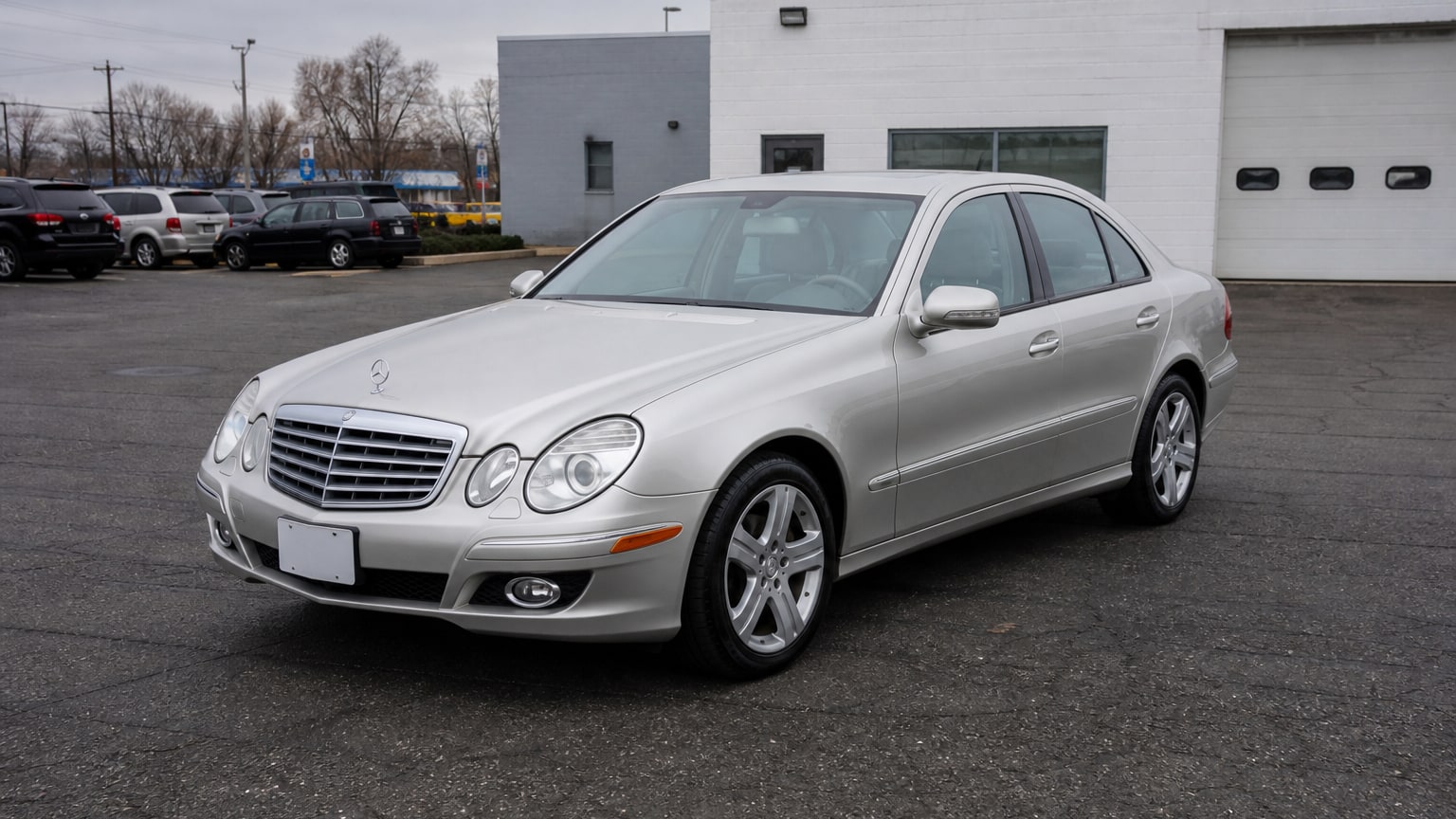
The Mercedes-Benz E-Class years to avoid are 2003, 2004, 2005, 2006, 2007, 2010, and 2011. CarComplaints rates the 2006 E350 as the worst model year by repair cost and average mileage when problems occur, making it the single most problematic year to avoid; NHTSA’s raw complaint volume is also concentrated in the W211 generation. The 2010 and 2011 W212s follow closely, combining early-production transmission and suspension issues with the Takata airbag recall.
| Mercedes-Benz E-Class Generation | Model Years to Avoid | Verdict | Main Issues |
|---|---|---|---|
| W211 (3rd Gen) | 2003, 2004, 2005, 2006, 2007 | Worst | M272 balance shaft, SBC brakes, conductor plate failure |
| W212 (4th Gen) | 2010, 2011 | Worst | Takata airbag recall, Airmatic leaks, early 7G-Tronic |
| W213 (5th Gen) | None | Mixed | Early infotainment glitches, Airmatic; 2020-2021 best |
| W214 (6th Gen) | None | Mixed | Too new to assess; limited complaint record |
Worst Mercedes-Benz E-Class years: 2003, 2004, 2005, 2006, 2007, 2010, 2011
3rd-Generation Mercedes-Benz E-Class (2003-2009)
The worst Mercedes-Benz E-Class for reliability is the W211, produced between 2003 and 2009. It was the first truly modern E-Class, with sleeker styling and more tech, but the drive to cut costs had taken full effect, and the greater complexity meant there was simply more to go wrong.
The balance shaft gears fail on most E-Class models with the M272 engine built between 2004 and 2008. This generation was also plagued by recalls, seven at the start of the generation, dropping to four by the end, covering issues with brakes, software calibration, and steering gear bolt problems. The NHTSA complaint data for the 2006 E-Class reflects this concentration of issues.
4th-Generation Mercedes-Benz E-Class (2010-2016)
The 2010 W212 offers a compelling blend of luxury and performance, but specific vulnerabilities, particularly with the optional Airmatic suspension and 7G-Tronic transmission, can lead to substantial repair bills. The 2010 and 2011 cars are the ones to avoid; from 2012 onward the generation is generally a solid buy.
The early W212 models were mechanically solid but were caught up in the massive Takata airbag recall. The car itself was fairly reliable with no widespread engine or transmission problems, but owners had to deal with long waits for replacement airbags. Verify Takata completion on any 2010-2013 car using the NHTSA VIN checker before purchase.
What Are the Best Mercedes-Benz E-Class Years to Buy?
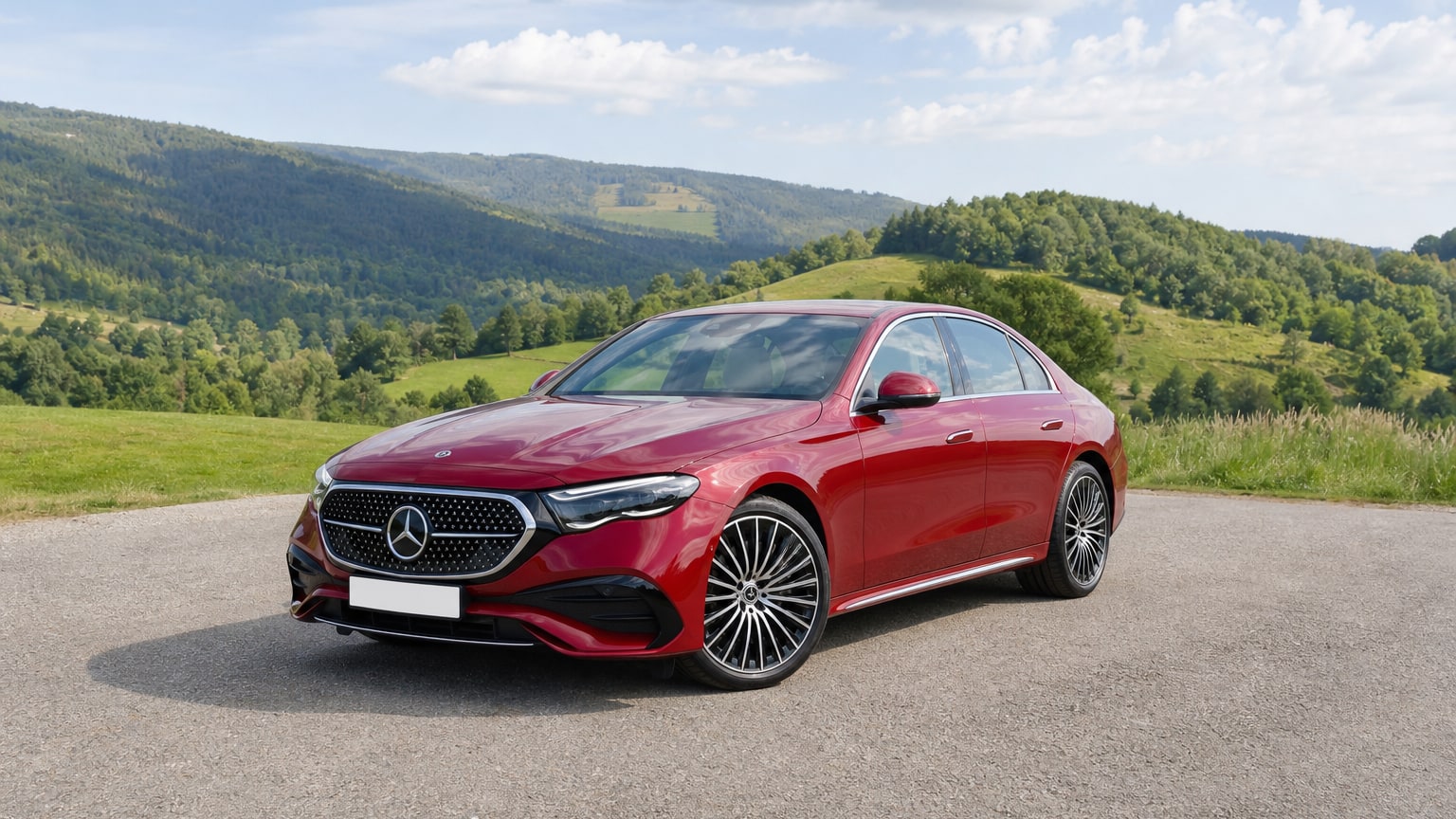
The best Mercedes-Benz E-Class years to buy are 2012, 2015, 2020, and 2021. Each represents a point where the generation’s early issues had been resolved without the next generation’s teething problems.
| Best Mercedes-Benz E-Class Year | Why It's a Strong Buy |
|---|---|
| 2012 | W212 sweet spot; pre-facelift complexity, low complaint count, proven M276 V6 |
| 2015 | Final W212 refinement; Takata recall largely resolved; pinnacle year |
| 2020 | Zero E350 complaints on CarComplaints; full mid-cycle W213 refinements |
| 2021 | Low complaints; 9G-Tronic settled; latest ADAS features at used prices |
Most reliable Mercedes-Benz E-Class years: 2012, 2015, 2020, 2021
2012 Mercedes-Benz E-Class
The 2012 Mercedes E-Class is regarded as one of the best years of the W212 generation and one of the best E-Class years overall. The W212 post-2010 cars feature the improved M276 direct-injected V6 engine, which is less prone to the severe balance shaft issues of the earlier M272 engine. It also predates the 2014 facelift’s added electronic complexity, keeping repair costs lower.
2015 Mercedes-Benz E-Class
The final two years of the E350 in the U.S. market, including the 2015 sedan, are widely regarded as the pinnacle of E-Class reliability. By 2015 the Takata airbag recall process was well underway, the transmission had been refined through several years of production, and the Airmatic suspension components were well understood by independent shops. It is among the safest W212 picks for a used buyer.
2020 Mercedes-Benz E-Class
CarComplaints lists zero complaints for the 2020 E350 model year, giving an idea of just how reliable this specific year can be. All 2020 E-Class models come standard with blind-spot monitoring, a 12.3-inch infotainment screen, dual-zone climate control, rain-sensing wipers, and exterior LED lights all around. The 2020 benefits from the W213 mid-cycle updates that resolved early infotainment and suspension software calibration issues.
Mercedes-Benz E-Class Submodel Years to Avoid
The E-Class has been sold under several engine-badged submodel names across its generations. Each is assessed here on its own complaint and reliability record - not simply borrowed from the parent model’s data.
All submodel ratings follow the same editorial guidelines and research verification standards applied to the full model analysis, using NHTSA, CarComplaints, and RepairPal as primary sources.
Mercedes-Benz E320 Years to Avoid
The E320 was offered in the U.S. market as part of the W211 generation from 2003 through 2005, before being replaced by the E350 for 2006. The E320 is third on CarComplaints’ list of most-complained-about Mercedes-Benz cars, with 48 complaints on file. The E320 is no longer in production; the E350 replaced it in 2006.
The E320 used the M112 V6 (a 3.2L naturally aspirated unit) rather than the M272, so it does not share the balance shaft gear defect that defines the E350’s worst years. Its own documented faults center on electrical system problems and SBC brake issues common to early W211 production. The worst E320 model year is 2000, primarily due to electrical problems, though for current used-car shoppers the 2003-2005 W211 E320 carries the SBC brake and early-production electrical concerns covered in the problem sections above. Those faults belong to the W211 platform, not to the M112 engine specifically.
- Pre-purchase check: Verify SBC brake system function (listen for the pump cycling and confirm pedal feel is normal)
- Confirm no open recalls via the NHTSA VIN checker - the 2003-2005 W211 platform carried several brake and steering recalls
Mercedes-Benz E400 Years to Avoid
The E400 badge was used in the U.S. for 2013-2016 (W212) as a hybrid and V6 turbocharged variant, and then again for 2017-2018 (W213) with a 3.0L biturbo V6. In 2012, an E400 Hybrid using the naturally aspirated 3.5L V6 and an electric motor was added to the W212 lineup. The W212 E400 Hybrid’s additional powertrain complexity (the electric motor and battery system) adds a layer of long-term ownership risk not present on straight E350 models.
The W213 E400 (2017-2018) uses the M276 3.0L biturbo V6, which does not share the M272 balance shaft defect. The fifth-gen W213 kicked off with a simplified engine lineup comprising 2.0L turbo I4 and 3.0L twin-turbo V6 engines with a nine-speed automatic, with the V6 being AWD only. The E400 has not accumulated a distinct avoid-year record separate from the W212/W213 platform issues described throughout this article. The 2013 W212 E400 Hybrid sits inside the Takata airbag recall window - verify completion before buying.
- Check the Takata recall status on any 2013-2016 E400
- On the hybrid variant, ask for battery health records and confirm no hybrid system fault codes
Mercedes-Benz E450 Years to Avoid
The E450 badge replaced the E400 in the U.S. for model year 2019, using a 3.0L biturbo inline-six (M256) in the W213. The worst Mercedes-Benz E-Class year in the 2018-2026 span is 2019, primarily due to higher volumes of unknown or other category complaints. Because the E450 launched with the 2019 model year, some of those 2019 complaints may reflect early-production E450 teething issues rather than a fundamental fault.
No distinct avoid year has emerged for the E450 on its own separate from the 2019 W213 caution. The M256 inline-six is a newer architecture without the M272’s documented sprocket problem. Models with the optional Airmatic system are prone to air strut leaks and compressor failures, with owners reporting front air strut leaks as early as 60,000-80,000 miles; post-2019 facelifted models show improved materials. If the E450 in your budget is a 2019, proceed with an Airmatic inspection and a full dealer pre-purchase check.
- If buying a 2019 E450, inspect the Airmatic system carefully and pull NHTSA complaint records for that specific VIN
Mercedes-Benz E550 Years to Avoid
The E550 was offered in the W211 generation from 2007-2009 and in the W212 from 2010-2011, using the M273 4.6L V8. The M272 was installed in several 280, 300, and 350 models, while the M273 was installed in several 450, 500, and 550 models. The M273 V8 shares the same class-action settlement coverage as the M272: Mercedes agreed to cover qualified future repairs up to 10 years or 125,000 miles on the idle gear in M273 engines.
The balance shaft repair on an E550 costs around $4,000, and at least one owner confirmed their 2007 E550 required the repair, with the warranty covering it. The 2007-2009 W211 E550 and 2010-2011 W212 E550 both sit in the avoid window. Later E550 production (W212 2012 onward) used updated components and is less problematic, though the V8 naturally carries higher fuel and maintenance costs than the six-cylinder variants.
- Verify the M273 engine serial number is above the defect threshold before buying any 2007-2011 E550
- Confirm the 2015 class-action extended guarantee coverage was either applied or is no longer applicable at the mileage in question
Mercedes-Benz E63 AMG Years to Avoid
The high-performance Mercedes-AMG E63 and E63 S versions of the W213 have been available as well from 2016 as 2017 models, and these are the only W213 versions with V8 engines. The W213 E63 uses a hand-built 4.0L biturbo V8 (M177) paired with a nine-speed MCT wet-clutch transmission rather than the standard 9G-Tronic torque converter.
The E63 AMG has not accumulated a distinct avoid-year record on CarComplaints separate from the broader W213 platform issues. No E63 AMG model year has yet accumulated enough complaint data to flag a specific year as an outlier. The M177 V8 is generally well-regarded for durability when maintained with correct oil grades and service intervals, and the wet-clutch MCT is different from the standard 7G-Tronic conductor plate issue - the fault does not transfer. The W211-era E63 AMG (2007-2009) used the M156 6.2L naturally aspirated V8, which is known for valve-guide wear at high mileage; any W211 E63 AMG with over 80,000 miles should have compression and valve-train condition checked.
- On any W211 E63 AMG, have valve-guide clearances inspected if the mileage is above 80,000
- On W213 E63 AMG, verify MCT fluid service history (recommended every 40,000 miles)
Mercedes-Benz E-Class Pre-Purchase Checklist
Run these checks on any used E-Class before finalizing a deal - they are specific to this model’s known failure points.
- Run the VIN through NHTSA’s recall checker to confirm every open recall - especially Takata airbag and sunroof glass detachment - has been completed before you take delivery.
- On any 2005-2008 M272/M273 car, verify the engine serial number is above the defect threshold (No. 2729.30 468993 for M272). If not, factor the potential $2,000-$5,000 balance shaft repair into your offer price or walk away.
- Check 7G-Tronic transmission behavior on any W211 or early W212: test cold-start shifts, listen for shudder or hesitation between 1st and 2nd, and pull a fluid sample - dark or burnt-smelling ATF accelerates conductor plate wear. Transmission fluid pooling under a parked car is a stop-buy signal.
- On Airmatic-equipped cars (W212 and W213), park the car overnight and check for corner sag in the morning. Run the engine and listen for a compressor cycling more than 30 seconds continuously - that indicates a slow air-spring leak.
- Test the SBC brake system on 2003-2006 W211 models: the pedal should feel firm and consistent. A spongy or pulsating pedal on these cars often means the SBC pump is failing.
- Ask for full service records, particularly oil-change intervals. The M272/M273 balance shaft failure is worsened by oil sludge; a car without documented oil changes is a higher risk.
- Confirm the Takata airbag recall is complete on all 2010-2016 cars. This is a safety recall - do not accept a car with an open Takata campaign regardless of asking price.
- On 2017-2018 W213 cars, bring the car to a dealer or independent with a Mercedes STAR/Xentry scan tool to check for stored infotainment module and electronic control unit fault codes before buying.
Better Alternatives to Consider
If the E-Class years in your budget land on the avoid list, consider these alternatives in the same luxury-sedan class:
- BMW 5 Series - a direct competitor with a clear generation-by-generation reliability record and a broad independent-shop network in the U.S.
- Mercedes ML350 years - if you want Mercedes build quality in a more versatile body style, the ML350 overlaps on powertrain with the W211/W212 era but gives you SUV practicality.
- Mercedes S550 years - for buyers whose budget can stretch to the flagship sedan, the S550’s larger platform often means better-isolated versions of the same engines and transmissions found in the E-Class.
- Audi A6 - shares a similar price point on the used market and offers a well-documented reliability profile, with its own avoid years concentrated in early turbocharged and early 7-speed S-Tronic generations.
Is the Mercedes-Benz E-Class Worth Buying?
Yes, the Mercedes-Benz E-Class is worth buying - as long as you stay away from the 2003-2007 W211 cars and the 2010-2011 W212s. The W213 generation holds an average reliability score of 59/100, with a strong NHTSA safety rating of 5 out of 5 stars, and common issues are concentrated in electrical system malfunctions rather than catastrophic mechanical failures. A 2012, 2015, 2020, or 2021 model with full service records gives you genuine luxury, strong safety technology, and a manageable ownership cost.
RepairPal puts the annual maintenance cost of an E350 at $788, which is competitive for the luxury segment. The J.D. Power dependability data for the W213 generation supports the later years as the stronger buys. Run the VIN through NHTSA’s recall database and verify the full maintenance history before signing - those two steps alone eliminate most of the risk on an otherwise excellent car.