
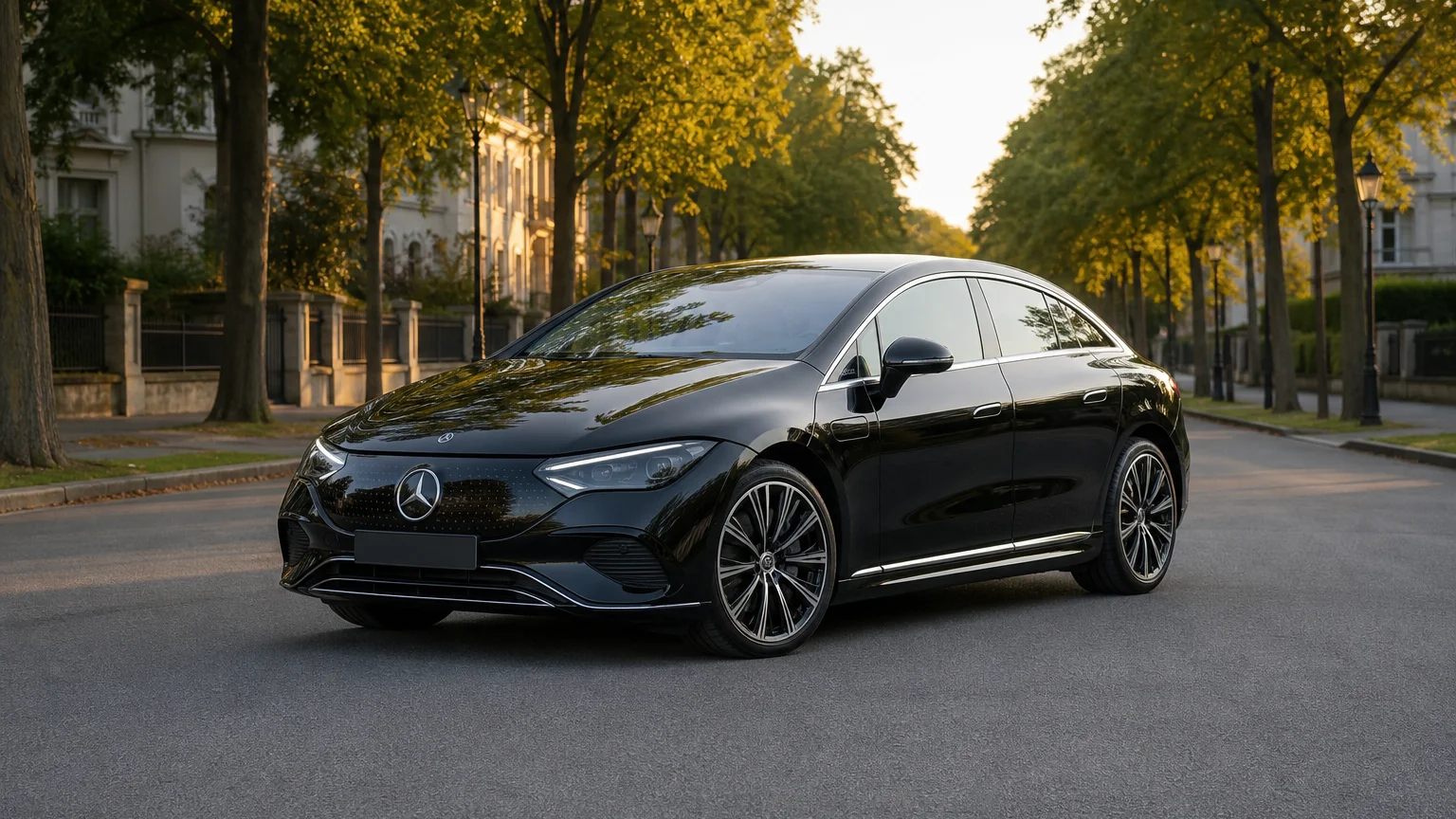
The Mercedes-Benz EQE is a genuinely impressive all-electric executive sedan, but its short production history has not been trouble-free - data for the EQE indicates mixed reliability, with an average score of 59 out of 100 across its model years. If you are shopping a used EQE, steering clear of the weakest model year and verifying that every open recall has been closed can save you from expensive dealer visits. This guide ranks every EQE model year on NHTSA complaint volume, recall counts, and owner-reported failures so you know exactly what to buy and what to skip.
For generations, engines, and ownership notes in one place, see the Mercedes-Benz EQE hub.
Related: Mercedes-Benz EQS years to avoid, Mercedes-Benz C-Class years to avoid.
At a glance
- Worst years
- 2023
- Best years
- 2024
- Top failure
- Electrical system faults and BMS software shutdown, 1st generation (NHTSA complaint data)
- Always do before buying
- Run the VIN through NHTSA's recall checker to confirm all open recalls are closed, and ask the dealer for a printed recall/campaign history showing completed repairs
How We Rated the Best and Worst Mercedes-Benz EQE Years
The 2023 EQE is the weakest year in the model’s short life, with 10 recalls and 30 NHTSA owner complaints on file, including 6 crash-related complaints and 1 fire-related complaint, with the most commonly reported problem areas being electrical system (9), unknown or other (5), and air bags (3).
Ratings here draw on NHTSA complaint filings and recall campaign data, cross-referenced with the Auto Reliability Index (which scores model years on a 0-100 scale using NHTSA records), Consumer Reports reliability data, and owner reports from the Mercedes EQ All Electric Forum. CarComplaints.com ranks a “worst year” by repair cost and mileage-at-failure using its PainRank system, while NHTSA tracks raw complaint volume - the two sources can point to different years. The Mercedes-Benz EQE does not yet appear on CarComplaints.com’s ranked worst-vehicle list due to its low complaint volume overall, so this guide relies primarily on NHTSA complaint counts and recall totals. Scores are weighted using a years to avoid methodology that applies consistent criteria across every model in the dataset, and all findings are subject to the editorial guidelines and research verification process used across this site.
| Mercedes-Benz EQE Generation | Best Mercedes-Benz EQE Years | Worst Mercedes-Benz EQE Years |
|---|---|---|
| 1st generation (2023-present) | 2024 | 2023 |
Every Mercedes-Benz EQE Model Year Ranked
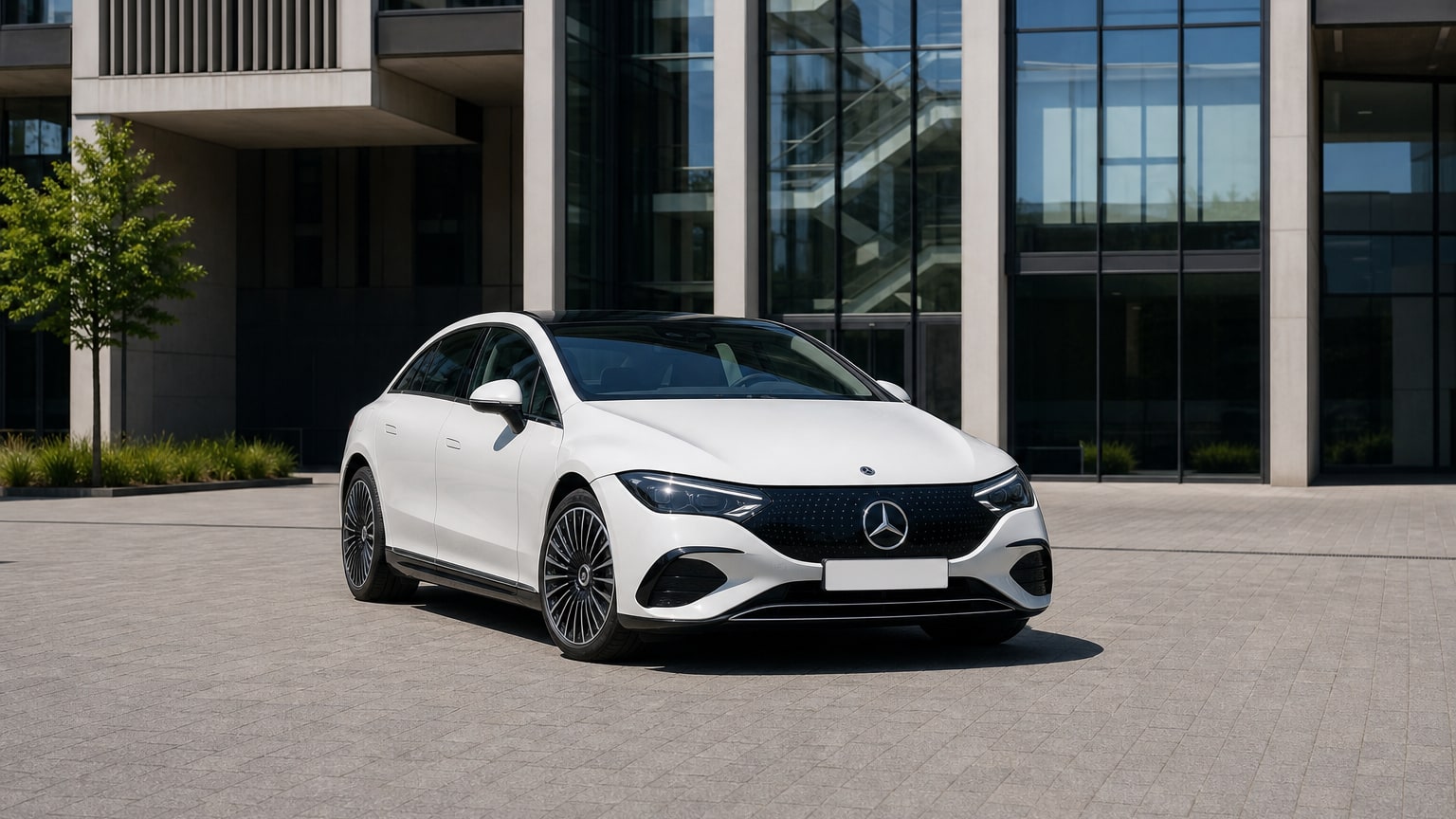
All Mercedes-Benz EQE years score consistently around the model average of 59/100, in a 56-61 range, with no statistical outliers - the best is 2024 at 61/100 and the weakest is 2023 at 56/100.
| Model Year | Generation | Verdict | Notes |
|---|---|---|---|
| 2023 | 1st gen | Avoid | 10 recalls, 30 NHTSA complaints, 56/100; highest recall and complaint count |
| 2024 | 1st gen | Best | 5 recalls, 14 NHTSA complaints, 61/100; strongest year to date |
Most Common Mercedes-Benz EQE Problems
The most common Mercedes-Benz EQE problems across all model years are electrical system faults (12 complaints), unknown or other (11 complaints), and air bags (3 complaints), based on NHTSA owner complaints. The electrical system is the single biggest failure category, and it is covered first below.
1. Electrical System Faults and BMS Software Shutdown
Electrical system issues are the top reported problem area on the 2023 EQE, accounting for 9 of its 30 NHTSA complaints. Owners describe the car throwing multiple dashboard warnings, losing propulsion mid-drive, and requiring tow-ins to the dealer. One owner filed a NHTSA safety complaint stating that their 2023 EQE 350+ had repeatedly shut down while driving, causing loss of power and reduced braking assistance, with the defect occurring at least five times despite multiple repair attempts at authorized dealerships.
On affected EQE, EQE SUV, EQS SUV, and EQS vehicles, the battery management system software might not meet current production specifications and may lead to a shutdown of the high-voltage battery, causing the contactors to open and potentially resulting in a loss of propulsion without prior warning, increasing the risk of a crash. The cause was a deviation in the software development process, where continuous diagnostic requests from other control units could overload the memory capacity of the BMS. This was addressed by NHTSA recall 24V-372, which covered certain 2024 EQE 350 4MATIC, EQE 350+, and EQE 500 4MATIC models, among others. Dealers update the battery management system software free of charge.
Earlier, recall 23V-405 addressed a related drivetrain software issue on 2023 EQE models. Mercedes-Benz determined that on certain EQE (295 platform) vehicles, the electric drivetrain software might not meet requirements, as it could improperly respond in the event of a detected fault, potentially causing a loss of propulsion. The campaign updated the electric drivetrain software on 7,704 model year 2022-2023 EQS, EQS SUV, and EQE (295, 296, and 297 platform) vehicles. Dealer software updates are free under both recalls. Buyer takeaway: confirm recalls 23V-405 and 24V-372 show “completed” for any used EQE before you sign.
2. Faulty 80-Amp Fuse Box (Recall 24V-115)
Separate from the BMS software recall, Mercedes flagged faulty high-amperage fuses and related power-distribution parts in a batch of 2023-2024 vehicles, including certain EQE and EQS models; an improperly manufactured 80-amp fuse can lead to failures in critical electrical systems, up to and including loss of power or, in a worst-case scenario, increased fire risk.
An incorrect fuse box can result in a sudden loss of drive power or a loss of critical safety functions such as the restraint systems or instrument cluster, increasing the risk of a crash or injury, and there could also be an increased risk of fire. Dealers replace the main fuse boxes free of charge, with owner notification letters mailed April 5, 2024. A follow-up recall, 25V-255, caught cars where the 24V-115 remedy was itself performed incorrectly - affecting certain 2023-2024 EQE and related models where fuse boxes may have been reworked incorrectly during the previous recall remedy, with a contact interruption or installation of fuses with incorrect amperage values as a possible result. Verify both 24V-115 and 25V-255 are resolved on any used EQE.
3. Airbag and Safety System Concerns
The 2023 EQE has 6 crash-related complaints and 1 fire-related complaint on file, with air bags ranking as the third most commonly reported problem area with 3 complaints. One specific recall addresses a structural airbag issue: Mercedes recalled certain 2023 AMG EQE, EQE 500, and EQE 350 vehicles because the absorbers in the roof frame may not be secured properly and can detach during window air bag deployment; dealers replace the absorbers free of charge.
The NHTSA recall page for the 2023 EQE lists 10 separate campaigns, making airbag and safety-system verification a priority before buying any 2023 example. Buyer takeaway: request the dealer print every recall and campaign number and verify each one shows completed status.
4. AVAS Pedestrian Warning Sound Software
Mercedes recalled certain 2022-2025 S-Class, EQE SUV, EQE, EQS SUV, and EQS vehicles because software in the Acoustic Vehicle Alerting System may cause an incorrect external pedestrian warning sound while reversing, causing the vehicles to fail to comply with Federal Motor Vehicle Safety Standard 141, and a vehicle that makes an incorrect sound may fail to alert pedestrians of a reversing vehicle, increasing the risk of a crash. Dealers update the AVAS software free of charge, with owner notification letters mailed August 1, 2025.
This is a compliance issue rather than a mechanical failure, and the fix is a straightforward software update. Still, any used 2023 or 2024 EQE may have this open if the software work was never completed at the dealer.
5. Steering Coupling Bolt Loosening
Mercedes recalled EQE sedans from 2023 to 2026 because an improperly tightened steering coupling bolt may allow the steering coupling to loosen from the steering rack, resulting in a loss of steering control and an increased risk of a crash; dealers tighten any loose bolts free of charge. This recall (25V-533) covers a broad range of production years, so it may be open on pre-owned 2023 or 2024 examples that have not yet been in for service.
Understanding whether electric cars are worth it often comes down to exactly this kind of recall transparency - an EV’s lower running costs are only a genuine advantage when open safety campaigns have been cleared.
6. Panoramic Sunroof Integrity and Tire Durability
Owner reports also include concerns about panoramic sunroof integrity and tire durability across EQE model years. Owners most often mention tire wear, brake feel, and low-speed ride quality rather than outright hardware failures, and the weight of the battery plus stiff sidewalls contributes to accelerated tire wear.
Tire wear is not covered by recall but can add up quickly on a heavy luxury EV. The most frequently reported problem areas across the generation include electrical system, brakes, and safety systems, with regenerative brake feel and one-pedal driving behavior also generating owner complaints. Budget for tire inspections and replacement cycles more frequently than you might on a lighter vehicle.
Which Mercedes-Benz EQE Years Should You Avoid?
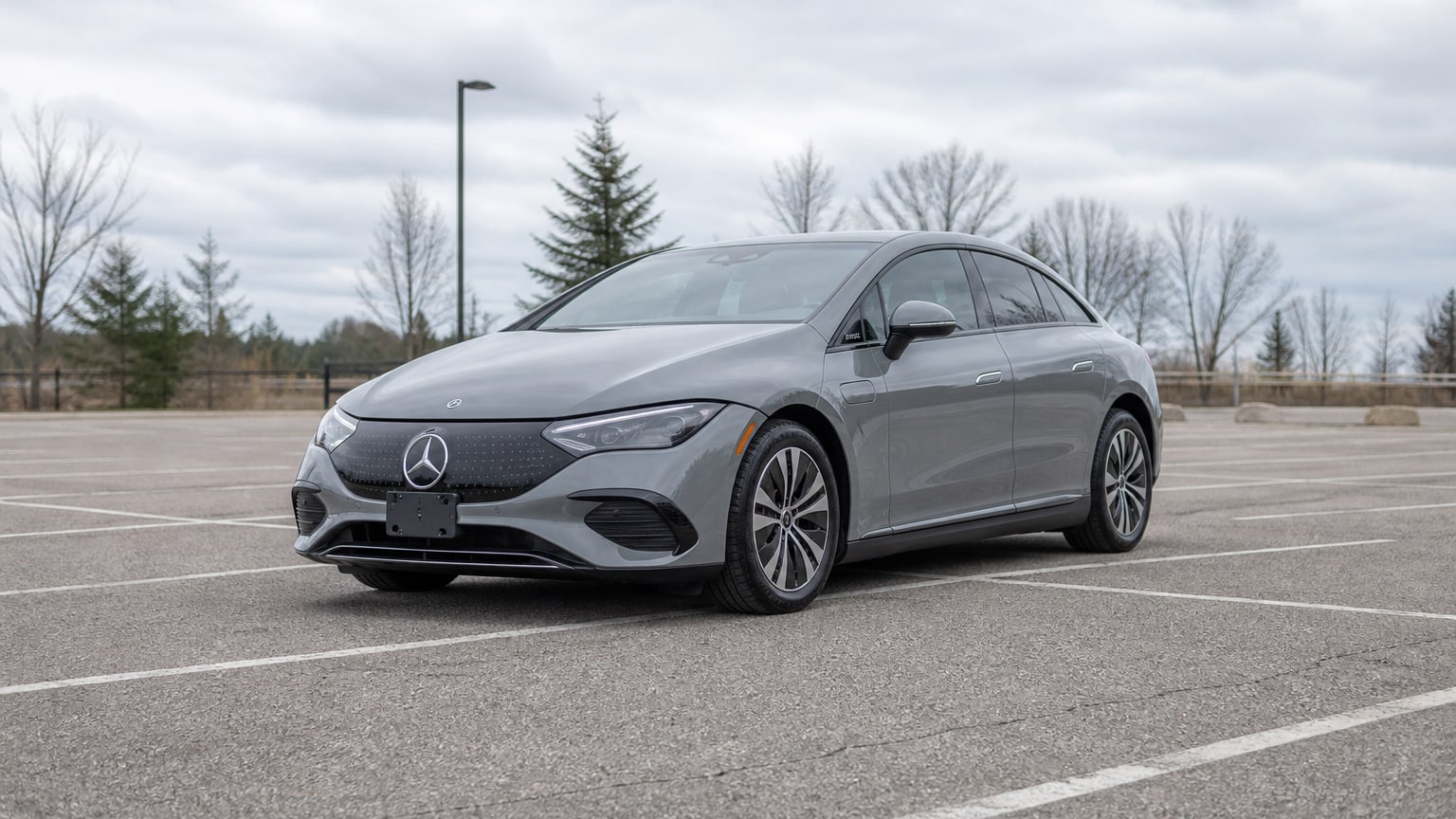
The Mercedes-Benz EQE year to avoid is 2023. The 2023 EQE has mixed reliability, with 10 recalls and 30 NHTSA owner complaints on file - the highest total for any EQE model year so far. By NHTSA complaint volume, 2023 is clearly the weaker year; CarComplaints.com does not yet have a ranked PainRank entry for the EQE separately, so the NHTSA data is the primary signal here.
| Mercedes-Benz EQE Generation | Model Years | Verdict | Main Issues |
|---|---|---|---|
| 1st generation | 2023-present | Worst: 2023 / Best: 2024 | Electrical system, BMS shutdown, fuse box, airbag recall |
Worst Mercedes-Benz EQE years: 2023
1st-Generation Mercedes-Benz EQE (2023-present)
The 2023 Mercedes-Benz EQE has mixed reliability, with 10 recalls and 30 owner complaints on file, including 6 crash-related complaints and 1 fire-related complaint. The electrical system accounted for the largest complaint cluster, followed by unspecified issues and airbag concerns. Ten recall campaigns in the first model year is a high number for any vehicle, reflecting the teething problems of a brand-new EV architecture introduced across multiple Mercedes nameplates simultaneously.
The 2023 EQE recalls page at NHTSA lists those 10 campaigns covering everything from drivetrain software and BMS management to the steering coupling, AVAS sound compliance, and airbag absorbers. Most have dealer remedies available at no charge, but only a completed recall history confirms the work was actually done.
What Are the Best Mercedes-Benz EQE Years to Buy?
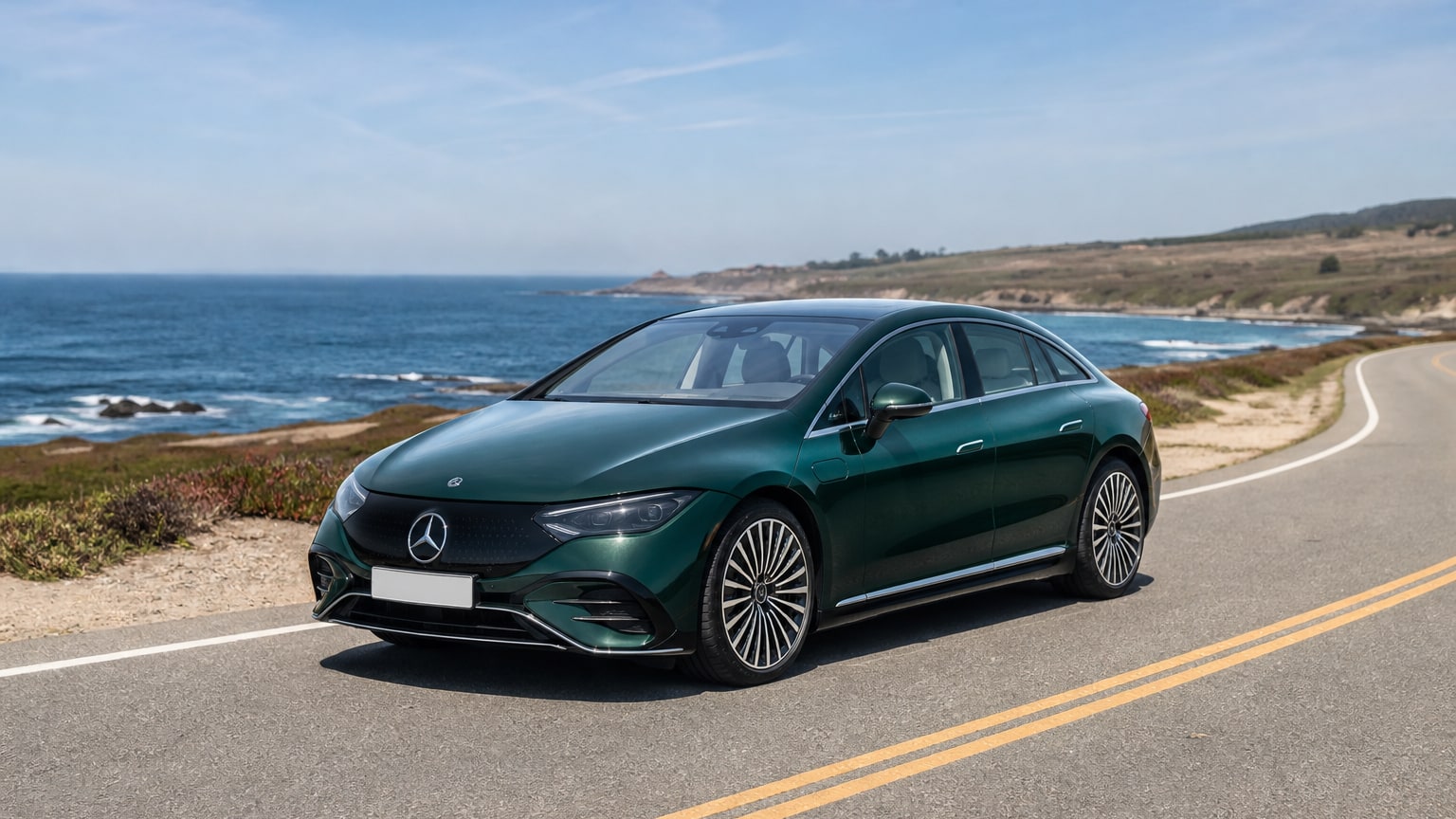
The best Mercedes-Benz EQE year to buy is 2024. The 2024 Mercedes-Benz EQE scores 61/100 (Good) with 5 recalls and 14 owner complaints.
| Best Mercedes-Benz EQE Year | Why It's a Strong Buy |
|---|---|
| 2024 | Fewest recalls (5), fewest NHTSA complaints (14), highest reliability score (61/100 Good) |
Most reliable Mercedes-Benz EQE years: 2024
2024 Mercedes-Benz EQE
At 61/100, the 2024 EQE lands in “Good” reliability territory; its complaint rate of 17.2 per 10,000 vehicles sold does run above the sedan segment average of 5.4, though it is a meaningful improvement on the 2023. The most commonly reported problem areas on the 2024 are unknown or other (5), electrical system (3), and wheels (2) - a much narrower spread than the 2023’s nine electrical complaints alone.
The 2024 Mercedes-Benz EQE has been recalled 4 times by NHTSA per Consumer Reports, compared to 10 for the 2023. The 2024 benefits from software fixes that were applied in production after the early-build issues were identified, making it a more composed used buy. Confirm that the battery-pack recall 24V-372, the fuse-box recall 24V-115, and the steering-coupling recall 25V-533 are all closed before purchase.
Mercedes-Benz EQE Submodel Years to Avoid
The two main EQE submodels a used buyer will encounter are the EQE 350 (the entry-level sedan trim) and the EQE SUV - each is assessed on its own recall and complaint record below.
Mercedes-Benz EQE 350 Years to Avoid
The EQE 350 was the only model available at the EQE’s US launch, making it the most common used example you will find. It uses a single rear-mounted permanent magnet AC synchronous motor producing 215 kW (292 hp) on the rear-wheel-drive EQE 350+, or dual motors on the EQE 350 4MATIC.
The EQE 350 has its own distinct recall: Mercedes recalled certain 2023 EQE 350 4MATIC and EQE 350+ vehicles because the rim inserts may detach from the wheels while driving, creating a hazard for other road users and increasing the risk of a crash; dealers inspect and replace rim inserts free of charge. This is specific to the 2023 EQE 350 and does not apply to the 2024. The BMS shutdown recall (24V-372) covered 2024 EQE 350 4MATIC and EQE 350+ specifically. No EQE 350 model year has yet accumulated a CarComplaints PainRank entry of its own.
Before buying a 2023 EQE 350, verify:
- Recall 23V-405 (drivetrain software) is closed
- Recall 24V-115 (fuse box) and, if 24V-115 was performed at a dealer, 25V-255 (fuse-box re-remedy) are both closed
- The wheel rim insert recall (MBUSA recall 2025030016) is closed
- Recall 25V-533 (steering coupling) is closed
Mercedes-Benz EQE SUV Years to Avoid
The EQE SUV (X294) has been in production since December 2022 and covers model years 2023-present, assembled in Tuscaloosa, Alabama. It shares the same 90.6 kWh EVA-platform battery pack as the EQE sedan but rides on a different body and is physically heavier, with a curb weight up to 2,690 kg (5,930 lb).
The BMS recall (24V-372) covered 2023-2025 EQE SUV 350 4MATIC, EQE SUV 350+, and EQE SUV 500 4MATIC models, where the battery management system software may cause the high-voltage battery to shut down, resulting in sudden loss of drive power. No EQE SUV model year has yet accumulated enough independent complaint data on CarComplaints to generate a PainRank score. The EQE SUV shares the electrical system, fuse box, AVAS software, and steering coupling recall family with the sedan, all covered in the problem sections above. Owner forum reports include an EQE SUV 500 returning to service three times in 8,000 miles, with one incident involving the car failing to start in a parking lot for over half an hour.
The practical check for EQE SUV buyers: confirm that 24V-372, 24V-115, 25V-255, and 25V-533 are all marked completed on your specific VIN, because the SUV’s wider model-year coverage under 24V-372 (2023-2025) means a 2025 SUV can still have this open.
Mercedes-Benz EQE Pre-Purchase Checklist
Use this checklist on every used EQE, regardless of year, before committing to a purchase.
- Run the VIN through NHTSA’s recall checker at nhtsa.gov/recalls. Confirm that recalls 23V-405, 24V-115, 24V-372, 25V-255, 25V-366, and 25V-533 all show “completed” for your specific VIN.
- On any 2023 example, verify the BMS and drivetrain software recalls are closed. Owners have reported repeated shutdowns while driving on 2023 EQE 350+ vehicles, causing loss of power and reduced braking assistance. Ask the dealer to print the campaign history directly from the Mercedes-Benz service system.
- Check the fuse box remedy chain (24V-115 and 25V-255). An improperly manufactured 80-amp fuse can lead to failures in critical electrical systems, loss of power, or increased fire risk. Make sure both the original recall and the follow-up re-remedy are confirmed done.
- On 2023 EQE 350 models, confirm the rim insert recall is complete. The rim inserts may detach from the wheels while driving, creating a hazard for other road users.
- Test the brake feel and regenerative braking during a thorough test drive. Regenerative brake feel and one-pedal driving behavior are among the most frequently reported issue areas. Any inconsistency or ABS alert during normal stops deserves dealer investigation before you buy.
- Request a high-voltage battery health report. The EQE’s battery warranty covers 10 years or 155,000 miles to 70% capacity. Ask an independent EV specialist or the dealer to run a BMS health scan and confirm no active fault codes.
- Ask for complete service records. Repeated visits for the same complaint are a stronger warning sign than the raw visit count alone.
- Check the steering coupling. The steering coupling bolt may have been improperly tightened, allowing the coupling to loosen from the steering rack and cause a loss of steering control. Confirm recall 25V-533 is closed, and test steering feel at highway speeds during the test drive.
Better Alternatives to Consider
If the EQE years in your budget land on the avoid list, or the recall history on a specific car looks incomplete, these alternatives deserve a look:
- Audi Q5 - a well-established luxury crossover with a longer production run and a more mature reliability record across multiple generations
- BMW iX - shares the luxury EV segment with the EQE and has a comparable price range, with its own distinct powertrain architecture that some owners find more predictable in software behavior
- Tesla Model S - a longer-established all-electric executive car with a more extensive used-market history, making year-by-year reliability patterns easier to assess
- Audi e-tron GT - a direct EQE competitor on the Porsche Taycan platform, with a separate recall history worth comparing if the EQE’s software complexity concerns you
Is the Mercedes-Benz EQE Worth Buying?
The EQE’s biggest downsides are not catastrophic hardware failures but complex electronics and software that can turn into nagging problems if not sorted early, making picking the right individual car and getting hard data on battery health, software history, and driver-assist behavior absolutely critical. If your budget puts you in a 2024 example with a clean recall history, the EQE is a worthwhile buy: the 2024 is the highest-scoring model year with a reliability score of 61/100, with 5 recalls and 14 owner complaints, making it a solid used buy.
Avoid the 2023 model year unless you can verify that all 10 of its NHTSA recall campaigns have been completed and documented. Run the VIN through NHTSA’s recall checker and ask for a printed recall and campaign history from a Mercedes-Benz dealer before signing anything.