
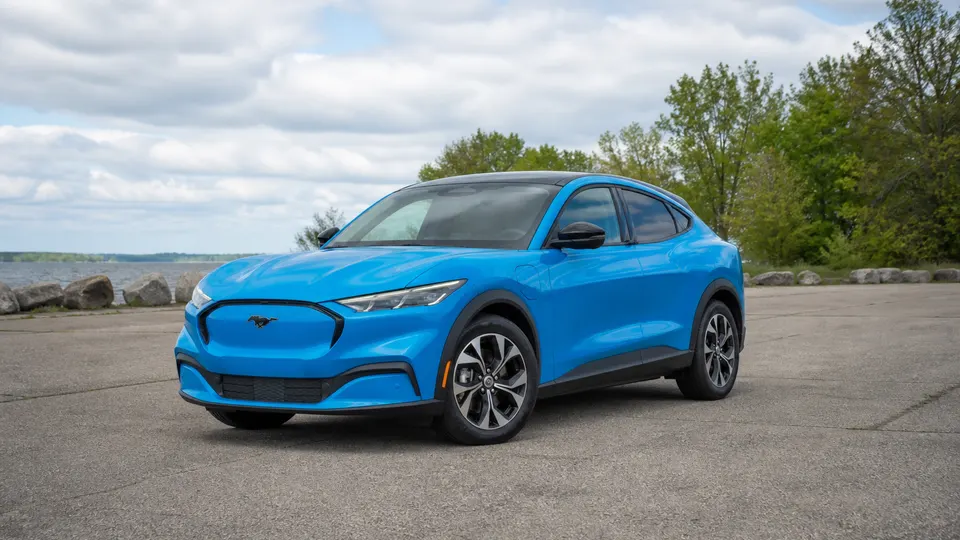
The Ford Mustang Mach-E is a genuinely capable electric SUV with strong safety scores and steadily improving reliability, but the first three model years carry a serious recall and complaint burden you should know about before buying used. Electrical system failures, a high-voltage battery junction box defect that left drivers stranded, and a door-latch flaw that could trap rear passengers are not cosmetic issues. This guide uses NHTSA complaint and recall data, CarComplaints PainRank ratings, and Consumer Reports reliability scores to show you exactly which years to skip and which are worth your money.
For generations, engines, and ownership notes in one place, see the Ford Mustang Mach-E hub.
Related: Cadillac LYRIQ years to avoid, BMW i4 years to avoid.
At a glance
- Worst years
- 2021
- 2022
- 2023
- Best years
- 2024
- 2025
- Top failure
- High-voltage battery junction box (HVBJB) overheating on 2021-2022 extended-range and GT models (NHTSA recall 23V-687 / Ford 23S56)
- Always do before buying
- Run the VIN through NHTSA's recall checker to confirm all open campaigns are closed, and on 2021-2022 cars specifically ask for paperwork showing the HVBJB was physically replaced, not just reprogrammed
How we rated the best and worst Ford Mustang Mach-E years
The first three model years of the Mustang Mach-E are beset with consumer complaints and recalls according to NHTSA, and also received below-average predictive reliability scores from Consumer Reports - making the 2021-2023 the generation to steer away from. This article draws on NHTSA complaint and recall filings, CarComplaints PainRank data, Consumer Reports subscriber surveys, and owner discussions at MachEforum to build each verdict. CarComplaints ranks a “worst year” by repair cost and mileage-at-failure (its PainRank system), while NHTSA shows raw complaint volume - the two metrics often point to different years. CarComplaints rates the 2023 model year as worse than the 2022 on repair cost and problems at lower mileage, even though the 2022 has more overall CarComplaints submissions. NHTSA complaint volume, by contrast, peaks on the 2021. Our years to avoid methodology combines these sources into a single verdict for each model year, weighted by severity of failure rather than raw complaint count alone.
| Ford Mustang Mach-E Generation | Best Ford Mustang Mach-E Years | Worst Ford Mustang Mach-E Years |
|---|---|---|
| 1st gen (2021-present) | 2024, 2025 | 2021, 2022, 2023 |
Every Ford Mustang Mach-E model year ranked
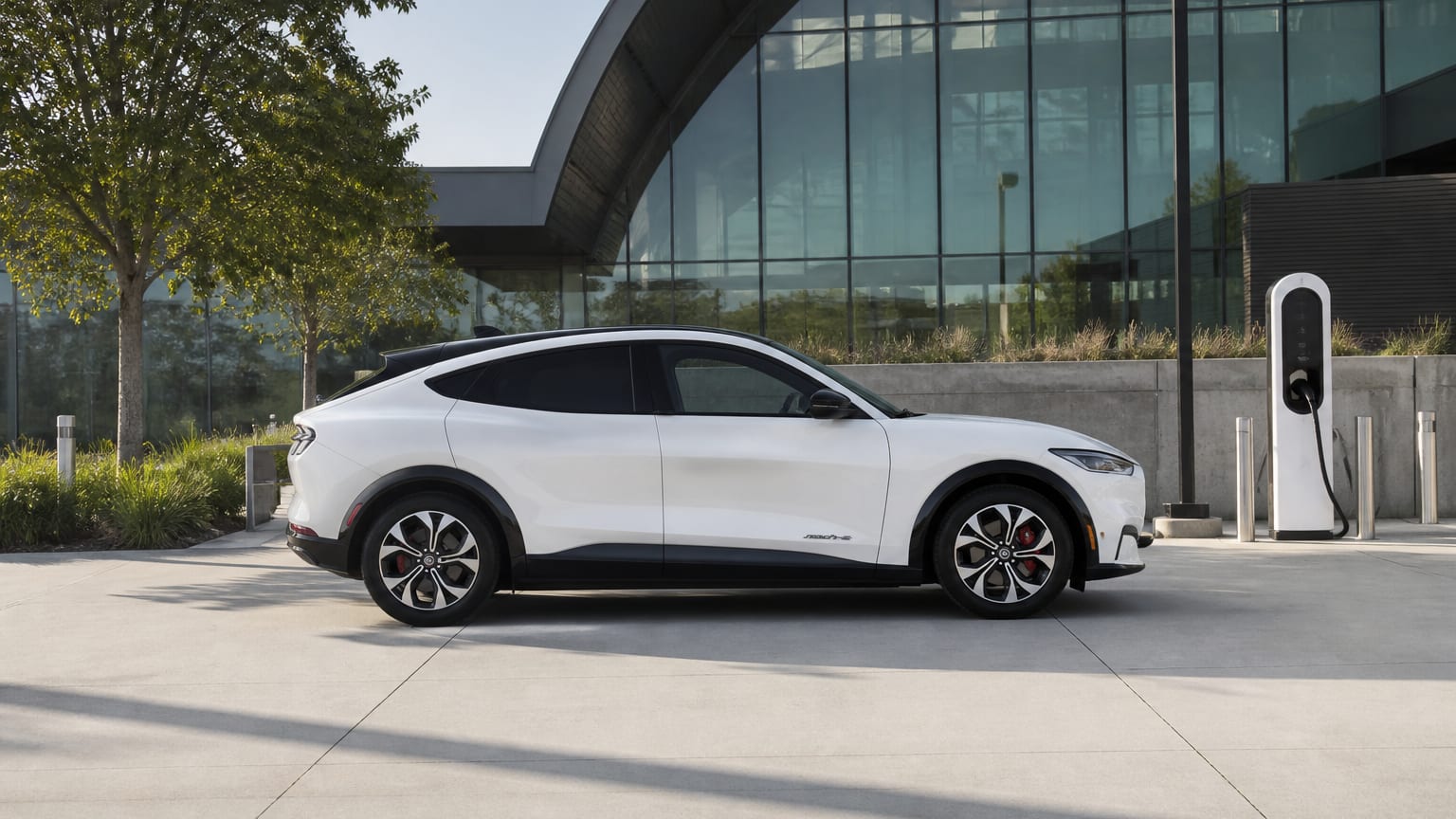
The Mustang Mach-E has been a single continuous generation since its 2021 launch, so the year-by-year differences reflect production maturity rather than a full redesign.
| Model Year | Generation | Verdict | Notes |
|---|---|---|---|
| 2021 | 1st gen | Avoid | Highest NHTSA complaint volume (328); heaviest recall cluster; HVBJB defect |
| 2022 | 1st gen | Avoid | Carried over HVBJB recall; Consumer Reports ultra-low reliability score |
| 2023 | 1st gen | Avoid | CarComplaints worst PainRank; 189 NHTSA complaints; 104 NHTSA owner complaints per ARI |
| 2024 | 1st gen | Best | First year with better-than-average Consumer Reports score; complaints drop sharply |
| 2025 | 1st gen | Best | High predictive reliability; Consumer Reports "much more reliable than average" |
Most common Ford Mustang Mach-E problems
The single biggest documented failure is the high-voltage battery junction box (HVBJB) overheating on 2021-2022 models, which generated multiple federal recalls and NHTSA investigations. Beyond the HVBJB, owners across multiple model years have reported electronic door-latch failures, 12-volt auxiliary battery drain, charging system faults, and software glitches tied to the SYNC 4A infotainment system.
1. High-voltage battery junction box (HVBJB) overheating
In affected vehicles, the high-voltage battery main contactors may overheat, which can result in a contactor that remains open or a contactor that welds closed. A welded-closed contactor prevents the car from moving or charging, and a failing HVBJB can turn the Mach-E into an expensive lawn ornament with little warning - the car may still power on but refuse to move or charge properly, and this is one of the few issues that can truly strand the driver and require a flatbed tow.
Ford issued multiple safety campaigns - recalls 22S41 and 23S56 - covering 2021-2022 Mach-E models for HVBJB overheating; on affected vehicles, dealers replace the HVBJB with a revised part and reprogram the battery and powertrain control modules. The first campaign, Ford 22S41 / NHTSA 22V-412, applied a software fix to approximately 48,924 vehicles. When that software remedy proved insufficient, Ford issued recall Ford 23S56 / NHTSA 23V-687 requiring physical replacement of the junction box on 2021-2022 extended-range and GT models. Following the recall, Ford issued Technical Service Bulletin TSB 23-2020, covering replacement of the HVBJB on the subject vehicles. Ford’s own recall notification disclosed 107 instances where an overheated contactor led to power loss even after prior recall repairs - and 100 of those instances were in Mustang Mach-E GT or extended-range variants.
The high-voltage battery and related components carry an 8-year/100,000-mile warranty in the U.S., so many 2022s are still covered today. If you are buying a used 2021 or 2022 with the extended-range battery, confirm with VIN verification that both 22S41 and 23S56 are completed and that paperwork shows the HVBJB was physically replaced, not just reprogrammed.
2. Electronic door latches failing when 12V battery is low
A software flaw can cause the electronic door latches to fail if the 12-volt battery has a low charge, which can result in occupants, particularly those in the rear seats, being trapped inside the vehicle as the rear doors lack a mechanical release. Ford campaign 25S65 (NHTSA 25V-404) covers roughly 197,000 vehicles across the 2021-2025 model years for this issue.
This is one of the most serious and recent recalls to hit the Mach-E line, covering roughly 197,000 vehicles across 2021-2025. The recall targets the way the electronic door latches behave when the 12-volt system is in distress - in affected vehicles, the rear doors may stay locked after the driver and front passenger exit and close their doors, and in the worst case, a child or adult in back who cannot operate the interior release could be trapped in the rear seat.
The fix is a free software update at any Ford dealer. Checking the health of the 12-volt battery before buying is important, since a weak one is what triggers the door-latch failure. On any used Mach-E, confirm that recall 25S65 has been completed.
3. 12-volt auxiliary battery drain and system shutdowns
Unlike the main high-voltage pack that moves the car, the Mach-E also relies on a traditional 12-volt battery to power control modules, door latches, and electronics; when that small battery goes low or fails, the symptoms can be dramatic - the car appears totally dead, doors will not unlock, screens stay black, and charging may not start even if the main battery is full.
Early software bugs often kept the car “awake” while trying to download updates or communicate with the cloud, draining the small battery overnight. This problem is most common on 2021-2023 builds, where early software versions had the most aggressive background-process activity. Ford has addressed much of this through OTA updates, but a used car that has not received them may still exhibit the fault.
4. Charging system faults (DC fast-charge and home charging)
Consumer Reports owner surveys for the 2023 model year flag charging problems as a top trouble spot - covering failure to charge at home, incompatibility with some public chargers, failure to fully charge, and charge-port door faults. Some 2023 owners still receive high-voltage software update campaigns aimed at improving charging reliability, and scattered reports mention 2023 cars that would slow-charge, stop at DC fast chargers, or throw powertrain fault messages until dealers applied the latest software bundles.
On 2022 models, owners report charge-schedule bugs where scheduled charging does not start or stop as expected after OTA updates, and charge-port doors that stick in cold weather or after minor misalignment. Most charging complaints on later builds resolve with a dealer software update, so confirm the car’s software is current before buying. The hidden costs of owning an electric car include the Level 2 home charger installation that many Mach-E owners find reduces charging-fault frequency significantly.
5. Rear differential pinion shaft fracture (2021-2023 AWD)
The 2021-2023 Mach-E AWD models are being recalled because of a defect in the rear differential pinion shaft, which could fracture and result in unintended movement or loss of drive power, and could also cause the vehicle to move while in park if the parking brake is not engaged. Ford campaign 26S50 covers approximately 42,784 Mach-E vehicles. Owners can visit a Ford dealership to have the rear differential assembly repaired or replaced at no cost.
This is a more recently announced recall (July 2026) and remedy availability extends into late 2026, so used buyers of 2021-2023 AWD models should check whether the repair has been performed before taking delivery.
6. Software glitches and SYNC 4A infotainment freezes
The majority of Ford Mustang Mach-E common problems center on software polish, 12-volt battery behavior, charging interactions, and the many electronic features built into the car. Rearview camera software is covered by recall 25S49 on 2021-2023 models, where a software error may cause the rearview camera image to delay, freeze, or not display when the vehicle is in reverse, reducing the driver’s view behind the vehicle and increasing crash risk.
Most Mach-E recalls have been remedied via over-the-air (OTA) software updates, which is an advantage of the EV architecture. For a used buyer, this means many software issues on 2023 and later cars may already be resolved - but you should confirm the car’s software version is current at the dealer before finalizing a purchase.
Which Ford Mustang Mach-E years should you avoid?
The Ford Mustang Mach-E years to avoid are 2021, 2022, and 2023. CarComplaints rates the 2023 model year as the worst by repair cost and mileage-at-failure (PainRank), even though the 2022 has the most CarComplaints submissions overall. On NHTSA complaint volume, the 2021 is the peak year: the first model year drew 328 consumer complaints and 12 recalls according to NHTSA data.
| Ford Mustang Mach-E Generation | Model Years | Verdict | Main Issues |
|---|---|---|---|
| 1st gen early (2021-2023) | 2021, 2022, 2023 | Worst | HVBJB overheating, door-latch lockout, high NHTSA complaint volume |
| 1st gen later (2024-2025) | 2024, 2025 | Best | Sharply lower complaints, first better-than-average Consumer Reports scores |
Worst Ford Mustang Mach-E years: 2021, 2022, 2023
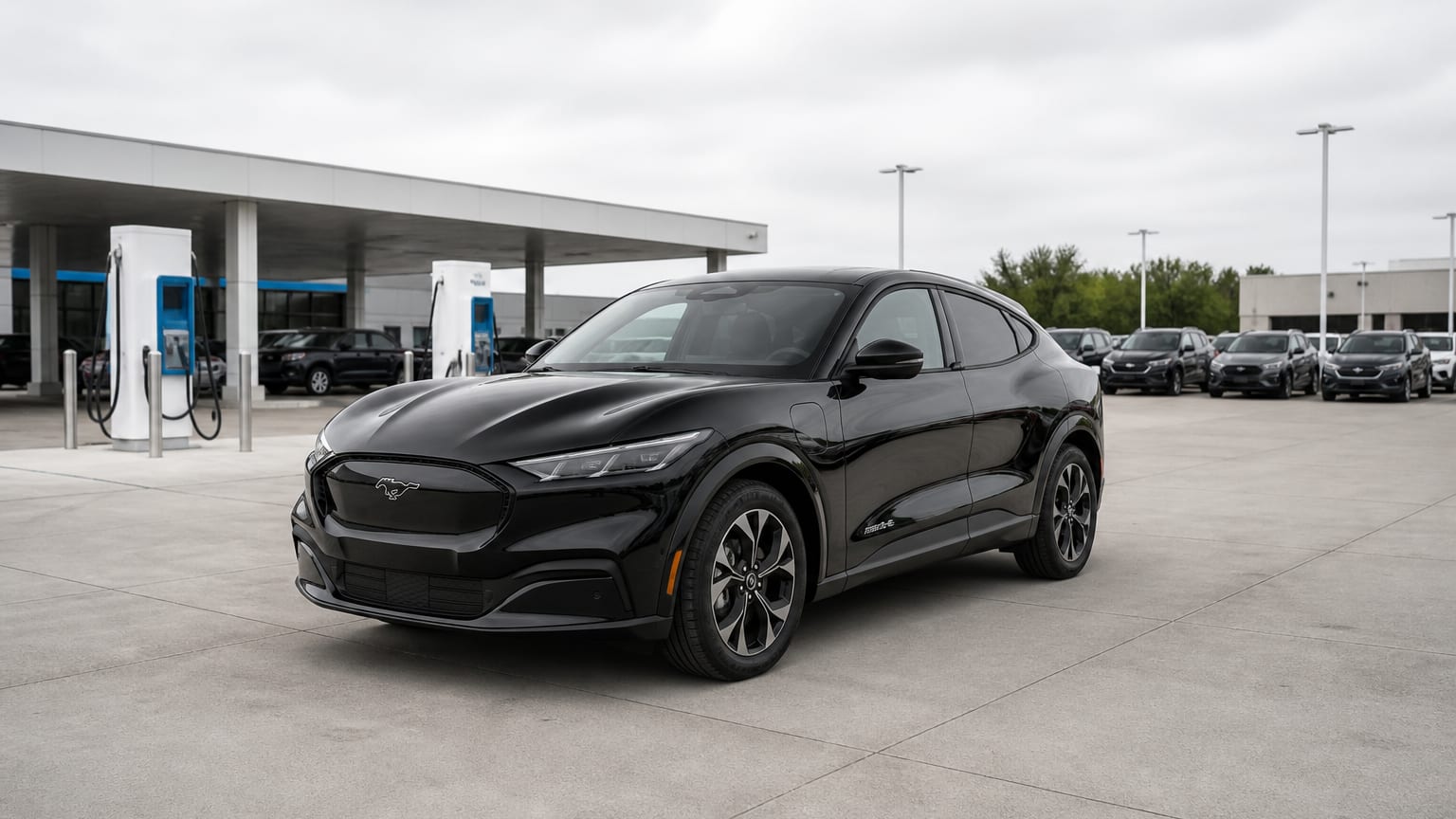
1st-generation Ford Mustang Mach-E (2021-2023)
The heaviest recall clusters - the high-voltage contactor overheating and the AWD powertrain-control-module fault - concentrate on 2021 and 2022 cars, and the 2021 model year alone carries both anti-lock-brake campaigns. The 2021 is the most recall-laden year the Mach-E has produced.
The 2021 models had below-average reliability due to the battery junction box failure, but reliability has significantly improved for the 2023-2026 model years as Ford fixed the hardware and software bugs. The 2022 inherited the HVBJB problem and drew a Consumer Reports score of 1 out of 5 on reliability. The 2023 scores 66 out of 100 on the Auto Reliability Index, with 3 recalls and 104 NHTSA owner complaints on file.
What are the best Ford Mustang Mach-E years to buy?
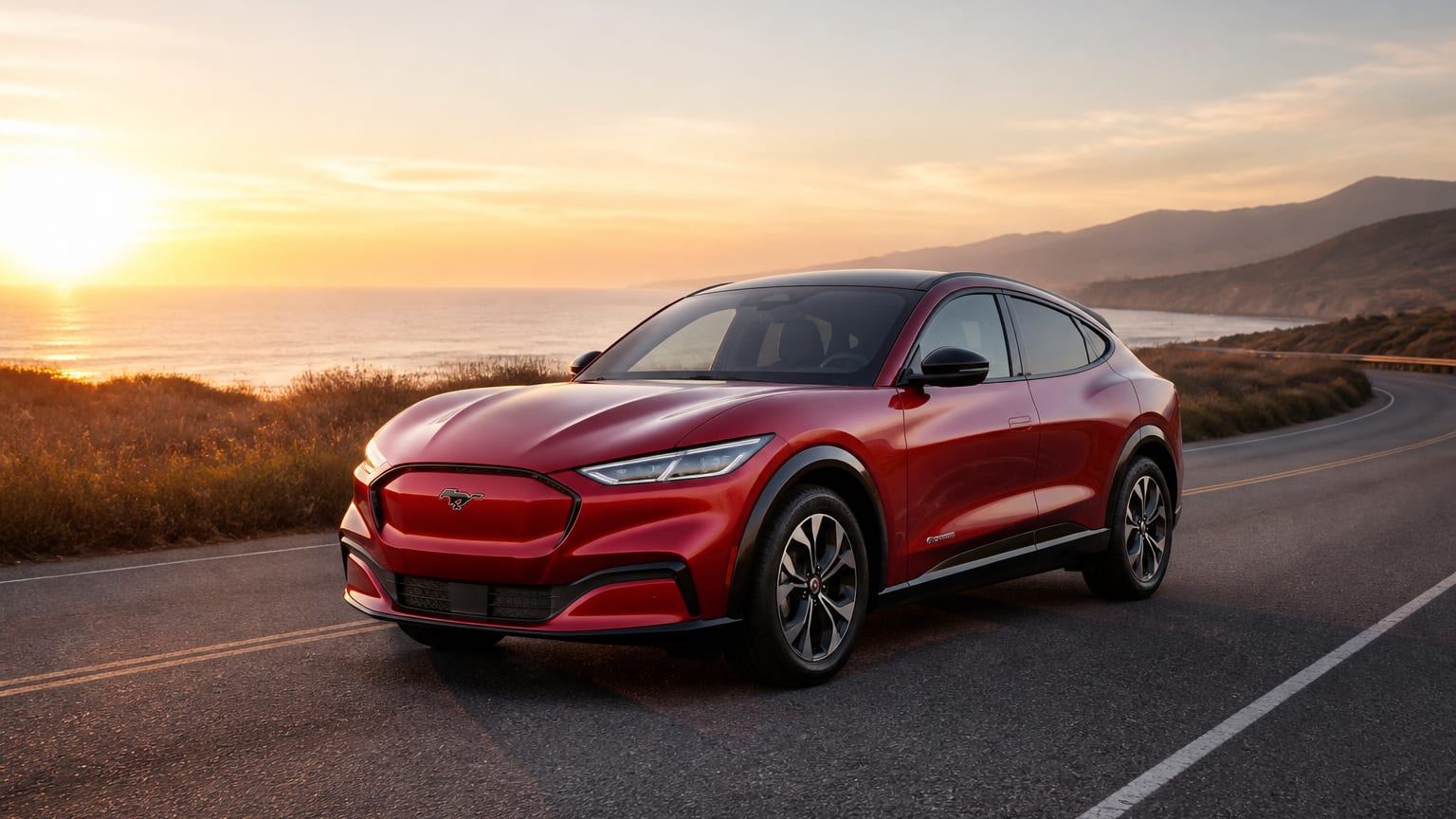
The best Ford Mustang Mach-E years to buy are 2024 and 2025. The 2024 is the first model year to receive a better-than-average reliability ranking from Consumer Reports and, according to NHTSA, the year when consumer complaints and recalls drop dramatically. Consumer Reports rates the 2025 Mustang Mach-E as much more reliable than other cars from the same model year.
| Best Ford Mustang Mach-E Year | Why It's a Strong Buy |
|---|---|
| 2024 | First CR better-than-average score; NHTSA complaints fall sharply vs. 2021-2023 |
| 2025 | Consumer Reports "much more reliable than average"; high predictive reliability score |
Most reliable Ford Mustang Mach-E years: 2024, 2025
2024 Ford Mustang Mach-E
The 2024 Ford Mustang Mach-E has good reliability, with 3 recalls and 35 owner complaints on file, including 2 crash-related complaints. That is a dramatic reduction from the 328 NHTSA complaints filed against the 2021. Consumer Reports gave it a better-than-average score - the first Mach-E model year to earn that distinction.
NHTSA selected the Ford Mustang Mach-E for 2024 testing under its updated New Car Assessment Program, and the 2024 earns IIHS Top Safety Pick+ with “Good” crashworthiness ratings and strong crash-avoidance technology. The 2024 also benefits from the park-function recall (25C69) being a software OTA fix, meaning most are already resolved.
2025 Ford Mustang Mach-E
Most 2024-2025 owners report strong satisfaction with comfort, performance, and day-to-day usability. The 2025 model received an updated thermal management system and a standard heat pump on all trims. The 2025 Ford Mustang Mach-E has been recalled 5 times by NHTSA, but those campaigns are primarily lighting compliance and park-module software issues - not the hardware failures that defined 2021-2022. The 2025 model year is a strong bet, with high predictive reliability scores and few complaints.
Ford Mustang Mach-E submodel years to avoid
The Mach-E’s two most purchased trims, the GT and the Premium, each have their own records worth examining separately. Here is what the data shows for each.
Ford Mach-E GT years to avoid
The Mach-E GT, offered from the 2021 model year onward, is the performance variant of the lineup. It pairs a dual-motor all-wheel-drive setup with an extended-range battery and output of up to 480 hp (GT Performance Edition), which means more current flows through the high-voltage contactors than in standard-range models.
The extended-range and GT trims see more current flow through the contactors than standard-range models due to larger battery capacity and higher-output motors. This made the GT disproportionately affected by the HVBJB recall: 100 of the 107 documented post-recall power-loss failures were in Mustang Mach-E GT or extended-range variants. The HVBJB issue covered earlier in this article applies here with greater severity - every 2021-2022 GT falls inside Ford recall 23S56 / NHTSA 23V-687.
The 2021 and 2022 GT model years are the ones to treat with extra caution. Confirm via VIN check that both 22S41 and 23S56 have been fully completed with a physical HVBJB replacement on any GT you consider:
- Ask for the dealer repair order showing the HVBJB part was swapped, not just software updated
- Verify the electronic door-latch recall 25S65 is completed, as the GT is covered alongside all 2021-2025 models
- Confirm the rear differential pinion shaft recall 26S50 has been addressed on AWD GT models from 2021-2023
The 2024 GT onward does not carry the HVBJB risk and has its own strong safety performance under IIHS testing.
Ford Mach-E Premium years to avoid
The Mach-E Premium has been offered since 2021 as the mid-tier trim, available in both standard-range and extended-range battery configurations with rear-wheel drive or AWD. The Premium with the extended-range battery shares the same HVBJB risk as the GT for 2021-2022 model years, since the contactor stress is tied to the extended-range pack, not the GT badge specifically.
No Mach-E Premium model year has accumulated a distinct complaint pattern that sets it apart from the overall Mach-E record. The charging faults, door-latch lockout recall (25S65 across 2021-2025), and rearview camera software recall (25S49 for 2021-2023) covered earlier in this article apply equally to the Premium trim. For standard-range Premium models, the HVBJB overheating risk is lower than for extended-range or GT cars, because standard-range contactors see less thermal stress.
The practical buy guidance is the same as for the broader Mach-E: avoid 2021-2022 Premium extended-range without confirmed HVBJB replacement, treat the 2023 Premium as mixed given its CarComplaints PainRank, and favor 2024-2025 Premiums for the lowest complaint and recall exposure.
Ford Mustang Mach-E pre-purchase checklist
Before committing to any used Mach-E, run through these model-specific checks:
- Run the VIN through NHTSA’s recall checker at nhtsa.gov/recalls and confirm every campaign - especially 22S41, 23S56, 25S65, and 26S50 - shows as completed before signing anything.
- On 2021-2022 extended-range and GT models, verify HVBJB replacement. Ask the seller for the dealer repair order showing the high-voltage battery junction box was physically replaced under recall 23S56, not only reprogrammed under 22S41. Vehicles included in recall 23S56 that were previously repaired under recall 22V-412 are required to have the new remedy completed.
- Check the 12-volt auxiliary battery health. When the 12-volt battery goes low or fails, symptoms include the car appearing totally dead, doors not unlocking, screens staying black, and charging not starting even if the main battery is full. Ask when it was last replaced or tested.
- Confirm electronic door-latch recall 25S65 is completed on any 2021-2025 Mach-E. The rear doors have no mechanical release from the inside - they are entirely dependent on 12V power to open - making the recall fix essential for safety.
- On 2021-2023 AWD models, ask about recall 26S50 (rear differential pinion shaft). Remedy availability extends to late 2026, so the repair may not yet be done - factor that into your timing.
- Test the charging port door and charge session before purchase. Have the seller demonstrate a successful charge connection, since charge-port door and DC fast-charge faults are among the top consumer complaints on 2022-2023 models.
- Confirm SYNC software is up to date. A dealer service visit or OTA update check will confirm the rearview camera software recall (25S49 for 2021-2023) has been applied.
- Review Ford’s battery warranty coverage. Ford covers EV battery and excessive capacity loss for 8 years or 100,000 miles on the Mach-E. Ask the seller for the original purchase date and mileage to know how much coverage remains.
Better alternatives to consider
If the Mach-E years in your budget land on the 2021-2023 avoid list, consider these alternatives in the same electric compact-SUV class:
- Tesla Model Y - the best-selling electric SUV in this class, with a longer production run and extensive over-the-air update history that has resolved most early faults
- Chevrolet Equinox EV - a newer, more affordable entry that surpassed the Mach-E in 2025 sales and benefits from GM’s updated Ultium platform with fewer early-generation growing pains
- Ford F-150 - if you are open to a Ford truck with a longer reliability track record and a clearer year-by-year avoid map
- Ford Escape - a smaller Ford crossover option where the reliability record extends further back and best/worst years are well established
Is the Ford Mustang Mach-E worth buying?
Yes, the Ford Mustang Mach-E is worth buying - as long as you avoid the 2021, 2022, and 2023 model years or buy them only after thorough recall verification. The 2024 earns the IIHS Top Safety Pick+ award with “Good” crashworthiness ratings and strong crash-avoidance technology, and the 2025 is rated “much more reliable than average” by Consumer Reports. The EV range question that worries some buyers is manageable: understanding how far electric cars can go on one charge helps set realistic expectations before purchase.
For a 2024 or 2025, the Mach-E is one of the more polished non-Tesla EVs on the used market. Run the VIN through NHTSA’s recall checker and ask for complete service records showing all recall work before finalizing the deal. Every verdict in this guide follows the same editorial standards and verification process applied across all REREV vehicle reviews, including independent cross-checking of NHTSA, CarComplaints, and Consumer Reports data.