
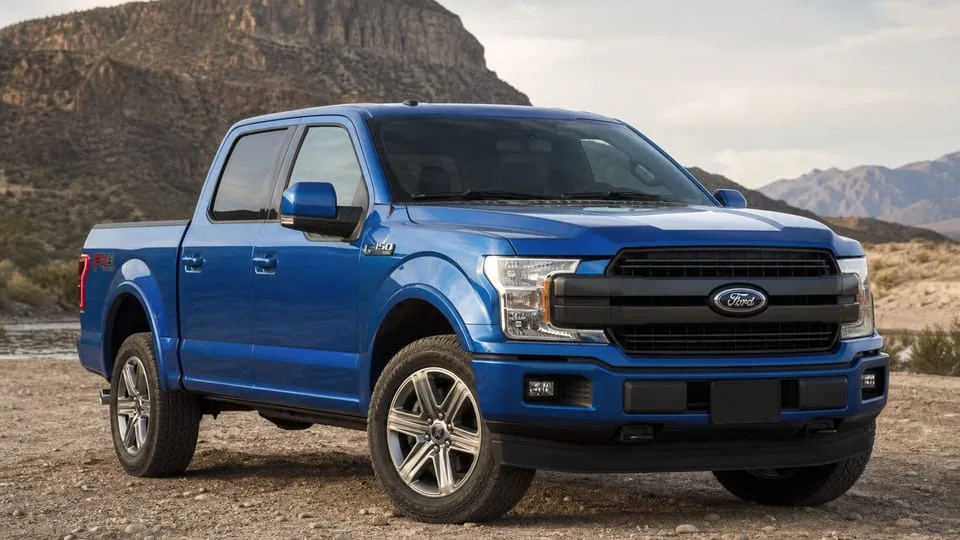
The Ford F-150 is the best-selling vehicle in America for good reason, but some model years carry far more complaints, recalls, and repair bills than others. This guide ranks F-150 years through the 2026 model year on sale now, using NHTSA complaints and recalls, CarComplaints owner data, and our years to avoid methodology.
Related: Ram 1500 years to avoid, Chevy Silverado years to avoid, Toyota Tundra years to avoid.
At a glance
- Worst years
- 2001
- 2002
- 2004
- 2005
- 2006
- 2010
- 2011
- 2013
- 2015
- 2016
- 2021
- Best years
- 1998
- 2008
- 2009
- 2014
- 2017
- 2020
- 2023
- 2024
- 2025
- Top failure
- 2004 spark-plug and engine complaints (3,000+ owner reports on CarComplaints); 2021 14th-gen launch complaint spike
- Always do before buying
- Run the VIN through NHTSA's recall checker; on 2021–2023 trucks, confirm park-rollaway, rear-axle, and trailer-module recalls are closed
Recalls by year
How we rated the best and worst Ford F-150 years
We start with NHTSA complaint counts and recall campaigns, then cross-check CarComplaints for repair-cost patterns and owner forums for repeat failures. Ford sells the F-150 in multiple cab and powertrain configurations; where NHTSA splits complaints by body style, we cite the F-150 Super Crew gas configuration because it represents the highest-volume setup on recent model years. Recall counts use the generic F-150 model year totals from NHTSA, which capture campaigns across cab styles.
The 14th-generation F-150 (2021–present) had a rough launch: 29 NHTSA recalls on file for the 2021 model year and 1,035 complaints on the Super Crew alone. Complaint volume and recall counts trend down on 2023–2025 trucks in the data available as of October 2026. 2026 model-year trucks are on sale but too new to judge for long-term reliability.
| Ford F-150 generation | Best F-150 years | Worst F-150 years |
|---|---|---|
| 10th generation (1997–2003) | 1998 | 1997, 2001, 2002 |
| 11th generation (2004–2008) | 2008 | 2004, 2005, 2006 |
| 12th generation (2009–2014) | 2009, 2014 | 2010, 2011, 2013 |
| 13th generation (2015–2020) | 2017, 2020 | 2015, 2016 |
| 14th generation (2021–2026) | 2023, 2024, 2025 | 2021, 2022 |
Every Ford F-150 model year ranked
This table focuses on 14th-generation years (2021–2026), where our prior guide stopped at 2022. Older generations are covered in the sections below. NHTSA complaint figures for 2021–2022 use the Super Crew configuration; 2023–2025 use F-150 (SUPER CREW) GAS unless noted.
| Model year | Generation | Verdict | Notes |
|---|---|---|---|
| 2021 | 14th | Avoid | 1,035 NHTSA complaints (Super Crew); 29 recalls on F-150 model year |
| 2022 | 14th | Caution | 599 NHTSA complaints (Super Crew); 23 recalls; shared campaigns with 2021 |
| 2023 | 14th | Best | 416 NHTSA complaints (Super Crew gas) + 95 (Super Crew HEV); 13 recalls |
| 2024 | 14th | Best | 194 complaints (Super Crew gas) + 37 (HEV); 11 recalls |
| 2025 | 14th | Best | 109 complaints (Super Crew gas) + 19 (HEV); 14 recalls |
| 2026 | 14th | Too new to judge | On sale; insufficient complaint history in NHTSA as of October 2026 |
Most common Ford F-150 problems
These problem areas recur across multiple F-150 generations in NHTSA complaints and CarComplaints data. Model years called out are the ones where each issue is most concentrated.
1. Spark plug and engine failures (2004–2007, 2010)
The 2004 F-150 remains the benchmark for bad years: CarComplaints logged more than 3,000 owner reports, with engine complaints dominating (2004 engine problems). Stripped or ejected spark plugs, coil failures, and expensive top-end work are the recurring theme on 11th-generation trucks. The 2010 model is the other high-water mark on the 12th generation, with engine leaks, downshift-induced engine damage, and MyFord infotainment failures widely reported. Buyer takeaway: unless you need a budget beater, skip 2004–2006 and 2010 entirely.
2. Frozen and unlatched door handles (2015–2017)
Ford recalled about 1.3 million 2015–2017 F-150 trucks for door-latch issues that could leave doors frozen shut or open while driving (CBS News coverage of the recall). Water intrusion and latch design were central. Throttle-body failures on 2015–2016 models prompted separate recalls and owner reports of stalling. These 13th-generation years are cheaper on the used market for a reason.
3. Transmission park-rollaway (2022–2023)
Ford recalled certain 2022–2023 F-150, Mustang, Explorer, and Bronco vehicles because a loose bolt inside the automatic transmission may prevent the park pawl from engaging even when the shifter shows Park (NHTSA 23V-070, Ford 23S06). Rollaway risk is the safety concern. Dealers inspect and may replace the transmission. Any 14th-generation truck needs this campaign verified closed before purchase.
4. Rear axle hub bolt and rollaway (2021–2025)
Campaign 23V-896 (expanded as 25V-512) covers certain 2021–2025 F-150 trucks with the Trailer Tow Max Duty package and 9.75-inch axle. A rear axle hub bolt may break, damaging hub splines and potentially allowing rollaway in Park or loss of drive. Ford replaces both rear axle shaft assemblies. If you tow heavy, this recall matters even on otherwise clean trucks.
5. Electric parking brake activation while driving (2021–2023)
Recall 23V-509 (Ford 23S35) covers certain 2021–2023 F-150 trucks with a single exhaust system where the rear axle may damage the parking-brake wiring harness, causing unexpected electric parking brake application while driving. Ford installs a protective tie strap and repairs the harness. Sudden braking feel on a test drive should be a walk-away signal until the recall is checked.
6. Rearview camera and SYNC display failures (2021–2026)
Multiple 14th-generation campaigns address backup camera compliance. 25V-315 (Ford 25S49) covers 2021–2024 F-150 among other models for delayed, frozen, or missing rear camera images. A separate campaign, 26V-489 (Ford 26C37), addresses 2021–2023 F-150 trucks with 8-inch SYNC screens where the home menu can block the reverse camera. These are software fixes at the dealer or over the air, but they are safety recalls — not optional updates.
7. Integrated trailer brake / lighting module (2021–2026)
NHTSA campaign 26V-104 (Ford 26C10) covers certain 2021–2026 F-150 and other Ford/Lincoln models where the integrated trailer module may lose communication, affecting trailer brake or turn-signal function. If you tow, confirm this recall is closed and test trailer lights and brakes on any truck you buy.
8. Fuel tank strap security (2023–2027)
Recall 26V-578 (Ford 26S69) covers certain 2023–2027 F-150 vehicles where fuel tank straps may be improper, with leak or detachment risk. This campaign is recent as of 2026; verify status on any late 14th-generation truck.
9. Fuse #27 no-start (2009–2014)
12th-generation F-150s are known for intermittent no-start conditions tied to a blown fuse #27 on the fuel pump circuit. Ford sold a relocation kit, but the issue still defines buyer caution on 2009–2014 trucks (owner discussions on F150Forum and related threads). Not every no-start is fuse #27, but it is common enough to check before paying for a major diagnosis.
Which Ford F-150 years should you avoid
Historic avoid list (still valid): 2001, 2002, 2004, 2005, 2006, 2010, 2011, 2013, 2015, 2016.
14th-generation avoid / caution: 2021 (avoid) and 2022 (caution). 2026 is not “bad” — it is too new to judge.
Eleventh generation (2004–2006)
The 2004 F-150 is the worst single year in modern F-150 history on CarComplaints, with 3,000+ reports and chronic engine faults. 2005–2006 inherited most of the same architecture. NHTSA and owner databases still recommend steering clear of this generation except for low-budget projects.
Twelfth generation (2010 and 2013)
The 2010 F-150 paired heavy engine and transmission complaints with MyFord Touch failures and backup-camera glitches. 2013 concentrated transmission slip and gear-selection complaints. Both years are poor values relative to 2009 or 2014 from the same generation.
Thirteenth generation (2015–2016)
Door-latch and throttle-body recalls define these years, along with brake and engine complaints in NHTSA data (2015 brake complaints on CarComplaints). They are usable with full recall history, but 2017 and 2020 are safer bets from the same generation.
Fourteenth-generation launch (2021–2022)
The redesigned 2021 F-150 logged 1,035 NHTSA complaints on the Super Crew configuration and 29 recalls at the model-year level — the heaviest launch load of the current generation. 2022 improved to 599 complaints and 23 recalls but shares many of the same campaigns (park pawl, axle hub, parking brake, cameras, trailer module). We rate 2021 as avoid and 2022 as caution unless every relevant recall is closed and the truck checks out on inspection.
What are the best Ford F-150 years to buy
Best recent picks: 2023, 2024, and 2025 14th-generation trucks. NHTSA complaint counts on the Super Crew gas configuration fall from 416 (2023) to 194 (2024) to 109 (2025) as of October 2026, while recall counts step down from 13 to 11 to 14 model-year campaigns — still not recall-free, but far below the 2021 peak. Hybrid Super Crew models add 95, 37, and 19 complaints respectively on those years; check both powertrains on the VIN you are buying.
Proven older picks: 1998, 2008, 2009, 2014, 2017, and 2020 remain standouts. The 2020 model had roughly 200 CarComplaints reports total and benefited from late 13th-generation fixes, including campaigns for inoperative windshield wipers (2020 recall 22V-250).
2023–2025 Ford F-150
These years are our default recommendation for a used 14th-generation F-150: lower complaint volume than 2021–2022, modern cab and powertrain choices (including PowerBoost hybrid on Super Crew), and most launch bugs addressed through running recall fixes. They are not immune to 26V-578 fuel-tank strap or trailer-module campaigns — run the VIN every time.
2008–2009 and 2014 Ford F-150
On the 11th/12th generations, 2008–2009 trucks show far fewer complaints than 2004–2006 or 2010 (2008 complaints, 2009 engine submissions). 2014 is the bright spot on the 12th generation before the aluminum-body 13th-gen redesign complexity.
2026 Ford F-150
Ford lists 2026 model-year F-150 trucks (gas, hybrid, and Lightning variants) in NHTSA product data. There is not enough accumulated complaint or long-term recall history to rank 2026 against 2023–2025 yet. Treat it as too new to judge, not as a verified “best year.”
Ford F-150 pre-purchase checklist
Before you buy any used Ford F-150:
- Run the VIN through NHTSA’s recall lookup.
- On 2021–2023 trucks, confirm 23V-070 (transmission park pawl), 23V-509 (parking brake harness), 23V-896 / 25V-512 (rear axle hub), and camera campaigns 25V-315 / 26V-489 are closed or scheduled.
- If the truck has the Trailer Tow Max Duty package, prioritize axle-hub and 26V-104 trailer-module recalls.
- On 2023+ trucks, check 26V-578 (fuel tank straps).
- Test reverse camera and Park engagement on a slope; listen for transmission clunks and verify 10-speed shift quality.
- On 2009–2014 trucks, ask whether fuse #27 has been relocated if intermittent no-start was ever reported.
Better alternatives to consider
If the F-150 years in your budget are on the avoid list:
- Chevy Silverado — similar capability; different weak years (2003–2007, 2011, 2014)
- Ram 1500 — strong interior and ride; watch 2010–2016 in our Ram guide
- Toyota Tundra — slower depreciation on recent years; fewer engine options
- Ford Maverick — if you can downsize, see our Maverick guide for 2022–2023 vs. 2024–2025
If you’re shopping for one with an EcoBoost V6, see our 3.5 EcoBoost problems and years to avoid and 2.7 EcoBoost problems and years to avoid for each engine’s worst years, recalls and service bulletins.
Is the Ford F-150 worth buying?
Yes — when you match the year to your risk tolerance. The F-150 still leads full-size trucks for capability, resale, and day-to-day usability. 2023–2025 14th-generation trucks are the sweet spot in current NHTSA data, while 2008–2009, 2014, 2017, and 2020 remain strong older picks. Skip 2004–2006, 2010, and 2021 unless you have a very specific budget and a thick stack of recall completion paperwork.
For cross-shopping, read Toyota Tundra years to avoid and Chevy Silverado years to avoid before you sign.