
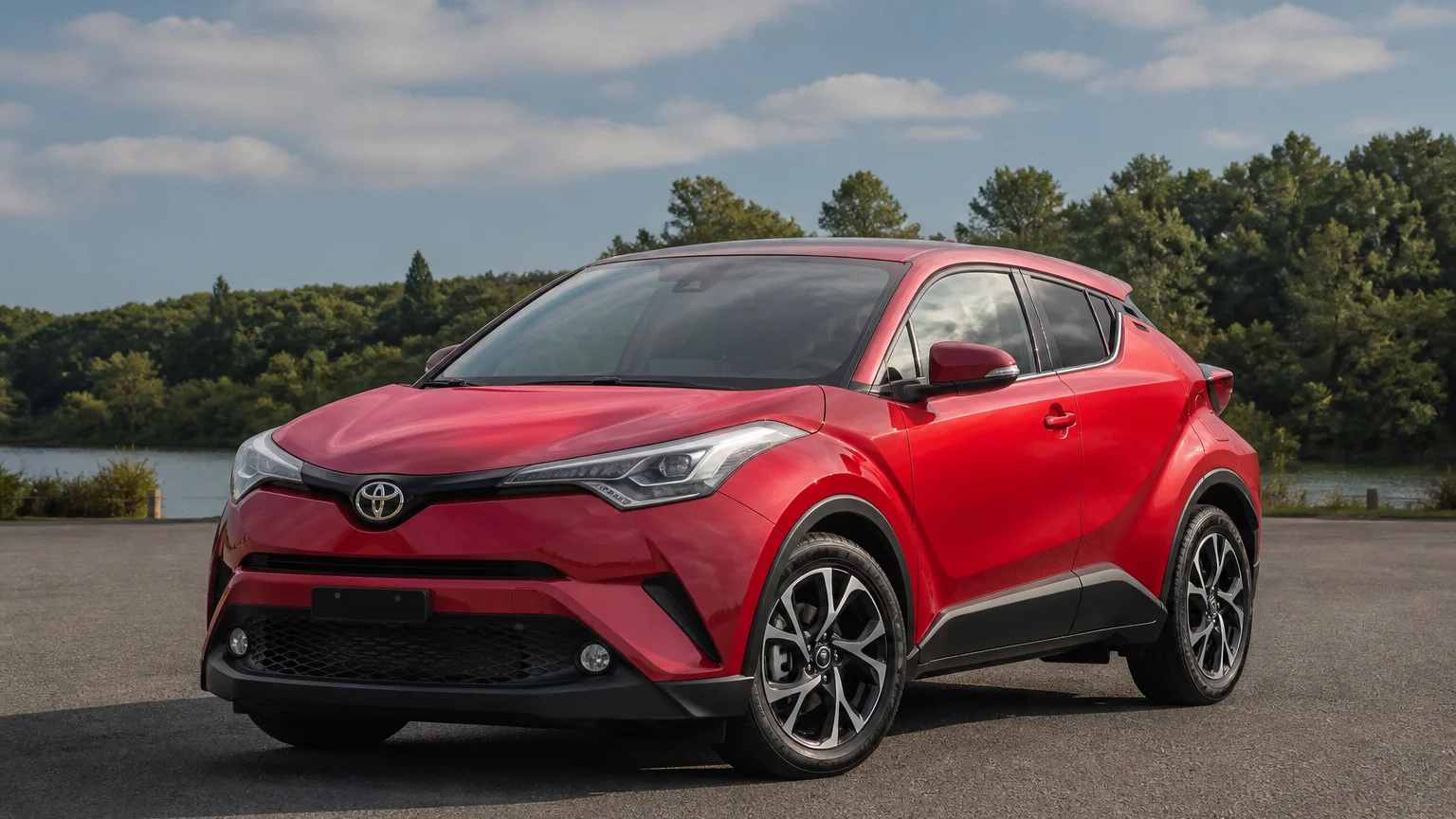
The Toyota C-HR is a genuinely solid subcompact crossover overall, but two specific model years carry a disproportionate share of serious, expensive problems that you'll want to sidestep. This guide uses data from NHTSA complaints and recalls, CarComplaints, RepairPal, IIHS, and the owner community at ToyotaCHRForum.com to rank every year from launch to the model's US discontinuation, so you can buy with confidence.
For generations, engines, and ownership notes in one place, see the Toyota C-HR hub.
Related guides appear in the Toyota years to avoid directory.
At a glance
- Worst years
- 2018
- 2019
- Best years
- 2020
- 2021
- 2022
- Top failure
- CVT transmission bearing failure (2018-2019, CarComplaints worst year by repair cost and mileage-at-failure)
- Always do before buying
- run the VIN through NHTSA's recall checker; on 2018-2019 cars, listen for a high-pitched CVT whine at highway speed before purchase
How we rated the best and worst Toyota C-HR years
The first-generation C-HR's 2018 launch year is both the CarComplaints PainRank worst year and the highest raw NHTSA complaint-volume year, making it the single clearest year to avoid across every dataset consulted.
Our ratings draw on NHTSA complaint and recall data, CarComplaints PainRank (which ranks the worst model year by repair cost and mileage-at-failure, not raw complaint volume), RepairPal recall summaries, IIHS crash-test ratings, Consumer Reports reliability, and owner threads on ToyotaCHRForum.com. Because CarComplaints measures a different dimension than NHTSA complaint volume, the two sources are attributed separately throughout this guide, following a years to avoid methodology that weights repair cost and mileage-at-failure alongside raw complaint volume. For the C-HR, they happen to agree: 2018 is worst on both metrics.
| Toyota C-HR Generation | Best Toyota C-HR Years | Worst Toyota C-HR Years |
|---|---|---|
| 1st Gen (2018-2022) | 2020, 2021, 2022 | 2018, 2019 |
Every Toyota C-HR model year ranked
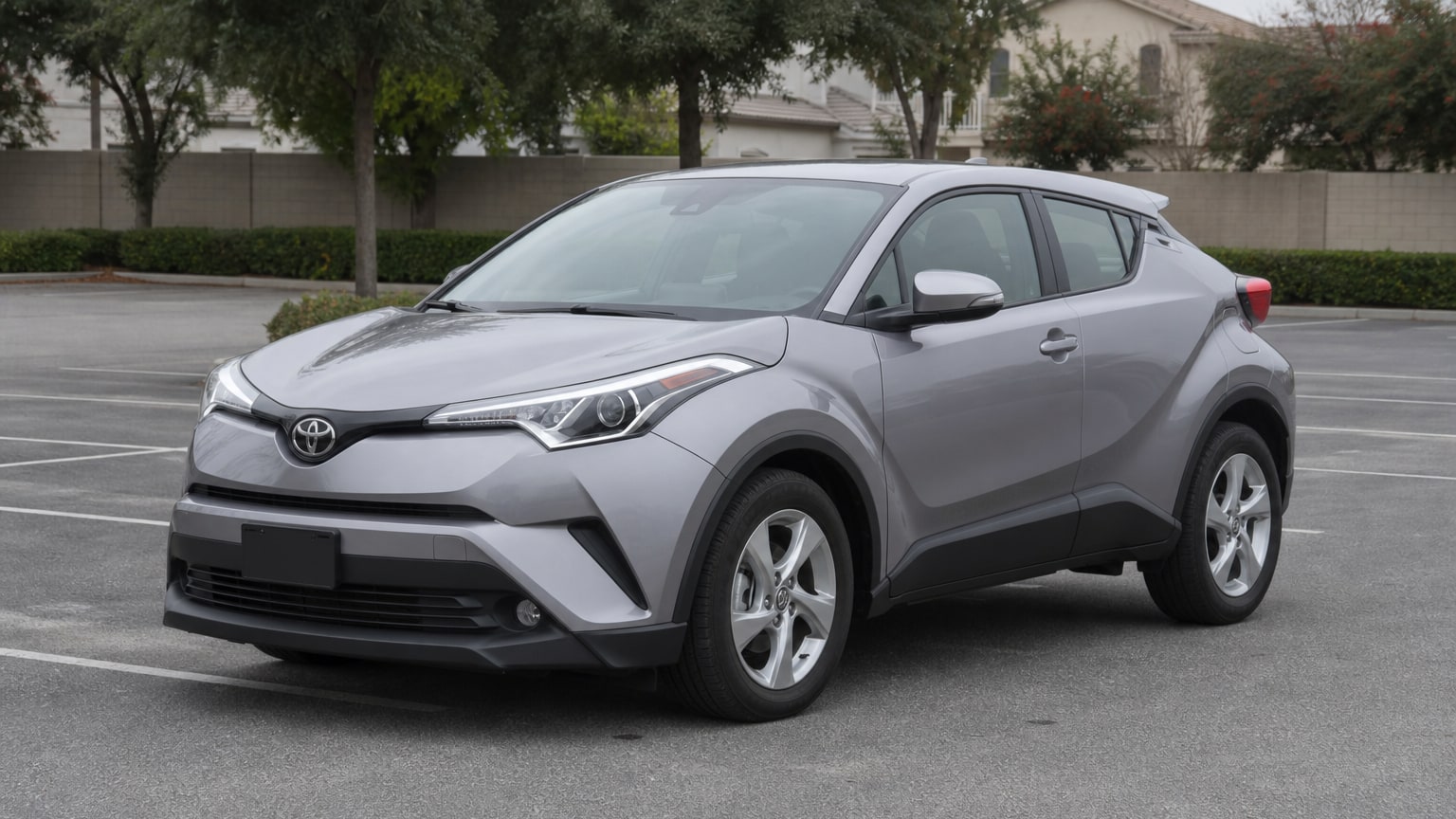
Every US C-HR is part of the same single generation, so the rankings below reflect within-generation complaint and recall data.
| Model Year | Generation | Verdict | Notes |
|---|---|---|---|
| 2018 | 1st Gen | Avoid | Most complaints (281 CarComplaints), highest NHTSA volume, CVT failures, worst CarComplaints PainRank |
| 2019 | 1st Gen | Avoid | 90 CarComplaints complaints, CVT and electrical issues, 3 NHTSA recalls |
| 2020 | 1st Gen | Best | Facelift, Apple CarPlay added, Consumer Reports rates more reliable than same-year class |
| 2021 | 1st Gen | Best | 26 CarComplaints complaints, 39 NHTSA complaints; TSS 2.5 safety suite upgraded |
| 2022 | 1st Gen | Best | Final US year, fewest reported issues, IIHS Good ratings across crash categories |
Most common Toyota C-HR problems
The single biggest documented failure on the C-HR is CVT transmission breakdown, most concentrated on 2018 and 2019 models. Below are the recurring problem categories found in owner and federal complaint data.
1. CVT transmission bearing failure (whine and complete failure)
The C-HR's CVT is often affected by loud whining noises that can eventually lead to expensive gearbox failures, with reports more common in the early model years and 2018 models being the most prone to early transmission failures. The symptom is a high-pitched whine that rises with acceleration and gets louder over time. If the CVT is not regularly serviced, the noise typically starts between 60,000 and 100,000 miles, and this issue affects only North American cars with the 2.0-liter non-hybrid engine mated to a regular CVT.
Hybrid variants of the Toyota C-HR use Toyota's eCVT system with planetary gears, which is far more durable. So if you are comparing trims, the hybrid powertrain carries meaningfully less transmission risk than the gas-only CVT. Forum owners report this as a problem across model years 2018-2021.
The repair bill is severe. Owners have received verbal quotes of around $10,000 for CVT replacement, while some owners report costs of about $12,000 to make the car driveable again. At least one owner with 125,000 miles was quoted $14,000 for CVT failure, and noted Toyota extended warranties only to Canadian residents. No NHTSA safety recall and no confirmed TSB with a manufacturer-issued program number covering a warranty extension for this specific failure on the C-HR appeared in our research; describe any dealer-goodwill assistance as case-by-case only. Buyer takeaway: before buying any 2018 or 2019 C-HR, drive it at highway speed and listen for a whining noise that increases with acceleration; if present, walk away.
2. Windshield chipping and cracking easily
The most-reported single problem on CarComplaints is the 2018 Toyota C-HR's windshield chipping and cracking easily. The 2018 model year has 281 reported problems and defects, with windows and windshield topping the complaint categories.
Owners report that both their C-HRs received windshield damage from rocks, with the glass needing full replacement, and that the model appears to have inferior glass or an improper slant. Cracked windshields on the C-HR can interfere with radar sensors and camera systems that require precise calibration, going beyond simple glass replacement.
Windshield replacement costs around $600 depending on local labor rates, though recalibrating the integrated safety camera system can push the total higher. There is no NHTSA recall covering this defect. Buyer takeaway: inspect the windshield closely on any 2018 or 2019 C-HR and ask whether it has already been replaced.
3. Electronic parking brake malfunction (2018 recall)
The 2018 Toyota C-HR has 1 known NHTSA recall, covering the electronic parking brake, which can disengage after being applied or fail to engage. This is the sole recall issued for the 2018 C-HR by NHTSA.
A parking brake that releases on its own is a genuine safety concern, especially on inclines. The recall repair is free at any Toyota dealership. Recalls don't cost anything to fix, but most are time-limited, so if your car is affected you should contact your local Toyota service department promptly. Buyer takeaway: run the VIN through NHTSA's VIN recall lookup before purchase to confirm this recall has been completed.
4. Pre-collision radar sensor not activated (2021 recall)
A recall affecting approximately 36,558 2021 C-HR vehicles (NHTSA campaign 22V-107) found that the radar sensor may not have been activated during production, leaving the pre-collision system inoperative. The forward collision warning and automatic emergency braking would not function on affected cars, with no warning to the driver.
RepairPal lists this pre-collision system radar sensor recall as the most common recall across the Toyota C-HR model line. The fix is a dealer software/activation procedure at no charge. Buyer takeaway: check any 2021 C-HR's VIN to confirm recall 22V-107 is closed before purchase.
5. Electrical system and AC problems (2018-2019)
The 2019 Toyota C-HR has 90 reported problems and defects on CarComplaints, with AC/heater and electrical problems among the worst complaint categories. Owners on 2018 and 2019 cars report air conditioning that stops cooling properly and various sensor/warning-light malfunctions.
Issues with the 12-volt battery were among the most common complaints from owners who said their C-HR had gone wrong. Some owners also experienced the rearview camera freezing within the first 1,000 miles, which can be resolved through software updates for the stereo system. Most software fixes are available at no cost during a regular dealership service visit. Buyer takeaway: on any 2018-2019 C-HR, test the AC thoroughly, check that no warning lights are illuminated, and confirm the infotainment system's camera functions normally during your test drive.
6. Suspension noise (2018-2019)
A noisy suspension is a prevalent problem reported by owners around 25,000 miles, often caused by components becoming loose as the SUV ages. NHTSA received 1 owner complaint about 2018 C-HR suspension on CarComplaints' tally.
Diagnosing and repairing a noisy suspension can cost under $100, but if new parts are needed the cost can exceed $500. This is one of the less severe issues on the C-HR, but it is worth checking during a test drive - particularly any clunks or rattles from the front end over bumps. Buyers who notice uneven tire wear alongside suspension noise should look into tire balancing and have a full suspension inspection done before committing.
Checking a used Toyota?
Scan for hidden fault codes from your phone in minutes — before you buy.
REREV may earn a commission if you sign up through this link. Learn more.
Which Toyota C-HR years should you avoid
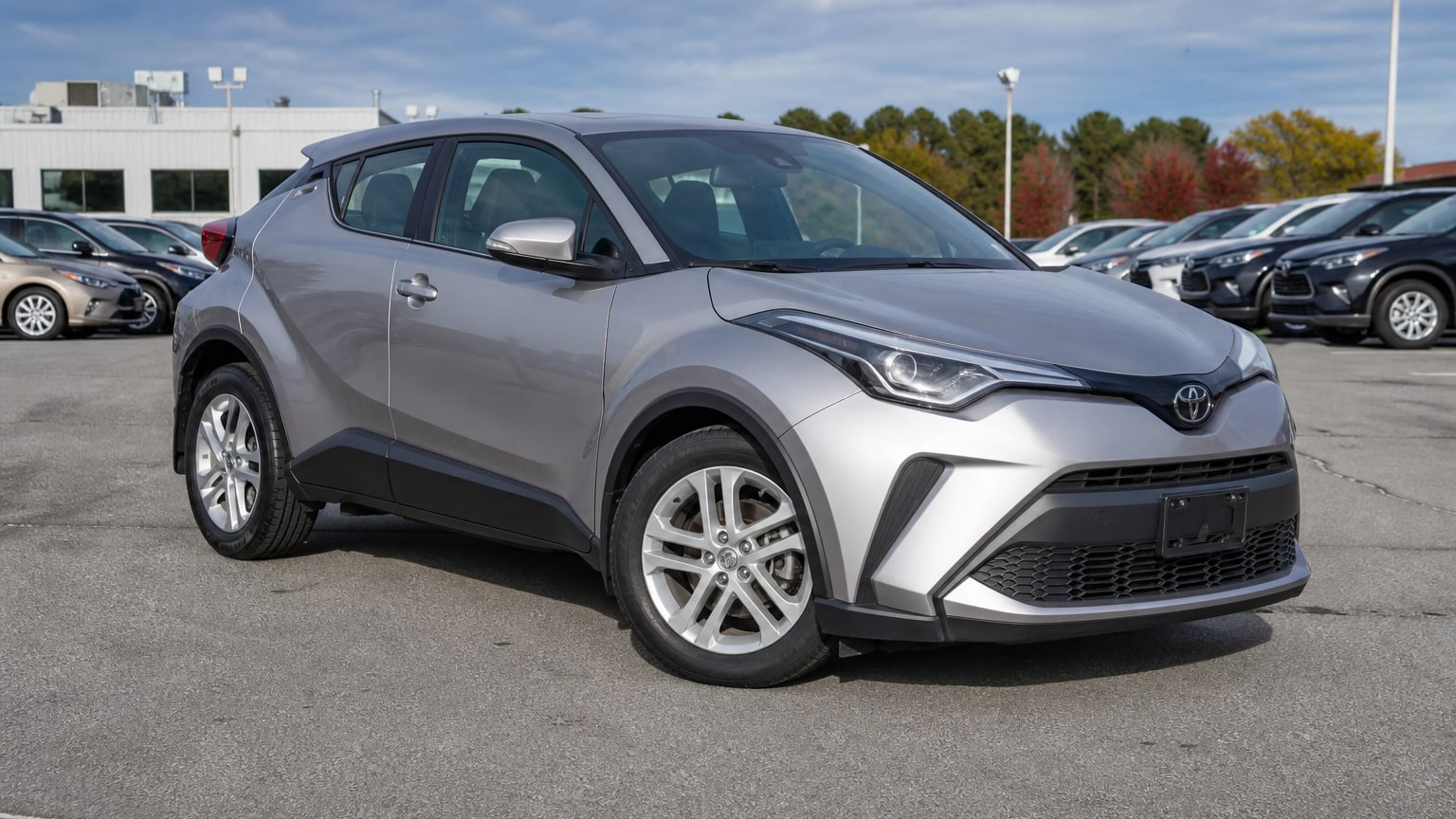
The Toyota C-HR years to avoid are 2018 and 2019. CarComplaints rates the 2018 as the worst model year on several factors including repair cost and average mileage when problems occur, while the 2018 C-HR also logged the most NHTSA complaints of any model year. In a model lineup that ran only five years, those two sources pointing to the same year is a clear signal.
| Toyota C-HR Generation | Model Years | Verdict | Main Issues |
|---|---|---|---|
| 1st Gen | 2018, 2019 | Avoid | CVT failure, windshield cracking, electrical/AC faults, parking brake recall |
| 1st Gen | 2020, 2021, 2022 | Best | Low complaint counts, updated safety tech, IIHS Good crash ratings |
1st-generation Toyota C-HR (2018-2019)
The 2018 Toyota C-HR has 281 problems and defects reported by C-HR owners on CarComplaints, the highest count across any model year. On NHTSA's side, the drivetrain category alone drew 131 complaints for the 2018 model - a figure dominated by CVT bearing failures with repair quotes regularly running $10,000 or more.
The 2019 C-HR has 90 CarComplaints complaints, with AC/heater and electrical problems among the worst-rated categories. The 2019 C-HR carries 3 NHTSA recalls and 101 owner complaints in NHTSA's database. Both years share the CVT whine failure pattern, the windshield cracking complaint, and early electrical issues that the 2020 facelift addressed.
What are the best Toyota C-HR years to buy
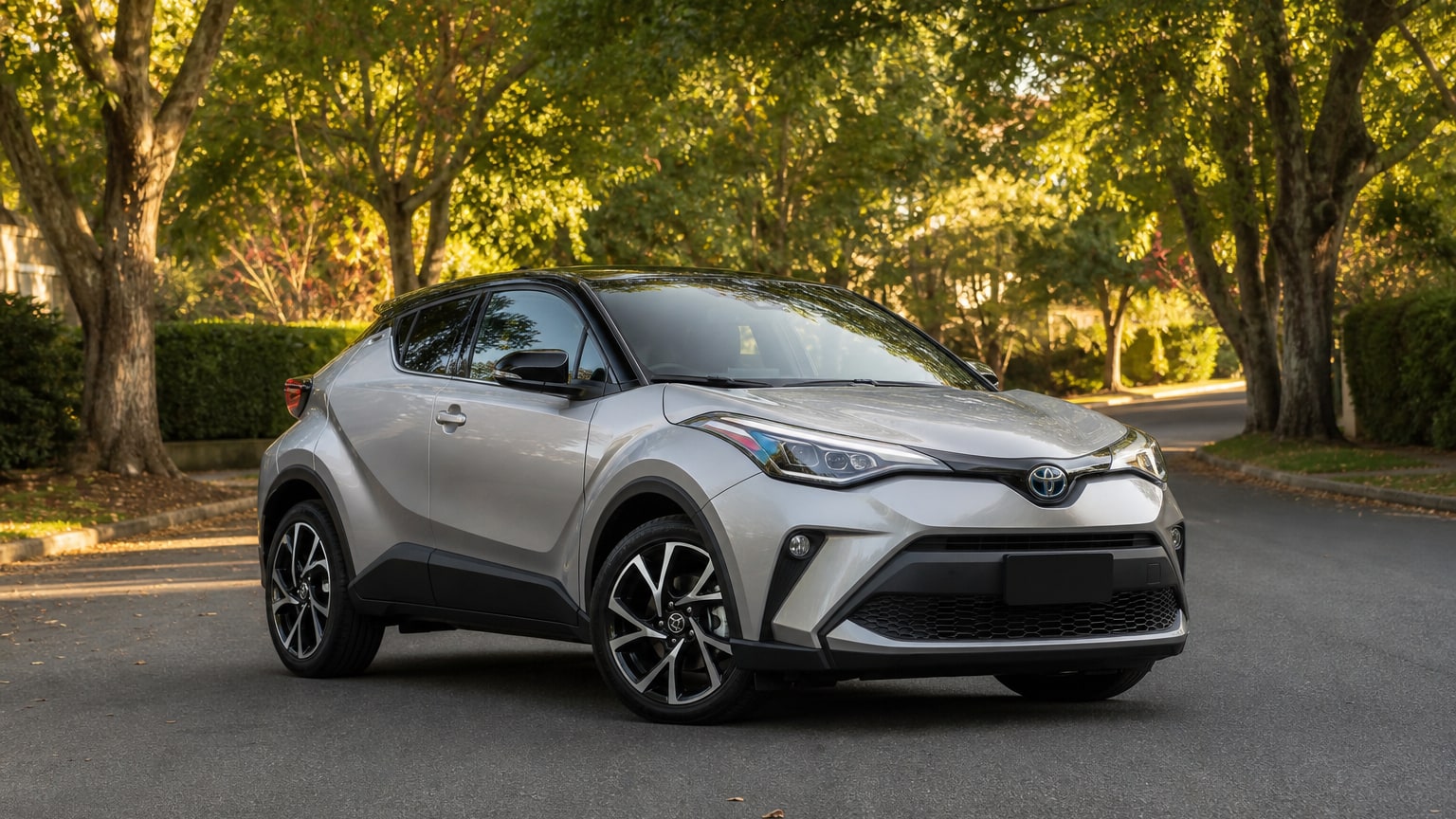
The most reliable Toyota C-HR years are 2022, 2021, and 2020, offering strong reliability and fewer owner complaints.
| Best Toyota C-HR Year | Why It's a Strong Buy |
|---|---|
| 2022 | Final US year; fewest complaints; IIHS Good across all crash categories |
| 2021 | 26 CarComplaints complaints; upgraded Toyota Safety Sense 2.5; low NHTSA complaint volume |
| 2020 | Facelift year; Apple CarPlay and Android Auto added; Consumer Reports rates more reliable than class average |
2022 Toyota C-HR
The 2022 C-HR is the final model year produced and the most reliable according to NHTSA data. IIHS rates the 2022 C-HR Good across all crashworthiness categories including small overlap front (driver and passenger), moderate overlap front, side, roof strength, and head restraints. Front crash prevention earns a Superior rating from IIHS for both vehicle-to-vehicle and pedestrian detection scenarios.
The 2022 model year is the most dependable, with fewer mechanical failures, and owners report fewer transmission and infotainment issues compared to earlier years. Since the 2022 is the last US model year, supply is finite, but finding one with documented service history is your safest used-car bet in this lineup.
2021 Toyota C-HR
The 2021 Toyota C-HR has just 26 problems and defects reported by C-HR owners on CarComplaints - roughly one-tenth of the 2018's count. For the 2021 model year, Toyota upgraded its Safety Sense system to TSS 2.5, adding improved low-light pedestrian detection and lane-centering assist to the standard suite. The one notable caveat is the 22V-107 radar recall; confirm it is closed on any specific 2021 VIN before buying.
2020 Toyota C-HR
The 2020 model year introduced a facelift with updated infotainment, including Apple CarPlay and Android Auto. Consumer Reports rates the 2020 C-HR as more reliable than other cars from the same model year. It carries 1 NHTSA recall related to the tire information placard (a minor paperwork noncompliance, not a mechanical defect), making it one of the cleanest used-car picks in the lineup.
Toyota C-HR pre-purchase checklist
Run through these checks before any used C-HR purchase to avoid costly surprises:
- Run the VIN through NHTSA's recall checker (nhtsa.gov/recalls) to confirm every open campaign is closed - especially the 2018 parking brake recall and the 2021 pre-collision radar recall (22V-107).
- On 2018-2019 cars, test drive at highway speed and listen for CVT whine. A high-pitched whine that increases with acceleration is an early sign of bearing failure; low transmission fluid can accelerate the damage, so check the CVT fluid level and condition before buying.
- Inspect the windshield carefully on any 2018-2019 C-HR. Look for existing cracks or previous replacement; a replaced windshield is not a problem in itself, but confirm the safety-camera system was recalibrated after the swap.
- Test the AC and all electronics. On 2018-2019 models, run the AC on maximum cold for several minutes and cycle through all infotainment screens to catch known electrical faults.
- Ask for full CVT service records. Toyota's CVT requires fluid changes every 30,000-40,000 miles; a car with no fluid-change history is at elevated risk of the bearing failure described above.
- Check for suspension noise over bumps. Drive over a speed bump or rough patch at low speed to check for clunks from the front end; this is straightforward to catch and can indicate loose components needing repair.
- Confirm the 2021 pre-collision radar recall is closed. The radar sensor activation failure (22V-107) is a safety-critical item; any 2021 C-HR without confirmation of completed repair should be brought to a Toyota dealer for the fix before driving.
Better alternatives to consider
If the C-HR years in your budget land on the avoid list, consider these alternatives instead:
-
Toyota RAV4 - a larger, more proven Toyota crossover with AWD availability, a longer production run, and a deeper used-car pool to choose from
-
The Honda CR-V is a subcompact crossover in the same price band with a simpler powertrain and a less concentrated complaint history than the early C-HR
-
The Subaru Forester is a practical all-wheel-drive alternative for buyers who want capable crossover dynamics with a well-documented year-by-year reliability record
-
Subaru WRX - a sporty all-wheel-drive alternative for buyers who want the coupe-adjacent styling of the C-HR but with full AWD capability and a well-documented year-by-year reliability record
Is the Toyota C-HR worth buying
Yes, the Toyota C-HR is worth buying - as long as you stick to 2020, 2021, or 2022. The 2022 C-HR earns Good ratings across all IIHS crashworthiness categories, and advanced safety features including forward collision warning and automatic emergency braking are standard equipment. RepairPal notes that the C-HR has 5 known recalls across its full production run, most of which are closed on later-year cars. The 2018 and 2019 models carry real financial risk from CVT replacement costs that can exceed the car's market value. Our editorial guidelines for vehicle research require cross-referencing complaint volume with repair cost data, which is why the 2018 consistently surfaces as the single year to avoid across every source consulted. Run your prospective VIN through NHTSA's recall database, confirm CVT fluid maintenance history, and the later-generation C-HR is a reliable, fuel-efficient, and distinctively styled used buy.
Frequently asked questions
What are the best Toyota C-HR years to buy?
The best Toyota C-HR years to buy are 2020, 2021, and 2022, which offer strong reliability and fewer owner complaints. The 2022 is the top pick for its fewest reported issues and IIHS Good crash scores across every category; the 2021 follows closely with only 26 CarComplaints reports.
What are the worst years for the Toyota C-HR?
The worst Toyota C-HR years are 2018 and 2019. CarComplaints rates the 2018 as the worst model year based on repair cost and average mileage when problems occur. The 2019 adds 3 NHTSA recalls and a continued CVT and electrical complaint pattern.
Which year Toyota C-HR is most reliable?
The 2022 C-HR is the most reliable model year, per NHTSA data. It is the final US production year, carries the fewest CarComplaints reports, and earns IIHS Good ratings across all crashworthiness tests, making it the strongest pick in the used-car market.
What year Toyota C-HR has the worst transmission problems?
The 2018 model is the most prone to early CVT transmission failures, followed by 2019. The symptom is a high-pitched whine from the CVT bearing that appears as early as 60,000 miles and typically requires full transmission replacement at $10,000 or more. No confirmed NHTSA safety recall was issued for this defect; Toyota offered case-by-case goodwill assistance to some owners, particularly in Canada.
How long does a Toyota C-HR last?
A well-maintained Toyota C-HR can reach 200,000 miles or more, consistent with Toyota's broader reputation. The key qualifier for the C-HR is CVT fluid maintenance: CVTs are intolerant of poor or skipped fluid changes, and fluid maintenance should be done every 30,000 to 40,000 miles. At least one forum owner who performed three fluid services reports their car running at close to 156,000 miles without transmission failure. Understanding how many miles is considered high for a used car can help you set realistic mileage expectations when shopping any used C-HR.