
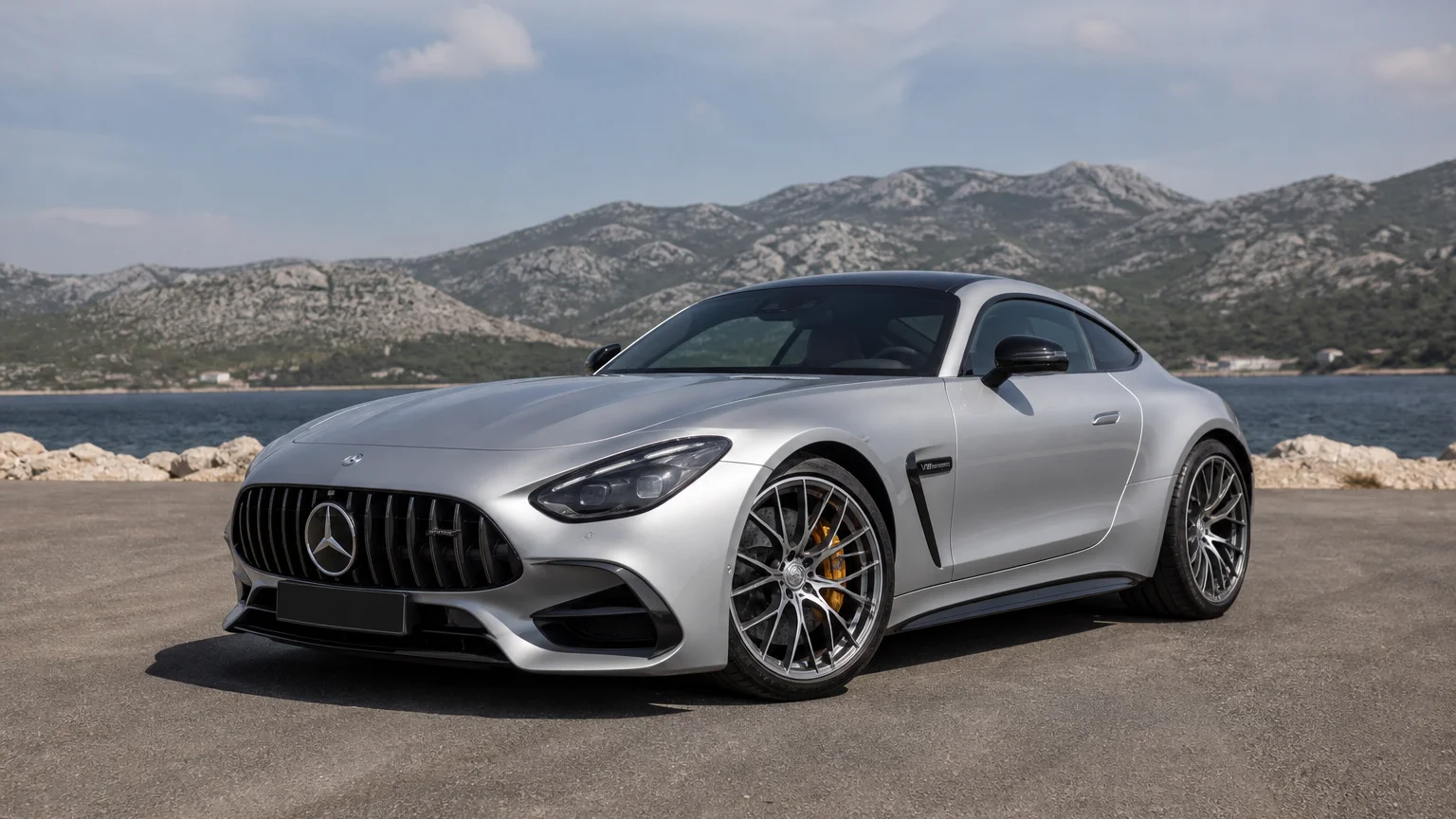
The Mercedes-Benz AMG GT is one of the most rewarding sports cars you can buy used, but two early C190-generation model years carry safety recalls serious enough to affect your purchase decision. Before you sign on a used example, you need to know which years drew the most NHTSA complaints, which carry unresolved recall risk, and which post-facelift cars give you the best combination of performance and peace of mind. This guide ranks every AMG GT model year using data from NHTSA, CarComplaints, RepairPal, and owner reports from MBWorld.org so you can buy with confidence.
For generations, engines, and ownership notes in one place, see the Mercedes-Benz AMG GT hub.
Related guides appear in the Mercedes-Benz years to avoid directory.
At a glance
- Worst years
- 2016
- 2017
- Best years
- 2019
- 2020
- 2021
- Top failure
- C190-generation carbon-fiber driveshaft bond failure (NHTSA recall 16V-308, expanded; 2016-2018 AMG GT)
- Always do before buying
- Run the VIN through NHTSA's recall checker to confirm every open recall is closed, plus physically verify the driveshaft recall status on any 2016-2018 car
How We Rated the Best and Worst Mercedes-Benz AMG GT Years
The 2016 and 2017 C190-generation AMG GTs are the years to approach most carefully, driven by a carbon-fiber driveshaft recall, an eCall software recall, and the highest relative NHTSA complaint volume in the model’s history. Ratings here draw from NHTSA complaint and recall data, CarComplaints PainRank scoring, RepairPal repair-cost data, and owner discussion on MBWorld.org. CarComplaints ranks a “worst year” by repair cost and mileage-at-failure (its PainRank), while NHTSA shows raw complaint volume - they measure different things and can point to different years. For the AMG GT, NHTSA-based complaint volume data flags 2016 and 2020 as the higher-volume years, based on raw NHTSA complaint counts. CarComplaints has limited AMG GT-specific PainRank data due to the model’s low sales volume; the 2016 Mercedes-Benz AMG GT has 7 complaints reported on CarComplaints, which is the most of any single model year in their database for this vehicle. Our years to avoid methodology weighs complaint volume, recall severity, and mileage-at-failure together rather than relying on any single data source.
| Mercedes-Benz AMG GT Generation | Best Mercedes-Benz AMG GT Years | Worst Mercedes-Benz AMG GT Years |
|---|---|---|
| 1st Gen C190 (2016-2022) | 2019, 2020, 2021 | 2016, 2017 |
| 2nd Gen C192 (2024+) | Insufficient used-market data | Insufficient used-market data |
Every Mercedes-Benz AMG GT Model Year Ranked
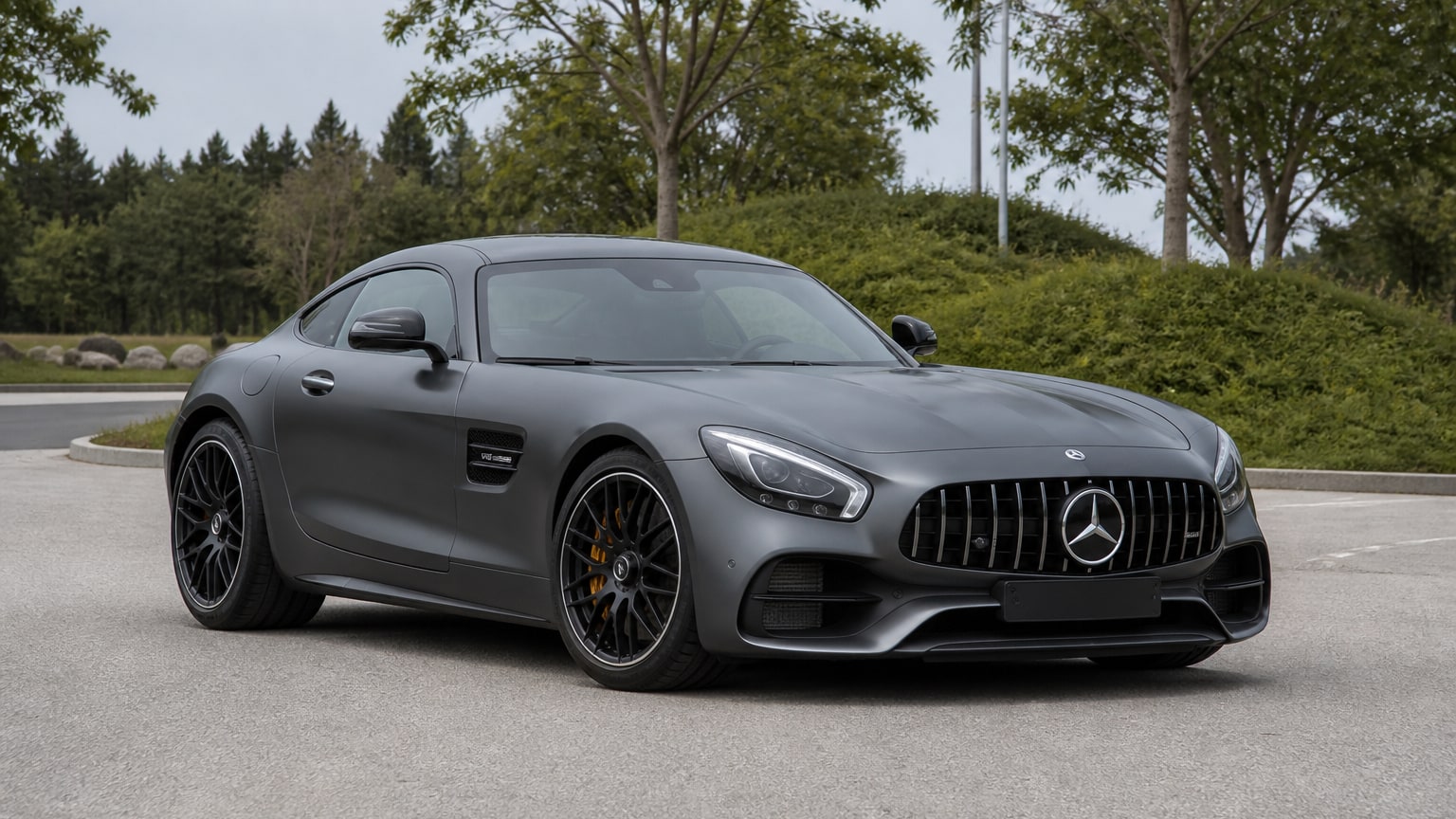
The C190 runs from 2016 through 2022 in the US market, with the facelift arriving for 2018; the C192 began for model year 2024. The Mercedes-AMG GT C190 is the first generation of 2-door sports cars produced by Mercedes-AMG, with production running from October 2014 through September 2022. The C192 is still too new to generate used-market reliability patterns.
| Model Year | Generation | Verdict | Notes |
|---|---|---|---|
| 2016 | C190 (1st Gen) | Avoid | Driveshaft recall, eCall recall, highest complaint volume |
| 2017 | C190 (1st Gen) | Avoid | Driveshaft recall expanded, eCall recall, multiple campaigns |
| 2018 | C190 (1st Gen, facelift) | OK/Mixed | Seat belt recall, driveshaft recall also covers some units; cleaner than 2016-17 |
| 2019 | C190 (1st Gen, facelift) | Best | eCall SIM recall resolved OTA; lower complaint volume |
| 2020 | C190 (1st Gen, facelift) | Best | Fuel injector recall shared across many MB models; otherwise strong |
| 2021 | C190 (1st Gen, facelift) | Best | Black Series year; low complaint count |
| 2022 | C190 (1st Gen, facelift) | OK/Mixed | Final C190 year; limited used-market data |
| 2024 | C192 (2nd Gen) | OK/Mixed | New generation; insufficient used-market data |
| 2025 | C192 (2nd Gen) | OK/Mixed | Too new; 1 NHTSA recall logged |
Most Common Mercedes-Benz AMG GT Problems
The single biggest documented failure on the AMG GT is the carbon-fiber driveshaft bond separation on early C190 cars, which triggered a safety recall and an NHTSA stop-sale order. The most frequently reported problem areas across the AMG GT’s history are the electrical system, transmission, and engine. Below are the four most documented failure categories, ordered from most to least serious.
1. Carbon-Fiber Driveshaft Bond Failure (2016-2018)
The bonding between the carbon-fiber driveshaft and the engine/transmission flange may be insufficient, causing the driveshaft to separate while in motion and a subsequent loss of drive, increasing the risk of a crash. The symptom is sudden loss of power delivery to the rear wheels, which can feel like an abrupt deceleration at speed.
The problem is caused by residue remaining from the production process on the bonding surfaces between the carbon-fiber driveshaft and the flange, affecting 2016 to 2018 model year cars, with a total of 1,522 units carrying a 100% estimated defect rate. The initial recall (NHTSA campaign 16V-308) covered 136 units of the 2016 AMG GT S; in addition to the recall, NHTSA issued a stop-sale order for the 2016 Mercedes-AMG GT S. A subsequent expanded campaign covered 2016-2017 AMG GT S and 2017 AMG GT vehicles as well. Dealers inspect and replace the carbon-fiber driveshaft, as necessary, free of charge.
If you are shopping a 2016, 2017, or 2018 AMG GT, run the VIN through NHTSA’s recall checker to confirm the driveshaft inspection has been completed. If the adhesive bond fails and results in a loss of torque to the rear wheels, the vehicle operator may be unable to move the vehicle, or may experience deceleration if the vehicle is in motion, increasing the risk of a crash. This is the single most safety-critical check for any early C190 purchase.
2. Emergency Call (eCall) System Software Fault (2016-2017)
A software fault may cause the date and time for the emergency call system (eCall) to differ from the actual date and time, potentially relaying an inaccurate vehicle location. The practical risk is that in a crash, emergency responders could be sent to the wrong location. Failure of the eCall system may result in emergency responders being dispatched to the wrong location, increasing the risk of injury following a crash.
Mercedes-Benz initiated an over-the-air (OTA) remote software update, and dealers also check and update the communication module software free of charge for affected 2016-2017 cars. The recall began December 23, 2019. Confirm this fix has been applied before purchase. Because the OTA update may or may not have been received depending on the car’s connectivity history, a dealer scan is the only sure way to verify the repair.
3. Communication Module SIM Card Failure (2019-2021)
On certain 2017-2022 AMG GT-Class vehicles, a defect in the communication module may prevent it from establishing a connection with a mobile phone network, making the manual and automatic eCall function unavailable and potentially precluding or delaying the arrival of emergency responders. NHTSA recall 22V-365 covers this issue on 2019-2021 AMG GT vehicles, with 530 affected units identified. The recall population for the AMG GT under 22V-365 was 530 vehicles in the 2019-2021 model years.
This is a software/hardware fix at the dealer and does not affect driveability. It is less immediately dangerous than the driveshaft issue, but eCall availability is a legal safety requirement. Always verify 22V-365 is resolved on any 2019-2021 car.
4. Fuel Rail and Injector Leak (2016-2020)
On certain 2016-2020 AMG GT 4-door Coupe and other platform vehicles with a gasoline engine, a leak may develop between the fuel rail and fuel injector due to trapped particles from the production process. Trapped debris might damage the seal between the fuel rail and fuel injector, which over the life of the vehicle might result in a fuel leak into the engine. A fuel leak into a hot engine bay is a fire risk, not just a driveability concern.
This issue was addressed under NHTSA recall 21V-961, which covered the 2016-2020 AMG GT 4-door Coupe platform among a wide range of other Mercedes-Benz models. Regular coolant checks and replacing hoses proactively can prevent major repairs on the high-output M178 engine, and a general under-hood inspection before purchase is the best safeguard. Ask the seller for proof that recall 21V-961 has been completed. A burning smell from under the hood is one of the early symptoms of a fuel or coolant leak.
5. Dual-Clutch Transmission Hesitation and Fluid Issues (2016-2022)
The AMG GT features a rear-mounted 7-speed dual-clutch transmission. Transmission is one of the most frequently reported problem areas across the AMG GT’s NHTSA complaint history. Owners on MBWorld.org describe slow or hesitant engagement in stop-and-go traffic, particularly on cars with deferred fluid maintenance. The dual-clutch unit runs at the rear transaxle and requires Mercedes-approved fluid at the manufacturer’s specified intervals.
Mercedes recommends servicing the transmission every 30,000 to 60,000 miles, depending on driving style. On an AMG-spec dual-clutch, skipping fluid changes can accelerate clutch-pack wear and lead to rough shifts that worsen over time. A transmission fluid leak when parked is an early warning sign that seals may be deteriorating. Transmission rebuilds on Mercedes-AMG models typically run $4,000 to $8,000, and replacements start at $4,000 and climb from there. Ask for documented transmission service history on any C190 before purchase.
Which Mercedes-Benz AMG GT Years Should You Avoid
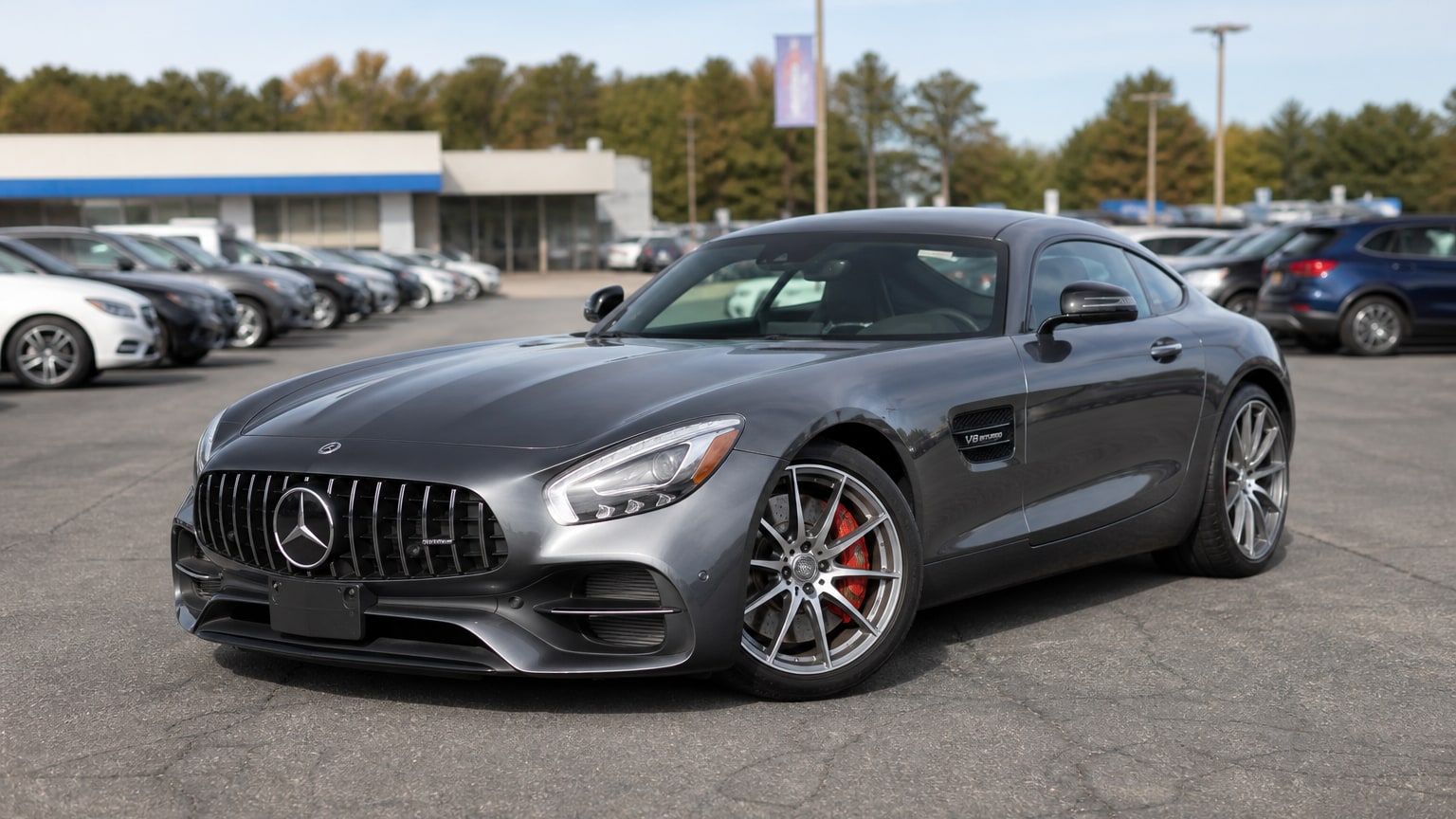
The Mercedes-Benz AMG GT years to avoid are 2016 and 2017. Both carry the carbon-fiber driveshaft bond failure recall (NHTSA 16V-308 and its expansions), the eCall software recall, and the highest relative NHTSA complaint volumes in the model’s production run. NHTSA-based data flags 2016 as one of the higher-complaint years for the AMG GT, and CarComplaints records the 2016 as the year with the most filed complaints in its AMG GT database, at 7.
| Mercedes-Benz AMG GT Generation | Model Years | Verdict | Main Issues |
|---|---|---|---|
| C190 1st Gen - early | 2016, 2017 | Worst | Driveshaft recall, eCall recall, elevated complaint volume |
| C190 1st Gen - facelift | 2018 | Mixed | Seat belt and driveshaft recall on some VINs |
| C190 1st Gen - facelift | 2019, 2020, 2021 | Best | Lower complaint count, recalls resolved OTA or at dealer |
| C190 1st Gen - final | 2022 | Mixed | Final production year; limited data |
| C192 2nd Gen | 2024+ | Mixed | Too new for used-market reliability pattern |
1st-Generation Mercedes-Benz AMG GT C190 - Worst Years (2016-2017)
MBUSA recalled certain 2016 AMG GT S vehicles; in those vehicles, the adhesive bond between the carbon-fiber driveshaft and the rear flange may fail, resulting in a loss of torque to the rear wheels. NHTSA issued a stop-sale order for the 2016 Mercedes-AMG GT S; anticorrosive residues not sufficiently removed by the supplier caused the driveshaft to separate from the flange and spin freely, resulting in a loss of drive between the engine and the transaxle.
The 2017 model year extended the driveshaft risk through a separate recall campaign. MBUSA recalled certain 2016-2017 AMG GTS and 2017 AMG GT vehicles for insufficient bonding between the carbon-fiber driveshaft and the engine/transmission flange. Together, these two years account for the bulk of the AMG GT’s documented safety-recall exposure. Always check NHTSA’s AMG GT complaint and recall records before committing to either year.
What Are the Best Mercedes-Benz AMG GT Years to Buy
The best used AMG GT years are 2019, 2020, and 2021 - post-facelift C190s that clear the worst of the driveshaft recall exposure and carry lower relative NHTSA complaint volumes.
| Best Mercedes-Benz AMG GT Year | Why It's a Strong Buy |
|---|---|
| 2019 | Post-facelift; eCall SIM issue resolved OTA; lower complaint count |
| 2020 | Strong NHTSA complaint profile; fuel injector recall shared across wide MB fleet and easily verified |
| 2021 | Final high-water-mark C190 year, including Black Series; low documented complaint count |
2019 Mercedes-Benz AMG GT
The 2019 is a strong entry point into the post-facelift C190 range. The C190 facelift adopted the Panamericana grille and expanded the model range more clearly, and the 2019 model benefits from two additional years of production refinement over the 2016 launch cars. The 2019-2021 AMG GT had 530 vehicles covered under the 22V-365 eCall SIM recall, which is resolvable at any Mercedes-Benz dealer - confirm it is closed before purchase. Based on NHTSA complaint data, the 4.0-liter V8 engine has the lowest complaint density and is considered the most reliable engine choice for buyers.
2020-2021 Mercedes-Benz AMG GT
The 2020 and 2021 models represent the most mature versions of the C190 platform. The AMG GT can be a solid used car purchase depending on trim, mileage, and maintenance history; with a relatively low total NHTSA complaint count on record, prospective buyers should review known problem areas and check for open recalls before buying. The 2021 also includes the track-focused Black Series, which carries its own dedicated ownership following and has documented wheel-speed sensor wiring harness recall coverage. MBUSA recalled certain 2021 AMG GT Black Series vehicles because the wiring harness for the front wheel speed sensor may be the incorrect length, which could result in damage to the harness during certain driving conditions. Verify that recall is closed on any 2021 Black Series VIN. Understanding which Mercedes class is the best fit for your needs can also help you evaluate whether the AMG GT’s two-seat, track-oriented character matches your priorities before you buy.
Mercedes-Benz AMG GT Pre-Purchase Checklist
Before you buy any used AMG GT, go through these model-specific checks in addition to a standard pre-purchase inspection. Our editorial guidelines require that every recommendation in this checklist be grounded in documented NHTSA recall data or owner-reported failure patterns, not manufacturer claims alone.
- Run the VIN through NHTSA’s recall checker: Confirm every open recall is closed, especially the driveshaft campaign (16V-308 and its expansions) on 2016-2018 cars, the eCall software recall on 2016-2017 cars, and the eCall SIM recall (22V-365) on 2019-2021 cars.
- On any 2016-2018 car, ask for written proof of driveshaft replacement: The driveshaft recall for 2016-2017 AMG GTs involves the bonding between the driveshaft and transmission flange; dealers replace the carbon-fiber driveshaft and flange, and a copy of the repair order is the only way to confirm it was done.
- Check for unusual vibration or hesitation under the rear of the car: A whining noise when accelerating from a rear-mounted dual-clutch can signal deferred fluid maintenance or early clutch-pack wear in the 7-speed transaxle.
- Ask for full transmission service records: Mercedes recommends servicing the transmission every 30,000 to 60,000 miles depending on driving style. On a high-output AMG, skipping that interval can accelerate gearbox wear significantly.
- Inspect under the hood for fuel or coolant seepage: The fuel rail/injector recall (21V-961) covered 2016-2020 AMG GT 4-door Coupe variants; a dealer can scan for completion. Regular coolant checks and replacing hoses proactively can prevent major repairs.
- On 2021 Black Series cars, verify the wheel-speed sensor harness recall is closed: The wiring harness for the front wheel speed sensor may be the incorrect length, which could result in damage to the harness during certain driving conditions.
- Request a pre-purchase inspection by a Mercedes-Benz specialist: The M178 4.0-liter twin-turbo V8 and the rear-mounted dual-clutch both require familiarity with AMG-specific torque specs and fluid types; a general shop is not the right setting for this inspection.
Better Alternatives to Consider
If the AMG GT years in your budget land on the avoid list, consider these alternatives instead:
-
Porsche 911 - the benchmark sports car in the AMG GT’s price class, with a longer production run, strong dealer-network support, and a well-documented model-year reliability record across multiple generations.
-
Audi R8 - naturally aspirated V10 option in a similar price bracket, with a mid-engine layout and a comparable low-volume sports-car profile, making it a direct cross-shop for buyers who want a European two-seat GT.
-
Mercedes ML350 - if you want to stay within the Mercedes-Benz family but need more practicality and a broader used-market selection than the AMG GT provides.
-
Mercedes S550 - for buyers considering a luxury-first Mercedes-Benz with more cabin space and a longer, better-documented reliability history.
Is the Mercedes-Benz AMG GT Worth Buying
Yes, the AMG GT is worth buying as long as you avoid the 2016 and 2017 model years. The 2019-2021 cars give you the full post-facelift C190 experience with the driveshaft recall safely behind them and relatively low NHTSA complaint exposure. The 4.0-liter V8 engine has the lowest complaint density across the AMG GT range and is considered the most reliable engine choice for buyers. The 2025 Mercedes-Benz AMG GT has been recalled 1 time by NHTSA, suggesting the C192 generation is off to a cleaner start than the C190’s launch years. Run the VIN through NHTSA’s recall checker and ask for documented maintenance and service history - those two steps will tell you more about a specific car than any model-year ranking alone.
Frequently Asked Questions
What are the best Mercedes-Benz AMG GT years to buy?
The best Mercedes-Benz AMG GT years to buy are 2019, 2020, and 2021. These post-facelift C190 cars cleared the early driveshaft recall, carry lower relative NHTSA complaint volumes, and benefit from production refinements introduced with the 2018 facelift. Based on NHTSA complaint data, the 4.0-liter V8 configuration found across these years has the lowest complaint density in the AMG GT lineup.
What are the worst years for the Mercedes-Benz AMG GT?
The worst years for the Mercedes-Benz AMG GT are 2016 and 2017. MBUSA recalled 2016 AMG GT S vehicles because the adhesive bond between the carbon-fiber driveshaft and the rear flange may fail, causing a loss of torque to the rear wheels. The 2017 model shares the expanded driveshaft recall and the eCall software recall, making both years the highest-risk buys in the lineup.
Which year Mercedes-Benz AMG GT is most reliable?
The 2019 AMG GT is the most reliable pick among the used C190 cars currently available. It clears the driveshaft recall window entirely, benefits from the 2018 facelift’s refinements, and shows a fairly consistent and moderate complaint pattern relative to other model years, with no significant complaint spikes. On a per-year basis, the 2019 has the cleanest combination of recall status and complaint volume in the lineup.
What year Mercedes-Benz AMG GT has driveshaft problems?
The 2016 and 2017 model years are the ones most closely associated with the carbon-fiber driveshaft bond failure. The 2016 to 2018 model year cars that left the factory between July 2015 and March 2017 are affected, with a total of 1,522 units at a 100% estimated defect rate. Dealers replace the carbon-fiber driveshaft, including the flange, free of charge under the recall - but only if the repair has not already been completed, so verifying that service record is essential before purchase.
How long does a Mercedes-Benz AMG GT last?
The AMG GT’s M178 4.0-liter twin-turbo V8 is designed to handle significant power output for many years when properly serviced. The AMG GT can be a solid used car purchase depending on trim, mileage, and maintenance history. Owner accounts on MBWorld forums report high-mileage examples in the six-figure range running well with regular oil changes and transmission fluid services. The key longevity factors are documented oil change history, adherence to the 30,000-to-60,000-mile transmission service schedule, and confirmation that all open recalls have been resolved.