
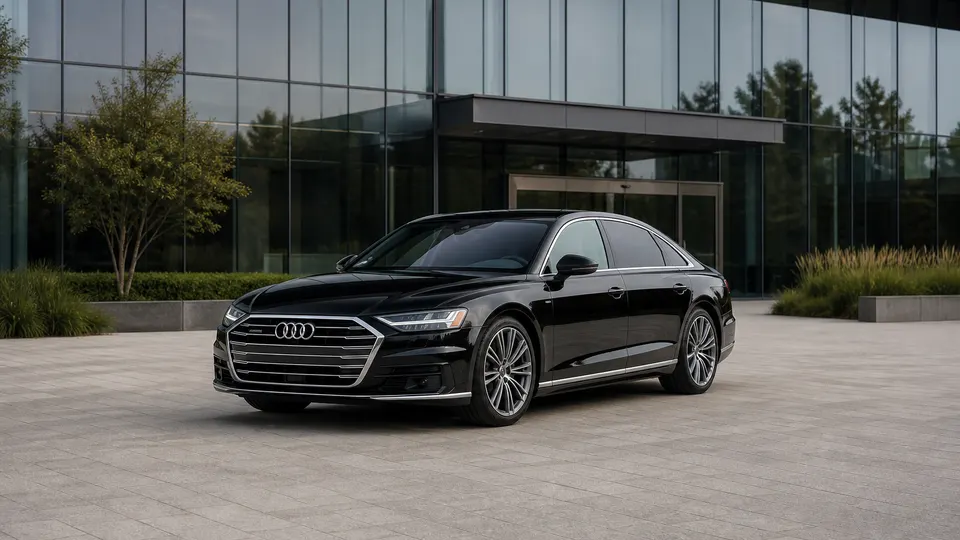
The Audi A8 is one of the most accomplished full-size luxury sedans on the market, and the majority of its model years deliver a refined, dependable experience. That said, a cluster of third-generation years carries documented turbocharger, cooling, and fuel-system problems that can turn a bargain into a five-figure repair bill. This guide uses NHTSA complaint data, CarComplaints PainRank scores, and owner reports to help you pick the right year.
For generations, engines, and luxury-sedan buying notes in one place, see the Audi A8 hub.
At a glance
- Worst years
- 2013
- 2014
- 2015
- Best years
- 1999
- 2001
- 2006
- 2009
- 2020
- 2021
- Top failure
- 3rd-gen (2013-2017) twin-turbo oil strainer failure causing engine stall (CarComplaints / NHTSA recall 22V-178)
- Always do before buying
- run the VIN through NHTSA's recall checker, plus on 2013-2017 cars confirm recall 22V-178 (oil strainer / turbocharger) has been completed
How we rated the best and worst Audi A8 years
CarComplaints' PainRank system identifies the third generation (2011-2018) as the generation to avoid across the A8's entire production run. The 2013, 2014, and 2015 model years stand out within that generation for the highest complaint volumes and the most serious documented failures.
This guide draws on NHTSA complaint and recall data, CarComplaints' PainRank scores, RepairPal reliability ratings, and owner reports from the AudiWorld forums. It is important to note that CarComplaints ranks years by repair cost and mileage-at-failure (its PainRank method), while NHTSA shows raw complaint volume - these two measures frequently point to different years. PainRank is a scoring system by CarComplaints that uses relative complaint analysis and considers the average cost of repairs, the mileage at failure, the age of the vehicle, and other factors - the higher the score, the more painful it is to own.
The same years to avoid methodology applies across related Audi models reviewed on this site, weighting recall severity and repair cost alongside raw complaint volume.
| Audi A8 Generation | Best Audi A8 Years | Worst Audi A8 Years |
|---|---|---|
| 1st gen D2 (1997-2002) | 1999, 2001 | None |
| 2nd gen D3 (2003-2010) | 2006, 2009 | None |
| 3rd gen D4 (2011-2018) | None | 2013, 2014, 2015 |
| 4th gen D5 (2019-present) | 2020, 2021 | None |
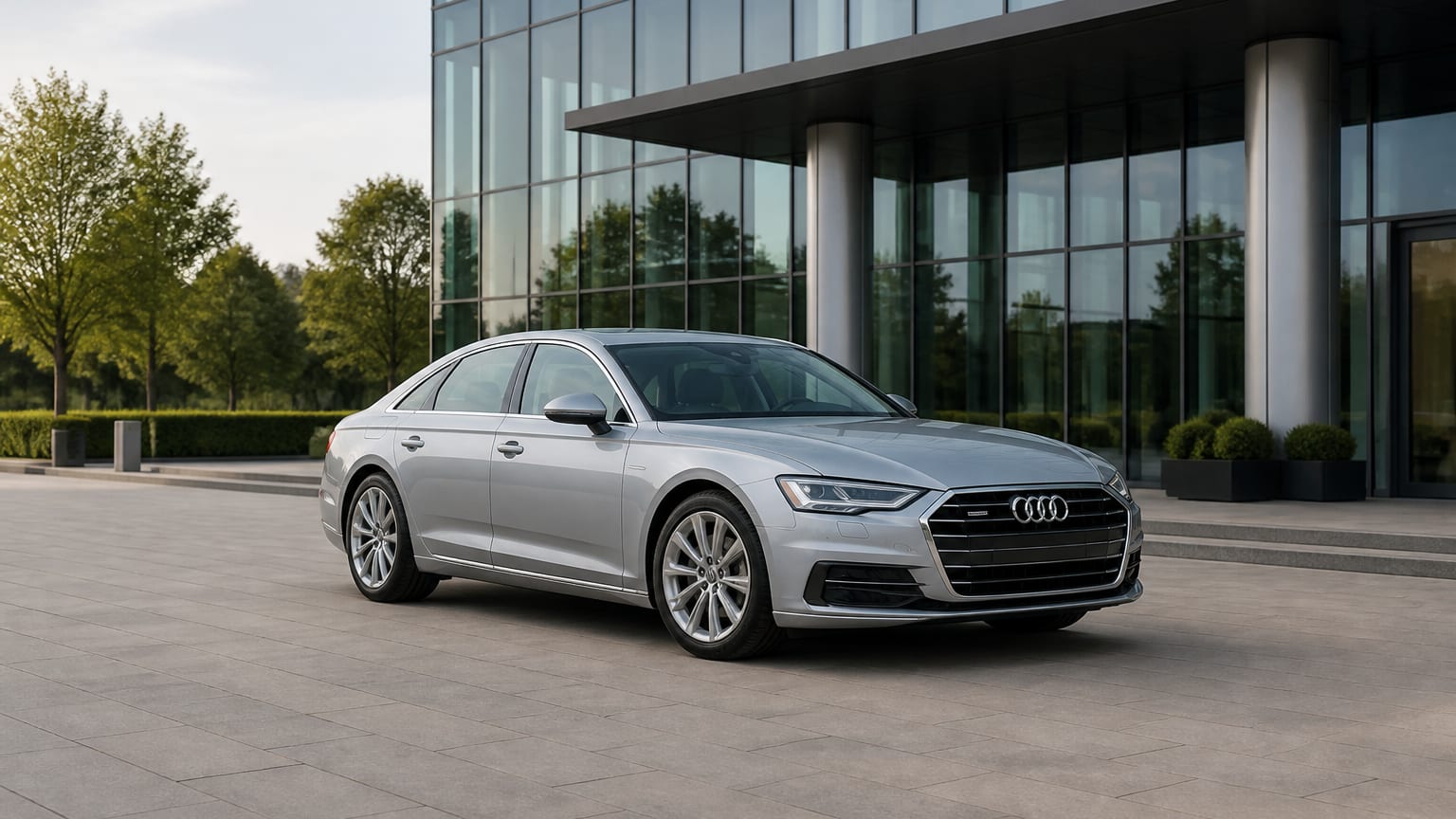
Every Audi A8 model year ranked
The 2013 Audi A8 carries the heaviest complaint burden of any A8 model year on CarComplaints, with the 2014 and 2015 model years close behind due to overlapping turbocharger and fuel-system issues.
| Model Year | Generation | Verdict | Notes |
|---|---|---|---|
| 1997 | 1st gen D2 | OK/Mixed | Early US model, sparse data |
| 1998 | 1st gen D2 | OK/Mixed | Low complaint volume |
| 1999 | 1st gen D2 | Best | Settled D2, fewer fault reports |
| 2000 | 1st gen D2 | OK/Mixed | Transmission shifter cable recall |
| 2001 | 1st gen D2 | Best | Lowest D2 complaint count |
| 2002 | 1st gen D2 | OK/Mixed | End-of-gen, age-related concerns |
| 2003 | 2nd gen D3 | OK/Mixed | First D3 year, early production issues |
| 2004 | 2nd gen D3 | OK/Mixed | Elevated early-gen complaint rate |
| 2005 | 2nd gen D3 | OK/Mixed | Electrical and body trim complaints |
| 2006 | 2nd gen D3 | Best | Low complaint count, settled D3 |
| 2007 | 2nd gen D3 | OK/Mixed | Sunroof detachment recall |
| 2008 | 2nd gen D3 | OK/Mixed | Refresh year, moderate complaints |
| 2009 | 2nd gen D3 | Best | Low D3 complaints, few recalls |
| 2010 | 2nd gen D3 | OK/Mixed | Coolant valve recall (2010-2013) |
| 2011 | 3rd gen D4 | OK/Mixed | New D4, coolant ECM recall |
| 2012 | 3rd gen D4 | OK/Mixed | Elevated engine complaints |
| 2013 | 3rd gen D4 | Avoid | Highest CarComplaints count; turbo, fuel-line, coolant recalls |
| 2014 | 3rd gen D4 | Avoid | Turbo oil strainer recall 22V-178; fuel-line recall |
| 2015 | 3rd gen D4 | Avoid | Fuel-line fire recall; turbo recall; diesel emissions issue |
| 2016 | 3rd gen D4 | OK/Mixed | Fewer complaints post-recall |
| 2017 | 3rd gen D4 | OK/Mixed | Tail end of recall range; low CarComplaints volume |
| 2018 | 3rd gen D4 | OK/Mixed | End-of-gen, moderate concern |
| 2019 | 4th gen D5 | OK/Mixed | First D5 year; electrical, transmission complaints |
| 2020 | 4th gen D5 | Best | Low NHTSA complaint count |
| 2021 | 4th gen D5 | Best | Low NHTSA complaint count; recall-light profile |
| 2022 | 4th gen D5 | OK/Mixed | Facelifted, early data still thin |
| 2023 | 4th gen D5 | OK/Mixed | Recent, data still accumulating |
Most common Audi A8 problems
The single biggest failure category for the Audi A8 is the twin-turbocharger oil strainer blockage on 2013-2017 cars equipped with the 4.0-liter V8, which triggered a federal safety recall and can cost owners up to $10,000 when the turbocharger fails outright. Below are the five most documented recurring failures across all generations.
1. Twin-turbocharger oil strainer blockage (2013-2017, 4.0L V8)
The problem is due to a poorly designed oil strainer that allows oil and/or carbon deposits to build up, blocking oil from reaching the turbocharger bearings; if the turbocharger isn't lubricated, it could fail. Owners may notice that the oil, Electronic Power Control (EPC), or check engine warning lights appear on the dashboard, and the engine may take longer to turn over when starting, have a rough idle when stopped, or feel like it's losing power while moving.
Audi recalled 2013-2017 A8 models (along with RS7, S6, S7, and S8 sedans) after a yearlong NHTSA investigation into reports that these vehicles could stall without warning while in motion; only those with 4.0-liter twin-turbocharged engines are included. The recall is NHTSA campaign 22V-178, Audi's own recall number 21H7. In February 2022, Audi also extended the warranty period for the turbocharger to 10 years or 120,000 miles.
One owner reported that the turbocharger failure cost $10,000 on a 2013 A8 at 40,000 miles - a problem Audi of America had at that time failed to acknowledge or recall. Audi received 1,889 warranty claims and 47 field reports related to this problem since April 2017 alone. If you own a 2013-2017 A8 with the 4.0L V8, confirm recall 22V-178 has been completed before buying. Metal shavings in the oil at the time of an oil change are one early warning that bearing wear may already be underway.
2. Coolant valve leak causing engine stall (2010-2013)
Volkswagen recalled certain 2010-2013 Audi A8 vehicles where a coolant valve may leak, allowing coolant to enter the engine control module, causing a loss of power or an engine stall - and a vehicle stall increases the risk of a crash. The fix required dealers to replace the coolant valve and inspect for coolant that had leaked into the electrical connector. The 3rd-generation A8 got off to a slow start thanks to leaking antifreeze frying the engine's control modules, and the problem was recalled in September 2016.
Owners whose VINs fell outside the initial recall coverage paid out of pocket: one owner reported paying $2,500 for the repair because their VIN was not covered by the recall. If you're shopping a 2010-2013 A8, check the coolant valve recall status with your VIN before purchase. A radiator or coolant leak presenting as a slow drip or sweet smell under the hood is a red flag on these years.
3. Fuel line fire risk (2013-2015)
Audi recalled 6,633 A8 luxury sedans because certain 2013 through 2015 model years have a fuel line that could become porous over time, leading to a fuel leak near an ignition source - creating a fire risk. Cars built between June 2012 and July 2014 received the suspect part; a new, stiffer part was put into production starting in July 2014, said to be less susceptible to the problem. Audi's number for that recall is 20AV.
The 2015 Audi A8 Quattro has 5 known recalls, the most common being the engine fuel rails leaking fuel. Before buying any 2013-2015 A8, verify the fuel line recall has been completed and ask the seller whether any fuel smell has ever been noted.
4. Start-stop system failure
There are multiple problems with Audi's start-stop technology, with owners complaining that the system will shut off the power steering and brake assist before the car comes to a complete stop. A lawsuit was filed over the defect, though the case was dismissed when a judge ruled that Audi's owner's manuals clearly state the start-stop system "may turn off the engine before the car comes to a complete stop."
The lawsuit sought refunds for the purchase price plus compensation for overpaying and loss of value, with owners alleging the start-stop system requires expensive repairs, car rentals, towing charges, and time off work while the vehicles lose value. This issue appears across the 2011-2018 D4 generation. Test the system on any D4 A8 during a pre-purchase drive - the engine should not shut off before the car fully stops.
5. Suspension and steering bushing wear
The most commonly reported Audi A8 problem on RepairPal is bushings - located around the subframe, suspension, and steering - that deteriorate with age. This produces a clunking noise over bumps and on turn-in, and it affects older examples of all generations as mileage climbs. According to real-owner repair data from TrueDelta, electrical and air conditioning issues account for 33% of A8 repairs, engine problems for 30%, and suspension/steering for 19%.
A whining noise when accelerating paired with vague steering on an older A8 often points to worn steering rack bushings rather than a rack replacement. Budget $400-$800 for a full subframe and control-arm bushing refresh on high-mileage cars.
Checking a used Audi?
Scan for hidden fault codes from your phone in minutes — before you buy.
REREV may earn a commission if you sign up through this link. Learn more.
Which Audi A8 years should you avoid?
The Audi A8 years to avoid are 2013, 2014, and 2015. The 2013 Audi A8 has 69 problems and defects reported by A8 owners on CarComplaints, with the worst complaints concentrated in engine and interior categories - the highest single-year count on that site for the A8. On NHTSA's complaint database, the 2013 Audi A8 has 33 NHTSA engine complaints alone, at an average of 33,665 miles.
| Audi A8 Generation | Model Years | Verdict | Main Issues |
|---|---|---|---|
| 1st gen D2 (1997-2002) | 1997, 1998, 2000, 2002 | Mixed | Transmission shifter, early US market issues |
| 2nd gen D3 (2003-2010) | 2003, 2004, 2005, 2007, 2008, 2010 | Mixed | Sunroof detachment, electrical, fuel system |
| 3rd gen D4 (2011-2018) | 2013, 2014, 2015 | Worst | Turbo oil strainer, coolant ECM, fuel-line fire risk, start-stop |
| 4th gen D5 (2019-present) | 2019, 2022, 2023 | Mixed | Electrical, transmission; lower overall complaint volume |
Worst Audi A8 years: 2013, 2014, 2015
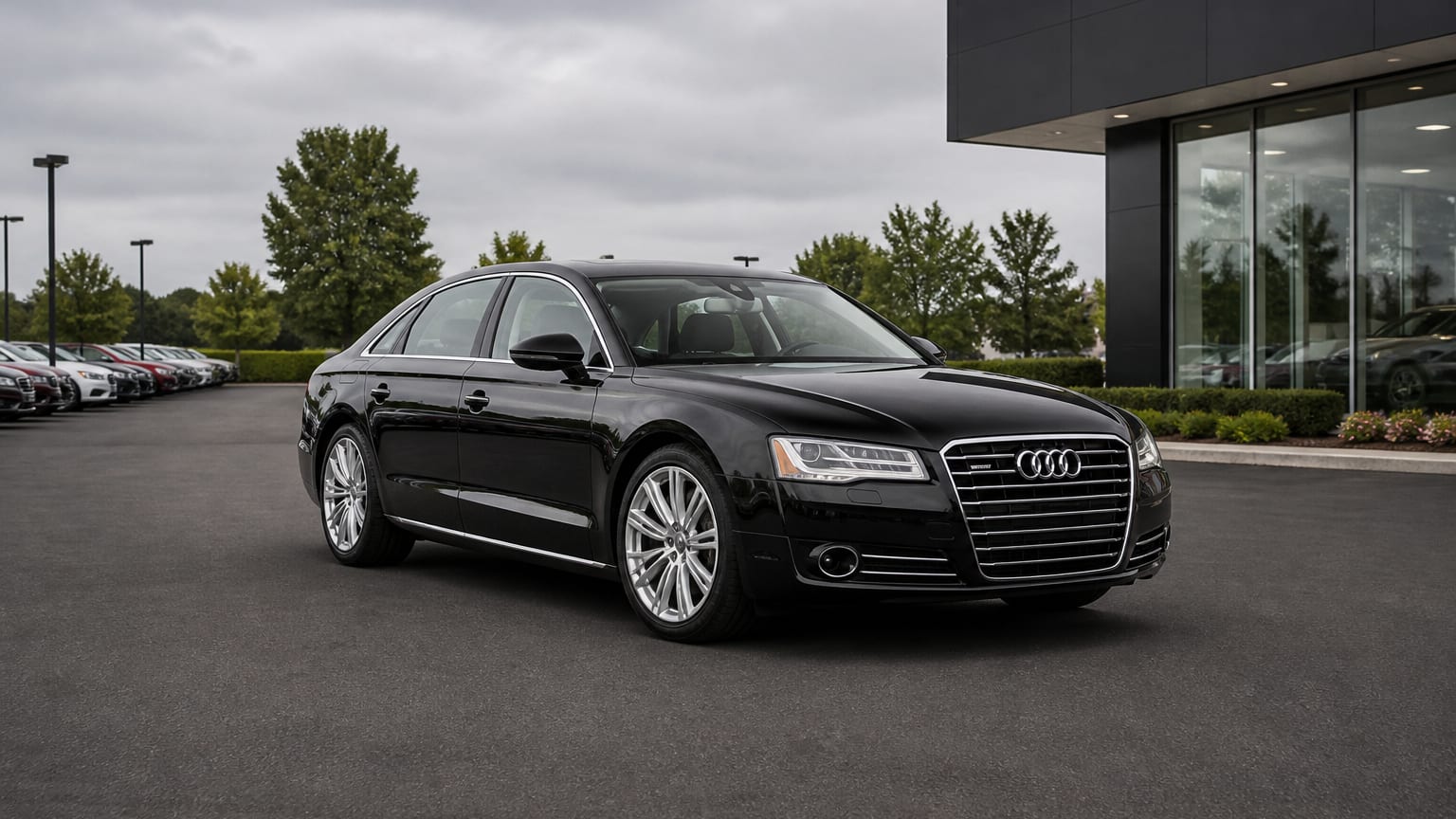
Third-generation Audi A8 (2011-2018)
A8 owners made 16 complaints about the 2011-2018 model years on the audicomplaints platform, and using the PainRank system it ranks 18th out of 39 Audi generations in overall reliability, with the worst concerns centered on interior and suspension. The engine-related problems - particularly the 4.0L V8 turbocharger oil strainer - are the most financially dangerous.
Audi recalled certain 2013-2017 A8 vehicles because the turbocharger oil supply strainer can become blocked, causing wear to the bearings due to lack of lubrication - worn bearings can cause the turbine wheel to contact the turbocharger housing or the shaft to break, causing an engine stall and increasing the risk of a crash. The 2013-2015 years are the core avoid window because they combine this turbocharger defect with the fuel-line fire recall and the coolant valve stall recall, giving you three overlapping serious campaigns to manage. Verify all three recalls are closed on any 2013-2015 car via NHTSA's recall lookup tool. Shoppers cross-referencing Audi A4 years to avoid will notice the same third-generation window flagged for turbocharger-related failures, a pattern that runs across multiple Audi platforms in this era.
What are the best Audi A8 years to buy?
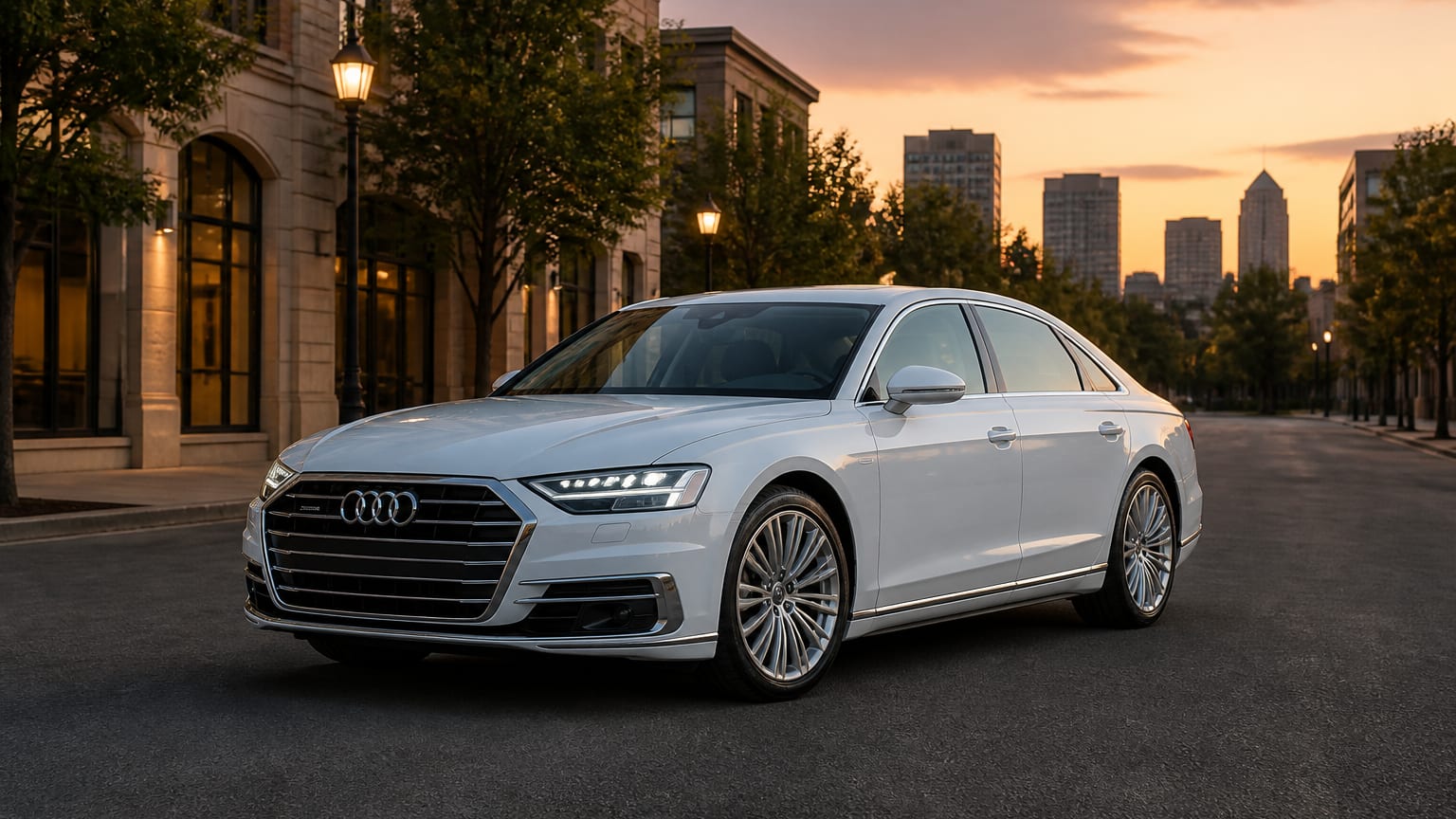
The best Audi A8 years to buy are 1999, 2001, 2006, 2009, 2020, and 2021 - years that either posted the lowest complaint counts within their respective generations or carry a cleaner recall history than their peers.
| Best Audi A8 Year | Why It's a Strong Buy |
|---|---|
| 1999 | Settled D2 generation; fewer fault reports than surrounding years |
| 2001 | Lowest D2 complaint count |
| 2006 | Settled D3 generation; low complaint count; W12 available |
| 2009 | Lowest D3 complaints near end of generation; few recalls |
| 2020 | Low NHTSA complaint volume; D5 build quality refined |
| 2021 | Low NHTSA complaint count; outside the worst recall windows |
Most reliable Audi A8 years: 1999, 2001, 2006, 2009, 2020, 2021
2006 Audi A8
The redesigned D3 arrived as a 2004 model with a naturally aspirated 330-hp 4.2L V8; later the V8 gained direct injection and was uprated to 350 hp, while a 450-hp 6.0L W12 was also added. By 2006 the D3 platform was well sorted, and complaint volumes on CarComplaints are among the lowest for the generation. The W12 option makes the 2006 a desirable collector-grade buy for enthusiasts who want maximum power without the 4.0L twin-turbo's oil strainer headache. Buyers also weighing the SUV side of Audi's lineup should note that Audi Q5 years to avoid cluster around the same third-generation turbocharged period, making model-year selection equally important there.
2021 Audi A8
The 2021 A8 has 6 NHTSA complaints and 10 recalls on record - a very low complaint count for its age bracket. The 2019-2025 A8 generation has accumulated just 22 total NHTSA complaints, with the most frequently reported problem areas being electrical system, engine, and transmission - none of which approach the severity of the 3rd-gen turbo and fuel-line failures. An Audi A8 will cost about $10,619 for maintenance and repairs during its first 10 years of service, which beats the industry average for luxury sedan models by $1,270.
Audi A8 pre-purchase checklist
Before handing over a deposit on any used Audi A8, work through each of these model-specific checks:
- Run the VIN through NHTSA's recall checker. Every used A8 should be checked; the 2013-2017 cars can carry three or more open campaigns simultaneously.
- On 2013-2017 cars with the 4.0L V8, confirm recall 22V-178 (NHTSA) / 21H7 (Audi) is closed. The oil strainer within the oil supply for the turbocharger might become blocked by oil/carbon deposits, leading to a lack of lubrication of the turbocharger bearings. Ask the dealer to show the repair order proving the oil strainer was replaced and an oil change performed.
- On 2013-2015 cars, verify the fuel-line fire recall (Audi #20AV) is completed. The fuel supply line connecting to the fuel pump may become porous over time and leak gasoline; dealers replace the fuel line free of charge.
- On 2010-2013 cars, check the coolant valve recall. Certain 2010-2013 A8 vehicles have a coolant valve that may leak, allowing coolant to enter the engine control module and cause a loss of power or an engine stall.
- Test the start-stop system on any 2011-2018 D4 car. The engine should disengage only after the car is fully stopped; early shut-off indicates the known start-stop defect is present.
- Check the oil level on any 4.0L V8 A8 before a test drive. Low oil is a leading cause of the turbocharger oil strainer failure and is easy to spot before you commit.
- Request full service records. The annual maintenance cost of an Audi A8 is $731 - and a car that skipped oil changes is far more likely to have deposited carbon in the turbo strainer. Gaps in documentation on a 2013-2017 car are a deal-breaker.
- Have a pre-purchase inspection done by an Audi specialist. The highly precise nature of the A8's engineering means that replacement components require exact specifications, which usually means getting parts from Audi or a reputable supplier of remanufactured parts.
Better alternatives to consider
If the Audi A8 years in your budget land on the avoid list, also compare the Audi A6 years to avoid and Audi S8 years to avoid guides, or consider these alternatives instead:
- Mercedes-Benz S-Class - the benchmark full-size luxury sedan, with a more thoroughly documented reliability record across its generations and a wider independent service network.
- BMW 7 Series - a direct segment rival with similar long-wheelbase comfort; earlier-generation (E65/E66, 2002-2008) cars carry their own electronic gremlins, but the F01/F02 (2009-2015) generation has a stronger reliability record in the mid-price used market.
- Lexus LS 460 - offers significantly lower average annual repair costs than the A8 and a longer track record of mechanical simplicity; a strong choice if your budget overlaps with troubled 3rd-gen A8 pricing.
Is the Audi A8 worth buying?
Yes, the Audi A8 is worth buying - as long as you avoid the 2013, 2014, and 2015 model years. An Audi A8 will cost about $10,619 for maintenance and repairs during its first 10 years of service, beating the industry average for luxury sedans by $1,270, with a 27.69% chance of requiring a major repair during that period. The 4th-generation D5 cars (2019-present) carry just 22 total NHTSA complaints across the generation - a clean profile for a flagship sedan.
Performance-focused buyers who are also considering the Audi S4 years to avoid will find a similar pattern of turbocharged engine concerns concentrated in the same model-year window. Stick to the 1999, 2001, 2006, 2009, 2020, or 2021 model years, run every VIN through NHTSA's recall checker, and verify maintenance history before signing.