
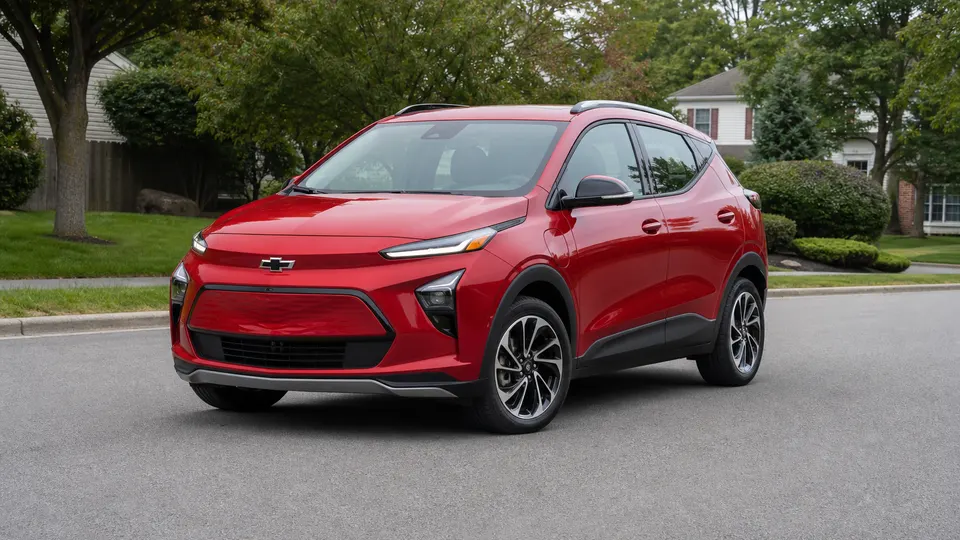
The Chevrolet Bolt EUV is a practical, affordable electric crossover with a genuine 247-mile EPA range and a five-star NHTSA overall safety rating, and for the right buyer it can be one of the lowest-cost EVs to own. That said, its short two-year production run means every used example comes with some history worth understanding, and one model year carries noticeably more baggage than the other. This guide uses complaint data from NHTSA and CarComplaints, recall records, and owner-forum reports to tell you exactly which year to skip and which one to target.
For generations, engines, and ownership notes in one place, see the Chevrolet Bolt EUV hub.
Related: Nissan Leaf years to avoid, BMW i4 years to avoid.
At a glance
- Worst year
- 2022
- Best year
- 2023
- Top failure
- High-voltage battery fire risk on 2022 (NHTSA recall 21V-650 and follow-on campaigns)
- Always do before buying
- Run the VIN through NHTSA's recall checker to confirm every open battery recall is closed, and ask the seller for documented proof of battery module replacement or final software-remedy completion
How we rated the best and worst Chevrolet Bolt EUV years
The 2022 Bolt EUV is the single worst model year because it was swept into a massive battery fire recall and accumulated four NHTSA recall campaigns, while the 2023 avoided the original battery-fire defect entirely and earns above-average reliability scores.
The 2022 Chevrolet Bolt EUV has been recalled 4 times by NHTSA. The 2022 model year also carries the highest NHTSA complaint volume of the two EUV years, driven almost entirely by battery and electrical concerns. The 2023 Chevrolet Bolt EUV reliability rating is generally better than average for its model year, with most issues clustered around electronics, charging quirks, and build quality rather than the battery pack or electric motor.
For this guide, CarComplaints was used for complaint counts and repair-cost ranking (CarComplaints ranks years by repair cost and mileage-at-failure, its PainRank system), while NHTSA data was used for raw complaint volume, recall campaign counts, and safety ratings. The two datasets measure different things and can produce different “worst year” conclusions; here they agree. Consumer Reports owner surveys, the Chevy Bolt owner forum at chevybolt.org, and NHTSA safety-rating pages were used for corroboration. The years-to-avoid methodology weights reliability data, known defects, and repair costs to identify problem model years.
| Chevrolet Bolt EUV Generation | Best Chevrolet Bolt EUV Years | Worst Chevrolet Bolt EUV Years |
|---|---|---|
| 1st Gen (2022-2023) | 2023 | 2022 |
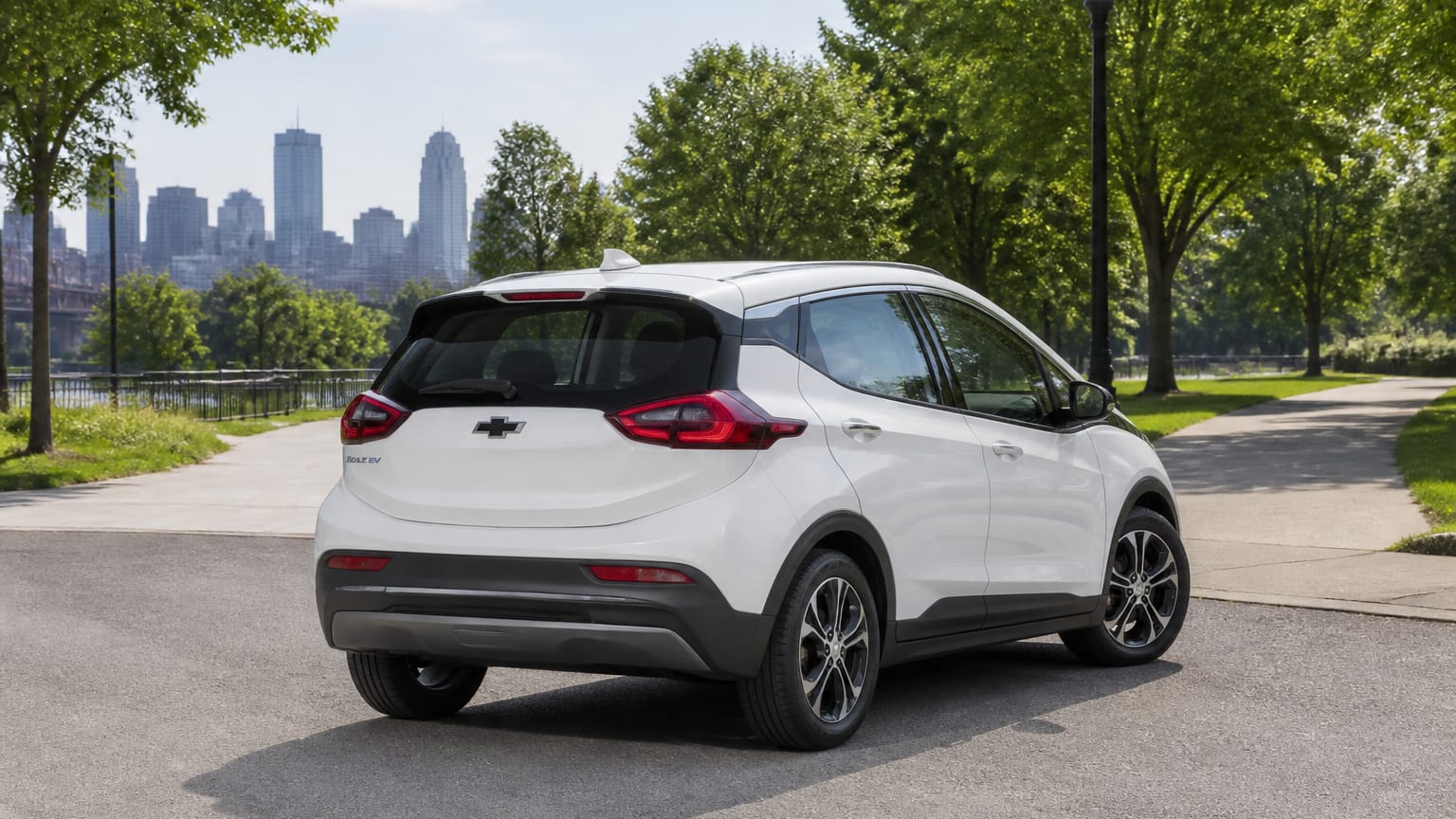
Every Chevrolet Bolt EUV model year ranked
The 2022 Bolt EUV is the year to approach with the most caution, while the 2023 is the cleaner buy among the two available model years.
| Model Year | Generation | Verdict | Notes |
|---|---|---|---|
| 2022 | 1st Gen | Avoid | 4 NHTSA recalls; battery fire risk; highest complaint volume |
| 2023 | 1st Gen | Best | No battery fire recall; above-average reliability; fewer complaints |
Most common Chevrolet Bolt EUV problems
The single biggest issue in Bolt EUV history is the high-voltage battery fire risk, which drove the most recalls, the most complaints, and the most owner anxiety across the model’s entire run. Below are the four recurring failure categories found in complaint data and owner reports, ordered most serious first.
1. High-voltage battery fire risk
The single biggest story in Bolt EUV history is the lithium-ion battery fire recall. GM ultimately extended the recall to cover every Bolt EV and EUV built through the 2022 model year. Defective cells could develop internal damage under rare conditions, raising fire risk while parked or charging. The root cause, identified jointly by GM and LG Energy Solution, was the simultaneous presence of two rare manufacturing defects in the same battery cell.
There are 7,364 Bolt EUV vehicles included in NHTSA recall 21V-650, which is itself an expansion of NHTSA recall 21V-560. The remedy under 21V-650 was defective battery module replacement, free of charge. A follow-on concern emerged when the advanced diagnostic software installed as the recall fix was itself found to be faulty. “The installation of advanced diagnostic software may have failed,” NHTSA stated, and dealers were directed to reinstall the software free of charge. This follow-on issue became NHTSA recall 24V-812. Most affected cars received full battery pack replacements or module replacements under recall.
The battery fire risk is unique to the 2022 Bolt EUV. 2023 Bolt EUV packs were built after GM and LG changed their manufacturing process, and so far there have been no widespread 2023-only fire recalls. For any used 2022 EUV, verify battery recall completion before purchase. On a 2022 Bolt EUV, verify recall completion with the VIN through GM or a Chevrolet dealer.
2. Portable charging cord electrical shock risk
Some Webasto high-voltage portable charging cords provided with 2022 and 2023 Chevy Bolt EUV vehicles have a defect in their software. The incorrect software in these Webasto charging cords may cause them to continue charging even if the ground connection is lost. GM issued safety recall N232407300 for this issue.
No fewer than 9,423 vehicles produced for the 2022 and 2023 model years feature portable charging cords that contain incorrect software. If the cord loses its ground connection, Bolt EUV owners run the risk of “a very brief electrical shock” - GM details a 1/40th of a second shock in limited circumstances. Vehicles built after September 22, 2022, are not impacted as they were provided updated charging cords.
The fix is straightforward: your GM dealer will inspect the portable charging cord and replace if necessary, free of charge. If you are buying a used 2022 or early-build 2023 Bolt EUV, confirm the cord was inspected and replaced if needed under this recall. The NHTSA recall checker will show whether this campaign is still open on a specific VIN.
3. Infotainment and electronics glitches
The typical 2023 Chevy Bolt EUV problems fall into a few buckets: glitchy Android Auto/Apple CarPlay, frozen screens, odd warning messages, and the occasional “ghost” check-engine light that clears on its own. These issues affect both model years and were the top trouble spot flagged in Consumer Reports owner surveys for 2023.
Consumer Reports data confirms the 2023 Bolt EUV is more reliable than other cars from the same model year overall, but its identified weak spot is in-car electronics. On the 2023 Bolt EUV specifically, the most complained-about areas at NHTSA are the electrical system (9 complaints) and exterior lighting (9 complaints). Most infotainment issues resolve with a dealer software update; a car that won’t start but the lights come on can sometimes trace to a similar low-voltage module fault in EV platforms. Ask any seller whether open software campaigns have been completed.
4. Forward collision avoidance and driver-assist faults
Some owners of the 2023 model complain that the brake lights are difficult to see at night or that the collision avoidance and lane departure systems do not work. The most common problems reported to NHTSA about the 2023 Bolt EUV relate to transmission problems and brake lights; the components owners link their complaints to include brakes, exterior lighting, forward collision avoidance, lane departure, and the powertrain.
Forward collision warning acting too aggressively, lane-keep assist ping-ponging, or Super Cruise map/software hiccups on Premier models are consistent themes in owner-forum threads on the Chevy Bolt EV forum. These issues are more of a nuisance than a safety failure in most cases, but they can be persistent. On the 2023 Premier, verify that Super Cruise map data is current and that no driver-assist software campaigns are open on the VIN.
5. 12-volt battery drain and no-start conditions
A handful of complaints mention the car not waking up or showing a drained low-voltage battery after sitting for a few days. Software updates or 12-volt battery replacement are common dealer responses. This is not unique to the Bolt EUV among EVs, but it is worth flagging because a dead 12-volt battery can strand the car even when the main traction pack is fully charged.
The 12-volt battery in the Bolt EUV is a conventional lead-acid unit that powers computers and accessories when the main pack is dormant. If you are buying a used example that sat on a lot for an extended period, have the 12-volt battery tested before purchase. Replacement cost is low - under $200 at most shops - and the repair is straightforward.
Which Chevrolet Bolt EUV years should you avoid?
The Chevrolet Bolt EUV year to avoid is 2022. The 2022 Chevrolet Bolt EUV has been recalled 4 times by NHTSA, more than any other EUV model year, and NHTSA complaint volume for 2022 is higher than for 2023. Of the NHTSA complaints filed against the 2022 Bolt (EV and EUV combined), 19 blame the electrical system, and most relate to the risk of the vehicle’s high-voltage battery catching fire.
| Chevrolet Bolt EUV Generation | Model Years | Verdict | Main Issues |
|---|---|---|---|
| 1st Gen | 2022-2023 | Worst: 2022 | Battery fire recall (21V-650), follow-on software recall (24V-812), charging cord shock recall, airbag fastener recall |
Worst Chevrolet Bolt EUV year: 2022
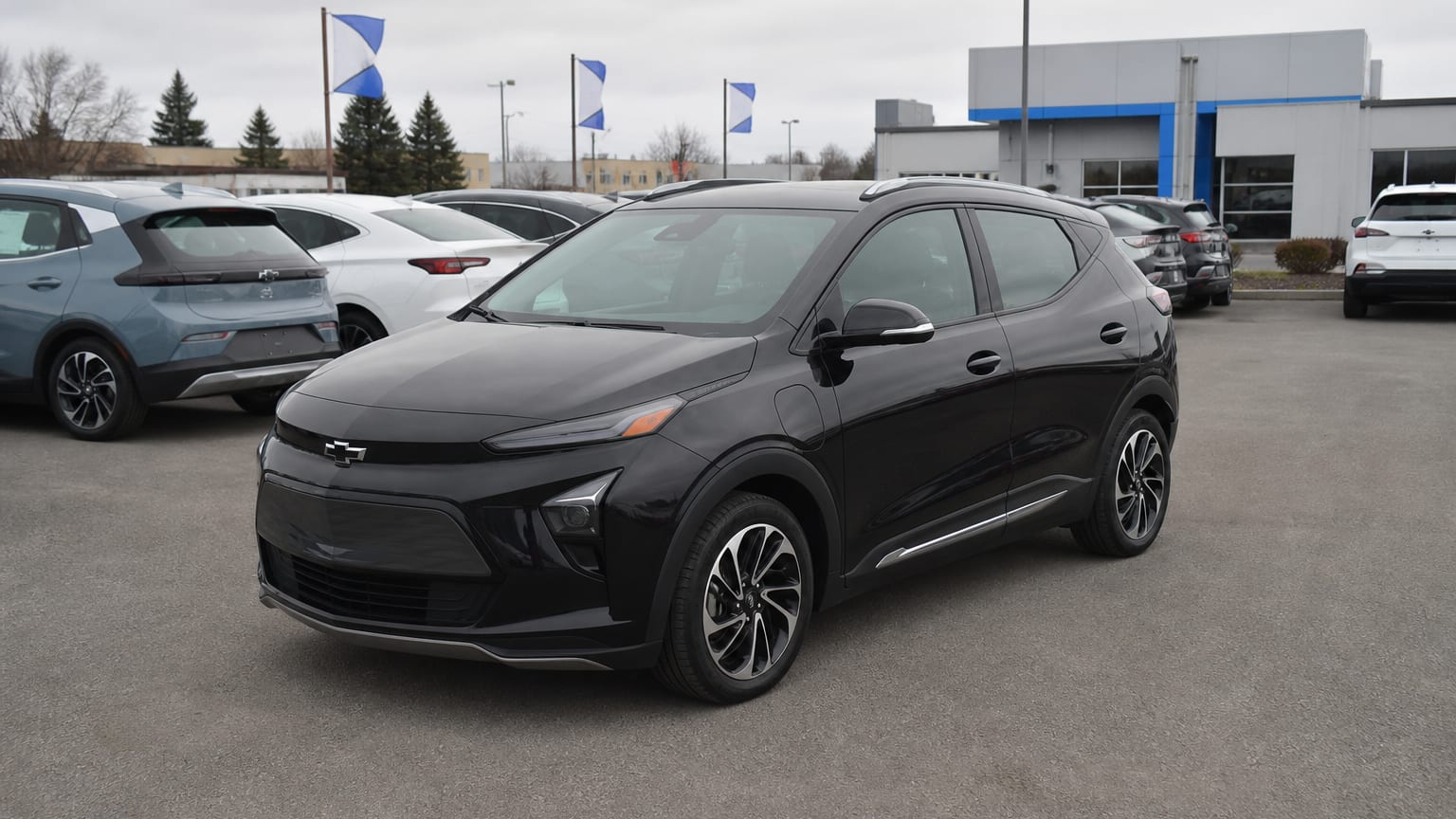
1st-generation Chevrolet Bolt EUV (2022)
The 2022 Bolt EUV was built on GM’s BEV2 platform with LG-supplied batteries, and these are the cars behind the battery fire recall headlines and most of the owner complaint data. The scale of the recall response was significant: it took GM more than 100 days to replace some batteries, during which owners could not use their cars.
Beyond the battery campaign, GM also recalled certain 2022 Chevrolet Bolt EV and Bolt EUV vehicles because one of the two fasteners that secure the driver’s frontal airbag to the steering wheel may be missing or improperly tightened. That adds up to four separate NHTSA recall campaigns on the 2022 EUV. A 2022 that has had all four recalls completed with documented dealer records is a substantially safer purchase than one with an unknown recall history. The Chevy Bolt owner forum at chevybolt.org has owner accounts of the battery replacement process and typical wait times.
What are the best Chevrolet Bolt EUV years to buy?
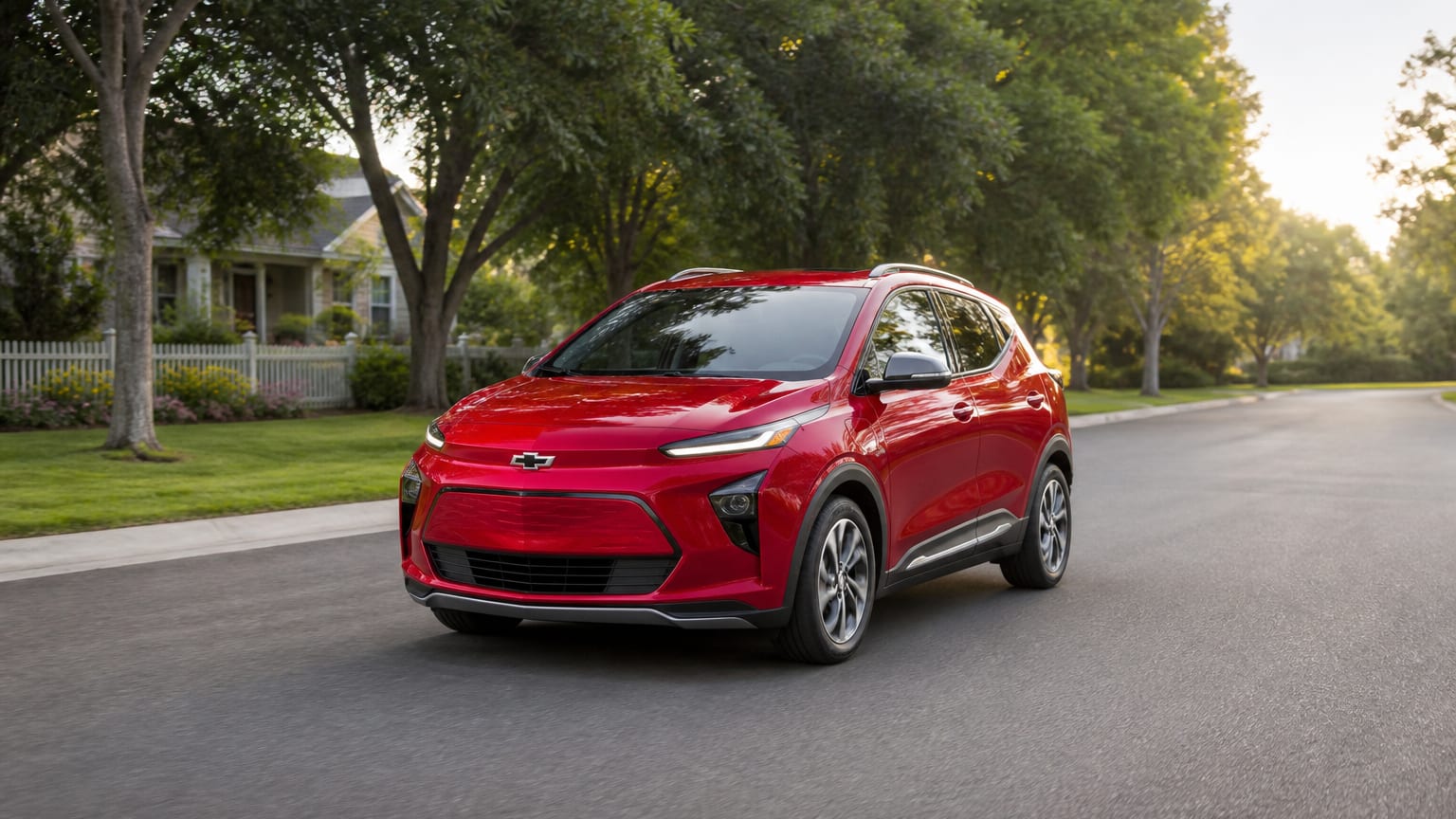
The best Chevrolet Bolt EUV year to buy is 2023. There are no vehicle-level NHTSA safety recalls specific to the 2023 Bolt EUV itself as of early 2026; the 2023 is a strong bet with no repeat of the 2017-2022 battery fire recall, an inexpensive purchase price on the used market, and relatively simple EV hardware.
| Best Chevrolet Bolt EUV Year | Why It's a Strong Buy |
|---|---|
| 2023 | No battery fire recall; above-average Consumer Reports reliability; fewer NHTSA complaints; same 5-star safety rating as 2022 |
Most reliable Chevrolet Bolt EUV year: 2023
2023 Chevrolet Bolt EUV
Across major owner surveys and rating sites, the 2023 Bolt EUV earns above-average scores for reliability and owner satisfaction, with most issues clustered around electronics, charging quirks, and build quality. Consumer Reports’ owner survey shows the 2023 Bolt EUV scoring better-than-average overall reliability versus all 2023 vehicles.
The Bolt EUV was awarded a five-star rating in almost every NHTSA crash test, including front, side barrier, and side pole tests. The Bolt EUV got a four-star rating in rollover tests, which still led to a five-star overall safety rating. The 2023 Chevy Bolt EUV garnered the same ratings as the 2022 model, so you get the same passive-safety performance without the battery recall history. Check the 2023 NHTSA vehicle detail page to confirm all open campaigns are closed on any specific VIN.
The 2023 also benefits from a manufacturing change: 2023 packs were built after GM and LG revised their manufacturing process, so the specific two-defect combination that caused fires in earlier cars is not present. Understanding how far electric cars can go on one charge is relevant here - the 2023 EUV’s 247-mile EPA range holds up well for daily commuting with minimal battery stress.
Chevrolet Bolt EUV pre-purchase checklist
Before you buy any used Bolt EUV, work through these model-specific checks to avoid inheriting open recalls or hidden battery issues:
- Run the VIN through the NHTSA recall checker: Go to nhtsa.gov/recalls and enter the VIN. On a 2022 EUV, confirm that recall 21V-650 (battery module replacement), recall 24V-812 (software reinstallation), the airbag fastener recall, and the Webasto charging cord recall (GM recall N232407300) are all shown as completed.
- On a 2022 EUV, request battery replacement documentation: Verify recall completion with the VIN through GM or a Chevrolet dealer. A car with a documented battery module replacement has cleared the biggest risk.
- Check the portable charging cord on 2022 and early-build 2023 vehicles: Vehicles built after September 22, 2022, are not impacted by the Webasto cord recall, but earlier-build cars should have a dealer replacement on file.
- Test DC fast-charging behavior: Slow or inconsistent DC fast-charging speeds and session interruptions at public stations are a known Bolt EUV quirk. On a test drive, initiate a DC fast-charge session and confirm the car accepts charge at its rated speed.
- Inspect the infotainment and driver-assist systems: With the car running, test Android Auto or Apple CarPlay, the backup camera, and the forward collision alert. Backup camera failures that recur after warranty repairs have been reported on the 2023 model, so check it more than once.
- Have the 12-volt battery tested: A handful of complaints mention the car not waking up or showing a drained low-voltage battery after sitting for a few days. This is a quick, inexpensive test at any shop.
- Ask for full service records: A 2022 EUV with no service records is a red flag. The battery recall work alone involves multiple dealer visits; documented recall completion is the single best indicator that the car has been properly maintained.
Better alternatives to consider
If the 2022 Bolt EUV is the only example in your budget and its recall history cannot be confirmed, consider these same-class alternatives instead:
- Nissan Leaf - a longer production run (2011-present) gives you a clearer year-by-year reliability record and more data points for choosing a lower-risk model year
- Hyundai Kona Electric - similar compact crossover footprint with a strong reliability record and no equivalent battery fire recall history in the US market
- Chevrolet Bolt EV (hatchback) - shares the same platform and powertrain as the EUV but has a longer data trail and may have completed recalls earlier given its head start in production
Is the Chevrolet Bolt EUV worth buying?
Yes, the Bolt EUV is worth buying as long as you target the 2023 and avoid the 2022 unless every open recall is fully documented as completed. The Bolt EUV earned five-star ratings in front, side barrier, and side pole NHTSA crash tests and a five-star overall safety rating, which is a strong passive-safety baseline for a compact EV at this price. Most affected packs have been replaced or cleared by diagnostics, and many owners report quiet, trouble-free commuting - if you focus on post-recall cars with documented battery work and clean diagnostics, the Bolt EUV can be one of the lowest-cost EVs to own.
The hidden costs of owning an electric car are genuinely low on the Bolt EUV once battery recall work is confirmed. Run every VIN through nhtsa.gov/recalls and ask for a full dealer service printout before signing.