
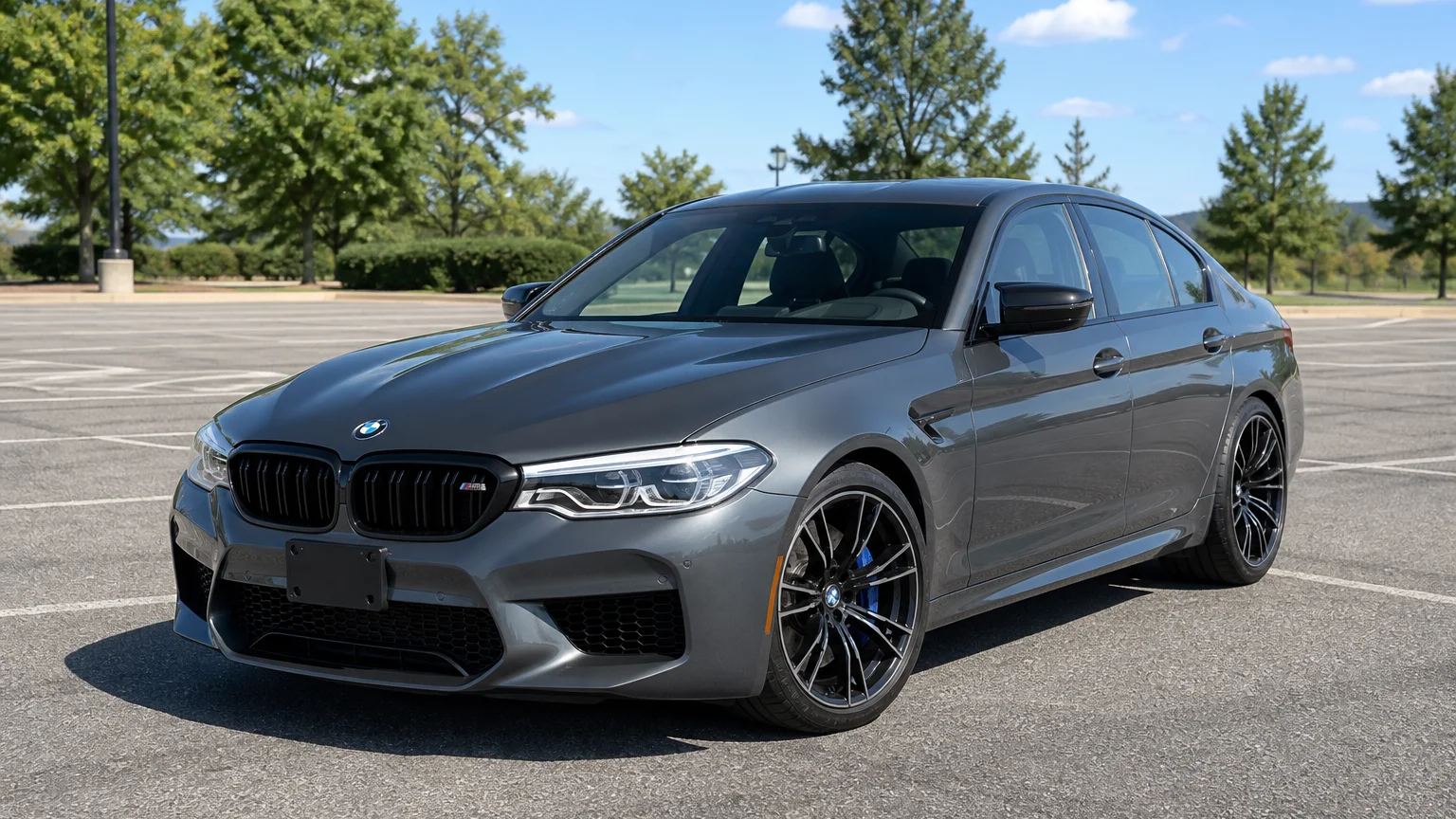
The BMW M5 is one of the most celebrated performance sedans ever built, and across most of its history it delivers a strong ownership experience - but specific generations carry serious, expensive mechanical defects that can turn a dream car into a money pit. CarComplaints rates the 2014 model year as the worst M5 by repair cost and mileage-at-failure (its PainRank metric), even though the 2013 has the most overall complaints in that database. This guide uses NHTSA complaint data, CarComplaints PainRank, RepairPal cost figures, and owner-forum records to rank every modern M5 year so you can buy with confidence, following the same years to avoid methodology used across this site's vehicle reliability assessments.
For generations, engines, and ownership notes in one place, see the BMW M5 hub.
Related guides appear in the BMW years to avoid directory.
At a glance
- Worst years
- 2006
- 2007
- 2008
- 2009
- 2010
- 2013
- 2014
- Best years
- 2000
- 2001
- 2002
- 2003
- 2019
- 2020
- 2021
- 2022
- 2023
- Top failure
- E60 S85 V10 rod bearing failure (2006-2010), the most catastrophically expensive recurring defect across all M5 generations (CarComplaints/owner forums)
- Always do before buying
- Run the VIN through NHTSA's recall checker; on 2006-2010 cars, check the oil level cold and ask for evidence of rod bearing preventive replacement; on 2013-2014 cars, verify the high-pressure fuel pump warranty extension (SI B01 02 18) status
How we rated the best and worst BMW M5 years
The E60 generation (2006-2010) and early F10 years (2013-2014) are the worst to own, driven by catastrophic engine and drivetrain defects. Ratings here draw from NHTSA complaint and recall data, CarComplaints PainRank (which ranks the worst year by repair cost and mileage-at-failure), RepairPal annual cost figures, CarEdge 10-year cost data, and owner threads on M5Board. CarComplaints rates the 2014 as the worst M5 year on its PainRank, while the 2013 holds the highest raw complaint count in that database - two different metrics, two different years. NHTSA's raw complaint volume is highest on the 2006 BMW M5, which carries 54 owner complaints.
| BMW M5 Generation | Best BMW M5 Years | Worst BMW M5 Years |
|---|---|---|
| E39 (2000-2003) | 2000, 2001, 2002, 2003 | None |
| E60 (2006-2010) | None | 2006, 2007, 2008, 2009, 2010 |
| F10 (2013-2016) | None | 2013, 2014 |
| F90 (2018-2023) | 2019, 2020, 2021, 2022, 2023 | None |
Every BMW M5 model year ranked
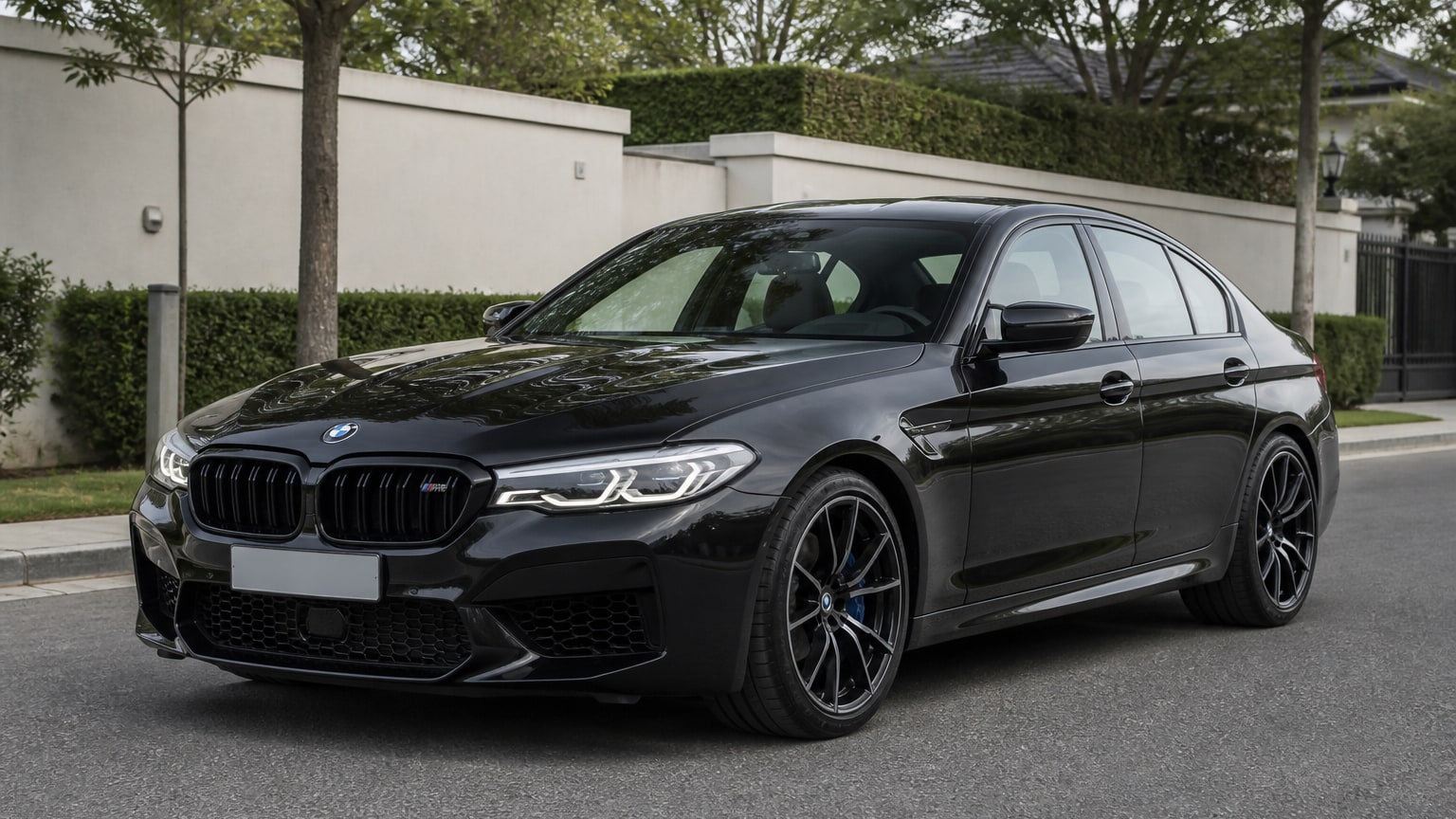
The cleanest used M5 picks are the E39 generation (2000-2003) and the F90 generation (2019-2023); the entire E60 generation (2006-2010) and the first two F10 model years (2013-2014) carry the clearest documented risks. Classic-era models (E28, 1988-1993 US; E34, 1991-1993 US) are a separate collector market assessed differently from the modern used-car pool and are not included in the avoid/best designations below.
| Model Year | Generation | Verdict | Notes |
|---|---|---|---|
| 1988 | E28 | OK/Mixed | Classic/collector; separate market |
| 1991 | E34 | OK/Mixed | Classic/collector; separate market |
| 1992 | E34 | OK/Mixed | Classic/collector; separate market |
| 1993 | E34 | OK/Mixed | Classic/collector; separate market |
| 2000 | E39 | Best | Low complaints; reliable V8; fan favorite |
| 2001 | E39 | Best | Low complaints; reliable V8 |
| 2002 | E39 | Best | Low complaints; strong ownership record |
| 2003 | E39 | Best | Final E39 year; low complaint count |
| 2006 | E60 | Avoid | Highest NHTSA raw complaint volume (54); S85 rod bearings, VANOS |
| 2007 | E60 | Avoid | S85 rod bearing failure; SMG pump issues |
| 2008 | E60 | Avoid | S85/SMG; 2 recalls per RepairPal |
| 2009 | E60 | Avoid | Shares all E60 S85 critical faults |
| 2010 | E60 | Avoid | Final E60 year; same catastrophic failure risks |
| 2013 | F10 | Avoid | Most CarComplaints complaints for F10; S63T fuel pump issues; engine failures reported at \\~60k miles |
| 2014 | F10 | Avoid | CarComplaints PainRank worst M5 year; suspension complaints |
| 2015 | F10 | OK/Mixed | Reduced complaint rate; fuel injector warranty extension still applies |
| 2016 | F10 | OK/Mixed | Low complaint count; final F10 year |
| 2019 | F90 | Best | New generation; S63 refined; ZF 8-speed; low complaint count |
| 2020 | F90 | Best | Low complaint count; reliable modern platform |
| 2021 | F90 | Best | Competition trim widely available; strong owner reports |
| 2022 | F90 | Best | Low complaint count; most reliable modern M5 pick |
| 2023 | F90 | Best | Final F90 year; strong platform maturity |
Most common BMW M5 problems
The single biggest failure across M5 history is the S85 V10 rod bearing failure in 2006-2010 E60 cars, a fault that can destroy an engine completely and costs more than some cars are worth to fix. Below are the four most documented recurring failure categories across all modern M5 generations.
1. S85 V10 rod bearing failure (E60, 2006-2010)
The S85 V10 of the E60 M5 and E63 M6 is one of BMW's most celebrated engines, but it is plagued by rod bearing failure. The rod bearing connects the connecting rod to the crankshaft; when it wears prematurely, the symptom is a low-frequency knock at idle that progresses rapidly to catastrophic engine seizure. Factory bearing clearances are too tight for the high-revving V10, causing premature wear.
At high RPM, oil struggles to maintain a lubricating cushion in this narrow gap, leading to accelerated wear and catastrophic engine failure, including a seized engine or hole in the engine block requiring $15,000 - $32,000 in repair. The SMG III hydraulic pump failure on the same E60 cars adds another $1,500 - $7,700 repair cost, and VANOS high-pressure pump failure can reach $3,000 - $32,000. No factory recall or BMW warranty extension covered the rod bearings themselves on the E60 M5; all E60 M5s are well outside any factory coverage. The community consensus, sourced from M5Board threads, is to budget for preventive rod bearing replacement before 70,000 miles. Buyer takeaway: any E60 M5 without documented rod bearing service history is a financial gamble - price that repair into your offer.
When a rod bearing lets go on these engines, metal shavings in the oil are the first sign owners often see on a dipstick check - by that point, the engine is usually already damaged internally.
2. S63T high-pressure fuel pump and fuel injector failures (F10, 2013-2015)
The F10 redesign of the BMW M5 arrived for MY2013 and was the first M5 with turbocharging, using a twin-turbocharged 4.4L V8 with 560 hp. The early S63T engine in 2013-2014 cars developed documented high-pressure fuel pump (HDP) failures and fuel injector defects, causing hard starts, rough running, and stalling.
BMW responded with two separate warranty extensions documented in NHTSA's TSB database. TSB SI B01 02 18 extended the warranty on the S63T high-pressure fuel pumps to 10 years/120,000 miles for F10 M5 model years 2013 and 2014. A separate bulletin, SI B01 06 18, extended the warranty on the S63T engine fuel injectors to 10 years/120,000 miles for F10 M5 model years 2013, 2014, and 2015. These are warranty extensions, not recalls - no immediate repair is required unless the car is currently experiencing the problem. For used buyers, confirm via VIN-specific dealer lookup whether these programs were completed before purchase.
3. SMG III hydraulic pump failure (E60, 2006-2010)
The E60 M5's 7-speed SMG III transmission uses a hydraulic pump that is a common failure point, leading to loss of gears, inability to shift, or complete transmission lockout. The pump itself, or the pressure sensor within it, fails without warning. A drivetrain malfunction warning on the instrument cluster is the typical first sign.
SMG III hydraulic pump repair costs range from $1,500 to $7,700. The failure can occur at any mileage but is most common past 60,000 miles on unmaintained units. The E60's much-maligned SMG gearbox was dropped for the F10 generation, replaced with a seven-speed dual-clutch automatic, so this fault is confined to 2006-2010 cars only. Buyer takeaway: test all shift modes thoroughly on any E60 M5 before buying, and budget for pump replacement if service records don't show it.
4. VANOS high-pressure pump and oil line failure (E60, 2006-2010)
The E60 M5's S85 uses a high-pressure VANOS pump for variable valve timing. The high-pressure lines were improperly routed without adequate bends, causing premature line failure and oil leaks; when a VANOS line fails, it can starve the pump of pressure, causing pump failure and sending metal debris throughout the engine.
VANOS high-pressure pump failure on the E60 M5 carries repair costs of $3,000 - $32,000 depending on whether debris contaminated the rest of the engine. M5Board's TSB/recall thread documents service information bulletins addressing VANOS-related issues on the S85, including fuel system and pump service actions. The VANOS-related service actions are particularly important for engine longevity on E60 cars. Buyer takeaway: ask any E60 seller for records of VANOS line inspection or replacement, and treat an unserviced VANOS system as a deferred expense.
5. Rear differential rubbing noise and suspension drop (F10/all generations)
The most commonly reported BMW M5 problem on RepairPal is a rubbing noise from the rear differential during tight, slow-speed turning. This is a separate, less catastrophic fault from the engine issues above - it typically traces to worn differential bushings or a low fluid level and is most common on higher-mileage F10 cars.
The most-reported single complaint on CarComplaints for the M5 overall is with the 2014 BMW M5, specifically speakers not working properly, reflecting that the 2014's elevated PainRank is driven partly by electronics and suspension issues alongside engine concerns. Suspension drop complaints on 2013-2014 cars point to rear air-spring or EDC (Electronic Damper Control) module failures. Repair costs for suspension components vary widely but EDC module replacement at a dealer typically runs $1,500 - $3,000.
Checking a used BMW?
Scan for hidden fault codes from your phone in minutes — before you buy.
REREV may earn a commission if you sign up through this link. Learn more.
Which BMW M5 years should you avoid
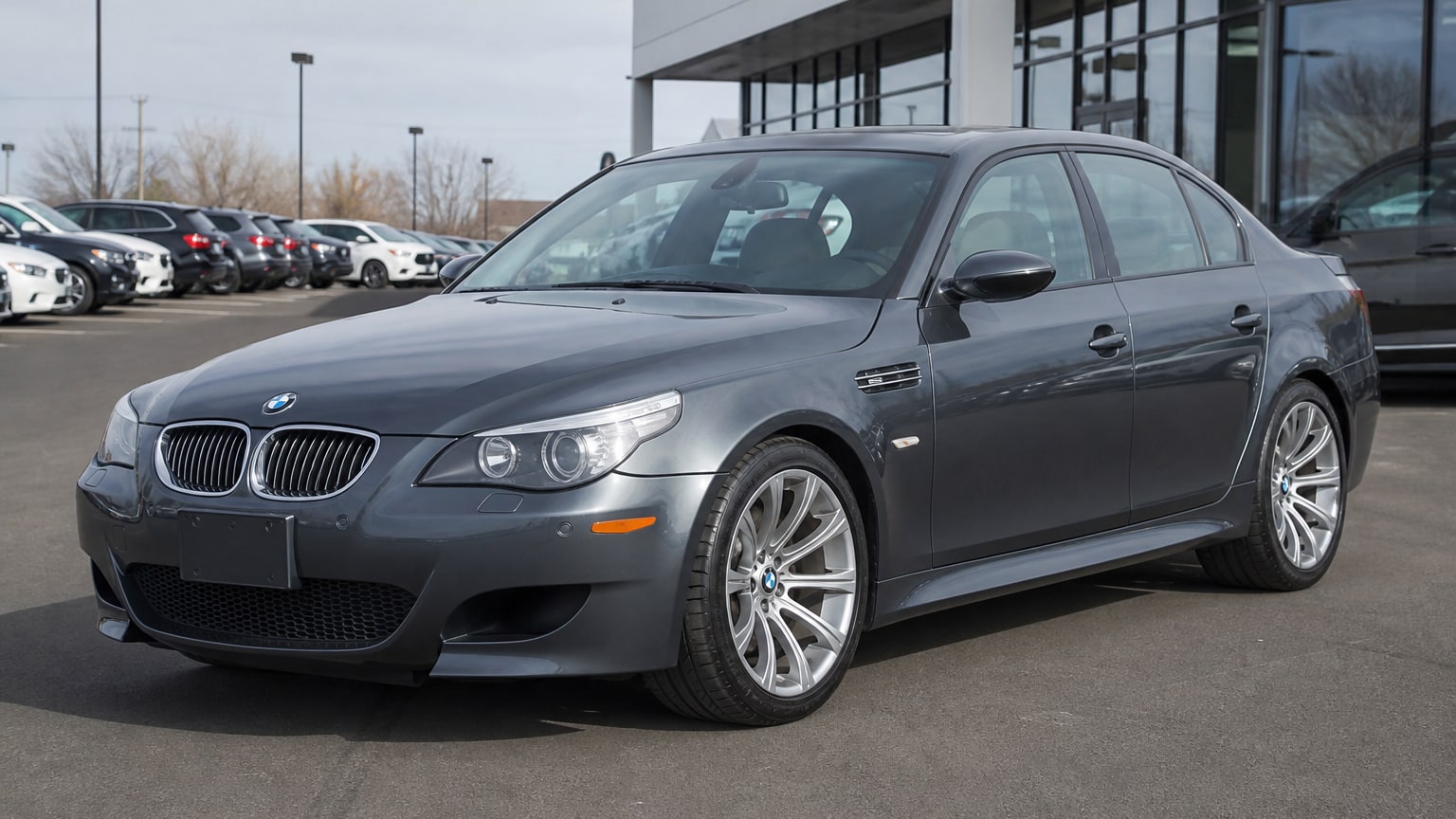
The BMW M5 years to avoid are 2006, 2007, 2008, 2009, 2010, 2013, and 2014. CarComplaints rates the 2014 the worst M5 year on its PainRank metric (repair cost and mileage-at-failure), while the 2013 carries the highest raw complaint count in that database - those are two different measures of two different problems. The 2006 BMW M5 carries the highest NHTSA raw complaint volume at 54 owner complaints, with airbags the most common complaint category.
| BMW M5 Generation | Model Years | Verdict | Main Issues |
|---|---|---|---|
| E39 (2000-2003) | 2000, 2001, 2002, 2003 | Best | Aging rubber, VANOS service; otherwise reliable |
| E60 (2006-2010) | 2006, 2007, 2008, 2009, 2010 | Worst | S85 rod bearings, SMG pump, VANOS lines |
| F10 (2013-2016) | 2013, 2014 | Worst | S63T HDP, fuel injectors, suspension drop |
| F10 (2013-2016) | 2015, 2016 | Mixed | Lower complaint count; warranty extension applies |
| F90 (2018-2023) | 2019, 2020, 2021, 2022, 2023 | Best | Refined S63; ZF 8-speed; lowest complaint rate |
3rd-generation BMW M5 E60 (2006-2010)
The 2006-2010 E60 M5 uses a high-strung V10 engine prone to rod bearing failure, and its SMG automated manual transmission suffers from expensive pump and actuator defects. The 2006 is the single highest-volume complaint year with 54 NHTSA complaints on record and 1 recall. The 2007 follows with 8 NHTSA complaints and 1 recall, with airbags the most common complaint category. All five years share the same S85 engine and SMG drivetrain, so no year within this generation is safe to buy without thorough pre-purchase inspection and confirmed rod bearing service history. Visit NHTSA complaint data for the 2006 M5 before making any offer.
4th-generation BMW M5 F10 (2013-2014)
The 2013 BMW M5 has 18 complaints on CarComplaints, with engine and suspension the worst categories. One owner complaint filed with NHTSA on a 2013 M5 describes a rod seizure to the crankshaft at 59,817 miles, destroying the bearing and sending metal debris through the engine. BMW's warranty extension SI B01 02 18 covered the high-pressure fuel pumps on 2013 and 2014 F10 M5s to 10 years/120,000 miles, and a second extension, SI B01 06 18, covered fuel injectors on 2013-2015 cars to the same term. Whether these programs were executed on any specific car must be verified by VIN lookup at a BMW dealer. The average repair cost for a 2013 BMW M5 runs between $1,121 and $1,370 annually - before any major powertrain event.
What are the best BMW M5 years to buy
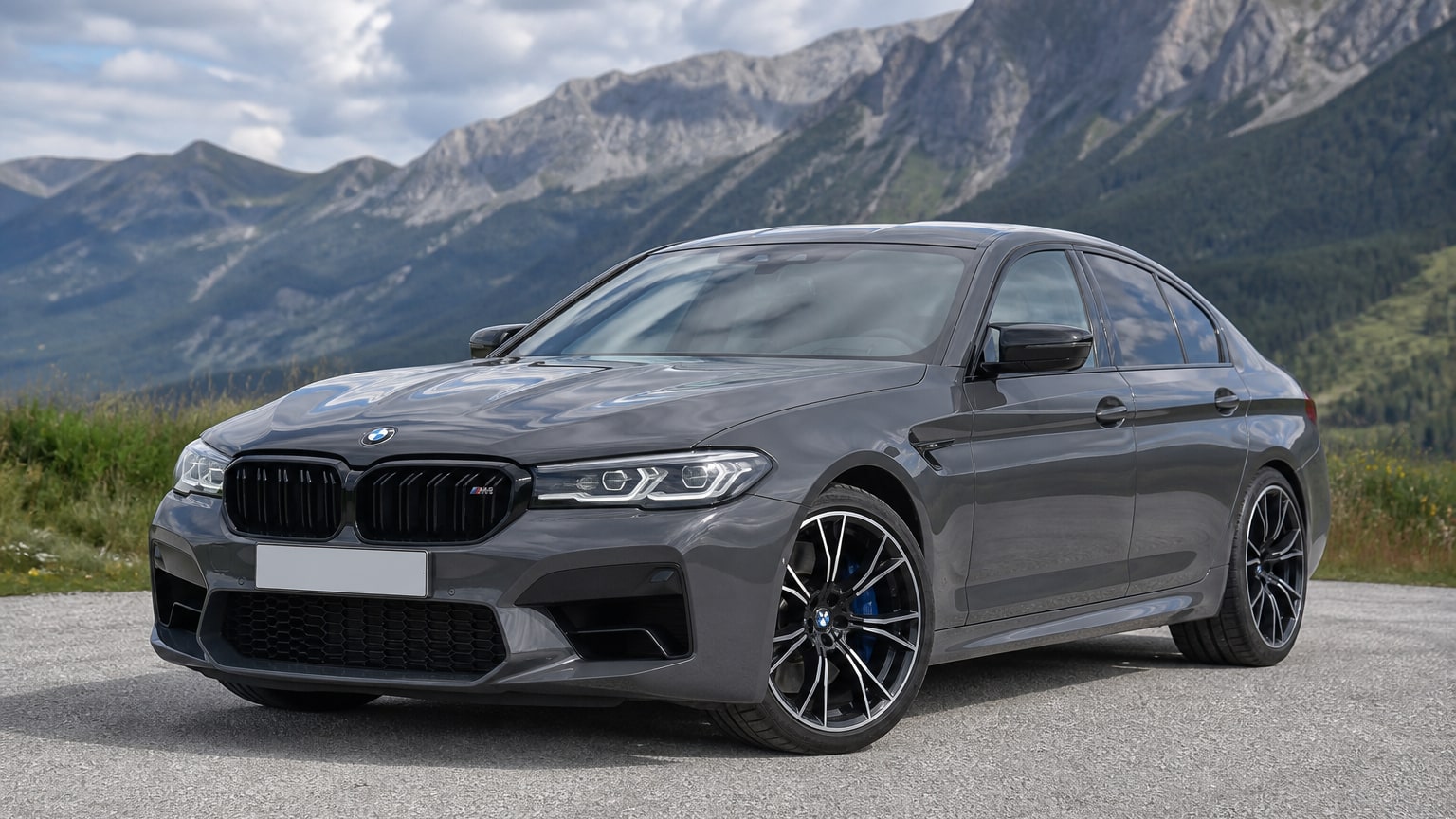
The best BMW M5 years to buy are 2000, 2001, 2002, 2003 (E39) and 2019, 2020, 2021, 2022, 2023 (F90), with the F90 generation being the strongest pick for a modern used buyer. The F90 generation (2018-2023) is comparatively the most reliable modern M5, as its twin-turbo V8 and ZF automatic transmission avoid the severe mechanical flaws found in the V10 and early twin-turbo models.
| Best BMW M5 Year | Why It's a Strong Buy |
|---|---|
| 2000 | E39 generation debut; S62 V8; low complaint count; strong owner loyalty |
| 2001 | Low CarComplaints count (4 complaints); S62 V8 well-proven |
| 2002 | Mature E39 platform; minimal documented defects |
| 2003 | Final E39 year; no generation-specific catastrophic faults |
| 2019 | Launch of refined F90; S63 updated; ZF 8HP; low NHTSA complaints |
| 2020 | Competition trim widely available; minimal complaints on record |
| 2021 | Mid-generation maturity; clean complaint record |
| 2022 | Lowest complaint rate in modern M5 history |
| 2023 | Final F90 year; platform fully sorted; strong reliability |
2000-2003 BMW M5 (E39)
The E39 broke with M5 tradition by using a big 5.0L V8, the naturally aspirated S62, which proved far more durable than the later S85 V10. The 2001 BMW M5 has just 4 complaints on CarComplaints, and the pattern holds across the 2000-2003 run. The 2000-2003 E39 is an excellent enthusiast car that requires dedicated maintenance, and buyers must proactively address the VANOS system and aging rubber components for reliable daily use. With the E39 now 20-plus years old, the concerns are age-related rather than design flaws - a pre-purchase inspection focusing on cooling system hoses, VANOS function, and subframe condition covers the main risks.
2022 BMW M5 (F90)
The 2022 M5 is the strongest single-year pick among modern cars, combining a fully mature S63 twin-turbo V8, the ZF 8-speed automatic, and the lowest documented complaint rate in the F90 generation. A BMW M5 will cost about $15,626 for maintenance and repairs during its first 10 years of service, which beats the industry average for luxury sedan models by $6,277 - and a 2022 car still has years of that window ahead of it. At current used prices, the 2022 offers the best balance of warranty proximity, low mileage, and platform maturity.
BMW M5 submodel years to avoid
The M5 has been produced across five key chassis and body codes - E39, E60, F10, F90, and the Competition trim that spans the F10 and F90 eras - each with its own engine, drivetrain, and fault profile. Here is what each one's own record actually shows.
BMW M5 E39 years to avoid
The E39 M5 ran from model years 2000 to 2003 in the US market, powered by the naturally aspirated 5.0L S62 V8 producing 394 hp, paired with a 6-speed manual. Thousands of BMW fans consider the E39 M5 to be the best M5 ever produced, and the complaint record backs that sentiment. CarComplaints shows just 4 complaints for the 2001 M5 - a representative figure across the E39 run - with no catastrophic powertrain defect pattern comparable to the E60 or early F10.
No E39 M5 model year has accumulated enough data to flag as a dedicated avoid year on its own. The S62 engine does not share the S85's rod-bearing geometry problem. Buyers must proactively address the VANOS system and aging rubber components for reliable daily use. At 20-plus years of age, the pre-purchase checks that matter most are:
-
Cooling system condition (hoses, expansion tank, water pump)
-
VANOS function (rough idle at cold start indicates wear)
-
Subframe and rear trailing-arm bushing condition
-
Full service history including oil change intervals
BMW M5 E60 years to avoid
The E60 M5 ran from 2006 to 2010 in the US, and its defining mechanical feature - for better and worse - is the 5.0L S85 naturally aspirated V10 producing 500 hp. The S85 unit revved to 8,250 rpm, driving the rear wheels via a seven-speed single-clutch automated manual SMG transmission. Every year of the E60 M5 carries the rod-bearing, SMG, and VANOS fault risks covered above.
The 2006 leads NHTSA complaint volume at 54 complaints, making it the single highest-volume year in the entire M5 model history. All E60 M5s are well outside any factory or extended warranty coverage, and independent warranty providers typically exclude known S85 weak points like rod bearings and VANOS. Avoid any E60 without documented preventive rod bearing replacement. If you buy one, self-insure with a dedicated repair fund - the same advice given by experienced owners on M5Board and M5Post forums.
BMW M5 F10 years to avoid
The F10 M5 ran from 2013 to 2016 in the US, using the S63T 4.4L twin-turbo V8. Having skipped 2011 and 2012 model years, the F10 redesign arrived for MY2013 as the first turbocharged M5; the E60's SMG gearbox was dropped and replaced with a seven-speed dual-clutch automatic, while a six-speed manual was also available.
The 2013 and 2014 are the years to avoid within this generation. The 2013 BMW M5 has 18 complaints on CarComplaints - the highest F10 count - centered on engine and suspension. The 2014 is CarComplaints' PainRank worst M5 year. BMW issued warranty extension SI B01 02 18 (high-pressure fuel pumps, 10 years/120,000 miles, 2013-2014 cars) and SI B01 06 18 (fuel injectors, 10 years/120,000 miles, 2013-2015 cars) in response to documented S63T failures. The 2015 and 2016 carry meaningfully lower complaint rates and are in OK/Mixed territory. Pre-purchase checks specific to this generation:
-
Verify SI B01 02 18 and SI B01 06 18 warranty extension completion by VIN at a BMW dealer
-
Check for oil leaks at the turbo coolant lines and intercooler hoses
-
Pull the rod bearing service history; proactive replacement is standard practice at 60,000-80,000 miles
-
Test all DCT shift modes and look for hesitation at low-speed launch
BMW M5 F90 years to avoid
The F90 M5 launched for model year 2018 (though 2018 carries 7 CarComplaints complaints vs. cleaner 2019-onward records) and ran through 2023, using the S63 4.4L twin-turbo V8 now producing 600 hp in standard form and 617 hp in Competition trim, paired with the ZF 8HP automatic. The current F90 M5 was met with initial criticism due to the introduction of a four-wheel drive system BMW had never before installed on the M5 series, but in fact delivered one of the best four-door luxury sports sedans available.
No F90 M5 model year has accumulated a complaint volume or PainRank score that flags it as an avoid year. The F90 generation is comparatively the most reliable modern M5, as its twin-turbo V8 and ZF automatic transmission avoid the severe mechanical flaws found in the V10 and early twin-turbo models. The most common issue on S63-powered cars is leaks of oil and coolant lines, endemic to all turbo cars; BMW designed a complex cooling system with the water-cooled intercooler adding a set of coolant lines. Inspect those hoses on any used F90 buy, but this is a maintenance item, not a systemic defect.
BMW M5 Competition years to avoid
The M5 Competition first appeared as an option package for the F10 in 2014 (adding power to 575 hp) and became a standalone trim for the F90 generation. For the 2014 model year, the Competition package upped the power to 575 hp. The F90 M5 Competition uses the same S63 engine and ZF 8HP as the standard F90 M5, producing 617 hp with stiffer suspension calibration and no manual-transmission option.
The M5 Competition as a specific trim variant does not have a separate NHTSA or CarComplaints complaint record that would flag any model year beyond what applies to the standard M5. For the 2014 F10 Competition, the same high-pressure fuel pump and fuel injector warranty extensions (SI B01 02 18 and SI B01 06 18) apply - verify by VIN. For F90 Competition years (2019-2023), no model year has accumulated enough complaint data to flag a dedicated avoid year. The stiffer suspension on Competition cars does generate more owner discussion about ride harshness and tire wear, but these are preference issues, not reliability defects.
BMW M5 pre-purchase checklist
Before buying any used BMW M5, confirm the following:
- Run the VIN through NHTSA's recall checker at nhtsa.gov/recalls to confirm every open recall campaign is completed before you take delivery.
- On 2006-2010 E60 cars, check the rod bearing service history - pull the dipstick cold and look for metallic sheen; ask for documented preventive bearing replacement (ideally before 70,000 miles). Walk away if no records exist.
- On 2013-2014 F10 cars, verify warranty extension status for high-pressure fuel pumps (SI B01 02 18) and fuel injectors (SI B01 06 18) at a BMW dealer using VIN-specific lookup; these cover up to 10 years/120,000 miles from the original in-service date.
- On all E60 cars, test the SMG transmission through all modes (Auto, Sequential, Sport) and check for hesitation, error messages, or failure to engage - hydraulic pump repair starts at $1,500.
- On E39 cars (2000-2003), check the cooling system and VANOS - a rough cold-start idle points to VANOS wear; inspect all rubber hoses and the expansion tank for cracking.
- Request full service records including oil change intervals and oil type used; the S85 V10 requires 10W-60 synthetic and is sensitive to incorrect oil viscosity.
- Have a BMW-specialist independent shop perform a pre-purchase inspection - a standard dealer inspection often misses S85 rod bearing wear or early S63T fuel pump symptoms.
- Check for active drivetrain malfunction warnings in the iDrive fault memory on any turbo-era M5 (F10/F90); stored faults can reveal intermittent issues not present during a test drive.
Better alternatives to consider
If the BMW M5 years in your budget land on the avoid list, consider these alternatives instead:
-
Mercedes-AMG E63 S - direct class competitor with a biturbo V8; the post-2012 M157 engine is generally more reliable than the pre-2012 M156 naturally aspirated unit, and the used market is well-documented
-
Cadillac CT5-V Blackwing - 668 hp supercharged V8, available with a manual, and significantly lower used-market prices than a comparable F90 M5 with a cleaner reliability record on its GM LT4 engine
-
Acura TLX - a significantly lower-cost alternative in the sport-sedan segment with a more accessible maintenance cost and a clearer year-by-year reliability record for budget-conscious buyers
Is the BMW M5 worth buying
The BMW M5 is worth buying as long as you avoid the E60 generation (2006-2010) and the early F10 years (2013-2014). The F90 generation (2018-2023) is the most reliable modern M5, with its twin-turbo V8 and ZF automatic transmission avoiding the severe mechanical flaws of earlier generations. Over its first 10 years, a BMW M5 costs about $15,626 in maintenance and repairs, which beats the luxury sedan industry average by $6,277 - a better long-term cost picture than many buyers expect. For the best ownership experience, target a 2019-2023 F90 or a well-maintained 2000-2003 E39, run the VIN through NHTSA's recall database, and verify full maintenance history before signing.
Frequently asked questions
What are the best BMW M5 years to buy?
The best BMW M5 years to buy are 2000, 2001, 2002, 2003 (E39 generation) and 2019, 2020, 2021, 2022, 2023 (F90 generation). The 2018-2023 F90 generation is the strongest overall choice for modern performance and daily usability, while the 2000-2003 E39 remains the definitive analog sports sedan for enthusiasts willing to perform proactive maintenance.
What are the worst years for the BMW M5?
The worst BMW M5 years are 2006, 2007, 2008, 2009, 2010, 2013, and 2014. The 2006-2010 E60 uses a V10 prone to rod bearing failure, and its SMG transmission suffers from expensive pump defects. CarComplaints rates the 2014 the worst M5 by repair cost and mileage-at-failure, while NHTSA raw complaint volume peaks at the 2006 with 54 complaints.
Which year BMW M5 is most reliable?
The 2022 BMW M5 is the single most reliable pick among modern cars, combining a fully mature S63 twin-turbo V8 with the ZF 8-speed automatic and the lowest documented complaint rate in the F90 generation. The F90 as a generation is comparatively the most reliable modern M5, as its twin-turbo V8 and ZF automatic avoid the severe mechanical flaws found in earlier generations. Among classic cars, how long a BMW lasts depends heavily on maintenance discipline, and the E39's S62 V8 has a strong long-term record when properly serviced.
What year BMW M5 has the worst rod bearing problems?
The rod bearing failure is most severe and most documented on the 2006-2010 E60 M5. The S85 V10 of the E60 M5 is plagued by rod bearing failure due to overly tight factory bearing clearances. Engine replacement costs $15,000 - $32,000 in catastrophic cases. BMW did not issue a recall or warranty extension covering the S85 rod bearings; preventive bearing replacement before 70,000 miles is the community standard. The F10 S63T engine also has documented rod bearing wear in tracked cars, though far less catastrophically than the S85, and BMW's warranty extensions for that generation covered fuel pumps and injectors rather than bearings.
How long does a BMW M5 last?
A BMW M5 will cost about $15,626 in maintenance and repairs during its first 10 years, and there is a 41.71% chance it will require a major repair during that period. With proper maintenance - regular oil changes using the correct viscosity, proactive rod bearing replacement on S85 and S63 cars, and timely cooling system service - well-maintained M5s from the E39 and F90 generations regularly reach 150,000-200,000 miles. The E60 generation's ceiling is lower due to its structural engine faults, and the cost of keeping one running past 100,000 miles without proactive work is high. The annual maintenance cost of a BMW M5 averages $1,173, though that figure rises sharply on E60 cars with deferred engine service.