
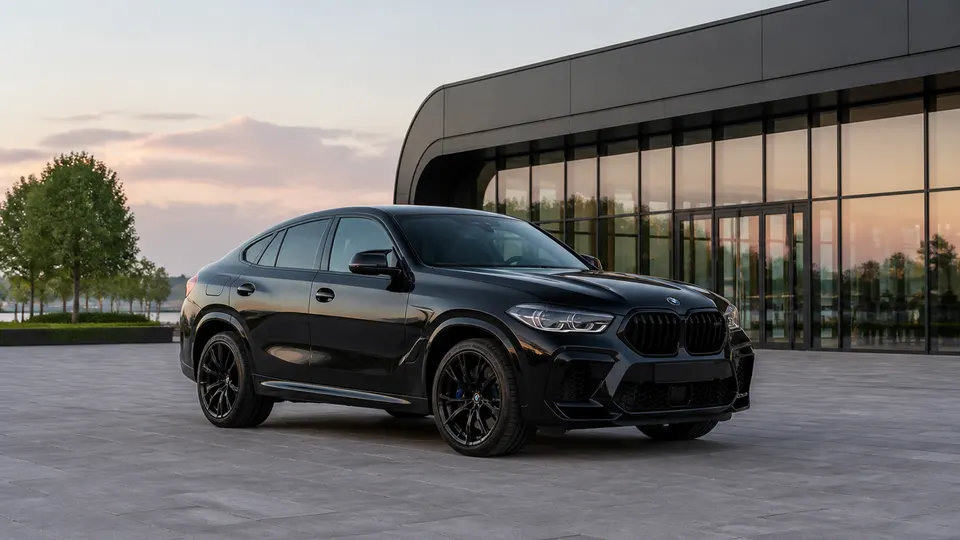
The BMW X6 is a genuinely capable luxury sport-utility coupe that holds up well when you buy the right year, but specific model years carry expensive N63 engine and drivetrain problems that can turn a good deal into a money pit. This guide ranks every model year on NHTSA complaint and recall data, CarComplaints figures, and RepairPal ownership cost data so you can buy with confidence and skip the lemons.
For generations, engines, and ownership notes in one place, see the BMW X6 hub.
At a glance
- Worst years
- 2009
- 2011
- 2012
- 2013
- Best years
- 2017
- 2022
- 2023
- Top failure
- 1st-gen N63 V8 oil consumption and timing chain wear (2008-2013 E71, per CarComplaints highest complaint volume and owner forums)
- Always do before buying
- run the VIN through NHTSA's recall checker; on 2008-2013 cars, ask for documented proof that the N63 Customer Care Package was completed at a BMW dealer
Recalls by year
Gray bands mark years the model was not produced.
How we rated the best and worst BMW X6 years
The first-generation E71 (2008-2014) is the clear worst generation, led by the 2012 and 2013 model years on CarComplaints raw complaint volume and the 2009 and 2011 on combined complaint and repair-severity data.
Our years-to-avoid methodology draws on NHTSA complaint and recall filings, CarComplaints per-year counts and PainRank, and RepairPal's reliability and cost ratings. CarComplaints ranks a "worst year" by repair cost and mileage-at-failure (its PainRank system), while NHTSA shows raw complaint volume - the two often point to different years. The 2012 BMW X6 has 47 problems and defects reported by X6 owners on CarComplaints, the highest raw count on that platform across all X6 years in our research.
The 2013 BMW X6 has 37 problems and defects reported by X6 owners on CarComplaints, making it the second-highest year. The BMW X6 Reliability Rating is 2.0 out of 5.0, which ranks it 16th out of 19 for luxury fullsize SUVs on RepairPal.
| BMW X6 Generation | Best BMW X6 Years | Worst BMW X6 Years |
|---|---|---|
| 1st gen E71 (2008-2014) | None | 2009, 2011, 2012, 2013 |
| 2nd gen F16 (2015-2019) | 2017 | None |
| 3rd gen G06 (2020-present) | 2022, 2023 | None |
Every BMW X6 model year ranked
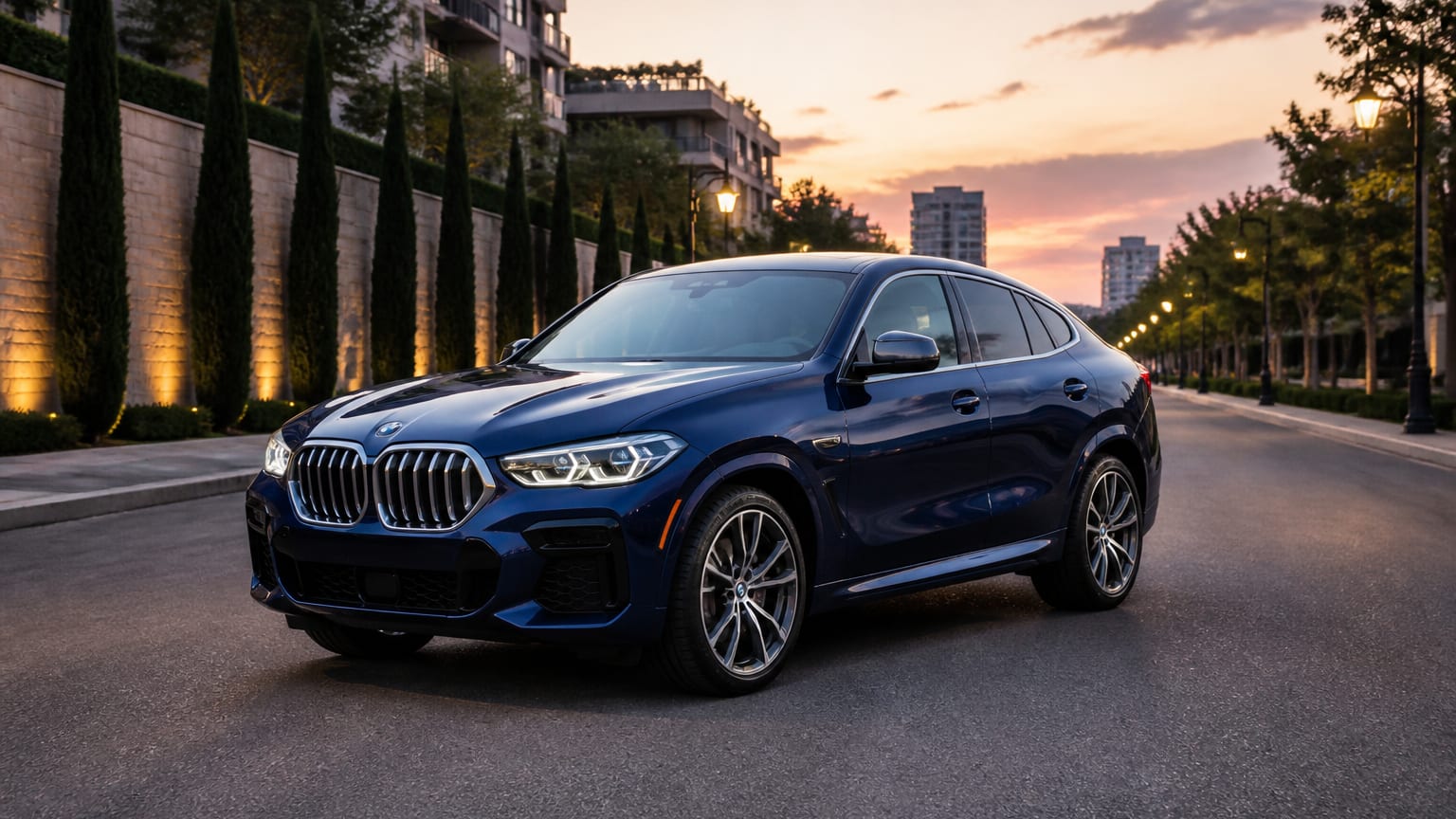
The 2012 and 2013 E71s carry the most CarComplaints reports of any X6 model year, making them the clearest years to avoid, while the 2022 and 2023 G06s post the lowest complaint volumes in the model's history.
| Model Year | Generation | Verdict | Notes |
|---|---|---|---|
| 2008 | E71 (1st gen) | OK/Mixed | Launch year; fewer complaints than 2009-2013 but N63 oil risk present |
| 2009 | E71 (1st gen) | Avoid | 28 CarComplaints reports; N63 overheating and engine issues |
| 2010 | E71 (1st gen) | OK/Mixed | 25 CarComplaints reports; drivetrain complaints most common |
| 2011 | E71 (1st gen) | Avoid | 51 NHTSA complaints; 11 recalls; engine complaints highest in generation |
| 2012 | E71 (1st gen) | Avoid | 47 CarComplaints reports; highest on platform; N63 [timing chain](/articles/timing-belt-vs-timing-chain/) and oil consumption |
| 2013 | E71 (1st gen) | Avoid | 37 CarComplaints reports; N63 CCP window; Takata airbag recall |
| 2014 | E71 (1st gen) | OK/Mixed | 10 CarComplaints reports; final E71 year; low complaint count |
| 2015 | F16 (2nd gen) | OK/Mixed | New generation; improved but EGR and timing chain still present |
| 2016 | F16 (2nd gen) | OK/Mixed | 9 CarComplaints reports; medium KBB repair-risk rating |
| 2017 | F16 (2nd gen) | Best | Low complaint volume; mid-generation sweet spot |
| 2018 | F16 (2nd gen) | OK/Mixed | Low complaint count; water pump recall issued |
| 2019 | F16 (2nd gen) | OK/Mixed | Final F16 year; transfer case wear at higher mileage |
| 2020 | G06 (3rd gen) | OK/Mixed | Launch year; 12 NHTSA complaints; rear spoiler recall (20V-095) |
| 2021 | G06 (3rd gen) | OK/Mixed | 13 NHTSA complaints; 7 recalls; electrical faults most common |
| 2022 | G06 (3rd gen) | Best | 5 NHTSA complaints; 1 recall; lowest complaint count on record |
| 2023 | G06 (3rd gen) | Best | 1 recall; low complaint volume; reliability score 65/100 |
| 2024 | G06 (3rd gen) | OK/Mixed | 4 recalls; 9 NHTSA complaints; brake hydraulic system reports |
Most common BMW X6 problems
N63 V8 oil consumption and timing chain failure is the single biggest documented problem across the X6's history, concentrated in the 2008-2013 first generation but carrying real financial consequences for any buyer who misses the service history check. Beyond the N63, owners across all three generations report electric water pump failure, xDrive transfer case wear, Takata airbag inflator defects, and electrical and software faults on the newer G06.
1. N63 V8 oil consumption and timing chain wear (2008-2013)
The BMW N63 engine is powerful but has known issues like high oil consumption, timing chain wear, and battery drain, often due to its high-heat "hot V" design. The engine mounts its twin turbos between the cylinder banks, which traps heat and accelerates wear on the piston rings, valve stem seals, and plastic timing chain guides. You may notice blue smoke on startup, an oil level warning well before the next service interval, or a rattling noise on cold starts - all signs the chain guides are wearing.
Many N63 engines consume oil at rates exceeding 1 quart per 1,500 miles, particularly beyond 75,000 miles, with causes including worn piston rings, PCV system faults, and degraded valve stem seals. BMW does not consider oil consumption below 1 quart/1,200 miles a warranty issue, leaving owners responsible for top-offs. BMW used inferior plastic guides to support the timing chain system in the N63 engine; over time, these plastic components wear down causing slack in the timing chain, which can lead to the chain jumping timing and catastrophic engine failure.
Timing chain kits should be inspected by 80,000 miles and replaced preventively by 100,000 miles; kits cost $600-$1,000, but labor can exceed $3,000 due to complexity. BMW issued a voluntary service campaign to address these failures. In December 2014, BMW initiated a comprehensive service campaign known as the "N63 Customer Care Package" (TSB SIB 11 06 14), to address the engine's most significant flaws; this was not a formal recall, but a voluntary campaign that applied to all N63-equipped vehicles, even those out of warranty. The campaign covered every N63B44O0 engine across the 5, 6, 7 Series, X5, and X6 built between 2008 and 2013, regardless of mileage or warranty status; BMW instructed dealers to carry out a six-point inspection and replace, where needed, the timing chain, fuel injectors, mass airflow sensors, crankcase vent lines, engine vacuum pump, and the low-pressure fuel sensor. BMW also halved the service interval, from 15,000 miles to 10,000 miles, and added an annual oil change requirement. If you're looking at a 2008-2013 X6 xDrive50i (the N63-engined trim), ask the seller for a dealer printout showing TSB SIB 11 06 14 was completed. If you own one of these cars and there's no record of the CCP being carried out, that's an important gap.
2. Electric water pump failure (2008-2012 N63)
The electric water pump on the N63 is integrated into the cooling system and fails without warning; a failed pump leads to overheating, which may cause head gasket failure or warping, with replacement costs running $800-$1,500. BMW issued NHTSA recall 18V-248 covering the electronic auxiliary water pump on the E71 X6 xDrive50i and X6M for model years 2008-2012. The symptom is a temperature warning light or coolant level drop with no visible external leak - the pump fails internally.
Regular coolant flushes every two years help prevent corrosion and pump strain. On any 2008-2012 X6 50i or X6 M you're considering, verify that recall 18V-248 has been completed before purchase. Overheating damage from a failed pump can cascade into a head gasket repair costing several thousand dollars.
3. xDrive transfer case wear (E71 and F16, high mileage)
The xDrive all-wheel-drive system on the E71 and, to a lesser extent, the F16 develops transfer case actuator and clutch pack wear as mileage climbs. The E71 X6 (2008-2014) shares the same transfer case architecture as the E70 X5, including the same failure patterns. The warning sign is a 4WD warning light, a whirring or grinding noise under load, or hesitation when turning tight.
The actuator motor fault is common on the E70 X5, E71 X6, F15 X5, and F16 X6. Dealers often quote full transfer case replacement when only the actuator motor has failed; always get a second opinion from a BMW specialist who can differentiate between actuator failure and internal transfer case failure. A full transfer case replacement can run $2,000-$4,000 at a dealer, while an actuator-only repair is significantly less. G-series vehicles (the G06 X6, 2020-present) have improved transfer case designs and show significantly fewer failures.
4. Takata airbag inflator recall (2008-2014 E71)
The E71 X6 (including the X6 M), model years 2008-2014 with approximately 37,000 vehicles, was included in Takata airbag recall 16V-071 covering the driver's front airbag module. A separate campaign, recall 19V-017, covered the passenger's front airbag module on E71 X6 (including the X6 M) for 2008-2014, with approximately 14,221 vehicles affected. Both recalls involve Takata inflators that can rupture and send metal fragments toward occupants.
These recalls are free to repair at any authorized BMW dealer, but some are still unresolved on individual vehicles. Always run your specific VIN through NHTSA's recall lookup tool before finalizing any 2008-2014 X6 purchase.
5. Electrical faults and software issues (G06 2020-present)
The 2020 BMW X6 has 12 NHTSA complaints, with electrical faults the most common issue at 5 complaints. The 2021 BMW X6 has 13 NHTSA complaints, with electrical faults the most common issue at 2 complaints. Third-generation owners on xBimmers.com report iDrive software freezes, camera system glitches, and forward-collision system false alerts - most addressable via dealer software updates under warranty.
BMW recalled certain 2020-2022 X6 models because the roof function control unit may be programmed incorrectly, allowing the sunroof to close without the key fob present inside the vehicle, failing to comply with Federal Motor Vehicle Safety Standard number 118. The fix is a free dealer reprogram. This applies to all 2020-2022 G06 trims and is covered by recall 22V-267.
6. EGR cooler failures (F16 2015-2019)
F16 X6 models continued to experience issues with the EGR cooler and timing chain. The EGR (exhaust gas recirculation) cooler can crack or clog, triggering a check engine light, reduced power mode, and visible white or blue smoke. It is more common on higher-mileage F16 cars and affects both the inline-6 and V8 engine variants. Replacement costs typically run $1,000-$2,500 depending on labor rates and whether the EGR valve is replaced at the same time.
Checking a used BMW?
Scan for hidden fault codes from your phone in minutes — before you buy.
REREV may earn a commission if you sign up through this link. Learn more.
Which BMW X6 years should you avoid?
The BMW X6 years to avoid are 2009, 2011, 2012, and 2013. The 2012 BMW X6 has 47 problems and defects reported by X6 owners on CarComplaints - the single highest count across all X6 years on that platform, making it CarComplaints' highest-volume year for this model. The 2011 BMW X6 carries 51 complaints filed with NHTSA, which is the highest raw NHTSA complaint count in the first generation - note that CarComplaints and NHTSA measure different things, and a year that tops one list does not automatically top the other. Both the 2012 (CarComplaints) and the 2011 (NHTSA volume) sit inside the same dangerous N63 ownership window.
| BMW X6 Generation | Model Years | Verdict | Main Issues |
|---|---|---|---|
| 1st gen E71 | 2009, 2011, 2012, 2013 | Worst | N63 oil consumption, timing chain, electric water pump, Takata airbag |
| 2nd gen F16 | 2015-2019 | Mixed | EGR cooler, timing chain residual, xDrive actuator wear |
| 3rd gen G06 | 2020-present | Best | Electrical/software bugs, sunroof recall (22V-267), low complaint volume overall |
Worst BMW X6 years: 2009, 2011, 2012, 2013
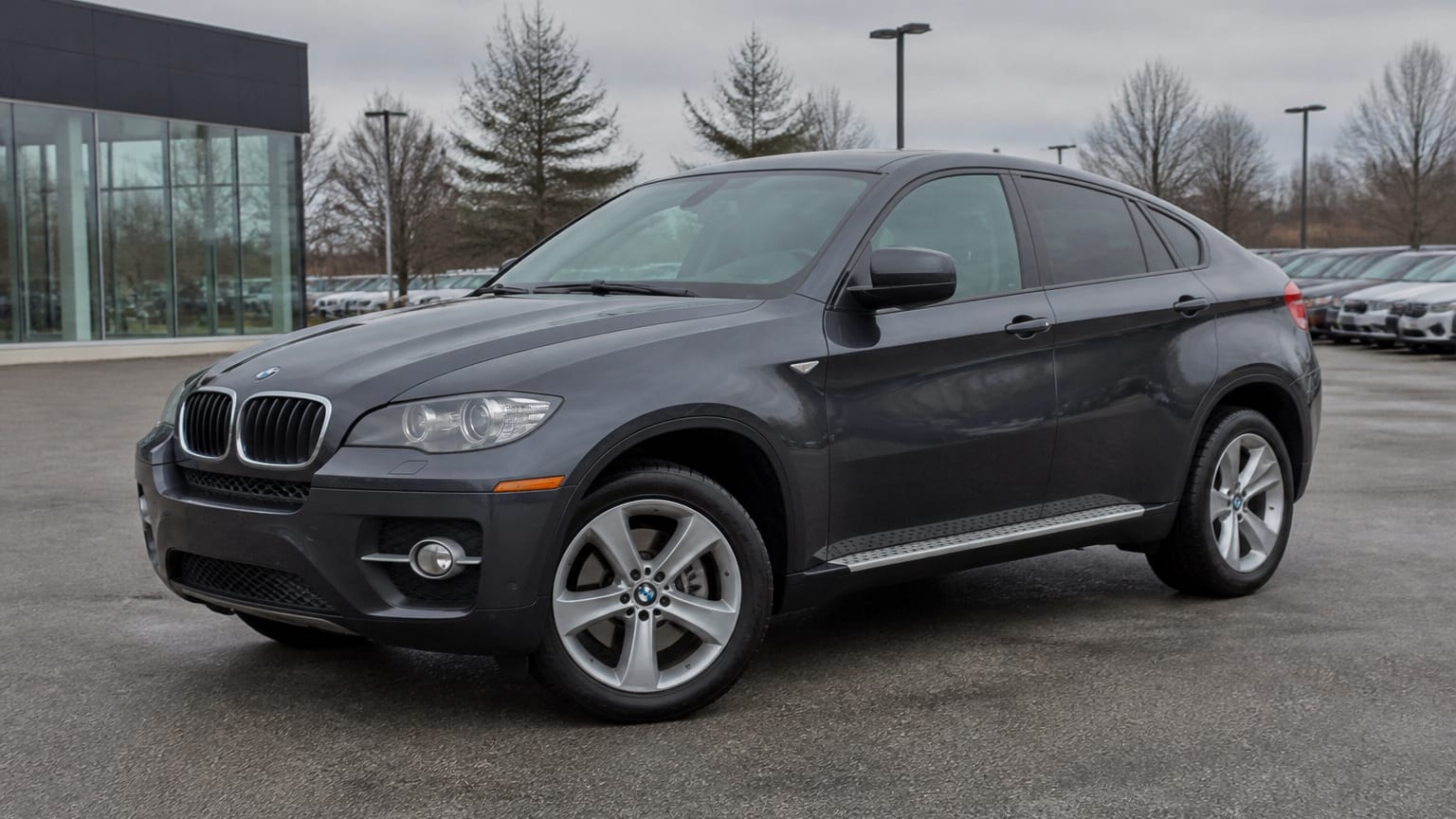
First-generation BMW X6 (2008-2014)
Common issues in the E71 generation include engine overheating, transmission problems, and electrical faults, especially in the earlier years. The 2009, 2011, 2012, and 2013 model years are the standout concerns. The 2009 BMW X6 has 28 problems and defects reported by X6 owners on CarComplaints. The 2011 BMW X6 has 11 recalls on record, and at least one is a critical "Do Not Drive" recall. The 2012 and 2013 sit squarely inside the N63 Customer Care Package window, and if the TSB SIB 11 06 14 service was never performed on a specific car, you are buying all of those deferred repairs at once. The 2014 is the safest E71 to buy, with only 10 CarComplaints reports and the last year of the generation.
Second-generation BMW X6 (2015-2019)
The F16-generation X6 debuted in 2015, sharing its platform with the F15 X5; it featured updated styling, improved interior materials, and more advanced technology, but some models continued to experience issues with the EGR cooler and timing chain, and reliability improved over the first generation, though certain years still had notable complaints. No F16 year reaches the complaint threshold of the worst E71 years. The 2017 is the strongest pick in this generation, sitting in the middle of the production run after early issues were ironed out and before higher-mileage wear set in.
What are the best BMW X6 years to buy?
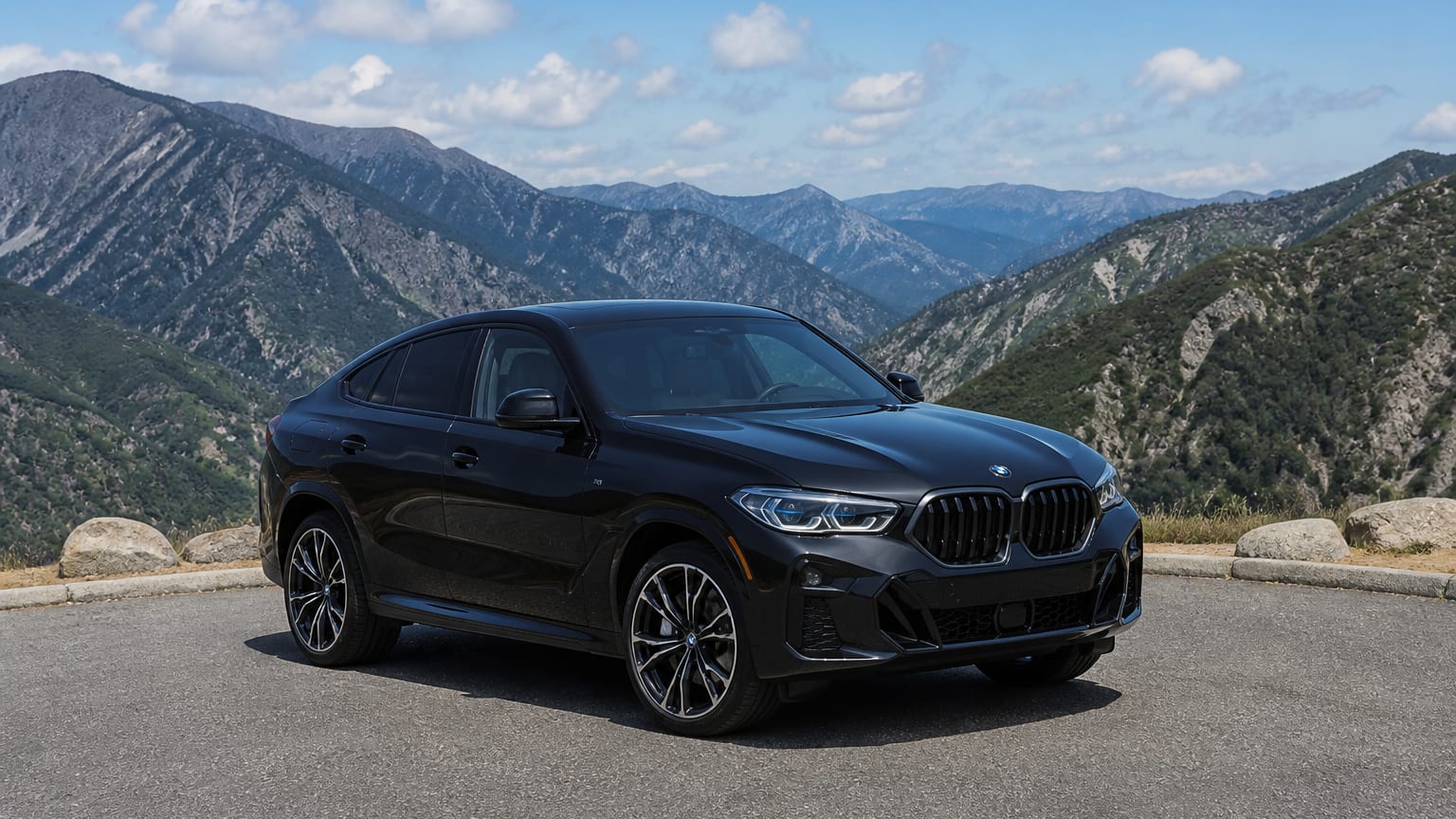
The best BMW X6 years to buy are 2017, 2022, and 2023, based on the lowest complaint volumes, fewest recalls, and strongest reliability scores across the model's history.
| Best BMW X6 Year | Why It's a Strong Buy |
|---|---|
| 2017 | Mid-generation F16; low complaint count; past EGR teething issues; N63TU updated engine |
| 2022 | Lowest NHTSA complaint count (5) of any X6 year; only 1 recall; 66/100 reliability score |
| 2023 | 65/100 reliability score; 1 recall; G06 platform matured; full ADAS suite standard |
Most reliable BMW X6 years: 2017, 2022, 2023
2017 BMW X6
The 2017 is the sweet spot of the F16 generation. It uses the updated N63TU engine, which includes critical updates such as improved turbos, stronger timing chains, better cooling, and a reinforced fuel pump drive, and generally offers better durability and fewer major failures than the pre-TU version. Sitting in the middle of the 2015-2019 run, the 2017 has had time on the road for its issues to surface in owner data, and the complaint count remains low.
2022 BMW X6
The best BMW X6 year for reliability is 2022, with a reliability score of 66/100, and it has only 1 recall and 3 owner complaints on record according to one tracking source. NHTSA data shows the 2022 BMW X6 has 5 NHTSA complaints and 1 recall, with the top reported problem being the back-over prevention rearview system, and the verdict is below-average complaints. That single recall (22V-267, the sunroof control unit reprogram) is a simple, free dealer fix.
2023 BMW X6
Only 1 recall has been issued for the 2023 BMW X6, and all recall repairs are performed free of charge at authorized dealerships. The 2023 carries a reliability score of 65/100 from one tracking source, just behind the 2022. It shares the G06 platform's improved drivetrain malfunction resilience and comes with a full suite of updated driver-assistance technology standard. For a used buyer, a 2023 CPO example with remaining factory coverage is one of the lower-risk X6 purchases available today.
BMW X6 submodel years to avoid
The BMW X6 is sold in three main trims - xDrive40i, M50i, and X6 M - each with its own engine, complaint profile, and specific concerns. Each is assessed on its own NHTSA and recall record below.
BMW X6 xDrive40i years to avoid
The xDrive40i uses the B58 turbocharged 3.0-liter inline-six, replacing the earlier 35i's N55 engine when the G06 generation launched in 2020. This is the volume seller of the X6 range. Its own model-year span as a named trim runs from 2020 to present.
No xDrive40i model year has yet accumulated enough NHTSA complaint data to flag a single year as distinctly worse than others on its own record. The 2020-2022 X6 sDrive40i and xDrive40i (along with other G06 trims) were included in recall 22V-267 covering the roof function control unit sunroof closing fault. That recall affects all 2020-2022 G06 X6 trims equally and is resolved by a free dealer reprogram. The B58 engine is widely regarded as more reliable than the N63 it replaced, and no B58-specific fault has surfaced in meaningful quantity in the xDrive40i's complaint record.
Before buying a used xDrive40i, check:
- VIN confirmation that recall 22V-267 (sunroof control unit) is closed
- Full service records showing oil changes at or under 10,000-mile intervals
- No stored drivetrain fault codes via a pre-purchase OBD scan
BMW X6 M50i years to avoid
The X6 M50i uses the S58-related N63TU3 4.4-liter twin-turbo V8 producing 523 hp and was offered from 2020. It is mechanically distinct from the xDrive40i in its engine, twin-turbo V8 character, and sport-tuned adaptive suspension. The 2021 X6 M50i (along with the sDrive40i and xDrive40i) was included in a recall covering certain Pirelli tires that may have a damaged inner layer, possibly resulting in a rapid loss of pressure while the vehicle is moving.
No M50i model year has yet accumulated enough complaint data to flag a specific year as an avoid on this trim's own record. The N63TU3 is a significantly improved descendant of the early N63 that caused problems in 2008-2013 cars, and while it shares the hot-V architecture, the updated cooling and chain guides described above reduce the risk considerably. If you're buying a used M50i, verify:
- The sunroof recall 22V-267 is resolved (applies to 2020-2022)
- The tire recall from 2021 (covering certain Pirelli fitments) has been addressed
- No oil consumption above 1 quart per 1,500 miles, which would be early for an N63TU3
BMW X6 M years to avoid
The X6 M uses the high-output S63 twin-turbo V8 (a separate engine from the standard N63) and has been offered in two generations: the E71-based X6 M (2010-2014) and the G06-based X6 M (2020-present), with no F16 X6 M produced for the US market in the same configuration. The E71 X6 M (2008-2012 production) was included in NHTSA recall 18V-248 covering the electronic auxiliary water pump.
The S63-engined E71 X6 M also falls inside the Takata airbag recall window (16V-071 and 19V-017) for model years 2010-2014, covered earlier in this article. The G06 X6 M (2020-present) carries the same structural spoiler recall (20V-484 covering the 2020 X6 M) as the rest of the 2020 G06 lineup - BMW recalled certain 2020 X6 sDrive40i, xDrive40i, X6 M50i, and X6 M vehicles because the rear spoiler may not be appropriately bonded to its mounting plate and could detach while driving, becoming a road hazard. That recall is resolved by a free dealer inspection and replacement if needed. No G06 X6 M year has accumulated enough complaint volume to flag one model year as distinctly worse than another on the X6 M's own record at this time.
BMW X6 pre-purchase checklist
Before signing on a used BMW X6, work through each of these checks to avoid the model's most expensive documented failure modes.
- Run the VIN through NHTSA's recall lookup: confirm every open recall - including the Takata airbag campaigns 16V-071 and 19V-017 on 2008-2014 cars, the water pump recall 18V-248 on 2008-2012 50i/M models, and the sunroof recall 22V-267 on 2020-2022 cars - has been completed at a BMW dealer.
- On any 2008-2013 xDrive50i or X6 M, demand dealer documentation of TSB SIB 11 06 14: the N63 Customer Care Package covers timing chain inspection, injector replacement, and interval reduction; a car with no record of this work carries all deferred costs.
- Check the oil level on the dipstick or via iDrive on 2008-2017 N63-powered cars: consumption above 1 quart per 1,500 miles suggests advanced piston ring or valve seal wear; walk away unless the price reflects a likely engine rebuild.
- Listen for a cold-start rattle on 2008-2015 models: a metallic rattle in the first 5-10 seconds of operation is a classic sign of worn timing chain guides on the N63.
- On 2008-2019 cars, test the xDrive system under load: turn the wheel tightly in a parking lot and note any grinding, whirring, or 4WD warning light, which can indicate transfer case actuator wear.
- Request full service records: verify oil changes at intervals of 10,000 miles or less (the CCP-reduced interval) and that coolant was flushed at least every two years on the N63.
- On 2015-2019 F16 cars, scan for EGR cooler fault codes: a P0401 or related code without a recent EGR service means that repair is coming soon.
- For any 2020+ G06, confirm the spoiler recall (20V-095 or 20V-484) and sunroof recall (22V-267) are closed before test driving at highway speeds.
Better alternatives to consider
If the BMW X6 years in your budget land on the avoid list, also see BMW X5 years to avoid and BMW X4 years to avoid, or consider these alternatives instead:
- BMW X5 - shares the X6's platform with more cargo space and a broader used-market selection, making it easier to find a clean example
- BMW X7 - the three-row sibling on the CLAR platform; 2020 and newer models avoid the early N63 oil-consumption window entirely
- BMW X4 - a smaller coupe-SUV alternative in the same style lane
- Porsche Cayenne - a competing sport-utility with a stronger long-term reliability reputation across its own generation spans
- Audi Q8 - a similarly styled luxury fastback SUV from the same price tier, with its own distinct avoid-year profile
Is the BMW X6 worth buying?
Yes, the BMW X6 is worth buying as long as you avoid the 2009, 2011, 2012, and 2013 model years. The average annual repair cost is $1,206, which means it has poor ownership costs; the frequency and severity of repairs are both much higher than the average vehicle. That cost is real, but it is concentrated in the first-generation N63-engined cars. The 2017, 2022, and 2023 model years post dramatically lower complaint volumes and fall outside the most problematic service windows. Maintenance for a BMW X6 will cost about $19,624 after 10 years, which is more than the industry average for luxury SUV models by $7,171, and there is a 56.41% chance that an X6 will require a major repair during that time. Those numbers improve sharply on a well-maintained G06. Run the VIN through NHTSA's recall checker and verify the full service history before committing - those two steps do more to protect your investment than any single model-year choice. You can also explore how long a BMW typically lasts to set realistic ownership expectations.