
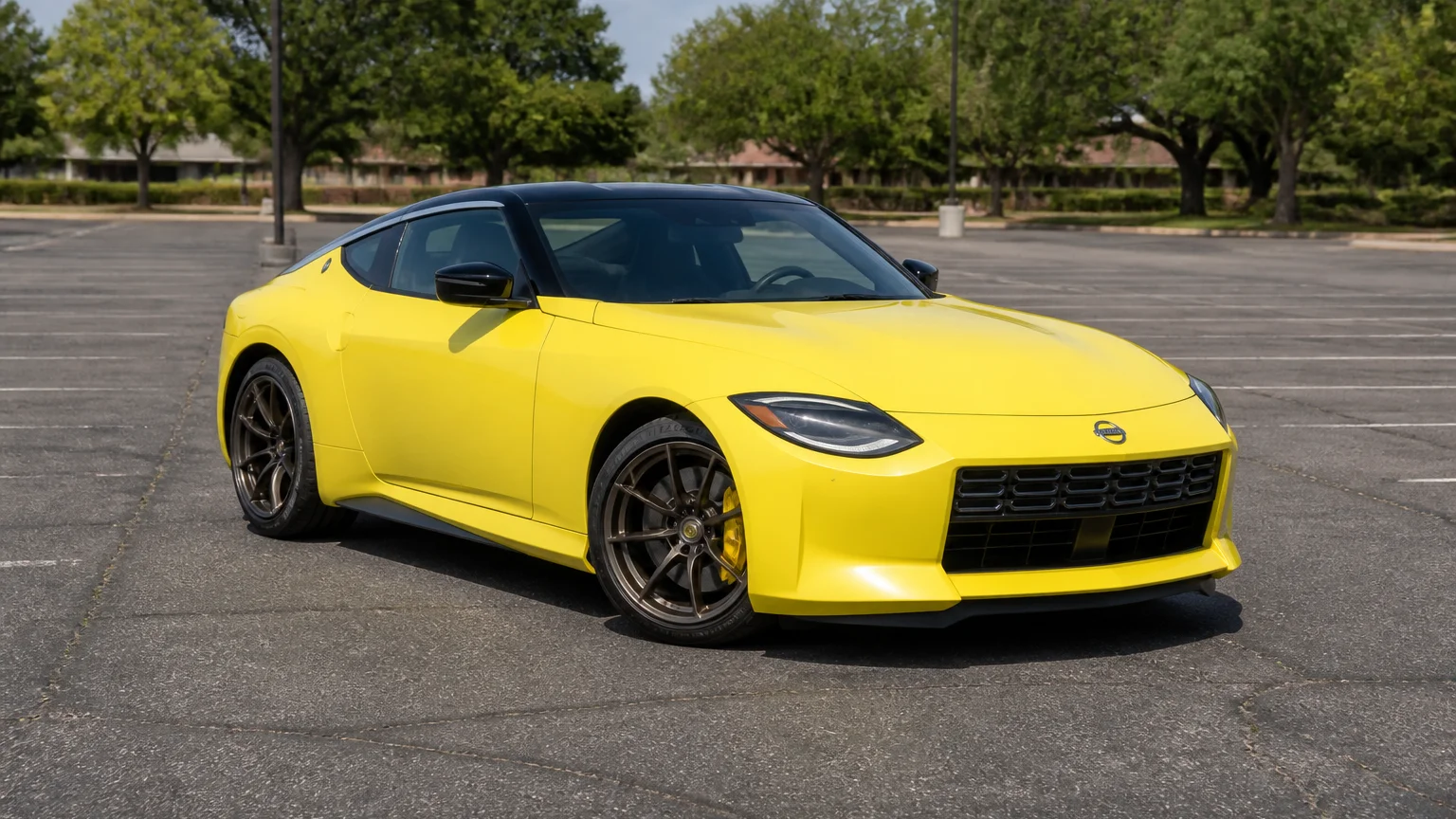
The Nissan Z is one of the most rewarding sports cars you can buy used, with strong engines, rear-wheel drive, and a long production history that gives you plenty of options at every price point. That said, a handful of model years carry well-documented problems that cost owners thousands out of pocket, and knowing which ones to skip can save you real money. This guide ranks every generation's best and worst years using NHTSA complaint data, CarComplaints PainRank scores, RepairPal repair costs, and owner forum reports, so you can buy with confidence.
For generations, engines, and ownership notes in one place, see the Nissan Z hub.
Related guides appear in the Nissan years to avoid directory.
At a glance
- Worst years
- 2006
- 2009
- 2010
- 2011
- Best years
- 2004
- 2007
- 2008
- 2015
- 2017
- 2023
- 2024
- Top failure
- 370Z electronic steering column lock failure, 2009-2011 (highest NHTSA complaint volume per NHTSA data; 2010 worst by CarComplaints PainRank)
- Always do before buying
- Run the VIN through NHTSA's recall checker; on any 2009-2011 370Z, ask specifically whether Nissan voluntary service campaign #P3208 was completed
Recalls by year
Gray bands mark years the model was not produced.
How we rated the best and worst Nissan Z years
The 2010 Nissan 370Z is CarComplaints’ worst-ranked model year for the 370Z by PainRank, which weights repair cost and mileage at failure. Meanwhile, NHTSA raw complaint volume is highest on the 2009 370Z with 226 complaints, making it the volume leader - a different year than the CarComplaints PainRank worst.
Ratings and complaint counts in this guide come from NHTSA complaint and recall data, CarComplaints (which ranks a “worst year” by repair cost and mileage at failure via its PainRank algorithm, not raw complaint volume), RepairPal for repair costs and reliability scores, and owner reports from the Nissan Z Club forum and the my350z.com / the370z.com owner communities.
These sources measure different things, and they frequently point to different years, so every claim below is attributed to its specific source. Our editorial guidelines govern how we weight and present each data source throughout the article.
| Nissan Z Generation | Best Nissan Z Years | Worst Nissan Z Years |
|---|---|---|
| 350Z (2003-2008) | 2004, 2007, 2008 | 2006 |
| 370Z (2009-2020) | 2015, 2017 | 2009, 2010, 2011 |
| Modern Z / RZ34 (2023 - present) | 2023, 2024 | None |
Every Nissan Z model year ranked
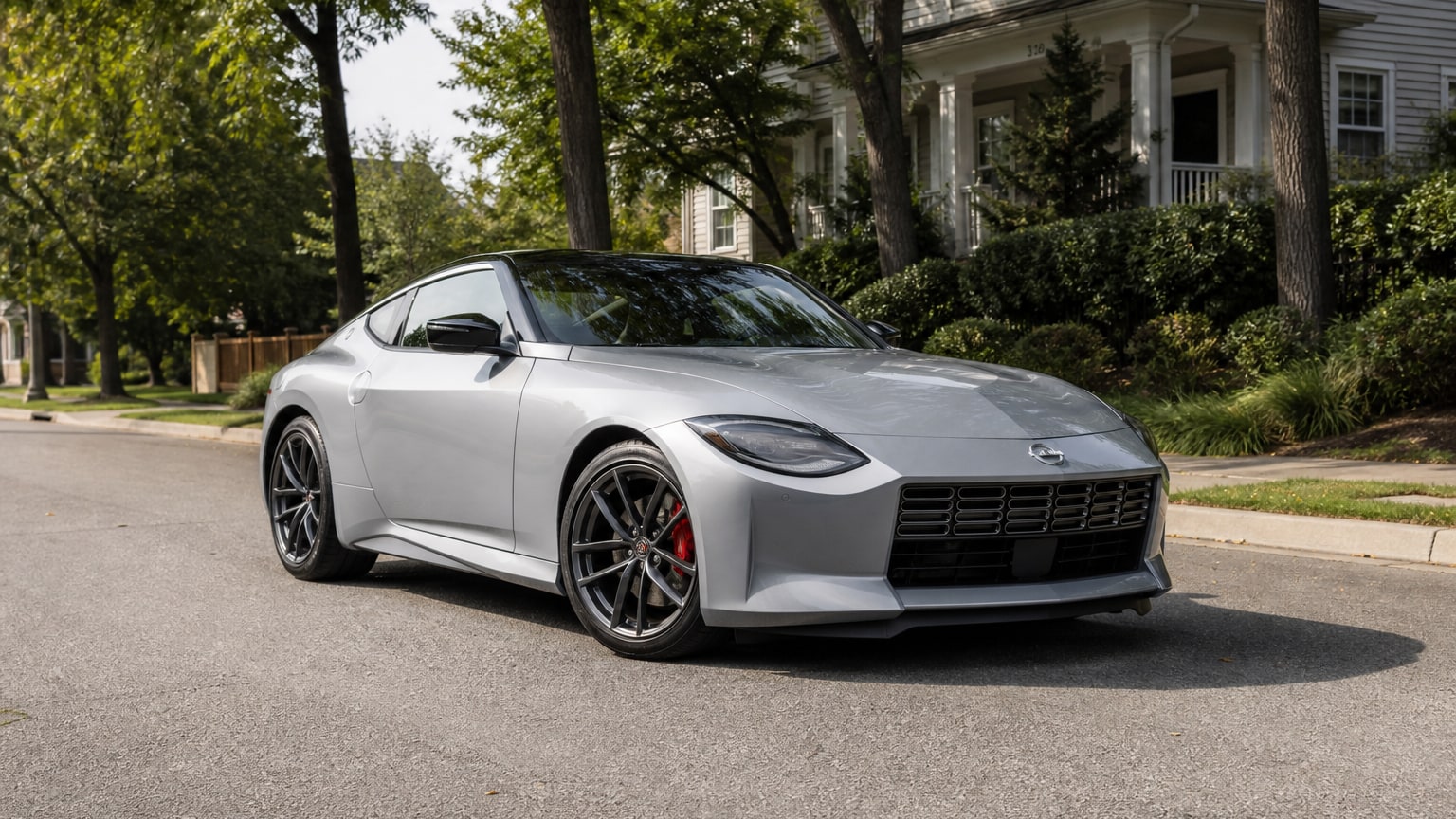
The data-backed picture is that the early 370Z years (2009-2011) and the 2006 350Z are the years to avoid, while the mid-to-late 370Z production run and the current-generation Z are the safest choices.
| Model Year | Generation | Verdict | Notes |
|---|---|---|---|
| 2003 | 350Z | OK/Mixed | Most raw complaints on CarComplaints, but at higher mileage than 2006 |
| 2004 | 350Z | Best | Revised cats, lower complaint rate, solid VQ35DE |
| 2005 | 350Z | OK/Mixed | "Rev-up" VQ35DE oil consumption emerges in this MY |
| 2006 | 350Z | Avoid | CarComplaints worst 350Z year by PainRank; higher repair cost, lower failure mileage |
| 2007 | 350Z | Best | VQ35HR engine introduced, fixed rev-up oil consumption |
| 2008 | 350Z | Best | Final 350Z year; VQ35HR, lower complaint count |
| 2009 | 370Z | Avoid | Highest NHTSA complaint volume (226) in entire Z lineup; ESCL failure dominant |
| 2010 | 370Z | Avoid | CarComplaints worst 370Z year by PainRank; 148 NHTSA complaints; ESCL most reported |
| 2011 | 370Z | Avoid | 59 NHTSA complaints; ESCL still present; 1 recall |
| 2012 | 370Z | OK/Mixed | ESCL removed; complaints drop sharply; complaints in teens |
| 2013 | 370Z | OK/Mixed | Low complaint count; oil galley gasket begins appearing at higher mileage |
| 2014 | 370Z | OK/Mixed | Continued low complaint count |
| 2015 | 370Z | Best | Single-digit NHTSA complaints; strong owner ratings |
| 2016 | 370Z | OK/Mixed | Low complaints; $504 annual maintenance |
| 2017 | 370Z | Best | Single-digit NHTSA complaints; cited alongside 2015 as best buy |
| 2018 | 370Z | OK/Mixed | 1 recall (airbag); complaint count low |
| 2019 | 370Z | OK/Mixed | Low volume; final full year of mainstream 370Z |
| 2020 | 370Z | OK/Mixed | Final 370Z model year; very low complaint data |
| 2023 | Modern Z (RZ34) | Best | 2 recalls resolved; very low NHTSA complaint count |
| 2024 | Modern Z (RZ34) | Best | 2 recalls resolved; Z Nismo joins lineup |
Most common Nissan Z problems
The single biggest failure across the Nissan Z nameplate is the electronic steering column lock (ESCL) on the 2009-2011 370Z, which strands owners without warning and was never formally recalled for the 370Z despite covering hundreds of complaints. Below are the four most documented recurring failure categories across all Z generations.
1. Electronic steering column lock (ESCL) failure - 2009-2011 370Z
The ESCL is a motorized lock built into the steering column that secures the wheel when the car is off and disengages when you start it. This failure is most common in 2009 and 2010 Nissan 370Z vehicles: the steering locking unit fails at a premature rate, and the car will suddenly not start without warning. The symptom is an illuminated intelligent key warning light and a car that cranks nothing - owners have been stranded in parking garages and on streets with no prior indication.
Owners discovered that from 2009 through 2012, all 370Zs shared this issue, and dealers quoted out-of-pocket repair costs of around $1,100. Other owners were quoted $1,200 for replacement, and Nissan ordered a recall for the GT-R for the same defect but declined to extend it to the 370Z.
Nissan did issue a voluntary service campaign covering 2009-2011 370Zs. According to Nissan’s voluntary service campaign for 2009-2011 model years, NHTSA reference #10051829, TSB #NTB13-014, campaign #P3208, the dealer is responsible for replacing the faulty steering lock module at no charge to the customer. If you are buying a 2009-2011 370Z, verify that campaign #P3208 was completed on the specific VIN before purchase. The steering lock was removed entirely in 2012 models forward, so 2012-and-later 370Zs do not carry this risk. Buyer takeaway: any 2009-2011 370Z without documented service campaign completion is a pass.
2. VQ35DE “rev-up” oil consumption - 2005-2006 350Z
It is only the VQ35DE “rev-up” 300 hp engine that has known oil consumption issues, with several owners having them replaced under warranty. This engine appeared in the 2005-2006 350Z; the oil consumption issue was resolved in 2007 with the VQ35HR motor, and the rev-up was the only one that suffered from it.
CarComplaints rates the 2006 350Z the worst model year for the 350Z because of higher repair cost and problems appearing at lower mileage - and engine problems are the top complaint category on that page. At high mileage, timing chain stretch and weakened tensioners on the primary chains appear past 150,000 miles, causing one-to-three seconds of rattle on cold start and eventually requiring chain, tensioner, and guide replacement. Budget $1,500 - $3,000 for timing chain service around 150,000-180,000 miles.
A bad timing chain on a VQ35DE typically announces itself with a cold-start rattle that clears within seconds of oil pressure building. If the rattle persists past warm-up or gets louder under load, the chain and tensioners are likely overdue. Buyer takeaway: on any 2005-2006 350Z, check the oil level cold and ask when the PCV valve was last replaced - a clogged PCV accelerates ring glazing and worsens oil burn.
3. VQ37VHR oil galley gasket failure - 370Z (all years, higher mileage)
The VQ37VHR in the 370Z introduced an oil galley gasket issue. The oil galley lets oil flow to the timing chain, and the VQ37VHR has two of them, sealed by two gaskets, whose failure is practically guaranteed at higher mileage.
The 370Z’s galley gasket problems stem not just from age but from poor design and materials, and replacing these gaskets requires disassembling a significant portion of the engine. Combined with the VQ platform’s tendency toward rising oil consumption, some older models consume a quart of oil every 1,000-2,000 miles, and an increasing thirst for oil makes it easier to run out, which can cause timing chain problems. Metal shavings in the oil at an oil change are a sign this process has already begun. Buyer takeaway: on any high-mileage 370Z, pull the dipstick, check for a dark or burnt smell, and confirm the oil change interval has been followed.
4. Clutch hydraulic system failure - manual 370Z
This issue is common enough with the manual Nissan 370Z that owners filed a class-action lawsuit against Nissan. The clutch master cylinder and clutch slave cylinder use pressurized fluid to shift gears smoothly; when the slave cylinder fails, it ruptures and leaks clutch fluid underneath the car, preventing gear changes.
The solution is to replace the failed parts with either revised OEM pieces or an aftermarket external slave cylinder arrangement, which eliminates the concentric design weakness. Watch for a soft or spongy clutch pedal, any pooling of fluid under a parked car, or difficulty engaging gears - all are early signs. Buyer takeaway: test the clutch pedal feel on any manual 370Z and look under the car for fluid traces near the bellhousing before you buy.
5. Pop-up hood sensor recalls - 2023-2024 Modern Z (RZ34)
The current-generation Z (RZ34, sold from 2023) carries two safety recalls related to its pedestrian-protection pop-up hood system. Two recalls - R23C8 and R24B6 - exist for the pop-up hood sensor system, and both should be verified on any used vehicle.
Recall R23C8 affects approximately 988 units of certain 2023-2024 Nissan Z vehicles. The fasteners in the left-side front bumper reinforcement clip may loosen, preventing the pop-up engine hood from activating in a frontal pedestrian crash, which increases the risk of injury. Recall 24V-798 (Nissan number R24B6) affects 4,036 vehicles across 2023-2024 model years for reversed pedestrian detection sensor connectors, also preventing the hood from popping up as intended. Nissan estimates 100% of the recalled vehicles have the connector issue, and dealers replace the front bumper harness at no charge. Buyer takeaway: run the VIN through NHTSA’s recall tool and confirm both R23C8 and R24B6 are closed before completing a purchase of any 2023 or 2024 Z.
Which Nissan Z years should you avoid
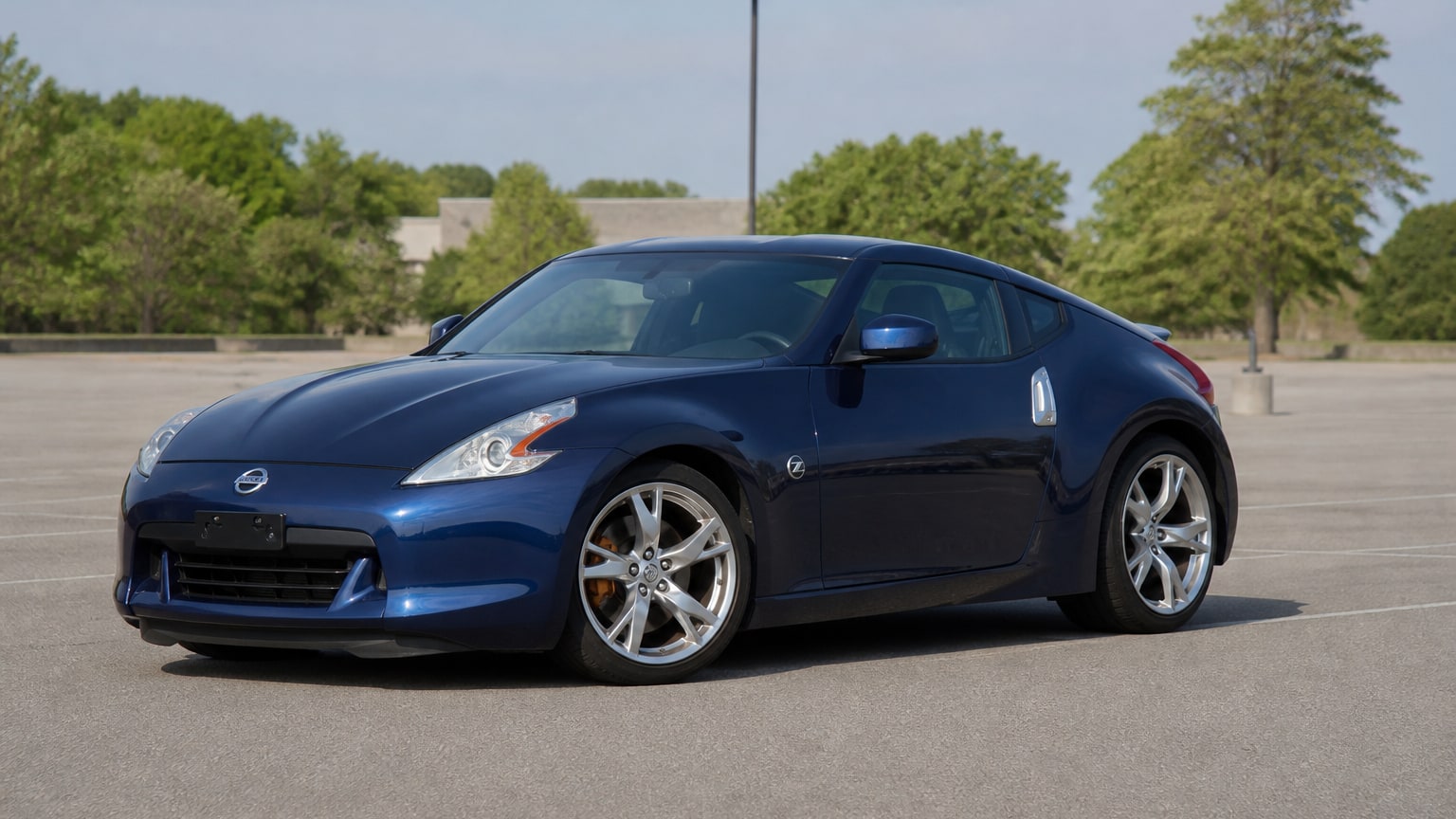
The Nissan Z years to avoid are 2006, 2009, 2010, and 2011. CarComplaints labels the 2010 Nissan 370Z its worst-ranked year by PainRank, citing 160-plus complaints, and the most notorious issue is the faulty steering wheel lock mechanism, which can render the car immobile by preventing the engine from starting. Separately, NHTSA raw complaint volume peaks on the 2009 370Z with 226 complaints, making it the worst year by that measure - a different conclusion than CarComplaints’ cost-based ranking.
| Nissan Z Generation | Model Years | Verdict | Main Issues |
|---|---|---|---|
| 350Z (2003-2008) | 2003-2008 | Mixed - avoid 2006 | Rev-up oil consumption, timing chain (2005-2006); 2006 worst by CarComplaints PainRank |
| 370Z (2009-2020) | 2009-2020 | Worst 2009-2011, mixed elsewhere | ESCL failure (2009-2011), oil galley gasket, clutch slave cylinder |
| Modern Z / RZ34 (2023 - present) | 2023 - present | Best overall | Pop-up hood recalls (both resolved at dealer) |
First-generation Nissan 370Z (2009-2011)
NHTSA data for the 370Z covers 2009-2019 with 2 recall campaigns and 498 total complaints. The years with the most NHTSA complaint volume are 2009 (226 complaints), 2010 (148 complaints), and 2011 (59 complaints). The dominant problem in all three years is the NHTSA-tracked ESCL failure, where the electronic steering column lock refuses to disengage and leaves the car unable to start. After 2011, complaints dropped to the teens and single digits, and from 2009 to 2011 the largest number of complaints were due to the steering wheel lock unit failure - confirming that avoiding these three years avoids the model’s biggest documented flaw.
Second-worst: 2006 Nissan 350Z
The 2006 Nissan 350Z has 72 problems and defects reported by owners, with the worst complaints in the seat belts/airbags, transmission, and engine categories. On top of those raw counts, CarComplaints rates 2006 as the worst 350Z year by repair cost and low-mileage failure - putting it above the 2003 despite the 2003 having more total complaints. The rev-up VQ35DE in 2005-2006 cars carries the known oil consumption fault described above; the 2007 switch to the VQ35HR engine effectively ended that specific defect.
What are the best Nissan Z years to buy
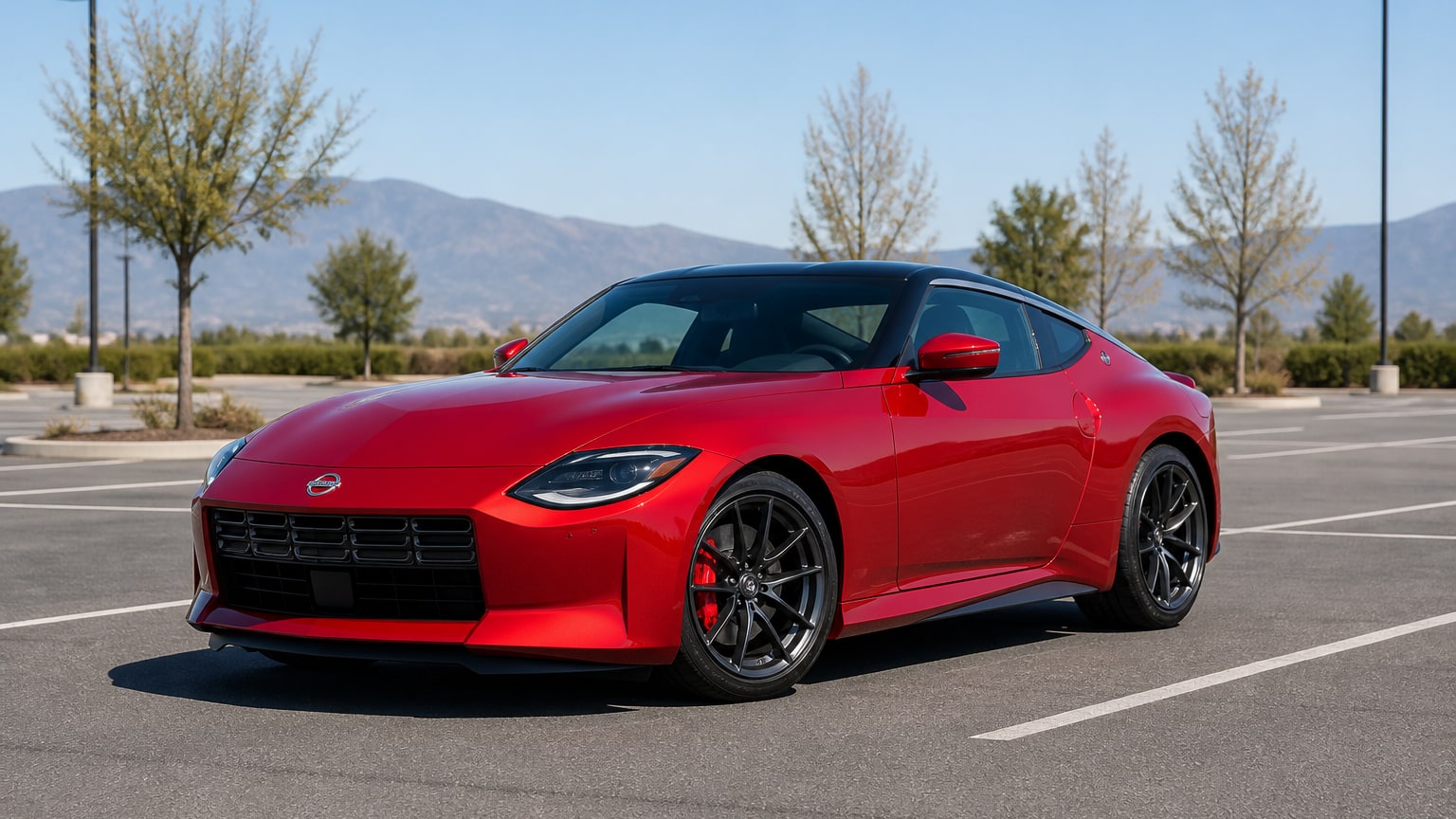
The best Nissan Z years to buy are 2004, 2007, 2008 (350Z), 2015, 2017 (370Z), and 2023-2024 (Modern Z/RZ34). The 370Z spanned 12 years, and the later models are generally better bets; 2012-2020 models show far fewer complaints on CarComplaints.
| Best Nissan Z Year | Why It's a Strong Buy |
|---|---|
| 2004 350Z | Revised cats, lower complaint rate, solid VQ35DE; pre-dates rev-up oil consumption |
| 2007 350Z | VQ35HR engine introduced, fixed rev-up oil consumption; lower complaint count |
| 2008 350Z | Final 350Z year; VQ35HR, lower complaint count |
| 2015 370Z | Single-digit NHTSA complaints; post-ESCL fix; low ownership cost |
| 2017 370Z | Single-digit NHTSA complaints; strong owner reviews; reliable mid-life 370Z |
| 2023 Modern Z | New platform (RZ34); twin-turbo VQ37VHR; both recalls resolved at dealer |
| 2024 Modern Z | Same platform gains; Z Nismo joins; recalls resolved; very low complaint count |
2015 Nissan 370Z
CoPilot calls out 2015 as one of the years to buy due to positive consumer reviews and high reliability ratings; that year also logs single-digit complaints from NHTSA. It sits well inside the post-ESCL era (the lock was removed in 2012), has no open recalls, and benefits from nearly six years of production refinement on the 370Z platform. The Nissan 370Z holds a RepairPal reliability rating of 4.0 out of 5.0, and annual maintenance averages around $481 - $504.
2017 Nissan 370Z
CoPilot also flags 2017 as a year to buy due to positive consumer reviews and high reliability ratings, with single-digit NHTSA complaint counts. The 2017 remains one of the most complained-about years to own among enthusiasts for its aging infotainment, but from a mechanical reliability standpoint the complaint data is as clean as any year in the Z34 run.
2023 Nissan Z (RZ34)
The Z arrived for the 2023 model year as the replacement for the long-serving Nissan 370Z, combining elements of that car’s platform with updates including a modern infotainment system and twin-turbo V6 engine. Both pop-up hood recalls (R23C8 and R24B6) are simple dealer fixes with no owner cost, and forum research shows very low overall NHTSA complaint volume for all RZ34 model years combined. Confirm both recalls are closed on the specific VIN and the 2023 Z is one of the cleaner used-sports-car buys in its price class.
Nissan Z submodel years to avoid
Each submodel below is assessed on its own documented record, not carried over from the parent car’s data.
Nissan Z Nismo years to avoid
For 2024, Nissan added the more track-focused Z Nismo to the lineup, boasting an extra 20 hp over the base car. The Nismo is automatic-only. A manual transmission is available in the standard Z but not in the Nismo.
Nissan lists three part numbers in the R24B6 recall documentation filed with NHTSA: one for 2023 models, one for 2024 models, and a third specifically for the Nismo, which debuted for the 2024 model year. So the Nismo is included in the R24B6 (NHTSA 24V-798) recall, and any 2024 Z Nismo you consider buying should have this recall confirmed as complete via VIN check.
No Nissan Z Nismo model year has yet accumulated enough NHTSA complaint data to flag a specific avoid year - the Nismo was only introduced for 2024 and production volumes remain low. The clutch-slave-cylinder fault described earlier applies to manual-transmission Z variants only, so the automatic-only Nismo is not exposed to that specific failure. The oil galley gasket concern on high-mileage VQ37VHR engines is a long-term watch item, but no Nismo is old enough to have triggered it in volume yet. If you are shopping a 2024 Z Nismo, confirm R24B6 is closed on the VIN, verify the pop-up hood actuates during a pre-purchase inspection, and note that the lack of a manual transmission removes the clutch hydraulic risk entirely.
Nissan Z pre-purchase checklist
Use this checklist on any used Nissan Z before signing:
- Run the VIN through NHTSA’s recall checker to confirm every open recall is closed; for 2023-2024 Z cars, specifically verify R23C8 and R24B6 are complete.
- On any 2009-2011 370Z, confirm campaign #P3208 is done. Ask the seller or dealer to produce documentation that Nissan’s voluntary service campaign (TSB #NTB13-014, NHTSA reference #10051829) was completed, replacing the electronic steering column lock module at no charge. If records are missing, budget $1,100 - $1,200 for the repair or walk away.
- Check the oil level cold before starting the engine. On any high-mileage 350Z or 370Z, a low cold reading or dark, burnt-smelling oil is an early sign of the oil consumption issue described above. If it’s down more than a quart between services, ask for at least six months of oil change receipts.
- On any manual 370Z, test the clutch pedal feel. A spongy or soft pedal, difficulty engaging first gear, or visible fluid near the bellhousing points to a failing clutch slave or master cylinder. This issue is common enough with the manual Nissan 370Z that owners filed a class-action lawsuit against Nissan.
- Listen for cold-start timing chain rattle on any 350Z past 100,000 miles. Start the engine cold and let it idle. A rattle that clears within two seconds is borderline; one that persists past warm-up means the chain and tensioners need service.
- Ask for full service records. The VQ-family engines are sensitive to oil change intervals. Any gap longer than 5,000-6,000 miles on a high-mileage car raises the risk of accelerated oil galley gasket and timing chain wear.
- On 2023-2024 Z cars, test the pop-up hood system (or ask a dealer to verify actuator function) as part of a pre-purchase inspection, given both recalls addressed this system.
Better alternatives to consider
If the Nissan Z years in your budget land on the avoid list, consider these alternatives instead:
-
Nissan Altima - a lower-cost Nissan option with a more thoroughly documented reliability record and available as a daily driver alternative if pure sports performance is not required
-
Toyota GR86 / Subaru BRZ - rear-wheel-drive sports coupes in a similar price bracket with a cleaner early reliability record and no ESCL-type systemic failure in the complaint data
-
Mazda MX-5 Miata - consistently one of the most reliable sports cars in its class, with lower annual maintenance costs and a well-established owner community
-
Nissan Leaf - if budget is the primary concern and sport driving is secondary, the Leaf offers Nissan’s own EV platform with a different risk profile and lower running costs than any Z generation
Is the Nissan Z worth buying
Yes, the Nissan Z is worth buying - as long as you avoid 2006, 2009, 2010, and 2011. RepairPal gives the Nissan 370Z a reliability rating of 4.0 out of 5.0, and annual repair costs average around $504, with major issues less frequent than average for the class. The best picks - 2004, 2007, 2008, 2015, 2017, and the current-generation 2023-2024 Z - offer sports car performance with a manageable ownership cost. Before you buy, run the VIN through NHTSA’s recall database and verify the maintenance history shows consistent oil changes.
Frequently asked questions
What are the best Nissan Z years to buy?
The best Nissan Z years to buy are 2004, 2007, and 2008 (350Z), 2015 and 2017 (370Z), and 2023 and 2024 (Modern Z/RZ34). The 2015 and 2017 are recommended for positive consumer reviews, high reliability ratings, and single-digit NHTSA complaint counts, while the 2023-2024 Z represents a clean new platform with both pop-up hood recalls resolved as simple dealer fixes.
What are the worst years for the Nissan Z?
The worst years for the Nissan Z are 2006, 2009, 2010, and 2011. CarComplaints rates the 2006 350Z the worst model year for the 350Z by PainRank, citing higher repair cost and problems at lower mileage. For the 370Z, CarComplaints ranks 2010 the worst by PainRank, while NHTSA raw complaint volume is highest on the 2009 370Z with 226 complaints - two different years depending on which metric you use.
Which year Nissan Z is most reliable?
The 2004, 2007, and 2008 350Z years and the 2015 and 2017 370Z are the most reliable picks in their respective generations, with low complaint counts and no open recalls. In the current generation, the 2023 and 2024 Z (RZ34) are the strongest buys, provided the two pop-up hood recalls (R23C8 and R24B6) have been completed on the specific vehicle.
What year Nissan Z has electronic steering lock problems?
From 2009 to 2011, the largest number of 370Z complaints were due to the steering wheel lock unit failure, which can prevent the car from starting entirely. Nissan issued voluntary service campaign #P3208 (TSB #NTB13-014, NHTSA reference #10051829) covering 2009-2011 370Zs, under which dealers replace the faulty steering lock module at no charge to the customer. The lock unit was removed from 2012 models forward, so later 370Zs are not affected.
How long does a Nissan Z last?
The VQ35DE engine powering the 350Z is one of the most widely used V6s ever made, and 250,000-mile examples are common when oil changes are consistent. The 370Z averages 0.3 repair shop visits per year with a 13% probability of a repair being severe, pointing to a car that, when maintained properly, can exceed 150,000-200,000 miles without major drivetrain failure. The keys are regular oil changes (the VQ family is oil-change-sensitive), prompt attention to any cold-start rattle, and verifying the ESCL service campaign on early 370Zs. The years to avoid methodology combines complaint volume, repair cost, and failure mileage to identify problem model years, while the team at REREV conducts the underlying research.