
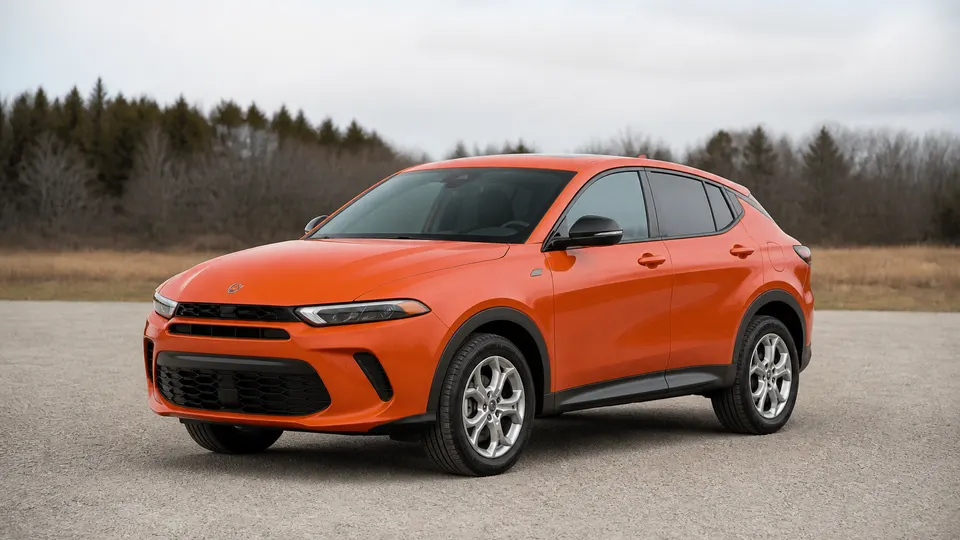
The Dodge Hornet is a punchy compact crossover built on the Alfa Romeo Tonale platform, and most of its mechanical fundamentals are solid - but two of its three model years carry a disproportionate number of electrical failures, safety-system glitches, and open recalls that you'll want to know about before handing over a check. This guide ranks every Dodge Hornet model year using NHTSA complaint and recall data, CarComplaints PainRank scores, and owner-forum reports so you can zero in on the one year worth buying.
For generations, engines, and ownership notes in one place, see the Dodge Hornet hub.
Related: Jeep Compass years to avoid, Chevrolet Trailblazer years to avoid.
At a glance
- Worst years
- 2023
- 2024
- Best years
- 2025
- Top failure
- 1st-gen electrical system faults - dashboards going blank, adaptive cruise control failures, and battery drain across 2023-2024 (CarComplaints; NHTSA)
- Always do before buying
- run the VIN through NHTSA's recall checker, plus confirm the fire-risk battery cable recall (NHTSA campaign 23V-623) is closed on any 2023-2024 PHEV you inspect
Recalls by year
How we rated the best and worst Dodge Hornet years
The 2023 Dodge Hornet has the most overall complaints on CarComplaints, which also rates 2023 as the worst model year ranked on several factors such as repair cost and average mileage when problems occur. That is a different finding from the raw NHTSA complaint-volume picture, where the 2024 model carries the heaviest load - so the CarComplaints worst-year designation (based on PainRank: repair cost and mileage-at-failure) and the NHTSA highest-volume year are not the same, and this guide attributes each claim to its correct source.
Our ratings draw on NHTSA complaint and recall data, CarComplaints PainRank scores, Consumer Reports reliability surveys, and owner-forum reports from the Hornet Owners forum. The years-to-avoid methodology used here weights safety-critical defects and recall density more heavily than minor fit-and-finish complaints.
| Dodge Hornet Generation | Best Dodge Hornet Years | Worst Dodge Hornet Years |
|---|---|---|
| 1st gen (2023-present) | 2025 | 2023, 2024 |
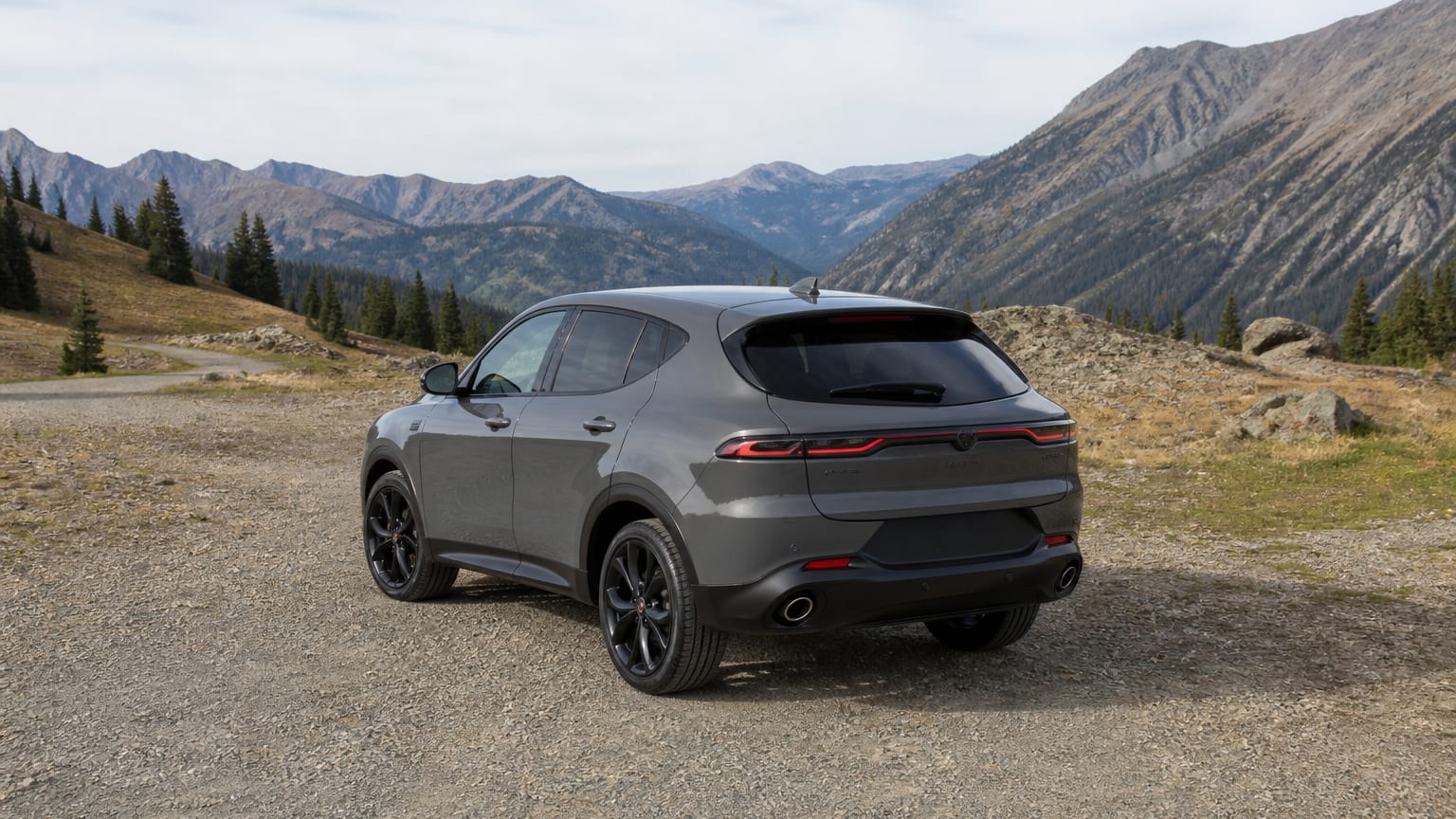
Every Dodge Hornet model year ranked
The Dodge Hornet launched for the 2023 model year, so there are only three years to evaluate - and the spread in complaint counts and recall density between them is meaningful enough to guide your buying decision.
| Model Year | Generation | Verdict | Notes |
|---|---|---|---|
| 2023 | 1st gen | Avoid | Worst PainRank (CarComplaints); 4 recalls; fire-risk battery cable recall on PHEV |
| 2024 | 1st gen | Avoid | Highest NHTSA complaint volume (60 complaints); 7 recalls; brake pedal collapse recall |
| 2025 | 1st gen (facelift) | Best | Fewest NHTSA complaints (1); 2 recalls; improved software stability |
Most common Dodge Hornet problems
The single biggest failure category across all Dodge Hornet model years is the electrical system, covering everything from blank dashboards and adaptive cruise control faults to full battery drain events. Below are the five most documented recurring issues, ordered most serious first.
1. Electrical system failures (2023-2024, all trims)
A common thread among Hornet owners is electrical issues - from dashboards that go blank to blinded adaptive cruise control, owners report all manner of miscellaneous errors wreaking havoc with basic functions. Specific symptoms include wiring harness failures, battery control module failures, touchscreen freezes, front collision warning malfunctions, start/stop issues, and wireless charging overheating.
Many of the issues owners complain about are backed up by technical service bulletins. The Dodge Hornet has accumulated 67 TSBs, covering issues as varied as prematurely worn spark plugs and firmware-related faults. The vast majority involve firmware-related or software-related issues. The 2024 model year alone has 69 TSBs on file, indicating widespread technical problems that dealers need guidance to address.
Across the 2023-2025 generation, the 84 NHTSA complaints on record list Electrical System, Safety Systems, and Brakes as the three most-reported problem areas. Most electrical repairs on cars still under the factory bumper-to-bumper warranty are covered at no cost, and software updates address many known problems - but some owners report the fixes don’t fully resolve the issues. Buyer takeaway: before purchasing any 2023 or 2024 Hornet, ask the selling dealer to confirm all outstanding software updates have been applied and that no open TSBs remain unaddressed.
2. Fire risk from loose battery cables (2023-2024 PHEV only)
Chrysler (FCA US, LLC) recalled certain 2023-2024 Alfa Romeo Tonale and 2023-2024 Dodge Hornet plug-in hybrid electric vehicles because the 12-volt battery positive cable and/or high voltage connector cable may not be tightened properly, which can overheat the electrical connections and result in a fire while parked or driving.
NHTSA campaign ID 23V-623 covers this defect, with a potential 4,129 units affected. FCA’s own recall number for this campaign is 98A. Owners of affected vehicles were advised to park outside and away from structures until the recall repair was complete; dealers inspected and tightened the cable connections at no charge. Owner notification letters were mailed September 28, 2023.
This is the most serious safety recall the Hornet has seen. If you are buying a used 2023 or 2024 PHEV, run the VIN through NHTSA’s recall lookup to confirm recall 23V-623 is closed before you buy - and park it outside until it is.
3. Brake pedal collapse (2024-2025 PHEV)
Chrysler recalled certain 2024-2025 Dodge Hornet and Alfa Romeo Tonale vehicles because the brake pedal may collapse and cause a loss of brake function. NHTSA described the issue as: “A brake pedal arm that collapses during normal braking may prevent the driver from being able to activate the service brakes.”
The NHTSA campaign number for this recall is 24V-752, covering service brakes, hydraulic. FCA’s own recall number is B7B. Dealers reinforced the brake pedal arm free of charge, with owner notification letters mailed October 17, 2024. Buyer takeaway: on any 2024 or 2025 PHEV, confirm recall 24V-752 (FCA B7B) is closed before a test drive.
4. Adaptive cruise control and forward collision warning faults (2023-2024)
Adaptive cruise control is cited as a major headache for owners, with the system still causing problems even after a patch was released to try and fix it. Owner reports include adaptive cruise control failure with a radar sensor blocked message, forward collision warning going inactive, and in at least one documented case, lane assist veering a vehicle off the road with the steering wheel locking to the left - with the driver unable to correct until the car stopped.
For the 2024 model year specifically, NHTSA records show 17 electrical system complaints, 10 service brake complaints, and 7 steering complaints among the most-reported categories. These ADAS (advanced driver assistance system) failures represent the costliest category of complaints to diagnose and repair because sensor replacement or radar module swaps can run into the hundreds of dollars once the bumper-to-bumper warranty expires. Buyer takeaway: on a pre-purchase test drive, deliberately activate adaptive cruise control and lane keep assist on a highway to verify both systems engage and stay active without error messages.
5. Rearview camera failure (2023-2025)
Chrysler recalled certain 2023-2025 Alfa Romeo Tonale and Dodge Hornet vehicles because the display module may not show the rearview camera image, meaning the vehicles fail to comply with the requirements of Federal Motor Vehicle Safety Standard (FMVSS) number 111, “Rear Visibility.”
This rearview camera failure affected 48,494 vehicles across the 2023-2025 model years. Dealers updated the software or replaced the radio at no charge. Chrysler’s recall numbers for this campaign are 13C and 38C. Buyer takeaway: put the Hornet in reverse during your pre-purchase inspection and confirm the camera image appears immediately without a delay or blank screen.
6. Battery drain and 12V battery failures (2023-2024)
A common problem for Hornet owners is battery drain that can leave the vehicle completely dead, especially after prolonged periods of inactivity. This issue has been attributed to loose battery wire connections, faulty auxiliary pumps, and ground issues from the negative post to the chassis. Some owners report having to replace their batteries multiple times.
One owner on the Hornet forum reported the battery dying again just three weeks after a replacement, with a service manager noting that Stellantis batteries are a known weak point. Battery replacement on the 12V side typically runs $150 to $300 depending on the shop, but repeated failures suggest an underlying electrical draw issue rather than simply a worn battery. Buyer takeaway: check how many battery replacements the service history shows - more than one within two years is a red flag.
Which Dodge Hornet years should you avoid?
The Dodge Hornet years to avoid are 2023 and 2024. CarComplaints rates 2023 as the worst model year on repair cost and average mileage when problems occur (its PainRank score). On raw NHTSA complaint volume, the 2024 is the heavier year - with 7 recalls and 60 complaints, buyers of 2024 models face the highest density of documented issues in the generation.
| Dodge Hornet Generation | Model Years | Verdict | Main Issues |
|---|---|---|---|
| 1st gen (2023-2025) | 2023, 2024 | Worst | Electrical faults, fire-risk battery recall, brake pedal collapse, rearview camera failure |
| 1st gen facelift | 2025 | Best | Reduced complaints, fewer recalls, improved software |
Worst Dodge Hornet years: 2023, 2024
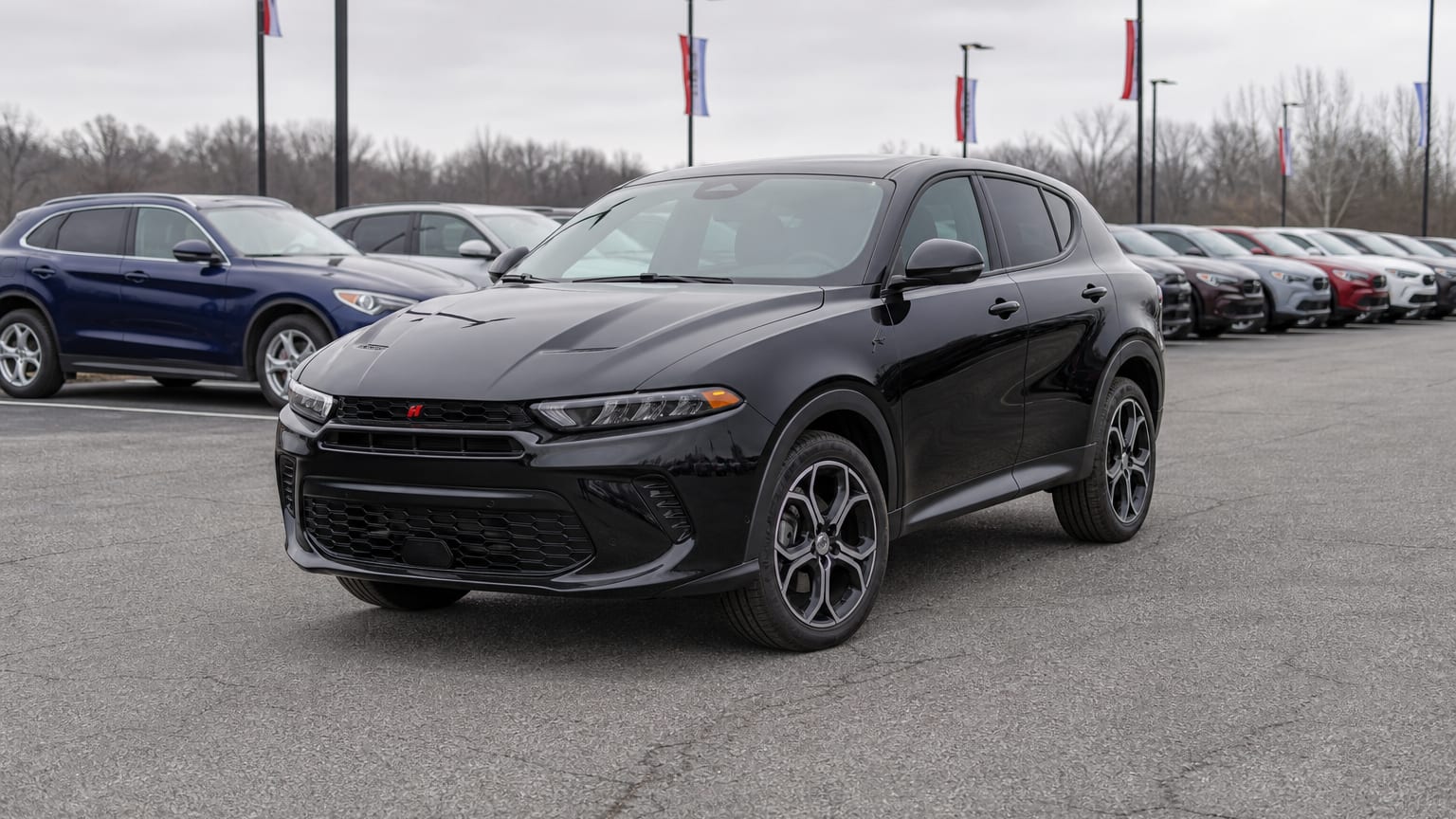
1st-generation Dodge Hornet (2023-2024)
The 2023 Dodge Hornet has 12 problems and defects reported on CarComplaints, with the worst complaints in the electrical category. Based on NHTSA data, 2023 is also the year with the most recalls - 4 - in the generation. The fire-risk battery cable recall (NHTSA 23V-623, FCA 98A) and the rearview camera recall (FCA 13C/38C) both hit the 2023 model year, making it a particularly recall-heavy first year.
The 2024 Dodge Hornet has 34 problems and defects reported on CarComplaints. On NHTSA, complaint volume sits above average at 60 owner complaints alongside 7 recalls. The 2024 added the brake pedal collapse recall (NHTSA 24V-752, FCA B7B) on top of the carryover electrical and camera issues. Adaptive cruise control is cited as a major headache for 2024 owners, with the system still causing problems even after a patch was released.
What are the best Dodge Hornet years to buy?
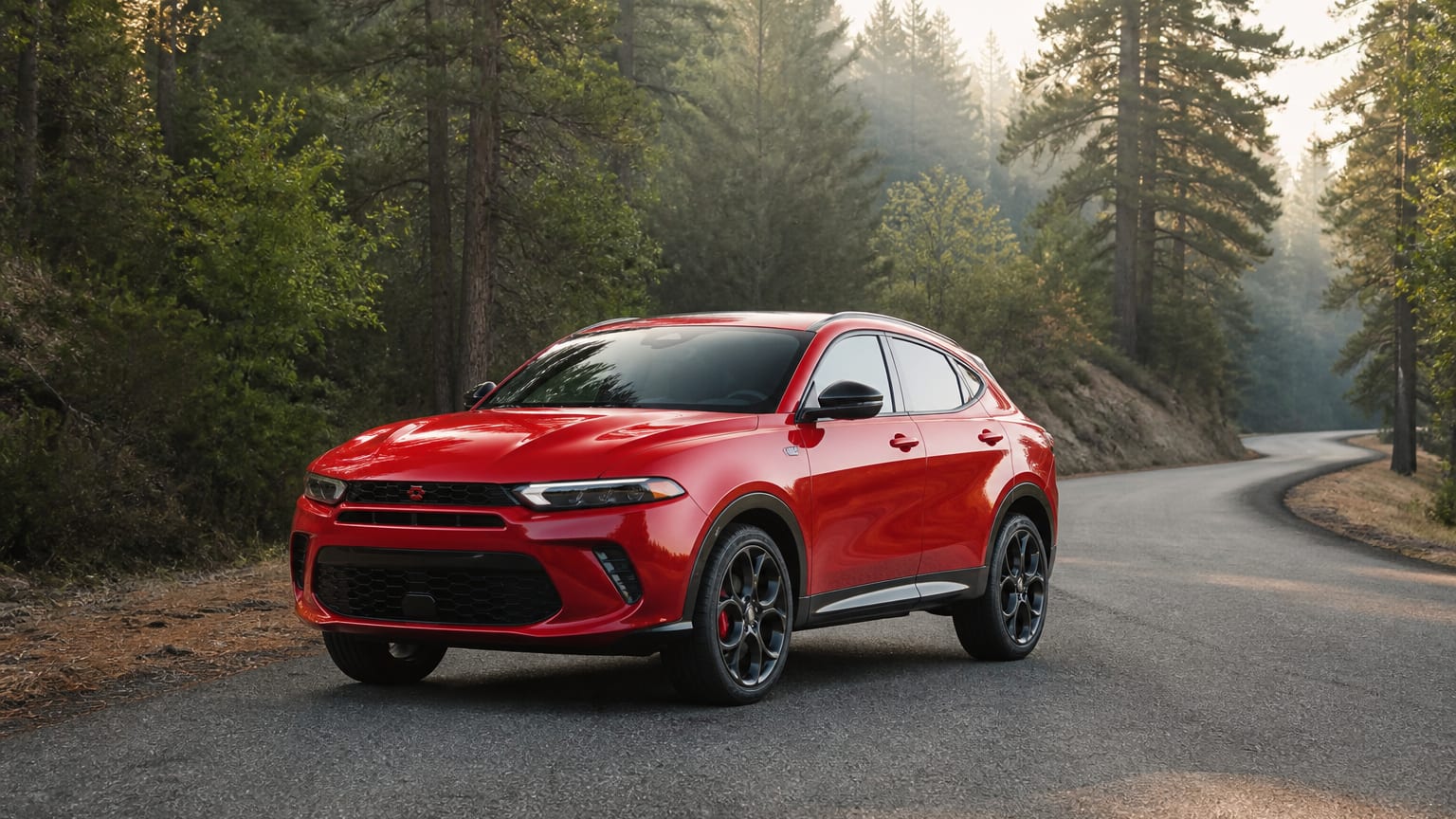
The best Dodge Hornet year to buy is 2025. The 2025 Dodge Hornet has just 1 NHTSA complaint on record as of the latest data snapshot - the fewest of any Hornet model year. The 2025 also has only 2 recalls on file, compared to 4 for the 2023 and 7 for the 2024.
| Best Dodge Hornet Year | Why It's a Strong Buy |
|---|---|
| 2025 | Fewest NHTSA complaints (1); only 2 recalls; software-stabilized platform after two years of updates |
Most reliable Dodge Hornet years: 2025
2025 Dodge Hornet
The 2025 model shows improvement with reduced complaints and recalls, reflecting the software updates and manufacturing corrections applied after the 2023 launch. The 2025 Dodge Hornet carries a reliability score of 64 out of 100 (rated Good), making it the strongest reliability pick in the generation.
Based on NHTSA complaint data, the 2.0L Turbo 4-cylinder engine used in the standard (non-PHEV) Hornet has the lowest complaint density and is considered the most reliable powertrain choice for buyers. If the 2025 is at the top of your budget, prioritizing the 2.0T trim over the PHEV avoids the battery-cable fire recall category entirely. The Kelley Blue Book recall page for the 2023 confirms the PHEV-specific recall is the most serious safety issue in the lineup.
Dodge Hornet pre-purchase checklist
Every used Dodge Hornet you seriously consider deserves this model-specific check before money changes hands:
- Run the VIN through NHTSA’s recall lookup. Confirm recalls 23V-623 (fire-risk battery cables, 2023-2024 PHEV), 24V-752 (brake pedal collapse, 2024-2025 PHEV), and the rearview camera campaign (FCA 13C/38C, 2023-2025) are all closed on the specific VIN.
- On a 2023 or 2024 PHEV, check the battery cable recall status first. Owners of unrepaired vehicles were advised to park outside and away from structures - so if the seller parks inside a garage, ask about recall status immediately.
- Test all ADAS systems on a real road. Activate adaptive cruise control and lane keep assist at highway speed. Adaptive cruise control failures are a known issue, with dealers acknowledging many people are experiencing it and no full solution yet in some cases - any error message during the test drive is a reason to walk away.
- Put the car in reverse and watch the screen. Confirm the rearview camera image appears without delay. A blank screen or a sluggish image means the recall (FCA 13C/38C) may not have been completed.
- On 2024-2025 PHEV models, press the brake pedal firmly during your test drive. The brake pedal collapse recall (24V-752, FCA B7B) covers this; the fix is a reinforced brake pedal arm installed by the dealer at no charge.
- Review the complete service history for battery replacement records. Some owners report having to replace their batteries multiple times - more than one 12V replacement in two years signals an unresolved electrical draw problem.
- Ask for all software update receipts. Many of the issues owners report are documented in technical service bulletins, and a good dealer will have a printout of every applied software update. No update history means unknown TSB status.
- Get an independent pre-purchase inspection from a mechanic who can read Stellantis-platform fault codes. Generic OBD-II readers often miss manufacturer-specific codes that a dealer scanner would catch.
Better alternatives to consider
If the Dodge Hornet years in your budget land on the avoid list, consider these alternatives in the same compact crossover class:
- Dodge Durango - a larger Dodge SUV with a longer production run and a clearer year-by-year reliability track record for used buyers who need more space
- Honda CR-V - KBB projects the Honda CR-V retains 54.6% of its original value after five years, well above the Hornet’s 41%, and it carries a stronger long-term reliability reputation in its segment
- Toyota RAV4 - projected to retain 50.6% of its original value after five years and widely regarded as one of the more dependable compact crossovers in the used market
- Dodge Journey - an older, discontinued Dodge crossover that some used buyers consider when shopping on a tight budget, though it has its own model-year concerns worth researching before buying
Is the Dodge Hornet worth buying?
The Dodge Hornet is worth buying as long as you stick to the 2025 model year and confirm all open recalls are closed on the specific VIN. The 2025 Hornet carries a reliability score of 64 out of 100 (rated Good), and its dramatically lower complaint and recall count compared to the 2023 and 2024 shows that Stellantis has worked through most of the first-year software and assembly issues. The 2023 and 2024 models are worth skipping entirely unless the price is low enough to absorb unexpected electrical repair costs and you can verify every recall is closed.
Before any purchase, run the VIN through NHTSA’s recall checker and request a complete service and software-update history from the seller.