
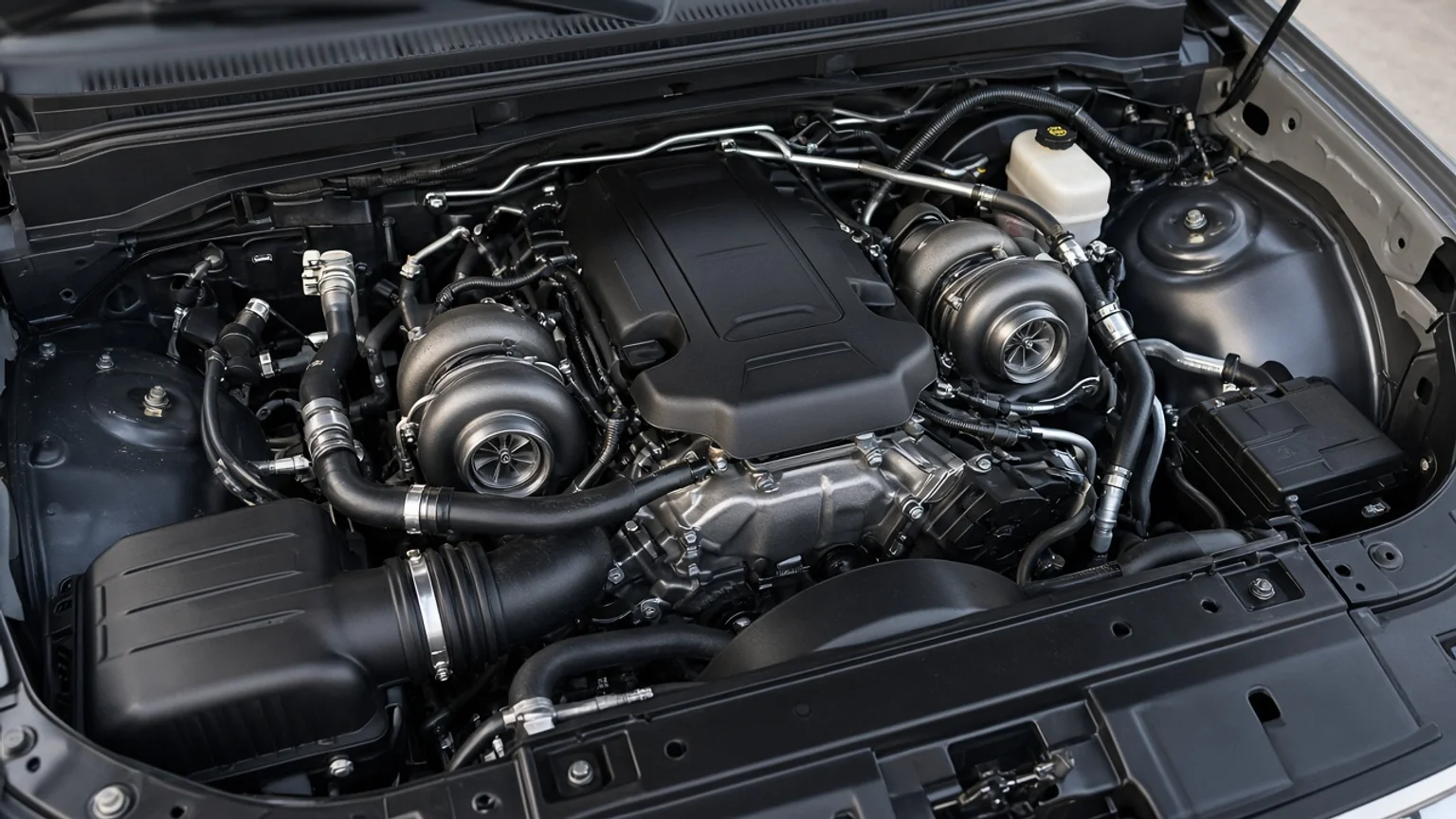
The 3.5 EcoBoost years to avoid are 2011-2013 and 2017-2019. The 2018 model year has the most engine complaints of any 3.5 EcoBoost year in the NHTSA database (193, accessed October 27, 2026), and 124 of them mention the cam phasers, timing or a rattle. The 2011-2012 F-150, the first years of the engine in Ford's truck, have the most complaints about misfires, stumbling and hesitation. Ford's twin-turbo 3.5-liter V6 first appeared in 2010 cars and crossovers, went into the F-150 for 2011, and was redesigned for the 2017 F-150.
Related: Ford F-150 years to avoid, Ford Expedition years to avoid, Lincoln Navigator years to avoid, Ford Explorer years to avoid.
At a glance
- Worst years
- 2011
- 2012
- 2013
- 2017
- 2018
- 2019
- Best years
- 2021, 2022, 2023 (with the caveats below)
- Top failure
- cam phaser rattle on cold starts (Ford Customer Satisfaction Program 21N03 extended cam phaser coverage on 2017-2020 F-150s)
- Always do before buying
- run the VIN through NHTSA's recall checker, ask a Ford dealer whether programs 21B10 and 21N03 apply and were done, and listen to a cold start after the truck has sat overnight
How we rated the best and worst 3.5 EcoBoost years
The worst 3.5 EcoBoost years are 2011-2013 and 2017-2019. Because the 3.5 EcoBoost is an engine and not a vehicle, we built the counts ourselves from NHTSA’s raw data, vehicle by vehicle, and then read the complaints to see what owners were reporting.
- Complaints: we counted unique owner complaints in NHTSA’s complaint flat file (FLAT_CMPL, downloaded October 27, 2026) that are filed under an engine component (exhaust excluded) for model years and vehicles offered with the 3.5L EcoBoost. For the 2015-2025 Expedition and Navigator, where it was the only engine, we counted every engine complaint. For vehicles also sold with other engines (F-150, Explorer, Taurus, Flex, MKS, MKT, Transit) we only counted complaints whose text names the EcoBoost, a turbo or GTDI and doesn’t name a different engine size. These are raw counts, not rates per vehicle sold, and they undercount the F-150 and the other mixed-engine vehicles.
- Recalls: we counted the NHTSA recall campaigns that name the 3.5L engine and cover an engine, turbo or fuel-delivery defect, using NHTSA’s recalls API (accessed October 27, 2026).
- Service bulletins: we read the Ford technical service bulletins, special service messages and customer satisfaction programs filed with NHTSA in its TSB data files (downloaded October 27, 2026), with links to the bulletin PDFs on static.nhtsa.gov where NHTSA publishes one.
Keyword counts in this guide (for example “mentions the cam phasers”) come from searching the complaint text, so a complaint can count toward more than one problem. Newer model years have had less time on the road to collect complaints. Our years to avoid methodology explains how we weigh volume, severity and mileage at failure.
| 3.5 EcoBoost Generation | Best 3.5 EcoBoost Years | Worst 3.5 EcoBoost Years |
|---|---|---|
| First generation (2010-2016) | 2014 | 2011, 2012, 2013 |
| Second generation (2017 F-150 onward) | 2021, 2022, 2023 | 2017, 2018, 2019 |
Every 3.5 EcoBoost model year ranked
Complaint counts are engine complaints from NHTSA’s complaint flat file, scoped as described above (downloaded October 27, 2026). Recall counts are the NHTSA engine, turbo or fuel-delivery recall campaigns that name the 3.5L for that model year (accessed October 27, 2026).
| Model Year | NHTSA Engine Complaints | NHTSA Engine Recall Campaigns | Verdict | Notes |
|---|---|---|---|---|
| 2010 | 18 | 0 | OK/Mixed | Cars and crossovers only (Flex, Taurus SHO, MKS, MKT); few complaints |
| 2011 | 166 | 0 | Avoid | First F-150 year (155 of the complaints); 71 mention a misfire, stumble or hesitation and 71 stalling or power loss |
| 2012 | 171 | 0 | Avoid | 168 on the F-150; 73 misfire, stumble or hesitation mentions and 82 stall or power-loss mentions |
| 2013 | 137 | 1 | Avoid | 125 on the F-150; timing chain bulletin 17-0026 (2011-2014 F-150); fuel pump module recall 16V-621 on the cars |
| 2014 | 47 | 1 | OK/Mixed | Fewest complaints of the first-generation F-150 years; fuel pump module recall 16V-621 on the cars |
| 2015 | 85 | 2 | OK/Mixed | First year in the Expedition and Navigator; block heater recall 20V-098 (F-150) |
| 2016 | 115 | 2 | OK/Mixed | Turbo oil supply tube recall 16V-925 (Taurus, Flex, MKT); block heater recall 20V-098 (F-150) |
| 2017 | 120 | 1 | Avoid | Second-generation engine in the F-150; cam phaser programs 21B10 and 21N03 start here; turbo oil tube recall 16V-925 (Explorer, Flex, MKT) |
| 2018 | 193 | 3 | Avoid | Most complaints of any year (119 on the new Expedition); 124 cam phaser, timing or rattle mentions; 3 engine recalls |
| 2019 | 183 | 0 | Avoid | 133 on the Expedition; 125 cam phaser, timing or rattle mentions |
| 2020 | 61 | 0 | OK/Mixed | Timing and rattle mentions drop to 7; still inside the 21B10 and 21N03 programs |
| 2021 | 66 | 0 | Best | No cam phaser complaints in our count; most complaints are on the Expedition (57) |
| 2022 | 14 | 0 | Best | Very few engine complaints; no engine recall |
| 2023 | 11 | 0 | Best | Very few engine complaints; no engine recall |
| 2024 | 9 | 2 | Caution | Cup plug oil leak recalls 24V-851 and 25V-198 (F-150, Expedition, Navigator) |
| 2025 | 4 | 2 | Too new | Same cup plug recalls; too little time on the road to judge |
Across all years we counted 1,400 engine complaints. Of those, 25 are flagged by the owner as involving a fire and 10 as involving a crash. The F-150 (697) and Expedition (500) account for most of them.
Most common 3.5 EcoBoost problems
The 3.5 EcoBoost problems that show up most in NHTSA complaints and Ford’s own bulletins are cam phaser rattle on the second-generation engine, timing chain wear and stumbling on early F-150s, turbo-related complaints, and oil consumption.
1. Cam phaser rattle (2017-2020)
Complaints that mention the cam phasers, timing or a rattle go from 32 on the 2017 to 124 on the 2018 and 125 on the 2019, then drop to 7 on the 2020 (NHTSA complaint file, downloaded October 27, 2026). Most 2018-2019 complaints are on the Expedition, partly because every Expedition complaint counts in our data.
Ford’s Customer Satisfaction Program 21N03 (March 2, 2021) covers certain 2017-2020 F-150s with the 3.5L built from March 10, 2016 (Dearborn plant) or April 15, 2016 (Kansas plant) through November 30, 2019. Raptor and Limited are excluded. Ford says “an undesirable noise may develop from the cam phasers,” heard “as a rattle when starting the engine after the vehicle was turned off for an extended period of time or as a knocking noise when the engine is idling after it is warmed up,” and that it “does not affect the vehicle safety, performance, or emissions.” Dealers replace all four cam phasers. Coverage runs to September 1, 2022 on a sliding scale (100% up to 69,999 miles, 0% from 90,000), and only if the engine computer update from companion program 21B10 was done by August 31, 2021. A later revision, 21B10-S3, adds 2018-2020 Expedition and Navigator. Bulletin 23-2143 (May 5, 2023) gives the repair for 2017-2020 F-150 and 2018-2020 Expedition and Navigator built on or before November 30, 2019: replace the variable camshaft timing units.
Buyer takeaway: the coverage dates have passed, so a 2017-2020 truck that still rattles on a cold start needs the repair at your cost. Ask for proof the phasers were replaced.
2. Timing chain wear and cold-start rattle (2011-2015 F-150)
On the first-generation engine, Ford bulletin 17-0026 (March 2017, NHTSA file 10099001) covers 2011-2014 F-150s built on or before October 10, 2014 with a check engine light and code P0016 that “may be due to a worn primary timing chain.” Bulletin 18-2305 (October 25, 2018) covers 2011-2015 F-150s built on or before May 29, 2015 with a rattle from the front cover for 2-5 seconds after sitting for 6 hours or more. Complaints that name the timing chain number 15 on the 2011, 13 on the 2012 and 12 on the 2013.
Buyer takeaway: on a 2011-2015 F-150, a rattle on the first cold start of the day is the sign to look for. Ask whether the timing chain or phasers have been replaced.
3. Misfires, stumbling and hesitation (2011-2013 F-150)
Misfire, stumble, shudder and hesitation mentions peak on the 2011 (71) and 2012 (73), almost all on the F-150. Owners describe the truck stumbling or losing power when they accelerate hard, often in humid or wet weather, and 30 of the 2011 complaints and 29 of the 2012 complaints mention the intercooler, condensation or moisture. Stall and power-loss mentions are also highest in these years (71 on the 2011, 82 on the 2012). We did not find a safety recall for this condition.
4. Turbo and oil-related problems
Turbo mentions are spread across the years, highest on the 2011 and 2012 (50 and 51). NHTSA recall 16V-925 covers 2016 Taurus, 2016-2017 Flex and MKT, and 2017 Explorer: improperly brazed turbocharger oil supply tubes may leak oil onto engine components. Dealers inspect and replace the tubes.
Ford has several bulletins for oil use. SSM 47376 (June 2018) covers 2013-2018 F-150, 2015-2018 Transit and Expedition and 2015-2017 Navigator with more than 20,000 miles and a tick from the block that “may be caused by a cracked piston skirt”, and recommends a new short block when the noise is isolated to one cylinder. SSM 47406 (July 2018) and bulletin 20-2132 (May 2020) cover excessive oil consumption on 2017-2019 F-150 and 2018-2019 Expedition built on or before April 1, 2019, traced to the crankcase ventilation system and fixed by replacing the valve covers. An earlier bulletin, 15-0086 (May 2015, NHTSA file 10058076), covers oil consumption and tailpipe smoke on 2010-2014 Flex, Taurus, MKS and MKT and 2013-2014 Explorer.
5. Engine recalls by year
- 16V-621: 2013-2015 Taurus, Flex, MKS and MKT. A component in the fuel pump electronic module may overheat and cut power to the fuel pump.
- 16V-925: turbo oil supply tube leak (above).
- 17V-672: certain 2018 F-150s with 3.5L engines whose cylinder heads may have been machined without the oil supply holes for the camshaft journals. Ford told NHTSA it was not aware of any affected vehicles outside dealer control.
- 18V-392: 2018 Expedition, F-150 and Navigator. Welds on the high-pressure fuel pump assembly can fracture, which may cause an oil or fuel leak.
- 18V-807: 2018 Explorer with 2.3L or 3.5L engines. The fuel pressure sensor can leak fuel.
- 20V-098: 2015-2016 F-150 with block heaters that may have been moved too close to hot engine components, which can damage the heater cable.
- 24V-851 (2024-2025 F-150, 2024 Expedition and Navigator) and 25V-198 (2024-2025 F-150 and Expedition, 2024 Navigator). A misaligned cup plug can cause a rapid oil leak.
All recall details are from NHTSA (accessed October 27, 2026).
Which 3.5 EcoBoost years should you avoid
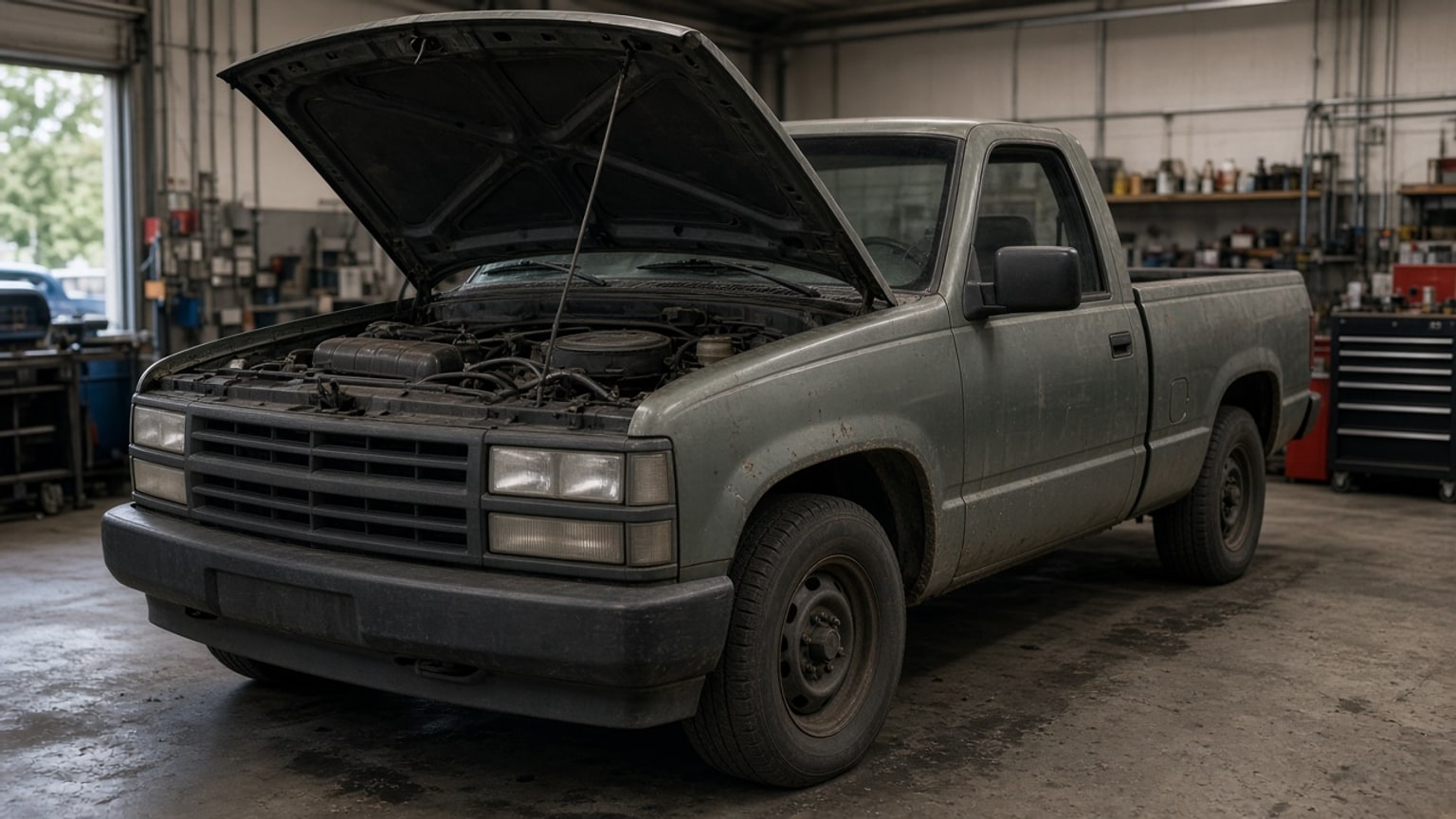
The 3.5 EcoBoost years to avoid are 2011-2013 and 2017-2019. The 2011-2013 F-150 has the stumbling, misfire and timing chain problems of the first-generation truck engine. The 2017-2019 trucks and SUVs have the cam phaser rattle, and the 2018 model year has the most engine complaints (193) and the most engine recalls (3) of any year (NHTSA, accessed October 27, 2026).
| 3.5 EcoBoost Generation | Model Years | Verdict | Main Issues |
|---|---|---|---|
| First generation | 2011, 2012, 2013 | Worst: Avoid | Stumbling and misfires under load, stalling, timing chain wear (F-150) |
| First generation | 2014, 2015, 2016 | OK/Mixed | Lower complaint counts; fuel pump module and turbo oil tube recalls on the cars |
| Second generation | 2017, 2018, 2019 | Worst: Avoid | Cam phaser rattle, oil consumption bulletins, three 2018 engine recalls |
| Second generation | 2020 | OK/Mixed | Still inside the cam phaser programs, but far fewer complaints |
Worst 3.5 EcoBoost years: 2011, 2012, 2013, 2017, 2018, 2019
First-generation 3.5 EcoBoost (2010-2016)
The 2010 cars and crossovers have very few complaints in our count (18). The F-150 is where the trouble starts, from 2011. Complaints fall sharply on the 2014 (47), which is the best first-generation year in our data.
Second-generation 3.5 EcoBoost (2017 onward)
For the 2017 F-150, Ford introduced a second-generation 3.5 EcoBoost with two injectors per cylinder (port and direct injection), paired with a new 10-speed automatic (Ford’s May 2016 announcement, republished by Automotive World, accessed October 27, 2026). The same engine went into the redesigned 2018 Expedition and Navigator. Its cam phaser rattle is the single biggest problem in our 3.5 EcoBoost data.
What are the best 3.5 EcoBoost years to buy
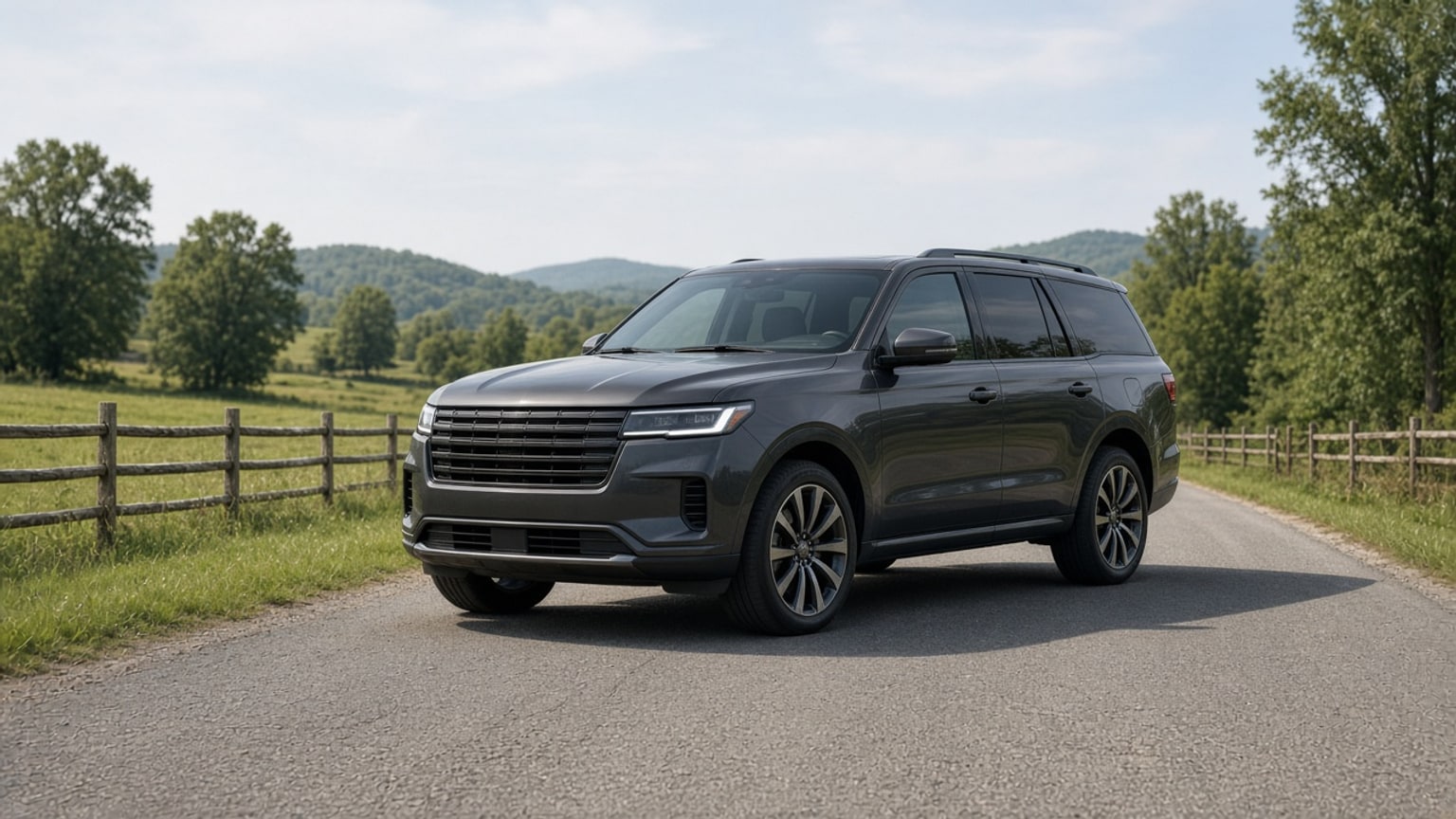
The best 3.5 EcoBoost years to buy are 2021, 2022 and 2023. They come after the cam phaser build window in Ford’s programs, have the lowest complaint counts in our data and have no engine recall.
| Best 3.5 EcoBoost Year | Why It's a Strong Buy |
|---|---|
| 2021 | 66 engine complaints and none in our count about cam phasers; no engine recall |
| 2022 | 14 engine complaints; no engine recall |
| 2023 | 11 engine complaints; no engine recall |
Most reliable 3.5 EcoBoost years: 2021, 2022, 2023
The 2022 and 2023 model years have had less time on the road than older years, so their low counts are less settled. If your budget means a first-generation truck, the 2014 model year is the one with the fewest F-150 complaints (35).
3.5 EcoBoost years to avoid by vehicle
These are the patterns in our complaint counts (NHTSA, downloaded October 27, 2026):
- Ford F-150: the 2011 (155 engine complaints) and 2012 (168) are the worst; 2017-2020 trucks need the cam phaser history checked. See Ford F-150 years to avoid.
- Ford Expedition: the 2018 (119) and 2019 (133) are the worst, mostly about cam phasers and timing noise. See Ford Expedition years to avoid.
- Lincoln Navigator: the 2018 and 2019 model years (12 engine complaints each) lead, with the same cam phaser program coverage as the Expedition. See Lincoln Navigator years to avoid.
- Ford Explorer: counts peak on the 2016 (26) and 2017 (30) Sport and Platinum; check the turbo oil tube recall on the 2017 and the fuel pressure sensor recall on the 2018. See Ford Explorer years to avoid.
- Ford Flex, Ford Taurus SHO, Lincoln MKS and MKT: few complaints, but check the fuel pump module and turbo oil tube recalls. See Ford Flex, Ford Taurus, Lincoln MKS and Lincoln MKT.
3.5 EcoBoost pre-purchase checklist
Before you buy a used vehicle with the 3.5 EcoBoost, check:
- Run the VIN on NHTSA’s recall checker: 16V-621, 16V-925, 17V-672, 18V-392, 18V-807, 20V-098, 24V-851 and 25V-198 should show as complete where they apply.
- Ask a Ford dealer to check the VIN for programs 21B10 and 21N03 (2017-2020 F-150, 2018-2020 Expedition and Navigator) and whether the cam phasers were replaced.
- Listen to a true cold start: let the truck sit for at least 6 hours and listen for a rattle in the first few seconds.
- Scan for codes: cam timing codes such as P0016, or misfire codes, are a reason to walk away or negotiate a repair.
- Check oil use: ask how often the owner tops up, and look for blue smoke on start-up.
- Get the service records: regular oil changes matter on a turbo engine. Get a pre-purchase inspection.
Better alternatives to consider
If the 3.5 EcoBoost vehicle in your budget is a 2011-2013 or 2017-2019, or the cam phaser history is unclear, consider these instead:
- GM 5.3 V8 - the V8 in the Silverado, Sierra and Tahoe, with its own lifter years to check
- Toyota Tundra - a full-size pickup rival with its own year-by-year issues to check
- Ram 1500 - another full-size pickup that is easy to find used
- Chevrolet Tahoe - a full-size SUV rival to the Expedition
Is the 3.5 EcoBoost a good engine
Yes, in the right year with a documented history. Skip the 2011-2013 F-150 and the 2017-2019 trucks and SUVs unless the timing chain or cam phaser work has been done. The 3.5 EcoBoost’s known problems are well documented by Ford’s own bulletins and programs, and most can be heard or scanned for before you buy. Our counts are raw complaint totals, not failure rates, and the F-150 is one of the best-selling vehicles in the US, so a high count partly reflects how many are on the road.
Frequently asked questions
What are the worst 3.5 EcoBoost years
The worst 3.5 EcoBoost years are 2011-2013 and 2017-2019. The 2018 model year has the most NHTSA engine complaints of any year (193, accessed October 27, 2026) and 3 engine recalls, and the 2011-2012 F-150 has the most misfire and stumbling complaints.
What are the best 3.5 EcoBoost years
The best 3.5 EcoBoost years are 2021, 2022 and 2023. They have the lowest complaint counts in our data and no engine recall. Watch for the cup plug oil leak recalls on 2024-2025 trucks and SUVs.
What years did the 3.5 EcoBoost have cam phaser problems
Cam phaser complaints are concentrated on 2017-2020 trucks and SUVs, peaking on the 2018 and 2019. Ford’s program 21N03 covered cam phaser replacement on certain 2017-2020 F-150s built from spring 2016 through November 30, 2019, and bulletin 23-2143 covers the same repair on 2018-2020 Expedition and Navigator. An earlier bulletin, 18-2305, covers a similar cold-start rattle on 2011-2015 F-150s.
Does the 3.5 EcoBoost have timing chain problems
On the first-generation engine, yes. Ford bulletin 17-0026 covers 2011-2014 F-150s built on or before October 10, 2014 with code P0016 caused by a worn primary timing chain.
Did the 3.5 EcoBoost have a recall for engine failure
Recall 17V-672 covers certain 2018 F-150s whose cylinder heads may have been machined without camshaft journal oil holes; Ford said affected trucks were still under dealer control. Other 3.5 EcoBoost recalls cover fuel leaks (18V-392, 18V-807), a stalling fuel pump module (16V-621), a turbo oil tube leak (16V-925) and an oil leak from a misaligned cup plug on 2024-2025 models (24V-851, 25V-198).