
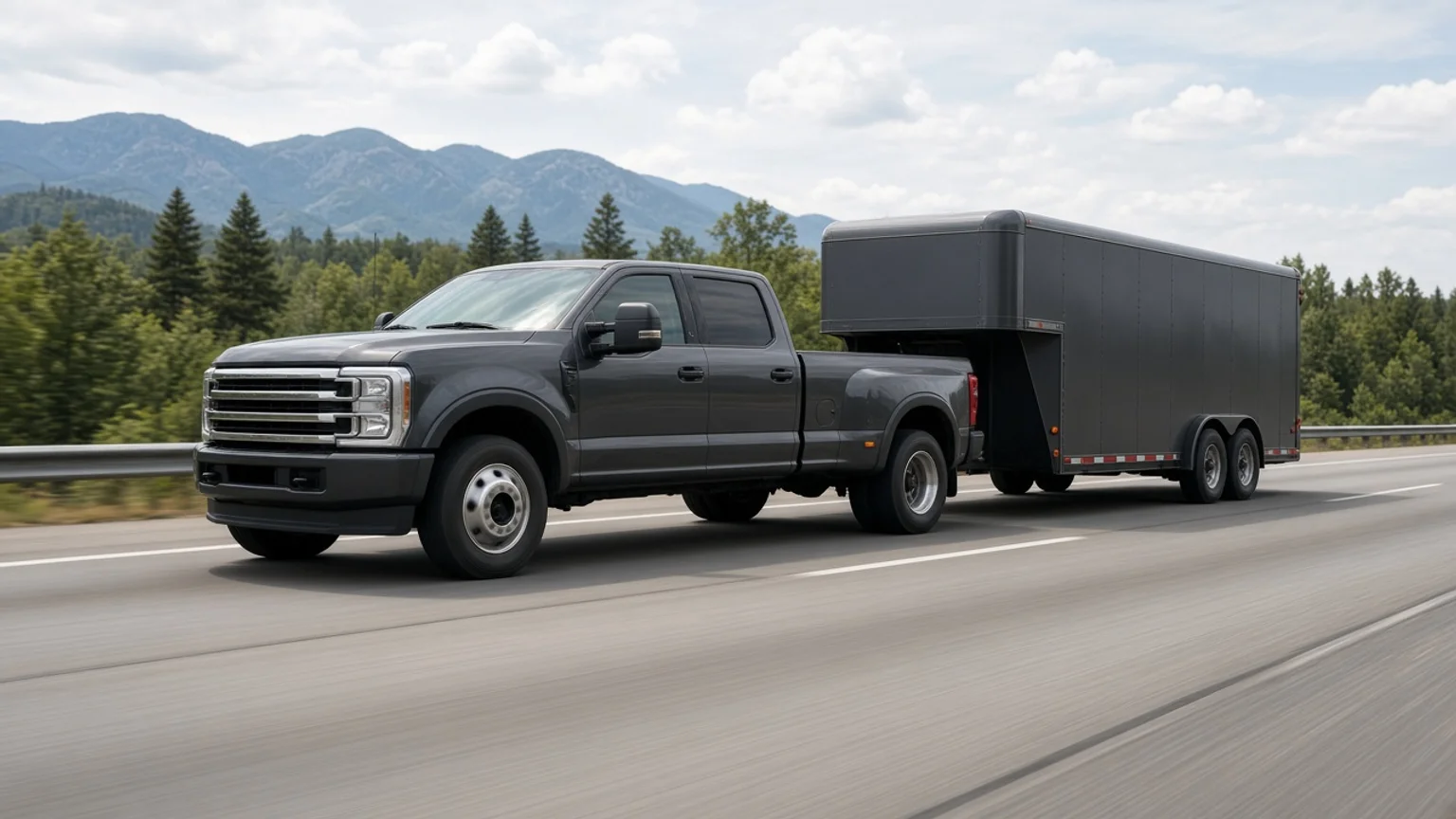
The 6.4 PowerStroke year to avoid is 2008. It has 92 of the 112 engine complaints we counted in NHTSA data, both NHTSA recalls on the 6.4 and most of Ford's bulletins for it (accessed October 27, 2026). The 2009 and 2010 model years have far fewer complaints, but they are now 15 or more years old, so condition and service history matter more than the year. The 6.4-liter V8 diesel, built by International for the 2008 Ford F-Series Super Duty, was the first pickup engine in North America to use common-rail injection with piezo injectors, and it added a diesel particulate filter (DieselNet, August 26, 2006, accessed October 27, 2026).
Related: Ford F-250 years to avoid, 6.0 PowerStroke years to avoid, 6.7 PowerStroke years to avoid.
At a glance
- Worst year
- 2008
- Better years
- 2009, 2010 (fewer complaints, but check the history)
- Top complaint
- radiator and coolant leaks, named in 36 of the 92 complaints on the 2008
- Always do before buying
- run the VIN through NHTSA's recall checker, pressure-test the cooling system and get records for EGR, DPF, radiator and turbo work
How we rated the best and worst 6.4 PowerStroke years
The worst 6.4 PowerStroke year is 2008. Because the 6.4 PowerStroke is an engine and not a vehicle, we built the counts ourselves from NHTSA’s raw data and then read the complaints to see what owners were reporting.
- Complaints: we counted unique owner complaints in NHTSA’s complaint flat file (FLAT_CMPL, downloaded October 27, 2026) that are filed under an engine component (exhaust excluded) for 2008-2010 Ford F-250 through F-550 Super Duty trucks. We kept complaints NHTSA codes as diesel, or whose text names the diesel, the 6.4 or the PowerStroke, and dropped gas-engine complaints. The 6.4 was the diesel in these trucks for these years.
- Recalls: we counted the NHTSA recall campaigns that name the 6.4L, using NHTSA’s recalls API (accessed October 27, 2026).
- Service bulletins: we read the Ford technical service bulletins and service campaigns filed with NHTSA in its TSB data files (downloaded October 27, 2026). NHTSA doesn’t publish PDFs for bulletins this old, so we cite them by bulletin number and NHTSA file number.
The 6.4 had a short three-year run. Our years to avoid methodology explains how we weigh volume, severity and mileage at failure.
| 6.4 PowerStroke Generation | Best 6.4 PowerStroke Years | Worst 6.4 PowerStroke Years |
|---|---|---|
| 6.4L V8 diesel (2008-2010 Super Duty) | 2009, 2010 | 2008 |
Every 6.4 PowerStroke model year ranked
Complaint counts are 6.4 diesel engine complaints from NHTSA’s complaint flat file, scoped as described above (downloaded October 27, 2026). Recall counts are the NHTSA recall campaigns that name the 6.4L for that model year (accessed October 27, 2026).
| Model Year | NHTSA 6.4 Engine Complaints | NHTSA 6.4 Recall Campaigns | Verdict | Notes |
|---|---|---|---|---|
| 2008 | 92 | 2 | Avoid | First year; radiator and coolant leaks, turbo, EGR and DPF complaints; DPF recall 07V-139 and battery cable recall 07V-140 |
| 2009 | 6 | 0 | Best | Fewest complaints; check EGR valve bulletin SB-21066 and calibration updates |
| 2010 | 14 | 0 | OK/Mixed | Last year; charge air cooler tube bulletin on some 4x4 single-rear-wheel trucks |
Across all three years we counted 112 complaints. Owners flagged 2 as involving a fire and none as involving a crash.
Most common 6.4 PowerStroke problems
The 6.4 PowerStroke problems that show up most in NHTSA data and Ford’s own bulletins are radiator and coolant leaks, DPF and EGR trouble tied to the then-new emissions system, turbo complaints and drivability codes that Ford addressed with calibration updates.
1. Radiator and coolant leaks
Radiator or coolant is named in 38 of our 112 complaints, 36 of them on the 2008. Owners describe radiators that crack or leak, in one case spraying coolant over the windshield while towing. For certain 2008 Super Duty trucks, Ford service campaign CSP-08B06 (NHTSA file 10027989) installed a cooling system venturi tee. Head gasket or overheating is named in 6 complaints, all on the 2008.
2. DPF and exhaust heat (recall 07V-139)
NHTSA recall 07V-139 covers certain 2008 trucks with the 6.4L diesel. NHTSA says “excessive temperatures in the diesel particulate filter in the exhaust system may result from excess hydrocarbons in the exhaust,” which can cause a lack of power or rough running, unusual noises, white exhaust smoke and potentially a visible flame out the tailpipe. Dealers reprogram the powertrain control module, and the recall began April 3, 2007 (NHTSA, accessed October 27, 2026). DPF or regeneration is named in 5 complaints, all on the 2008.
3. EGR valve and cooler trouble
Ford bulletin 20020 (October 2007, NHTSA file 10023437) covers EGR valve and DPF failures on some 2008 Super Duty trucks due to high-sulfur diesel fuel. Bulletin SB-21066 (October 2009, NHTSA file 10033139) covers 6.4 trucks with less than 5,000 miles showing codes P0404 and/or P1335, which Ford says may be due to weld slag from the turbo up-pipe manufacturing process stuck in the EGR valve. EGR is named in 6 complaints, all on the 2008.
4. Turbo and charge air complaints
The turbo is named in 14 complaints, 13 of them on the 2008. On some 2010 F-250 and F-350 Super Duty 4x4 trucks with single rear wheels, Ford bulletin 105-5-8 (March 2010, NHTSA file 10034196) gives a repair procedure for a hot-side charge air cooler tube that blows off. On some F-450 and F-550, bulletin 12-6-8 (June 2012, NHTSA file 10045066) covers a lack of power with codes P246C and P2463.
5. Codes and calibration updates
Ford issued a long run of bulletins and campaigns for 2008 trucks: bulletins 20129 and 20131 (February 2008) for check engine lights and sensor codes, bulletin 08-10-2 (October 2008, NHTSA file 10026388) for trucks built from January 3 to May 5, 2008 with codes including P0404 and P0406, campaign CSP-08B07-S2 (December 2008, NHTSA file 10028735) to reprogram the PCM and instrument cluster, and bulletin 09-16-7 (December 2009, NHTSA file 10030849) with a calibration update covering several concerns. Ford’s bulletin 19815 (June 2007, NHTSA file 10022718) covers fuel cooling pump noise on 2008 trucks.
Which 6.4 PowerStroke years should you avoid
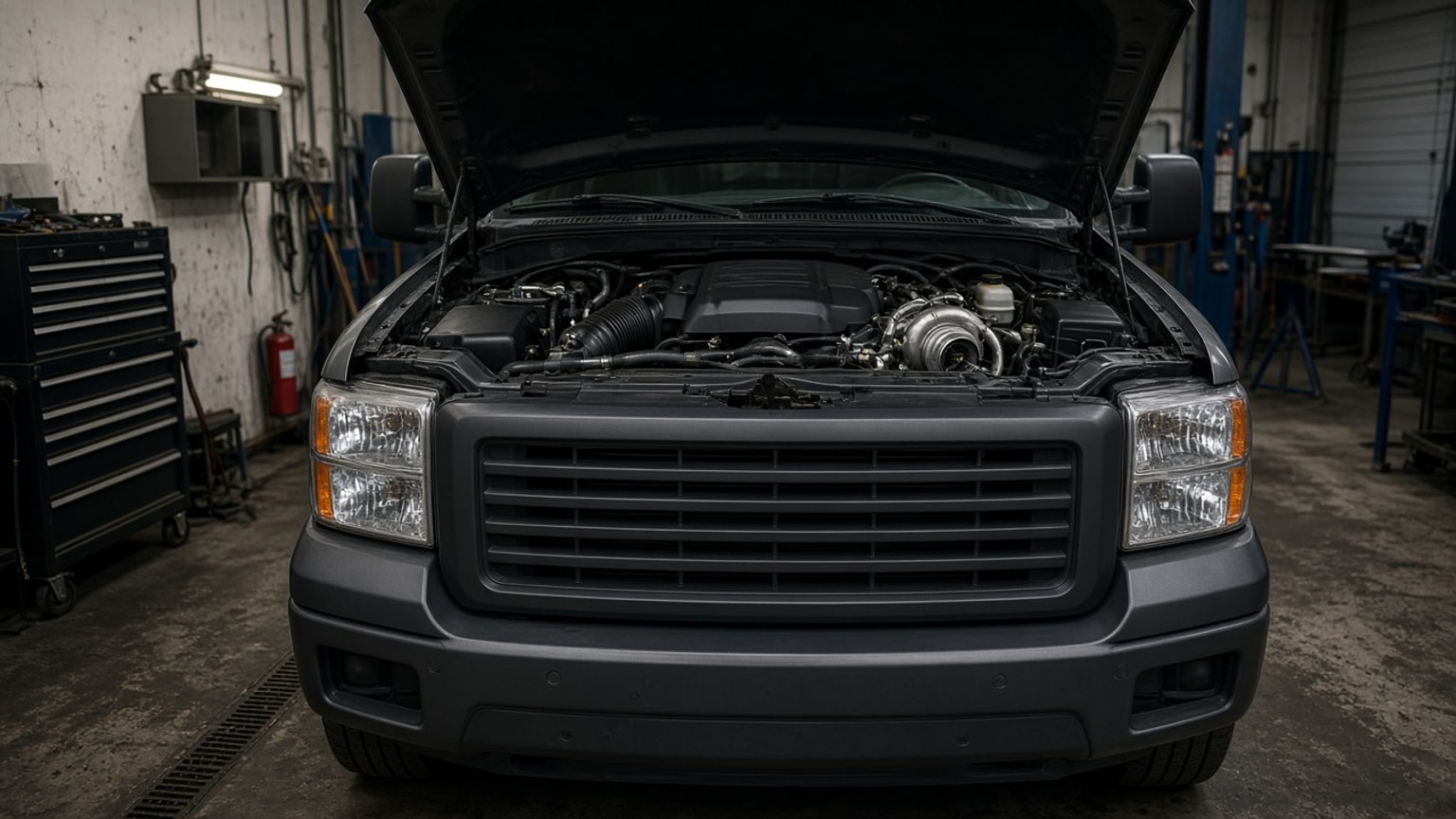
The 6.4 PowerStroke year to avoid is 2008. It has 82% of our complaints (92 of 112), both 6.4 recalls and most of Ford’s bulletins and campaigns (NHTSA, accessed October 27, 2026).
| 6.4 PowerStroke Generation | Model Years | Verdict | Main Issues |
|---|---|---|---|
| 6.4L V8 diesel | 2008 | Worst: Avoid | Radiator and coolant leaks, DPF heat recall, EGR failures, turbo complaints, drivability codes |
Worst 6.4 PowerStroke year: 2008
The 2008 6.4 PowerStroke
As the first year of the engine and its emissions system, the 2008 model year drew both recalls (07V-139 for DPF heat and 07V-140 for a battery cable that could chafe against a splash shield bolt and short to ground, increasing the risk of a fire), the high-sulfur fuel EGR bulletin and several calibration campaigns. If you buy one, get proof that the recalls and campaigns were done.
What are the best 6.4 PowerStroke years to buy
The best 6.4 PowerStroke years to buy are 2009 and 2010. Together they have 20 complaints in our count, against 92 for the 2008, and no 6.4 recall.
| Best 6.4 PowerStroke Year | Why It's a Strong Buy |
|---|---|
| 2009 | 6 engine complaints, the fewest of the three years; no 6.4 recall |
| 2010 | 14 engine complaints; no 6.4 recall; check the charge air cooler tube on 4x4 single-rear-wheel trucks |
Most reliable 6.4 PowerStroke years: 2009, 2010
Fewer complaints doesn’t make any 6.4 a safe bet. They are all 15 or more years old, and a well-documented 2008 can be a better buy than a neglected 2010.
6.4 PowerStroke years to avoid by vehicle
The 6.4 went into 2008-2010 Ford F-250, F-350, F-450 and F-550 Super Duty trucks. By NHTSA vehicle name, our 112 complaints split as F-250 Super Duty 27, F-350 Super Duty 19, F-350 19, F-450 Super Duty 17 and F-250 15, with the rest filed under other Super Duty names (NHTSA, accessed October 27, 2026). Across every model, the 2008 model year is the one with the most complaints. See Ford F-250 years to avoid for the whole truck.
6.4 PowerStroke pre-purchase checklist
Before you buy a used truck with the 6.4 PowerStroke, check:
- Run the VIN on NHTSA’s recall checker and ask a Ford dealer to confirm the campaigns and calibration updates are done.
- Pressure-test the cooling system and look for coolant around the radiator and on the ground.
- Watch for white smoke, a lack of power or a check engine light on the test drive.
- Get records for any EGR, DPF, radiator, turbo or injector work, and ask whether the emissions equipment is original.
- Get a pre-purchase inspection from a diesel specialist.
Better alternatives to consider
If the 6.4 PowerStroke truck in your budget is a 2008, or the history is unclear, consider these instead:
- 6.7 PowerStroke - Ford’s later Super Duty diesel
- 7.3 PowerStroke - the older Ford diesel
- Cummins - the diesel in Ram heavy-duty trucks
- Duramax - the diesel in Chevrolet and GMC heavy-duty trucks
Is the 6.4 PowerStroke a good engine
It depends on the year and the truck. The 2008 model year has most of the complaints, recalls and bulletins, so we’d avoid it unless the records are complete. The 2009 and 2010 model years have far fewer complaints, but at this age the service history and an inspection matter more than the year. Our counts are raw complaint totals, not failure rates, so treat them as a guide.
Frequently asked questions
What is the worst 6.4 PowerStroke year
The worst 6.4 PowerStroke year is 2008. It has 92 of the 112 engine complaints we counted and both 6.4 recalls (NHTSA, accessed October 27, 2026).
What is the best 6.4 PowerStroke year
The best 6.4 PowerStroke years are 2009 and 2010, with 6 and 14 complaints in our count and no 6.4 recall.
What years did Ford use the 6.4 PowerStroke
The 6.4 PowerStroke was used in the 2008-2010 Ford F-Series Super Duty pickups and chassis cabs covered on this page.
Are there recalls on the 6.4 PowerStroke
Yes, two on the 2008: 07V-139 reprograms the PCM to address excessive DPF temperatures, and 07V-140 repositions a battery cable that could chafe and short to ground.