

Buying a used Santa Fe can be one of the best moves you can make among affordable family SUVs, but only if you pick certain model years. Even though it's considered to be one of the most reliable Hyundai models, some model years have been bothered by severe issues, making them bad buying options.
Don't worry, though - our team will set you on the right track when it comes to the best year to buy and worst Hyundai Santa Fe years to avoid so you can have an easier time making your decision. We'll discuss everything there is to know about the model starting with its on-road dependability, to its track record of NHTSA complaints and recalls, as well as driver impressions to help you narrow down your options.
How we rated the best and worst Hyundai Santa Fe years
While rating the best and worst Hyundai Santa Fe years, our team used several metrics and trusted databases starting with the overall safety rating of the SUV. We checked all the NHTSA and IIHS ratings and complaints to see which model years were worse than others.
Next up, we compared our findings with real driver submissions and reviews on the car to see if the reports hold their ground in practice. For the ratings, we used only prominent automotive sites like Edmunds, KBB, and CR for driver reports. Our finishing touch was given thanks to forum feeds of previous Santa Fe owners that confirmed our inquiries on specific models, so here are the standings:
| Hyundai Santa Fe Generations | Best Hyundai Santa Fe Years | Worst Hyundai Santa Fe Years |
|---|---|---|
| 1st generation | 2002, 2006 | 2003, 2004 |
| 2nd generation | 2010, 2011 | 2007, 2008 |
| 3rd generation | 2015, 2016 | 2013, 2014, 2017, 2018 |
| 4th generation | 2019, 2020, 2021 | N/A |
Most common Hyundai Santa Fe problems
Hyundai Santa Fe is a reliable SUV for the most part and only several model years from the year 2000 to the new 2023 model faced severe engine and transmission issues. So, we’ll make sure to help you avoid those particular model years by going through the worst Santa Fe issues based on our evaluation:
1. Transmission problems
The kind of transmission problems Santa Fe encounters is mild compared to what other vehicles face, but it affects road performance negatively. Drivers reported that the transmission stuttered wildly before the car got warmed up.
You are more likely to experience an acute version of this issue in the 2001 to 2004 models. It affects both front-wheel and all-wheel transmission variants.
2. Hesitant acceleration
Many Santa Fe drivers have encountered hesitant vehicle acceleration at some point, which is most severe for those who used the 2017 model. Drivers have reported a lack of power while accelerating and a jerky motion caused by bad engine combustion.
According to user reports, it was prevalent in most driving modes but happened more often when the car was in ECO mode. If you are driving a 2017 Santa Fe, it will help if you are wary of the issue and be careful when rolling down a steep road or approaching traffic, as it is a significant cause of accidents and crashes.
3. Stalling engine
The engine of some Hyundai Santa Fes was reported to stall or stop working in the middle of a ride. It also affected speed, causing some vehicles to not move beyond 10 miles per hour. The leading cause of this issue is a problem with the crankshaft sensor.
The 2014 Santa Fe is the model most affected by this problem, making it a significant threat. In response to the complaints, Hyundai issued a technical service bulletin in 2019 to help deal with the exception issue. You can resolve the problem by replacing the crankshaft sensor with one from the aftermarket.
4. Airbag problem
2004 to 2006 and 2010, Santa Fe models have the most issues with airbags. The airbag lights glowed regularly, signifying a problem with the system that would most likely cause the airbag not to deploy when needed. The issue could also cause accidental deployment, especially when children throw tantrums in the front passenger’s seat.
Hyundai had to recall several units to the tune of thousands for servicing. They updated the airbag software, ensuring the airbags were only deployed when necessary.
5. Chipping and flaking paint
Over time, drivers complained of paint chipping off the vehicle or flaking in the most severe cases. There was no explanation for this issue, and was more common in the 2004 and 2009 models.
The fix depended on the extent of the damage, and it made many Santa Fe owners consider the ceramic coat benefits to protect the paint. No part of Santa Fe’s surface was free from this peeling of paint, making it compulsory that drivers got a paint correction and repainting.
6. Malfunctioning ABS module
The role of the anti-lock brake system module is to process information from the hydraulic brake system and wheel-speed sensor to ensure a wheel does not lock up and start skidding by releasing the braking pressure.
A malfunctioning ABS module causes the brakes to behave differently and lock up even under standard braking, and you can recognize it with the ABS light turned on. The issue was most severe in the 2013 model, and Hyundai later recalled 2013 and 2014 models over the ABS module.
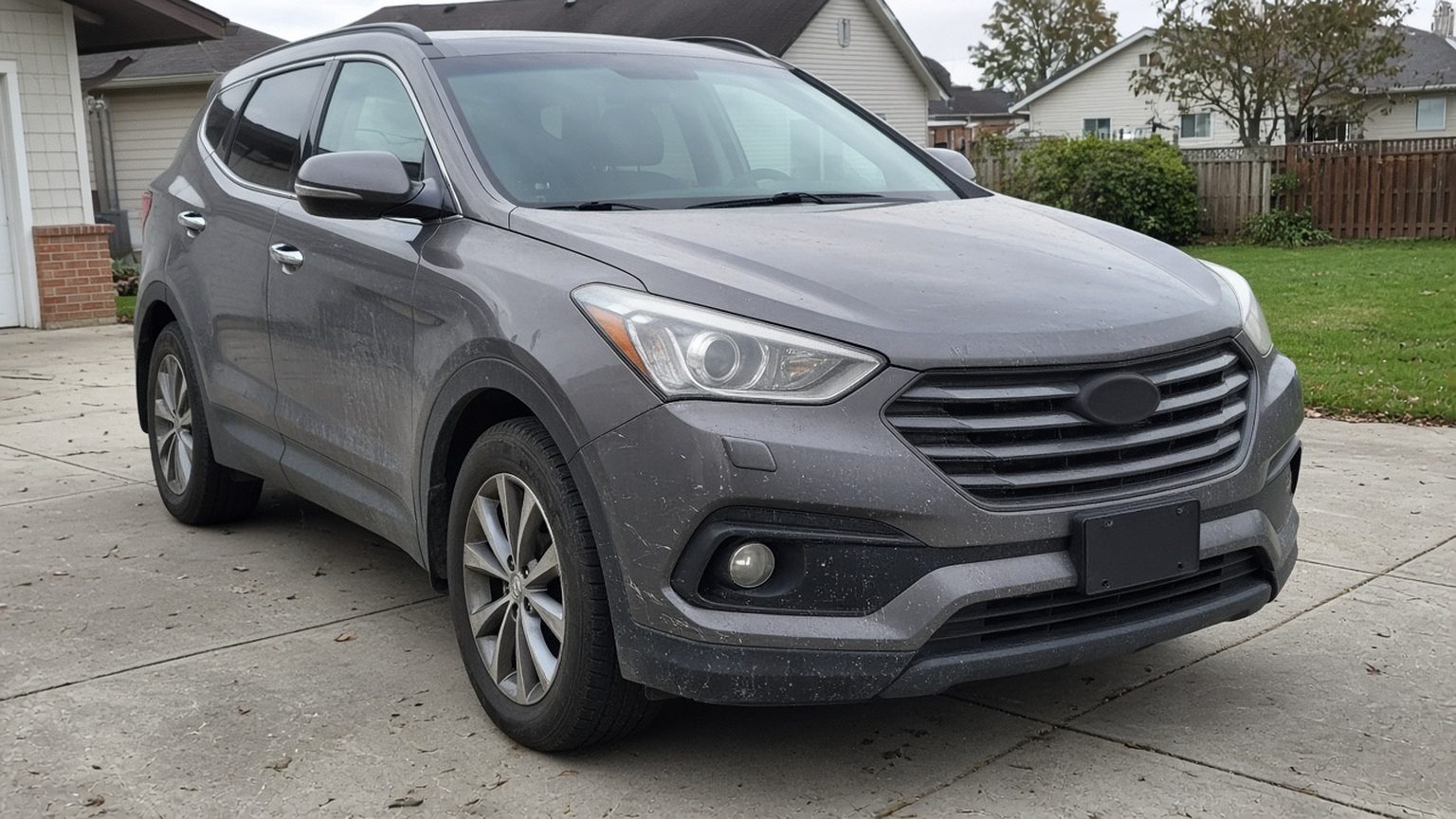
Worst Hyundai Santa Fe years to avoid
While every vehicle has some slight issues here and there, it’s the big things like engine stalling or transmission faults that you’d want to avoid when buying a used Santa Fe. However, some of these issues are shared among multiple model years.
So, you may be wondering - what are the worst Hyundai Santa Fe years to avoid? The worst Hyundai Santa Fe years are 2017, 2013, and 2007, but here’s a full list:
- 2003
- 2004
- 2007
- 2008
- 2013
- 2014
- 2017
- 2018
We’ll discuss these model years in more detail below as we wish to ensure that you avoid those and go straight for the best-rated Santa Fe models.
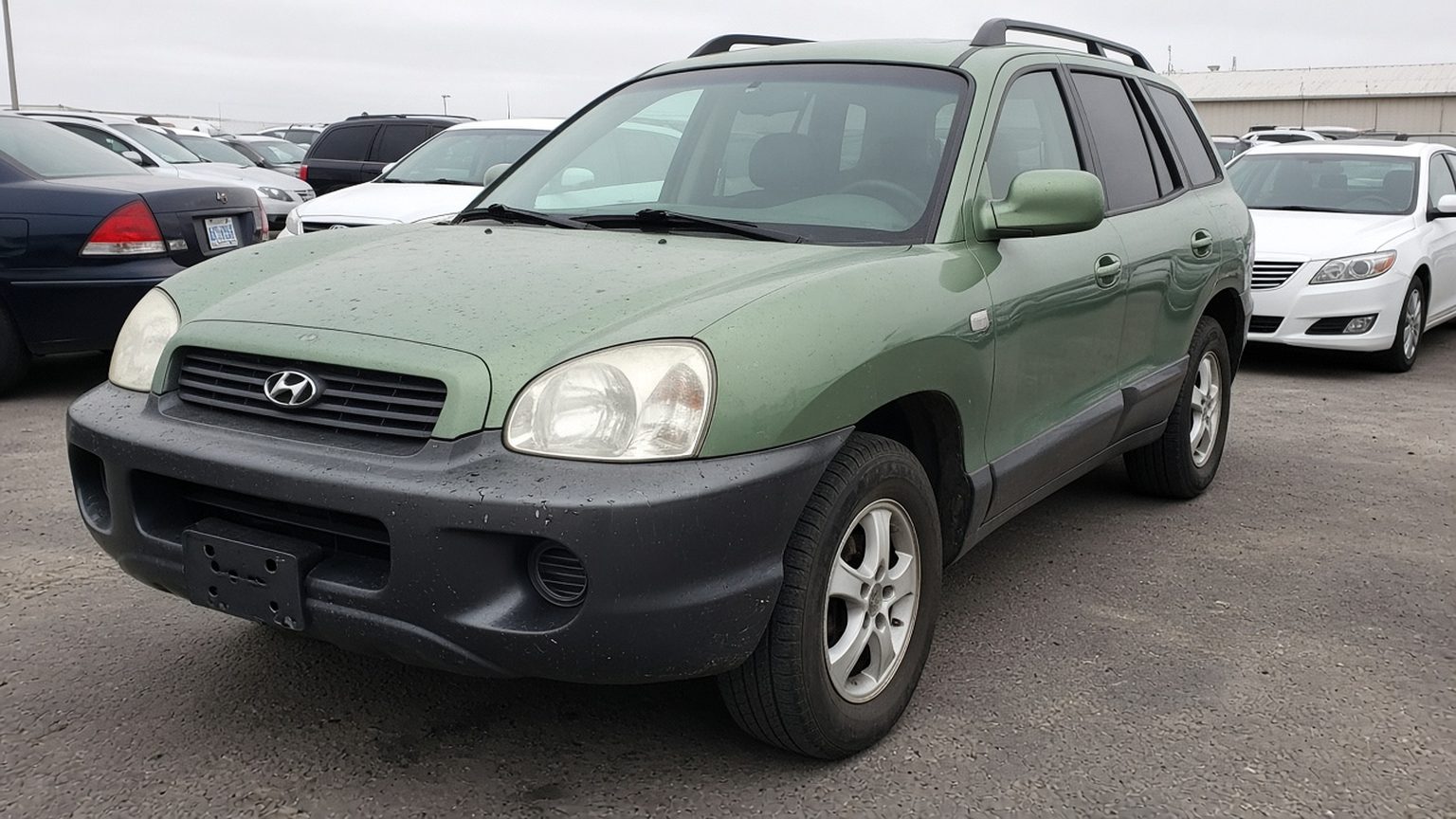
First-generation Santa Fe (2003 and 2004 model years)
The first-gen Santa Fe was sold from the 2001 to the 2006 model year and quite frankly it’s one of the best generations up to date. Even the worst-rated model years, 2003 and 2004, only received around 300 NHTSA complaints each, but we had to place them on our list as they encountered some severe issues.
To be precise, the 2003 model faced problems with the automatic transmission which often led to complete rebuilds, while the 2004 drew a lot of suspension, brake and airbag complaints. The 2001 model isn’t far behind either, as it struggled with engine problems including squeaky belts, loss of power, and even rod knock in worst-case scenarios.
Second-generation Santa Fe (2007 and 2008 model years)
The second-gen Santa Fe holds two models among the worst-rated Santa Fe years across all generations. These are the 2007 and 2008 model years and they were mostly plagued by poor engine performance, fuel delivery system issues, and faulty interior accessories.
There were also some electrical problems, and these two drew 684 and 541 NHTSA complaints, so it’s best to steer away from those.
Third-generation Santa Fe (2013, 2014, 2017, and 2018 model years)
The 2013 model had drivers battling many engine problems, such as oil leaks, weird engine noises, jerking, engine failure, turbocharger failure, and metal debris buildup. Hyundai recalled some of the 2013 models for a fuel level sensor and premature engine bearing wear fix. The 2014 shared the same engine recall and drew 657 NHTSA complaints, second only to 2013 in this generation apart from 2017.
The 2017 model is the worst of the lot, with 1,327 NHTSA complaints, most of them about the engine. They were primarily cases of stalling engines and hesitation, along with broken interior components and noise from the steering column. The 2018 also drew 434 complaints, again mostly about the engine. These four vehicles in this era are best avoided to ensure you do not get caught in an unfortunate scenario.
What are the best Hyundai Santa Fe years to buy?
Hyundai Santa Fe is renowned for its reliability which is highly demonstrated in some of its models. So, if you are wondering what are the best Hyundai Santa Fe years to buy, here’s a full list:
- 2002
- 2006
- 2010
- 2011
- 2015
- 2016
- 2019
- 2020
- 2021
These model years have minor complaints and manufacturing defects. They have the best reliability ratings for their era and provide a seamless performance, and the absolute best-rated models include 2006, 2011, and 2016 Santa Fe.
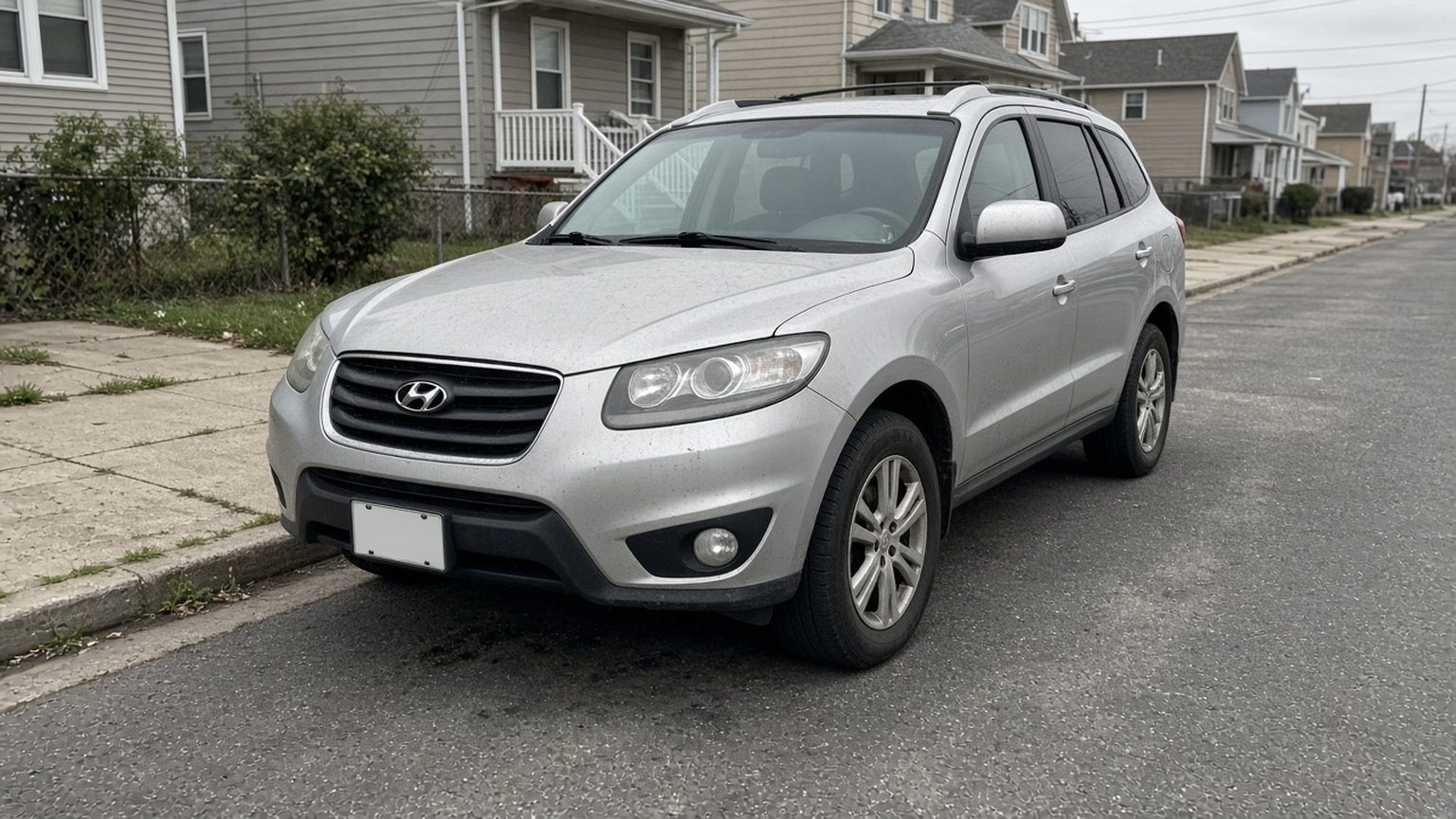
2006 Hyundai Santa Fe
As the best first-gen model, 2006 is among the top-rated Santa Fe model years overall considering all the production years. It received positive feedback from previous owners and was highly appraised on safety tests where it scored a 5-star result which is impressive for an SUV of this type.
It also didn’t have many of the previous issues carried on from the first-gen models like engine or transmission failure, and it received by far the least number of complaints among the first two generations (106), making it a safe overall pick.
2011 Hyundai Santa Fe
Pretty much like the 2006 model, the 2011 Santa Fe also scored impressive safety results and only had around 200 NHTSA complaints. For an SUV sold in millions, that’s a reassuring result for all the drivers potentially thinking about buying one of these.
This model didn’t have any severe issues, and other than some slight electrical system issues and suspension problems, it was a clean pick.
2016 Hyundai Santa Fe
Last but not least, we have to include at least one model from the third generation and it’s the 2016 Santa Fe this time. It managed to match some of the remaining best-rated models like 2006 and 2011 ones in terms of their safety ratings, practicality score, and low number of customer complaints.
With a positive rating overall, it made a perfect option for drivers on the used car market, and we have to point out that it did receive some complaints about the engine cooling, but their insignificant number caused most organizations to list it as a go-to option.
Is the Hyundai Santa Fe worth buying?
The Hyundai Santa Fe is a fantastic SUV and is worth your money. Its abundant features, even for its standard trim, and its affordable price attracts prospective drivers to it. Even more impressive is that these many features work fine together without many complaints.
Santa Fe holds its value well and is a good investment for drivers who resell vehicles. With the proper maintenance culture, you can make it last a long time.
Tapping into a wealth of automotive research and user experiences, we’re here to elevate your journey to finding the perfect car. Are you questioning which years might sour your driving experience? Our exploratory articles, including Kia Sorento years to avoid, and Ford Edge years to avoid, Subaru Outback years to avoid, pinpoint the years you would want to skip.
Which year is the most reliable Hyundai Santa Fe?
The 2019 model year is one of the most reliable Hyundai Santa Fe years you can find. It offers the most safety features, comfort, an incredible suspension system and pleasing aesthetics.
What year Santa Fe has engine problems?
The 2017 Santa Fe had the most severe engine problems by far. The 2013, 2014 and 2018 models also suffered from a lot of engine problems.
Which old Santa Fe should I avoid when purchasing one from the used market?
Avoid 2003, 2004, 2007, 2008, 2013, 2014, 2017 and 2018 models when buying a used Santa Fe. These models experience engine and transmission issues at low mileage, making you spend on costly repairs just months after purchasing the vehicle.
How many years can the Hyundai Santa Fe last?
You can use the Hyundai Santa Fe for nearly 15 years before needing any expensive transmission or engine repairs or replacements, depending on your model. You can make it last longer by finding and incorporating the proper maintenance routine and practices with careful consideration of the common issues the vehicle is bound to face.