
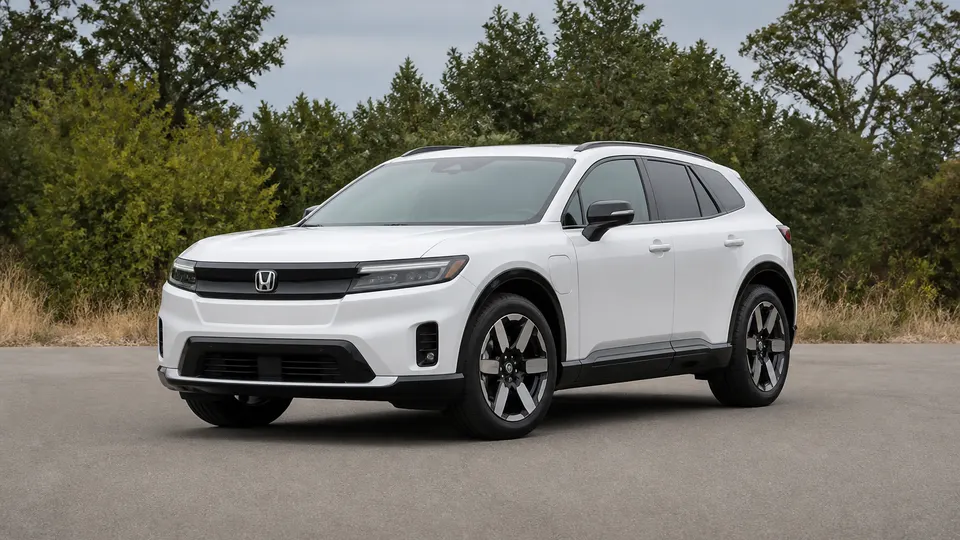
The Honda Prologue is a capable, long-range electric SUV with impressive range and a spacious cabin, but its first model years carry enough documented complaints and recalls that you'll want to do your homework before buying used. Early data from owner surveys and NHTSA complaints shows the 2024-2025 Honda Prologue landing below average for reliability compared with other new EVs its size. This guide ranks every Prologue model year by NHTSA complaint volume, CarComplaints PainRank data, recall history, and owner-reported failure patterns so you can buy with confidence.
For generations, engines, and ownership notes in one place, see the Honda Prologue hub.
Related: Cadillac LYRIQ years to avoid, Ford Mustang Mach-E years to avoid.
At a glance
- Worst years
- 2024
- Best years
- 2025
- Top failure
- 1st-gen CV axle/joint clicking and failure (CarComplaints, 2024-2025)
- Always do before buying
- Run the VIN through NHTSA's recall checker to confirm recalls 24V-540, 26V-112, and 26V-306 are closed; on any 2024 or 2025 car, test-drive at slow speed with full steering lock to listen for CV axle clicking
How we rated the best and worst Honda Prologue years
The 2024 Honda Prologue has the most overall complaints, and CarComplaints also rates 2024 as the worst model year ranked on several factors such as repair cost and average mileage when problems occur. We pulled data from NHTSA complaints and recalls, CarComplaints for per-year complaint counts and PainRank (repair cost and mileage-at-failure), Consumer Reports subscriber surveys, and owner discussions on the Honda Prologue EV Forum.
CarComplaints ranks the worst year by repair cost and mileage-at-failure through its PainRank system, while NHTSA shows raw complaint volume - they can point to different years, and we attribute each to the right source throughout.
Our years to avoid methodology weighs complaint volume, average mileage at failure, and recall severity together rather than treating any single source as the final word.
| Honda Prologue Generation | Best Honda Prologue Years | Worst Honda Prologue Years |
|---|---|---|
| 1st Gen (2024 - present) | 2025 | 2024 |
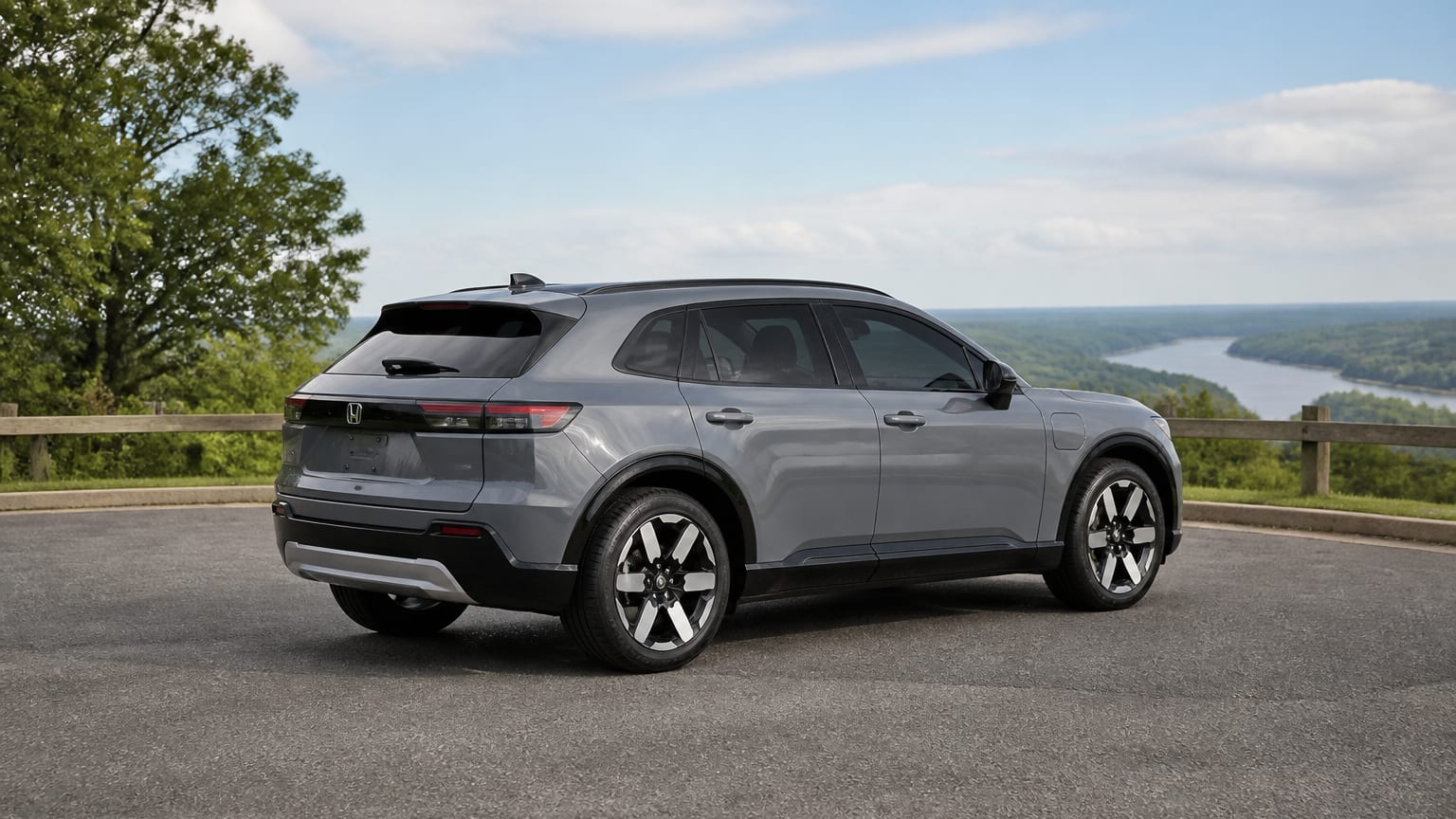
Every Honda Prologue model year ranked
The 2024 model year is the clear one to approach with extra caution, while the 2025 brings measurable improvements. The table below covers every model year the Prologue has been available in the U.S.
| Model Year | Generation | Verdict | Notes |
|---|---|---|---|
| 2024 | 1st Gen | Avoid | Most complaints, most recalls, CV axle and HV system issues |
| 2025 | 1st Gen | Best | Improved range, fewer raw complaints per CarComplaints |
| 2026 | 1st Gen | OK/Mixed | Too new for used-buyer data; CV axle issue still emerging |
Most common Honda Prologue problems
CV axle and joint failure is the single biggest recurring complaint across all Prologue model years, documented from as early as 3,000 miles on both 2024 and 2025 vehicles. Below are the top failure categories in order of severity.
1. CV axle and joint clicking/failure
Three major problems stand out for the 2024 Honda Prologue: faulty CV joints and axles that produce loud clicking or knocking noises when turning, false activations of the automatic emergency braking (AEB) system, and high-voltage system failures that can disable charging or limit performance. The CV axle complaint is the most widespread across both model years.
The 2024 Honda Prologue has 184 NHTSA complaints for the suspension at an average of 432 miles. Owners describe clicking and knocking during low-speed turns, which dealers have confirmed as a known issue. Broken or clicking CV joints could lead to loss of power transfer to the wheels, causing a sudden and unexpected stop. Honda is aware of the defect but has no permanent fix, as confirmed by multiple Honda service centers.
The problem carries over fully to the 2025. CV axles clicking and a slight vibration in the steering while driving at highway speeds, along with an audible buzzing, have been reported; this started around 8,000 miles and gets worse over time on 2025 models. Repair costs are difficult to pin down because Honda has not yet issued a formal fix - many owners remain in a holding pattern under warranty, with dealers reporting axle parts on backorder. One owner was told they needed a new axle but the part was backordered nationwide; the noise keeps getting worse, and as of early 2026, Honda corporate had released guidance stating this is not a safety issue and would not cover a new axle unless it became part of a recall.
No TSB or recall covering this specific defect had been confirmed at the time of writing. If you are buying a used Prologue, turn the wheel to full lock at low speed in both directions before signing anything.
2. High-voltage system warnings and battery faults
Multiple owners report “Service High Voltage System” warnings, loss of HVAC, and reduced power within the first 5,000-10,000 miles. The warning can appear without warning and force the vehicle into a reduced-performance mode, sometimes preventing charging entirely.
One owner reported a battery that would not charge and an error notice reading “Service high voltage system - Reduce acceleration - Drive with care.” The shop initially said it was a software issue and fixed it, but the problem returned and the car then needed a new battery. The 2024 Honda Prologue carries 138 NHTSA complaints for the electrical system, at an average of 29 miles. That 29-mile average means some owners experience electrical faults almost immediately after taking delivery.
Many 2024 Honda Prologue high-voltage warnings and brake-assist behavior issues may be addressed by TSBs or case-by-case repairs long before they rise to full recall status. Online owner reports about “Service High Voltage System,” charging failures, or infotainment bugs are not automatically recalls - many are handled under warranty with TSBs or one-off software updates. Before buying, ask for any warranty claim records related to high-voltage or charging faults. The pros and cons of owning an EV are real here: the Ultium battery platform is powerful, but first-year EV growing pains on a shared GM platform can mean unpredictable faults early in the ownership cycle.
3. Instrument panel and rearview camera blackouts (Recall 26V-112)
NHTSA documents show that the electric SUVs may fail to properly display important information on the instrument cluster and center infotainment screens while driving; specifically, the instrument panel may fail to display crucial information such as the speedometer and any warning messages, and the infotainment screen defect may keep the rearview camera image from displaying while the vehicle is reversing.
NHTSA campaign 26V-112 covers the 2024 Honda Prologue and 2024 Acura ZDX; dealers will update the vehicle radio control module software, free of charge. The exact breakdown of the 65,153 vehicles in this recall involves an estimated 45,562 Honda Prologues. Honda’s own recall designations for this campaign are TNL and XNK.
According to the recall documents, the issues may be intermittent and could be resolved temporarily by restarting the car. This is a free software fix at any Honda dealer, but verify the repair is already completed when looking at a used 2024.
4. Front suspension control arm fracture (Recall 24V-540)
NHTSA campaign 24V-540 covers certain 2024 Prologue vehicles built between April 10-14, 2024; the right front lower control arm may contain a manufacturing defect that can cause it to fracture, and a fracture can cause loss of vehicle control, increasing the risk of a crash. Honda’s manufacturer recall number for this campaign is PIY.
The potential number of units affected is 39 - a very small batch tied to a narrow production window. Dealers will inspect and replace the right front lower control arm as necessary, free of charge; owner notification letters were mailed September 3, 2024. If the VIN of any 2024 Prologue you are considering falls in the April 10-14 production window, confirm this inspection has been completed.
5. False AEB and phantom braking
Multiple owners report false AEB (“phantom braking”) and quirky collision avoidance behavior. The system triggers hard braking in situations with no actual obstacle, which is both startling and a rear-end collision risk in traffic. Some owners describe ADAS settings as too sensitive, with the car slamming on the emergency brake when backing out of a parking spot with no obstacles in view.
The 2025 Honda Prologue has 32 NHTSA steering complaints and 24 NHTSA electrical complaints on record at CarComplaints. Many of these overlap with phantom braking and driver-assist misbehavior. Software updates from Honda have addressed some triggers, but owners on the Prologue Talk forum report that dealer calibration and firmware currency can vary widely.
6. Rearview camera failure (Recall 26V-306)
NHTSA recall 26V-306 covers 59,887 vehicles in total, including 44,199 Honda Prologue models affecting 2024 and 2025 units; Honda estimates only 5% of them actually have the defect, but issued the recall as a safety precaution. Honda’s recall numbers for this campaign are DO5 and DO6.
Honda said dealers will replace the rearview camera for free; owners can expect notification letters to be mailed out on July 6, 2026. This recall affects both 2024 and 2025 Prologues, so a VIN check is a non-negotiable step before purchase.
Which Honda Prologue years should you avoid?
The Honda Prologue years to avoid is 2024. CarComplaints rates the 2024 the worst model year based on repair cost and average mileage when problems occur, and it also has the most overall complaints. On the NHTSA side, the 2024 carries more individual recall campaigns and a higher raw complaint volume than the 2025 for a model that had been on sale a shorter time.
| Honda Prologue Generation | Model Years | Verdict | Main Issues |
|---|---|---|---|
| 1st Gen (2024 - present) | 2024 | Worst | CV axle clicking, HV system faults, instrument panel blackouts, control arm recall |
| 1st Gen (2024 - present) | 2025 | Best | CV axle still emerging, fewer recall campaigns, improved range |
Worst Honda Prologue years: 2024
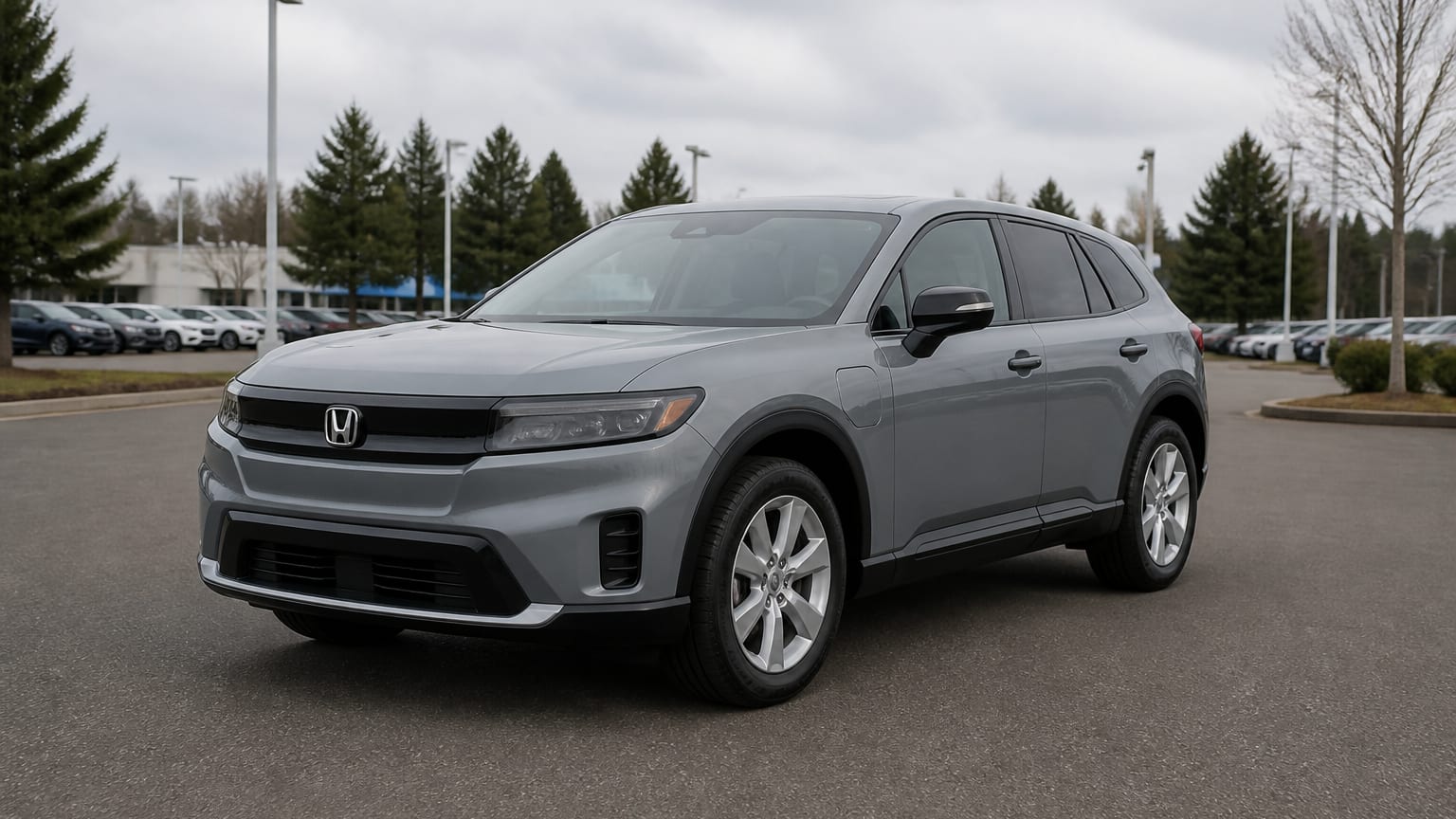
1st-generation Honda Prologue (2024 - present)
The 2024 Prologue arrived as Honda’s first all-electric SUV in the U.S. The 2025 Honda Prologue is a carryover vehicle because it made its debut as an all-new midsize electric SUV in 2024. Consumer Reports rates the 2024 Prologue as much less reliable than other cars from the same model year.
The 2024-2025 Honda Prologue has accumulated 830 NHTSA complaints combined, with the most frequently reported problem areas being steering, suspension, and electrical systems. The 2024 model draws the bulk of those complaints because it was on sale first and hit the most recalls. For the 2024 specifically, three NHTSA recall campaigns (24V-540, 26V-112, and 26V-306) have been issued, covering the front suspension control arm, the instrument panel software, and the rearview camera. Verify all three are closed on any used 2024 before buying via NHTSA’s recall lookup tool.
What are the best Honda Prologue years to buy?
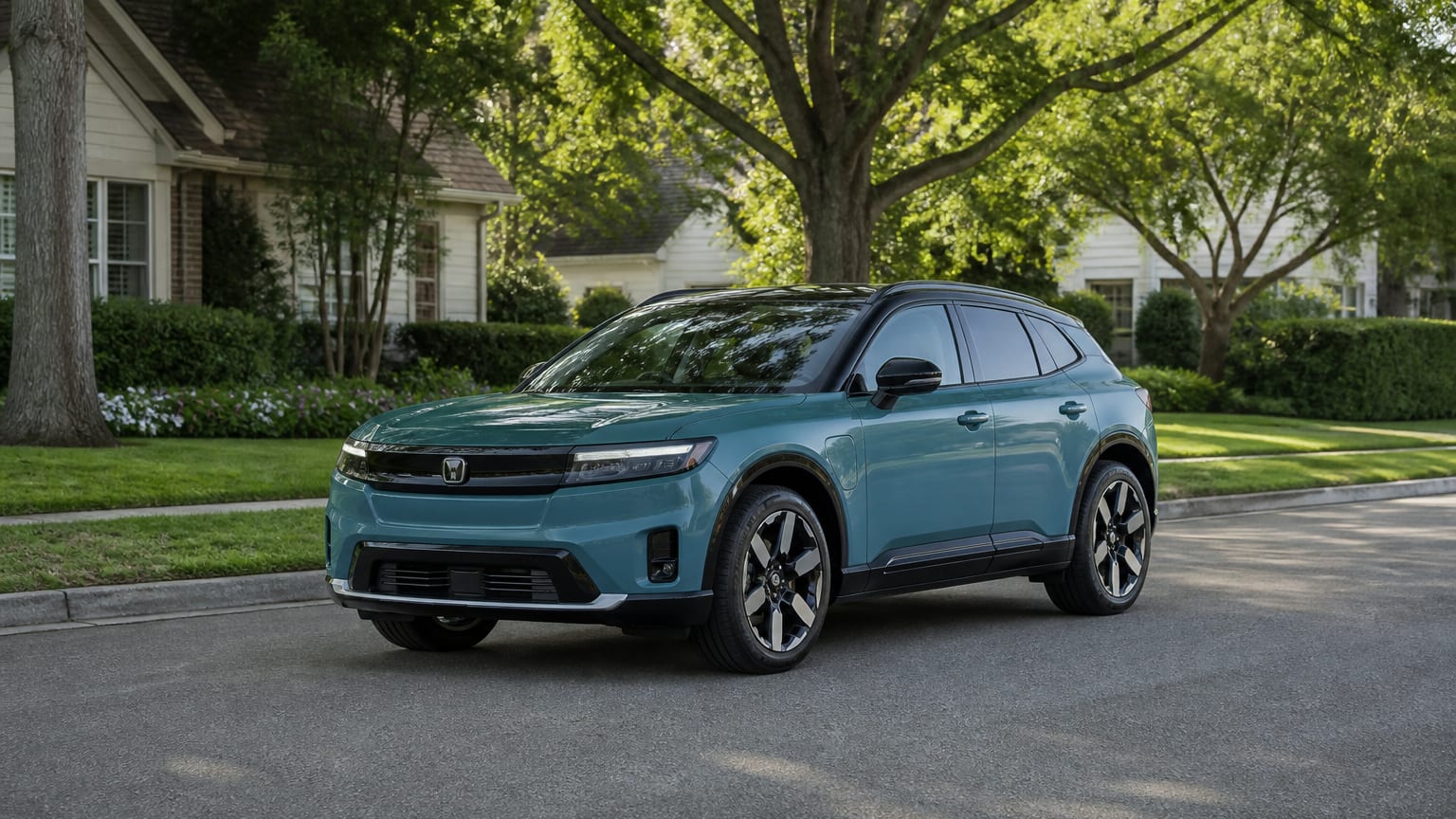
The best Honda Prologue year to buy used is the 2025. The 2025 Honda Prologue is a carryover model, but it brings the max range up to 308 miles, which is up 12 miles from 2024. The all-wheel drive models also receive a power boost and are now rated at 300 horsepower and 355 lb-ft of torque.
| Best Honda Prologue Year | Why It's a Strong Buy |
|---|---|
| 2025 | Improved range (up to 308 mi FWD), AWD power boost, fewer recall campaigns than 2024 |
Most reliable Honda Prologue years: 2025
2025 Honda Prologue
The 2025 Honda Prologue’s CarComplaints complaint breakdown shows 32 NHTSA steering, 24 electrical, 21 miscellaneous, and 19 drivetrain complaints on record - a lower total complaint count than the 2024, and it benefits from Honda addressing early software and calibration issues on the platform. The CV axle problem is still present on some 2025 units, so the test-drive check remains critical.
As part of Honda’s partnership with General Motors, the 2025 Prologue uses an 85 kWh liquid-cooled lithium-ion Ultium battery. The 2025 also carries recall 26V-306 for the rearview camera, so run the VIN before buying. A confirmed, clean-history 2025 with all open recalls closed is the strongest used Prologue buy available today.
Honda Prologue pre-purchase checklist
Before buying any used Honda Prologue, run through these model-specific checks.
- Run the VIN on NHTSA’s recall tool - confirm recalls 24V-540 (control arm, 2024 only), 26V-112 (instrument panel software, 2024), and 26V-306 (rearview camera, 2024-2025) are all shown as completed. A recall that is open means an outstanding safety defect.
- Test the CV axles at full steering lock - at low speed (5 mph), turn the wheel to full lock in both directions and listen for clicking, knocking, or grinding. A 2025 with only 5,424 miles was reported to have CV joint clicking; owners note it is a defective design part that will continue to get worse until the vehicle becomes undrivable. If you hear it, walk away or negotiate for a free axle replacement under warranty.
- Check the instrument panel and rearview camera - start the car cold and confirm the gauge cluster and center screen both display normally; back up slowly and verify the camera feed appears. This is the defect covered by 26V-112.
- Request all warranty and service records - look specifically for any high-voltage system repairs, software updates, or repeat visits for the same concern. A franchised Honda dealer can usually pull a history of recall, TSB, and warranty work done at authorized shops; look for repeated visits for the same concern, especially high-voltage, A/C, or driver-assist complaints.
- Test the AEB and driver-assist systems - drive in a parking lot and confirm the forward collision warning and automatic braking do not trigger falsely. Pull up to a clear, empty lane at low speed to check lane-keeping behavior.
- Verify charging at the test location - plug the car into a Level 2 charger if one is available at the dealership and confirm the port engages and the dashboard shows an active charge session. A failed charge-port sensor is a reported fault on some 2025 units.
- Check the 12V auxiliary battery date - the 12V battery has failed on some Prologues, leaving the vehicle unable to start. Ask the dealer when it was last tested or replaced; many EV 12V batteries are not covered by the main battery warranty.
Better alternatives to consider
If the Honda Prologue years in your budget land on the avoid list, consider these alternatives instead:
- Honda Passport - a gas-powered midsize SUV from the same brand, with a longer production record and a clearer year-by-year reliability history for buyers cautious about first-gen EV ownership
- Honda Pilot - Honda’s three-row flagship SUV, with multiple generations of reliability data and strong long-term owner satisfaction scores
- Chevrolet Blazer EV - shares the same GM Ultium platform as the Prologue, so cross-shop carefully, but pricing and inventory can be favorable and GM’s dealer network is wider for Ultium-specific diagnostics
- Subaru Forester - a more conservative pick for buyers who want all-wheel drive and a proven reliability record without first-gen EV uncertainty, available at a lower price point
Is the Honda Prologue worth buying?
Yes, the Honda Prologue is worth buying - as long as you avoid the 2024 model year or go into a 2024 purchase with eyes wide open on its three active recalls and documented CV axle issues. Consumer Reports rates the 2024 Prologue as much less reliable than other cars from the same model year, which is a meaningful caution for used buyers. The 2025 is the cleaner pick: improved range, a power upgrade on AWD trims, and a shorter recall list. Our editorial guidelines for vehicle research require that reliability verdicts rest on documented complaint data and confirmed recalls rather than manufacturer claims, which is why the 2024 Prologue carries an avoid rating despite Honda’s broader reputation.
The Prologue is not a disaster, but it also is not the set-and-forget Honda reliability story many buyers expect, especially in its early years on a shared GM Ultium platform - that said, most 2026 Honda Prologues on the road today are driving around with little more than minor software quirks. Run the VIN through NHTSA’s recall checker and verify the full maintenance and warranty history before signing.