
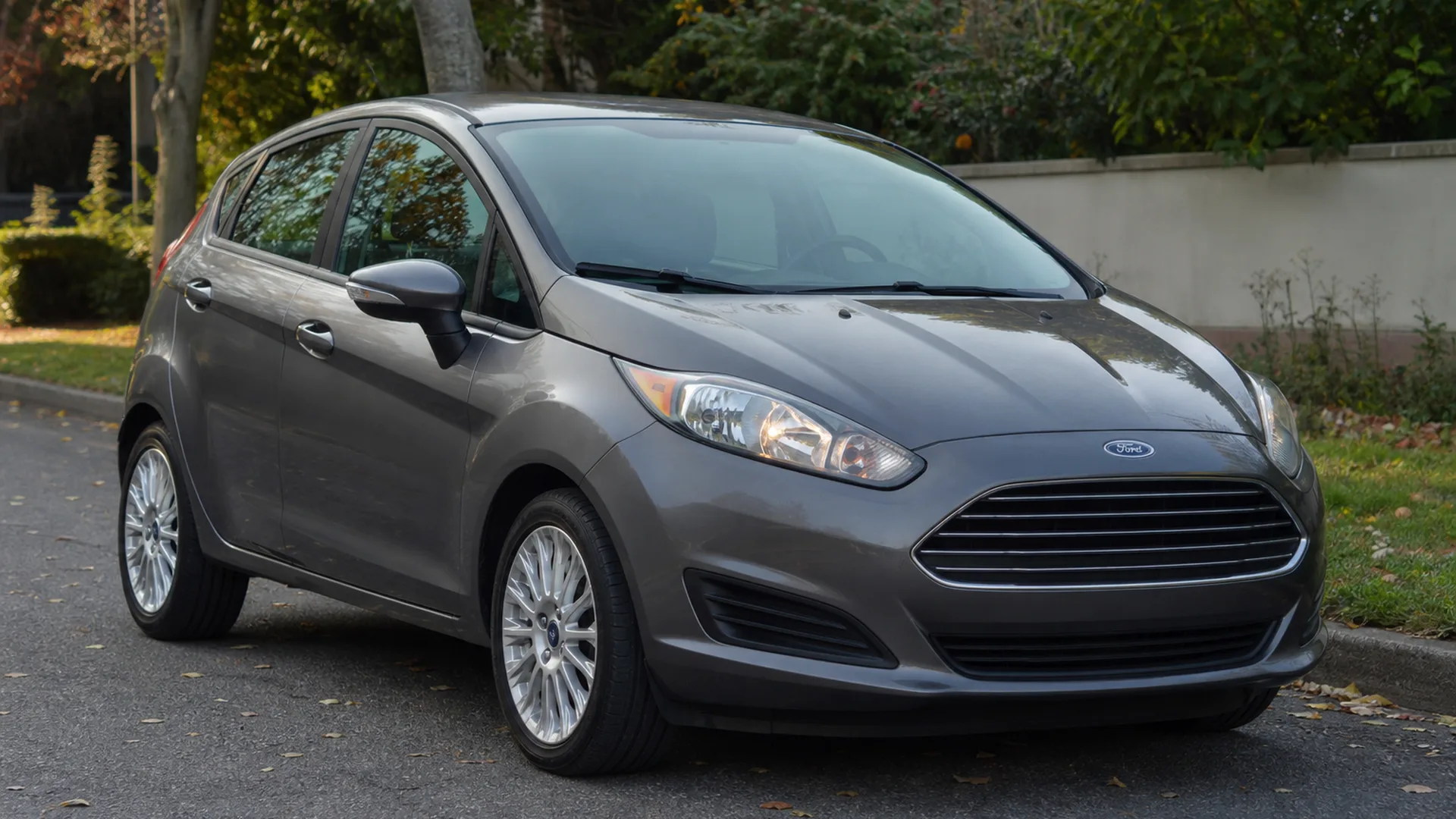
The Ford Fiesta caught the eye of American buyers when it returned to U.S. showrooms in 2011, promising zippy handling and 30+ MPG fuel economy in a wallet-friendly package. Sold globally since 1976 and in over 100 countries, this little hatchback seemed like the perfect city car.
But here’s the catch: certain Fiesta years are riddled with transmission failures, engine overheating, and electrical headaches that can drain your bank account faster than you can say “PowerShift.” If you’re shopping for a used Fiesta, you need to know which years to avoid—and which ones are actually dependable. This guide breaks down the Fiesta’s biggest problems, reveals the worst model years to avoid, and points you toward better alternatives that won’t leave you stranded.
How We Researched Ford Fiesta Reliability
We built this guide by pulling data from multiple reliable sources to give you the full picture. First, we combed through the NHTSA complaint database to track powertrain failures, safety recalls, and owner-reported issues across all Fiesta model years. We cross-referenced that with Technical Service Bulletins (TSBs) and class-action lawsuit filings—particularly the massive legal actions surrounding the PowerShift transmission defects.
Next, we analyzed complaint patterns on CarComplaints.com, which aggregates thousands of owner experiences by model year. We also looked at Consumer Reports and J.D. Power reliability ratings to see how the Fiesta stacked up against competitors. Owner forums like FiestaSTForum, Reddit’s r/FordFiesta, and BlueOvalForums gave us real-world perspectives on long-term ownership. Finally, we reviewed expert analysis from Edmunds, Kelley Blue Book, and RepairPal to understand average repair costs and common failure points.
This multi-source approach lets us separate isolated complaints from widespread problems. When hundreds of owners report the same shuddering transmission or overheating engine, you know it’s not just bad luck—it’s a design flaw worth avoiding.
The Ford Fiesta’s Most Common Problems
PowerShift Transmission: The Achilles’ Heel
If there’s one problem that defines the Ford Fiesta’s troubled reputation, it’s the dual-clutch PowerShift automatic transmission (DPS6) found in 2011–2016 models. This transmission became notorious for shuddering, jerking, slipping, and—in severe cases—complete failure. Owners described hesitation when accelerating from a stop, violent shuddering at low speeds, and gears that refused to engage properly.
The root cause? A fundamentally flawed clutch design and faulty transmission control module. Ford attempted multiple software updates, but the hardware itself was the real issue. Repair costs frequently exceeded $3,000 for clutch replacements or full transmission rebuilds, often hitting owners at surprisingly low mileage (sometimes under 50,000 miles).
The problem was so widespread that Ford faced multiple class-action lawsuits and was forced to extend warranties. According to NHTSA data, transmission failures represent the single most-reported problem across all Fiesta model years. If you’re considering a 2011–2016 Fiesta with an automatic transmission, you’re playing Russian roulette with your wallet. The manual transmission, on the other hand, completely sidesteps this issue—it’s a traditional 5-speed that holds up just fine.
Engine Troubles: Overheating and Oil Leaks
Engine problems run a close second to transmission woes. The 1.6L EcoBoost turbo engine (used in the performance-oriented Fiesta ST) suffered from overheating that could crack cylinder heads and, in extreme cases, cause engine fires. Ford issued recalls for this fire risk, but the damage to the engine’s reputation was done.
The tiny 1.0L EcoBoost 3-cylinder engine—offered in Europe and some later U.S. models—brought its own headaches. Coolant leaks from faulty hoses led to overheating and premature engine failure in 2011–2013 builds. Ford extended warranties and funded repairs, but many owners had already experienced catastrophic failures. The 2015–2017 1.0L models added oil pump failures to the mix, prompting yet another recall and ongoing legal action.
While these engines deliver impressive fuel economy, their defects make certain model years risky propositions. If you’re looking at a Fiesta with either of these engines, documentation of completed recalls and regular maintenance becomes absolutely critical.
Electrical Gremlins: Sensors and Safety Systems
Electrical issues might not strand you like a bad transmission, but they’re incredibly frustrating. Random warning lights—especially the persistent “hood open” alert caused by a faulty sensor—plagued many Fiestas. Power accessories failed unexpectedly: windows refused to roll down, infotainment screens went black, and batteries drained overnight.
The most serious electrical problem involved door latch mechanisms on 2011–2014 models. Faulty latches could cause a door to fly open while driving, creating obvious safety hazards. Ford recalled roughly 2 million vehicles to fix this defect. If you’re looking at a Fiesta from these years, verify that this recall was completed—it’s a non-negotiable safety issue.
HVAC Problems: When Your AC Quits in August
Air conditioning failures show up frequently in owner complaints, especially from warmer states. The AC compressor clutch and pressure switches tend to fail, leaving you with warm air when you need cool relief. Heater blend door actuators also break, making it impossible to adjust cabin temperature properly.
Some 2011–2013 models left the factory with insufficient AC refrigerant or small leaks that gradually degraded performance. These aren’t catastrophic problems, but they’re annoying and can cost several hundred dollars to repair. Always test the HVAC system during a test drive—if the air isn’t ice-cold and the heat doesn’t work on demand, budget for repairs.
Suspension and Brake Wear: Clunks and Premature Replacement
The Fiesta’s suspension is generally straightforward, but certain components wear faster than expected. Lower control arm bushings and sway bar links develop clunks over bumps, especially on rough roads. Owners of sportier ST models report more noticeable suspension noise due to the stiffer setup.
Brake components—rotors and pads—wear relatively quickly on the Fiesta’s small braking system. Some owners experienced warped rotors or needed pad replacements more frequently than average. There’s no major systemic brake defect, but expect higher-than-usual wear if the previous owner drove aggressively or neglected maintenance.
Tech and Sensor Malfunctions
Ford’s SYNC infotainment system in early Fiestas suffered from Bluetooth connectivity problems and frozen screens. The upgraded systems in 2014–2019 models weren’t immune either—touchscreen bugs and sluggish response frustrated owners. Various sensors misbehave: faulty cooling fan relays can prevent the radiator fan from activating (leading to overheating), and oxygen sensor failures trigger “Check Engine” lights.
Many of these tech issues can be resolved with software updates or sensor replacements, but they contribute to the Fiesta’s reputation for nagging problems. If you’re test-driving a Fiesta, connect your phone to the infotainment system and cycle through all the climate and tech features to catch any glitches.
Worst Ford Fiesta Years: Models to Avoid Completely
2011 Fiesta – The Absolute Worst
The 2011 Fiesta holds the dubious honor of being the single worst model year. As the first year of the Fiesta’s U.S. comeback, it arrived with a transmission that was fundamentally broken. CarComplaints data ranks 2011 as the worst year based on problem severity, even though 2013 logged more total complaints.
Owners reported relentless transmission shuddering, slipping, and complete failures. Extended warranties rarely covered the repeated dealer visits and repairs. Beyond the PowerShift nightmare, 2011 models also suffered from engine stumbling, electrical sensor failures, and infotainment bugs. This year is a financial sinkhole—skip it entirely.
2012–2013 Fiesta – The Problem Continues
Ford made minimal changes for 2012 and 2013, meaning the defective dual-clutch transmission carried over unchanged. The 2013 Fiesta actually logged 211 complaints on CarComplaints (the highest total of any year), covering everything from transmission jerking to door latch failures.
Multiple recalls hit these years: transmission control module updates, airbag deployment software fixes, and door latch replacements. Ford released software patches claiming to improve the transmission, but most owners saw little improvement. Unless you stumble upon a rare manual-transmission version, 2012–2013 Fiestas are high-risk purchases. These years earned the Fiesta’s bad reputation among used-car shoppers.
2014 Fiesta – High Complaint Volume Persists
By 2014, Ford had refreshed the Fiesta’s styling and introduced the fun Fiesta ST performance model. But under the surface, the same transmission problems remained. In fact, 2014 logged the second-highest complaint count after 2013.
The “intermittent shudder when accelerating” became the single most-reported problem for any Fiesta year, and 2014 automatics suffered it most. Owners also dealt with mysterious warning lights (that infamous hood latch sensor) and declining interior build quality. Ford extended warranties on the 2014 transmission, but owners still spent countless hours at dealerships for reprogramming and clutch replacements. Approach 2014 models with extreme caution.
2015 Fiesta – Engine and Electrical Issues Join the Party
You’d expect improvements by the fourth year, but 2015 brought new problems to the table. Transmission complaints declined slightly as Ford tweaked clutch materials, but engine and electrical issues took center stage. Recalls for fuel system leaks (potential fire hazards) hit 2015 models, and owners reported engines stumbling or losing power unexpectedly.
Faulty purge valves and wiring issues caused drivability problems. The infotainment system continued to glitch, and warning lights appeared without clear cause. In short, 2015 Fiestas carry forward most of the previous years’ weaknesses while adding new headaches. Unless you find one with immaculate service records and all recalls completed, it’s best to keep looking.
2016 Fiesta – The Final Risky Year
The 2016 Fiesta shows modest improvement—CarComplaints lists only 18 total complaints versus hundreds in earlier years. Ford had implemented various transmission fixes and addressed several recalls by this point. Some 2016 owners report decent experiences, making this year less universally problematic than 2011–2015.
That said, lingering transmission shudder still affected unlucky owners. The 2016 sits at the tail end of the “bad batch,” and while it’s not as dire as earlier years, it’s not bulletproof either. If you’re tempted by a deal on a 2016, verify that all recall work (especially transmission control module updates) is completed, and test the car thoroughly for any shuddering or hesitation during shifts.
Why 2011–2016 Models Earned Their Bad Reputation
These six model years (the early Mark VI generation in the U.S.) share the PowerShift transmission as their primary flaw, but they also suffered from engine defects, electrical problems, and multiple safety recalls. The combination of frequent, expensive repairs and safety concerns earned the 2011–2016 Fiesta spots on virtually every “used cars to avoid” list published by automotive journalists and consumer advocates.
Skipping these years dramatically improves your odds of a hassle-free ownership experience. The savings on the purchase price of a 2012 Fiesta will evaporate when you’re paying $3,000 for a transmission rebuild at 60,000 miles.
Best Ford Fiesta Years: Reliable Models Worth Buying
2017–2019 Fiesta (U.S.) – The Safe Choice
If you want a Ford Fiesta, the 2017–2019 model years are your safest bet. These late-production U.S. models benefited from Ford’s accumulated fixes and show a dramatic drop in owner complaints. CarComplaints lists only six complaints for 2017 and eight for 2019, compared to 183 for 2011.
Ford refined both the transmission software and hardware by 2017, making the dreaded shudder much rarer. Consumer Reports and J.D. Power ratings improved noticeably for these years. The 2019 Fiesta—the final U.S. model year—earned particular praise for solid reliability, along with kudos for its updated Sync 3 infotainment and responsive engines.
Owners of 2018 and 2019 Fiestas report far fewer problems overall. If you’re set on buying a Fiesta, these are the years to target. You’ll get the Fiesta’s fun driving dynamics and fuel efficiency without the constant dealer visits that plagued earlier models.
2017–2023 Fiesta (Global Markets) – The Redesigned Generation
Outside the U.S., Ford introduced a redesigned seventh-generation Fiesta in 2017 that continued production through 2023. This global Fiesta proved to be a dependable supermini, benefiting from Ford’s hard-learned lessons. Many markets offered conventional automatic or manual gearboxes instead of the troublesome PowerShift, further improving reliability.
European reviews consistently praised the 2017+ Fiesta for its build quality, handling, and low ownership costs. If you’re shopping in markets where the Fiesta remained available past 2019, any 2017 or newer model is a solid choice.
Pre-2011 Models (International Markets) – Simple and Reliable
If you’re outside the U.S. or considering imports, older Fiesta generations have strong reliability records. The 2006–2010 Fiesta (Mark V/VI in Europe) is known for dependability, as are even older 1995–1996 models (Mark III/IV).
These were simpler cars—often manual transmission, naturally aspirated engines, minimal electronics—which meant fewer potential failure points. The 2008–2010 European/Mexican Fiesta, sold before the U.S. launch, is particularly robust. You’ll sacrifice modern tech and safety features, but as budget runabouts these older Fiestas are generally reliable.
If you’re on a tight budget and find a well-maintained 2008 or 2009 Fiesta, it could be a decent choice. Just inspect carefully for age-related issues like rust, worn suspension components, and deteriorating rubber seals—expected on any 15+ year-old car.
Manual Transmission Models (Any Year) – Sidestepping the Main Problem
Here’s an important point: a manual-transmission Fiesta from any year tends to be significantly more reliable than its automatic counterpart. The worst issues were specific to the PowerShift dual-clutch automatic. A 2011–2016 Fiesta with the 5-speed manual can actually be relatively trouble-free (aside from minor annoyances), since the engine and other components were generally sound.
In Europe, where manual transmissions are common, many owners report long-lived Fiestas unaffected by the automatic’s troubles. So if you’re comfortable driving a stick shift and find a manual Fiesta at a good price, you sidestep the biggest problem area entirely.
Better Alternatives: Reliable Subcompacts Worth Considering
If the Fiesta’s track record gives you pause, several subcompact alternatives offer similar fuel economy and practicality with far better reliability. Here are your top options:
Honda Fit (2009–2013, 2015–2020) – Best-in-Class Dependability
The Honda Fit directly competes with the Fiesta and crushes it on reliability. RepairPal gives the Fit a 4.5 out of 5 reliability rating versus the Fiesta’s 4.0, ranking it 4th among subcompact cars. Owners report average annual repair costs around $390—significantly cheaper than the Fiesta’s $550.
The second-generation Fit (2009–2013) and third-generation (2015–2020) both have stellar reliability records. You get Honda’s legendary powertrain durability and the ingenious “Magic Seat” system that creates incredibly versatile cargo space. Both the CVT automatic and manual transmission hold up well long-term. If reliability matters to you, many shoppers would choose a used Fit over a same-year Fiesta without hesitation.
Toyota Yaris (2007–2017, 2019–2020) – Legendary Dependability
Toyota’s subcompact carries a legendary reputation for dependability. The Yaris benefits from Toyota’s famous build quality—RepairPal gives it a 4.5 out of 5 reliability score with average annual repair costs around $333. In real-world terms, Yaris models routinely pass 150,000 miles with only routine maintenance.
Strong years include the 2007–2011 first-generation U.S. models, the 2012–2017 second-generation, and the interesting 2019–2020 Yaris (which was actually a rebadged Mazda2 sedan, combining Mazda’s handling with Toyota’s quality). Any used Yaris makes a safe bet if you prioritize basic, reliable transportation. It won’t match the Fiesta’s driving fun, but you’ll likely never regret the purchase from a reliability standpoint.