
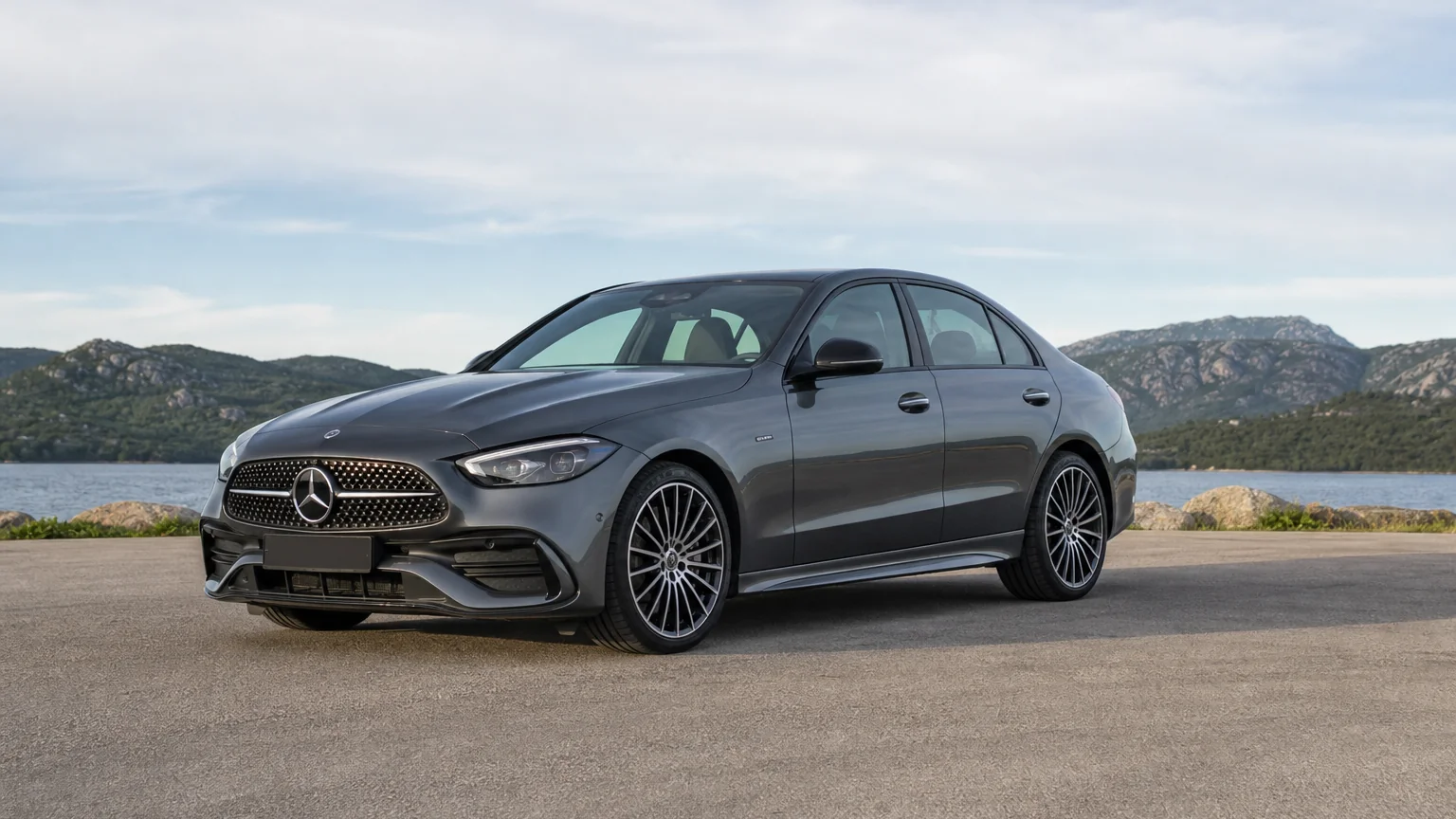
The Mercedes-Benz C-Class is one of the most capable compact luxury sedans on the used market, and the majority of its model years deliver a solid ownership experience. The C-Class offers a generally better reliability record than its alternatives from Audi and BMW. That said, specific model years carry real complaint clusters, elevated recall counts, and costly engine or electrical failures that you will want to know before you hand over your money. This guide uses NHTSA complaint data, CarComplaints rankings, Consumer Reports recall counts, and owner-forum findings to give you a clear, year-by-year picture of which C-Class cars to seek out and which to skip.
For generations, engines, and ownership notes in one place, see the Mercedes-Benz C-Class hub.
Related: Mercedes E350 years to avoid, Mercedes-Benz CLA years to avoid.
At a glance
- Worst years
- 1994
- 2001
- 2006
- 2007
- 2012
- 2013
- 2015
- 2016
- 2018
- 2020
- Best years
- 1998
- 2000
- 2005
- 2011
- 2014
- 2021
- 2024
- Top failure
- W204/W203 M271 timing chain and camshaft adjuster wear (CarComplaints - 2012 C250 is the single worst-rated model)
- Always do before buying
- Run the VIN through NHTSA's recall checker to confirm every open campaign is closed, plus check for a cold-start engine rattle on any 2012-2013 C250 (M271 timing chain signal)
How we rated the best and worst Mercedes-Benz C-Class years
CarComplaints rates the 2012 C250 as the single worst Mercedes-Benz C-Class model on its database, driven by repair cost and the low mileage at which failures appear - the methodology CarComplaints calls its PainRank system. Although the 2015 Mercedes-Benz C300 has the most overall complaints by volume, CarComplaints rates the 2016 model year as worse because of higher repair cost or more problems at lower mileage. Those are two different measurements: CarComplaints ranks by cost and mileage-at-failure, while NHTSA tracks raw complaint volume - and the two datasets often point to different model years. We draw on both, alongside Consumer Reports recall counts per year, J.D. Power reliability scores, and owner discussions on MBWorld.org forums, to build the verdicts below. Our editorial guidelines and research process define how these data sources are weighted and verified before a verdict is assigned.
This guide draws on NHTSA complaint and recall data and CarComplaints PainRank rankings. Our years to avoid methodology combines both datasets rather than relying on either one alone.
| Mercedes-Benz C-Class Generation | Best Mercedes-Benz C-Class Years | Worst Mercedes-Benz C-Class Years |
|---|---|---|
| W202 (1994-2000) | 1998, 2000 | 1994 |
| W203 (2001-2007) | 2005 | 2001, 2006, 2007 |
| W204 (2008-2014) | 2011, 2014 | 2012, 2013 |
| W205 (2015-2021) | 2021 | 2015, 2016, 2018, 2020 |
| W206 (2022-present) | 2024 | None |
Every Mercedes-Benz C-Class model year ranked
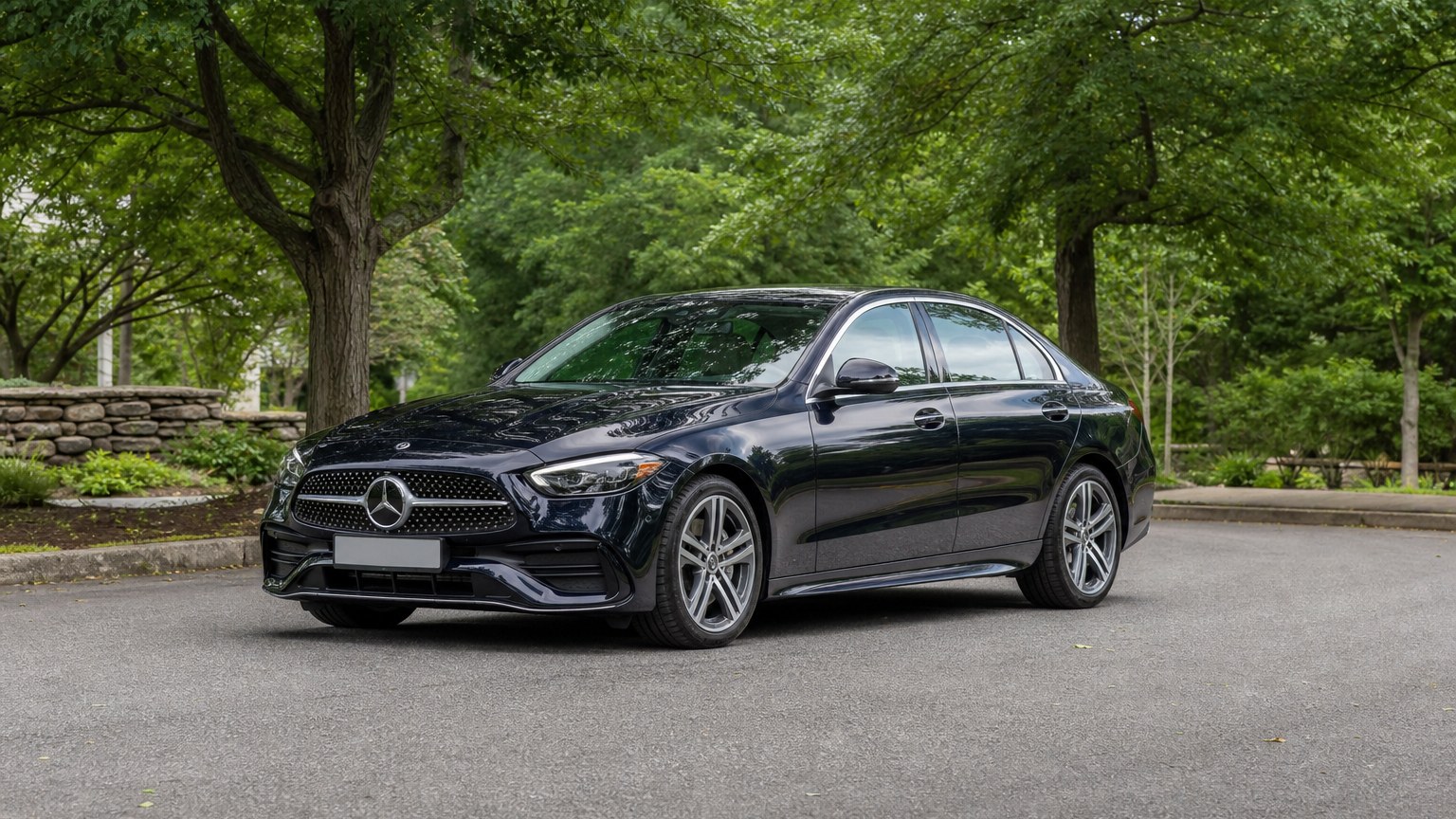
The 2012 C250 and 2015-2016 C300 are the standout problem years across the C-Class lineup, but the table below gives you a verdict on every model year where data exists.
| Model Year | Generation | Verdict | Notes |
|---|---|---|---|
| 1994 | W202 | Avoid | Aging insulation, ignition lock failures |
| 1995 | W202 | OK/Mixed | Early W202, sparse data |
| 1996 | W202 | OK/Mixed | Minimal complaint record |
| 1997 | W202 | OK/Mixed | Minimal complaint record |
| 1998 | W202 | Best | Low complaints, W202 sweet spot |
| 1999 | W202 | OK/Mixed | Pre-refresh, adequate |
| 2000 | W202 | Best | Final W202, improved refinement |
| 2001 | W203 | Avoid | Electrical issues, stepper motor failures |
| 2002 | W203 | OK/Mixed | Improving over 2001 |
| 2003 | W203 | OK/Mixed | Mixed record |
| 2004 | W203 | OK/Mixed | Mid-W203, acceptable |
| 2005 | W203 | Best | Strongest W203 complaint record |
| 2006 | W203 | Avoid | Takata airbag recall, elevated complaints |
| 2007 | W203 | Avoid | Takata airbag recall, elevated complaints |
| 2008 | W204 | OK/Mixed | Launch year, some teething issues |
| 2009 | W204 | OK/Mixed | Settling complaints |
| 2010 | W204 | OK/Mixed | Improved over launch |
| 2011 | W204 | Best | Low complaints, J.D. Power strength |
| 2012 | W204 | Avoid | Worst CarComplaints year; M271 timing chain |
| 2013 | W204 | Avoid | Second-worst CarComplaints; M271 engine issues |
| 2014 | W204 | Best | Fewest W204 complaints; top J.D. Power score |
| 2015 | W205 | Avoid | 13 NHTSA recalls; most W205 complaints |
| 2016 | W205 | Avoid | CarComplaints worst W205 (cost/mileage) |
| 2017 | W205 | OK/Mixed | Improved over 2015-2016 |
| 2018 | W205 | Avoid | 518 NHTSA complaints; 115 recalls |
| 2019 | W205 | OK/Mixed | 18 NHTSA recalls, but settling |
| 2020 | W205 | Avoid | 377 NHTSA complaints; worst W205 score |
| 2021 | W205 | Best | 7 NHTSA recalls; final W205, improved |
| 2022 | W206 | OK/Mixed | Early W206; 271 NHTSA complaints, teething |
| 2023 | W206 | OK/Mixed | 209 NHTSA complaints, mixed score |
| 2024 | W206 | Best | 20 NHTSA complaints; 69/100 reliability score |
Most common Mercedes-Benz C-Class problems
The single biggest documented failure across the C-Class lineup is the M271 engine timing chain and camshaft adjuster wear found in 2012-2013 C250 models, followed by W205-generation engine and electrical problems, panoramic sunroof detachment, and fuel system faults on newer cars.
1. M271 timing chain and camshaft adjuster wear (2012-2013 C250)
The M271 engine has well-known issues with timing chain stretching, which disrupts valve timing and degrades the condition of the camshaft adjusting sprockets. The symptom most owners notice first is a cold-start rattle that lasts one to three seconds, followed by a check-engine light showing cam/crank correlation codes. Cold-start rattle for one to three seconds, a check-engine light with cam/crank correlation codes, rough idle or misfire, and metal shavings in the oil from worn guides are all warning signs.
The issue with the M271 turbo camshaft adjusters is internal wear: between 45,000 and 90,000 miles, the plates develop a groove worn by the locking pin. The overwhelming complaint against the 2012 C250 is engine rattles on cold start, and there were also multiple reports of engine failures and even engine fires. The 2013 Mercedes-Benz C250 has 42 NHTSA complaints for the engine at an average failure mileage of 46,093 miles.
Repair costs quoted by owners range from $4,000 to $8,000 at a Mercedes-Benz dealer for a full timing chain, tensioner, and camshaft adjuster replacement. CarComplaints lists the 2012 C250 and 2013 C250 among the worst Mercedes-Benz models in its entire database. No manufacturer-issued TSB number for a warranty extension on this specific failure could be confirmed in research; if you are buying a 2012 or 2013 C250, ask the selling dealer to document whether any goodwill or extended-coverage work was performed. Buyer takeaway: start any M271-powered C250 cold, listen for the startup rattle, and budget for the timing system if the car has over 50,000 miles.
2. W205 engine failures and cracked pistons (2015-2016 C300)
The early 2015-2016 model years are very troublesome, with 14 recalls and between 287 and 381 complaints affecting C300 models in particular, according to NHTSA data. CarComplaints judges engine problems to be this generation’s weakest link, primarily those equipped with the 2.0L four-cylinder turbocharged engine that suffer from varying degrees of engine failure, loss of power, cracked pistons, and fuel system issues.
Broken pistons, clogged PCV valves, engine knocking, and oil pan leaks are among the engine problems reported on the 2015 C300. The 2015 Mercedes-Benz C-Class was recalled 13 times by NHTSA, and one owner reported a sunroof repair costing $4,000 on top of the engine faults. CarComplaints states: “Although the 2015 Mercedes-Benz C300 has the most overall complaints, we rate the 2016 model year as worse because of other possible factors such as higher repair cost or more problems at lower mileage.”
Engine repairs on the W205 turbocharged four-cylinder can run from $3,000 for a piston replacement to a full engine swap exceeding $10,000. Buyer takeaway: on any 2015-2016 C300, scan for engine fault codes and watch for oil consumption (check the dipstick before a test drive). You can verify the specific open recalls for any example at NHTSA’s complaint page for the C-Class.
3. Panoramic sunroof panel detachment (2015-2020 C-Class)
The front roof panel located between the windshield and the panoramic sunroof may not have been bonded correctly to the vehicle during a prior repair, allowing the front panel to detach from the vehicle. A detached panel at highway speed becomes a road hazard and a crash risk. This recall is an expansion of previous NHTSA recall number 22V-954.
A related earlier recall (expansion of NHTSA recall number 21V-197) covers 2017-2020 C300 Coupe, C43 Coupe AMG, C43 AMG, 2015-2020 C300, and a wide range of other Mercedes-Benz models equipped with a panoramic sunroof. Dealers will inspect and replace the sunroof panel as necessary, free of charge. Buyer takeaway: any 2015-2020 C-Class with a panoramic sunroof needs a VIN check to confirm the sunroof recall has been completed before you buy.
4. Electrical system and SOS software faults (W205, 2015-2020)
The most commonly reported problem areas on the 2020 C-Class are electrical system (64 complaints), engine (62), and unknown/other (51), according to NHTSA data. Models equipped with an SOS emergency function were also under scrutiny due to errors in the SIM software, which could leave the emergency call function inoperable when a situation required it.
There are 115 recalls and 518 NHTSA owner complaints on file for the 2018 Mercedes-Benz C-Class, with electrical system and engine faults tying as the top complaint category. Electrical repairs on these cars - covering everything from faulty collision prevention sensors to unexplained battery drain - can run several hundred to several thousand dollars depending on the root cause. Buyer takeaway: on any 2018-2020 C-Class, verify all warning lights are off before purchase and ask for documentation on any electrical work performed.
5. Fuel system faults and fuel pump recall (2015-2020, extended)
A fuel pump recall is an expansion of NHTSA recall number 23V-445, affecting certain 2014-2020 C-Class vehicles among others. Dealers replace the fuel pump free of charge. On 2016 C300 models specifically, a strong gas smell is the most-reported complaint against the 2016 Mercedes-Benz C300.
A fuel smell at idle or after a cold start on a 2015-2020 C-Class is a direct pointer to this recall. If transmission fluid pooling under a parked car is visible alongside a fuel smell, you are likely dealing with compounding seal failures common to high-mileage W205 examples. Buyer takeaway: confirm the 23V-445 fuel pump recall (or its expansion) is closed on any 2015-2020 C-Class you are considering.
6. Takata airbag recall (2005-2007 W203 C-Class)
The 2005-2007 C-Class models were among the Mercedes-Benz vehicles affected by the widespread Takata airbag recall, which surrounds the airbag inflators that could pose a safety hazard to occupants if not corrected. This is a safety-critical defect and the highest-priority recall to check on any W203 example. The recall covers 2012-2014 C250, C350, C300 4Matic among other models in the Takata inflator campaign.
Dealers replace the inflator free of charge. Buyer takeaway: before purchasing any 2005-2007 W203 C-Class, run the VIN through NHTSA’s Takata recall lookup to confirm the airbag inflators have been replaced. Do not drive the car until the recall is closed.
Which Mercedes-Benz C-Class years should you avoid?
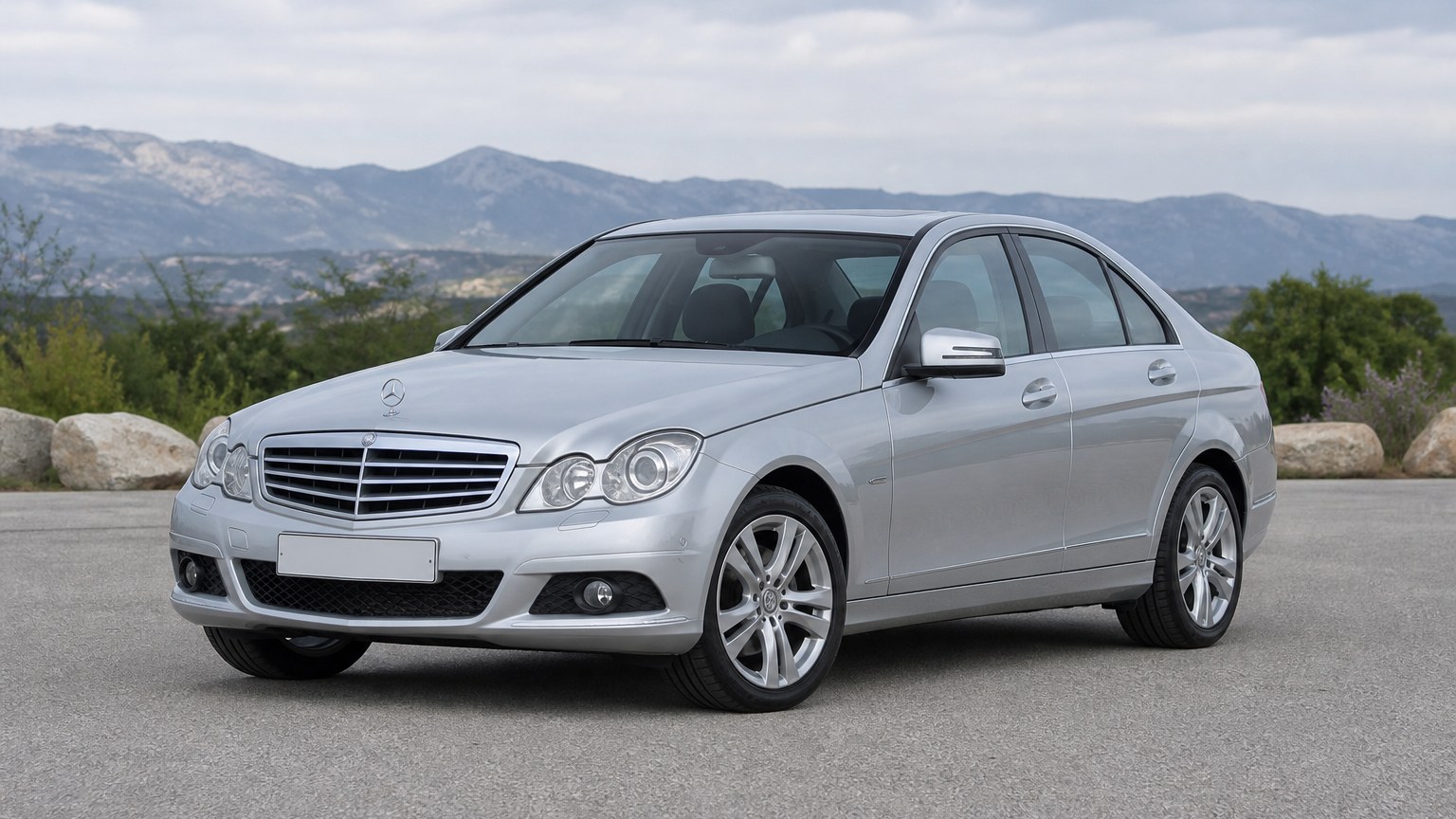
The Mercedes-Benz C-Class years to avoid are 1994, 2001, 2006, 2007, 2012, 2013, 2015, 2016, 2018, and 2020. CarComplaints’ PainRank system - which weights repair cost and mileage-at-failure - rates the 2012 C250 as the single worst Mercedes-Benz on its database, while NHTSA raw complaint volume is highest on the 2018 model year, with 518 NHTSA owner complaints and 115 recalls on file for the 2018 C-Class. These are different measurements pointing to different model years, and both signal real risk. The years to avoid methodology applied here combines both datasets rather than relying on either one alone.
| Mercedes-Benz C-Class Generation | Model Years | Verdict | Main Issues |
|---|---|---|---|
| W202 (1994-2000) | 1994 | Worst | Aging wiring, ignition lock, trim degradation |
| W203 (2001-2007) | 2001, 2006, 2007 | Worst | Electrical gremlins, Takata airbag recall |
| W204 (2008-2014) | 2012, 2013 | Worst | M271 timing chain, camshaft adjusters, engine fires |
| W205 (2015-2021) | 2015, 2016, 2018, 2020 | Worst | Engine failures, 13-18 NHTSA recalls, 377-518 NHTSA complaints |
| W206 (2022-present) | None | - | No avoid years identified |
Worst Mercedes-Benz C-Class years: 1994, 2001, 2006, 2007, 2012, 2013, 2015, 2016, 2018, 2020
W204-generation Mercedes-Benz C-Class (2008-2014)
The 2012 C-Class received the most complaints on CarComplaints of any C-Class. Most complaints originate from the 2012 C250. The bulk is engine issues: many owners experienced a rattling noise on startup or engine failures, and there are even complaints stating the engine caught on fire. The 2013 C250 follows closely, with 42 NHTSA complaints for the engine alone, at an average failure mileage of 46,093 miles.
The 2014 C-Class is one of the most reliable model years of the C-Class, with just four complaints on CarComplaints, and the highest reliability score on J.D. Power out of any C-Class. The 2014 is the clear safe harbor within this generation.
W205-generation Mercedes-Benz C-Class (2015-2021)
The 2015 Mercedes-Benz C-Class was recalled 13 times by NHTSA, and the 2019 C-Class was recalled 18 times by NHTSA. The 2018 is the volume-complaint peak: the most commonly reported problem areas are engine (75 complaints), electrical system (75), and unknown/other (73).
The 2020 Mercedes-Benz C-Class scores 43/100 for reliability. There are 170 recalls and 377 owner complaints on file, with severity signals including 17 crash-related complaints and 7 fire-related complaints. The 2021 is the generation’s recovery year: the 2021 Mercedes-Benz C-Class has been recalled 7 times by NHTSA, considerably fewer than any of the 2015-2020 cars. You can review the full 2015 complaint and recall record at the Consumer Reports 2015 C-Class reliability page.
What are the best Mercedes-Benz C-Class years to buy?
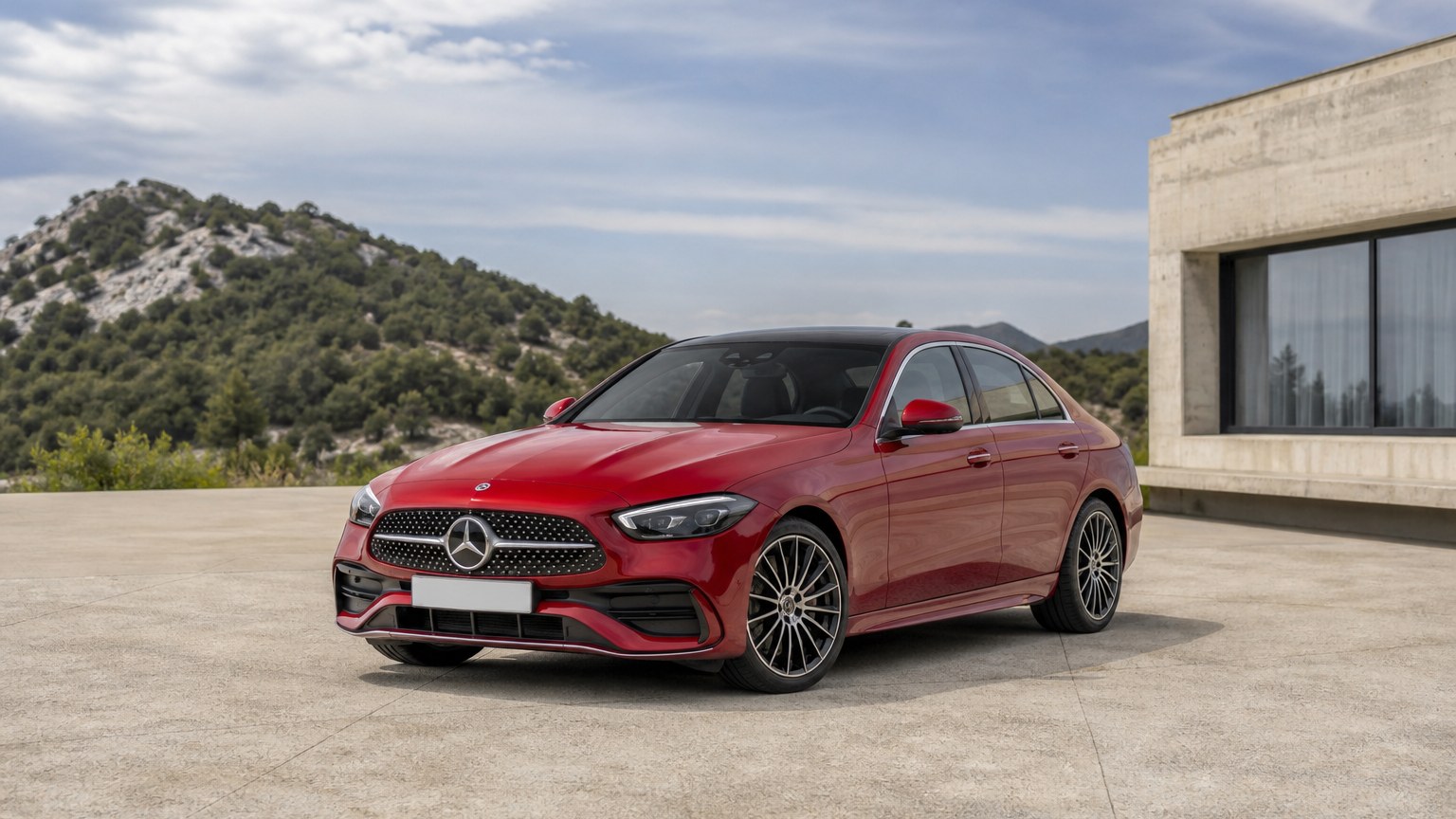
The best Mercedes-Benz C-Class years to buy are 1998, 2000, 2005, 2011, 2014, 2021, and 2024, based on low NHTSA complaint counts, low recall counts, and strong J.D. Power scores.
| Best Mercedes-Benz C-Class Year | Why It's a Strong Buy |
|---|---|
| 1998 | Low complaints; W202 sweet spot with minimal documented faults |
| 2000 | Final W202 year; improved refinement over earlier W202 cars |
| 2005 | Strongest W203 complaint record; cleanest data in that generation |
| 2011 | Low W204 complaint count; W204 generation widely regarded as reliable |
| 2014 | Fewest W204 complaints; top J.D. Power reliability score among all C-Class years |
| 2021 | Only 7 NHTSA recalls; final W205 year with most issues resolved |
| 2024 | 20 NHTSA complaints; 3 NHTSA recalls; 69/100 reliability score |
Most reliable Mercedes-Benz C-Class years: 1998, 2000, 2005, 2011, 2014, 2021, 2024
2014 Mercedes-Benz C-Class
The 2014 Mercedes-Benz C-Class is one of the most reliable model years of the C-Class: it has just four complaints on CarComplaints, and it carries the highest reliability score on J.D. Power out of any C-Class generation. It is the final year of the W204, meaning it benefits from six years of production refinements while avoiding the troubled early W205 launch.
The 2014 Mercedes-Benz C-Class has been recalled 6 times by NHTSA - manageable, and far below the 13 recalls on the 2015 model that replaced it. If your budget allows only one year from the W204 generation, 2014 is the clear pick.
2024 Mercedes-Benz C-Class
The 2024 Mercedes-Benz C-Class has good reliability, with just 7 recalls and 20 owner complaints on file. The 2024 C-Class has been recalled 3 times by NHTSA - the lowest count among W206 cars reviewed here. Based on NHTSA complaint data, the 2.0L four-cylinder is the most reliable engine choice for buyers in the 2022-2025 C-Class range.
2021 Mercedes-Benz C-Class
The 2021 C-Class wraps up the W205 generation with a significantly cleaner federal record than the 2018-2020 cars. The 2021 C-Class has been recalled 7 times by NHTSA, compared to 115 recalls on the 2018. It shares no timing chain fault with the W204 and has benefited from mid-cycle software and mechanical updates. For a used buyer who wants a modern-feeling C-Class without the W206 price premium, 2021 is the value pick.
Mercedes-Benz C-Class submodel years to avoid
Every C-Class submodel is assessed here on its own complaint record, not the parent lineup’s figures. Each variant uses a different engine or tune, and the fault profile follows the powertrain, not just the badge.
Mercedes-Benz C230 years to avoid
The C230 nameplate in the US covers two distinct eras: a straight-six entry model in the W202 (1994-2000) and a supercharged four-cylinder version in the W203 (2001-2007). CarComplaints holds 52 total complaints on the C230 across all years, making it one of the higher-volume complaint models in the C-Class family by nameplate.
The W203-era C230 Kompressor (2002-2005, supercharged 1.8L inline-four) shares the W203 generation’s electrical complaint pattern, which includes instrument cluster failures and stepper motor faults behind erratic gauge behavior. The 2006-2007 C230 additionally sits inside the Takata airbag recall window covered above. Pre-purchase checks for a used C230:
- Confirm the Takata airbag recall is closed on any 2005-2007 example via the NHTSA VIN lookup
- Test all gauges and warning lights for erratic behavior (stepper motor fault)
- Listen for supercharger whine that fades at speed, which can signal a worn coupling
Mercedes-Benz C240 years to avoid
The C240 was sold in the US during the W203 generation (2001-2005), powered by a 2.6L V6 mated to a five-speed automatic. CarComplaints carries 22 complaints on file for the C240, a relatively modest total that reflects both its limited production years and the era’s lower internet-complaint penetration.
The C240’s 2.6L V6 is mechanically separate from the M271 four-cylinder that drives the 2012-2013 C250 complaint spike - it does not share that timing chain fault. The main documented concern on the C240 is transmission shifting quality from the early five-speed automatic, with some owners reporting delayed engagement from cold. The 2001 and 2002 model years also sit inside the broader W203 electrical complaint window. Focus your pre-purchase checks on fluid condition and shift quality rather than the engine internals.
Mercedes-Benz C250 years to avoid
The C250 is the submodel with the most serious documented fault in the entire C-Class lineup. There are 66 total complaints on file for the Mercedes-Benz C250 on CarComplaints. CarComplaints rates the 2012 C250 and 2013 C250 among the worst models in its entire Mercedes-Benz database.
The C250 was sold in the US from 2012 to 2015, powered by the M271 1.8L turbocharged inline-four. That engine’s timing chain and camshaft adjuster wear - described in full in the “Most common problems” section above - is concentrated almost entirely in this nameplate. Between 45,000 and 90,000 miles, the M271 turbo cam adjuster plates develop a groove worn by the locking pin, causing the cold-start rattle that is the C250’s signature complaint. Avoid 2012 and 2013 outright. The 2014-2015 C250 uses the same engine but benefits from revised parts; still check for the rattle. The 2015 C250 also falls inside the panoramic sunroof recall window (expansion of 22V-954).
Mercedes-Benz C300 years to avoid
There are 140 total complaints on file for the Mercedes-Benz C300 on CarComplaints - the highest of any C-Class nameplate. The C300 spans multiple generations: a 3.0L V6 in the W204 (2008-2014) and a 2.0L turbocharged four-cylinder in the W205 and W206 (2015-present).
Although the 2015 C300 has the most overall complaints, CarComplaints rates the 2016 model year as worse because of higher repair cost or more problems at lower mileage. The 2015 and 2016 C300 are the models to avoid within this nameplate. The W204-era V6-powered C300 (2008-2014) has a cleaner record; the W204 generation (2008-2014) is widely considered one of the most reliable C-Class generations due to its build quality and simpler engineering compared to later models. The 2014 C300 is the strongest individual pick. On W205 C300s, confirm the sunroof recall (22V-954 expansion) and the fuel pump recall (23V-445 expansion) are closed before purchase.
Mercedes-Benz C350 years to avoid
The C350 used a naturally aspirated 3.5L V6 (M272) and was offered in the W203 (2006-2007) and W204 (2008-2014) generations. CarComplaints holds 15 total complaints for the C350, the lowest count of any mainstream C-Class nameplate, giving it one of the cleaner records in the lineup.
The M272 V6 does not share the M271’s timing chain flaw. The Takata inflator recall covers some 2012-2014 C350 models, so confirm that recall is closed on any W204 C350 you inspect. The 2006-2007 C350 additionally sits inside the W203 Takata window. Apart from the airbag recall, no C350-specific engine or transmission fault has accumulated enough complaint volume on CarComplaints or NHTSA to flag a specific avoid year - making the C350 one of the safer used picks in the C-Class family, provided the recall work is done.
Mercedes-Benz C43 AMG years to avoid
The C43 AMG entered the US market in the W205 generation (2017-2021 as a sedan/coupe/cabriolet) powered by a twin-turbocharged 3.0L V6 producing 385 hp. Consumer Reports documents at least one owner-reported issue on the 2021 C43 AMG relating to electronics malfunctions that the dealer could not diagnose.
CarComplaints holds just 1 complaint on the AMG C43 nameplate, which means the C43 AMG has not yet accumulated enough complaint data to flag a specific avoid year. The 2017-2020 C43 AMG sits inside the panoramic sunroof recall (expansion of 21V-197) and the seat belt retraction recall covering 2017-2020 AMG C43 vehicles. Confirm both are closed via a VIN check. The powertrain itself, the biturbo V6, has no documented widespread failure separate from the broader W205 electrical complaints already covered above.
Mercedes-Benz C63 AMG years to avoid
The C63 AMG spans the W204 (2008-2014, M156 naturally aspirated 6.2L V8) and W205 (2015-2021, M177 twin-turbocharged 4.0L V8) generations. The W204 C63 AMG with the M156 V8 is regarded as mostly trouble-free with care and attention, and it is considered one of the coolest models in AMG’s history.
CarComplaints holds 1 complaint on the C63 AMG nameplate, meaning no individual model year has accumulated enough complaint data to flag as a specific avoid year. The Takata airbag campaign covers 2013-2014 C63 AMG and 2015-2019 C63 AMG, so the recall check is the mandatory step on any used example. The W205 C63 AMG also sits inside the panoramic sunroof recall window (expansion of 21V-197). A whining noise when accelerating on a high-mileage W205 C63 AMG can signal worn transfer case or differential bearings - worth inspecting on any example over 60,000 miles.
Mercedes-Benz C-Class pre-purchase checklist
Before buying any used Mercedes-Benz C-Class, work through these checks, following the Editorial Guidelines that govern how complaint data and recall severity are weighted:
- Run the VIN through NHTSA’s recall checker: Go to nhtsa.gov/recalls and confirm every open recall is closed - especially the panoramic sunroof campaigns (21V-197 and 22V-954 expansions) and the fuel pump campaign (23V-445 expansion) on 2014-2020 cars.
- Cold-start rattle check (2012-2013 C250): Start the engine cold and listen for a rattle in the first one to three seconds. Any metallic knock at startup on an M271-powered car points to camshaft adjuster or timing chain wear costing $8,000 to repair.
- Check oil level and condition (W204/W205): Pull the dipstick before the test drive. Low oil on a 2012-2016 car can mean the timing system or valve seals are consuming oil; dark, gritty oil signals deferred maintenance on an engine with tight service intervals.
- Sunroof inspection (2015-2020 with panoramic roof): Look at the front roof panel seam for any gaps, lifting edges, or fresh sealant. A panel that moves or flexes under hand pressure has likely not had the recall repair completed.
- Transmission shift quality (W205, 9G-Tronic): On 2015-2021 C300/C43 cars, drive the car through a full stop-start cycle and a highway merge. Consumer Reports owners reported instances where the 2015 C300 would not shift between reverse and drive, requiring a full power cycle to reset. Any hesitation or harsh downshift warrants a further inspection.
- SRS and warning light check: Make sure no warning lights - including the airbag or SRS light - are illuminated at startup. A lit SRS lamp on a 2005-2007 car is an immediate Takata-era red flag.
- Request full service records: The M271 and W205 turbocharged engines are sensitive to oil change intervals. Confirm oil was changed on schedule (typically every 10,000 miles or one year) with the correct specification fluid.
- Pre-purchase inspection by an independent Mercedes-Benz specialist: Have the car scanned for stored fault codes, including powertrain and body control modules. Many electrical faults in the 2018-2020 cars store codes without triggering a warning light visible to the driver.
Better alternatives to consider
If the C-Class years in your budget fall on the avoid list, these same-class competitors are worth putting on your shortlist:
- Audi A4 - a direct segment rival with its own year-by-year reliability variation, but the late B9 generation (2017-2023) posts a competitive complaint record against the troubled W205 C-Class
- BMW 3 Series - the benchmark German sport sedan; the F30 generation (2012-2018) shares some electronic complexity but avoids the specific M271 timing chain fault that plagues the 2012-2013 C250
The Audi Q3 offers a crossover footprint, though certain Audi Q3 years to avoid have documented reliability issues worth examining.
Is the Mercedes-Benz C-Class worth buying?
Yes, the Mercedes-Benz C-Class is worth buying - as long as you steer clear of the 1994, 2001, 2006, 2007, 2012, 2013, 2015, 2016, 2018, and 2020 model years. The 2014 C-Class carries the highest J.D. Power reliability score of any C-Class year, with just four complaints on CarComplaints, and the 2021 and 2024 editions show a meaningfully cleaner federal record than the troubled mid-W205 cars. The C-Class offers a generally better reliability record than its alternatives from Audi and BMW, and its depreciation curve means you can enter a genuinely premium car for a reasonable price if you pick the right year.
The 2024 Mercedes-Benz C-Class carries good reliability, with just 20 owner complaints and 7 recalls on file - a strong data point for buyers considering the newest used examples. Run the VIN through NHTSA’s recall checker and verify full maintenance history before any purchase.