

There are only a few things more frustrating than getting into your car, turning the key, and hearing the dreaded clicking of a dead battery. It’s happened to most drivers, you leave your headlights on, your battery just drains for some reason, and you need a jump. The experience is double worse if it rains at that moment, which brings us to the question: can you jump a car in the rain?
Although it’s not ideal, and many drivers have expressed concerns about safety, jumpstarting a car in the rain is very safe if done correctly.
Is it safe to jump a car in the rain?
Your car battery never dies at a convenient time, but it is more annoying when it does so in the rain. If you stick to a few easy rules, it is safe to jump a car in the rain. These are some things to bear in mind to ensure your safety when jump-starting a car in the rain.
- Keep your jumper cables in good shape: Verify that your jumper cables are sufficiently new to have adequate insulation and that there are no exposed wires on them. If rain enters the cable, it could result in a short circuit.
- Stay under an umbrella: Ensure you are under an umbrella and make sure it covers the battery too.
- Wear eye protection: Be sure to shield your eyes if you decide to jump the automobile yourself. Keep a set of safety glasses to protect your eyes from any potential explosion or hazardous materials.
- Wear protective gear: while you should always wear gloves when jumpstarting a car, it is crucial to do so in the rain.
Jump starting a car in the rain is completely safe if done correctly, according to mechanics, automotive experts, and specialists. You won’t get electrocuted, and neither will the battery or the engine get drowned in the rainwater. Before you start jumpstarting a car in the rain, it’s worth inspecting the car battery corrosion, especially on the terminals you’ll be using to jumpstart the car.
Why do drivers think it’s not safe to jump a car in the rain?
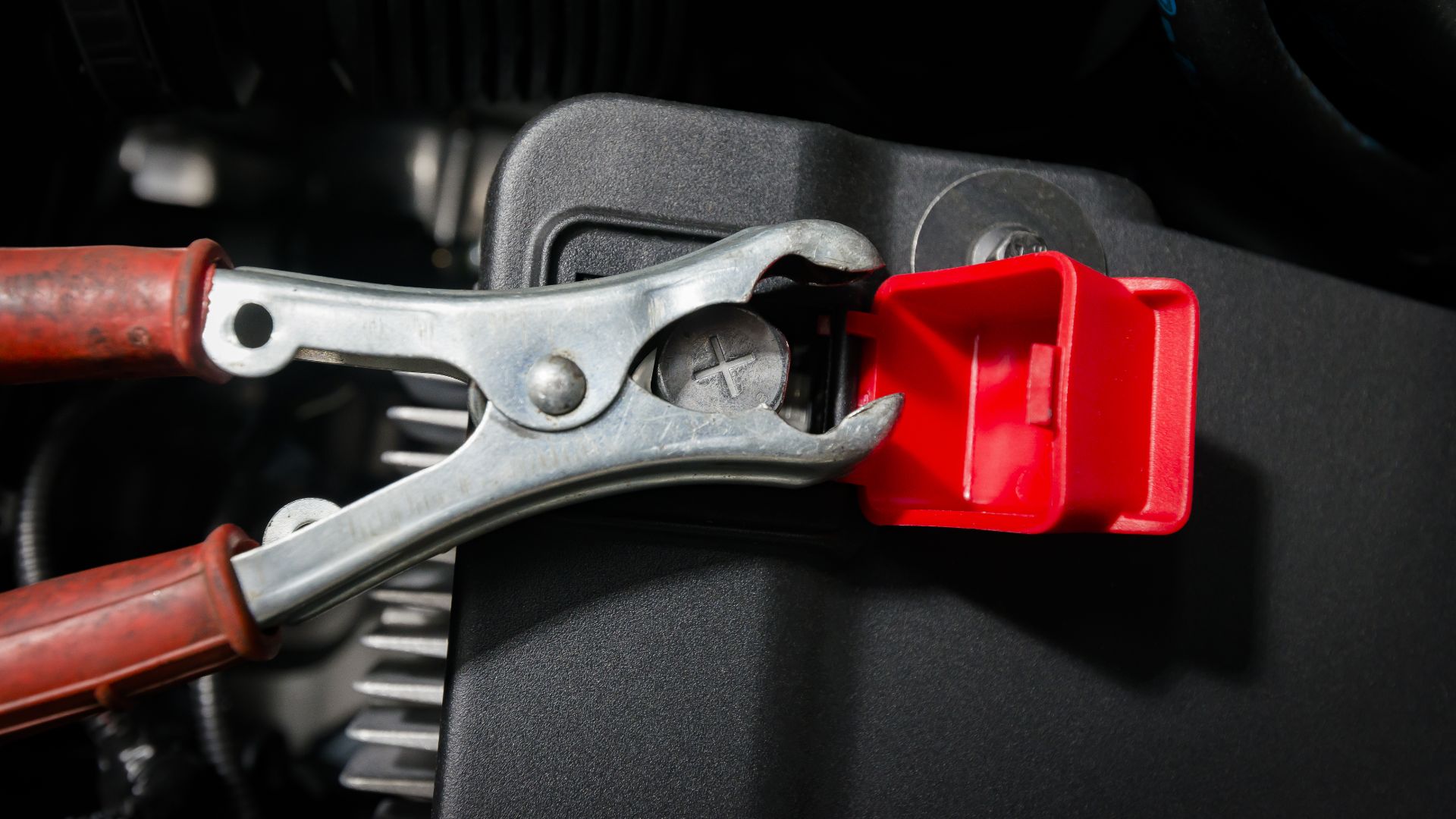
Water is a good conductor of heat and electricity, as we are all aware. Does that imply that trying to jumpstart a car in the rain is a bad idea? False; the situation is somewhat different. Most automobiles have DC 12 volt or, in the case of large trucks, 24 volt and 5-volt electric systems.
A car battery has an amperage of 48 to 50 Ah at the same time. You won’t risk getting hurt while attempting to jumpstart a car in the rain because the voltage and current range are relatively safe to work with. You may set your anxieties aside if you are reading this because you are worried about being electrocuted while jumpstarting your car.
Technically, a human being can withstand up to 10,000 ohms of resistance, which, when calculated for a 12-volt automotive battery, equals 0.012 amps. That is much less and cannot have an impact on a person’s body.
However, you must be careful when connecting the jumper wires and avoid having raindrops drip onto the exposed terminals, as short-circuiting is a potential concern. And there is the chance of getting hurt from a burn from the battery.
Can I get electrocuted when I jump a car in the rain?
In general, it is possible to jumpstart a car in the rain. When jumped in a downpour, cars don’t have enough voltage to electrocute someone fatally. Many people attach jumper wires to a car incorrectly, as a result, get a shock to their fingertips.
By no means are they serious wounds, but they ache, nonetheless. Before attempting to jump a car, make sure your hands are dry because they are more likely to get a moderate zap from a battery if they are damp