
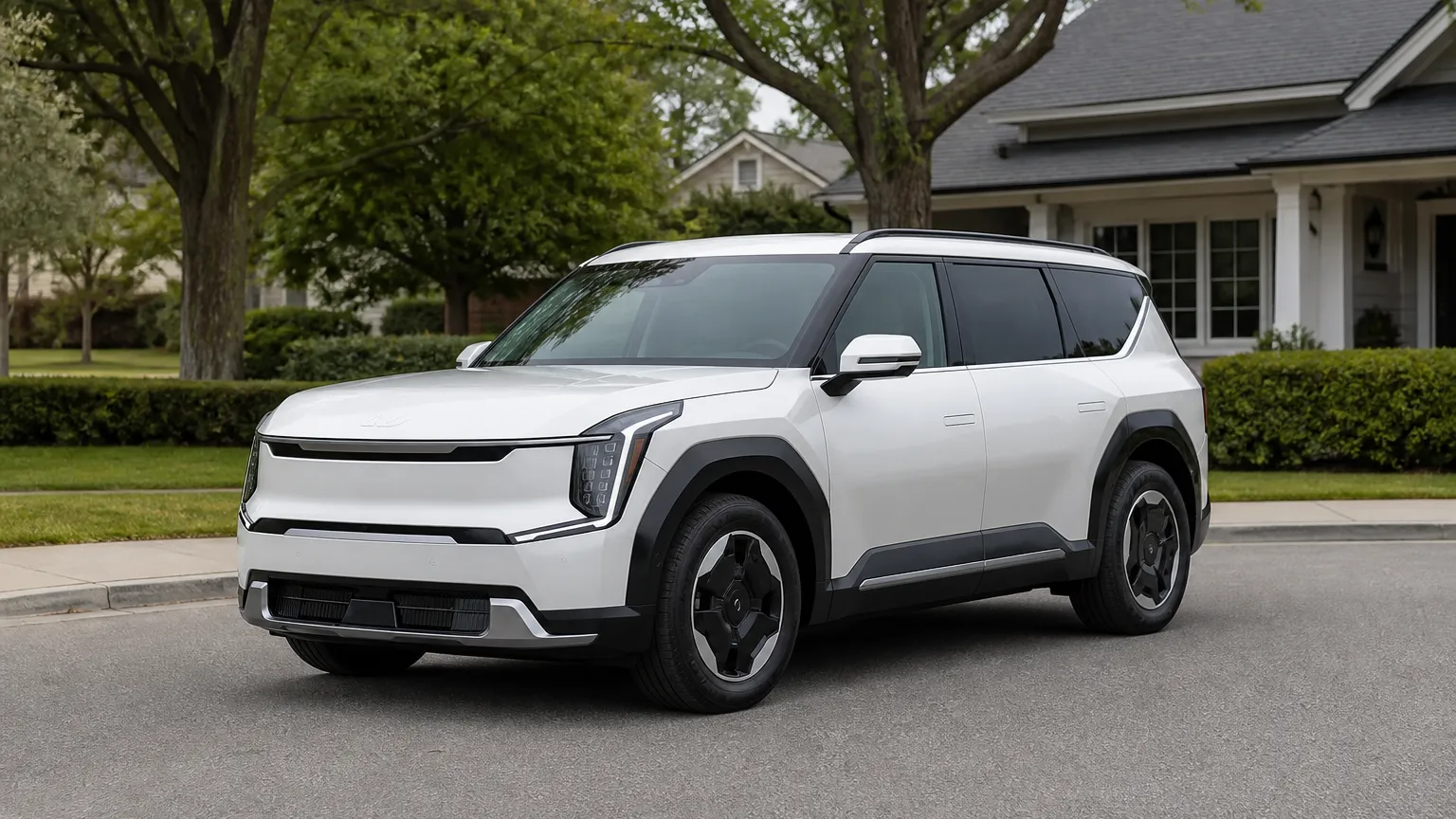
The Kia EV9 is a genuinely impressive three-row electric SUV with a 5-star NHTSA safety rating and one of the roomiest cabins in its class, but its first model year carries a cluster of electrical, suspension, and build-quality issues that make it a riskier used-car buy than its reputation suggests. Since the EV9 only launched for the 2024 model year, the year-to-year spread is narrow, but the difference between 2024 and 2025 is meaningful enough to steer your purchase. This guide ranks every available model year using NHTSA complaint and recall data, CarComplaints PainRank scoring, Consumer Reports reliability surveys, and real-owner reports so you know exactly which year to prioritize and which to approach with caution.
For generations, engines, and ownership notes in one place, see the Kia EV9 hub.
Related: Kia Telluride years to avoid, Hyundai Ioniq 5 years to avoid.
At a glance
- Worst years
- 2024
- Best years
- 2025
- Top failure
- ICCU (Integrated Charging Control Unit) failure causing 12V battery drain and loss of drive power - 2024 model year (CarComplaints worst-year ranking; Consumer Reports reliability survey)
- Always do before buying
- Run the VIN through NHTSA's recall checker to confirm every open recall is closed, and on any 2024 EV9, ask the dealer to verify the ICCU service campaign (SC327Y) and the battery fire recall (SC375) have been resolved
How we rated the best and worst Kia EV9 years
The 2024 Kia EV9 is CarComplaints’ worst-rated model year, ranking last on repair cost and average mileage at failure across EV9 model years. That makes 2024 the year to approach most cautiously when shopping used.
To build these rankings, we pulled data from NHTSA complaints and recalls, CarComplaints PainRank scores, Consumer Reports reliability surveys, J.D. Power dependability ratings, and owner discussions on the Kia EV Forum. It is important to keep the two main sources straight: CarComplaints ranks the worst year by repair cost and mileage-at-failure (its PainRank methodology), while NHTSA measures raw complaint volume - the two datasets often point to different model years, and every claim below names its source.
| Kia EV9 Generation | Best Kia EV9 Years | Worst Kia EV9 Years |
|---|---|---|
| 1st Gen (2024 - present) | 2025 | 2024 |
Every Kia EV9 model year ranked
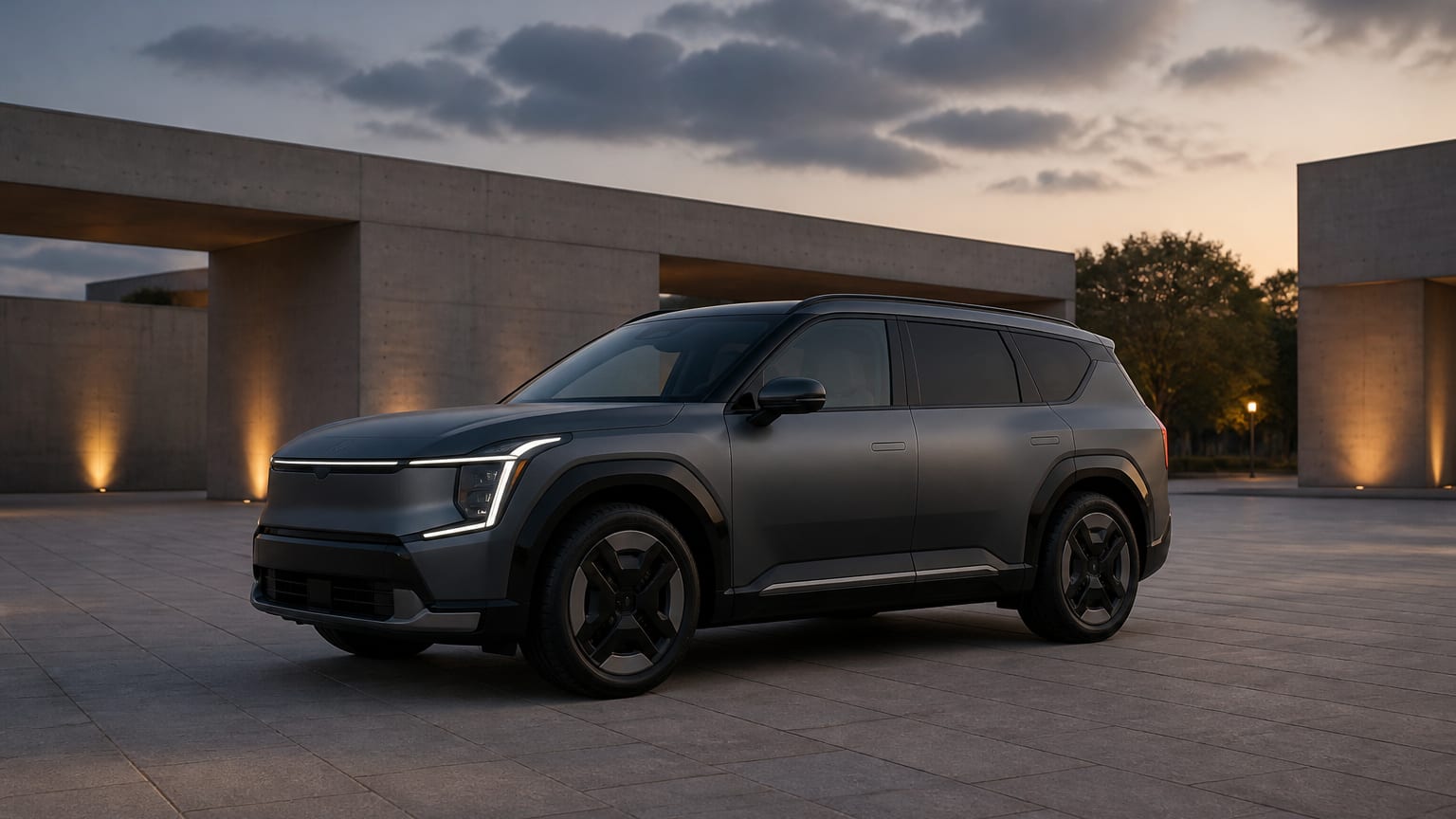
The 2025 Kia EV9 is the stronger used-car pick; the 2024 is the only year with a data-backed “avoid” designation.
| Model Year | Generation | Verdict | Notes |
|---|---|---|---|
| 2024 | 1st Gen | Avoid | Most complaints, 7 NHTSA recalls, ICCU failures, seat-bolt recall |
| 2025 | 1st Gen | Best | Fewer recalls (3), improved build quality, same strong safety rating |
Most common Kia EV9 problems
The single biggest recurring failure across the EV9 lineup is ICCU (Integrated Charging Control Unit) failure, which leaves the vehicle unable to charge and can cause sudden loss of drive power. Below are the four most documented problem categories, ordered most serious first.
1. ICCU failure and 12V battery drain
The most critical electrical issue on the 2024-2025 EV9 is failure of the Integrated Charging Control Unit (ICCU). Symptoms include a “Check Electric Vehicle System” warning, a dead 12V battery, and failure to AC charge, with fault code P1A9096.
On the 2024 EV9, the ICCU can fail due to a MOSFET transistor defect, blowing an internal fuse and preventing the high-voltage battery from charging the 12V auxiliary battery. When the 12V battery drains, the vehicle can suddenly lose drive power and speed while driving. The failure has two root causes: overvoltage at the start and end of the 12V charging cycle, and thermal overloading during driving or charging.
According to Consumer Reports, the Kia EV9’s reliability problems often trace back to the ICCU, an onboard charger and power converter found in cars based on Hyundai Motor Group’s E-GMP platform. Kia has issued service campaign SC327Y to address ICCU failures, so the repair may be covered under warranty. Replacement is not a DIY job - it requires a certified EV technician to handle high-voltage components and use Kia’s proprietary KDS tool to bleed the liquid cooling system. Parts backorders have stranded some owners for weeks, which is relevant to know when considering the hidden costs of owning an electric car.
2. High-voltage battery fire risk (recall SC375 / 26V-431)
Kia is recalling certain 2022-2024 EV6 and 2024 EV9 vehicles because the high-voltage battery cells may contain misaligned electrodes, which can lead to a fire while parked or driving - a fire increases the risk of injury.
The investigation into the misaligned electrode condition crossed over to North American examples of the EV9 in June 2026, after Hyundai and Kia were notified by their South Korean subsidiaries about battery-related fires in the South Korean market. According to documents filed with NHTSA, supplier SK On Co blames a quality deviation for the problem; the recall covers seven 2022-2024 EV6s and a single 2024 EV9. Kia electric vehicle recalls and safety campaigns like this one have affected multiple nameplates sharing the same battery supply chain, as owners of other Kia models have encountered similar quality-deviation issues.
Until the recall repair is complete, owners are advised to park outside and away from structures, limit charging to a maximum of 80%, and schedule a free dealer visit to have the entire high-voltage battery system assembly replaced. This is Kia’s recall SC375 (NHTSA campaign 26V-431). Any 2024 EV9 buyer should confirm this recall is closed before purchase.
3. Suspension vibration and rear-end lateral hop
The most-reported single problem on CarComplaints for the 2024 Kia EV9 is rear-end sway and lateral hop over bumps at highway speed. Owners report steering vibration at speeds above 65 mph, and many have brought the vehicle in for service four or more times with multiple alignments, rotations, and road-force balances failing to resolve the issue.
NHTSA has logged 14 complaints specifically for 2024 EV9 steering problems at 0 miles average. The near-zero mileage at failure is the detail that concerns most buyers: these vibrations appear effectively at delivery, not after years of wear. Some owners report rear alignment as the root cause, with dealers chewing up rear tires before the alignment was corrected and tires replaced.
NHTSA’s Office of Defects Investigation has opened a preliminary evaluation into a potential issue affecting 2024 and 2025 EV9 crossovers, as wipers may stop while driving when snow or ice accumulates at the bottom of the windshield. If this investigation leads to a recall, Kia may have to fix an estimated 26,862 vehicles.
4. Instrument cluster blank screen (recall 24V-757 / SC326)
First-year 2024 EV9 builds had a software error that caused the instrument cluster to go blank - an HMI failure that affected drivability warnings - which Kia addressed via an over-the-air (OTA) recall (NHTSA 24V-757).
The software error can cause the driver’s instrument panel screen to display a blank or black screen on startup, hiding the speedometer, warning lights, gear indicator, and other critical driving information. Some owners report that even after receiving the software update for recall 24V-757 (SC326), the instrument panel screen continued to go blank at startup - turning the car off and letting it sit for an hour before restarting resolved it temporarily.
The fix is an instrument cluster software update performed by a dealer or through an OTA update, free of charge. Buyers of used 2024 EV9s should confirm this recall is closed on the VIN before signing, since electric cars don’t have a traditional transmission but rely heavily on software-managed power delivery where a blank dash is a real safety concern.
5. Missing seat mounting bolts (recall SC329 / 24V-962)
According to an NHTSA announcement, 22,883 Kia EV9 electric vehicles from the 2024-2025 model year are affected by a recall because some cars lack the mounting fasteners for the second and third rows of seats.
NHTSA’s recall report notes that a plant assembly worker was responsible for applying the bolts at the Kia Autoland Gwangmyeong plant in South Korea, and random testing uncovered the issue on three vehicles - all traced back to the same individual on the production line. Dealers will inspect and install mounting bolts as necessary, free of charge; owner notification letters were mailed January 24, 2025. This recall affects both 2024 and 2025 model years, so confirming closure on any used EV9 is a must.
Which Kia EV9 years should you avoid?
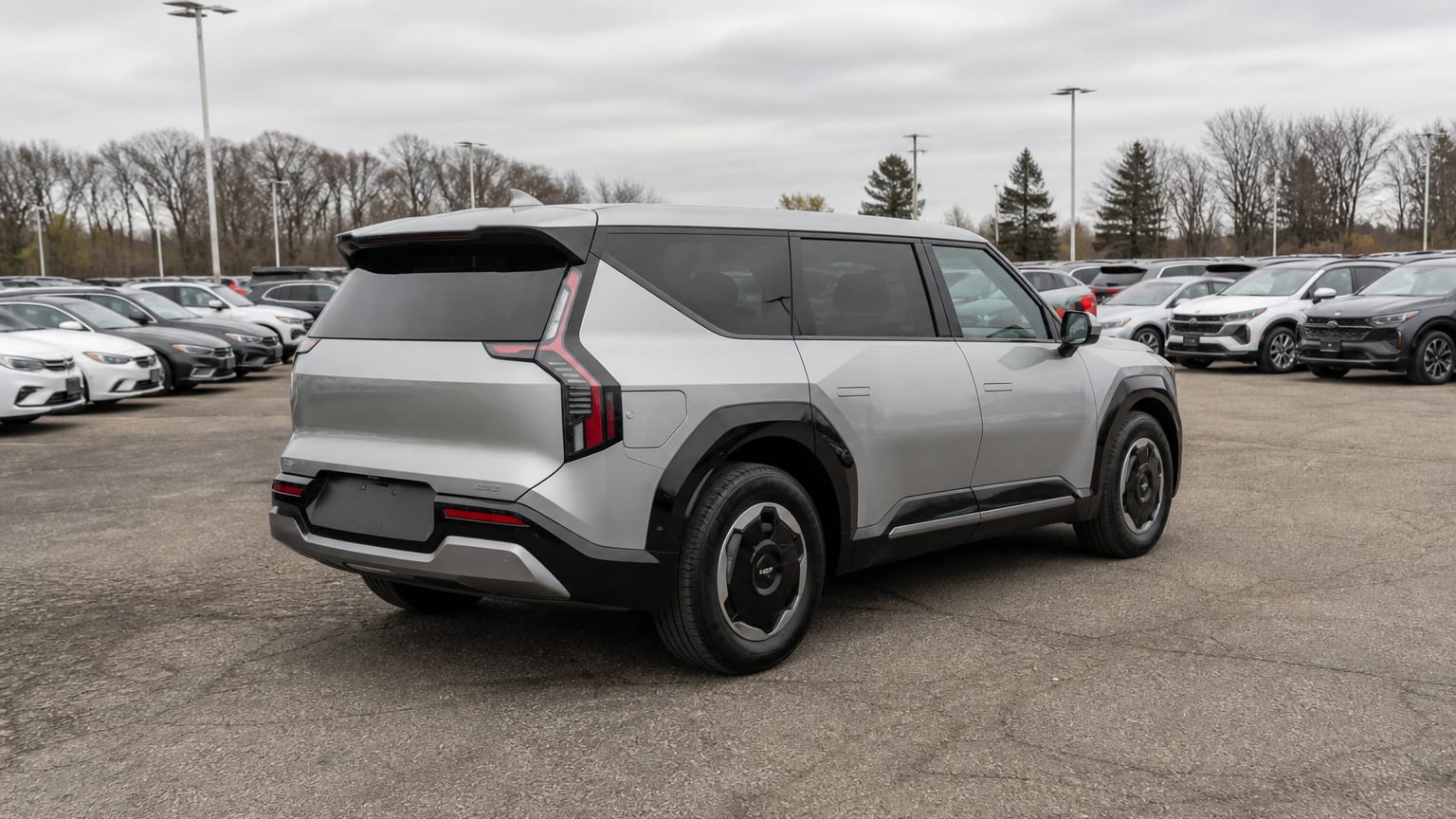
The Kia EV9 year to avoid is 2024. CarComplaints rates 2024 as the worst model year on several factors including repair cost and average mileage when problems occur, while NHTSA complaint volume for the 2024-2025 EV9 combined stands at 207 complaints, with the most frequently reported problem areas being the electrical system, safety systems, and suspension. The 2024 year carries the heavier share of that complaint load, given it accounts for 194 complaints on CarComplaints alone.
| Kia EV9 Generation | Model Years | Verdict | Main Issues |
|---|---|---|---|
| 1st Gen | 2024 | Worst | ICCU failure, battery fire recall (SC375), 7 NHTSA recalls, suspension vibration, missing seat bolts |
| 1st Gen | 2025 | Best | Fewer recalls (3), improved assembly quality, same 5-star NHTSA safety rating |
1st-generation Kia EV9 (2024)
The 2024 Kia EV9 has 194 problems and defects reported by EV9 owners on CarComplaints. The 2024 Kia EV9 has been recalled 7 times by NHTSA. Those seven recalls span ICCU-related electrical failures, missing seat bolts, a blank instrument cluster, a faulty seat belt retractor, a remote smart parking assist software error, a headliner impact protection deficiency, and the high-voltage battery fire risk linked to SK On battery cells.
Consumer Reports’ owner survey shows subpar reliability for the EV9, with powertrain and build quality being the major trouble spots. The Kia EV9 has not earned strong reliability ratings from J.D. Power, coming in at 67 out of 100. For a first-year launch vehicle, that combination of a high recall count and a below-average reliability survey score puts the 2024 in “avoid” territory for used-car shoppers who want a lower-risk purchase.
What are the best Kia EV9 years to buy?
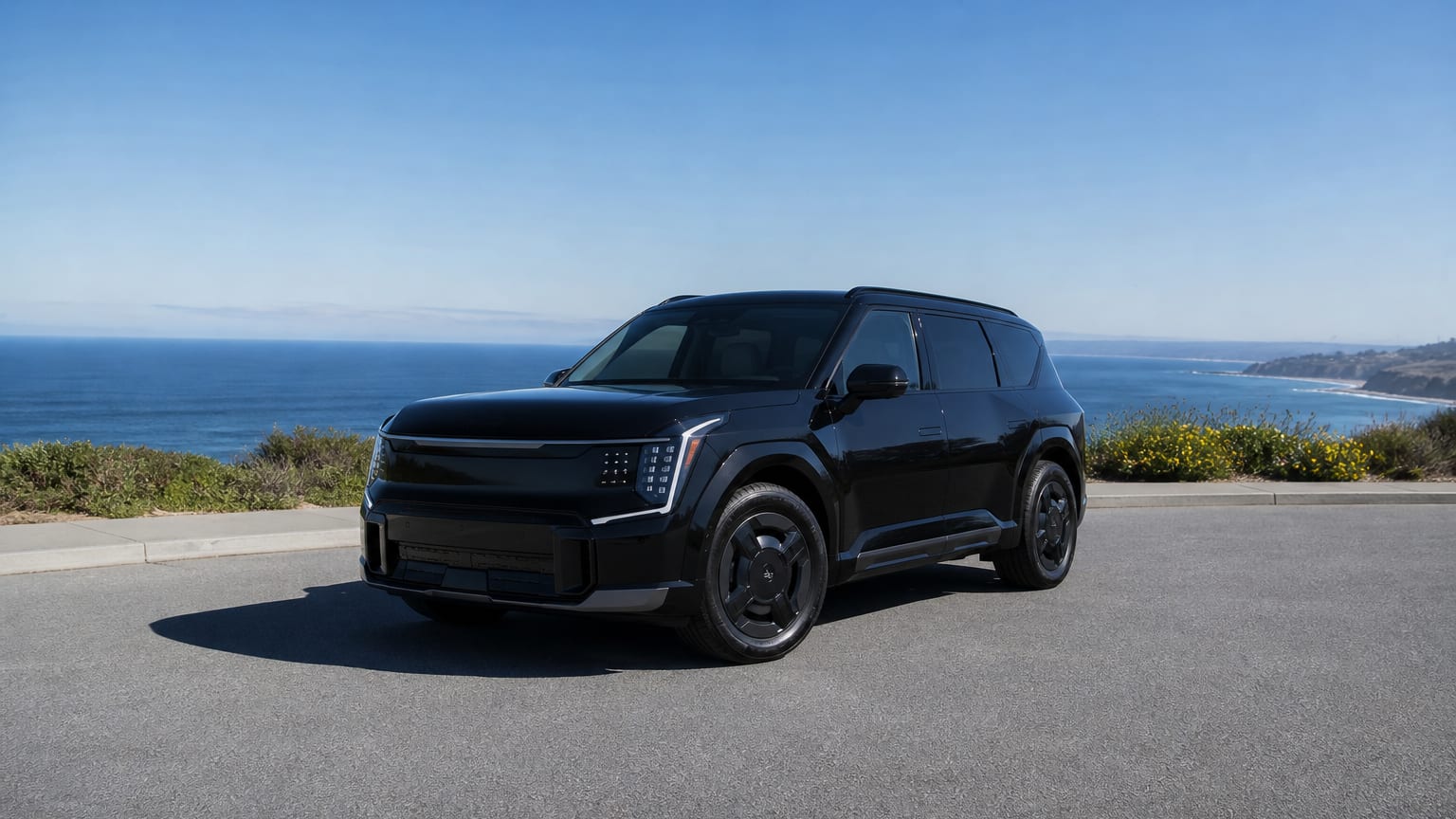
The 2025 Kia EV9 is the best year to buy among the available model years. Consumer Reports lists 3 recalls on the 2025 Kia EV9, compared to 7 on the 2024, and the structural and assembly issues that drove the seat-bolt and battery-fire recalls have largely been addressed in later production builds.
| Best Kia EV9 Year | Why It's a Strong Buy |
|---|---|
| 2025 | Only 3 recalls vs. 7 on the 2024; improved assembly quality; same 5-star NHTSA overall safety rating |
Most reliable Kia EV9 years: 2025
2025 Kia EV9
The 2025 Kia EV9 received an overall 5-star safety rating from NHTSA, with a 4-star frontal crash rating, a 5-star side crash rating, and a 4-star rollover rating (10.7% rollover probability). That safety score is a meaningful assurance for a family-hauling three-row SUV.
Under IIHS’s tougher 2025 criteria, the EV9 stepped up to the coveted Top Safety Pick+ (TSP+) designation for newer model years, giving buyers of late 2025 builds a strong independent crash-test endorsement on top of the NHTSA stars. The 2025 also carries the same 10-year / 100,000-mile battery warranty to 70% capacity that covers all EV9 model years, giving used buyers an extended safety net on the most expensive component. The OEM warranty floor on the EV9 pack is 10 years / 100,000 miles to 70% capacity.
Kia EV9 pre-purchase checklist
Before signing on any used Kia EV9, run through this list to catch the model’s known problem points before they become your problem:
- Run the VIN through NHTSA’s recall checker. Confirm all open campaigns - especially the battery fire recall SC375 (26V-431), the seat-bolt recall SC329, and the instrument cluster recall SC326 - are closed on that specific VIN.
- Verify the ICCU service campaign SC327Y is on record. Kia issued service campaign SC327Y to address ICCU failures, so ask the selling dealer or a Kia service advisor to pull up the vehicle history and confirm the campaign was performed.
- On any 2024 EV9, check for the battery fire recall (SC375). Until the repair is complete, owners should park outside and away from structures and keep charging capped at 80%. Do not buy a 2024 EV9 without confirmed SC375 completion.
- Test-drive at highway speeds (65+ mph). Steering vibration above 65 mph is a well-documented complaint on the 2024 EV9; if the rear end hops or the steering wheel shakes on the test drive, walk away until the dealer can diagnose and repair it.
- Inspect all three rows of seat mounting. Rock each seat firmly forward and backward; the second- and third-row seat mounting bolts may be missing, and seats without mounting bolts may not properly restrain an occupant in a crash.
- Pull up the instrument cluster on startup. A blank or black display at startup is a sign the instrument cluster software recall has not been fully resolved; confirm before purchase.
- Ask for full charging history and check the 12V battery date. The 12V battery in the EV9 is what starts the electronics for the car; if it dies, the car loses all power and must be towed. A recent 12V replacement with no documented ICCU work can signal an unresolved underlying failure.
- Confirm how far the EV9 can go on a full charge matches EPA specs. Range noticeably below EPA figures can indicate a degraded or defective pack - particularly relevant given the battery cell recall.
Better alternatives to consider
If the 2024 Kia EV9 is the only year in your budget and the open recalls are not yet resolved, these same-class electric SUVs may offer a lower-risk entry point. Three-row SUV reliability comparison data shows significant variation across brands, and the Subaru Ascent’s model-year track record illustrates how even well-regarded nameplates can have problematic launch years worth avoiding:
- Hyundai Ioniq 5 - shares the E-GMP platform with the EV9 but has a longer complaint and recall history that is better documented, giving used buyers more data to work with on specific VINs
- Rivian R1S - a three-row electric SUV that Consumer Reports places above the EV9 in predicted reliability for comparable model years, with an established owner community for real-world feedback
- Tesla Model Y - a two-row option in the same EV segment with a longer production history, meaning used buyers have more year-over-year reliability data to guide their decision; consider it if three rows are not a hard requirement
Is the Kia EV9 worth buying?
The Kia EV9 is worth buying as long as you target the 2025 model year and verify all open recalls are closed before the purchase. The EV9 has earned a 5-star overall rating from NHTSA, a Top Safety Pick+ from IIHS on newer models, and a 5-star Euro NCAP score - an unusually strong sweep across all three major crash-test programs. That safety performance makes it one of the better-protected three-row family SUVs on the road today.
The EV9 launched for the 2024 model year to critical acclaim, but it does not seem to have corrected all of its teething problems in those first builds. Stick with 2025, confirm the SC375 battery recall and the ICCU campaign SC327Y are resolved, and run the VIN through NHTSA’s recall checker alongside a full service-history review before you sign.