
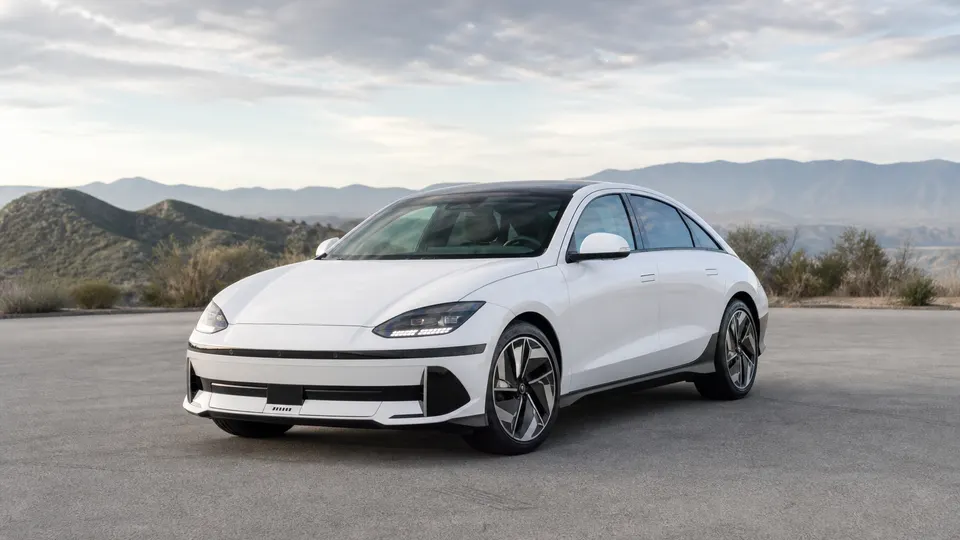
The Hyundai Ioniq 6 is a strong all-electric sedan with class-leading range and an IIHS Top Safety Pick+ award, but not every model year is equal. The 2023 launch year carries the most complaints, the most recalls, and the model's most serious recurring defect. This guide uses NHTSA complaint and recall data, CarComplaints rankings, and owner feedback to show you exactly which years to skip and which ones are worth your money.
For generations, engines, and ownership notes in one place, see the Hyundai Ioniq 6 hub.
Related: Hyundai Ioniq 5 years to avoid, BMW i4 years to avoid.
At a glance
- Worst years
- 2023
- Best years
- 2025
- 2026
- Top failure
- 1st-gen ICCU (Integrated Charging Control Unit) failure causing 12V battery drain and sudden loss of drive power (CarComplaints / NHTSA)
- Always do before buying
- Run the VIN through NHTSA's recall checker, and on any 2023-2025 car confirm that both the ICCU recall (24V-868) and the seat belt anchor recall have been completed at the dealer
How we rated the best and worst Hyundai Ioniq 6 years
The 2023 Ioniq 6 is the single year to avoid, carrying the highest complaint volume on NHTSA, the most recalls of any model year, and the lowest reliability score in the lineup. CarComplaints rates 2023 as the worst model year, ranked on factors such as repair cost and average mileage when problems occur. NHTSA complaint volume tells the same story: there are 5 recalls and 54 owner complaints on file for the 2023 Ioniq 6, the highest of any model year. Note that CarComplaints ranks a year by repair cost and mileage-at-failure (its PainRank system), while NHTSA tracks raw complaint volume - here both metrics point to 2023, but they are different datasets and the distinction matters when you cross-shop other models.
Our years to avoid methodology weights complaint volume, recall count, and mileage-at-failure together rather than treating any single dataset as definitive. Data sources for this guide include NHTSA complaints and recalls, CarComplaints, and owner reports across the Ioniq 6 community.
The Ioniq 6 is in its first generation (2023-present), with a facelift arriving for 2025. The table below maps that single generation to its best and worst model years.
| Hyundai Ioniq 6 Generation | Best Hyundai Ioniq 6 Years | Worst Hyundai Ioniq 6 Years |
|---|---|---|
| 1st Gen (2023-present, facelifted 2025) | None | 2023 |
Every Hyundai Ioniq 6 model year ranked
The 2023 model year is the one to skip, while 2025 and 2026 represent the best of what the Ioniq 6 has to offer so far.
| Model Year | Generation | Verdict | Notes |
|---|---|---|---|
| 2023 | 1st Gen | Avoid | Most complaints, most recalls, ICCU failure widespread |
| 2024 | 1st Gen | OK/Mixed | Fewer complaints than 2023, differential bolt recall (2024 AWD only) |
| 2025 | 1st Gen (facelift) | Best | Facelift, improved rear seat belts, 79/100 reliability score |
| 2026 | 1st Gen (facelift) | Best | 0 recalls, 0 complaints on record, 82/100 reliability score |
Most common Hyundai Ioniq 6 problems
The single biggest failure across all Ioniq 6 model years is the ICCU (Integrated Charging Control Unit) defect, which causes the 12V battery to stop charging and can leave the car dead on the road. The most common Hyundai Ioniq 6 problems are electrical system issues (58 complaints), unknown or other (17 complaints), and powertrain (16 complaints), based on NHTSA owner complaint data.
1. ICCU failure - 12V battery drain and sudden loss of drive power
On the 2023-2025 Hyundai Ioniq 6, the Integrated Charging Control Unit (ICCU) on the E-GMP platform can suffer internal damage from overvoltage at the start and end of the 12V charging cycle plus thermal loading, blowing the ICCU fuse so it can no longer charge the 12V battery from the high-voltage pack. The symptom owners notice first is a dead 12V battery, followed by warning lights and reduced power.
As the 12V drains, the Ioniq 6 throws “Check Electric Vehicle System” and reduced-power warnings, and can lose drive power while in motion, requiring a tow. This problem affects not only the Ioniq 6 but also the Ioniq 5, Genesis GV60, and other vehicles on Hyundai’s E-GMP platform.
An initial software-only remedy did not fully resolve the problem, so a second recall added ICCU hardware replacement; the expanded campaign is covered under NHTSA recall 24V-868, covering 28,932 model-year 2023-2025 Ioniq 6 vehicles. This recall expands and replaces the previous recall 24V-204; vehicles previously repaired under 24V-204 will need to have the new remedy completed. This failure is also covered under Hyundai’s 10-year/100,000-mile EV warranty. Buyer takeaway: before purchasing any 2023-2025 Ioniq 6, confirm that recall 24V-868 has been completed at the dealer - not just the earlier 24V-204 software update.
2. Seat belt anchor separation
On the 2023-2025 Hyundai Ioniq 6, the front seat belt anchors may not be securely attached to the seat frame because of a snap-on component that can be damaged if improperly removed or reinstalled during servicing or assembly. The driver and passenger seat belt anchors may detach, and a detached seat belt anchor will not adequately restrain the seat occupant, increasing the risk of injury in a crash.
The Ioniq 6 - roughly 36,000 units - is part of a campaign spanning approximately 294,000 vehicles including the Hyundai Santa Fe and Genesis G90. This is covered under the April 2026 NHTSA recall (campaign 25V-797) for 2023-2025 Ioniq 6 vehicles. Dealers will inspect and reinforce or replace the seat belt anchors, as necessary, free of charge. Buyer takeaway: this recall is recent (2026), so many used 2023-2025 cars on the lot may not yet have had the repair - verify VIN status before finalizing any purchase.
3. Differential gear bolt loosening (2024 AWD)
The differential gear bolts in the gear drive unit may not be tightened properly, which can result in a loss of drive power or cause the differential to lock up, increasing the risk of a crash. This issue is limited to the 2024 model year AWD variant. Dealers will replace the gear drive unit, free of charge.
If you are shopping a 2024 AWD Ioniq 6, confirm this recall has been completed at the dealer before purchase. The repair is a full gear drive unit replacement at no cost. Owner notification letters were mailed June 17, 2024.
4. Charging port door detachment
Hyundai recalled 31,042 Ioniq 6 sedans from model years 2023-2025 because their charging port door panels may fall off; the outer door panel adheres via hooks that may not be sufficient to hold it through repeated opening and closing. The fix is straightforward: dealers add an adhesive layer in addition to the hooks.
This is a lower-severity defect compared to the ICCU or seat belt issues, but it is a nuisance failure that some owners encounter frequently. Dealers apply an adhesive on the charging port door assembly, free of charge, with owner notification letters mailed beginning October 10, 2025.
5. Horn and electrical system faults
Common issues reported by owners include problems with the electrical system, particularly the ICCU, as well as horn malfunctions. Owners of the 2025 Ioniq 6 also report issues with the vehicle’s app incorrectly indicating service is needed from the first day of ownership, and some owners describe the horn not functioning.
Hyundai has also conducted an extended warranty campaign for certain vehicles where water could enter the horn assembly and cause the horn’s electrical contacts to corrode. If a used Ioniq 6 you are considering has any horn or electrical system warnings, have a dealer run a full diagnostic scan before purchase.
Which Hyundai Ioniq 6 years should you avoid?
The Hyundai Ioniq 6 year to avoid is 2023. CarComplaints rates the 2023 as the worst model year, ranked on repair cost and average mileage when problems occur, and NHTSA data shows 5 recalls and 54 owner complaints on file for the 2023 Ioniq 6 - the highest complaint volume of any model year. Consumer Reports also rates the 2023 Ioniq 6 as less reliable than other cars from the same model year.
| Hyundai Ioniq 6 Generation | Model Years | Verdict | Main Issues |
|---|---|---|---|
| 1st Gen (2023-present, facelifted 2025) | 2023 | Worst | ICCU failure, seat belt anchor separation, highest complaint/recall count |
| 1st Gen (2023-present, facelifted 2025) | 2024 | Mixed | Differential bolt recall (AWD), electrical complaints, but fewer than 2023 |
| 1st Gen (facelift, 2025-present) | 2025, 2026 | Best | Fewer complaints, improved rear occupant protection, low recall count |
Worst Hyundai Ioniq 6 years: 2023
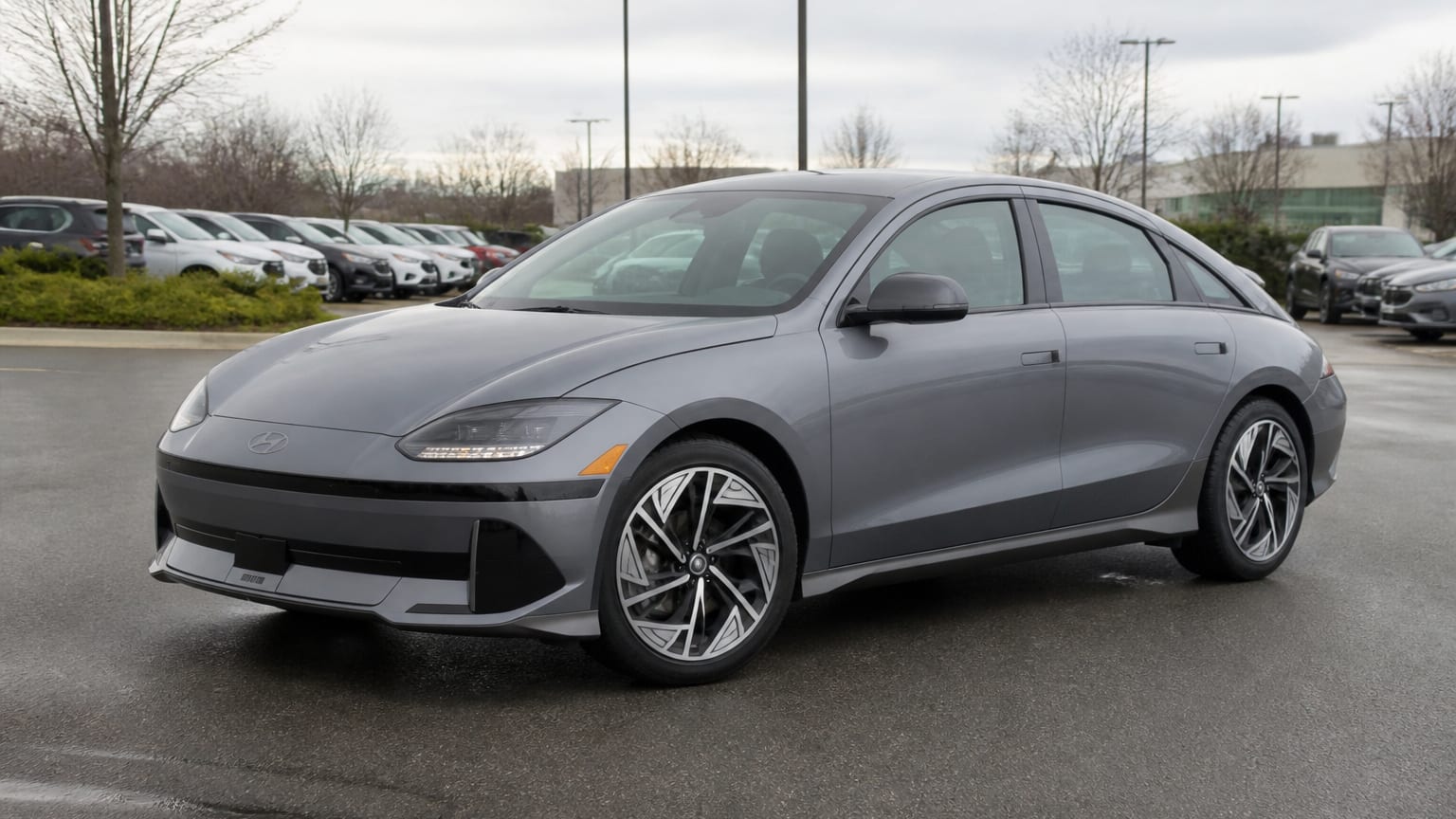
1st-generation Hyundai Ioniq 6 (2023-present)
The 2023 Ioniq 6 drew the most complaints and the most recalls of any model year in the lineup. The most commonly reported problem areas for 2023 are Electrical System (29 complaints), Power Train (7 complaints), and Unknown or Other (7 complaints), per NHTSA data. The ICCU defect was the dominant issue, with owners reporting sudden loss of drive power well before the first recall was issued.
There are 5 recalls and 54 owner complaints on file for the 2023 Ioniq 6, compared to 5 recalls and 33 owner complaints for the 2024 model. The 2024 improved on complaint volume, but it still carries the differential gear bolt recall (AWD) and the same ICCU and seat belt recalls that span 2023-2025. The most-reported single problem on CarComplaints for the Ioniq 6 is the 2023 model’s defective 12V battery under two years old.
What are the best Hyundai Ioniq 6 years to buy?
The best Hyundai Ioniq 6 years to buy are 2025 and 2026, both of which score in the “Good” to “Excellent” range and carry significantly fewer complaints than the 2023 launch year.
| Best Hyundai Ioniq 6 Year | Why It's a Strong Buy |
|---|---|
| 2025 | Facelift updates, improved rear seat belts per IIHS feedback, 79/100 reliability, 30 complaints vs. 54 on 2023 |
| 2026 | 0 recalls, 0 complaints on record, 82/100 reliability ("Excellent") |
Most reliable Hyundai Ioniq 6 years: 2025, 2026
2025 Hyundai Ioniq 6
The 2025 Ioniq 6 has a “Good” reliability rating with a score of 79/100. It has 3 recalls and 30 owner complaints, though some issues have been reported. The 2025 received a facelift with a redesigned front and rear fascia, new headlights, and an updated interior. Beginning with 2025 models, Hyundai made improvements to the rear seat belts to improve rear occupant protection in moderate overlap front crashes, addressing one of the areas where the earlier Ioniq 6 fell short on the IIHS updated side and frontal tests. Complaint volume is roughly half that of the 2023, making it a meaningfully better buy if your budget allows it. Consumer Reports rates the 2025 Ioniq 6 as having about average reliability compared to other cars from the same model year.
2026 Hyundai Ioniq 6
The 2026 Ioniq 6 has excellent reliability, with 0 recalls and 0 owner complaints on file. The 2026 is the highest-scoring model year with a reliability score of 82/100 (“Excellent”). As a brand-new model year, real-world complaint data will accumulate over time, so running the VIN through the NHTSA recall checker before purchase remains good practice. The 2026 also carries the Ioniq 6’s IIHS TSP+ safety credential, which applies to 2023-2026 models based on testing of the 2023 Ioniq 6 SE 4-door AWD.
Hyundai Ioniq 6 pre-purchase checklist
Before signing on any used Ioniq 6, run through these model-specific checks:
- VIN recall check: Enter the VIN at NHTSA’s recall lookup to confirm all open recalls are closed, including the ICCU (24V-868), seat belt anchor (25V-797), and charging port door campaigns.
- ICCU recall status (all 2023-2025 cars): Ask the dealer for paperwork showing recall 24V-868 - not just the earlier 24V-204 software update - has been completed. Recall 24V-868 expands and replaces 24V-204; vehicles previously repaired under 24V-204 will need the new remedy completed.
- Seat belt anchor inspection (2023-2025 cars): Confirm that the seat belt anchor recall (25V-797) has been performed, as owner notification letters were only mailed starting in mid-2026 and many cars will not yet be remedied.
- 2024 AWD differential bolt recall: On any 2024 AWD model, verify the gear drive unit replacement under Hyundai’s recall has been done; loosely torqued differential gear bolts can cause loss of drive power or differential lock-up.
- 12V battery and charging system test: On any 2023-2025 Ioniq 6, have a dealer or independent EV technician test the 12V battery health and run a diagnostic for ICCU fault codes, even if the recall has been completed - some owners report repeat ICCU failures even after initial fixes.
- Horn function: Test the horn during the test drive. Water intrusion can corrode the horn’s electrical contacts, and Hyundai has run an extended warranty campaign for this issue.
- Full service records: Ask for all dealer service records to confirm recall repairs, battery conditioning history, and any collision repairs that may have disturbed the seat belt anchors.
Better alternatives to consider
If the Ioniq 6 years in your budget land on the avoid list, consider these alternatives instead:
- Volkswagen ID.4 - a similarly priced all-electric crossover with a comparable E-GMP-class platform, worth cross-shopping if you prefer SUV packaging over the Ioniq 6’s sedan stance
- Hyundai Kona - a smaller Hyundai EV/hybrid option at a lower price point, with a longer production run that gives used-car buyers more model years to choose from
- Tesla Model 3 - the volume battery electric sedan benchmark in the Ioniq 6’s class, with a wider used inventory and a well-documented year-by-year reliability record across multiple generations
Is the Hyundai Ioniq 6 worth buying?
The Ioniq 6 is worth buying, as long as you avoid the 2023 model year. The Ioniq 6 has an average reliability score of 77/100 across all model years in the database, rated “good,” and is overall a reliable vehicle, though some model years perform better than others. Scores are cross-checked against primary sources following our editorial guidelines and research verification process, so complaint counts and recall figures reflect the most current available data. The 2023 Ioniq 6 earned a TOP SAFETY PICK+ designation from the IIHS, and that rating carries through to the 2026 model, so crash protection is not the concern here - it is the early-generation electrical and charging system issues that make the 2023 a harder buy. Stick to 2025 or 2026, confirm all open recalls are closed by running the VIN through NHTSA’s recall checker, and verify full service records before you finalize the purchase.