
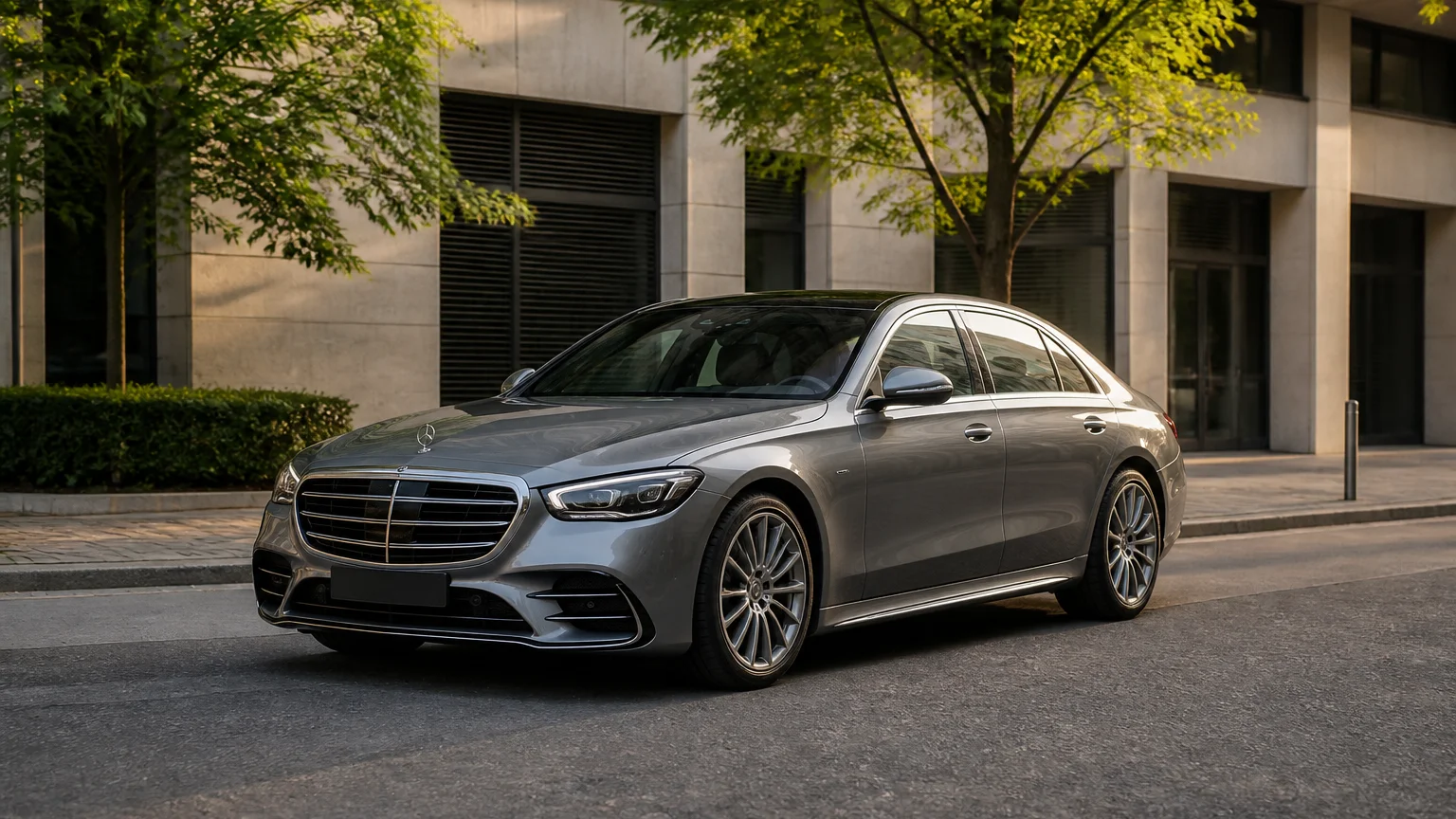
The Mercedes-Benz S-Class is one of the most distinguished full-size luxury sedans ever built, and across most of its generations it delivers a genuinely strong ownership experience. A handful of model years, though, carry disproportionate repair costs, high complaint volumes, or documented mechanical failures that make them risky used-car purchases.
This guide uses data from NHTSA complaint records, CarComplaints PainRank scores, and owner-forum feedback to give you a data-backed year-by-year breakdown of what to buy and what to skip.
For generations, engines, and ownership notes in one place, see the Mercedes-Benz S-Class hub.
Related: Mercedes-Benz E-Class years to avoid, Mercedes-Benz C-Class years to avoid, Mercedes-Benz SL years to avoid.
At a glance
- Worst years
- 2000
- 2001
- 2002
- 2003
- 2007
- 2014
- 2021
- Best years
- 2005
- 2006
- 2009
- 2012
- 2016
- 2017
- 2019
- 2022
- Top failure
- W220-generation Airmatic air suspension collapse and electrical failures (CarComplaints / NHTSA - W220 leads all generations at 307 NHTSA complaints)
- Always do before buying
- run the VIN through NHTSA's recall checker, plus physically inspect the Airmatic suspension on any 2000-2006 car for ride-height sag before purchase
How we rated the best and worst Mercedes-Benz S-Class years
The W220 generation (2000-2006) carries the highest NHTSA complaint volume of any S-Class generation, with 307 complaints across its production run, making it the generation most used buyers should approach with caution.
Ratings are drawn from NHTSA complaints and recalls, CarComplaints PainRank (which ranks the worst year by repair cost and mileage-at-failure), RepairPal owner-reported reliability data, Consumer Reports subscriber surveys, J.D. Power dependability scores, Edmunds and KBB owner ratings, and owner forums including BenzWorld and MBWorld. CarComplaints and NHTSA measure different things: CarComplaints ranks a “worst year” by repair cost and average mileage at failure (its PainRank system), while NHTSA shows raw complaint volume - the two do not always name the same year. CarComplaints rates the 2021 Mercedes-Benz S-Class as the worst model year on its platform, ranked on repair cost and average mileage when problems occur. By contrast, NHTSA complaint volume is highest across the W220 generation (2000-2006) as a whole, with the 2000-2003 model years accounting for the bulk of those 307 complaints. Our editorial guidelines require that verdicts reflect both complaint volume and repair-cost severity, which is why years with high NHTSA totals and years with costly individual failures can both earn an avoid rating.
| Mercedes-Benz S-Class Generation | Best Mercedes-Benz S-Class Years | Worst Mercedes-Benz S-Class Years |
|---|---|---|
| W220 (2000-2006) | 2005, 2006 | 2000, 2001, 2002, 2003 |
| W221 (2007-2013) | 2009, 2012 | 2007 |
| W222 (2014-2020) | 2016, 2017, 2019 | 2014 |
| W223 (2021-present) | 2022 | 2021 |
Every Mercedes-Benz S-Class model year ranked
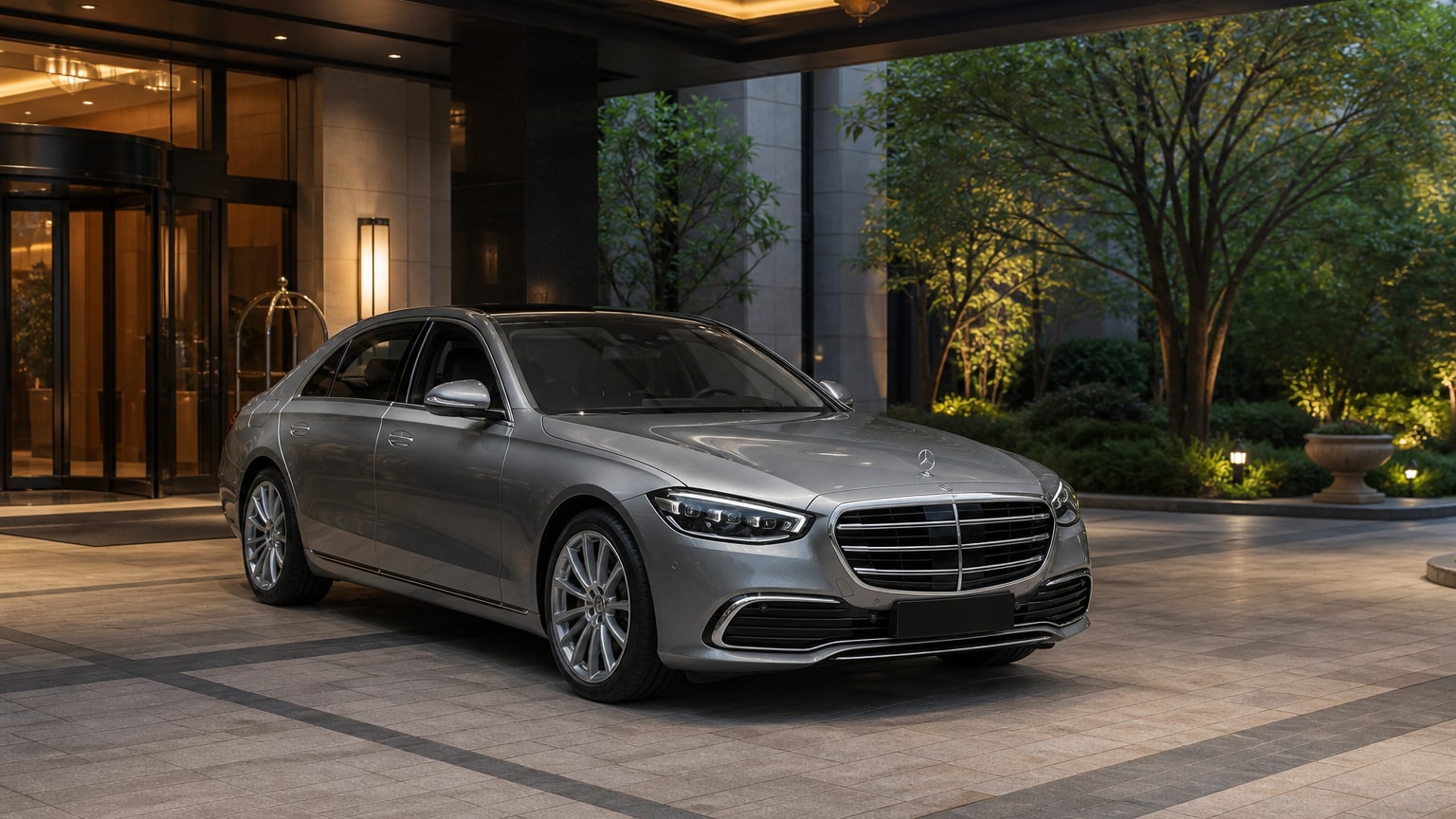
Across four generations, the S-Class has accumulated 748 NHTSA complaints, with the W220 (2000-2006) generating the most at 307, followed by the W222 (2014-2020) at 176, the W221 (2007-2013) at 173, and the W223 (2021-2025) at 92.
| Model Year | Generation | Verdict | Notes |
|---|---|---|---|
| 2000 | W220 | Avoid | Highest W220 electrical and suspension complaints |
| 2001 | W220 | Avoid | 6 NHTSA recalls; suspension, electrical failures |
| 2002 | W220 | Avoid | Airmatic collapse, transmission sluggishness |
| 2003 | W220 | Avoid | Pre-facelift electrical gremlins, rust |
| 2004 | W220 | OK/Mixed | Post-facelift improvements begin |
| 2005 | W220 | Best | Facelifted, reduced complaints |
| 2006 | W220 | Best | Final W220 year; most refined iteration |
| 2007 | W221 | Avoid | 61 NHTSA complaints; M273 timing gear wear |
| 2008 | W221 | OK/Mixed | Improved over 2007; some lingering engine issues |
| 2009 | W221 | Best | Low complaints; high owner satisfaction |
| 2010 | W221 | OK/Mixed | Mid-cycle refresh; average reliability |
| 2011 | W221 | OK/Mixed | Solid mid-generation year |
| 2012 | W221 | Best | 4/5 J.D. Power; one recall; strong owner ratings |
| 2013 | W221 | OK/Mixed | Final W221 year; watch for high mileage |
| 2014 | W222 | Avoid | First-year W222; below-average J.D. Power score |
| 2015 | W222 | OK/Mixed | Improved over launch year |
| 2016 | W222 | Best | Running improvements; sweet spot for S550 |
| 2017 | W222 | Best | Strong owner satisfaction; updated software |
| 2018 | W222 | OK/Mixed | S560 replaces S550; strong mechanically |
| 2019 | W222 | Best | Post-refresh W222; low complaint count |
| 2020 | W222 | OK/Mixed | Final W222 year; generally reliable |
| 2021 | W223 | Avoid | CarComplaints worst year by repair cost; electrical |
| 2022 | W223 | Best | No active NHTSA recalls; strong build quality |
| 2023 | W223 | OK/Mixed | Accumulated recalls for fuse box; still maturing |
| 2024 | W223 | OK/Mixed | Some software-related recalls; newer data |
Most common Mercedes-Benz S-Class problems
The single biggest recurring failure across all modern S-Class generations is the Airmatic air suspension, which can collapse without warning and leave the car sitting on its bump stops. Beyond that, electrical system failures, engine timing issues, transmission concerns on first-year models, and advanced-electronics gremlins on the W223 round out the major problem categories.
1. Airmatic air suspension failure
The Airmatic system replaces conventional steel springs with air springs, electronically controlled dampers, and a compressor. When an air strut or the rubber bellows cracks and leaks, the car sags noticeably on one corner - sometimes while driving - and the compressor can burn out trying to compensate, turning a moderate repair into a major one.
The Airmatic system is found on all S-Class generations from W220 through W223, so the failure is not limited to any single year. One of the biggest problem areas on the W220 was the Airmatic system, where failures in the air struts or compressor could leave the car sitting unevenly and require repairs costing thousands of dollars. NHTSA recall campaign 07V-263000, covering the suspension on certain S-Class vehicles, was reported in June 2007 and affected up to 19,924 units. No broader recall was issued for the general Airmatic strut-and-compressor failure on other model years, meaning most owners pay out of pocket.
Addressing Airmatic problems early is important: a leaking air spring that costs around $1,200 to fix can turn into a $3,000-plus repair if the compressor burns out. Failures most often surface around 60,000-80,000 miles on the W220, based on owner reports on BenzWorld and MBWorld. Buyer takeaway: on any W220-W222 S-Class, check for overnight ride-height sag and listen for a compressor running for more than a few seconds at startup.
2. Electrical system failures
Electrical glitches were common on the W220, affecting everything from the COMAND infotainment system to power accessories. The 2000-2003 models are generally considered the S-Class’s nadir thanks to widespread electrical problems in the then-new W220 generation.
Specific NHTSA-documented electrical recalls on the W220 include NHTSA campaign 04V-227000, covering electrical system fuses and circuit breakers, which potentially affected 54,454 vehicles, and NHTSA recall 06V-028000, covering instrument cluster electrical malfunctions where gauges and indicators failed to illuminate, increasing the risk of a crash. On the W223, the most-reported problem on CarComplaints is also electrical, with owners describing faulty electronics across the 2021 model year. NHTSA complaints on the 2021 model most commonly relate to the electrical system, including backup camera failures and battery charge warnings. Repair costs for electrical module replacements on the W223 can exceed $1,500 depending on the component. Buyer takeaway: on W220 cars, confirm both instrument cluster recalls have been completed; on 2021 W223 cars, test every infotainment and safety-system function before purchase.
When an SRS warning light illuminates on an S-Class - particularly on the W221 and W222 - it often traces back to a seat-belt tensioner fault or water intrusion in a connector rather than the airbag module itself, which keeps diagnostic costs lower than the warning suggests.
3. Engine timing gear and cam gear wear (W221, 2007-2008)
Early W221 models, especially the 2007, suffer from a timing gear defect in the M273 V8 engine. The cam timing idler gear’s teeth can wear down, causing timing chain slip that leads to catastrophic engine damage. The M272 V6 and M273 V8 engines found in pre-facelift W221 models also had known issues with balance shaft wear and timing chain tensioners.
The 2007 S-Class model has 61 complaints logged on NHTSA and had 3 safety recalls issued. Engine failure from timing gear wear can cost $5,000-$10,000 or more, depending on whether the cylinder heads require replacement. No manufacturer warranty extension has been confirmed in research for this specific failure on the S-Class. Buyer takeaway: on any 2007-2008 S550, ask for engine records showing the cam gear was inspected or replaced, and listen for ticking at idle that could indicate chain slack.
4. Transmission and drivetrain concerns (early W220 and first-year W222)
The W220 (1999-2006) was reported to have failures in the suspension system, a slow and unresponsive transmission, and electrical failures. On early W220 models (2000-2002), owners reported sluggish 5-speed automatic response and occasional torque converter shudder. One documented 2007 W221 owner reported a transmission failure around 45,000 km, where the torque converter casing cracked and stopped the car from being drivable.
On the W222, the 2014 first-year model drew below-average drivetrain ratings. J.D. Power gave the 2014 S-Class a reliability score of 3/5, which is considered average but below expectations for a luxury flagship. Transmission fluid condition is a strong indicator of care: complex MBUX module replacements and air suspension system overhauls become significant cost items when maintenance is neglected. Any transmission fluid leak when the car is parked is a red flag on these models and warrants a full pre-purchase inspection before proceeding. Buyer takeaway: request full transmission service records on any W220 or 2014 W222, and budget for a fluid service at purchase if records are unavailable.
5. Rust and corrosion (W220 and early W221)
Early W220 models developed rust problems in areas where previous S-Class generations rarely suffered corrosion. Early W221 models can also exhibit rust issues, especially in vehicles from regions with harsh winters and heavy road salt, with common spots around the wheel arches, door bottoms, trunk lid, and subframe components.
Rust repair on a full-size luxury sedan can run $2,000-$5,000 or more depending on severity, and subframe corrosion is a structural concern that can affect handling. Facelift W221 models (2010-2013) benefit from improved rust prevention measures. Buyer takeaway: on any W220 or pre-facelift W221 purchased in a rust-belt state, insist on an undercarriage inspection at a lift before purchase.
6. Advanced electronics and safety-system faults (W223, 2021-2022)
The 2021-2025 W223 generation’s most frequently reported NHTSA problem areas are safety systems, electrical system, and wheels and tires. The most common problem reported in 2022 S-Class NHTSA complaints falls under forward collision avoidance; there was also an urgent recall on certain S580 and S500 models initiated in March 2022, covering a rear axle carrier that might fail due to improper welding, with a detached thrust arm capable of causing sudden loss of control.
Phantom braking - where the Active Brake Assist fires without a real obstacle - adds an element of risk to driving these models. No active NHTSA safety recalls remain on file for the 2022 S-Class as of the latest data, and it outscores the 2021 on reliability metrics. Buyer takeaway: confirm through the NHTSA VIN checker that the rear axle recall has been completed on any 2022 S580 or S500, and verify phantom braking behavior during a highway test drive.
Which Mercedes-Benz S-Class years should you avoid
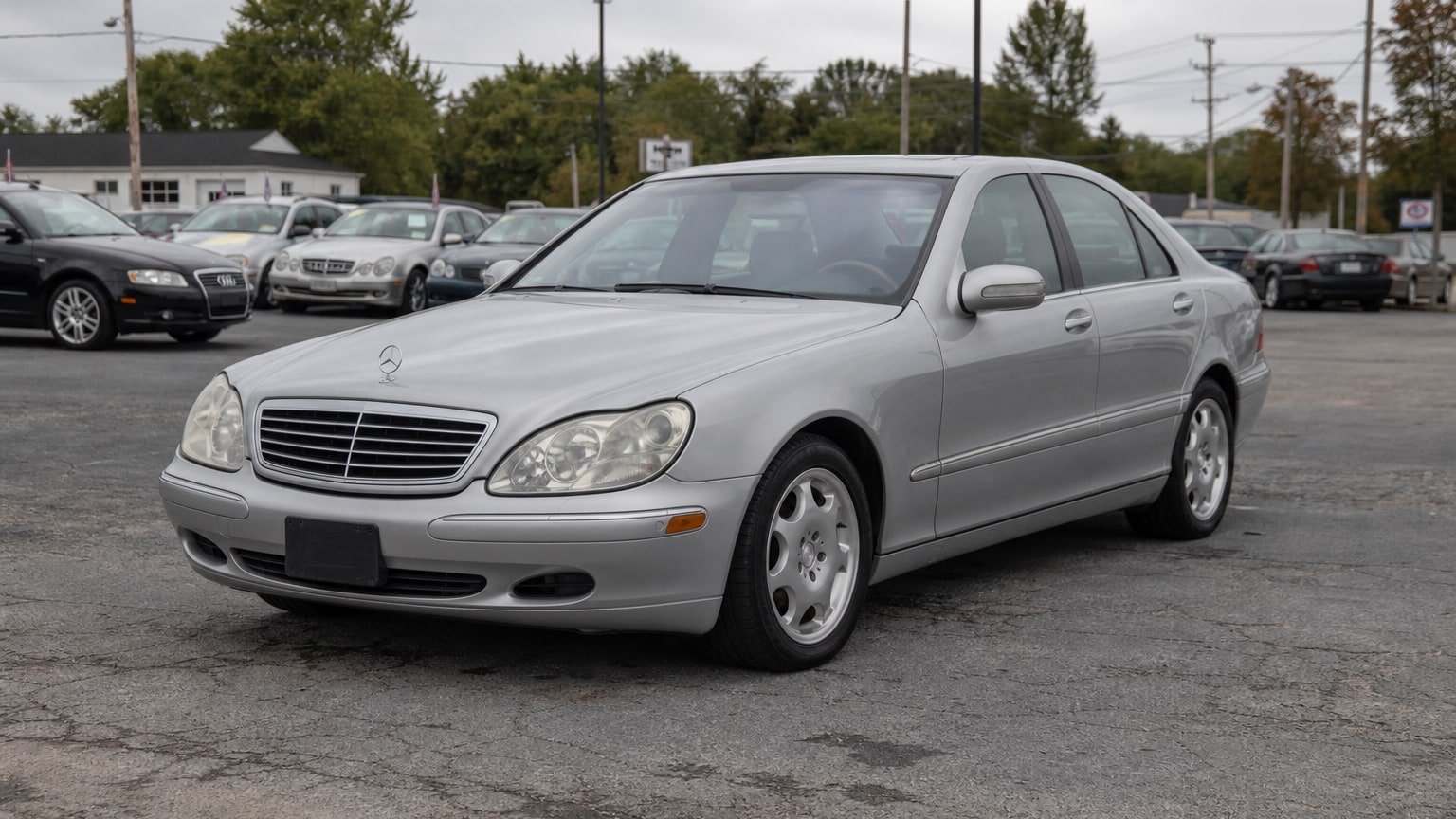
The Mercedes-Benz S-Class years to avoid are 2000, 2001, 2002, 2003, 2007, 2014, and 2021. CarComplaints rates the 2021 as the worst single model year by repair cost and average mileage when problems occur, while NHTSA complaint volume is highest on the W220 generation (2000-2006) with 307 total complaints - the heaviest-burdened generation in the S-Class lineup.
| Mercedes-Benz S-Class Generation | Model Years | Verdict | Main Issues |
|---|---|---|---|
| W220 | 2000, 2001, 2002, 2003 | Worst | Airmatic failure, electrical recalls, rust, transmission sluggishness |
| W221 | 2007 | Worst | M273 timing gear wear |
| W222 | 2014 | Worst | First-year reliability dip, air suspension costs |
| W223 | 2021 | Worst | Electronics faults, fuel pump recall, axle recall |
Worst Mercedes-Benz S-Class years: 2000, 2001, 2002, 2003, 2007, 2014, 2021
1st-generation modern S-Class: W220 (2000-2006)
The 2000-2003 models are generally considered the S-Class’s nadir thanks to widespread electrical problems, and the entire W220 series draws criticism from reliability trackers for its high maintenance and repair costs and frequent need for electronic diagnoses. The 2004-2006 years are better, as Mercedes facelifted the car and improved quality. In 2003, Mercedes introduced a facelifted model with vastly improved quality, including interior plastics of a higher standard and a more robust Airmatic system. Despite the facelift improvements, the W220’s legacy of Airmatic collapse and electrical recall exposure makes the entire 2000-2003 run the most data-backed avoid set in S-Class history.
2nd-generation W221 (2007-2013) - worst year: 2007
Early W221 models, built in 2007 and 2008, appear to have a higher-than-average number of problems and complaints. The 2007 model alone logged 61 NHTSA complaints and had 3 safety recalls issued. The M273 V8 timing gear wear is the single biggest mechanical risk on this generation. The W221 generally improved upon the W220’s reliability record, with RepairPal scoring the 2008-2013 S-Class range around 3 out of 5, labeling it “average” reliability for a high-end luxury vehicle.
3rd-generation W222 (2014-2020) - worst year: 2014
The 2014 model was the first year of its generation, and its reliability was graded below average in its class. The 2014-2020 W222 accumulated 176 NHTSA complaints overall, with the most frequently reported problem areas being engine, steering, and interior. By 2016, the W222 had received running improvements, and many owners call 2016-2017 the sweet spot for this generation.
4th-generation W223 (2021-present) - worst year: 2021
There were 6 recalls for 2021 Mercedes-Benz S-Class vehicles on NHTSA. One of those recalls covered certain 2021 S580 vehicles, where the suction jet pump in the fuel tank may have had a loose or missing nozzle, causing the pump to fail and result in an engine stall. The 2021-2025 generation as a whole has accumulated 92 NHTSA complaints.
What are the best Mercedes-Benz S-Class years to buy
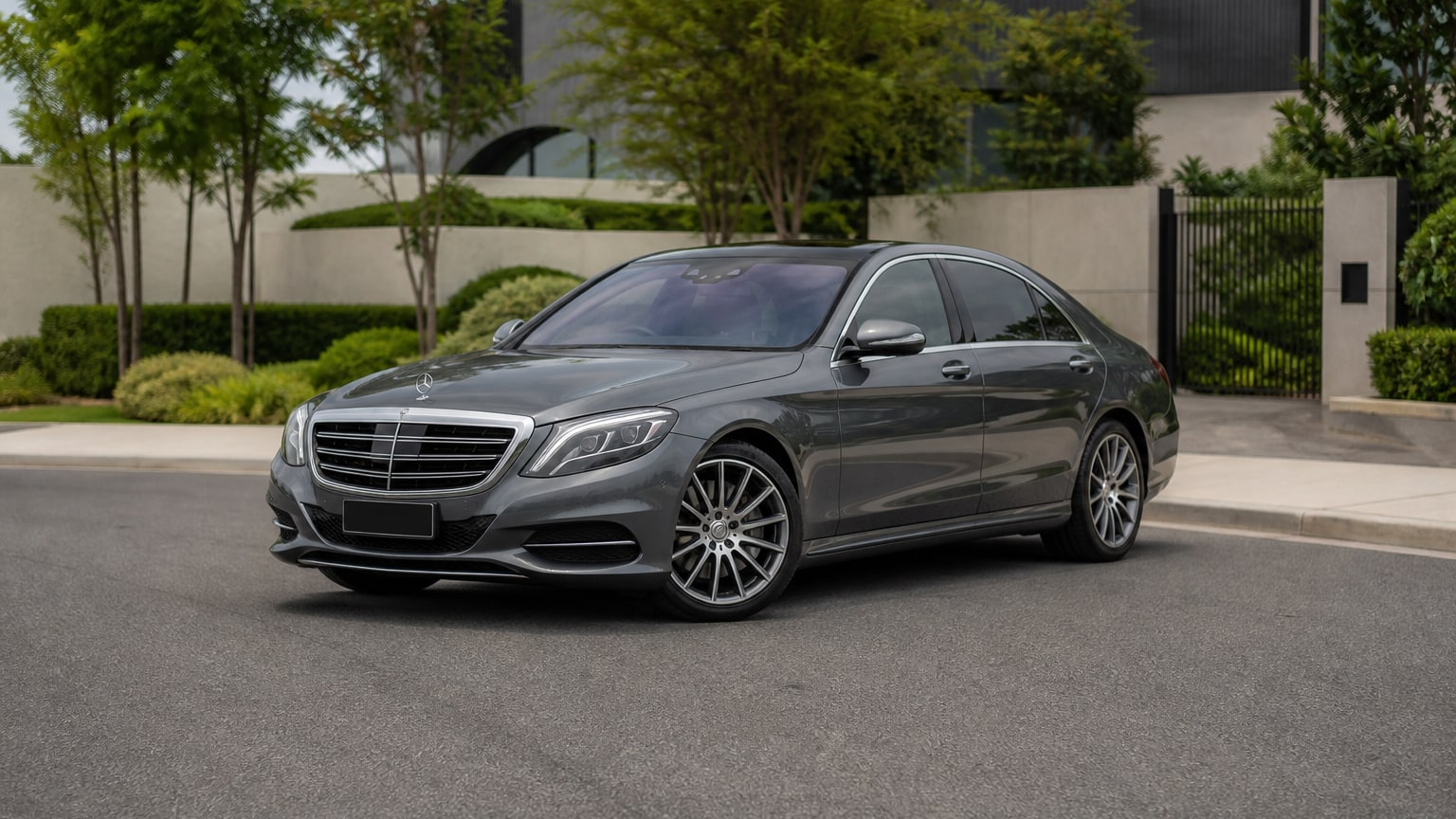
The best Mercedes-Benz S-Class years to buy are 2005, 2006, 2009, 2012, 2016, 2017, 2019, and 2022. These years sit at the mature end of their respective generations, after first-year bugs were resolved, and carry the lowest complaint counts in their generation windows.
| Best Mercedes-Benz S-Class Year | Why It's a Strong Buy |
|---|---|
| 2005 | Facelifted W220; reduced complaints over 2000-2003 |
| 2006 | Final W220 year; most refined W220 iteration |
| 2009 | Late W221, low complaints, high owner satisfaction |
| 2012 | 4/5 J.D. Power; only one NHTSA recall; strong owner ratings |
| 2016 | W222 sweet spot; running improvements, updated software |
| 2017 | High owner satisfaction; low complaint count |
| 2019 | Post-facelift W222; strong reliability data |
| 2022 | No active NHTSA recalls; outscores 2021 on reliability |
Most reliable Mercedes-Benz S-Class years: 2005, 2006, 2009, 2012, 2016, 2017, 2019, 2022
2009 Mercedes-Benz S-Class
The 2009 Mercedes-Benz S-Class is considered the benchmark for those desiring a large ultra-luxury sedan that can do everything, with countless owners expressing high satisfaction. It sits in the middle of the W221’s run, past the 2007-2008 timing gear trouble and well before end-of-cycle age concerns. The W221 as a whole accumulated 173 NHTSA complaints, with the most frequently reported areas being electrical system, engine, and fuel system - but the 2009 model year draws a disproportionately smaller share of those complaints compared to 2007-2008.
2012 Mercedes-Benz S-Class
The 2012 S-Class received a 4/5 on the J.D. Power reliability scorecard, and NHTSA issued only one recall for a faulty fuel system. The 2009 and 2012 models stand out for exceptional reliability and high owner satisfaction ratings among all modern S-Class years.
2022 Mercedes-Benz S-Class
No active NHTSA safety recalls are on file for the 2022 S-Class, and it outscores the 2021 model by 5 points on reliability metrics - making it one of the stronger nearby years to consider. The W223’s MBUX-equipped interior and updated safety systems are at their most polished in the 2022 model year, with initial software bugs largely addressed through over-the-air updates.
Mercedes-Benz S-Class submodel years to avoid
The four main S-Class submodels on the used market - the S430, S500, S550, and S560/S580 - each wear a different badge but share much of the same platform as the standard S-Class. Each is assessed below on its own complaint and recall record, not the parent’s aggregate.
Mercedes-Benz S430 years to avoid
The S430 was offered as part of the W220 generation from 2000 to 2006. It uses the naturally aspirated M112 V8 (3.2L, later 4.3L), which is mechanically simpler than the S500’s larger M113 5.0L V8 and generally considered a lower-stress unit. CarComplaints has only 4 complaints on file for the Mercedes-Benz S430, making it one of the thinner complaint records among all S-Class variants. That said, the S430 shares the W220’s Airmatic suspension, electrical architecture, and recall exposure covered earlier in this article; the difference is in the engine, not the chassis.
The years to approach most cautiously are 2000-2003, consistent with the W220 worst-years set above. Owner complaints about the 2002 S430 include the ABC suspension suddenly lowering at highway speeds, a failure mode shared with all Airmatic-equipped W220 cars. The 2004-2006 S430 benefits from the post-facelift quality improvements and is the more defensible buy among W220 S430 variants.
Pre-purchase checks specific to the S430:
- Confirm NHTSA recall 04V-227000 (electrical fuses) has been completed
- Inspect Airmatic struts for overnight sag, as documented on W220 owner forums
- Check for the blower motor regulator recall, which affected 2000-2001 model years
Mercedes-Benz S500 years to avoid
The S500 has been offered across every modern S-Class generation - W220 (2000-2006), W221 (2007-2013 as S550 in the US), and W223 (2021-present as the entry S500 in the current lineup). In the W220 era, the S500 used the M113 5.0L naturally aspirated V8; the current W223 S500 uses a 3.0L turbocharged inline-6 (M256) paired with a 48-volt mild-hybrid system.
Owners of the W220 S500 specifically reported the Airmatic system failing for a second time, with the car body dropping onto the tires and making the vehicle impossible to operate. This is the same failure pattern covered in the Airmatic section above; it is not unique to the S500 badge, but the S500 was among the most commonly cited variants in owner complaints. For the 2014-2020 W222 generation, NHTSA complaint data shows the 3.0L turbo 6-cylinder engine has the lowest complaint density - a relevant finding for the current W223 S500, which uses a comparable turbocharged 6-cylinder architecture.
For the current W223 S500, NHTSA complaints filed by 2022 S-Class owners reference both the S500 and S580 trim levels, spanning seven systems. No S500 model year has yet accumulated a complaint record large enough to flag a single year as distinctly worse than the others within the W223 window.
Mercedes-Benz S560 years to avoid
The S560 replaced the S550 in 2018 as part of the W222 mid-cycle refresh. It uses the M176 4.0L twin-turbocharged V8 - a different engine from the S550’s M278 4.6L biturbo that it replaced. Mercedes refreshed the S-Class in 2018 and renamed the S550 to S560 with the new engine architecture, and initial reliability data for 2018-2020 S560s showed improvement over the earlier W222 years.
MBUSA recalled certain 2018-2019 S560 and Maybach S560 vehicles equipped with the 4.0L 8-cylinder engine because two engine oil plugs may not withstand high engine loads while driving, possibly resulting in an engine oil leak. This is a specific S560 recall that does not apply to the S550 variants. Electrical system problems are also among the most commonly reported S560 owner complaints.
No S560 model year has accumulated a complaint volume large enough on CarComplaints to flag a single worst year - the model existed for only three production years (2018-2020) and carried low overall complaint counts. The 2018-2019 engine oil plug recall is the key item to verify on any S560 purchase.
Pre-purchase checks specific to the S560:
- Confirm the engine oil plug recall (covering 2018-2019 S560) has been completed via the NHTSA VIN checker
- Inspect for any oil seepage around the lower engine area on 2018-2019 cars
- Check the panoramic sunroof front panel bonding on 2018-2019 models, which was subject to a separate adhesive recall
Mercedes-Benz S580 years to avoid
The S580 is a W223-generation model (2021-present) powered by the M176 4.0L twin-turbocharged V8. It replaced the S560 when the W223 was introduced. MBUSA recalled certain 2021 S580 and Maybach S580 vehicles after an engine control unit software error was found that could cause a sudden engine stall without the ability to restart. A separate 2021 S580 recall covered the suction jet pump in the fuel tank, which could have a loose or missing nozzle causing pump failure and engine stall.
There was also an urgent recall on S580 and S500 models initiated in March 2022 covering a rear axle carrier that might fail due to improper welding, with a detached thrust arm capable of causing sudden loss of vehicle control. The combination of an ECU stall recall, a fuel pump recall, and the axle carrier recall makes the 2021 S580 the single model-year/variant combination to approach most cautiously in the current W223 generation.
The 2022-onward S580 does not carry those same open-recall concerns, and no active NHTSA safety recalls are on record for the 2022 S-Class, which includes the S580 trim. If you are set on an S580, the 2022 model year is the safer entry point.
Mercedes-Benz S-Class pre-purchase checklist
Before committing to any used S-Class, run through these model-specific checks:
- Run the VIN through NHTSA’s recall checker to confirm every open recall - including the axle carrier recall on 2022 S500/S580 cars and the Airmatic-related 07V-263000 on W220 cars - has been completed
- On any 2000-2006 W220, inspect the Airmatic suspension at a lift - look for cracked rubber bellows on the air struts, ask if the compressor has been replaced, and check that the car holds ride height overnight before purchase
- On any 2007-2008 W221, request engine service records showing cam gear and timing chain inspection, and listen for a metallic ticking at idle that signals M273 timing gear wear
- Verify completion of electrical recalls on W220 cars - specifically NHTSA 04V-227000 (fuse box) and 06V-028000 (instrument cluster) - by VIN at the dealer
- On 2021 S580 models, confirm the ECU stall recall and the fuel pump recall have both been completed by the selling dealer before taking delivery
- Request full service records covering oil changes, transmission fluid services, and air suspension inspections - neglected maintenance on these cars multiplies repair risk significantly
- Check for rust on the undercarriage, wheel arches, door bottoms, and subframe on any W220 or pre-facelift W221 purchased from a northern or rust-belt state
- Test every MBUX and driver-assistance function on any 2021-2022 W223, including backup camera, Active Brake Assist, and lane-departure warning, since electrical gremlins on these systems are the top W223 complaint category
Better alternatives to consider
If the S-Class years in your budget fall on the avoid list, these same-class competitors are worth considering:
- BMW 7 Series - a direct S-Class competitor with its own year-by-year reliability record, and later generations (2016-2019 G11) show lower first-year complaint volumes than the comparable W222
- Lexus LS - consistently tops long-term reliability surveys in the full-size luxury sedan segment and carries significantly lower annual maintenance costs than the S-Class
- Audi S4 - a smaller but closely related German luxury alternative with a known reliability profile that used buyers can evaluate year by year
Is the Mercedes-Benz S-Class worth buying
The Mercedes-Benz S-Class is worth buying, as long as you avoid the W220 years 2000-2003, the 2007 W221, the 2014 W222, and the 2021 W223. The current W223 (2021-present) and previous W222 (2014-2020) are both very reliable and offer more features than any previous S-Class, making them good bets for used buyers who land on the right years. The best picks - 2005, 2006, 2009, 2012, 2016, 2017, 2019, and 2022 - deliver the S-Class ownership experience without the elevated repair exposure of the avoid years. Run the VIN through NHTSA’s recall checker, verify the car’s full maintenance history, and budget for an independent pre-purchase inspection before committing.
Frequently asked questions
What are the best Mercedes-Benz S-Class years to buy
The 2009 and 2012 models stand out for exceptional reliability and high owner satisfaction ratings. The 2005, 2006, 2016, 2017, 2019, and 2022 model years round out the best-years list, each benefiting from mature mid- or late-generation production with low complaint counts and resolved first-year issues.
What are the worst years for the Mercedes-Benz S-Class
The worst Mercedes-Benz S-Class years are 2000, 2001, 2002, 2003, 2007, 2014, and 2021. The W220 generation (2000-2006) generated 307 NHTSA complaints - the highest of any generation - with the 2000-2003 years accounting for the bulk, while CarComplaints rates the 2021 as the single worst model year on its platform based on repair cost and mileage at failure. The years to avoid methodology used here weights both raw complaint volume and average repair cost at failure, which is why multiple generations can each contribute avoid-rated years.
Which year Mercedes-Benz S-Class is most reliable
The 2012 Mercedes-Benz S-Class is the single strongest pick for reliability among all used-market years. The 2012 S-Class received a 4/5 J.D. Power reliability scorecard score, and NHTSA issued only one recall for a faulty fuel system. For buyers with a newer budget, the 2022 W223 carries no active NHTSA recalls and outscores the 2021 on reliability metrics.
What year Mercedes-Benz S-Class has the worst electrical problems
The 2000-2003 W220 model years carry the worst electrical problem record. NHTSA campaign 04V-227000, covering electrical system fuses and circuit breakers, affected up to 54,454 W220 vehicles, and a separate recall (06V-028000) covered instrument cluster electrical malfunctions where the driver could not read gauges including the speedometer, increasing crash risk. On the modern W223, the 2021 model year draws the most electrical complaints, primarily around backup camera failures and battery charge management.
How long does a Mercedes-Benz S-Class last
A well-maintained Mercedes-Benz S-Class can realistically reach 200,000 miles or more, particularly on the W221 and W222 generations where the core mechanicals are sound. For maximum reliability, buying a car with under 50,000 miles is recommended, as repair costs increase notably as mileage approaches and exceeds 75,000 miles on the complex W223 platform. Service records, timely fluid changes, and early attention to Airmatic symptoms are the strongest predictors of longevity on any S-Class generation.