
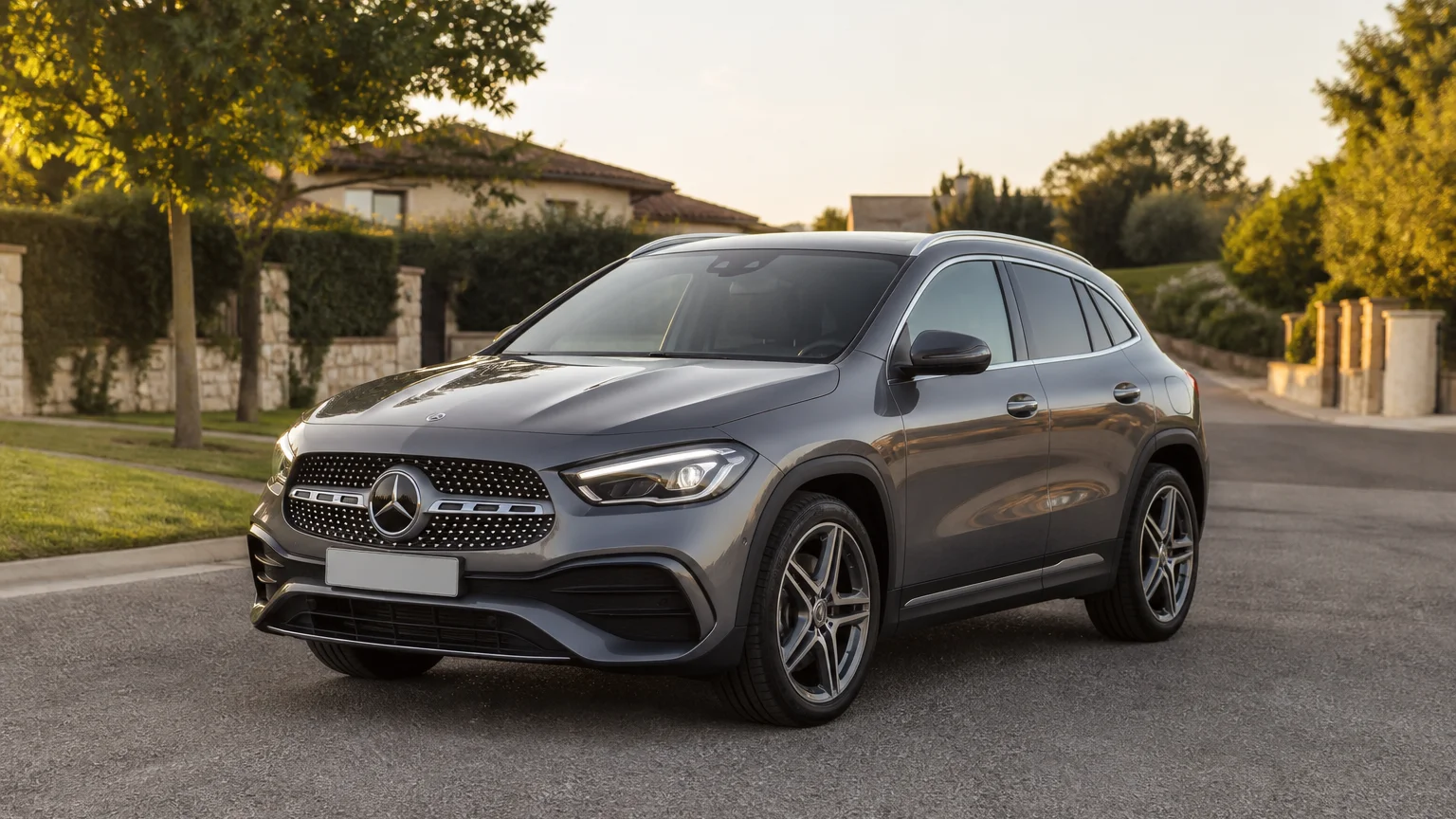
The Mercedes-Benz GLA is a capable, stylish subcompact luxury crossover that rewards buyers who choose the right model year - but a handful of first-generation years carry documented transmission, engine, and airbag concerns that can turn into four-figure repair bills. Before you buy a used GLA, you'll want to know which years to skip and which ones give you the best shot at a trouble-free ownership experience.
This guide draws on NHTSA complaint and recall data, CarComplaints PainRank scores, and RepairPal reliability ratings to rank every GLA model year.
For generations, engines, and ownership notes in one place, see the Mercedes-Benz GLA hub.
Related: Mercedes-Benz CLA years to avoid, Mercedes-Benz C-Class years to avoid.
At a glance
- Worst years
- 2015
- 2017
- 2018
- Best years
- 2021
- 2022
- 2023
- Top failure
- 1st-gen 7G-DCT dual-clutch transmission shudder and mechatronics failure (CarComplaints / owner forum data)
- Always do before buying
- Run the VIN through NHTSA's recall checker, plus check the DCT fluid condition and service history on any 2015-2019 GLA
How we rated the best and worst Mercedes-Benz GLA years
The first-generation GLA (2015-2019) is the generation to watch most carefully, with the 2017 ranking as CarComplaints’ worst year by repair cost and mileage-at-failure, and the 2018 carrying the highest raw NHTSA complaint volume. We pulled data from NHTSA complaints and recalls, CarComplaints (which ranks the worst year by PainRank - a composite of repair cost and mileage at failure, not raw complaint count), RepairPal for annual repair costs, owner reports on the GLA Owners Forum, and J.D. Power model-year history data.
CarComplaints and NHTSA measure different things: CarComplaints rates 2017 the worst on repair cost and mileage-at-failure, while NHTSA complaint volume is highest on the 2018. Both point to the same first-generation window as the one to avoid.
Our years to avoid methodology weighs repair cost and mileage-at-failure alongside raw complaint volume, which is why the 2017 and 2018 can rank differently depending on which metric leads.
| Mercedes-Benz GLA Generation | Best Mercedes-Benz GLA Years | Worst Mercedes-Benz GLA Years |
|---|---|---|
| 1st gen X156 (2015-2019) | None | 2015, 2017, 2018 |
| 2nd gen H247 (2021 - present) | 2021, 2022, 2023 | None |
Every Mercedes-Benz GLA model year ranked
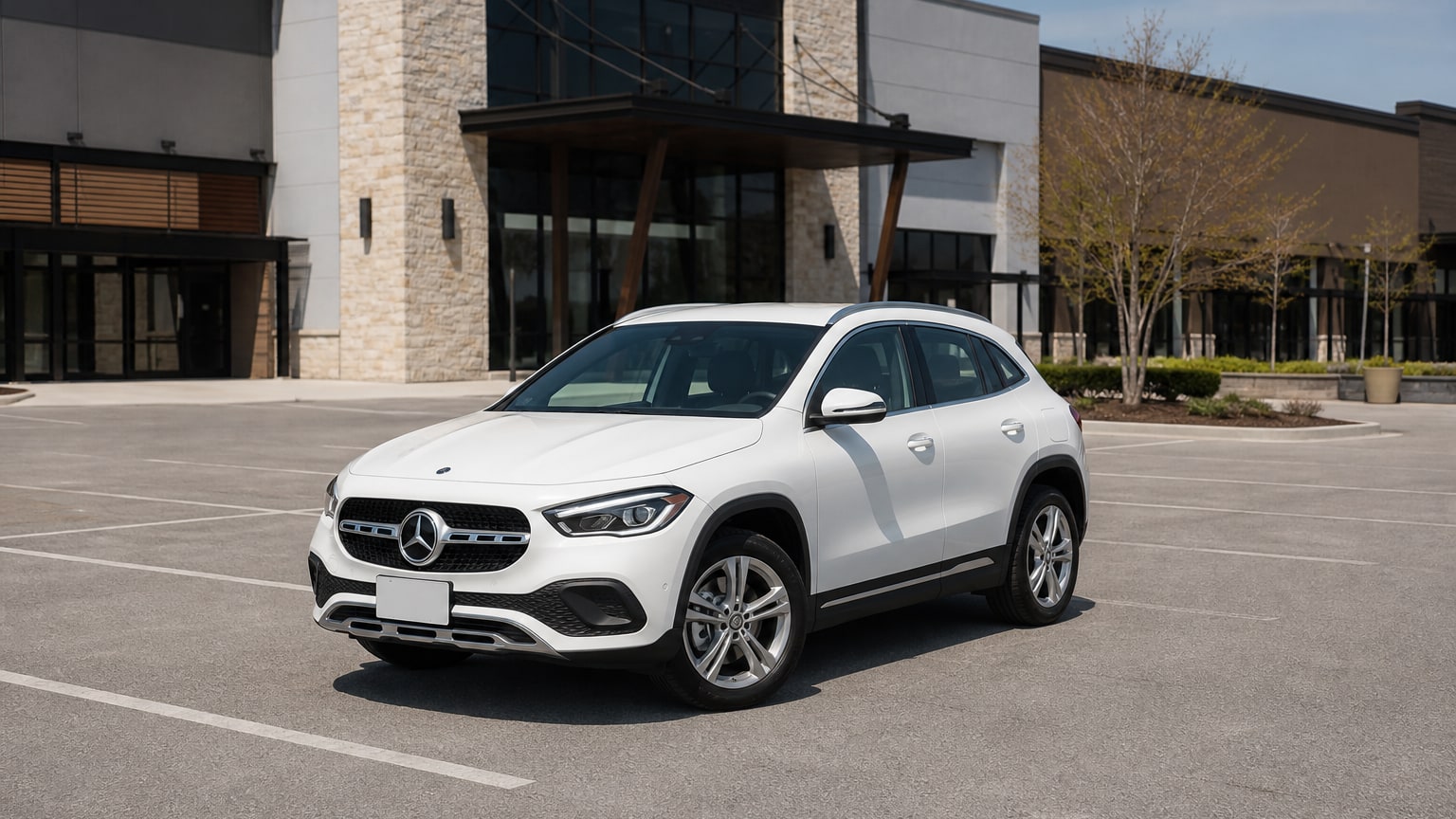
The second-generation GLA (2021 onward) is clearly the safer used buy, with far fewer complaints and zero NHTSA recalls in the data surveyed.
| Model Year | Generation | Verdict | Notes |
|---|---|---|---|
| 2015 | 1st gen X156 | Avoid | Most CarComplaints complaints; camshaft recall 15V-662; DCT shudder |
| 2016 | 1st gen X156 | OK/Mixed | Low CarComplaints count; brake shudder TSB noted |
| 2017 | 1st gen X156 | Avoid | CarComplaints worst year by repair cost/mileage; airbag recall; DCT issues |
| 2018 | 1st gen X156 | Avoid | Highest NHTSA complaint volume (46); airbag/steering grounding recall |
| 2019 | 1st gen X156 | OK/Mixed | Fewer complaints; 1st-gen DCT still applies; check service history |
| 2021 | 2nd gen H247 | Best | Low NHTSA complaints; new 8-speed auto; redesigned platform |
| 2022 | 2nd gen H247 | Best | Fewest NHTSA complaints of any GLA year surveyed |
| 2023 | 2nd gen H247 | Best | Low complaint count; 2nd-gen refinements |
Note: The GLA was not sold as a US model for the 2020 model year - it bridged generations. 2024 and 2025 are too recent for a full complaint record.
Most common Mercedes-Benz GLA problems
The single most widespread GLA failure across first-generation cars is the 7G-DCT dual-clutch transmission shudder, which affects the 2015-2019 range and accounts for the majority of high-cost repair reports from owners.
1. 7G-DCT dual-clutch transmission shudder and mechatronics failure
On the 2015-2020 GLA, the X156’s 7G-DCT 7-speed wet dual-clutch transmission (type 724.0) is prone to low-speed shudder/judder, jerky or delayed engagement, and clutch slip, typically emerging from around 40,000-75,000 miles. The symptom shows up as a noticeable lurch when pulling away from a stop and a jolt when shifting between second and third gear under light throttle. Left unchecked, it progresses quickly.
Root causes are wet multi-plate clutch wear, degraded or contaminated DCT fluid, and failure of the mechatronics control unit that manages clutch pressures. Stop-go urban driving and skipped fluid services accelerate it, and once shuddering begins, worn clutch packs can progress to a no-drive condition within a few thousand miles.
The average cost of repairs for transmission-related issues has been reported to range from $1,500 to $7,000, depending on the severity of the problem. A DCT fluid and filter change with a clutch adaptation reset is the first step and often clears early shudder; persistent slip requires clutch pack replacement. No manufacturer warranty extension specific to this issue was confirmed in research - ask the selling dealer whether the transmission has been serviced. Buyer takeaway: always request DCT service records on any 2015-2019 GLA before signing.
2. Camshaft weld failure - safety recall 15V-662
NHTSA campaign 15V-662 covers certain 2015 GLA250 and GLA250 4Matic vehicles manufactured July 17, 2015 to August 31, 2015, in which the intake or exhaust camshafts have welds that may fail and cause engine damage. Engine damage can result in a stall, increasing the risk of a crash.
On approximately 857 affected vehicles, one or both camshafts could break and damage the engine, leading to a loss of power and causing the engine to stall - after which the engine cannot be restarted. Mercedes-Benz addressed the recall by having dealers replace the affected camshafts free of charge. This is a safety-critical repair; confirm completion via VIN before buying any late-2015-production GLA250. Buyer takeaway: run the VIN through NHTSA’s recall checker - if 15V-662 is still open, require dealer completion before purchase.
3. Inadvertent airbag deployment - steering grounding recall
About 495,000 model-year 2015-2018 GLA-Class SUVs (along with several other Mercedes models) were recalled because the affected vehicles had insufficient electrical grounding in certain steering components. In rare instances, if the insufficiently grounded components were exposed to an electrostatic discharge and the steering-column-module clock spring was broken due to wear, an inadvertent deployment of the driver-side airbag could occur, increasing the risk of injury.
Separately, Mercedes-Benz recalled 2017 GLA250 and GLA250 4Matic vehicles over the front passenger pelvis airbag not inflating on impact - a fault whose non-deployment could increase the risk of injury for passengers. Dealers corrected the grounding issue by upgrading the grounding in the steering components. Buyer takeaway: confirm both airbag-related campaigns are closed on any 2015-2018 GLA you consider.
4. Electric water pump failure (M270 engine, 2015-2020)
On the 2015-2020 GLA equipped with the 2.0L M270 turbo engine, the electric water pump fails and causes loss of coolant circulation and rapid overheating. The pump motor or impeller breaks, and failure is often sudden with no warning. When water pump failure symptoms - such as the temperature gauge spiking and a coolant warning light - appear together, pull over immediately to avoid head gasket damage.
The water pump repair typically costs $400 - $1,200. The failure pattern is most common in higher-mileage first-generation cars. Buyer takeaway: on any 2015-2020 GLA, check coolant level and look for staining around the pump housing during a pre-purchase inspection.
5. Panoramic roof panel detachment - recall 21V-197
Mercedes-Benz recalled certain 2015-2020 GLA250 and 2015-2016 GLA45 AMG vehicles equipped with a panoramic sunroof because the front roof panel located between the windshield and the panoramic sunroof may not have been bonded correctly to the vehicle during a prior repair. Dealers replace the front panel free of charge. A later expansion of this campaign (noted as an expansion of NHTSA recall 21V-197) extended coverage further; confirm via VIN whether your specific car is affected. Buyer takeaway: inspect the headliner and roof seal area on any 2015-2020 GLA and verify recall completion.
6. Brake shudder (front rotors warping)
GLA owners report a shimmy or shudder when braking, with dealers acknowledging a TSB to replace all four rotors and install new brake pads when this condition is present - and some owners requiring rotor and pad replacement multiple times within the first 20,000 miles. This pattern is most prominent on 2015-2017 first-generation cars, particularly in city driving where repeated hard stops warp the relatively thin factory rotors.
Brake shudder repair is typically modest - rotor resurfacing or replacement runs $150 - $400 per axle - but the repeat nature of the fault on some cars is the real concern. Buyer takeaway: test for brake shudder during the test drive and ask whether rotors have been replaced.
Which Mercedes-Benz GLA years should you avoid?
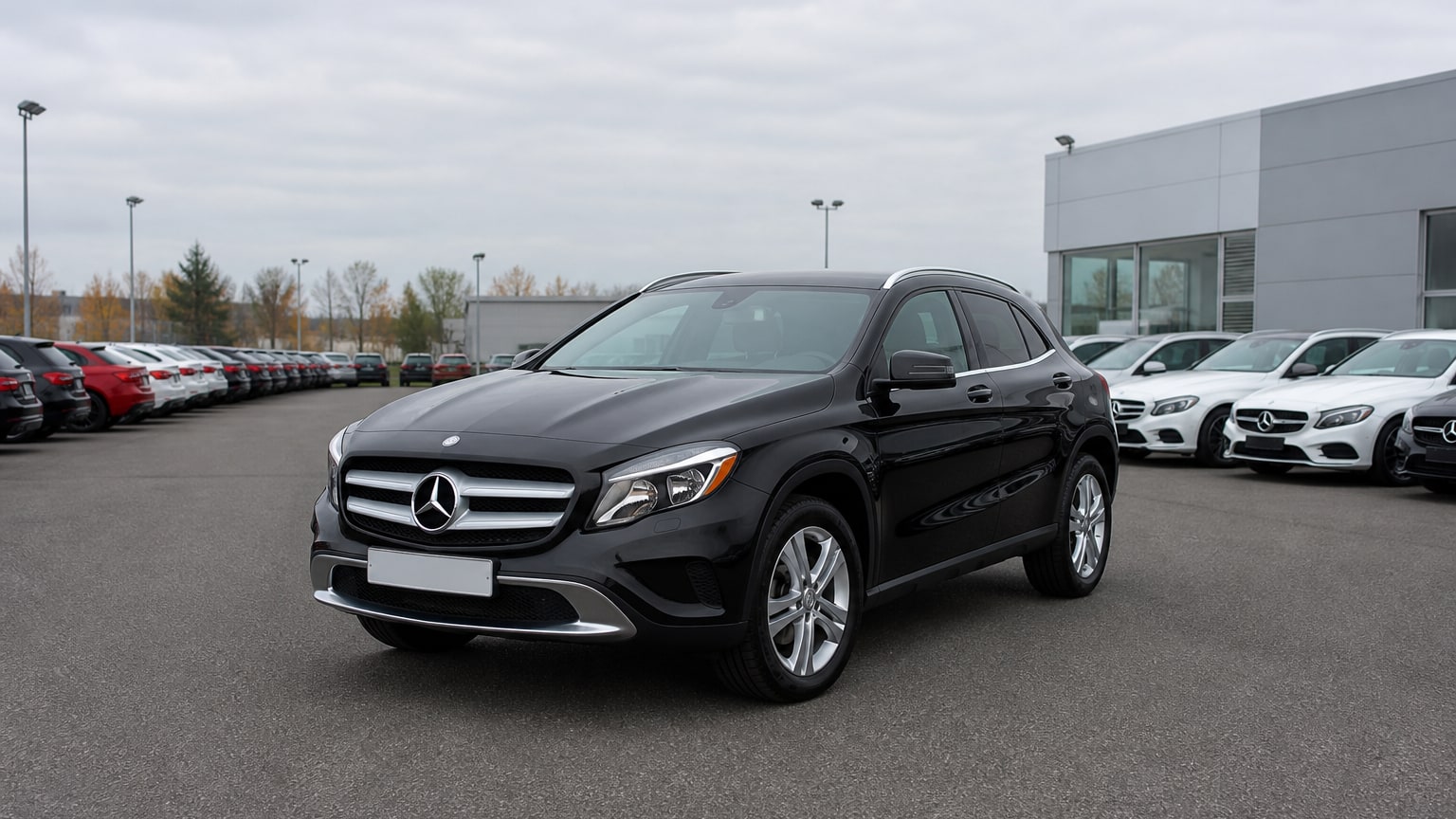
The Mercedes-Benz GLA years to avoid are 2015, 2017, and 2018. Although the 2015 Mercedes-Benz GLA250 has the most overall complaints, CarComplaints rates the 2017 model year as worse because of higher repair cost or more problems at lower mileage. On the NHTSA side, the 2018 GLA drew 46 NHTSA complaints - the most of any model year in the data surveyed - followed by the 2017 with 32 and the 2019 with 29.
| Mercedes-Benz GLA Generation | Model Years | Verdict | Main Issues |
|---|---|---|---|
| 1st gen X156 (2015-2019) | 2015, 2017, 2018 | Worst | DCT shudder, camshaft recall, airbag recall, water pump |
| 1st gen X156 (2016, 2019) | 2016, 2019 | Mixed | Brake shudder, 1st-gen DCT risk; otherwise lighter complaint load |
| 2nd gen H247 (2021 - present) | 2021, 2022, 2023 | Best | Redesigned platform, lowest NHTSA complaint counts |
Worst Mercedes-Benz GLA years: 2015, 2017, 2018
First-generation Mercedes-Benz GLA (2015-2019)
The GLA-Class first generation (X156) ran from 2014 to 2020 as a US model from 2015. The 2015 carries the most raw CarComplaints entries, including the camshaft recall (15V-662) and the highest density of DCT complaints. The most-reported single problem on CarComplaints is the 2017 Mercedes-Benz GLA250 engine failure - specifically “engine blew up.”
The 2018 drew 46 NHTSA complaints, concentrated in engine and electrical categories, and sits inside the steering grounding/airbag recall window. All three avoid years (2015, 2017, 2018) share the 7G-DCT transmission exposure and the panoramic roof panel recall. If you’re buying in this generation, the 2016 and 2019 are lower-risk picks within the X156 range - but still verify DCT service history on either.
What are the best Mercedes-Benz GLA years to buy?
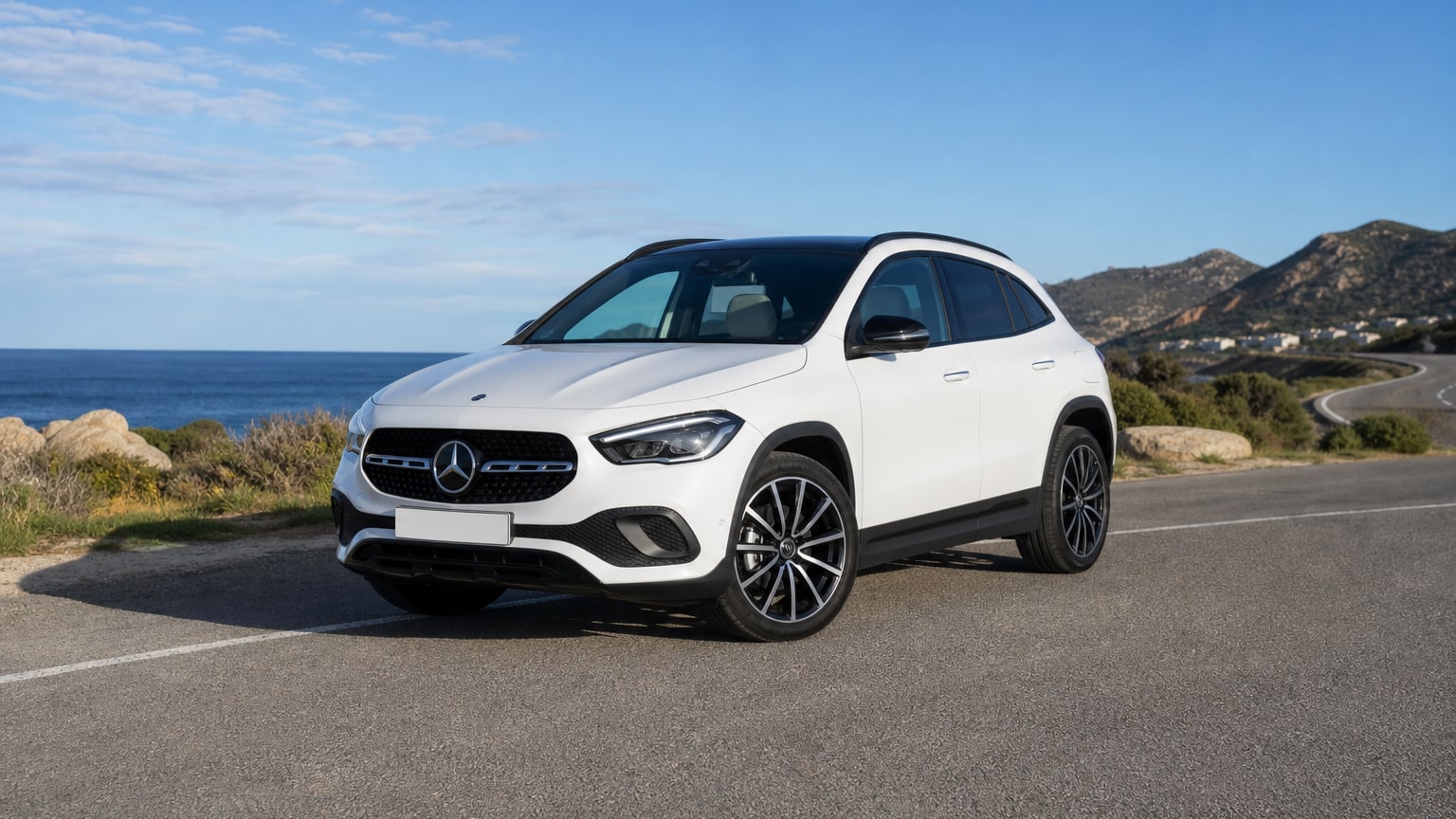
The best Mercedes-Benz GLA years to buy are 2021, 2022, and 2023. Of all surveyed GLA model years, 2022 drew the fewest NHTSA complaints. The second generation moved to a new H247 platform with an 8-speed torque-converter automatic - dropping the problematic 7G-DCT entirely - along with fresh exterior styling and updated MBUX infotainment.
| Best Mercedes-Benz GLA Year | Why It's a Strong Buy |
|---|---|
| 2021 | Launch year of 2nd gen H247; DCT replaced by 8-speed auto; low NHTSA complaint count |
| 2022 | Fewest NHTSA complaints of any surveyed GLA year; settled 2nd-gen production |
| 2023 | Continued low complaint rate; full suite of 2nd-gen safety tech standard |
Most reliable Mercedes-Benz GLA years: 2021, 2022, 2023
2022 Mercedes-Benz GLA
The 2022 GLA drew the fewest NHTSA complaints of any model year in the surveyed dataset. The 2021-2025 GLA-Class as a group accumulated only 26 NHTSA complaints in total, with the most frequently reported problem areas being engine, safety systems, and brakes - a dramatically lighter profile than the 2018’s 46 complaints alone. The 2022 benefits from a full production year of the H247 platform after any early-build kinks were addressed in 2021.
2021 Mercedes-Benz GLA
The 2021 is the first US model year of the second-generation H247. The 2021-2025 GLA was offered with one engine option; based on NHTSA complaint data, the 2.0L turbo four-cylinder has the lowest complaint density and is considered the most reliable choice for buyers. The switch to an 8-speed conventional automatic removes the biggest single reliability risk of the first generation.
2023 Mercedes-Benz GLA
The 2023 carries forward the second-generation platform with refinements and continues the low complaint trend of its immediate predecessors. The 2021-2025 GLA-Class can be a sound used car depending on trim, mileage, and maintenance history, with only 26 total NHTSA complaints on record - and prospective buyers should review known problem areas and check for open recalls before buying.
Mercedes-Benz GLA submodel years to avoid
Both the GLA250 and the GLA45 AMG are assessed here on their own complaint and recall records, not on the parent GLA’s aggregate figures.
Mercedes-Benz GLA250 years to avoid
The GLA250 arrived for the 2015 model year powered by a 2.0-liter turbocharged four-cylinder producing 208 horsepower, mated to a seven-speed dual-clutch transmission. Its own model years run from 2015 through the current second generation, making it the volume trim of the GLA lineup.
On CarComplaints, the 2015 GLA250 has 5 reported problems, with the worst complaints covering transmission, accessories/exterior, and electrical - consistent with the DCT shudder pattern covered above. The 2017 GLA250 has 3 reported problems, with the worst complaints spanning body/paint, brakes, and engine, which tracks with CarComplaints’ PainRank verdict placing 2017 as the worst year for repair cost. The annual maintenance cost of a GLA250 is $987, making it one of the more accessible luxury subcompact crossovers to own - provided you avoid the worst-year window. Our editorial guidelines require that cost figures like this come from RepairPal or equivalent aggregated sources rather than individual repair quotes, so treat this figure as a representative average rather than a fixed price.
Avoid the 2015 and 2017 GLA250 specifically. The 2015 carries the camshaft recall (15V-662) that belongs to this trim and no other, and the 2017 carries CarComplaints’ worst repair-cost ranking. Before buying any first-generation GLA250:
- Confirm NHTSA recall 15V-662 is closed (2015 VINs only)
- Request DCT fluid and filter service records
- Test for transmission shudder from a rolling stop at low speed
Mercedes-Benz GLA45 AMG years to avoid
The GLA45 AMG debuted for the 2015 model year with a 355-horsepower turbocharged 2.0-liter four-cylinder, paired to the same 7G-DCT as the GLA250 but tuned for performance and always paired with 4Matic all-wheel drive. Its US model-year run in the first generation spans 2015-2019.
The annual maintenance cost of a GLA45 AMG is $1,593 - meaningfully higher than the GLA250, reflecting the AMG-spec clutch pack and drivetrain components. The GLA45 AMG has 1 reported problem on RepairPal, a dim right-front HID low beam issue. No GLA45 AMG model year has accumulated enough complaint data on its own to flag a single “avoid year” beyond what the shared 7G-DCT exposure already covers in the GLA250 section. The 7G-DCT shudder risk applies equally here - particularly the 2015-2016 window covered by the panoramic roof panel recall.
The panoramic sunroof recall specifically names 2015-2016 GLA45 AMG 4Matic vehicles, so confirm that campaign is closed on any first-generation AMG you inspect. The performance orientation of the AMG variant - and the higher fluid-service sensitivity of the DCT at track-style loads - makes full transmission service records even more important here than on the GLA250.
Mercedes-Benz GLA pre-purchase checklist
Before buying any used GLA, verify these items specific to this model:
- Run the VIN through NHTSA’s recall checker: Confirm all campaigns - including 15V-662 (camshaft), the steering grounding/airbag campaign, and the panoramic roof panel recall (21V-197 and its expansion) - are closed before any money changes hands.
- Check DCT fluid condition on 2015-2019 cars: Request service records showing DCT fluid and filter changes. Test-drive from a dead stop and at low speed to detect any shudder or jolt - this is the single most important check on a first-gen GLA.
- Check coolant level and water pump area: On 2015-2020 M270-engined cars, look for coolant residue around the pump housing and ask when the pump was last inspected. A sudden failure causes rapid overheating.
- Inspect the panoramic roof panel: On any first-gen GLA with a sunroof, look for gaps, lifting edges, or wind noise at the leading edge of the panoramic panel. Confirm the recall repair is stamped in the service record.
- Test the brakes at low speed: Brake shudder on GLA250 models often shows up as a steering-wheel vibration during light braking from 30 mph. If present, negotiate rotor replacement into the deal price.
- On 2017 cars, ask for engine service history: CarComplaints rates 2017 the worst year by repair cost; engine complaints are the top category. Confirm no history of overheating or oil pressure faults.
- Request full service records and verify maintenance intervals: Mercedes-Benz recommends Service A at 10,000 miles and Service B at 20,000 miles. Gaps in the record on a first-gen car are a warning sign for DCT and water pump neglect.
Better alternatives to consider
If the GLA years in your budget land on the avoid list, consider these alternatives instead:
- Audi Q3 - a same-class German luxury subcompact crossover with a conventional torque-converter automatic that avoids the DCT shudder pattern entirely
- Audi Q5 - a step up in size with a stronger long-term reliability record in the Audi crossover lineup
- BMW X2 - shares the GLA’s market segment and price point, with a conventional ZF 8-speed automatic on most variants and a lighter recall history on 2018-onward cars
- Volvo XC40 - competitive in price with the first-gen GLA and built on a newer platform from launch, with fewer first-year quality issues documented in NHTSA data
Is the Mercedes-Benz GLA worth buying?
Yes - as long as you avoid the 2015, 2017, and 2018 model years. The 2021-2025 second-generation GLA has accumulated only 26 NHTSA complaints in total, which is a strong showing for a luxury crossover in this class. The second-gen H247 platform dropped the 7G-DCT, eliminating the biggest single failure mode of the first generation. RepairPal rates the Mercedes-Benz brand 3.0 out of 5.0 overall, placing it below the segment average for reliability - which makes model-year selection especially important. Stick to the 2021-2023 range, or if budget requires a first-gen car, the 2016 or 2019 with verified DCT service history. Always run the VIN through NHTSA’s recall database and verify complete maintenance records before finalizing any purchase.