
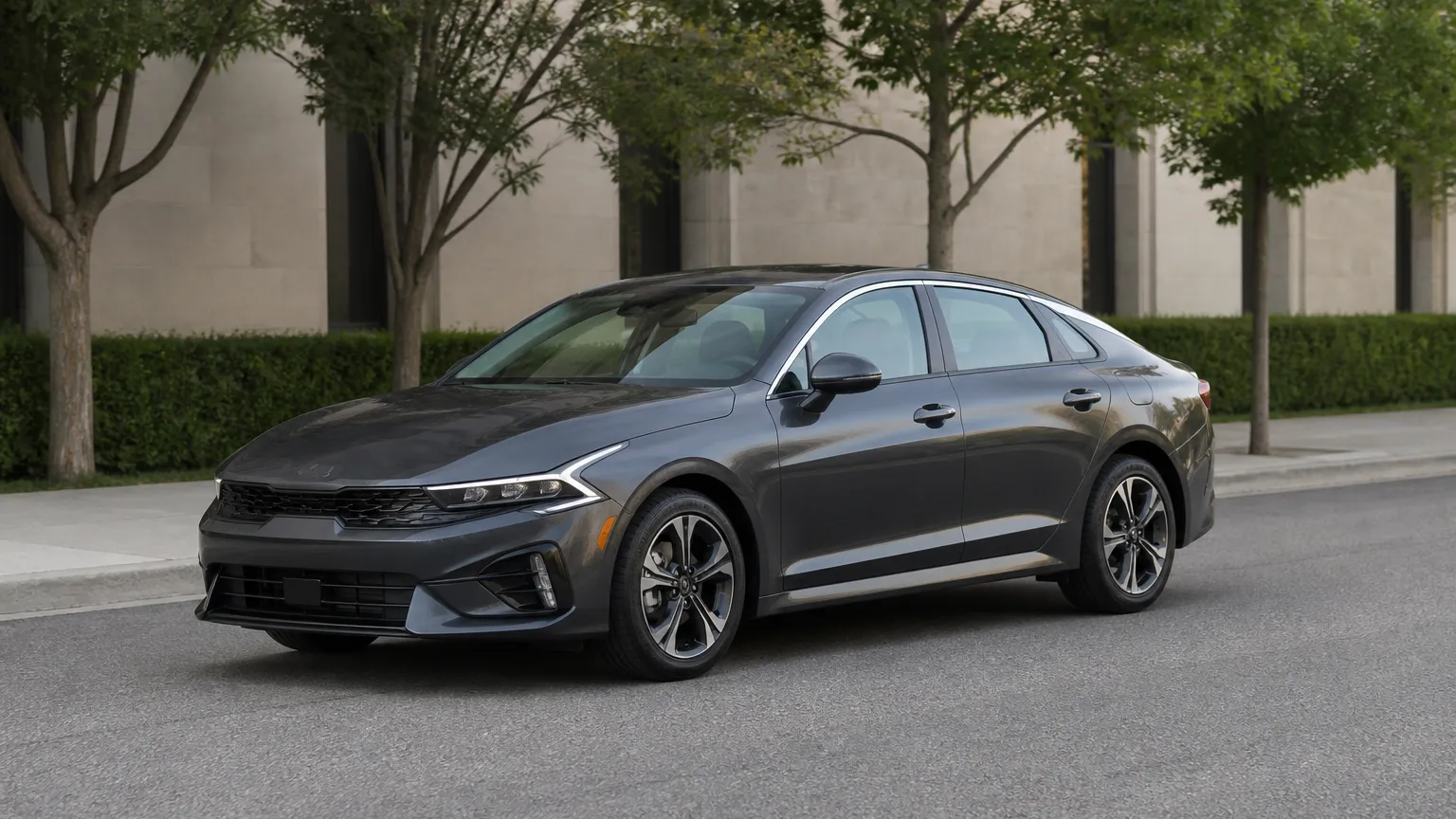
The Kia K5 is a genuinely solid mid-size sedan, but its earliest model years carry a cluster of safety recalls and owner complaints you should know about before buying used. The 2022 Kia K5 has the most overall complaints, and CarComplaints also rates 2022 as the worst model year ranked on factors such as repair cost and average mileage when problems occur. This guide uses NHTSA complaint data, CarComplaints PainRank figures, and recall records to show you exactly which years to skip and which to seek out.
For generations, engines, and ownership notes in one place, see the Kia K5 hub.
Related: Kia Optima years to avoid, Kia Forte years to avoid.
At a glance
- Worst years
- 2021
- 2022
- Best years
- 2024
- 2025
- Top failure
- Transmission electric oil pump (EOP) failure causing sudden loss of drive power on 2021-2023 K5s with the 2.5L T-GDI engine (NHTSA recall 22V-760 / Kia SC250)
- Always do before buying
- Run the VIN through NHTSA's recall checker to confirm every open campaign is closed, and on 2021-2023 cars with the 2.5L turbo, verify recall 22V-760 has been completed at a dealership
Recalls by year
How we rated the best and worst Kia K5 years
The 2022 Kia K5 ranks as the worst model year on CarComplaints.com due to its high overall complaint count and poor scores on repair cost and mileage-at-failure, while NHTSA raw complaint volume data points to 2021 as the most problematic year by sheer volume of filings. These are different datasets measuring different things: CarComplaints ranks a “worst year” using its PainRank system, which weights repair cost and the mileage at which problems appear, while NHTSA shows the raw number of complaints owners have filed with the federal government. The two sources often point to different years, so this guide attributes each claim to the correct source throughout.
Our years to avoid methodology combines NHTSA complaint volume, CarComplaints PainRank scores, recall records, and Consumer Reports reliability data to produce a consistent verdict across all model years. Data sources used here include NHTSA complaints and recall records, CarComplaints for PainRank and per-year complaint counts, Consumer Reports reliability scores, and IIHS crash-test results.
| Kia K5 Generation | Best Kia K5 Years | Worst Kia K5 Years |
|---|---|---|
| 1st gen / 5th-gen Optima rebranded (2021-2023) | None | 2021, 2022 |
| 1st gen facelifted (2024-present) | 2024, 2025 | None |
Every Kia K5 model year ranked
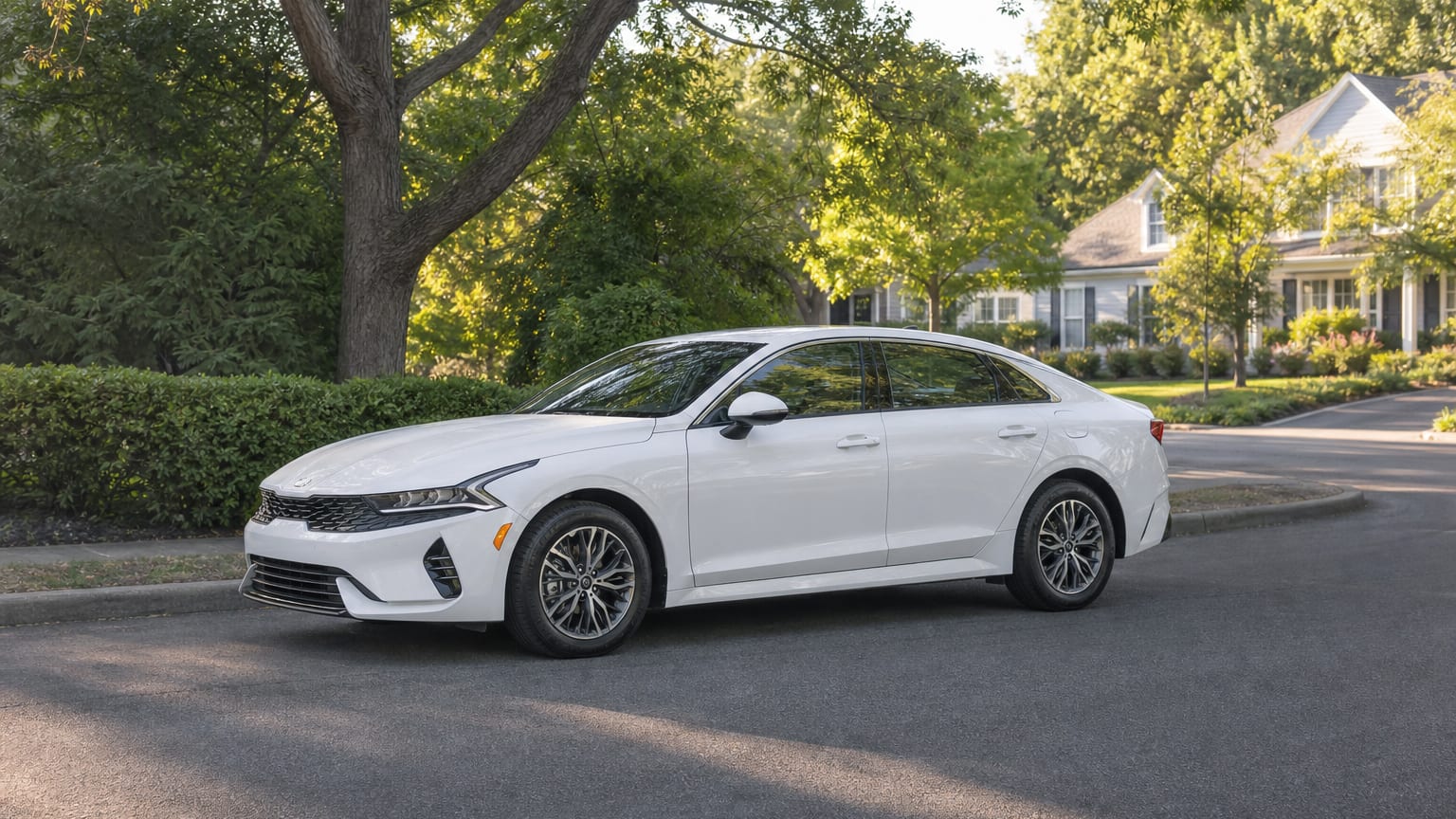
The Kia K5, spanning model years 2021 to 2026, shows a notable improvement in reliability, with initial years exhibiting issues primarily with the electrical and fuel systems, while later models, particularly 2024 onward, demonstrate significantly fewer complaints.
| Model Year | Generation | Verdict | Notes |
|---|---|---|---|
| 2021 | 1st gen (original) | Avoid | Highest NHTSA complaint volume; fuel, airbag, and transmission recalls |
| 2022 | 1st gen (original) | Avoid | CarComplaints worst year; 175 reported problems, 8 recalls |
| 2023 | 1st gen (original) | OK/Mixed | Complaints drop sharply to 54; transmission EOP recall still applies |
| 2024 | 1st gen (facelifted) | Best | 20 owner complaints, 2 recalls; fewest complaints in the lineup |
| 2025 | 1st gen (facelifted) | Best | 29 owner complaints, 2 recalls; 5-star NHTSA overall rating |
| 2026 | 1st gen (facelifted) | OK/Mixed | 11 NHTSA complaints, 1 recall; too new for full data |
Most common Kia K5 problems
The single biggest documented failure on the Kia K5 is the transmission electric oil pump fault on 2021-2023 models with the 2.5L T-GDI engine, which triggered a federal safety recall covering more than 69,000 vehicles. Beyond that, owners across all years have reported fuel system concerns, electrical and infotainment glitches, premature brake wear, and side curtain airbag deployment failures.
1. Transmission electric oil pump (EOP) failure - sudden loss of drive power
On 2021-2023 Kia K5 models equipped with the 2.5L T-GDI engine and 8-speed dual-clutch transmission, a supplier soldering defect can cause an internal electric oil-pump circuit-board fault. The vehicle may chime, display “stop safely immediately,” illuminate the malfunction indicator light, and then lose motive power when the transmission disengages its drive gears.
Kia recalled over 69,000 2021-2023 K5s and 2021-2022 Sorentos. The NHTSA report states the oil pump in the transmission can fail due to a production defect at the supplier, and the failed oil pump can lead to a complete loss of power while driving. This campaign is NHTSA recall 22V-760, Kia recall number SC250. Under the recall, dealers inspect and replace the transmission as necessary, and also update the transmission control unit software, all free of charge.
If the dealership tries to blame the failure on the consumer rather than the recall defect, an out-of-pocket transmission and electric oil pump replacement can cost over $5,000. Before buying any 2021-2023 K5 with the 2.5L turbo, confirm this recall is closed on the specific VIN. This recall only affects vehicles equipped with a 2.5L turbo gasoline engine and an 8-speed dual-clutch transmission.
2. Fuel system issues - fuel leak and fuel tank fire risk
Kia recalled certain 2021 Sorento and 2021-2022 K5 vehicles equipped with 2.5L turbocharged engines because fuel may leak at the pipe connection between the high-pressure fuel pump and fuel rail. That campaign is NHTSA 21V-519, Kia SC214, and owners were notified in July 2021. Dealers inspect and tighten, or replace the fuel pipe as necessary, free of charge.
A separate, later recall (NHTSA 26V-046, Kia SC361) affects certain 2021-2024 K5 vehicles. A damaged check valve can allow air to enter the fuel tank, causing it to expand and contact hot exhaust components, melting the tank. A melted fuel tank can leak, increasing the risk of a fire. Dealers will replace the check valve, inspect the fuel tank for damage, and replace it as necessary, free of charge.
Across the K5’s production run, fuel system issues account for 90 NHTSA complaints, making it the single most common complaint category fleet-wide. Both recalls are free repairs at any Kia dealer; use the NHTSA VIN recall checker to confirm status.
3. Side curtain airbag non-deployment
Kia recalled certain 2021-2023 K5 vehicles because the side curtain air bags may have been installed incorrectly, causing them not to deploy properly in the event of a crash. Air bags that do not deploy as intended can increase the risk of injury. This is NHTSA campaign 23V-149, Kia SC263. Dealers inspect and reinstall the side curtain air bags as necessary, free of charge. Owner notification letters were mailed April 7, 2023.
Seven separate NHTSA complaints on the 2021 K5 GT-Line cite airbags failing to deploy in moderate collisions, some resulting in significant occupant injuries. These incidents occurred despite the presence of frontal and side-curtain airbags, until Kia issued the dedicated recall in 2023.
Buyer takeaway: any 2021-2023 K5 you consider must have recall SC263 completed. An SRS warning light after a minor impact is a red flag that the airbag module should be inspected before purchase.
4. Electrical system and infotainment glitches
The 2021 Kia K5 has 113 problems reported by owners on CarComplaints, with the worst complaints falling in the AC/heater, electrical, and engine categories. Consumer Reports rated the 2021 K5’s common trouble spots as power equipment (1.0 out of 5.0) and in-car electronics (1.0 out of 5.0).
Owners of the 2025 Kia K5 frequently report experiencing electrical system failures, particularly involving the sudden loss of headlights, dashboard indicators, and infotainment systems while driving. These issues often occur without warning and can last for a brief moment, though some owners have experienced repeated occurrences over a period of more than a year.
The infotainment freezing and CarPlay/Android Auto dropout pattern spans all K5 model years and is the most common non-safety-critical complaint. A software update from the dealer often resolves minor glitches; persistent failures may indicate a deeper wiring fault. Electrical faults account for 78 NHTSA complaints across the K5’s run, with 2.6% of those involving a crash.
5. Phantom braking from Forward Collision Avoidance Assist (FCA)
On the 2021-2024 Kia K5, multiple owner reports and NHTSA complaints document unexpected, uninitiated hard braking events triggered by the Forward Collision Avoidance Assist system in the absence of any actual obstacle. These phantom braking events occur most commonly on highways, elevated roads, or in areas with overhead signs, bridges, or guardrails.
This fault is a safety concern at highway speeds and has generated complaints across multiple model years. A software calibration update is the typical dealer fix; ask whether it has been applied on any used K5 you inspect.
6. Premature brake wear and warped rotors
Premature brake wear and warped rotors are a recurring complaint across K5 model years. OEM tires also wear out quickly on the K5, with some rubbing against fenders causing damage.
Brake rotor warping tends to show up as a soft or pulsating brake pedal under moderate deceleration. On a used K5, check the rotor surface visually for deep grooves or scoring, and ask for brake service records. Replacement rotors and pads for the K5 run roughly $200-$400 per axle at an independent shop.
Which Kia K5 years should you avoid?
The Kia K5 years to avoid are 2021 and 2022. CarComplaints rates 2022 as the worst model year on repair cost and average mileage when problems occur, while NHTSA complaint volume data shows 2021 as the most problematic year, with high complaint volumes linked to fuel system issues. Both years share the most serious recalls, including the transmission EOP campaign (22V-760) and the fuel leak recall (21V-519).
| Kia K5 Generation | Model Years | Verdict | Main Issues |
|---|---|---|---|
| 1st gen original (2021-2023) | 2021, 2022 | Worst | EOP transmission recall, fuel leak, airbag non-deployment, high complaint volume |
| 1st gen original (2021-2023) | 2023 | Mixed | Transmission EOP recall still applies; complaints drop sharply |
| 1st gen facelifted (2024-present) | 2024, 2025 | Best | Fewest complaints and recalls in the lineup |
1st-generation Kia K5 (2021-2022)
The 2022 Kia K5 has 175 problems and defects reported by K5 owners, with the worst complaints in fuel system, brakes, and exhaust system problems. The 2022 K5 carries 195 NHTSA complaints and 8 recall campaigns.
The 2021 Kia K5 has 113 problems reported on CarComplaints, with the worst complaints in AC/heater, electrical, and engine categories. The 2021 model year also carries the most individual recall campaigns, as it is the first production year and accumulated the broadest set of early-build defects, including the airbag restraint module recall (Kia SC207, NHTSA 21V-164) covering child seat detection, in addition to the fuel leak and transmission recalls shared with 2022. Both years should only be purchased after all open recalls are confirmed closed on the specific VIN at NHTSA’s complaint database.
What are the best Kia K5 years to buy?
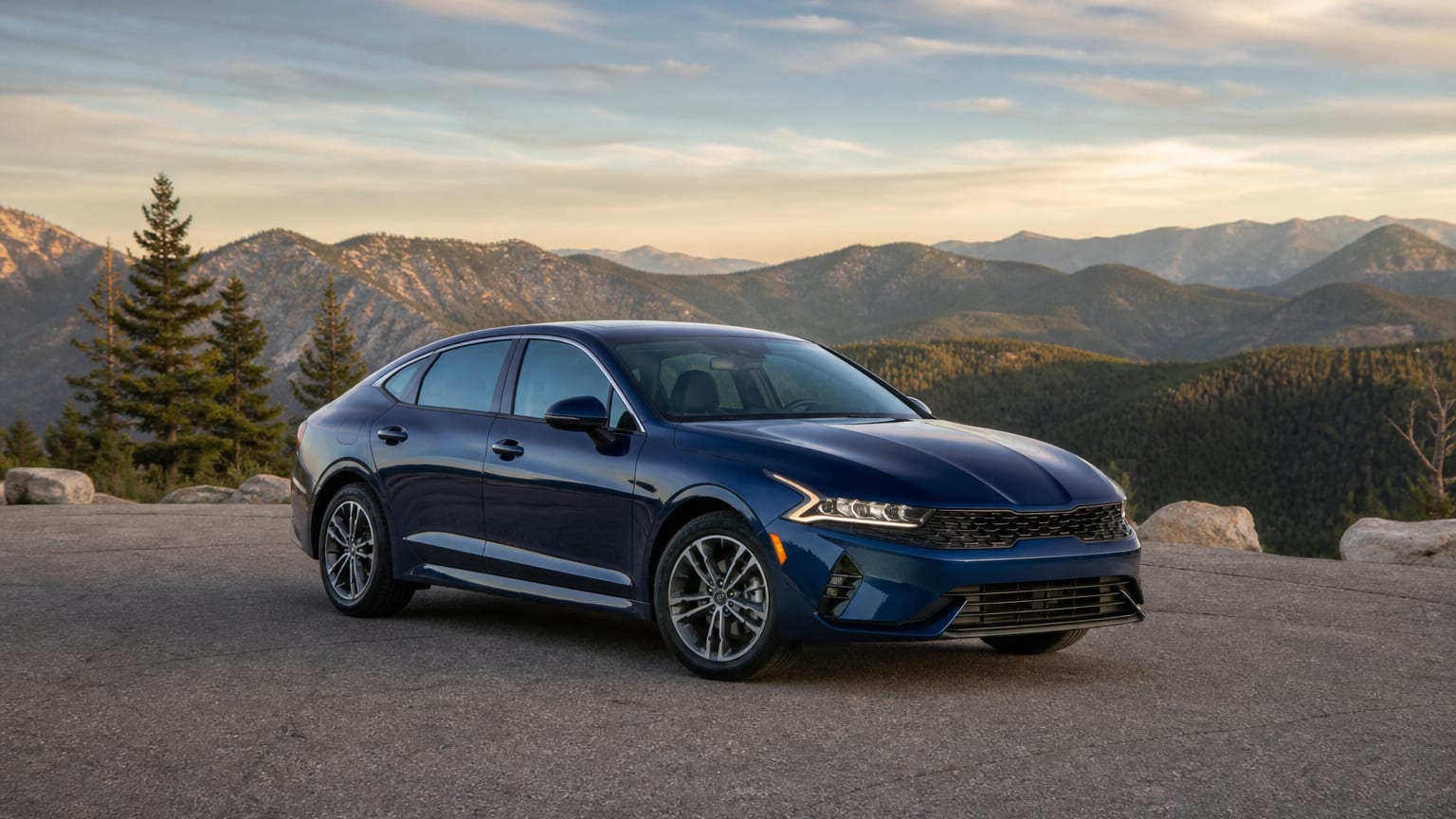
The best Kia K5 years are 2024 and 2025, as these later models demonstrate significantly fewer complaints and higher reliability scores, making them best suited for buyers prioritizing high safety ratings and reduced complaint rates.
| Best Kia K5 Year | Why It's a Strong Buy | 2024 |
|---|---|---|
| Only 20 owner complaints, 2 recalls; early EOP recall addressed in prior years | 2025 | 29 owner complaints, 2 recalls; 5-star NHTSA overall safety rating |
Most reliable Kia K5 years: 2024, 2025
2024 Kia K5
The 2024 KIA K5 has a “Good” reliability rating, is reasonably reliable with 2 recalls and 20 owner complaints, though some issues have been reported. The transmission EOP recall (22V-760) that plagued 2021-2023 cars carries over to the 2024 model in a separate fuel tank check valve campaign (26V-046 / SC356), but at just 20 owner-reported problems, the 2024 is measurably quieter than any prior K5 year.
2025 Kia K5
The 2025 Kia K5 received an overall 5-star safety rating from NHTSA, with a 4-star frontal crash, 5-star side crash, and 4-star rollover rating. The 2025 KIA K5 has a “Good” reliability rating with a score of 79/100 and is reasonably reliable with 2 recalls and 29 owner complaints. For used buyers, the 2025 represents a K5 that has moved past the problematic first-generation recall clusters while retaining the same strong safety scores.
Kia K5 submodel years to avoid The Kia K5 GT is the only distinct performance submodel in the K5 lineup; here is its own record separate from the standard K5.
Kia K5 GT years to avoid The Kia K5 GT uses a 2.5-liter turbocharged gasoline direct injection engine (T-GDI) paired with an 8-speed wet dual-clutch transmission (DCT), making it a mechanically distinct car from the base K5’s naturally aspirated 1.6L turbo and 8-speed automatic. The GT reaches 60 mph in only about six seconds, but it is not available with all-wheel drive, so all that power tends to overwhelm the front tires.
The GT’s specific concern is that its 2.5L T-GDI and 8-speed DCT pairing is exactly the powertrain covered by the transmission EOP recall (22V-760 / SC250) described above. This recall only affects vehicles equipped with the 2.5L turbo gasoline engine and 8-speed dual-clutch transmission - which is the GT’s standard setup. The GT-Line trim at lower trims uses a different 1.6L turbo and conventional 8-speed automatic, so it is not subject to the same DCT oil pump defect.
- Check any 2021-2023 K5 GT VIN for open recall 22V-760 before purchase; a dealer must confirm it has been inspected and the TCU software updated.
- A Kia dealer or qualified transmission specialist should confirm the vehicle is a K5 GT with the 2.5L T-GDI wet DCT and perform Kia’s KDS 8 Wet Type DCT Judder Test. Kia’s procedure replaces the dual-clutch assembly only when the test indicates replacement.
- No K5 GT model year has accumulated a separate, GT-specific complaint cluster beyond the EOP recall it shares with other 2.5T K5 variants. The 2024-2025 GT years sit outside the EOP recall window and are the safer used choices in this trim.
Kia K5 pre-purchase checklist
Before buying any used Kia K5, run through these model-specific checks:
- VIN recall check: Run the 17-digit VIN through NHTSA’s recall database and confirm every open campaign is closed. Pay particular attention to 22V-760 (EOP transmission), 21V-519 (fuel pipe leak), 23V-149 (side curtain airbag), and 26V-046 (fuel tank check valve on 2021-2024 cars).
- Transmission test drive on 2021-2023 2.5T models: On any K5 GT or 2.5T-equipped car from 2021-2023, confirm recall 22V-760 is closed before purchase. During the test drive, listen for audible chimes or “stop safely immediately” warnings, which signal the EOP fault is active.
- Airbag system check: The side curtain air bags on 2021-2023 K5s may have been installed incorrectly, and those that do not deploy as intended increase the risk of injury in a crash; confirm SC263 is complete on any car from those years.
- Fuel system inspection: On 2021-2022 K5s with the 2.5L turbo, check for any fuel smell at idle or after shut-down, which can indicate an unresolved fuel pipe leak from recall 21V-519.
- Brake inspection: Check rotors for scoring or blue heat marks, signs of the premature wear pattern reported across multiple K5 years. Ask for brake service records.
- Infotainment software version: Ask the selling dealer to confirm the infotainment and FCA software are up to date; phantom braking events and CarPlay dropouts are often resolved by a calibration update.
- Full service records: The Kia K5 has maintained high scores for reliability and dependability since its U.S. debut, so a well-documented service history is a reliable indicator the car has been maintained properly. Our editorial guidelines for vehicle research require that every verdict in this guide be traceable to a primary data source such as NHTSA, CarComplaints, or IIHS, so you can verify any claim independently.
- Independent pre-purchase inspection: A third-party mechanic inspection ($100-$200) can catch undisclosed transmission fluid leaks or early water pump issues that are not visible on a short test drive.
Better alternatives to consider
If the K5 years in your budget land on the 2021-2022 avoid list, consider these cross-shop options in the same mid-size sedan class:
- Kia Optima - the K5’s direct predecessor; a longer production run gives more model years to choose from, and the post-2017 versions resolved the worst Theta II engine issues
- Kia Rio - a smaller, lower-cost Kia sedan that shares the brand’s strong reliability reputation with a more established complaint record for used buyers to evaluate
- Honda Accord - a longer-tenured mid-size sedan with a well-documented year-by-year reliability record and a wider used inventory at most price points
- Toyota Camry - the benchmark mid-size sedan for low long-term repair costs, with Consumer Reports reliability data spanning decades of model years
Is the Kia K5 worth buying?
Yes, the Kia K5 is worth buying, provided you stick to 2024 or 2025 or verify that all major recalls are closed on a 2021-2023 car before signing. Throughout its production run, the Kia K5 received a five-out-of-five overall safety rating from NHTSA, with four stars for frontal crash and rollover protection. The 2021 and 2022 K5 were named IIHS Top Safety Pick+, the Institute’s highest honor, so even the avoid years are structurally sound - the problem is the recall backlog, not the crash cage. Stick to 2024-2025 for the fewest ownership headaches, run the VIN through the NHTSA recall checker, and verify a full maintenance history before purchase.