
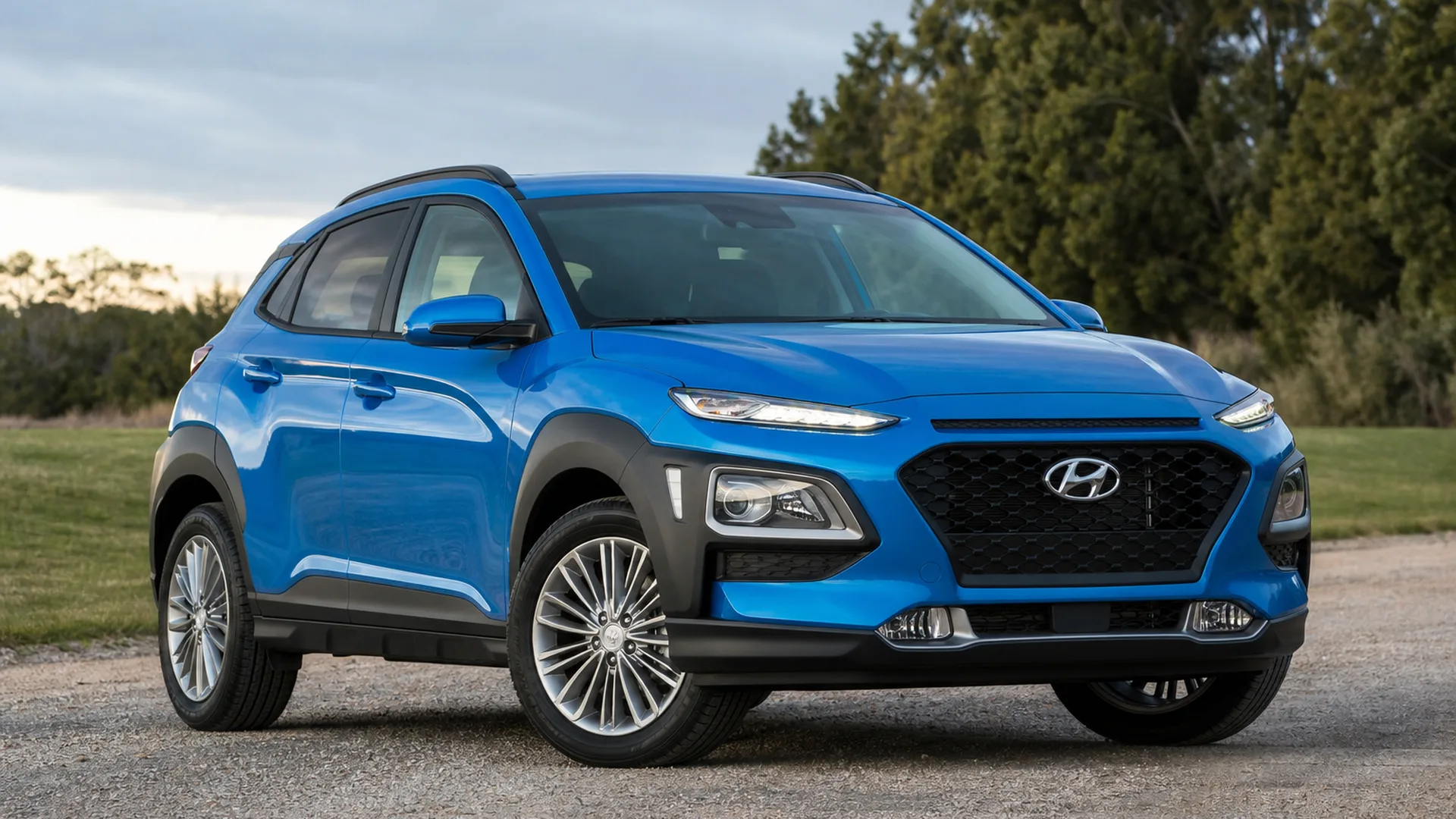
If you’re shopping for a used small SUV, understanding the Hyundai Kona years to avoid can save you from costly headaches later on. The Kona earned praise for its sharp design, fun handling, and available hybrid and electric variants, making it one of Hyundai’s most popular subcompact SUVs.
But not every model year delivers the same level of reliability. Certain Konas—especially early versions—have been hit with serious engine problems, EV battery fires, and expensive recalls that hurt their reputation.
The worst Hyundai Kona years to avoid are 2019 and 2018, known for severe engine problems, electrical faults, and widespread EV battery fires that led to massive recalls. The best Hyundai Kona years to buy are 2022 and 2023, which benefited from major reliability improvements, refreshed design, and far fewer complaints. If you’re considering a used Kona, the 2021 model can also be a safe pick—just verify that all recall work has been completed before you buy.
How we rated the best and worst Hyundai Kona years
Our team analyzed data from multiple authoritative sources to give you the complete picture on Kona reliability. We pulled recall information from the NHTSA database, reviewed Hyundai’s official service bulletins, and examined reliability ratings from Consumer Reports and J.D. Power. We also combed through thousands of owner complaints on forums and platforms like CarComplaints to identify patterns of problems across different model years.
The research revealed some eye-opening statistics: over 75,000 Kona Electric vehicles were recalled globally for fire-prone batteries, while approximately 10,000 gasoline Konas needed engine inspections or complete replacements due to defective piston rings. We cross-referenced this official data with real-world owner experiences to identify which years present the highest risk for buyers.
Most Common Hyundai Kona Problems
Before diving into the details, it’s important to understand the key issues that have affected Hyundai Kona reliability across both gas and electric versions. While the Kona quickly gained popularity for its affordability and modern design, several early model years were marred by major mechanical and electrical defects. The most frequent complaints involve premature engine failure, EV battery fires, transmission faults in performance models, and air conditioning system breakdowns. Below is a detailed look at the most notable problem areas reported by owners and documented by official recalls.
1. Engine Failures in Gas Models (2019–2021)
One of the most serious problems affecting the Kona involves catastrophic engine failure in models equipped with the 2.0L gasoline engine. Hyundai discovered that the piston oil rings were improperly heat-treated, causing excessive oil consumption and internal wear. Many owners began noticing high oil usage around 50,000–60,000 miles, followed by knocking sounds and sudden power loss.
Left unaddressed, the issue often led to complete engine seizure, with replacement costs averaging around $4,000–$4,500. Hyundai issued a major recall in 2021 to inspect and replace defective engines in affected 2019–2021 vehicles. However, many owners had already paid out of pocket before the recall campaign was launched.
2. EV Battery Fire Risk (2019–2020 Kona Electric)
The Hyundai Kona Electric made headlines worldwide due to its battery fire risk. More than 75,000 Kona EVs were recalled globally after numerous reports of spontaneous combustion linked to defective lithium-ion cells produced by LG Chem. These cells could short-circuit internally, potentially igniting the entire battery pack.
Initial software updates aimed at limiting charge capacity failed to prevent additional incidents. As a result, Hyundai ultimately replaced entire battery packs in affected vehicles. Until those replacements were completed, owners were advised to park outside and restrict charging to 90% capacity for safety reasons.
3. Transmission and Drivetrain Issues in Performance Models
The sportier Kona N and N Line variants experienced separate drivetrain problems due to an electrical fault in their 8-speed dual-clutch transmission. The issue could cause the transmission to unexpectedly shift into neutral while driving—posing a serious safety risk, particularly at highway speeds.
Hyundai recalled affected 2021–2022 models and replaced faulty transmission control modules under warranty. Although this issue was limited to higher-performance trims, it highlighted quality control challenges even in newer Konas.
4. Air Conditioning System Failures (2020–2021 Models)
A large number of 2020 and 2021 Kona owners reported premature air conditioning compressor failures, sometimes occurring in vehicles with fewer than 15,000 miles. The compressors either seized or leaked refrigerant, leaving drivers without cooling during warm weather.
While Hyundai covered many of these repairs under warranty, out-of-pocket costs could reach $1,000–$1,500. Buyers considering used Konas from these years should ensure that the air conditioning system functions properly and that any compressor replacement has been documented.
5. Minor Electrical and Software Glitches
In addition to major mechanical problems, several owners have reported smaller but persistent electronic issues—such as infotainment system reboots, flickering displays, and malfunctioning safety alerts. Although these faults rarely affect drivability, they can become costly to diagnose once warranties expire. Hyundai addressed most of these problems through software updates and warranty service campaigns in later years.
Worst Hyundai Kona years to avoid
2019: The Worst Year Overall
Skip 2019 Konas entirely if possible. This model year combined the worst engine problems with the introduction of fire-prone EV batteries. CarComplaints rates 2019 as the absolute worst Kona year because the issues were both expensive and dangerous.
Gas models faced engine failures that could cost thousands to fix. EV models were part of the massive battery recall. Even fuel pump issues cropped up, adding another potential $1,200 repair bill. The combination of multiple serious problems makes 2019 a year to avoid completely.
2018: First-Year Growing Pains
While not as catastrophic as 2019, the 2018 Kona logged more owner complaints than any other year. The blind-spot warning system would randomly shut off while driving – a serious safety concern. Owners also reported quirky electrical issues like the radio changing stations by itself.
These problems were mostly annoying rather than dangerous, but the higher complaint count puts 2018 on the caution list for used car buyers.
The Borderline Year: 2020
The 2020 Kona sits in a gray area. Hyundai had started implementing improvements, but this year was still caught up in the major recalls. Both the engine recall and EV battery replacement programs included 2020 models.
Here’s the thing though – if a 2020 Kona has documented proof that recall work was completed, it could actually be a decent buy. You’d essentially get a new engine or battery pack that should last for years to come. Just make sure you verify the repairs were actually done before purchasing.
Best Hyundai Kona years to Buy
2021: Where Things Started Looking Up
By 2021, most of the major issues were being addressed. J.D. Power gave the 2021 Kona an 82/100 reliability score, putting it in “about average” territory. While still technically part of the engine recall, many 2021s received fixes during pre-sale inspections.
2022-2023: The Sweet Spot
These are your best bets for a reliable used Kona. The 2022 model received a mid-cycle refresh with updated styling and new tech features. More importantly, it was largely free from the problems that plagued earlier years.
The 2023 was essentially the perfected version of the first-generation Kona. By this point, all major issues had been resolved, and owner complaints dropped to minimal levels. If you can find a used 2023 (they’re still pretty rare), it’s an excellent choice.
Better Alternatives If Kona Scares You Off
Honda HR-V: The Reliable Choice
Honda’s subcompact SUV lacks the Kona’s sporty character but offers bulletproof reliability. During 2018-2019 when Konas were having engine troubles, the HR-V sailed through with virtually no major issues.
Mazda CX-30: Style Meets Dependability
The CX-30 launched around the same time Kona was dealing with recalls, yet Mazda managed to avoid large-scale problems. Plus, the interior quality often beats the Kona’s.
Toyota Corolla Cross: Boring But Bulletproof
It won’t win any excitement awards, but Toyota‘s small SUV maintains the brand’s reputation for reliability. No engine sagas or battery fires to worry about here.
Quick Reference: Best and Worst Years
Avoid These Years:
- 2019 – Engine failures and EV battery fires (worst year)
- 2018 – First-year bugs and electrical issues
Proceed with Caution:
- 2020 – Recall-heavy but acceptable if repairs documented
Safe Bets:
- 2021 – Solid reliability, modern features
- 2022-2023 – Best years of first generation
What to Check Before Buying
If you’re considering a used Kona from any year, here’s your checklist:
- Run the VIN through NHTSA’s recall database
- Get written proof that any applicable recalls were completed
- Test the AC thoroughly – make sure it blows consistently cold
- Check headlights for condensation or moisture
- Verify all software updates were installed on 2018-2019 models
Is the Hyundai Kona worth buying?
The Hyundai Kona can be a great small SUV, but timing matters. Avoid 2019 completely and be cautious with 2018 and 2020. Focus your search on 2021-2023 models for the best balance of features, reliability, and value.
Remember, even a problematic year Kona might be okay if all recall work was properly completed. Just make sure you have documentation to prove it. With the right model year and proper research, you can enjoy the Kona’s fun driving character without the headaches that plagued early owners.