
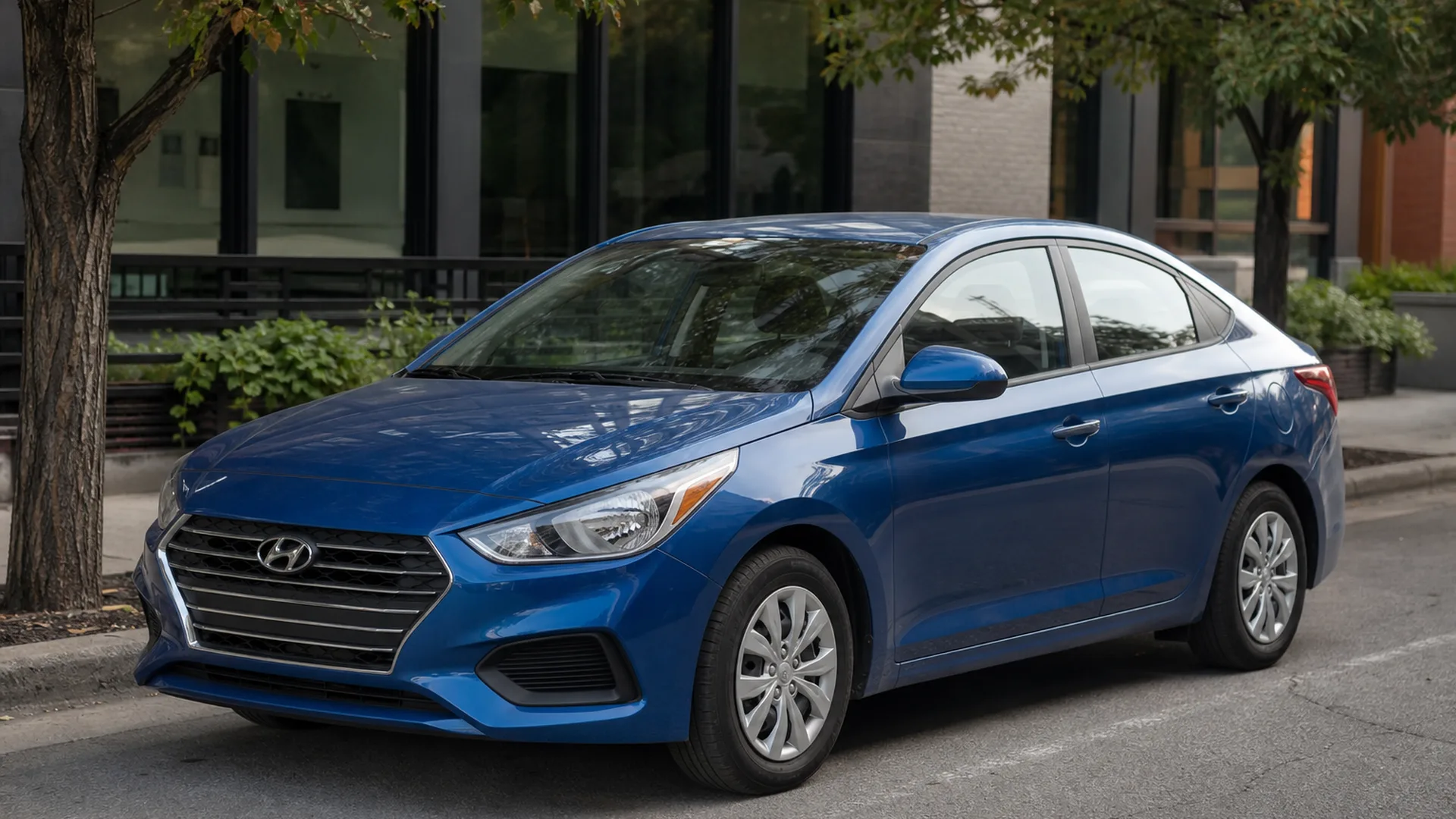
The Hyundai Accent is a car that hit a lot of good spots for buyers of affordable vehicles that still offer plenty of space and reliability.
However, the challenges that the Hyundai Accent years to avoid faced were enough to convince some drivers not to go for one of these, and in this guide, we'll explain why. Our team will focus on the best and worst Hyundai Accent years by their NHTSA submissions and complaints, official recalls issued by Hyundai, and common problems associated with them.
How we rated the best and worst Huindai Accent years
Exploring the best and worst Hyundai years was a bit of a challenge since our experts had to balance between trustworthy automotive sites and first-hand driver experiences to figure out the exact problematic years.
We did our best to make this guide from an unbiased perspective on the model, and Accent reviews on Edmunds, KBB, Consumer Reports, and other car review platforms also helped us. Of course, we double-checked everything through official reports on the model’s reliability, so here’s what it looks like when it comes to the best and worst Accent years:
| Hyundai Accent Generation | Best Hyundai Accent Generation | Worst Hyundai Accent Generation |
|---|---|---|
| 2nd generation | 2001, 2003 | 2002, 2004 |
| 3rd generation | 2006, 2007, 2008 | 2010, 2011 |
| 4th generation | 2015 | 2012, 2013, 2014, 2017 |
| 5th generation | 2018, 2019, 2020 | N/A |
Most common Hyundai Accent problems
Having in mind that the Accent was in production for five generations and nearly 30 years, there weren’t many problems associated with the model. Of course, it’s difficult to make a car in the affordable price range that will never require visiting the mechanic. One of the main problems that were prevalent for this model was the issue of a bad brake master cylinder and faulty brake among other common issues that we’ll explain.
1. Braking system problems
One of the main problems with the Hyundai Accent is the braking system fault. It happens for a few reasons and one of the main ones is the bad brake master cylinder. In case the master cylinder fails, the brake pedal goes to the floor and there’s simply no braking pressure.
You can probably guess how dangerous this situation could get, and this mostly happens due to brake fluid leaks or simply completely seized cylinders. Another problem with the braking system on an Accent is the faulty brake switch. Because of this, the brake lights don’t illuminate as you step on the brake, and while it doesn’t make a major mechanical threat, it’s an important signal for the drivers driving behind you.
2. Engine overheating and coolant leaks
Cooling system leaks are among the worst things that could happen while driving, and the fourth-gen and fifth-gen Accent models with the 1.6-liter engine were plagued by this issue. This often led to the engine overheating and a considerable rise in operative temperature. If left unattended, this issue often even led to engine stalling and complete rebuilds.
Coolant leaks can also be quite troubling for diagnosis since drivers reported several components to be the source of the leak. From the coolant hoses to radiator caps, it should all be inspected and thoroughly checked.
Even though many drivers complain about these leaks, there was never an official recall and that means you have to be extra careful when buying a used Accent.
3. Problems with the automatic transmission
Another common issue that we often see reported by Hyundai Accent drivers is regarding the 4-speed automatic transmission. We’ve seen a fair share of these issues reported including rough gear shifts and transmission slipping.
The problematic four-speed automatic transmission was finally replaced in the fourth generation, so this problem is mostly present in the earlier generations. To tackle this issue, your only hope is to frequently check transmission fluid level and have a trusted mechanic inspect it. A rebuild isn’t cheap, so it’s better to go with a five-speed manual if you are considering second and third-generation Accent cars.
4. Failing throttle position sensor
In modern cars, several crucial sensors monitor various factors that the ECU later on uses for controlling the combustion cycle. One of these is the throttle position sensor and it’s sadly prone to failure on the modern Accent models.
Some symptoms of a bad throttle position sensor include idle surges, sluggish acceleration, and the check engine light may show up. It can be a big problem since the air-to-fuel ratio simply won’t be right in case the sensor fails, and that leads to combustion problems and potential engine problems.
Worst Hyundai Accent years to avoid
It’s always useful to get some insight into the major problems of a certain car model before you decide whether to buy it or consider other options. However, that won’t do you much good on its own unless you go the extra step to find the exact model years that should be avoided. So, what are the worst Hyundai Accent years?
The worst Hyundai Accent years are 2012 and 2013, but you should also consider avoiding these model years:
- 2002
- 2004
- 2010
- 2011
- 2012
- 2013
- 2014
- 2017
Don’t worry - our team will help you with that as we go through the model years you should avoid from each generation.
Second-generation Hyundai Accent (2002 and 2004 model years)
The first problems with the Hyundai Accent as a model began with the second generation. Precisely, the 2002 and 2004 model years were considered the worst, and the 2002 drew 134 NHTSA complaints, the most of the second generation.
The 2004 model year drew complaints about faulty brake switches and the troublesome four-speed automatic transmission. The overall quality of the car was pretty good and the current market price makes this model a decent pick as long as you go with the manual one.
Third- and fourth-generation Hyundai Accent (2010-2014 model years)
The third generation of the Accent was pretty much reliable except for the issues with the automatic transmission, but things got a bit worse with its last years and the early fourth-gen cars that arrived for 2012. From the 2010 model year to the 2014 model year, we’ve seen a plethora of issues starting with the brake switch, brake master cylinder, and the airbag issue.
What truly made the fourth generation look bad are the 2012 and 2013 model years, with 153 and 142 NHTSA complaints, the most of any Accent. It was mostly affected by transmission problems and airbag issues, so owners have rated it as the worst option when it comes to driving safety.
Late fourth-generation Hyundai Accent (2017 model year)
The 2017 was the last fourth-generation Accent, and it drew 68 NHTSA complaints. It had problems such as a failing brake master cylinder, an inoperable trunk lid, and equipment labeling issues.
The fifth-gen models that followed are quite reliable, so you can get great reliability by simply going for any model from the fifth generation.
What are the best Hyundai Accent years to buy?
We are aware that all these listed issues and problematic model years may trigger the question of whether the Hyundai Accent is a reliable car at all. It can’t be helped since our team wanted you to have complete insight into its reliability by models and years, so it’s now time to go through the best years:
- 1997
- 1998
- 1999
- 2000
- 2001
- 2003
- 2005
- 2006
- 2007
- 2008
- 2015
- 2018
- 2019
- 2020
- 2021
The first generation of the Accent may be a bit outdated and old right now, but it’s the most reliable generation of the Accent along with the more recent fifth generation. The 1997 and 1998 model years stand out here, while the 2003 model was the most reliable second-gen Accent.
As for the third generation, it’s safest to go with the 2006 model year, and the safest model year for the fourth generation is 2015. Finally, the fifth-gen Accent (2018 to 2022) is pretty much the best generation along with the first one, so you’ll have no problems or additional repairs that need to be done except regular maintenance.
2015 Hyundai Accent
Following some of the worst consecutive Accent model years in the model’s entire production run, the 2015 Accent was surprisingly good. It didn’t have any leftover issues from previous years regarding the brakes and airbags, and the transmission was revised to prevent problems with the automatic gearbox.
It’s also one of the models that received the best overall feedback, so we can recommend it to interested buyers. It only received less than 100 complaints from NHTSA and Hyundai issued recalls to fix the issues with braking system and airbags, making this model one of the best options on the market.
Is the Hyundai Accent worth buying?
If you are looking for a compact four-door sedan with a fair amount of interior space and low maintenance costs, not many cars can compare with the Accent. It’s made to last and Hyundai knows how to create their cars in a way that’s appealing for owners, so you won’t have to visit the mechanic too often.
Overall, we can only appraise this model and give you a green light to go with the purchase. The final thing we’ll ask you to do is simply to follow this guide to prevent getting burned by the extra maintenance required by some of the worst model-year Accents.
Venturing into the realm of compact cars? Make sure to check articles like Kia Rio years to avoid, Chevy Sonic years to avoid, Chevy Spark years to avoid. Our exploration goes beyond mere specs and stats; we delve into the heart of what makes each of these cars a potential companion for your urban adventures.
What is the common problem of Hyundai Accent?
The common problem with the Hyundai Accent is the throttle position sensor fault, as well as the issue with the cooling system leaks.
Is Hyundai Accent a reliable car?
Yes, a Hyundai Accent is a reliable car and there are only a few unreliable model years like the 2012 and 2013 models.
What is the engine life of the Hyundai Accent?
A Hyundai Accent engine can last a long time with just regular timely maintenance.