
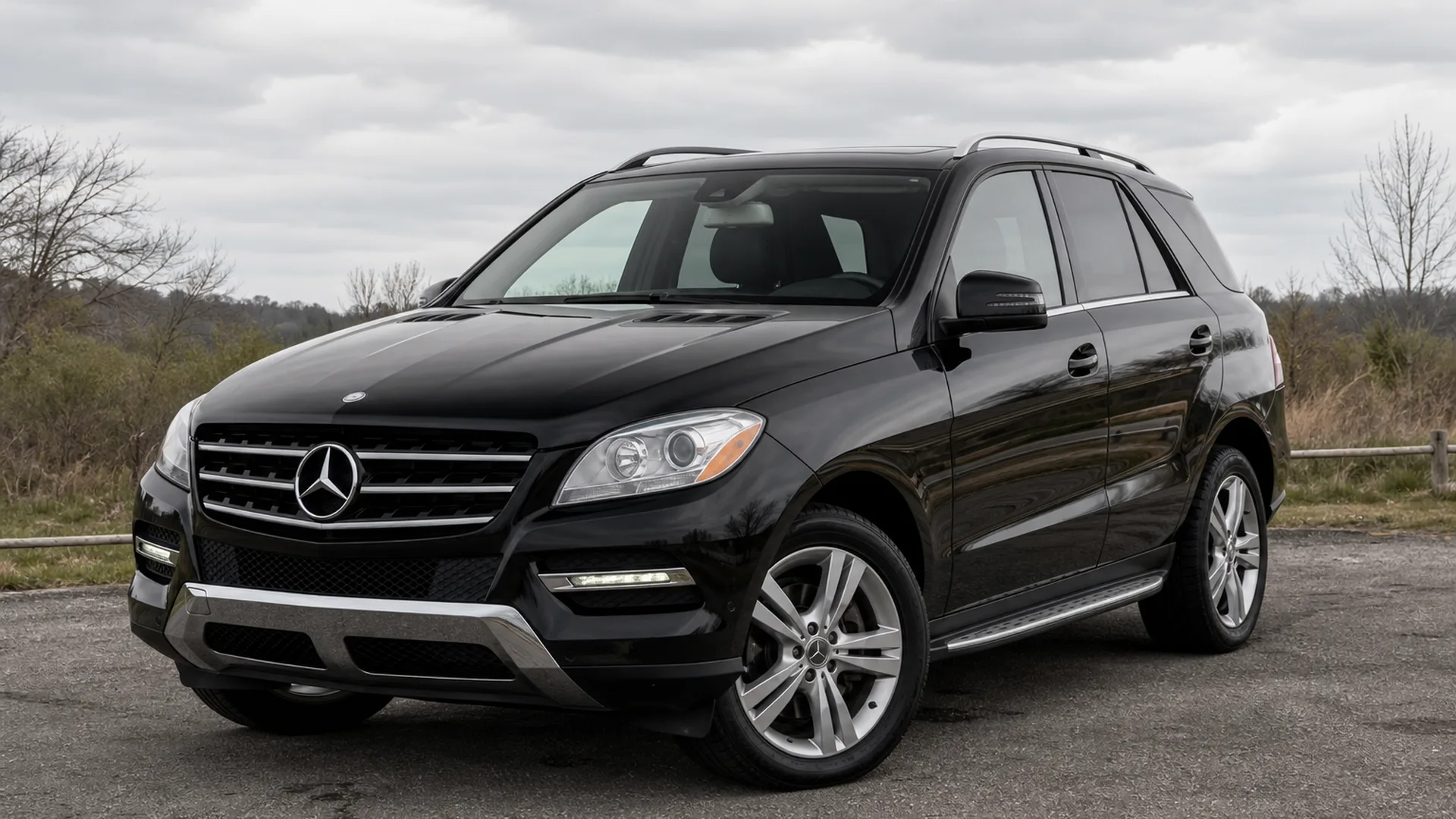
The Mercedes ML350 promised luxury SUV buyers the perfect combo of German engineering, comfortable seating for seven, and that coveted three-pointed star on the hood. But here’s the thing—some years delivered on that promise, while others left owners with repair bills that could fund a nice vacation. If you’re shopping for a used ML350, knowing which years to skip could save you thousands in headaches and unexpected garage visits.
How we rated the best and worst Mercedes ML350 years
Our team spent weeks analyzing NHTSA complaint databases, consumer reports, and real owner experiences from automotive forums. We cross-referenced recall data with mechanic feedback and repair cost estimates from trusted sources like RepairPal and CarComplaints.com.
We looked at both U.S. gasoline models and international diesel variants (often badged ML350 CDI or BlueTEC), since many of the core reliability issues affect both versions. Our focus centered on the most expensive failure points: engine problems, transmission issues, electrical gremlins, and suspension headaches that typically cost $3,000 or more to fix.
Most Common Mercedes ML350 Problems
Before we get into specific years, let’s talk about what tends to go wrong with these luxury SUVs. Understanding these patterns will help you spot red flags during your search.
1. Engine Troubles: The M272 V6 engine (used in 2006-2011 models) became infamous for balance shaft gear failures. When this component wears out, your engine timing goes haywire, triggering check-engine lights and potential stalling. The repair? Often $5,000+ since mechanics need to pull the engine apart. Later direct-injection engines weren’t immune either—camshaft adjuster solenoids would fail, and oil could leak into sensitive electronics.
2. Electrical Nightmares: Water intrusion plagued many ML350s, especially around the fuel pump module in the rear cargo area. When water gets into the SAM (signal acquisition module), you might experience anything from battery drain to complete electrical shutdown while driving. Some 2012-2014 models had oil seeping into wiring harnesses, frying expensive ECU components.
3. Air Suspension Headaches: The AIRMATIC system sounds great in theory—adjustable ride height and comfort. In practice, air springs leak, compressors fail, and the whole system can leave you stuck with a lopsided SUV. Individual corner repairs run $1,500-2,500, and full system replacement approaches $6,000.
4. Transmission Quirks: While not as notorious as the engine issues, valve body problems caused delayed shifts and rough operation. Transfer case failures also occurred, especially in early second-generation models.
Worst Cadillac XTS years to Completely Avoid
1998-2001 (First-Generation ML-Class)
These pioneering luxury SUVs were more like expensive science experiments. The 2000 and 2001 models accumulated hundreds of complaints about electronic stability control failures that would trigger limp mode—your ML would refuse to accelerate properly when ESC warning lights appeared. Steering problems were common too, from noisy power steering to complete rack failures. Build quality was inconsistent, with electrical gremlins and interior trim falling apart. Skip these entirely.
2006-2007 (Early Second-Generation)
The 2006 redesign brought fresh styling and the troublesome M272 engine. With over 250 owner complaints, 2006 stands as one of the worst ML350 years ever produced. Balance shaft gear failures were epidemic—owners reported sudden stalling and limp-home mode, often requiring complete engine rebuilds.
Beyond engine woes, these years suffered from differential failures, water leaks into the cabin, and bizarre electrical problems. One owner reported their ML wouldn’t shut off even after removing the key. A Mercedes forum moderator summed it up perfectly: “Stay away from 2006-2008 models. From the balance shaft issue to differential problems, they are just trouble.”
2012 (Third-Generation Launch)
First-year blues hit the redesigned W166 generation hard. The 2012 ML350 introduced direct injection and new electronics—both sources of expensive problems. Camshaft adjuster solenoids failed prematurely, causing persistent check-engine lights that sometimes couldn’t be fixed even after parts replacement.
Worse yet, engine oil found its way into wiring harnesses and ECU components, destroying sensitive electronics. Some owners experienced sudden highway stalling with no warning signs. Even after dealer repairs, intermittent power loss continued plaguing many 2012 models. This year represents a high-risk purchase.
2013 (Peak Problem Year)
CarComplaints.com actually rated 2013 as worse than 2006—not due to complaint volume, but because of repair severity and costs. The BlueTEC diesel models suffered catastrophic oil cooler leaks around 70,000-80,000 miles, typically requiring $6,000+ repairs when the seal under the turbo failed. Gasoline models weren’t much better, experiencing camshaft and timing chain problems similar to 2012.
Years Requiring Extra Caution
2004-2005 (Late First-Generation)
These final first-generation models got the 3.5L V6 (hence the ML350 name), but timing chain and balance shaft issues were already emerging. While more reliable than earlier models, expect potential engine problems that are expensive to fix properly.
2008 & 2011
The 2008 improved over 2006-2007 but still carried some balance shaft risk. The 2011 saw a spike in complaints despite being the final second-generation year, possibly related to new BlueTEC diesel integration and aging platform components.
2014 (Early Builds)
Later 2014 models were decent, but early production units (built in late 2013) suffered random electrical failures causing highway shutdowns. If considering a 2014, verify it’s a later build and check for completed recalls.
The Safer Choices
2015 ML350: Generally considered the most reliable ML350 year. As the final model year before the GLE rebrand, Mercedes had worked out most major bugs. Many owners report solid experiences with minimal unexpected repairs.
2009-2010: After fixing the worst 2006-2008 problems, these mid-cycle second-generation models offer better reliability while still being more affordable than 2015s.
Best Alternatives to the Mercedes ML350
Lexus RX 350
If you’re looking for a strong alternative to the ML350, the Lexus RX 350 should be at the top of your list. Renowned for its exceptional reliability and quiet ride, the RX 350 features a smooth V6 engine and a luxurious, well-built interior. It doesn’t have the third-row option, but its bulletproof reliability and lower maintenance costs more than make up for it. Models from 2010 through 2022 are especially solid picks, with a near-unmatched reputation for dependability in the luxury SUV class.
Acura MDX
Another smart option is the Acura MDX, which offers a compelling mix of Honda engineering, premium features, and three-row versatility. The MDX is known for its capable V6 engine and standard all-wheel drive in many trims. It’s a practical choice for families and a strong contender against the ML350, particularly in the 2011–2013 and 2016–2019 model years. It offers lower running costs and a strong resale value, all while maintaining upscale looks and comfort.
BMW X5
For buyers wanting a sportier German SUV feel, the BMW X5 delivers excellent driving dynamics and a broad range of engine choices. While it can be costly to maintain, late-model years like 2011–2013 and 2016–2018 have shown better reliability than earlier versions. If you’re willing to pay a little more for maintenance but want top-tier performance and a tech-rich cabin, the X5 is a refined and responsive option.
Red Flags During Your Search
When shopping, watch for these warning signs:
- Check-engine lights (could indicate balance shaft or camshaft problems)
- Any evidence of oil leaks, especially around wiring
- AIRMATIC suspension error messages
- Water damage in rear cargo area
- Incomplete recall repairs
Smart Shopping Tips
Get a Pre-Purchase Inspection: Find a Mercedes specialist who knows ML350 common problems. The $200-300 inspection fee could save you thousands.
Verify Recall Completion: Check the NHTSA website using the VIN. Key recalls include fuel pump module replacement and brake booster corrosion fixes.
Budget for Repairs: Even good ML350s typically need $1,000-1,500 annually in maintenance beyond routine service. Factor this into your total ownership costs.
Consider Warranty Options: Given the repair history, an extended warranty might provide peace of mind—just read the fine print carefully.
Final Thoughts
The Mercedes ML350 can be a wonderful luxury SUV when you choose the right year and find a well-maintained example. But buying blindly based on the badge alone often leads to expensive disappointment.
Skip the notorious problem years (especially 2006-2007 and 2012-2013), focus on 2015 models or well-documented 2009-2010s, and always get a thorough inspection. Your wallet—and your peace of mind—will thank you for doing the homework upfront rather than learning these lessons the expensive way.