
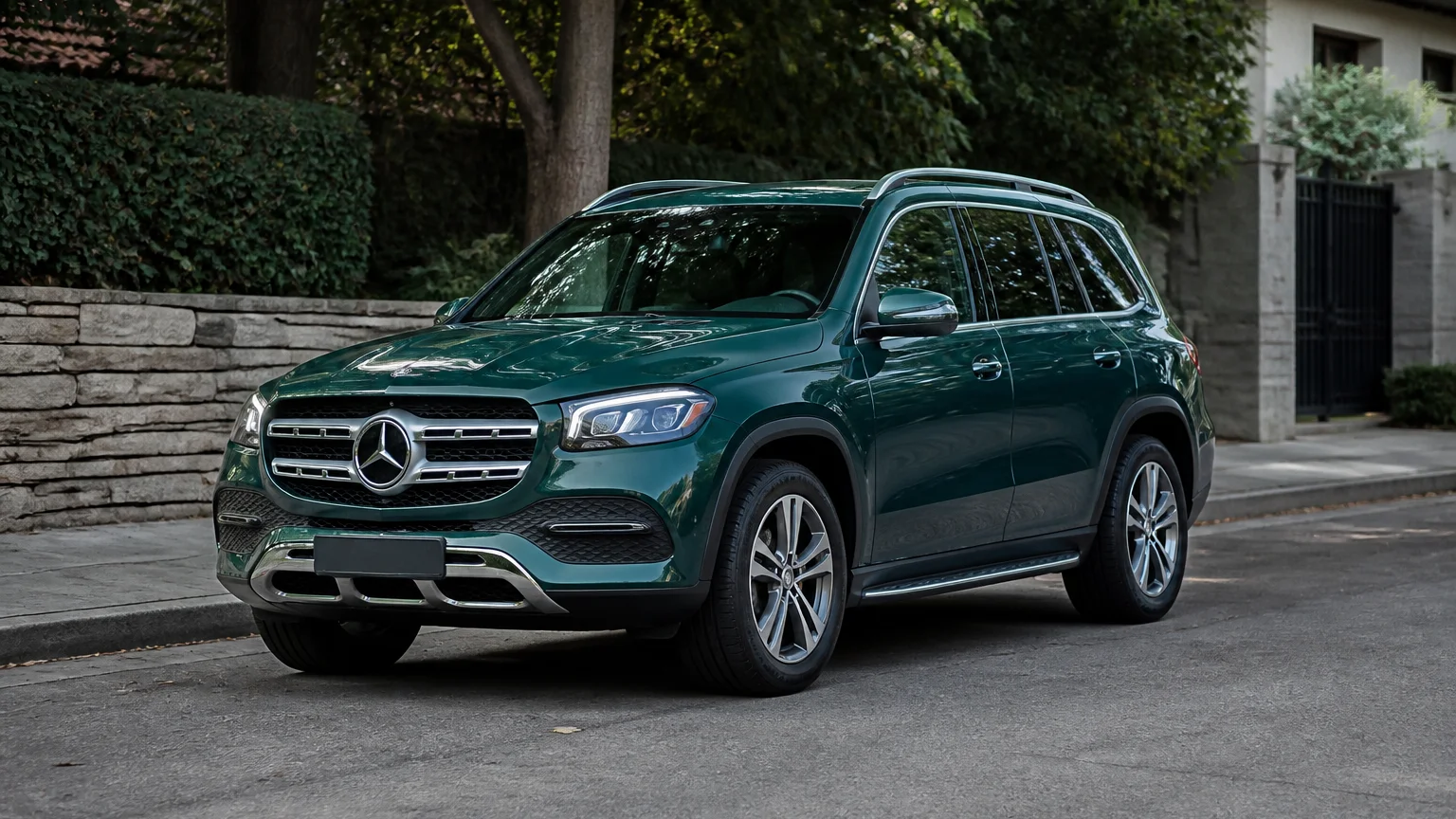
The Mercedes-Benz GLS is a well-regarded full-size luxury SUV, and most model years deliver on their promise of space, comfort, and long-term durability. A few specific years, though, carry documented problems severe enough to affect reliability, safety, and your repair budget. This data-backed guide pulls from NHTSA complaint and recall records, CarComplaints PainRank data, and RepairPal cost figures so you can shop with a clear picture of which years to buy and which to pass on.
For generations, engines, and ownership notes in one place, see the Mercedes-Benz GLS hub.
Related: Mercedes-Benz GLE years to avoid, Mercedes-Benz G-Class years to avoid.
At a glance
- Worst years
- 2007
- 2008
- 2013
- 2014
- 2020
- 2021
- 2022
- Best years
- 2010
- 2011
- 2012
- 2017
- 2018
- 2019
- 2023
- 2024
- Top failure
- AIRMATIC air suspension failure across 2013-present (CarComplaints / NHTSA - 1,500+ owner reports)
- Always do before buying
- run the VIN through NHTSA's recall checker, plus physically check whether the car sits level front-to-rear and corner-to-corner before purchasing any GLS with AIRMATIC suspension
How we rated the best and worst Mercedes-Benz GLS years
CarComplaints rates 2022 as the worst Mercedes-Benz GLS year, factoring in repair cost and the average mileage at which problems occur. On the NHTSA side, the 2020 GLS 450 had a notable spike in NHTSA complaints, making 2020 the highest-volume year in NHTSA’s database - a different measure from the CarComplaints PainRank. These two sources capture different things: CarComplaints ranks a “worst year” by repair cost and mileage-at-failure, while NHTSA shows raw complaint volume, and the two methods frequently point to different model years. The years to avoid methodology applied here weights both repair cost and complaint volume against mileage at failure, so a single expensive fault at low mileage can rank a year worse than many minor complaints at high miles. Additional data sources used include RepairPal for annual repair costs, Consumer Reports for recall histories, owner reports on Edmunds, and NHTSA recall filings pulled directly from nhtsa.gov.
| Mercedes-Benz GLS Generation | Best Mercedes-Benz GLS Years | Worst Mercedes-Benz GLS Years |
|---|---|---|
| 1st-gen GL-Class X164 (2007-2012) | 2010, 2011, 2012 | 2007, 2008 |
| 2nd-gen GL-Class / GLS X166 (2013-2019) | 2017, 2018, 2019 | 2013, 2014 |
| 3rd-gen GLS X167 (2020-present) | 2023, 2024 | 2020, 2021, 2022 |
Every Mercedes-Benz GLS model year ranked
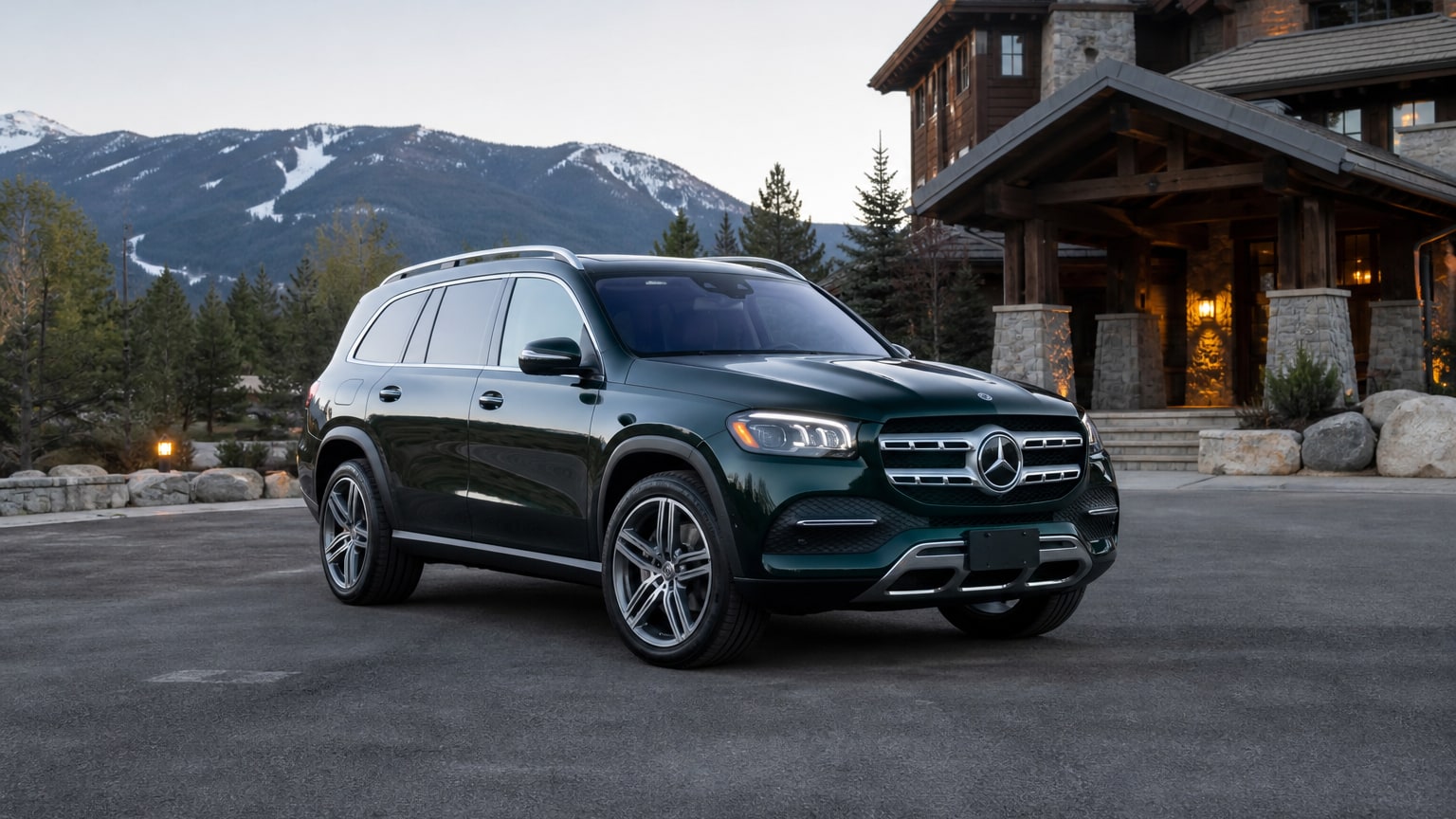
The 2022 and 2020 model years carry the most documented risk across the modern GLS lineup, while the mid-cycle X166 years (2017-2019) represent the sweet spot of the pre-X167 era.
Note on the X164 (2007-2012): the X164 ran from 2007 to 2012 in North America, badged as the GL-Class. It is a separate collector/budget market from the GLS nameplate, but it shares core platform DNA and its years are ranked below for shoppers who encounter them.
| Model Year | Generation | Verdict | Notes |
|---|---|---|---|
| 2007 | X164 GL-Class | Avoid | Early build quality issues, lowest production refinement |
| 2008 | X164 GL-Class | Avoid | Pre-facelift complaints; brake/suspension wear |
| 2009 | X164 GL-Class | OK/Mixed | Post-facelift improvements begin |
| 2010 | X164 GL-Class | Best | Facelift matured, low complaint volume |
| 2011 | X164 GL-Class | Best | Continued low complaints, good reliability |
| 2012 | X164 GL-Class | Best | Final X164 year, well-sorted platform |
| 2013 | X166 GL-Class | Avoid | First X166 year, early-build issues |
| 2014 | X166 GL-Class | Avoid | Transmission and AIRMATIC complaints elevated |
| 2015 | X166 GL-Class | OK/Mixed | Issues declining, still transitional |
| 2016 | X166 GL-Class | OK/Mixed | Pre-GLS rename; improving reliability |
| 2017 | X166 GLS | Best | Renamed GLS; mature platform, low complaint rate |
| 2018 | X166 GLS | Best | Highest reliability score (0 recalls, low complaints) |
| 2019 | X166 GLS | Best | Final X166 year; well-developed platform |
| 2020 | X167 GLS | Avoid | Highest NHTSA complaint spike; 48V and suspension recalls |
| 2021 | X167 GLS | Avoid | 48V fire risk recall; transmission stall recall |
| 2022 | X167 GLS | Avoid | CarComplaints worst year (PainRank); transmission complaints |
| 2023 | X167 GLS | Best | Recall fixes deployed; complaint volume declining |
| 2024 | X167 GLS | Best | Low complaint volume; 0 active recalls as of mid-2026 |
Most common Mercedes-Benz GLS problems
AIRMATIC air suspension failure is the single biggest recurring problem across the GLS lineup, spanning both the GL-Class era and the modern X167 generation. Below are the top documented failure categories ordered by severity.
1. AIRMATIC air suspension failure
AIRMATIC air suspension failure is the most commonly reported issue across the GLS lineup, with over 1,500 owner reports. The AIRMATIC system uses pressurized air springs and a compressor at each corner instead of conventional coil springs. When a spring or the compressor develops a leak, the affected corner sags noticeably, the suspension warning light illuminates, and ride quality deteriorates sharply.
The air struts and compressor are known to develop leaks or fail after 60,000 to 80,000 miles. Replacing air struts can cost anywhere from $1,000 to $3,000 depending on whether you use OEM or high-quality aftermarket replacements. A leaking air spring that costs $1,200 to fix can turn into a $3,000+ repair if the compressor burns out from running constantly to compensate for the leak. Mercedes-Benz issued a recall for a small number of 2020 model year GLE450, GLS450, and GLS580 vehicles under NHTSA Campaign Number 20V-329, stating that the piston seals within the front struts and rear shock absorbers might not meet specifications.
Before buying any used GLS, check whether the car sits level on all four corners. A corner that sits lower than the others after overnight parking points directly to a leaking air spring or failing compressor.
2. 48V ground connection overheating and fire risk
On certain 2020-2022 GLE-Class and GLS-Class (X167 platform) vehicles, the 48V ground connection located under the front passenger seat might not be tightened to the specified torque, so the ground cable lug might not be correctly secured. The electrical resistance at the connection might increase; in combination with the high electrical currents flowing through that connection, the temperature in this area might increase, and a risk of fire cannot be ruled out.
NHTSA recall 24V-207 covers certain 2023-2024 GLE 350, 2020-2024 GLE 450, 2020-2023 GLS 580, GLE 580, 2019-2023 GLS 450, 2021-2023 Maybach GLS 600, and AMG GLS 63 vehicles, in which the 48V ground connection under the passenger seat may not be secured properly, resulting in the ground connection overheating - which can increase the risk of fire. The dealer fix is a torque check and wiring harness replacement as needed at no cost to the owner. Confirm this recall is closed on any 2019-2023 GLS 450 or 2020-2023 GLS 580 before you buy.
3. Transmission control unit software and engine stall
On certain 2020-2023 GLE/GLS vehicles (X167 platform) equipped with the 6-cylinder gasoline engine and 9-speed transmission, the transmission control unit software might not meet current standards; if a downshift from 7th to 6th gear is not fully completed during a simultaneous slight braking maneuver, and additional conditions exist (such as an aborted shift operation, low transmission oil temperature, or simultaneous recuperation by the 48V starter-alternator), the engine might stall, the vehicle loses propulsion, and the risk of a crash might increase.
Mercedes opened an investigation in March 2022 after receiving reports of stalled GLE/GLS vehicles. The issue is covered by NHTSA recall 24V-118. Dealers update the transmission control unit software free of charge; owner notification letters were mailed March 29, 2024. The most-reported problem on CarComplaints for the 2022 GLS is harsh automatic downshifts from 4th to 3rd gear - a related transmission behavior that owners noticed even before the formal recall.
4. 4MATIC transfer case bearing wear
4MATIC transfer case bearing wear, which can present as a whine and a drivetrain lock-up risk, carries a repair cost of $2,500 to $7,000. The transfer case splits torque between the front and rear axles in the 4MATIC all-wheel-drive system. As bearing wear progresses, owners first notice a low whine that intensifies with speed; in advanced cases the transfer case can bind, causing unpredictable handling. This issue appears across both the X166 and X167 generations, particularly on higher-mileage examples.
No recall covers this fault. Mercedes does not publish a fixed fluid-change interval for the transfer case, but owners on enthusiast forums recommend servicing the transfer case fluid around every 60,000 miles as a preventive measure. Any used GLS over 80,000 miles should have a transfer case fluid inspection before purchase.
5. Fuel injector seal leak and fire risk
On GLE/GLS-Class (X167 platform) vehicles with a gasoline engine, a leak may develop between the fuel rail and fuel injector due to trapped particles from the production process; trapped debris might damage the seal, which over the vehicle’s life might result in a fuel leak into the engine compartment, and leaking fuel might contact hot parts of the engine, so a risk of fire cannot be ruled out. This defect prompted NHTSA recall 21V-961, covering 2020-2021 GLS models among a broad range of Mercedes gasoline-engined vehicles. The remedy is a dealer inspection and injector seal replacement at no charge. Verify this recall is closed on any 2020-2021 GLS before purchase.
Which Mercedes-Benz GLS years should you avoid
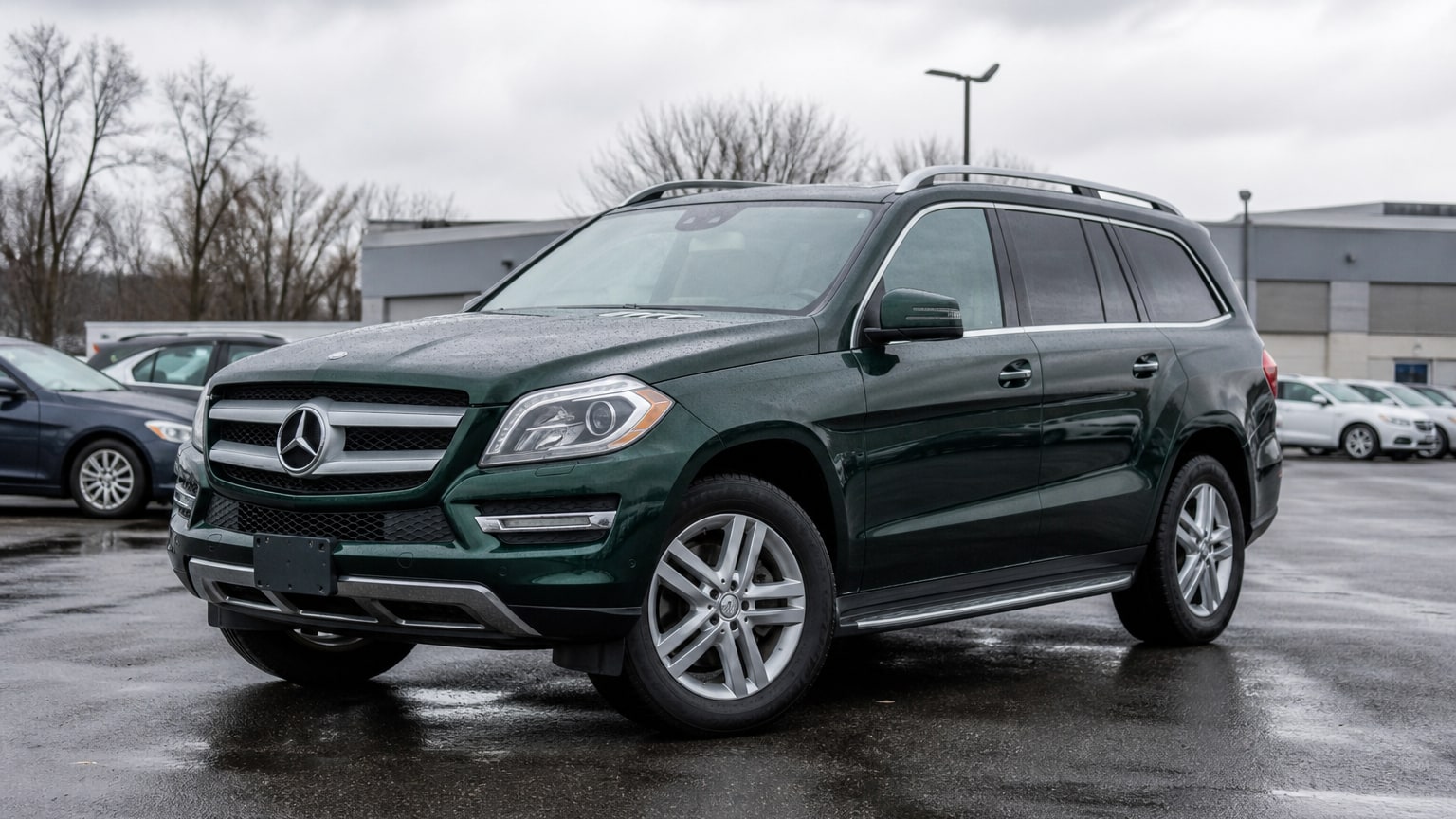
The Mercedes-Benz GLS years to avoid are 2020, 2021, and 2022. CarComplaints rates 2022 as the worst year on repair cost and average mileage when problems occur, while NHTSA complaint data shows the 2020 model year had the highest spike in raw complaint volume. These two years are flagged by different measures but both land in the avoid zone, and 2021 sits between them with the same 48V and transmission recalls active.
| Mercedes-Benz GLS Generation | Model Years | Verdict | Main Issues |
|---|---|---|---|
| X164 GL-Class | 2007, 2008 | Worst (early years) | Early build quality, brake wear, AIRMATIC starts appearing |
| X166 GL-Class / GLS | 2013, 2014 | Worst (early years) | First-year X166 issues; transfer case, AIRMATIC |
| X167 GLS | 2020, 2021, 2022 | Worst (2020-2022) | 48V fire risk, transmission stall, suspension recalls |
Worst Mercedes-Benz GLS years: 2007, 2008, 2013, 2014, 2020, 2021, 2022
Second-generation Mercedes-Benz GLS X166 (2013-2019)
The X166 Mercedes-Benz GL-Class was produced from 2012 to 2019, and it was renamed GLS as of the 2016 facelift. The 2013 and 2014 model years represent the first-year build of this new architecture, and they carry elevated complaints around AIRMATIC suspension reliability and the 7-speed transmission’s rough shifting behavior. The most commonly reported Mercedes-Benz GL450 problem on RepairPal is internal component failure that may cause rough shifting on vehicles equipped with the 7-speed automatic transmission.
Third-generation Mercedes-Benz GLS X167 (2020-present)
The Mercedes-Benz GLS X167 is the third generation, produced since October 2019 as a 2020 model year. The 2020-2022 years launched with the new 48V mild-hybrid system and a 9-speed transmission, and both components produced documented safety recalls within their first few production years. Certain 2020-2022 GLS-Class (X167 platform) vehicles have a 48V ground connection issue under the front passenger seat that can lead to overheating and a fire risk. The NHTSA complaints page for this generation shows the 2020 year with the highest raw complaint volume of the X167 run so far.
What are the best Mercedes-Benz GLS years to buy
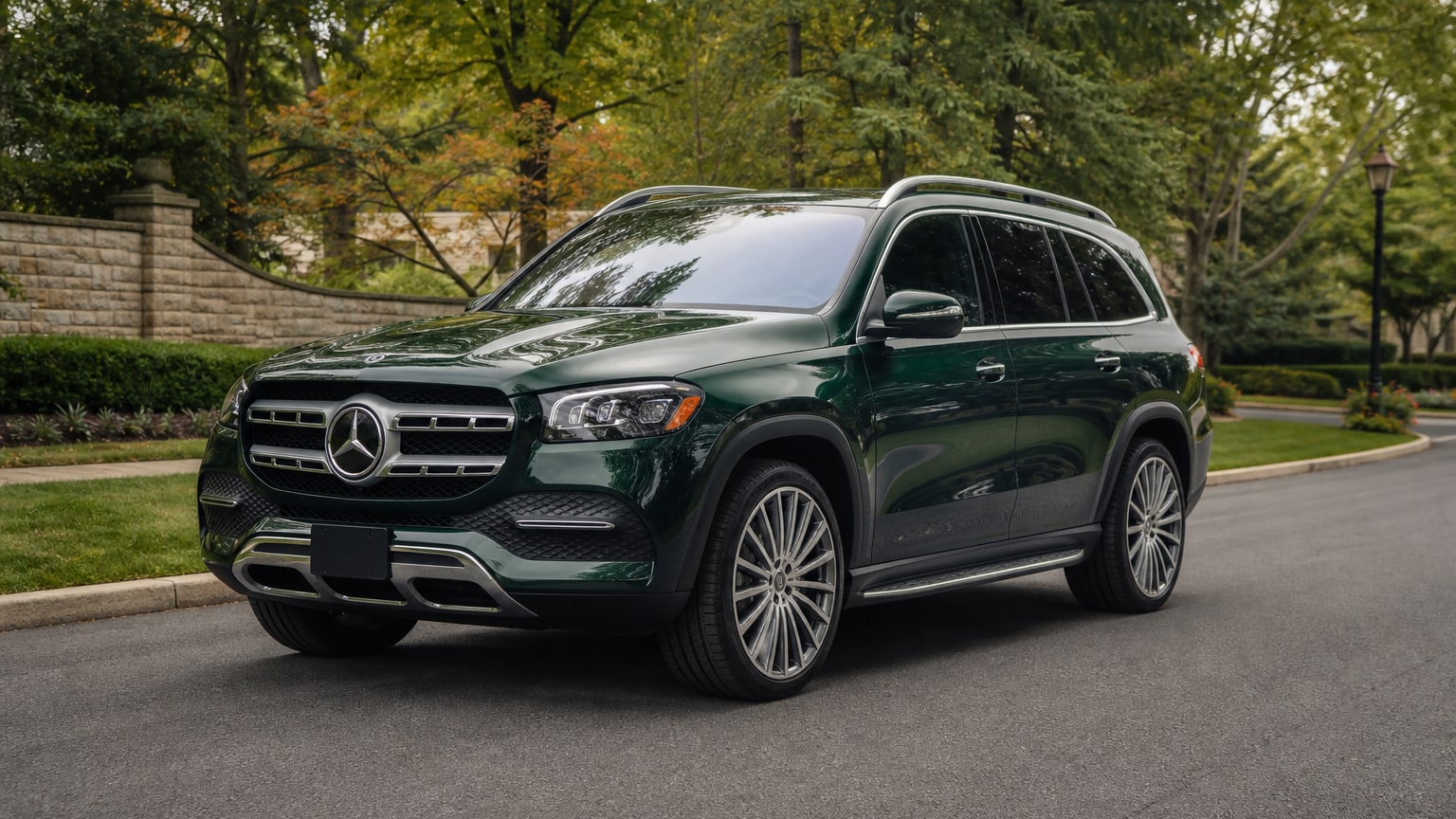
The best Mercedes-Benz GLS years to buy are 2010, 2011, 2012, 2017, 2018, 2019, 2023, and 2024. The 2017-2019 window represents the mature end of the X166 generation - all the early-build issues of 2013-2014 had been ironed out, and the new X167 platform’s problems had not yet arrived. Among recently analyzed model years, the 2018 GLS achieved the highest reliability score (94/100) with 0 recalls and the lowest complaint volume in its cohort. The 2023 and 2024 model years benefit from the software and recall fixes deployed across the 2020-2022 problems.
| Best Mercedes-Benz GLS Year | Why It's a Strong Buy |
|---|---|
| 2010 | Facelift matured; low complaint volume across the X164 generation |
| 2011 | Continued low complaints; good reliability in the X164's final stretch |
| 2012 | Final X164 year; well-sorted platform with no major open issues |
| 2017 | Mature X166 platform; GLS rename; low complaints, low AIRMATIC failure rate at this age |
| 2018 | Highest recorded reliability score; 0 recalls; low complaint count |
| 2019 | Final X166 year; well-developed platform before generation change |
| 2023 | Post-recall software fixes deployed; complaint volume declining from 2020-2022 peak |
| 2024 | Very low complaint count; 0 active recalls as of mid-2026 |
Most reliable Mercedes-Benz GLS years: 2010, 2011, 2012, 2017, 2018, 2019, 2023, 2024
2018 Mercedes-Benz GLS
The 2018 GLS achieved the highest reliability score of 94/100 among recently analyzed GLS model years, with 0 recalls and a low complaint count in NHTSA’s database. The X166 platform was in its sixth year of production, and Mercedes had addressed the early AIRMATIC and transmission issues from the 2013-2014 builds. If your used-GLS budget lands here, this is the single strongest pick in the lineup’s history on a per-model-year basis.
2019 Mercedes-Benz GLS
The 2019 is the final year of the X166 generation and inherits all the refinements made through the 2017-2018 model years. It does not carry the 48V electrical system that caused recalls on 2020-2023 cars, and its 3.0L twin-turbo V6 (M276) and 4.7L twin-turbo V8 (M278) are more thoroughly debugged powertrains than the X167’s new M256 inline-six. At current used-market pricing it offers one of the better value-per-reliability ratios in the GLS lineup.
2023 Mercedes-Benz GLS
Dealers update the transmission control unit software free of charge on affected cars, with owner notification letters mailed in March 2024 - meaning most 2023 examples in dealer inventory by late 2024 should have the fix already applied. The 2023 model year sits far enough from the first-year X167 teething period that complaint volumes are measurably lower than 2020-2022 cars.
Mercedes-Benz GLS submodel years to avoid
The three submodels most commonly shopped on the used market - the GLS 450, the GLS 550, and the predecessor GL 450 - each run their own engine and model-year range, and each has its own complaint record worth examining separately.
Mercedes-Benz GLS 450 years to avoid
CarComplaints rates 2020 as the worst Mercedes-Benz GLS 450 year on repair cost and mileage-at-failure, with only 2 complaints on file in its database. On the NHTSA side, the 2020 GLS 450 had a notable spike in NHTSA complaints, while other years had typical complaint volumes; the most common issue across all years is the electrical system. Total NHTSA complaints for the GLS 450 run to 153 across the 2018-2024 model years.
The GLS 450’s defining powertrain in the X167 generation is the 3.0L M256 turbocharged inline-six with 48V mild-hybrid assist - the same system at the center of recall 24V-207 (48V ground connection fire risk) and recall 24V-118 (transmission stall). Both of those recalls affect the GLS 450 specifically on 2019-2023 models. The 2020 year, as the first full production year of this engine-and-transmission combination, carries the most concentrated complaint activity.
Before buying a used GLS 450:
- Confirm recalls 24V-207 and 24V-118 are closed on the specific VIN
- Check for the AIRMATIC suspension warning light and verify all four corners sit level
- Inspect for any SRS or electrical warning lights, which owners report as a recurring electrical system complaint
Mercedes-Benz GLS 550 years to avoid
CarComplaints rates 2017 as the worst Mercedes-Benz GLS 550 year, with only 1 complaint on file - meaning the GLS 550 has virtually no meaningful complaint record on CarComplaints. The GLS 550 pairs a 4.7L twin-turbo V8 (M278) rather than the inline-six used in the GLS 450, which means it does not share the 48V mild-hybrid system’s ground-connection recall (24V-207) or the 9-speed TCU software stall recall (24V-118) in the same way. Its powertrain is a more conventional twin-turbo V8 with a 7-speed (X166) or 9-speed (X167) automatic and no 48V layer to go wrong.
The GLS 550 was offered from 2017 through 2019 on the X166 platform (replacing the GL 550) and continued into the X167 generation. Annual maintenance cost for a Mercedes-Benz GL450 - and by extension, comparable V8 GLS variants - runs about $1,293 per year according to RepairPal. The V8’s higher displacement makes AIRMATIC compressor demand a concern at high mileage, shared with the rest of the GLS range. No GLS 550 model year has accumulated enough complaint data to flag a specific avoid year with confidence; the honest finding is that the volume is too low to draw a data-backed line.
Mercedes-Benz GL 450 years to avoid
The GL 450 ran on the X164 chassis from 2007 to 2012 and on the X166 chassis from 2013 to 2019 in North America. Mercedes-Benz GL 450 vehicles have 34 reported problems on RepairPal; the most commonly reported is internal component failure causing rough shifting on the 7-speed automatic transmission. The GL 450 has 3 known recalls on RepairPal, the most common being the driver’s frontal airbag inflator rupture - the Takata airbag recall that covered millions of vehicles across manufacturers.
On the X164 platform (2007-2012), the early 2007 and 2008 model years see the most concentrated owner complaints around first-year build quality and brake wear. On the X166 platform (2013-2016, before the GLS rename), the 2013 and 2014 model years carry the highest complaint rates for AIRMATIC failures and transmission roughness - the same pattern covered earlier in this article. The 2015-2016 GL 450 years are more settled and represent better used-market picks within the X166 era.
Before buying a used GL 450, verify the Takata airbag recall has been remedied on the specific VIN and check AIRMATIC suspension condition on any car with more than 70,000 miles.
Mercedes-Benz GLS pre-purchase checklist
Run these checks on any used GLS before signing:
- VIN recall check: Run the VIN at NHTSA’s recall lookup to confirm all open recalls - especially 24V-207 (48V fire risk) and 24V-118 (engine stall) on 2019-2023 GLS 450 and 2020-2023 GLS 580 - have been closed.
- AIRMATIC level check: Park the car overnight on level ground. If any corner sits noticeably lower than the others the next morning, a leaking air spring or failing compressor is likely; budget $1,000-$3,000 for the repair.
- 48V warning lights: On 2020-2023 X167 cars, check for any 48V system warning messages in the instrument cluster. Persistent warnings after the recall fix indicate a deeper electrical fault.
- Transmission behavior: During the test drive, slow from highway speed with light brake pressure. Any unexpected stall or harsh, jerky downshift (particularly 7th-to-6th) on 2020-2023 cars suggests the TCU software recall has not been applied.
- Transfer case fluid and noise: On any GLS over 80,000 miles, listen for a whine at road speed. A whining noise when accelerating from the driveline can indicate early transfer case bearing wear, which costs $2,500-$7,000 to repair.
- Service records: Request the full service history, paying particular attention to AIRMATIC compressor replacements, transmission services, and transfer case fluid changes.
- Takata airbag (GL 450 only): On 2007-2016 GL 450 models, confirm the Takata frontal airbag recall has been remedied before purchase.
Better alternatives to consider
If the GLS years in your budget land on the avoid list, these same-class alternatives are worth a cross-shop:
- GMC Acadia - a three-row luxury-adjacent SUV with a more straightforward reliability record and lower annual repair costs than the GLS
- BMW X5 - a two-row alternative in the same luxury segment; shoppers who can step down in size from the X7 often find the X5’s reliability record more consistent across model years
- Chevy Traverse - a mainstream three-row alternative for budget-conscious shoppers who want GLS-like space at a substantially lower acquisition and repair cost than the GLS
- Lexus LX - Toyota-based three-row SUV with a proven V8 and consistently lower complaint rates across all model years
- Lincoln Navigator - body-on-frame alternative to the GLS with a strong recent reliability record and no equivalent to the GLS’s 48V-system recalls
Is the Mercedes-Benz GLS worth buying
Yes, the Mercedes-Benz GLS is worth buying as long as you avoid the 2020, 2021, and 2022 model years and approach early X166 years (2013-2014) with caution. With consistent maintenance, most Mercedes-Benz GLS owners report 150,000 to 200,000+ miles of service life. The 2017, 2018, and 2019 model years in particular offer a mature, well-sorted platform - the 2018 GLS stands out with the highest reliability score of 94/100 and 0 recalls in NHTSA’s database among all analyzed model years. Before finalizing any purchase, run the VIN through NHTSA’s recall checker and verify a complete service history, paying particular attention to AIRMATIC compressor condition and transfer case fluid status.
Frequently asked questions
What are the best Mercedes-Benz GLS years to buy
The best Mercedes-Benz GLS years to buy are 2010, 2011, 2012, 2017, 2018, 2019, 2023, and 2024. The 2018 GLS recorded the highest reliability score in its cohort at 94/100 with 0 recalls in NHTSA’s database, making it the single strongest used pick. The 2023 and 2024 cars benefit from recall-fix deployments that addressed the 2020-2022 generation’s main weaknesses.
What are the worst years for the Mercedes-Benz GLS
The worst years for the Mercedes-Benz GLS are 2007, 2008, 2013, 2014, 2020, 2021, and 2022. CarComplaints rates 2022 as the worst modern GLS year based on repair cost and average mileage at failure, while NHTSA complaint data shows the 2020 model year carried the highest complaint spike in the current generation.
Which year Mercedes-Benz GLS is most reliable
The 2018 Mercedes-Benz GLS is the most reliable model year, scoring 94/100 on reliability analysis with 0 recalls and a low complaint total in NHTSA’s database. It sits at the mature end of the X166 generation, after the 2013-2014 first-year problems were resolved and before the X167’s new-platform issues appeared.
What year Mercedes-Benz GLS has the worst transmission problems
The recall for engine stall from transmission control unit software impacts certain Mercedes-Benz GLE and GLS vehicles manufactured between 2020 and 2023, with 2020-2022 cars showing the highest owner-reported complaint activity. Mercedes opened its investigation in March 2022 after receiving reports of stalled GLE/GLS vehicles, and the fix - a free TCU software update under NHTSA recall 24V-118 - was not issued until early 2024. On top of that, the most-reported problem on CarComplaints for the 2022 GLS is harsh automatic downshifts from 4th to 3rd gear, making 2022 the year most associated with transmission complaints in the current generation.
How long does a Mercedes-Benz GLS last
With consistent maintenance, most Mercedes-Benz GLS owners report 150,000 to 200,000+ miles of service life. The key cost variables as mileage climbs are AIRMATIC suspension components (typically needing attention after 60,000-80,000 miles) and transfer case fluid maintenance. A first-year owner might spend under $700 on repairs, but by year ten that annual figure can climb past $2,300 with a near 1-in-2 chance of a major repair somewhere in between - so a solid maintenance history is the most important factor in predicting how long any individual GLS will last.