
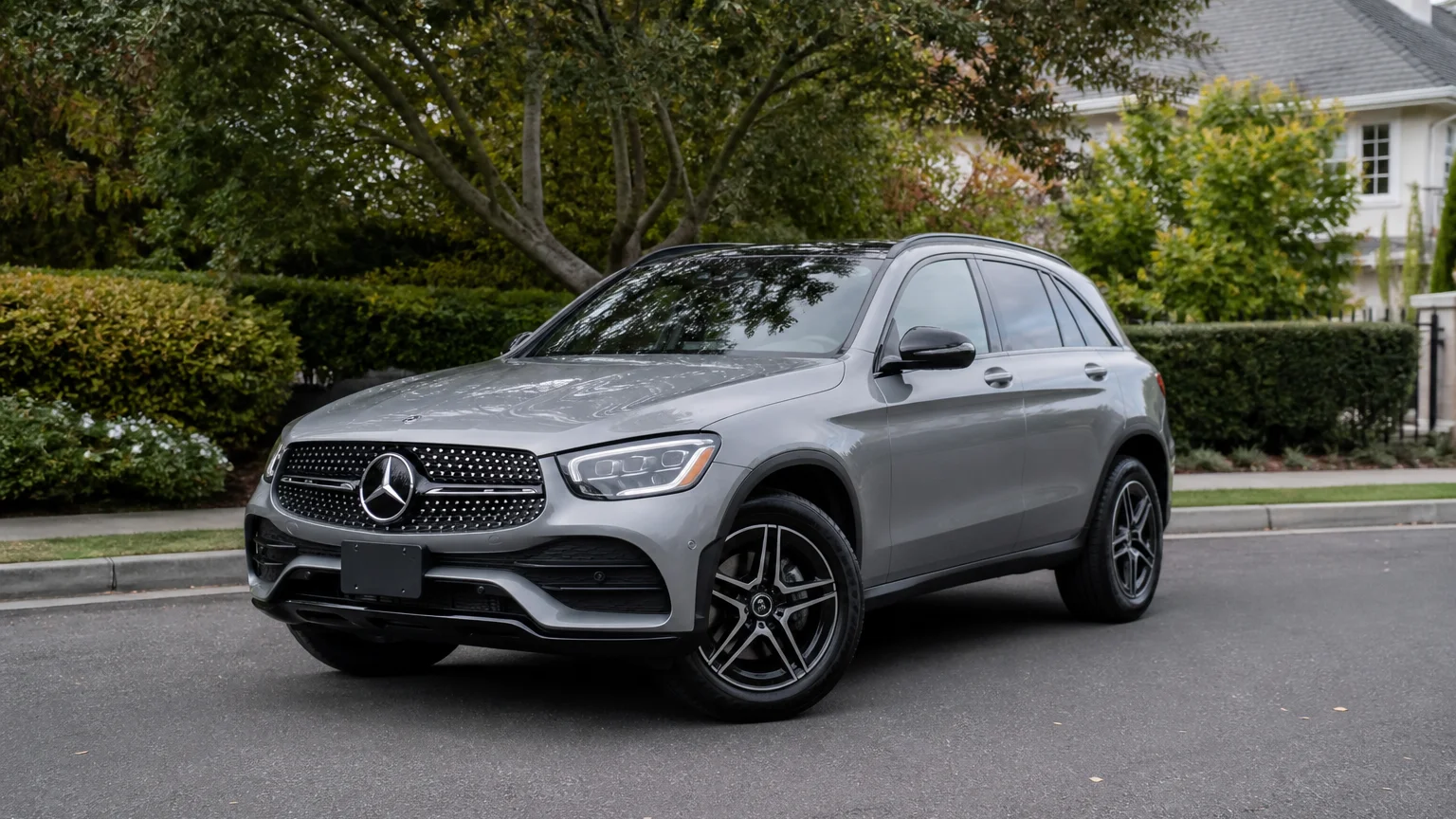
The Mercedes-Benz GLC is a well-regarded compact luxury SUV, and for most model years it delivers a refined, dependable ownership experience. Still, the first-generation lineup carries real documented problems - most concentrated in 2016 and 2017 - and knowing which years to sidestep can save you thousands at the repair shop. The guide below ranks every model year using NHTSA complaint data, CarComplaints PainRank, Consumer Reports subscriber surveys, and RepairPal cost figures so you can shop with confidence.
For generations, engines, and ownership notes in one place, see the Mercedes-Benz GLC hub.
Related: Mercedes-Benz GLE years to avoid, Mercedes-Benz GLA years to avoid.
At a glance
- Worst years
- 2016
- 2017
- 2018
- Best years
- 2021
- 2022
- Top failure
- 1st-gen faulty PCV valve and 9G-Tronic harsh shifting (NHTSA complaint data, 2016-2018)
- Always do before buying
- run the VIN through NHTSA's recall checker, plus verify that any outstanding fuel-pump shutdown recall (campaigns 23V-445 and its expansion) has been completed on 2021-2022 cars
How we rated the best and worst Mercedes-Benz GLC years
The worst GLC years by combined data are 2016 and 2017 - the first-generation cars that drew the highest NHTSA complaint volumes and, on CarComplaints’ PainRank, the 2017 rates worse than 2016 due to higher repair cost and lower mileage at failure.
Although the 2016 Mercedes-Benz GLC300 has the most overall complaints, CarComplaints rates the 2017 model year as worse because of other factors such as higher repair cost or more problems at lower mileage. This is a key distinction: NHTSA complaint volume was highest on the 2016 GLC with 115 problems, followed by the 2017 with 79, and the 2018 with 56. Sources used include NHTSA complaint and recall data, CarComplaints PainRank, Consumer Reports reliability surveys, and RepairPal repair-cost data.
CarComplaints ranks the worst year by repair cost and mileage-at-failure (its PainRank), while NHTSA shows raw complaint volume - they point to different years and must not be conflated.
The years to avoid methodology weighs these sources differently depending on complaint volume, severity, and mileage at failure, which is why PainRank and raw NHTSA totals can point to different model years.
| Mercedes-Benz GLC Generation | Best Mercedes-Benz GLC Years | Worst Mercedes-Benz GLC Years |
|---|---|---|
| 1st gen (2016-2022) | 2021, 2022 | 2016, 2017, 2018 |
| 2nd gen (2023-present) | None | None |
Every Mercedes-Benz GLC model year ranked
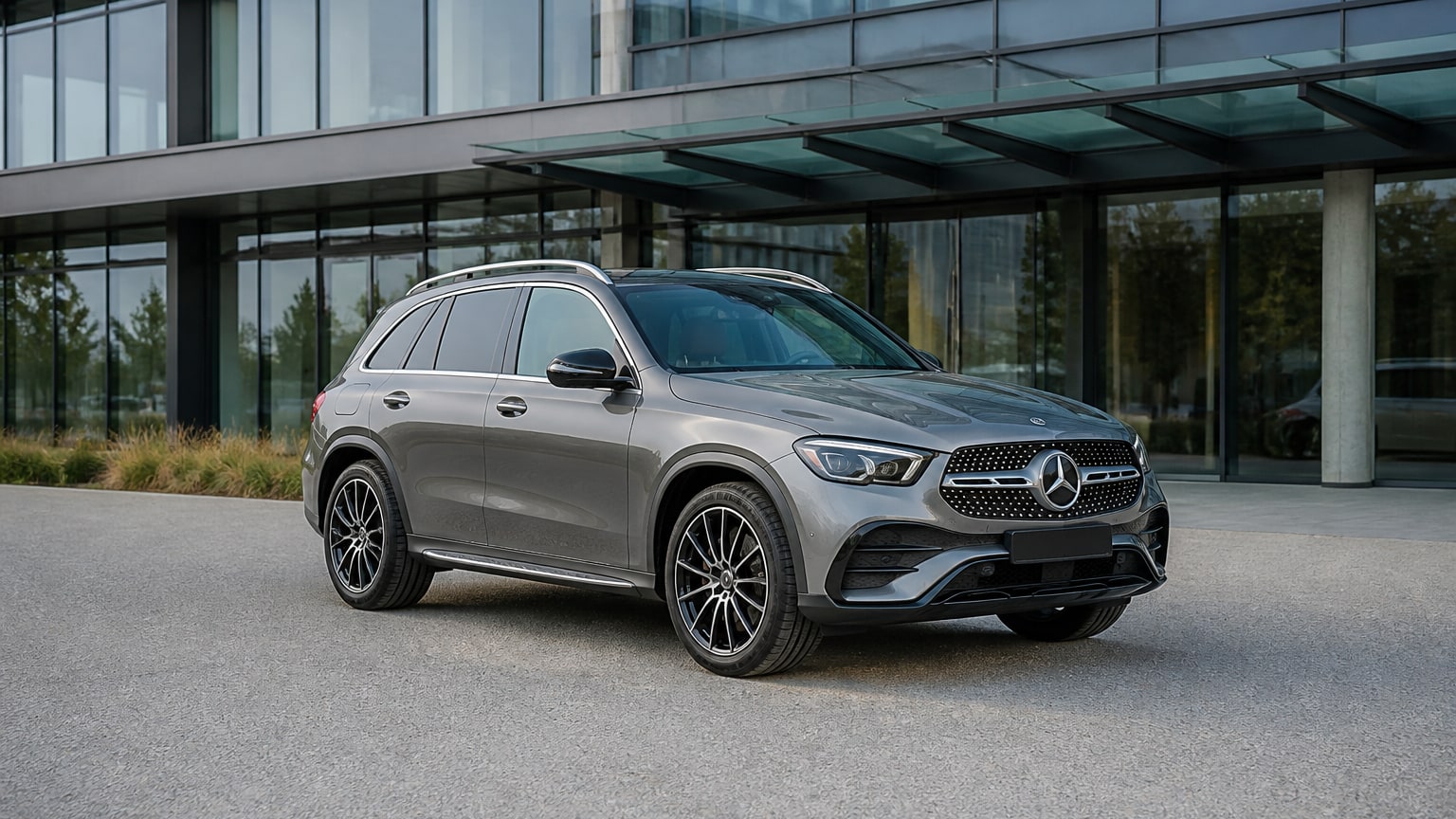
The Mercedes-Benz GLC was introduced in 2015 for the 2016 model year, replacing the GLK-Class. The table below covers every model year from launch through the current generation.
| Model Year | Generation | Verdict | Notes |
|---|---|---|---|
| 2016 | 1st gen | Avoid | Highest NHTSA complaint volume (115); PCV valve, brake squeal, steering wiring recall |
| 2017 | 1st gen | Avoid | CarComplaints PainRank worst year; higher repair cost, lower mileage at failure |
| 2018 | 1st gen | Avoid | 15 NHTSA recalls; brake squeal, 9G-Tronic shifting issues persist |
| 2019 | 1st gen | OK/Mixed | NHTSA complaints drop; headlight aim recall affects 2019-2022 GLC 300 |
| 2020 | 1st gen | OK/Mixed | Mid-cycle refresh; 48V ISG introduced; fuel pump risk begins |
| 2021 | 1st gen | Best | Lower complaint count; most major TSBs addressed |
| 2022 | 1st gen | Best | Low recall and complaint footprint; smoother refined exit to gen 2 |
| 2023 | 2nd gen | OK/Mixed | Fully redesigned; new platform but early-build electrical complaints surfacing |
| 2024 | 2nd gen | OK/Mixed | Strong J.D. Power predicted reliability; some open recalls still accumulating |
Most common Mercedes-Benz GLC problems
According to NHTSA data, the most common GLC complaints are engine-related, many of which were due to a faulty positive crankcase ventilation (PCV) valve - the single most notorious first-generation defect. Alongside that, transmission shifting behavior, brake noise, steering issues, fuel pump shutdown, and 48V mild-hybrid system faults round out the recurring failures found in NHTSA complaints and owner reports.
1. Faulty PCV (Positive Crankcase Ventilation) Valve
The most common GLC complaints on NHTSA are engine-related, many caused by a faulty PCV valve - a system that introduces filtered fresh air into the crankcase - mostly reported on 2016 and 2017 model years and, to a lesser extent, 2018 and 2019 models. The symptom is a check-engine light, often accompanied by OBD-II code P052E (PCV Regulator Valve Performance). Left unaddressed, a failed PCV valve creates crankcase pressure that can contaminate oil, damage seals, and in severe cases risk engine failure.
Outside of warranty, owners have reported repair costs in excess of $1,500 - the valve will need to be replaced, otherwise there is a risk of engine failure. No manufacturer TSB number for a warranty extension on this specific component was confirmed in available research; buyers of 2016-2019 cars should ask the selling dealer to check service records for any PCV-related work. RepairPal rates the overall Mercedes-Benz Reliability at 3.0 out of 5.0, ranking it 27th out of 32 for all car brands.
Buyer takeaway: On any 2016-2019 GLC, ask for a scan of fault codes before purchase and confirm no P052E history.
2. 9G-Tronic Transmission Harsh Shifting
On the 2016-2022 Mercedes-Benz GLC, the 9G-Tronic nine-speed automatic transmission exhibits harsh downshifts and jerky low-speed behavior, particularly in the 1-2 and 2-1 shifts. Drivers describe it as a shudder or lurch at parking-lot speeds, which worsens in cold weather. Transmission complaints of rough shifting were particularly noted in 2016-2018 models; some owners reported improvement after a software update, while others needed mechanical repairs.
The top failure points on the 2018 GLC include the 9G-Tronic transmission, typically appearing around 40,000-90,000 miles. A transmission fluid flush and software adaptation reset often improves the behavior, but a full fluid service or valve body repair can run $500-$2,000. Transmission service or replacement is estimated at $2,000-$6,000, typically after 100,000+ miles.
Buyer takeaway: Test drive any 2016-2022 GLC at slow speeds in a parking lot to feel for jerky 1-2 shifts, and ask if the TCU software has been updated.
3. Brake Squeal and Premature Pad/Rotor Wear
The 2016 GLC300 generated 171 reported problems on CarComplaints, with suspension, accessories-interior, and brakes listed as the worst complaints. The brake-squeal pattern is well-documented: owners hear a loud screech when backing out of a driveway in the morning or at low-speed stops. Consumer Reports owner comments describe premature pad/rotor wear, pulsation or vibration, antilock system issues, parking brake issues, master cylinder problems, calipers, and squeaking on 2018 GLC models.
Mercedes-Benz eventually addressed the GLC’s brake squeal issue starting with the 2020 models by updating the brake pads. Pre-2020 cars can be retrofitted with the updated pads to silence the squeal. The high-performance AMG models of the GLC remain susceptible to brake squeal because they use different compounds that provide better performance. A brake caliper sticking condition can worsen pad wear, so check caliper slide pins on higher-mileage examples.
Buyer takeaway: On any 2016-2019 GLC, inspect brake pad and rotor thickness; updated pads are inexpensive and fully eliminate the squeal.
4. Fuel Pump Shutdown (2021-2023 Models)
On certain 2021-2023 GLC vehicles, the fuel pump impeller may not meet material specifications, allowing the fuel pump to shut down and cause a sudden loss of drive power while driving - the subject of a large NHTSA recall covering 143,551 Mercedes vehicles across multiple model lines including the GLC. The base recall is NHTSA campaign 23V-445, and an expansion of that campaign extended coverage to additional VINs. The fuel pump may shut down causing a loss of drive power; dealers replace the fuel pump free of charge.
This defect is a safety concern because losing drive power at highway speeds removes power-assisted steering and brakes. Under the recall, dealers replace the fuel pump free of charge. Repair is no-cost if the recall is open, but only if the VIN has not yet been serviced.
Buyer takeaway: Run any 2021-2023 GLC VIN through NHTSA’s recall checker; confirm the fuel pump has been replaced before you buy.
5. Steering Coupling and Wiring Harness Recalls
The GLC carries multiple NHTSA recall campaigns tied to its steering system across both generations. NHTSA recall 16V-146 covered certain 2016 GLC 300 and GLC 300 4Matic vehicles where the steering column switch module wiring harness might have been incorrectly routed at the supplier, potentially causing the harness to become jammed in the adjustment mechanism and chafe. A chafed harness in that location can disable the turn signal, gear selector, ESP, or electric power steering - all safety-critical functions.
A separate recall covers certain 2023-2026 EQE and GLC vehicles where the steering coupling bolt may have been improperly tightened, allowing the steering coupling to loosen from the steering rack - a loose coupling can cause loss of steering control, increasing the risk of a crash. Under recall 25V-533, dealers inspect and tighten the steering coupling bolt connection to specification, free of charge.
Buyer takeaway: Confirm that all open steering-related recalls on the specific VIN have been closed before any test drive.
6. 48V Mild-Hybrid Integrated Starter-Generator (ISG) Failure
On 2020-2023 GLC 300 models with the M264 engine and 48-volt mild-hybrid system, the ISG, its 48V battery, or a loose/overheating 48V ground connection can fail, triggering a “48V On-Board Electrical System Malfunction” warning - failures often cause a no-start condition that cannot be jump-started, stalling while driving, or in severe cases overheated connections posing a fire risk.
Because the ISG sits between the engine and gearbox, repair is labor-intensive and expensive. Repair costs run $1,000-$7,000. This fault is specific to 2020-2023 M264-powered GLCs. Buyers of 2020-2023 examples should ask whether any 48V system warning messages appear in the fault-code history.
Buyer takeaway: Request a pre-purchase inspection that pulls 48V system fault codes on any 2020-2023 GLC 300.
Which Mercedes-Benz GLC years should you avoid
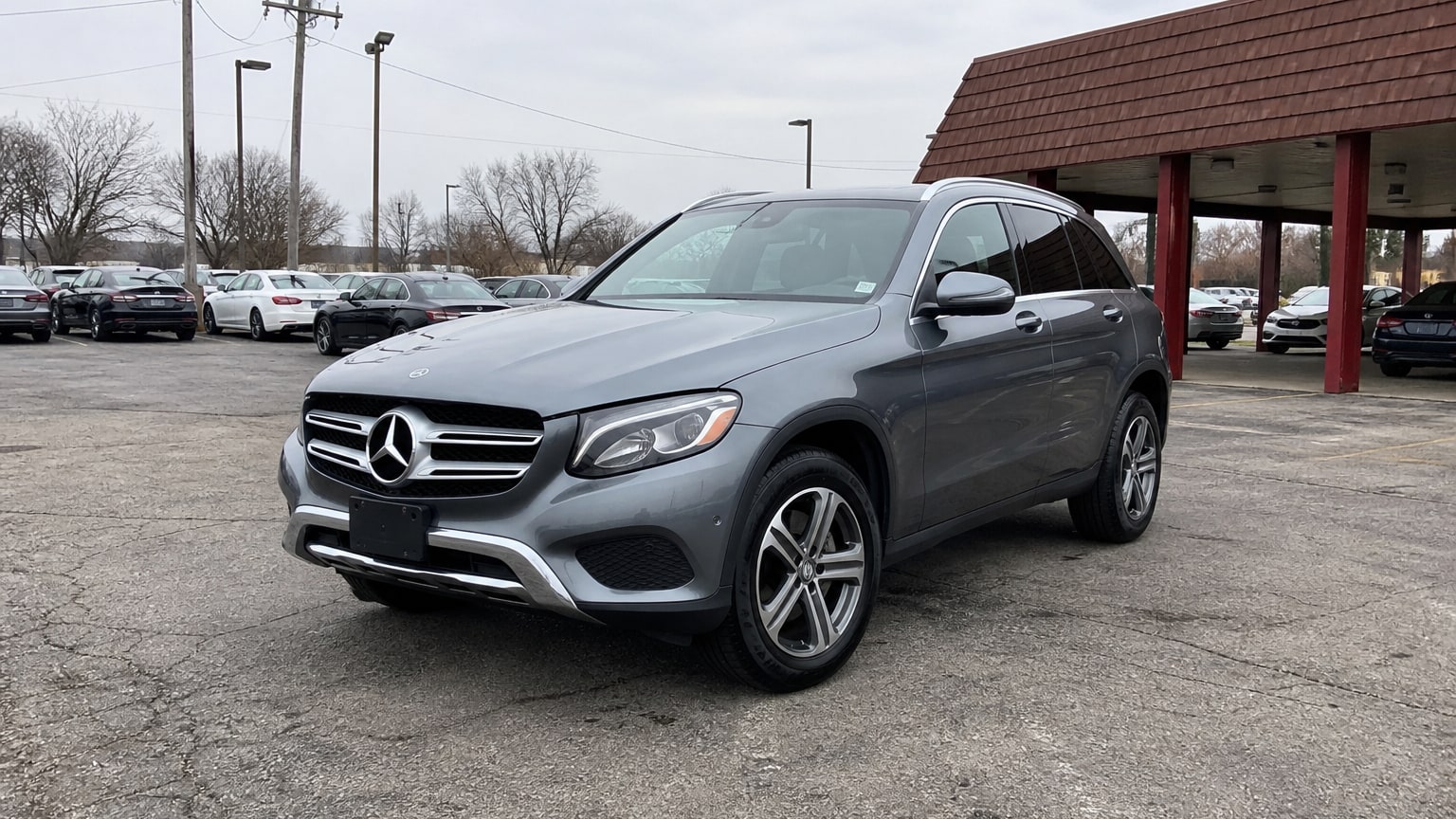
The Mercedes-Benz GLC years to avoid are 2016, 2017, and 2018. NHTSA complaint volume was highest on the 2016 GLC with 115 reported problems, making 2016 the worst year by raw NHTSA volume. CarComplaints, which weighs repair cost and mileage-at-failure through its PainRank system, rates the 2017 model year as worse than 2016 - so the single worst year differs depending on the metric used.
| Mercedes-Benz GLC Generation | Model Years | Verdict | Main Issues |
|---|---|---|---|
| 1st gen | 2016, 2017, 2018 | Worst: Avoid | PCV valve, 9G-Tronic shifting, brake squeal, steering recalls |
| 1st gen | 2019, 2020 | OK/Mixed | Headlight aim recall, 48V ISG concerns emerging |
| 1st gen | 2021, 2022 | Best | Lower complaints, brake fix in place |
| 2nd gen | 2023, 2024 | OK/Mixed | Early electrical complaints; new platform settling |
Worst Mercedes-Benz GLC years: 2016, 2017, 2018
First-generation Mercedes-Benz GLC (2016-2022)
The 2016 GLC300 logged 171 problems and defects on CarComplaints, with suspension, accessories-interior, and brakes as the top complaints. The 2017 GLC300 has 116 problems reported, with engine, accessories-exterior, and accessories-interior as the worst complaint categories. The 2017’s higher PainRank score means owners faced steeper repair bills earlier in the ownership cycle than even the more complaint-heavy 2016.
The 2018 Mercedes-Benz GLC has been recalled 15 times by NHTSA, the highest recall count of any single GLC model year per Consumer Reports data. Brake issues dominate 2018 owner comments. The 2019 and 2020 years sit in mixed territory - complaints taper off but the headlight aim recall (affecting 2019-2022 GLC 300) and the emerging 48V ISG concerns keep them from the best-year list. You can find NHTSA complaint filings for the 2017 GLC and cross-reference them against any car you are considering.
What are the best Mercedes-Benz GLC years to buy
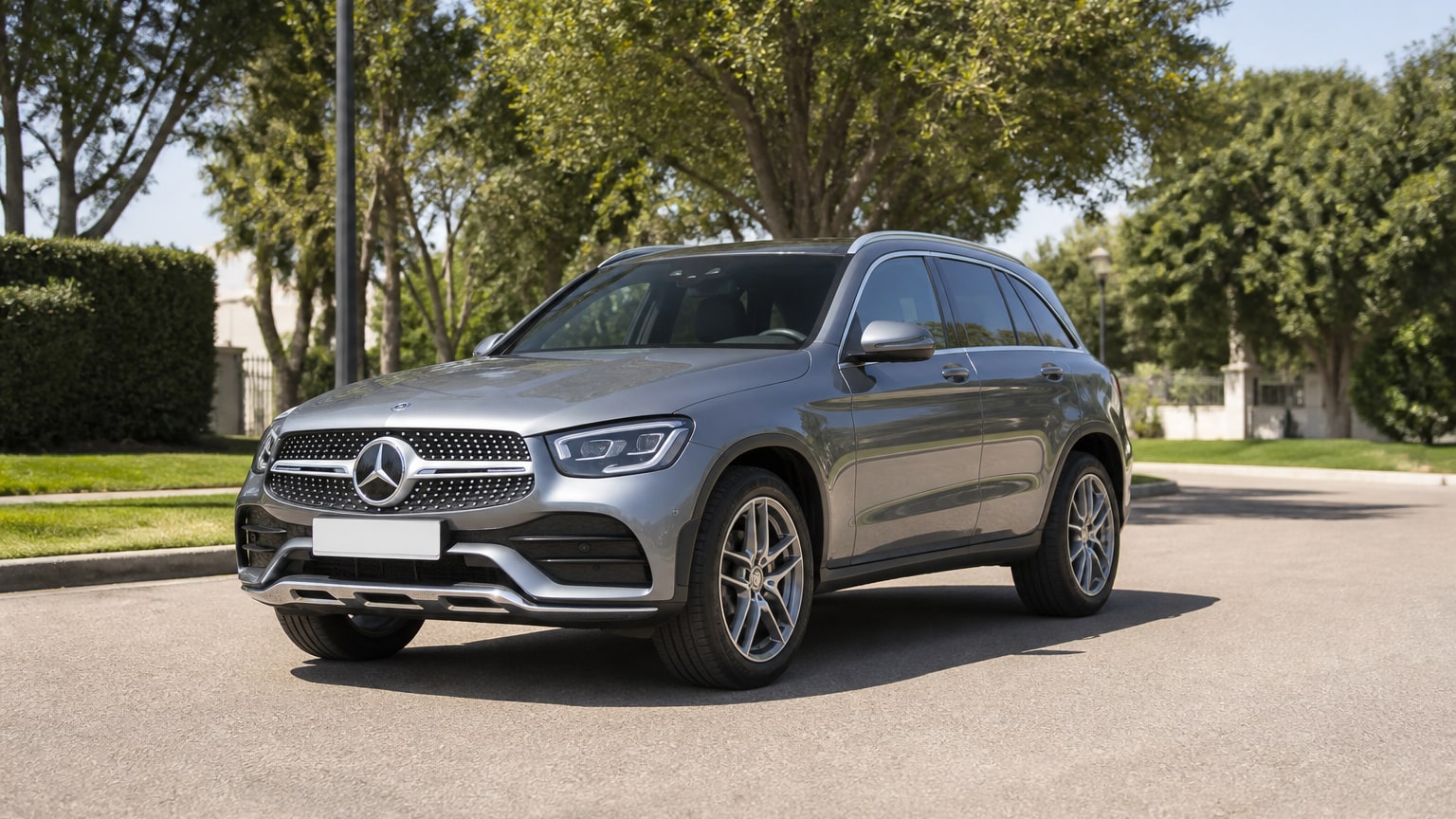
The best Mercedes-Benz GLC years to buy are 2021 and 2022 - the late first-generation cars that benefited from updated brake pads, addressed TSBs, and a substantially lower complaint and recall footprint than early production.
| Best Mercedes-Benz GLC Year | Why It's a Strong Buy |
|---|---|
| 2021 | Lower complaint count; updated brake pads standard; major PCV/transmission TSBs addressed |
| 2022 | Low recall footprint; 2022 receives a "Good" reliability score; smoother transition to gen 2 platform |
Most reliable Mercedes-Benz GLC years: 2021, 2022
2021 Mercedes-Benz GLC
The 2021 GLC sits in the sweet spot of the first generation: the brake-pad update from 2020 carries over, and earlier software TSBs for the 9G-Tronic had been distributed through dealer service. The fuel pump recall (23V-445) does apply to some 2021 VINs, so a VIN check is still mandatory, but the overall complaint volume is materially lower than the 2016-2018 cars. Check service records to confirm the fuel pump campaign status.
2022 Mercedes-Benz GLC
The 2022 Mercedes-Benz GLC has good reliability, with 2 recalls and 51 owner complaints on file. That recall count is one of the lowest across the entire first-generation run. The 2022 is also the final year before the full second-generation redesign, meaning it carries well-sorted mechanicals and broad parts and service familiarity at independent shops. The 2024 Mercedes-Benz GLC-Class has a J.D. Power predicted reliability score of 78 out of 100 - in J.D. Power’s scale, 70-80 is rated Average, and the 2022 first-gen sits in comparable territory.
Mercedes-Benz GLC submodel years to avoid
The GLC family includes the base GLC 300, the performance-oriented GLC 43 AMG, and the predecessor GLK 350 - each assessed on its own complaint and recall record.
Mercedes-Benz GLC 300 years to avoid
The GLC 300 is the volume variant of the GLC and has been offered for every model year from 2016 through the present second generation. It uses a turbocharged 2.0-liter four-cylinder engine (M274 in 2016-2019, upgraded to M264 with 48V mild-hybrid assist from 2020 onward) paired with the 9G-Tronic nine-speed automatic.
The 2016 GLC 300 generated 171 problems and defects on CarComplaints, with suspension, accessories-interior, and brakes as its worst complaint categories. The PCV valve fault, 9G-Tronic harsh shifting, and brake squeal described in the “Most common problems” section above were measured predominantly on GLC 300 variants - those are the dominant seller, so the parent data and GLC 300 data overlap heavily. The most-reported problem is with the 2016 GLC 300 for steering wheel vibrations.
From 2020, the GLC 300’s M264 engine introduced the 48V ISG system covered above. That system fault belongs specifically to the GLC 300 (and GLC 350e), not to the AMG models, which use a different powertrain. Pre-purchase checks for a used GLC 300:
- Confirm 2016-2019 PCV valve and 9G-Tronic software status
- On 2021-2023 cars, verify the fuel pump recall (23V-445 or its expansion) is closed
- On 2020-2023 cars, pull 48V fault codes before buying
Mercedes-Benz GLC 43 AMG years to avoid
The GLC 43 AMG was offered from 2017 through the 2022 first generation (the second-generation GLC 43 arrived for 2024). It is powered by a 3.0-liter twin-turbocharged V6 (engine code M276) producing approximately 385 horsepower, paired with AMG’s SPEEDSHIFT TCT nine-speed transmission rather than the standard 9G-Tronic torque-converter unit - meaning the 9G-Tronic harsh-shifting fault described above does not apply to the GLC 43 AMG.
NHTSA has received only 2 direct complaints about the GLC 43 AMG across its complaint database, which is too small a sample to flag any single model year as statistically avoid-worthy. The low volume reflects both lower production numbers and, per the complaint record, no systemic powertrain defect specific to the AMG’s twin-turbo V6. A recall did cover 2020-2022 AMG GLC 43 vehicles for headlights that may be incorrectly adjusted too high, creating glare for oncoming traffic. Dealers inspected and corrected headlight aim at no charge; confirm this campaign is closed on any 2020-2022 GLC 43 AMG you consider.
The fuel pump recall (23V-445 base campaign) covered a broad range of Mercedes models; confirm via VIN whether a specific GLC 43 AMG is included. Pre-purchase, ask for full service records, check for any 48V warnings on cars equipped with mild-hybrid assist, and verify headlight aim. No GLC 43 AMG model year has accumulated enough complaint data to designate it an avoid year on its own record.
Mercedes-Benz GLK 350 years to avoid
The GLK 350 is the direct predecessor to the GLC, produced for model years 2010-2015 before being replaced. It uses a naturally aspirated 3.5-liter V6 (M272 or M276 depending on year), a very different powertrain from either GLC variant, and it is a separate collector and used-car market.
CarComplaints rates the 2013 GLK 350 as the worst model year - despite the 2014 having the most overall complaints - because of higher repair cost or more problems at lower mileage. The most-reported problem on the GLK 350 is paint bubbling, associated with the 2014 model. The GLK 350’s most notable safety issue is a fuel system defect: the most widely reported problem is hairline cracks in the plastic covers of the in-tank fuel pump assemblies - these cracks allow gasoline to seep out and pool on top of the fuel tank, directly under the rear seat cushion, creating a strong, hazardous fuel smell and a significant fire risk common on the 2010-2015 GLK 350.
NHTSA recall 12V-557 affected some 2011-2012 GLK 350 models for a potential crack in the fuel filter flange, which can cause a strong fuel smell and a visible leak. The 2013 and 2014 GLK 350 also carried a Takata airbag recall (covering a wide range of Mercedes models) - the 2010-2012 GLK 350 was included in a recall where upon deployment of the driver’s frontal air bag, excessive internal pressure may cause the inflator to rupture. Confirm both fuel and airbag recall status on any pre-2016 GLK 350 before purchase.
Mercedes-Benz GLC pre-purchase checklist
Before signing on any used GLC, run through these model-specific checks:
- Run the VIN on NHTSA’s recall checker: Confirm every open campaign - especially steering wiring (16V-146 on 2016 cars), headlight aim (2019-2022), and fuel pump shutdown (23V-445 on 2021-2023) - is marked complete.
- On 2016-2019 cars, pull fault codes for P052E: A PCV valve fault may be stored but not illuminated at the time of a test drive; a full OBD-II scan confirms whether it has been addressed.
- Test the 9G-Tronic at low speed: Drive slowly in a parking lot and feel for jerky 1-2 downshifts; ask if the TCU software has been updated at a dealer.
- Inspect brake pads and rotors on 2016-2019 cars: Pre-2020 brake pads are prone to squeal; replacement with updated pads is cheap and permanent.
- On 2020-2023 GLC 300, pull 48V fault codes: The integrated starter-generator can fail silently until a no-start event; a scan of the 48V circuit before purchase flags this early.
- On GLK 350 (2010-2015), smell-check the rear seat area: A gasoline odor under the rear cushion indicates cracked in-tank fuel pump covers - a fire hazard requiring immediate attention.
- Request full service records: Confirm oil-change intervals, transmission fluid changes, and any dealer software update history.
- Verify the fuel pump recall is closed on 2021-2023 VINs: Under the recall, dealers replace the fuel pump free of charge, so there is no cost reason for a seller to have skipped this.
Better alternatives to consider
If the GLC years in your budget land on the avoid list, consider these alternatives instead:
- Lexus GX 460 - a body-on-frame luxury SUV with a notably cleaner first-generation complaint record and strong long-term durability data
- Lexus ES 350 - a front-wheel-drive luxury sedan in a similar price bracket with consistently high J.D. Power dependability scores across most of its model years
- Audi Q5 - direct compact luxury crossover competition with a broad used-car market, though early 2.0T examples carry their own timing-chain and oil-consumption concerns worth researching
- BMW X3 - cross-shops naturally with the GLC in price and size; mid-cycle years (2015-2017) have documented N20 engine issues, but 2019-onward B48 examples have a cleaner record
Is the Mercedes-Benz GLC worth buying
Yes - as long as you avoid the 2016, 2017, and 2018 model years. The Mercedes-Benz GLC is a very reliable compact crossover SUV that can last between 200,000 and 250,000 miles when well maintained and driven conservatively. The 2021 and 2022 first-generation cars offer the best value in the used market: the major early-build faults are resolved, brake noise is gone, and parts availability is strong. The 2024 Mercedes-Benz GLC has a J.D. Power predicted reliability score of 78 out of 100, showing the second generation is starting from a solid base. Run the VIN through NHTSA’s recall database and verify full maintenance history before you commit - those two steps alone eliminate most of the risk on any GLC you are considering.
Frequently asked questions
What are the best Mercedes-Benz GLC years to buy
The best Mercedes-Benz GLC years to buy are 2021 and 2022. Both years benefit from updated brake pads (which ended the squeal complaints common on 2016-2019 cars), addressed 9G-Tronic software updates, and a significantly lower NHTSA recall count compared to the 2016-2018 first-gen cars.
What are the worst years for the Mercedes-Benz GLC
The worst years for the Mercedes-Benz GLC are 2016, 2017, and 2018. NHTSA complaint volume peaked at 115 problems on the 2016 GLC, making it the highest-volume complaint year. CarComplaints rates the 2017 as the single worst year by its PainRank, which weighs repair cost and mileage-at-failure.
Which year Mercedes-Benz GLC is most reliable
The 2022 Mercedes-Benz GLC is the most reliable pick among used first-generation cars. The 2022 GLC has good reliability with only 2 recalls on file - the lowest recall count in the generation - and major first-gen faults had been corrected by that point in the production run.
What year Mercedes-Benz GLC has PCV valve problems
The PCV valve fault was most reported on 2016 and 2017 GLC model years, and to a lesser extent on 2018 and 2019 models. The symptom is a check-engine light with OBD-II code P052E. Outside of warranty, repair costs exceed $1,500; ask for a scan of stored codes before purchasing any 2016-2019 car. No manufacturer warranty-extension program number for this specific defect was confirmed in research - verify the repair status through dealer service history instead.
How long does a Mercedes-Benz GLC last
A well-maintained Mercedes-Benz GLC can last between 200,000 and 250,000 miles when driven conservatively. A GLC will cost about $14,421 for maintenance and repairs during its first 10 years of service, which beats the industry average for luxury SUVs by $1,293. Sticking to Mercedes-Benz service intervals - particularly transmission fluid changes and the A/B service schedule - is the single biggest factor in reaching that mileage threshold. If you’re curious how the GLC compares to other Mercedes models, the which Mercedes class is best breakdown covers the full lineup’s relative reliability positioning.