
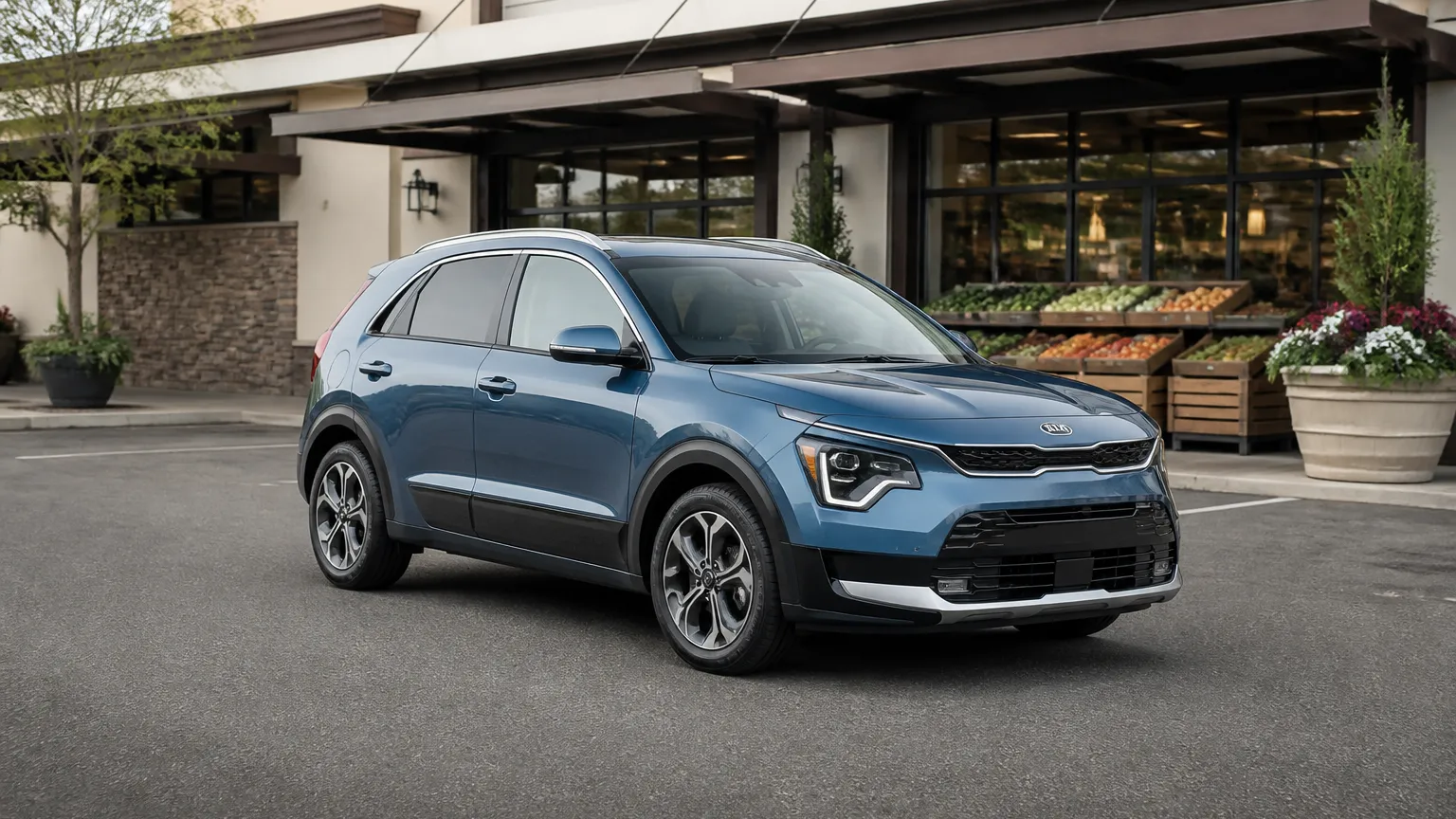
The Kia Niro is one of the more dependable compact hybrids on the used market, earning a 4.5-out-of-5-star reliability rating from RepairPal and a low average annual repair cost - but two specific model years carry documented problems serious enough to give you pause. This guide uses data from NHTSA complaints and recall records, CarComplaints PainRank, Consumer Reports, and the Kia Niro Forum to tell you exactly which years to skip and which ones are a solid buy.
For generations, engines, and ownership notes in one place, see the Kia Niro hub.
Related: Kia Sportage years to avoid, Kia Soul years to avoid.
At a glance
- Worst years
- 2017
- 2023
- Best years
- 2020
- 2021
- 2024
- Top failure
- 1st-gen Hydraulic Clutch Actuator (HCA) fluid leak / fire risk - 2017-2022 (CarComplaints PainRank worst year 2017; NHTSA recall 23V-534 / Kia SC276)
- Always do before buying
- Run the VIN through NHTSA's recall checker, and on any 2017-2022 Niro, verify in writing that the HCA recall (Kia SC276) has been completed at a dealer
How we rated the best and worst Kia Niro years
The 2017 Kia Niro is the single most problematic model year, carrying the highest PainRank on CarComplaints and the highest raw NHTSA complaint volume of any Niro ever made. The 2023, as the launch year of the second generation, follows as a secondary concern on NHTSA volume alone.
CarComplaints rates the 2017 Kia Niro as the worst model year, ranked on factors including repair cost and average mileage when problems occur - not just raw complaint volume. CarComplaints’ PainRank system uses relative complaint analysis that weighs repair cost, mileage at failure, and vehicle age, so a high PainRank means more painful ownership, not just more reports. NHTSA complaint counts, by contrast, are raw owner filings that show how much attention a year attracts, regardless of cost. NHTSA complaint data shows the 2017 Niro with 95 complaints, 2023 with 40, and 2022 with 28 - the highest raw volumes by year. The 2017 is the worst year on both measures simultaneously, which is unusual.
Our years-to-avoid methodology cross-references CarComplaints PainRank, NHTSA complaint volume and recall counts, RepairPal reliability ratings, Consumer Reports subscriber data, and owner forum reports.
| Kia Niro Generation | Best Kia Niro Years | Worst Kia Niro Years |
|---|---|---|
| 1st gen (2017-2022) | 2020, 2021 | 2017 |
| 2nd gen (2023-present) | 2024 | 2023 |
Every Kia Niro model year ranked
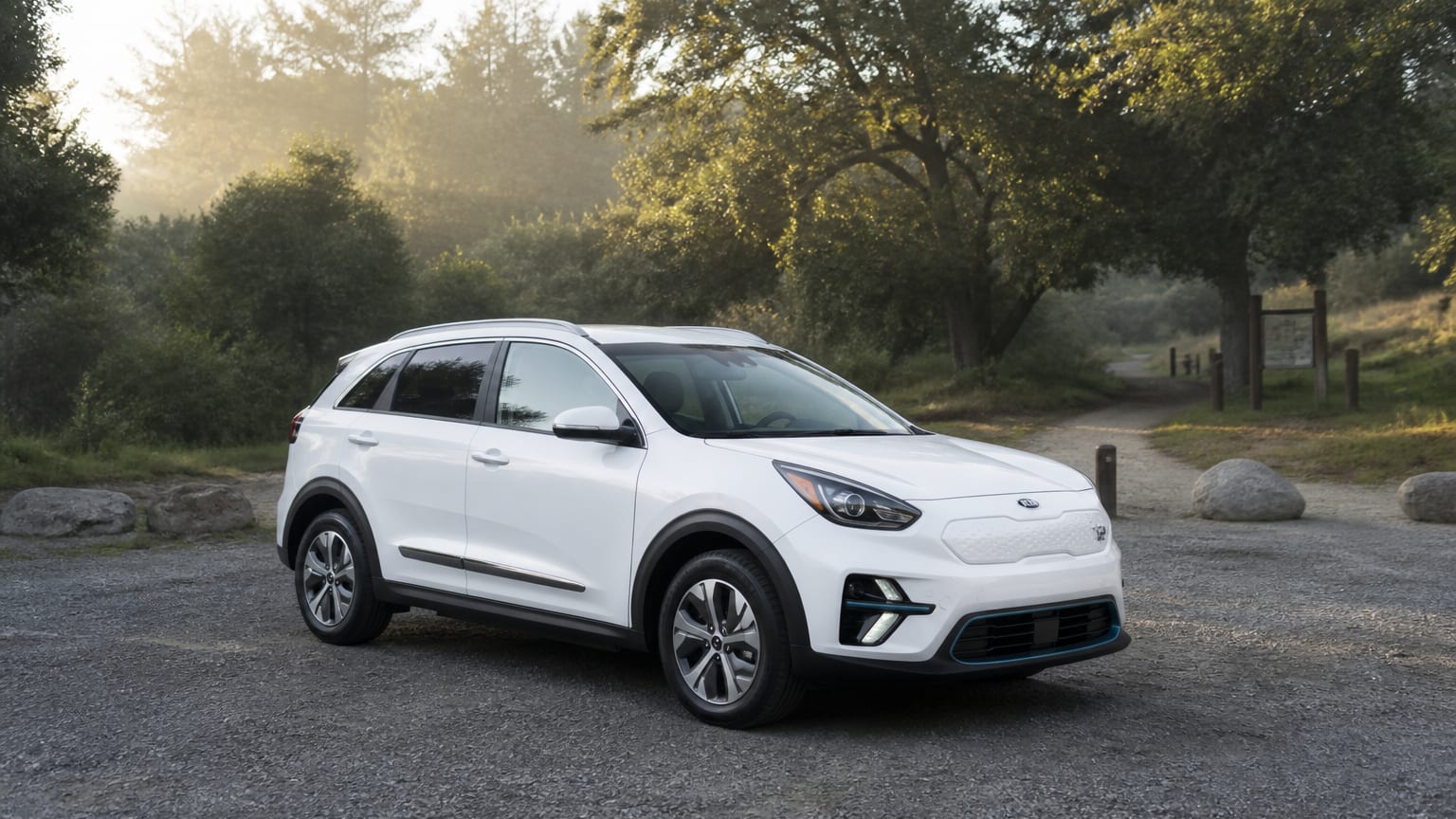
The overall worst problem category across all Niro years is electrical problems, and the 2017 holds the most complaints on CarComplaints. On NHTSA data, 2017 drew the most complaints while 2021 drew the fewest of any model year.
| Model Year | Generation | Verdict | Notes |
|---|---|---|---|
| 2017 | 1st gen | Avoid | Most complaints (CarComplaints + NHTSA); 4-5 recalls; HCA fire risk, door handles, relay overheating |
| 2018 | 1st gen | OK/Mixed | 72 CarComplaints reports; brake complaints; PHEV launch year |
| 2019 | 1st gen | OK/Mixed | Transmission clunking, "Check Hybrid System" warnings |
| 2020 | 1st gen | Best | Only 4 CarComplaints reports; low complaint volume across sources |
| 2021 | 1st gen | Best | Fewest NHTSA complaints (9) of any Niro model year |
| 2022 | 1st gen | OK/Mixed | Moderate NHTSA volume (28); HCA recall applies |
| 2023 | 2nd gen | Avoid | 40 NHTSA complaints; launch-year electrical and software issues |
| 2024 | 2nd gen | Best | Consumer Reports rates it "more reliable than average"; 2 recalls |
| 2025 | 2nd gen | OK/Mixed | Consumer Reports "about average"; 1 recall; data still maturing |
Most common Kia Niro problems
The single biggest documented failure across the Niro’s production run is the Hydraulic Clutch Actuator (HCA) fluid leak, which carries a fire risk and triggered a multi-stage recall spanning 2017 through 2022. Beyond the HCA, electrical system faults, transmission behavior, Power Relay Assembly overheating, and first-gen door handle failures round out the top recurring issues.
1. Hydraulic Clutch Actuator (HCA) fluid leak and fire risk
Kia recalled certain 2017-2022 Niro and 2018-2022 Niro Plug-in Hybrid vehicles because fluid may leak into the printed circuit board inside the hydraulic clutch actuator, which can result in an engine compartment fire. The symptom an owner typically notices first is an illuminated HEV or “Check Hybrid System” warning light, sometimes followed by stalling or a complete loss of drive power.
Kia recalled approximately 27,029 of its 2017 Niro hybrids in the initial campaign because of a defective part that may leak oil and cause an electrical short. This initial recall carried NHTSA campaign number 18V-257, Kia number SC163. A subsequent, broader recall (Kia SC276 / NHTSA 23V-534) covered 2017-2022 Niro and 2018-2022 Niro Plug-in Hybrid vehicles, again addressing fluid that may leak into the HCA’s printed circuit board and cause a fire. The remedy is free: dealers inspect and replace the hydraulic clutch actuator as necessary and install a new fuse.
Owners who needed HCA replacement out-of-pocket before the recall was issued reported costs around $10,000 for the part and labor. Because the recall covers the repair free of charge, your first pre-purchase check on any 2017-2022 Niro should be confirming SC276 completion at a dealer.
2. Power Relay Assembly (PRA) overheating
The Main Relay within the Power Relay Assembly may have inadequate connections between its contacts, causing increased electrical resistance that can overheat the rear seats, increasing the risk of a fire. This defect is distinct from the HCA issue above and affected 2017-2018 Niro hybrid models.
Kia recalled certain 2017-2018 Kia Niro hybrid electric vehicles for this Main Relay / Power Relay Assembly fault. The initial recall carried Kia number SC168 / NHTSA 18V-666; a follow-up campaign (Kia SC256) superseded NHTSA recall 18V-666, and vehicles already repaired under the previous recall need to have the new remedy completed. Buyers of 2017-2018 hybrids should confirm both SC168 and SC256 are closed on their specific VIN.
3. Transmission and drivetrain faults
The most common single Kia Niro problem category across all NHTSA filings is Transmission / Drivetrain, with 69 NHTSA complaints and a 1.4% crash-involvement rate. On the 2019 model year in particular, NHTSA complaints describe sudden, unexpected stalling while driving, disconcerting clunking noises, and jolting sensations when accelerating from a stop.
Some owners also reported sluggish engine and transmission performance in colder temperatures, with the transmission “engine braking” of the vehicle and making acceleration difficult. A transmission fluid leak when parked is an early warning that the dual-clutch unit’s seals may be deteriorating - worth checking on any 2017-2019 Niro before purchase. There is no blanket recall for this issue; it is handled case by case under warranty or at owner expense.
4. Electrical system faults
Overall, the worst problem category by complaint frequency on CarComplaints is Kia Niro electrical problems. Across all NHTSA filings, Electrical System ranks second with 90 complaints, behind only Powertrain.
Specific complaints on 2017 models involved engine problems, electrical relay overheating, and cruise control malfunctions. The 2018 model saw electrical and computer issues, including shift lock malfunctions. The 2019 year also produced reports of the vehicle randomly displaying “Check Hybrid System” warnings during charging or normal operation. These electrical faults are generally resolved by software updates or relay replacement under recall, but you should confirm all open campaigns are closed before buying.
5. Door handle failure (exterior)
The most-reported single problem on CarComplaints across all Niro years is the 2017 Kia Niro’s door handle breaking off. The component that holds the handle in place can break away from the door skin, leaving the handle non-functional. This is a quality issue rather than a safety hazard, but it points to build-quality weaknesses in first-year production.
Replacement door handle assemblies typically run $100-$300 in parts and labor depending on whether the internal mechanism also needs replacement. Inspect all four door handles physically before finalizing any 2017 Niro purchase.
6. Airbag wiring and floor harness (2023-2025)
Kia recalled certain 2023-2025 Niro EV, Plug-in Hybrid, and Hybrid vehicles because the floor wiring assembly beneath the front passenger seat may become damaged, which can prevent the front airbags and seat belts from deploying properly or cause an unintended side curtain airbag deployment - either of which can increase the risk of injury in a crash.
The recall remedy is free: dealers inspect, replace, and reroute the floor wiring assembly as necessary, and install wiring covers. This recall (Kia SC332 / NHTSA 25V-024) covers the second-generation Niro’s most significant safety campaign to date. Verify it is closed before buying any 2023-2025 Niro.
Which Kia Niro years should you avoid?
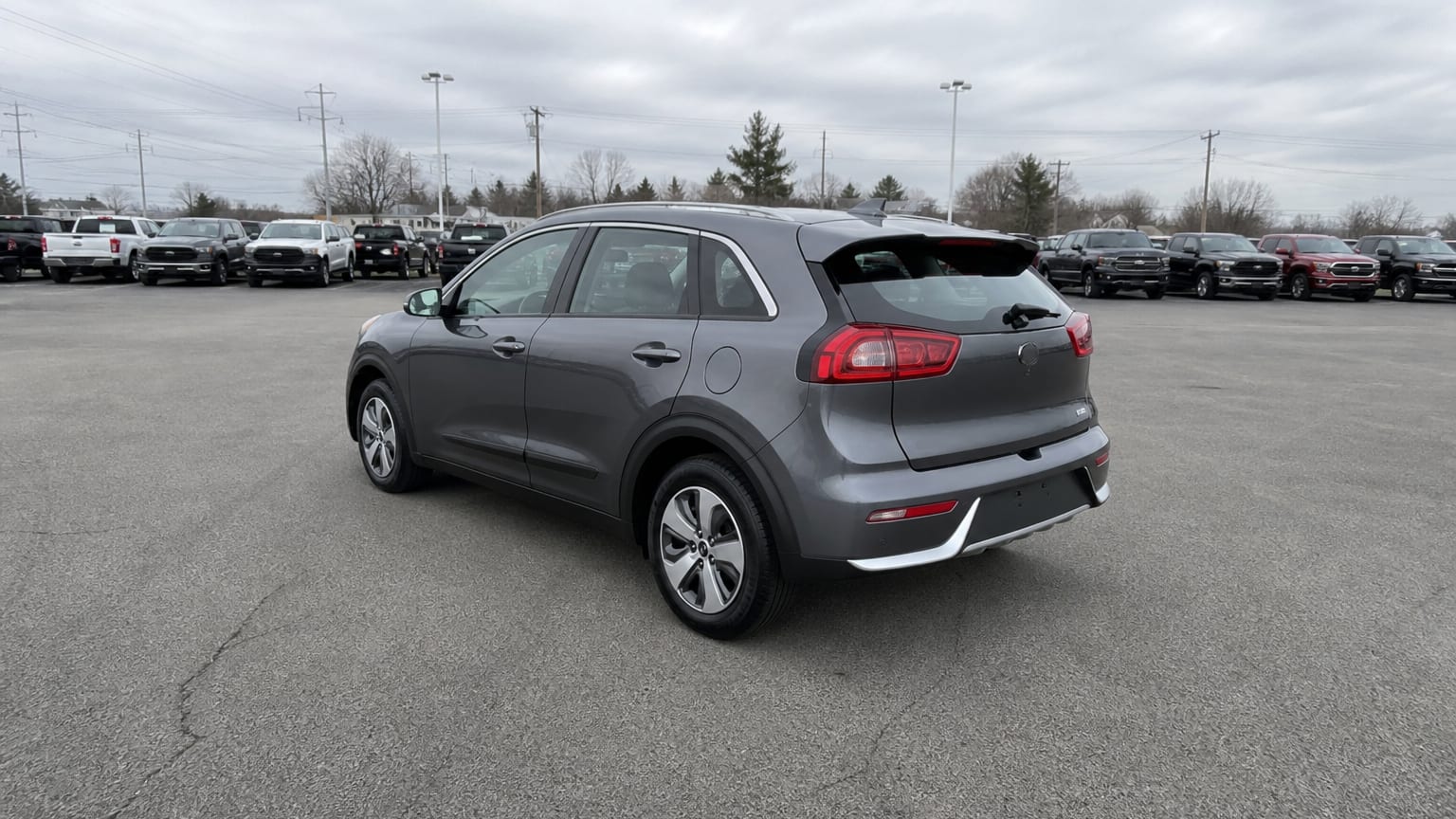
The Kia Niro years to avoid are 2017 and 2023. CarComplaints rates 2017 as the worst model year on repair cost and average mileage when problems occur (PainRank), and it also holds the most total complaints of any Niro year in that database. On NHTSA raw complaint volume, 2017 again leads with 95 complaints, followed by 2023 with 40. The 2017 is the only year that ranks worst on both measures simultaneously.
| Kia Niro Generation | Model Years | Verdict | Main Issues |
|---|---|---|---|
| 1st gen | 2017-2022 | Worst: 2017 | HCA fire recall, PRA overheating, door handles, highest complaint volume |
| 2nd gen | 2023-present | Worst: 2023 | Launch-year electrical/software faults, airbag wiring recall, elevated NHTSA volume |
First-generation Kia Niro (2017-2022) The 2017 Kia Niro has 119 problems and defects reported by Niro owners on CarComplaints. It also carried the most recall activity in the first generation, with 4 recalls affecting the 2017 model year alone. The HCA and PRA campaigns covered in the problems section above both originate on the 2017 model, and the HCA recall expanded to cover the entire 2017-2022 range under Kia SC276.
The 2017 Kia Niro is not considered highly reliable because of teething problems that include engine and electrical system malfunctions, overheating issues, and higher-than-average repair costs. Kia also recalled 135 model-year 2017 Niro crossovers that could lose power steering due to damaged motor-driven power steering connectors. That is a lot of distinct safety campaigns for one model year.
Second-generation Kia Niro (2023-present) The 2023 redesign experienced lower reliability scores, with electrical and software problems, consistent with being the first year of a new generation. The 2023 Kia Niro has 66 problems reported by owners on CarComplaints, with the worst complaints in accessories/interior, electrical, and AC/heater categories.
NHTSA shows 40 complaints filed against the 2023 model - the second-highest volume of any Niro year. The airbag wiring recall (Kia SC332 / NHTSA 25V-024) applies to 2023 and affects airbag and seatbelt deployment reliability, which is a meaningful safety concern.
What are the best Kia Niro years to buy?
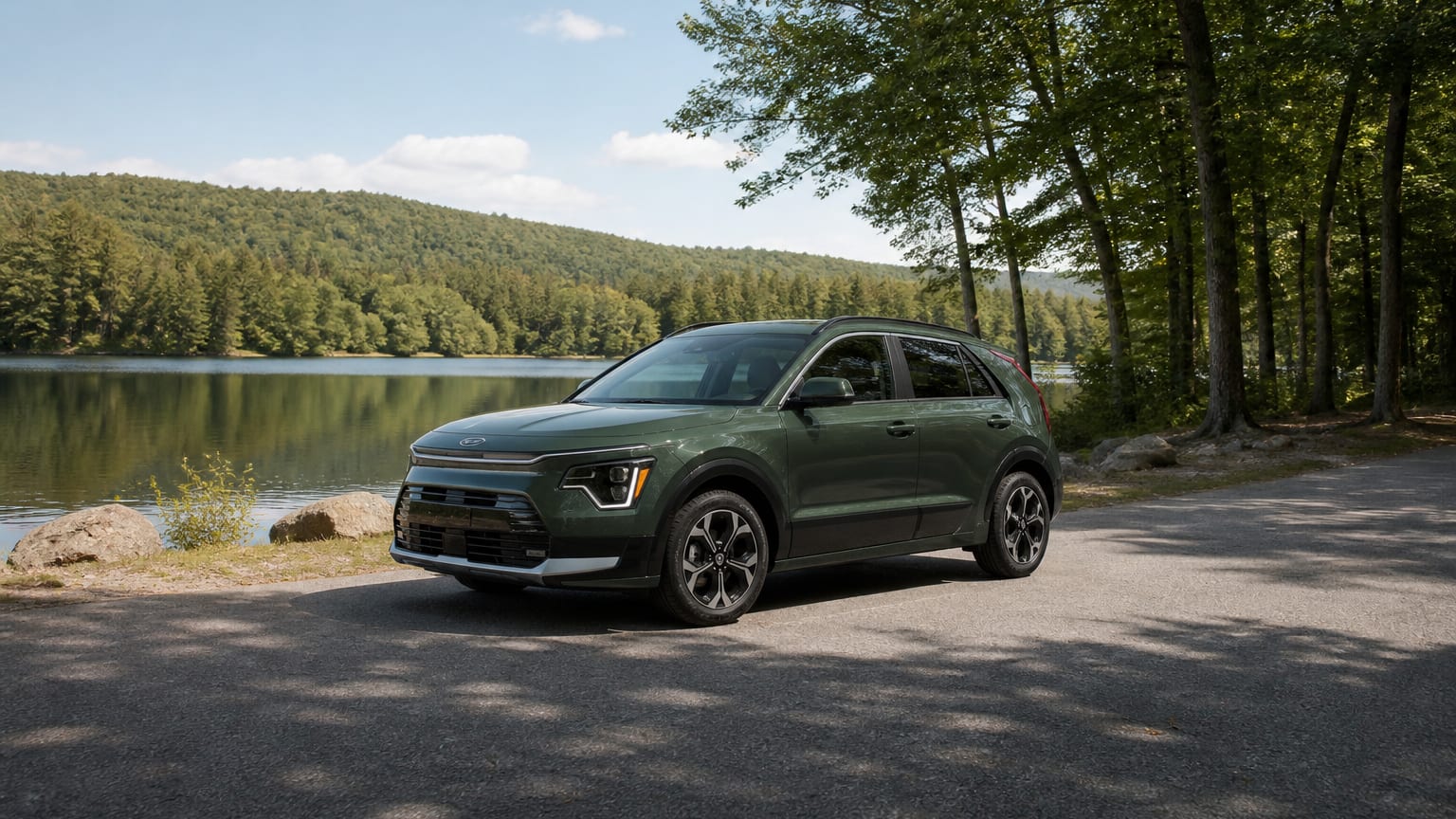
The best Kia Niro years to buy are 2020, 2021, and 2024. The 2020 Kia Niro has just 4 problems reported by owners on CarComplaints - the lowest count of any first-generation year. On NHTSA data, 2021 drew the fewest complaints of any model year. For second-generation buyers, Consumer Reports rates the 2024 Niro as more reliable than other cars from the same model year.
| Best Kia Niro Year | Why It's a Strong Buy | 2020 | Only 4 CarComplaints reports; mid-cycle refined powertrain; 3 years of first-gen production fixes absorbed |
|---|---|---|---|
| 2021 | Fewest NHTSA complaints (9) of any Niro year; first-gen reliability at its peak | 2024 | Consumer Reports "more reliable than average"; 2nd-gen launch issues resolved |
Most reliable Kia Niro years: 2020, 2021, 2024
2020 Kia Niro
The 2020 model year benefited from three years of production refinements, eliminating many early first-generation issues. Owners reported minimal powertrain complaints and stable hybrid system performance, along with low false alarm rates in safety sensors and reliable infotainment software.
RepairPal gave the Kia Niro an overall reliability rating of 4.5 out of 5 stars (described as Excellent), ranking it 3rd out of 6 among alternative fuel vehicles - and the 2020’s tiny complaint footprint sits well below the model average.
2021 Kia Niro
Among the strongest years of the first generation, the 2021 Niro delivered consistent reliability across hybrid and plug-in hybrid variants, with few recalls affecting this model year. NHTSA data shows the 2021-2022 models had significantly fewer reported issues than earlier years.
The 2021 is the pick for buyers who want a first-gen car with the most documented reliability and the lowest remaining recall exposure. Check that the HCA recall SC276 has been addressed, and you will have one of the cleanest used Niros on the market.
2024 Kia Niro
Consumer Reports rates the 2024 Kia Niro as more reliable than other cars from the same model year. J.D. Power gives the 2024 Kia Niro a reliability score of 76 out of 100, which is considered average for its category. For second-generation buyers who want the redesigned body, larger infotainment screen, and updated driver-assistance suite, 2024 is where the second gen found its reliability footing.
The 2024 Kia Niro has been recalled 2 times by NHTSA - a much lower recall burden than the 2017’s 4-5 campaigns or the 2023’s floor wiring campaign. Confirm those two campaigns are closed on the specific VIN before purchase.
Kia Niro submodel years to avoid The Niro has been sold in three powertrain configurations - standard Hybrid, Plug-in Hybrid (PHEV), and all-electric (EV) - each with its own model-year span, distinct drivetrain, and fault pattern. Here is what the research shows for each.
Kia Niro EV years to avoid The Kia Niro EV uses a battery-electric drivetrain with no combustion engine, so the HCA fluid-leak and PRA overheating recalls that define the worst first-gen hybrid years do not apply here. On CarComplaints, the 2019 Kia Niro EV is rated the worst model year for the EV nameplate, ranked on repair cost and average mileage when problems occur. The most-reported single problem on the Niro EV is a ticking noise in the powertrain.
The Niro EV was first offered for the 2019 model year and carried into the 2022 end of the first generation, then returned for 2023 onward in the second-generation body. A 2022 recall (NHTSA 22V-899) targeted certain 2020 model-year Niro EV vehicles, covering an Electric Power Control Unit (EPCU) assembly produced with improper sealing that could allow coolant to internally leak and contact the circuit board. A separate recall (Kia SC342) targeted 2020-2022 Niro EV vehicles because the circuit board for the rearview camera may become damaged, causing the camera image not to display.
Before buying a first-gen Niro EV (2019-2022), check the following:
- Confirm NHTSA 22V-899 (EPCU coolant seal) is closed on 2020 model-year VINs
- Confirm Kia SC342 (rearview camera circuit board) is closed on 2020-2022 VINs
- Confirm the second-gen floor wiring recall (Kia SC332 / NHTSA 25V-024) is closed on 2023-2025 VINs
- Test the 12V auxiliary battery; EV-specific drain issues appear in owner forum reports on the 2021-2022 cars Kia Niro PHEV years to avoid The Niro PHEV pairs the same 1.6-liter GDI engine and 6-speed dual-clutch transmission (DCT) as the standard hybrid with a larger 8.9 kWh battery pack and plug-in charging capability. The PHEV variant was introduced for the 2018 model year, and early PHEV models experienced more issues than standard hybrid versions. The HCA fire recall (Kia SC276 / NHTSA 23V-534) covers the 2018-2022 Niro PHEV explicitly - so the same fire-risk recall that defines the worst hybrid years applies here too, across every PHEV year of the first generation.
The 2017-2022 Niro and 2018-2022 Niro Plug-in Hybrid vehicles were recalled because fluid may leak into the printed circuit board inside the hydraulic clutch actuator, which can result in an engine compartment fire. No PHEV model year escapes this recall window. The 2018 PHEV, as the launch year of that variant, carries the highest risk of finding an unaddressed recall.
No PHEV model year has accumulated a complaint volume in CarComplaints or NHTSA that independently flags it as dramatically worse than its siblings beyond the HCA campaign shared with the hybrid. For second-generation PHEV buyers (2023 onward), the floor wiring recall (Kia SC332 / NHTSA 25V-024) applies and should be confirmed closed before purchase.
Kia Niro pre-purchase checklist
Run these checks before committing to any used Kia Niro purchase:
- Run the VIN through NHTSA’s recall checker at nhtsa.gov/recalls to confirm every open campaign is resolved - especially on 2017-2022 cars with multiple active campaigns.
- Confirm Kia recall SC276 is complete (2017-2022 Hybrid and PHEV): ask the selling dealer or a Kia dealer to pull recall service records showing the HCA was inspected and, if needed, replaced with the updated fuse. This is the highest-priority check for first-gen cars.
- On 2017-2018 models, confirm SC256 is also complete: the Power Relay Assembly recall superseded 18V-666, and cars repaired under the old campaign need the new remedy done.
- Inspect all four exterior door handles physically on any 2017 Niro - the handle bracket can break without notice, and a loose or rattling handle is a sign of impending failure.
- Test the hybrid system and transmission with a 15-minute drive that includes highway acceleration and cold-start: clunks, jolts, or “Check Hybrid System” warnings on the 2019 model need investigation before purchase. Pay particular attention to transmission, engine, and electrical system behavior, which are the most commonly reported problem areas across NHTSA filings.
- On 2023-2025 models, confirm SC332 is complete: the floor wiring airbag recall covers all 2023-2025 Niro variants (Hybrid, PHEV, EV) and is a safety-critical fix.
- On 2020-2022 Niro EVs, confirm SC342 is complete: the rearview camera circuit board recall applies and is quick to verify at a Kia dealer.
- Request full service records to verify scheduled maintenance (especially DCT fluid changes) has been kept up; a neglected dual-clutch transmission is the component most likely to cause an expensive repair.
Better alternatives to consider
If the Kia Niro years in your budget land on the avoid list, consider these alternatives instead:
- Toyota Prius - the volume hybrid benchmark, with a longer production run and a consistently strong reliability record across most model years
- Kia Forte - a non-hybrid Kia sibling at a lower price point, with a simpler powertrain and fewer recall campaigns to track
- Toyota Highlander - steps up in size and offers a Hybrid variant with Toyota’s proven gas-electric system if the Niro’s DCT behavior concerns you
- Honda CR-V Hybrid - a compact crossover hybrid with its own two-motor system that avoids the dual-clutch architecture responsible for many Niro drivetrain complaints
Is the Kia Niro worth buying?
Yes - the Kia Niro is worth buying as long as you avoid the 2017 and 2023 model years and verify that all HCA-related recalls are closed on any first-generation car. RepairPal rates the Niro 4.5 out of 5 stars for reliability, ranking it 3rd among alternative fuel vehicles - a strong position for a used hybrid crossover. The 2022 Kia Niro received an overall 5-star safety rating from NHTSA, and the 2020 and 2021 model years represent the sweet spot in the first generation for a clean, low-complaint used purchase.
The best single piece of advice: run the VIN through NHTSA’s recall checker before you sign anything, and get written confirmation from a Kia dealer that SC276 is complete on any 2017-2022 car. Those two steps eliminate the biggest risks the Niro has ever posed.