

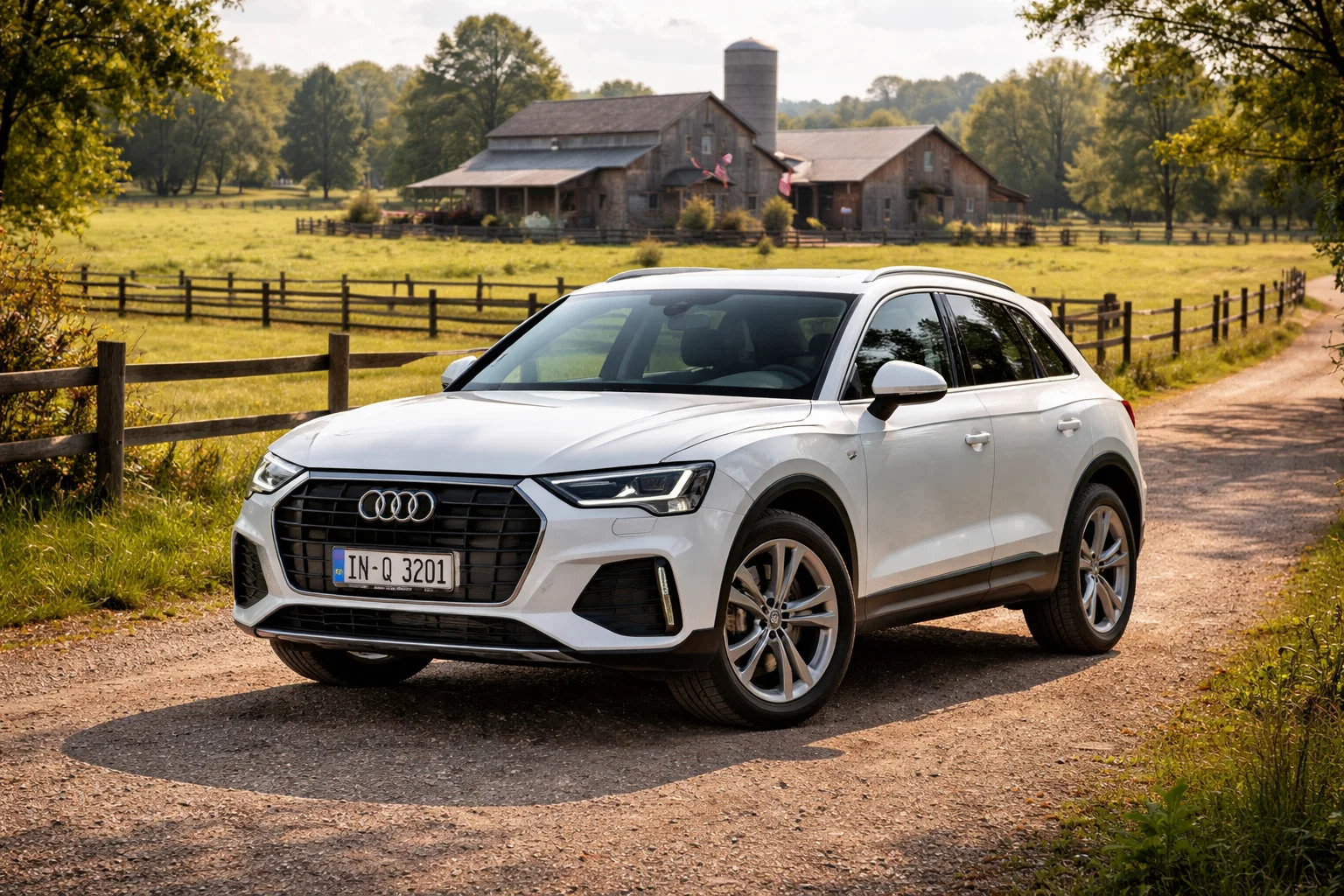
How we rated the best and worst Audi Q3 years
We didn’t just skim a few forums and call it a day. Our team pulled data from multiple official sources: NHTSA complaint databases, CarComplaints owner reports, Audi’s own recall records, and technical service bulletins that detail known EA888 engine issues. We cross-referenced long-term test reviews from Edmunds and Kelley Blue Book, checked reliability scores from Consumer Reports and J.D. Power, and spent hours reading through owner experiences on dedicated Audi forums and mechanic feedback. We also factored in real-world repair costs—like the $5,000+ bill for a turbo replacement or the $2,500 timing chain service—so you know what you’re really signing up for if something goes wrong.
Most Common Audi Q3 Problems
1. Engine Trouble That Can Cost Thousands
Let’s start with the big one: the 2.0-liter turbocharged four-cylinder. It’s the heart of nearly every Q3, and in first-generation models (2015–2018), the timing chain tensioner has a reputation for failing. When that tensioner gives out, the chain gets slack, you hear a nasty rattle on cold starts, and if you ignore it long enough, the timing can jump and trash the engine completely. Some 2015 owners dealt with this around 50,000–60,000 miles, and repairs weren’t cheap.
Throw in turbocharger failures—especially in 2016 models, where lag or total loss of boost was common—and you’re looking at another five-figure repair. High-mileage Q3s also burn through oil faster than they should, and a few unlucky 2015 owners even had cracked cylinder heads show up. Not exactly the worry-free experience you’d expect from a luxury brand.
2. Transmission Quirks and Scary Stalls
Second-generation Q3s (2019 and newer) brought Audi’s DSG dual-clutch automatic to the table, and it hasn’t been entirely smooth. Owners report jerky shifts, hesitation when you hit the gas, and sometimes the transmission just feels confused. A lot of this comes down to software bugs or low fluid, and dealer updates can help. But the 2020 Q3 had a much scarier issue: the auto start-stop system would fail, causing the engine to stall at red lights or refuse to restart when you lifted off the brake. Some drivers described their car freezing in traffic, wheels locked, unable to move. Audi traced it to software and battery glitches, but plenty of owners simply disabled start-stop to avoid the problem altogether.
3. Electronics That Act Like They Have a Mind of Their Own
Lighting problems plagued early Q3s. In 2016, rear and side marker lights would fail or throw warning lights for no clear reason. Audi even issued a recall for 2015–2017 Q3s after discovering a software bug that could disable side markers entirely. Then there’s the MMI infotainment system, which has been a mixed bag. From 2018 onward, owners have dealt with frozen screens, navigation that reboots mid-route, and in 2022 models, complete display blackouts that also kill the backup camera and driver-assist features. Audi acknowledged the 2022 bug and launched a software recall, but if you’re test-driving a used 2022 Q3, make sure that fix has been applied—you don’t want your entire center screen going dark on the highway.
4. Sunroofs That Let the Rain In
If you love panoramic sunroofs, the Q3’s track record might give you pause. Models from 2019 to 2021 had a drainage design flaw: the hoses that channel water away from the sunroof would clog or get routed incorrectly, and suddenly you’d have water dripping onto your headliner and soaking the carpet. It’s not just annoying—it can lead to mold and electrical problems if left unchecked. Earlier 2015–2016 Q3s had a different sunroof issue: a software glitch that let the roof keep closing even after you turned the car off, which Audi fixed with a recall. Either way, checking sunroof drains should be on your pre-purchase inspection list.
5. Brakes, Squeaks, and AC That Quits
Some 2021 Q3s needed new brake pads and rotors at just 20,000 miles, which is way too early for a luxury vehicle. Late-model Q3s also developed brake squeal at low speeds—not dangerous, just irritating. On the suspension side, 2020 models occasionally developed squeaks and rattles from worn bushings or tie-rod ends, especially on rough pavement. It undermines that premium feel you’re paying for.
Then there’s the AC: 2019–2020 Q3s had compressor clutch failures, leading to weak cooling or no cold air at all. Replacing a compressor isn’t cheap, so if you’re looking at one of these years, make sure the AC blows ice-cold during your test drive. And if you’re considering a diesel Q3 (more common in Europe), know that the diesel particulate filter clogs up fast if the car only sees short city trips. Long highway runs help burn off the soot, so check that the previous owner actually drove it that way.
The Model Years You Should Skip
Not every Q3 year is a minefield, but a few stand out as genuinely problematic. Here’s the short list of years where the risk outweighs the reward.
2015 – A Rocky Start
As one of the first years the Q3 hit many markets, 2015 had all the growing pains you’d expect from a launch year. The timing chain tensioner was a known weak spot, yet Audi’s timing chain recall somehow didn’t cover 2015 models, leaving owners to foot the bill when things went wrong. Some faced catastrophic engine damage around 50,000–60,000 miles. On top of that, 2015 Q3s had persistent electrical gremlins—random warning lights, a sunroof that wouldn’t stop closing properly, and side marker lights that failed to turn on. Multiple recalls tried to fix these issues, but the damage to 2015’s reputation was done. If you see a 2015 Q3 for sale, it’s best to keep walking.
2016 – The Absolute Worst
Ask anyone familiar with Q3 reliability, and 2016 will come up as the year to avoid. CarComplaints data shows the #1 problem was turbo failure, typically hitting around 55,000 miles and costing more than $5,000 to repair. Beyond that, electrical issues were rampant: exterior lights malfunctioning, random dash warnings, and turn signals that wouldn’t work right. Audi recalled thousands of 2015–2017 Q3s to fix a software bug affecting marker lamps, but 2016 models seemed to get hit the hardest. Between the turbo issues, lighting problems, and above-average NHTSA complaints, 2016 is the Q3 year with the worst overall track record. Unless you’re getting an unbelievable deal and have a warranty to back it up, steer clear.
2018 – The Last-Year Letdown
You’d think the final model year of the first generation would be bulletproof, but 2018 had its share of quirks. Water pumps and cooling systems failed on some Q3s, and a few owners dealt with unexpected engine stalling. Audi also issued a recall to fix turn-signal indicators that wouldn’t alert you when a bulb burned out—not life-threatening, but annoying. Reliability scores for 2018 were slightly worse than surrounding years, which is why it shows up on “avoid” lists. If you’re seriously considering a 2018 Q3, make sure all recalls have been completed and get a thorough inspection of the cooling system before you buy.
2019–2020 – Dangerous Stalls and Soaked Interiors
The second-generation Q3 debuted in 2019, and the first two years were rough. The 2020 Q3 logged the highest number of consumer complaints of any Q3 year, with engine stalling being the scariest issue. Owners reported their nearly new Q3 would randomly stall on the highway or refuse to restart at traffic lights. The culprit was usually the start-stop system—software faults caused the engine to shut off and then lock the wheels when you tried to drive away.
Some drivers felt genuinely unsafe, describing moments where their car simply froze in traffic. Audi released software updates, but the problem persisted for many. On top of that, 2019 and 2020 models suffered from notorious sunroof leaks, with water dripping into the cabin during rain. Between the stalling, the leaks, and a handful of broken AC compressors, these two years are among the least reliable Q3s ever made. If a dealer offers you a great price on a 2019 or 2020, ask for proof that all software recalls have been completed—and maybe look elsewhere anyway.
2022 – When Your Screen Goes Rogue
The 2022 Q3 isn’t as mechanically troubled as the 2019–2020 models, but it has one major flaw: a possessed infotainment system. Owners reported the MMI randomly switching audio sources, rebooting mid-drive, or the screen going completely blank, which also disabled the backup camera and parking sensors. One owner described the navigation stopping on its own, the interface toggling inputs without being touched, and the screen blacking out until the entire unit was replaced.
Audi acknowledged the defect and planned a recall to update or replace the MMI software and hardware. A few 2022 Q3s also had random engine shut-offs and persistent brake squeal. These problems showed up early in the car’s life, meaning 2022 models spent a lot of time at the dealer. If you find a 2022 Q3 you like, verify that the infotainment recall has been done—otherwise, you’re signing up for a frustrating ownership experience.
The Model Years That Actually Work
Despite the trouble spots, there are Q3 years that deliver the premium experience Audi promised. These are the ones worth hunting down on the used market.
2017 – The First-Gen Sweet Spot
If you want a first-generation Q3, 2017 is the year to buy. By this point, Audi had fixed the early engine and software bugs, and it shows in the reliability data. CarComplaints shows virtually zero owner complaints for 2017, and J.D. Power gave it a solid 79/100 reliability score. Owners praised the comfortable ride, solid build quality, and minimal road noise. It had a few minor recalls (like the marker light fix), but once those are done, a 2017 Q3 should run without drama. You get the classic first-gen styling with proven engineering underneath. If you’re shopping used and want a Q3 that won’t keep you up at night, 2017 is your best bet.
2021 – The Second-Gen Rebound
By 2021, Audi had worked out most of the bugs that plagued the 2019 and 2020 models. The result is a much more reliable SUV with modern tech and far fewer complaints. CarComplaints shows only a few owner complaints for 2021, compared to eight for 2020—a huge improvement. The start-stop software was updated, the sunroof drainage issue was less common, and features that were optional on earlier years became standard by 2021. Owners say the 2021 Q3 has a high-quality interior, a comfortable ride, and the kind of reliability you’d expect from a luxury brand. If you want second-gen styling and tech without the headaches, 2021 is the year to target.
2023 – Nearly New and Nearly Flawless
If your budget can stretch to a newer model, the 2023 Q3 is one of the safest bets. By this point, Audi had years to refine the platform, and it shows: minimal problem reports, no major recalls publicly listed, and a Consumer Reports reliability rating above average. The infotainment software was updated, presumably fixing the 2022 glitches, and the mechanical components (engine, transmission, AWD) are now fully proven. Buying a 2023 gets you nearly new-car reliability, the latest tech, and most likely some remaining factory warranty. For anyone who wants a Q3 with the fewest potential issues, 2023 is the top choice.
If You’re Open to Alternatives
Love the idea of a compact luxury SUV but not sold on the Q3’s reliability record? Here are a few competitors that might give you more peace of mind.
BMW X1 (2017–2021) – Sportier and More Reliable
The X1 is the Q3’s main rival, and the second-generation X1 (2016 and newer) has proven to be more dependable. A 2022 analysis ranked the BMW X1 as the most reliable used subcompact luxury SUV in its class, and 2017–2021 models have far fewer major issues than similar-year Q3s. The X1 also delivers a sportier driving feel, thanks to BMW’s tuning. If reliability matters and you want something fun to drive, a 2017 or 2018 X1 is a smart pick.
Lexus NX (2017–2018) – Bulletproof and Boring (in a Good Way)
The Lexus NX is slightly bigger than the Q3, but it overlaps on many shopping lists. As a Toyota luxury product, the first-gen NX (2015–2020) is known for rock-solid reliability—J.D. Power scores show it’s over 20 points higher than the Q3. Owners report very few problems even as miles pile up. A 2017 or 2018 NX 200t/300 (turbo) or NX 300h (hybrid) will give you years of trouble-free ownership. You might miss the Q3’s sporty handling, but you’ll gain excellent build quality and resale value.
Mazda CX-5 (2018–2019) – Near-Luxury Without the Badge
If you don’t need a luxury badge, the Mazda CX-5 is one of the best compact SUVs you can buy. The second-gen CX-5 (2017+) offers stylish design, a high-quality interior (especially in Grand Touring Signature trim), and reliability that beats most luxury brands. Consumer Reports consistently scores it well above average, and owners rarely report problems even at high mileage. A 2018 or 2019 CX-5 delivers similar size and comfort to the Q3 with lower long-term costs and often more features for the money. You won’t get the Audi prestige, but the CX-5’s driving dynamics are genuinely fun, and you’ll save a lot on purchase price and repairs.
Acura RDX (2019–2020) – Japanese Reliability with Luxury Features
For North American buyers, the redesigned 2019+ Acura RDX is worth a look. It’s slightly larger than the Q3 (closer to a Q5), but it’s one of the most reliable luxury SUVs in recent surveys. The 2020 RDX scored an 8.3/10 reliability rating, making it the top-ranked compact luxury SUV for dependability in its price range. Its 2.0L turbo engine and 10-speed transmission have been solid, and electronic issues are rare. If you value Japanese engineering durability with luxury features, a lightly used 2019–2020 RDX offers excellent peace of mind—and standard AcuraWatch safety tech is a nice bonus.
If you’re willing to step down from the luxury tier, the Toyota RAV4 (2019+) offers hybrid options and top-tier reliability, though it’s not as premium inside. And the Volvo XC40 brings Swedish style and safety, with reliability that’s better than early Q3 years but not quite as strong as Lexus or Acura.
What to Remember Before You Buy
The Audi Q3 can be a satisfying premium SUV—as long as you pick the right year. Avoid 2015, 2016, 2019, 2020, and 2022 unless you’re prepared for potential headaches (and have warranty coverage). Target 2017 for a dependable first-gen model, or go for 2021 or 2023 if you want the newer platform. If reliability is your top priority, alternatives like the BMW X1, Lexus NX, Mazda CX-5, or Acura RDX might save you stress and money over the long haul. Before you sign on the dotted line, get a thorough pre-purchase inspection, run a full diagnostic scan, and verify